IT’S A PRETTY COOL BOAT
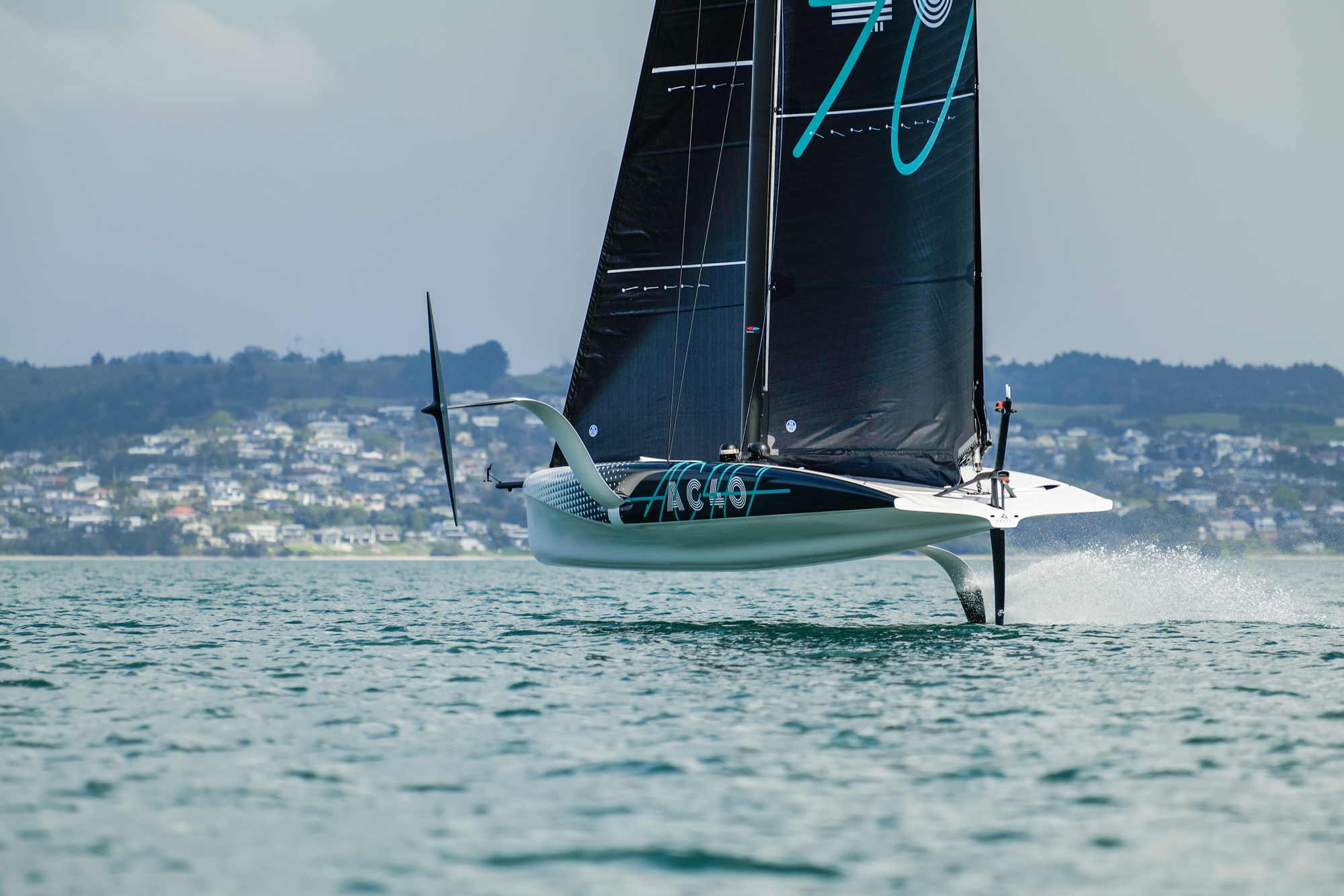


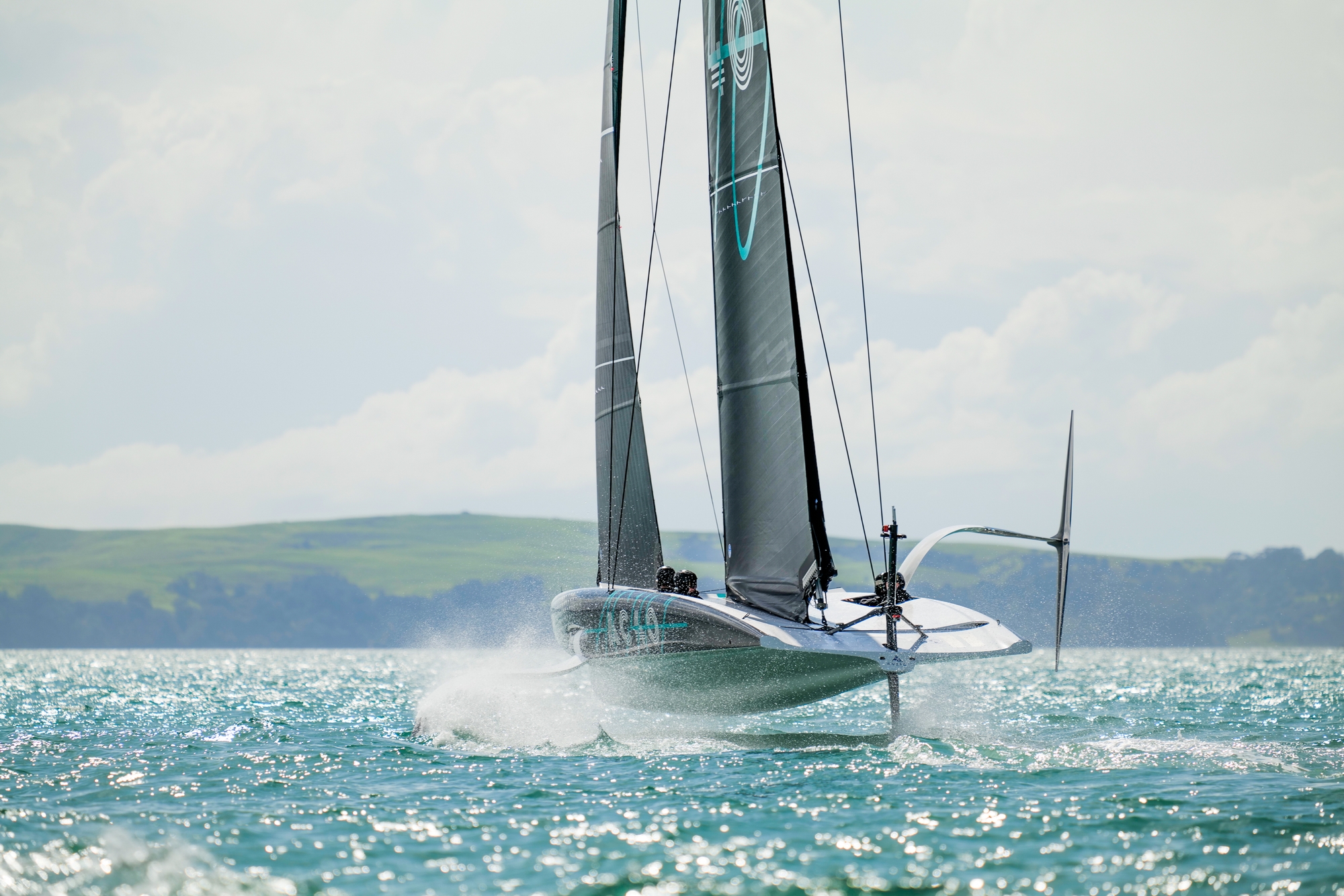
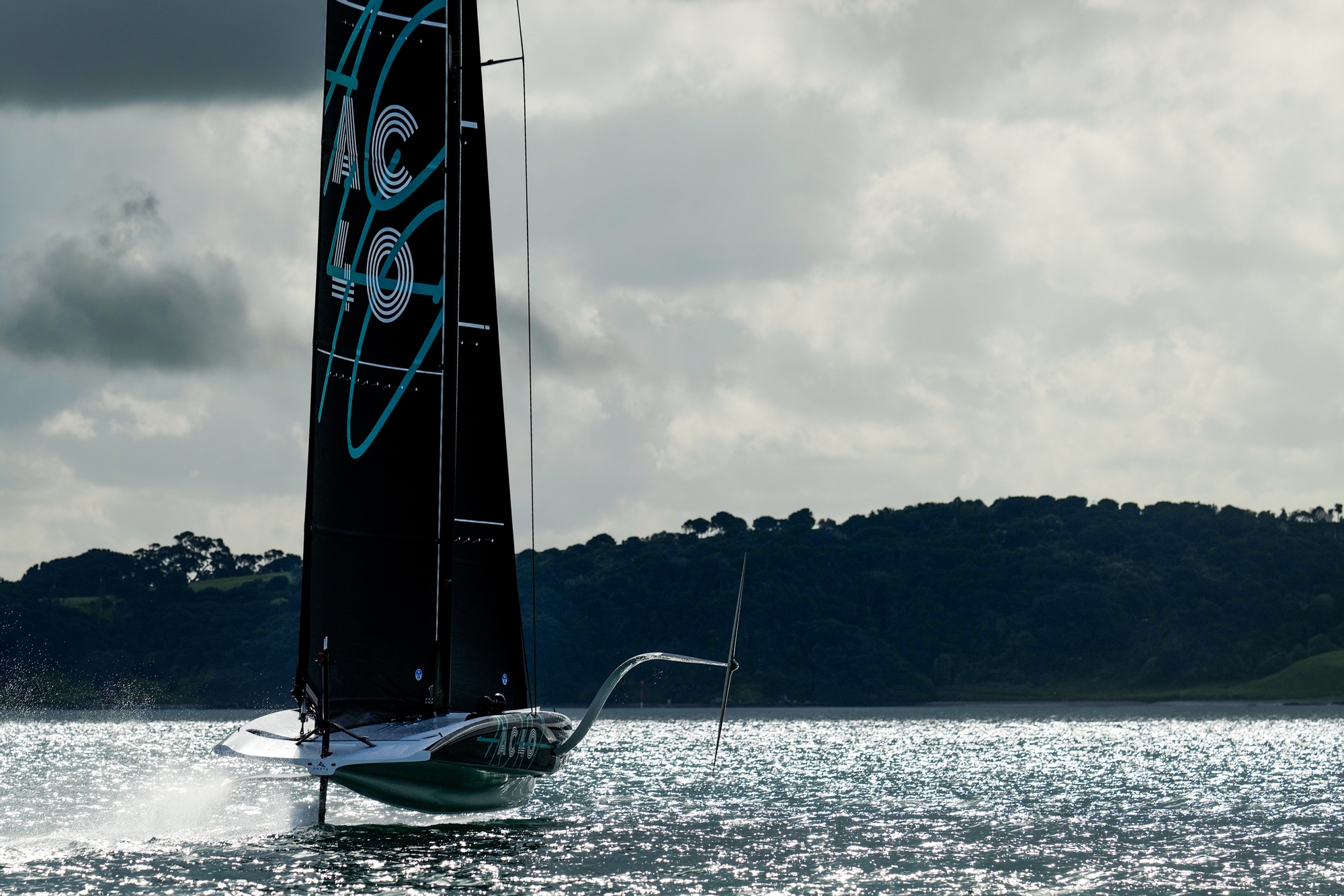
Under the watchful gaze of Emirates Team New Zealand CEO, Grant Dalton, it was over to the sailors Nathan Outteridge, Ray Davies, Sam Meech and Nick Burridge to begin the commissioning process of the world’s first AC40 in pitch-perfect Auckland conditions.

After a long tow out at 25 knots where the team could thoroughly test the auto-pilot and manual over-ride for height and trim, the 3Di sails were raised and the team began the awesome task of achieving first-flight under wind-power alone. It was sensational. Better than even the wildest dreams of the Kiwi design team, the architects of this most exciting of new classes on the America’s Cup landscape, could imagine. Predominantly built as a pathway programme for the Youth & Women’s America’s Cups, what struck was the ease with which the AC40 took and maintained flight.
With the auto-pilot software adjusting as the mainsheet tension was brought on, the track squeezed up to the centre-line and the mast rotation cunningham set optimally, the boat went from a somewhat wet displacement to perfect flight in an instant. Ten knots appears to be the target number for flight as confirmed by Outteridge later in the day and interestingly the sailors, none of whom were aboard an AC75 in the 36th America’s Cup, achieved not only stable flight but close-to-perfect tacks and gybes on the foils almost instantly.
For those crews lucky enough to be selected to represent their clubs and countries in the Youth & Women’s America’s Cup, the fact that a crew with next to no experience in monohull foiling yachts, albeit some of the best sailors on the planet otherwise, can sail the boats at such a high level almost straight out of the box, is surely a comfort.
With the AC40’s being strict one-design for racing, the premium on foiling sailors who can extract the maximum out of the design will be at a premium. As Outteridge explained: “On the wheel there are two buttons where you can increase or decrease your ride-height in 100mm increments and the trim is the same where you can change the attitude of the boat (forwards and aft).” On the water, it's noticeable, once you really watch, just how much input the helmsmen and crew are having to maintain flight and attain maximum speed.
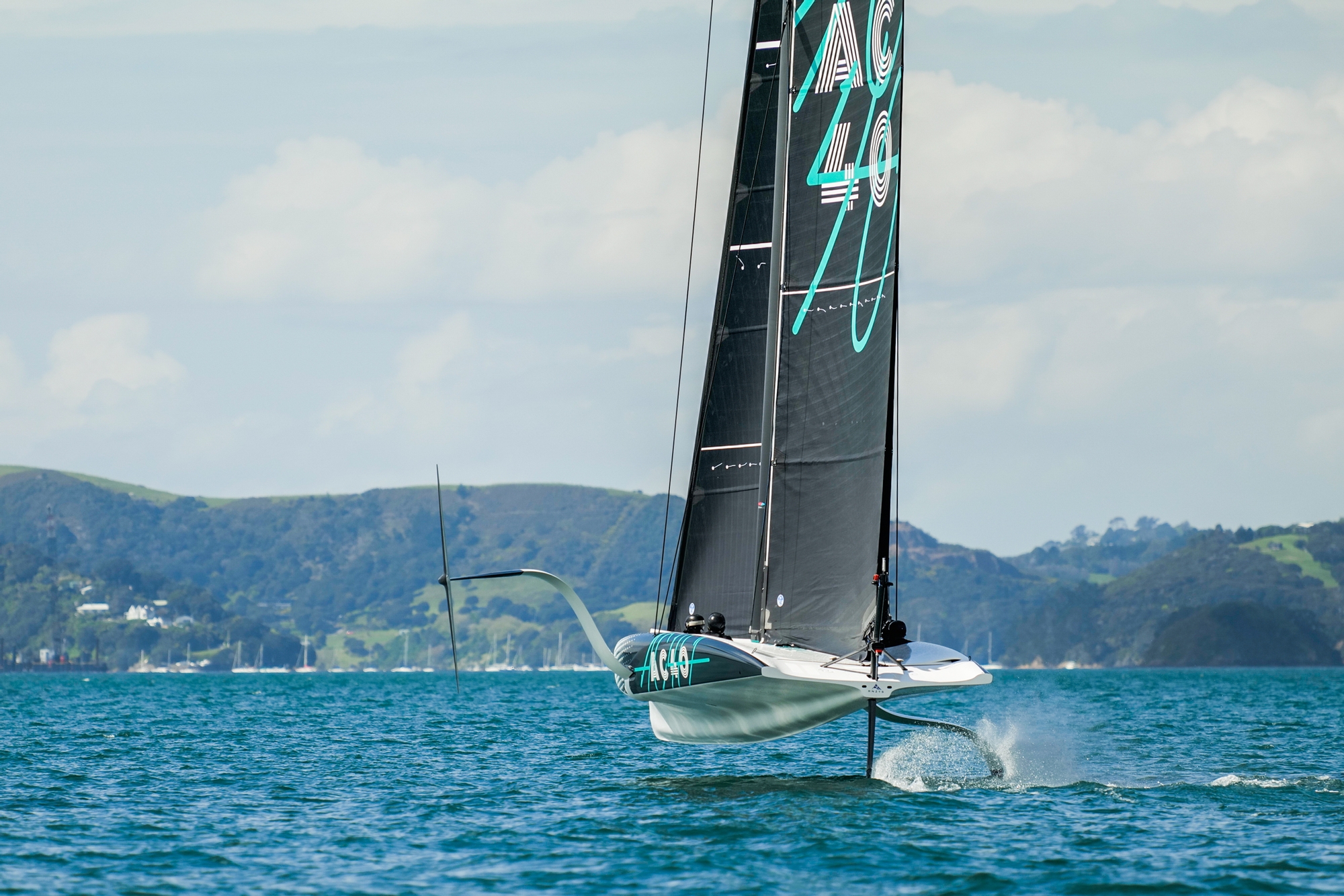
All afternoon the helms were scooping to windward and bearing away as the 10-12 knots breeze fluctuated on flat water out on the ‘back paddock’ between Auckland’s Waiheke Island and Howick Beachlands. Ride height was continually being adjusted throughout, whilst the most impressive sight was seeing straight foil to foil gybes on a long run back home.
The AC40, a mighty one-design concept, is now very much a reality and as the first boat continues its commissioning over the coming weeks and months, it seems very apparent that straight out of the box, the boat behaves beautifully. As the shared open-source software develops for the one-design auto-pilot with a firm focus on riding the swells and short frequency chop that can be expected in the Barcelona race area, the AC40 will simply get better and better.

Top speeds today were just over 27 knots upwind and an impressive 34 knots downwind and as Ray Davies explained: “An amazing team effort to go out there and pull off the first tack as a foiling tack, the first gybe a foiling gybe. The boat is going really well, we have a few tweaks for sure, but awesome to sail with Nath, Sam and Nick. All of the support guys have done an incredible job, out of the box and we were ripping around foiling.” (Magnus Wheatley)