SILVER ARROW FLYING
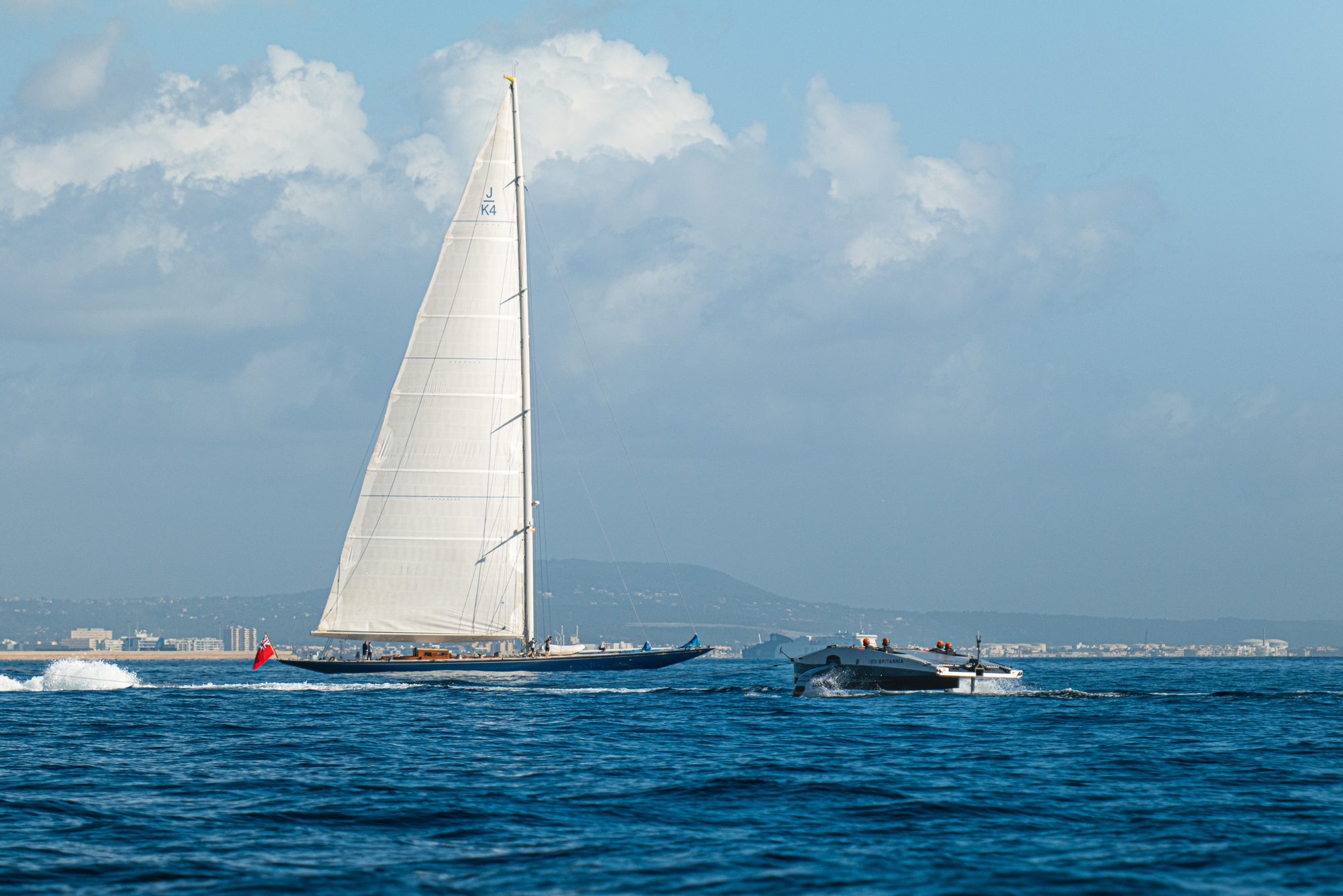
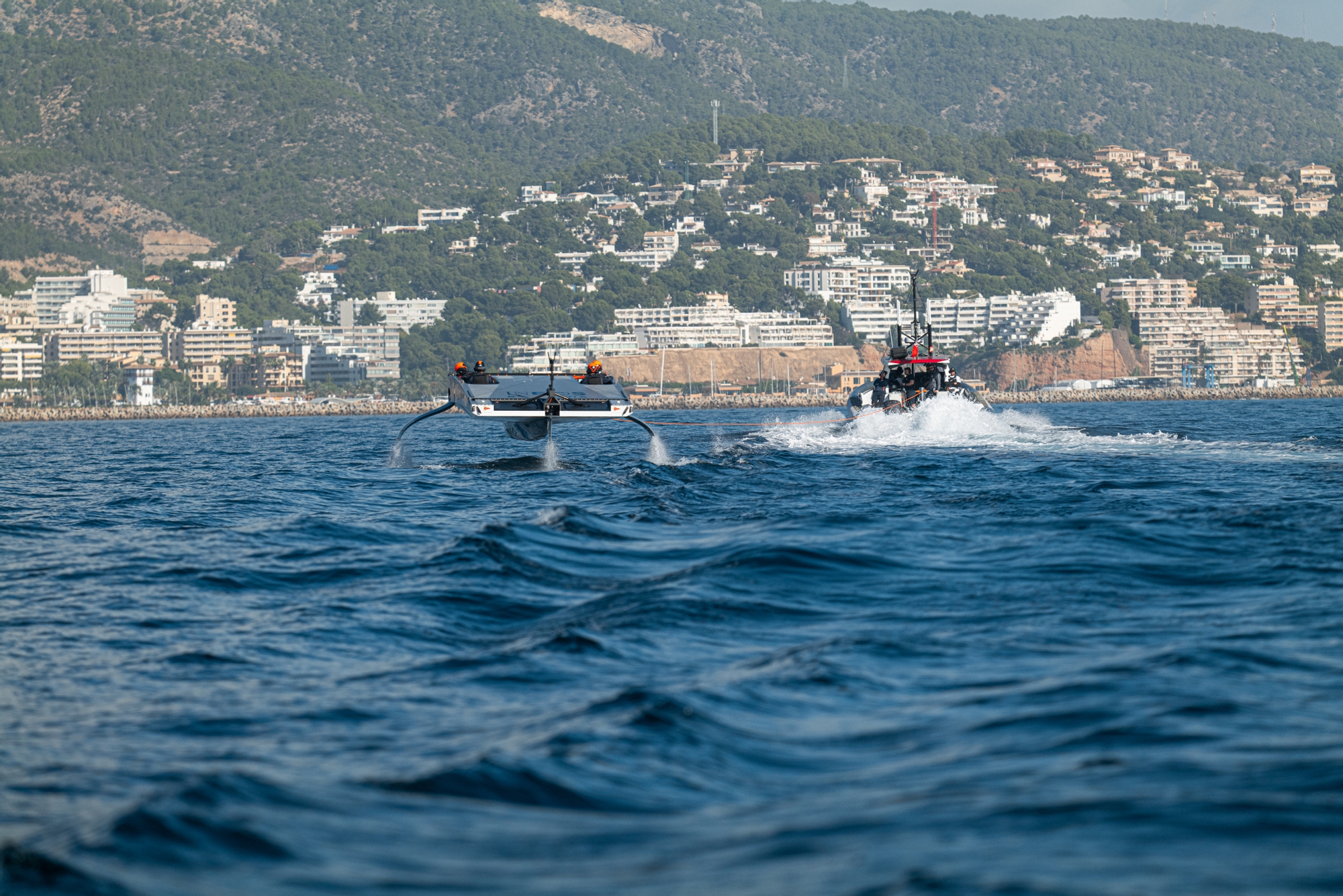
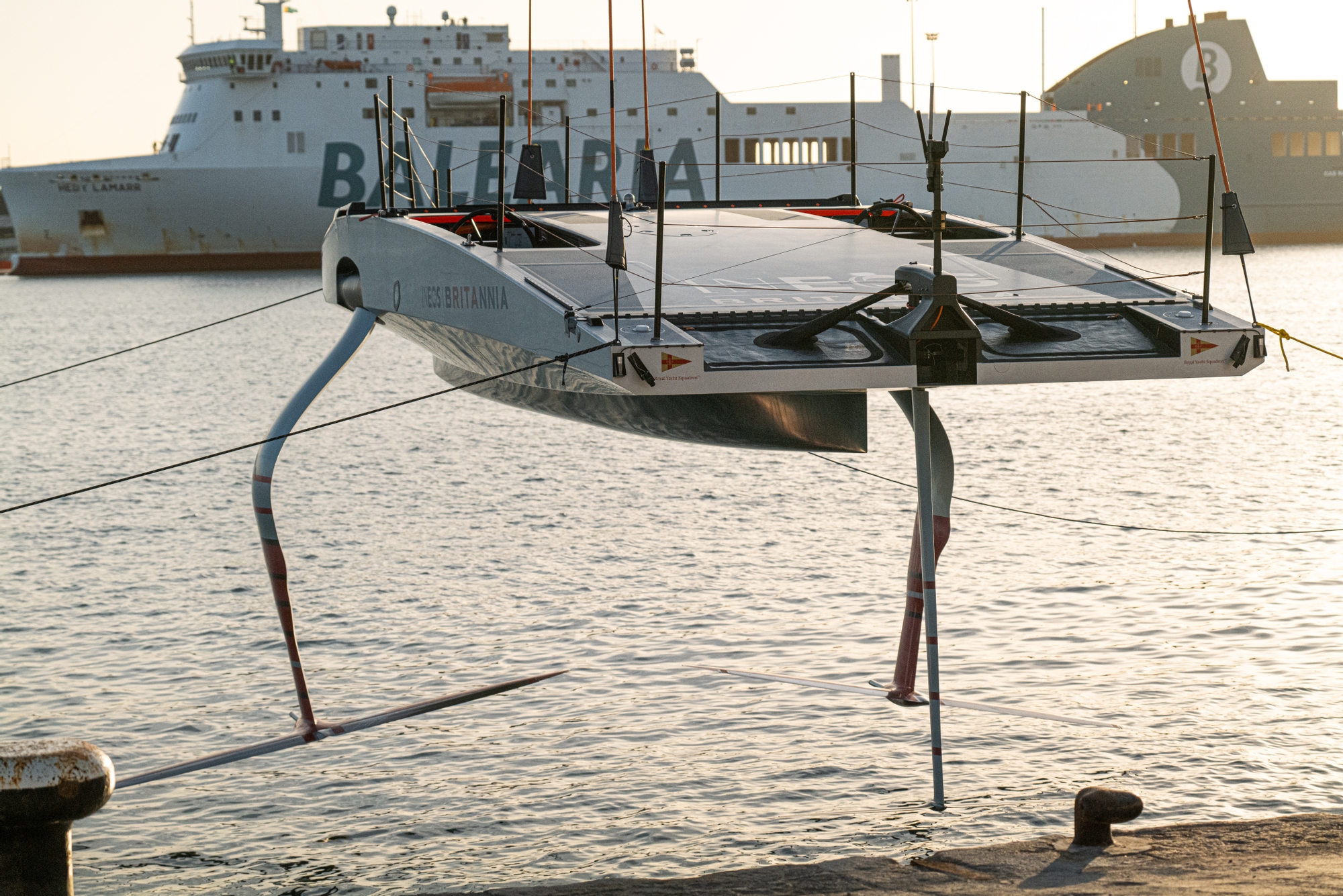
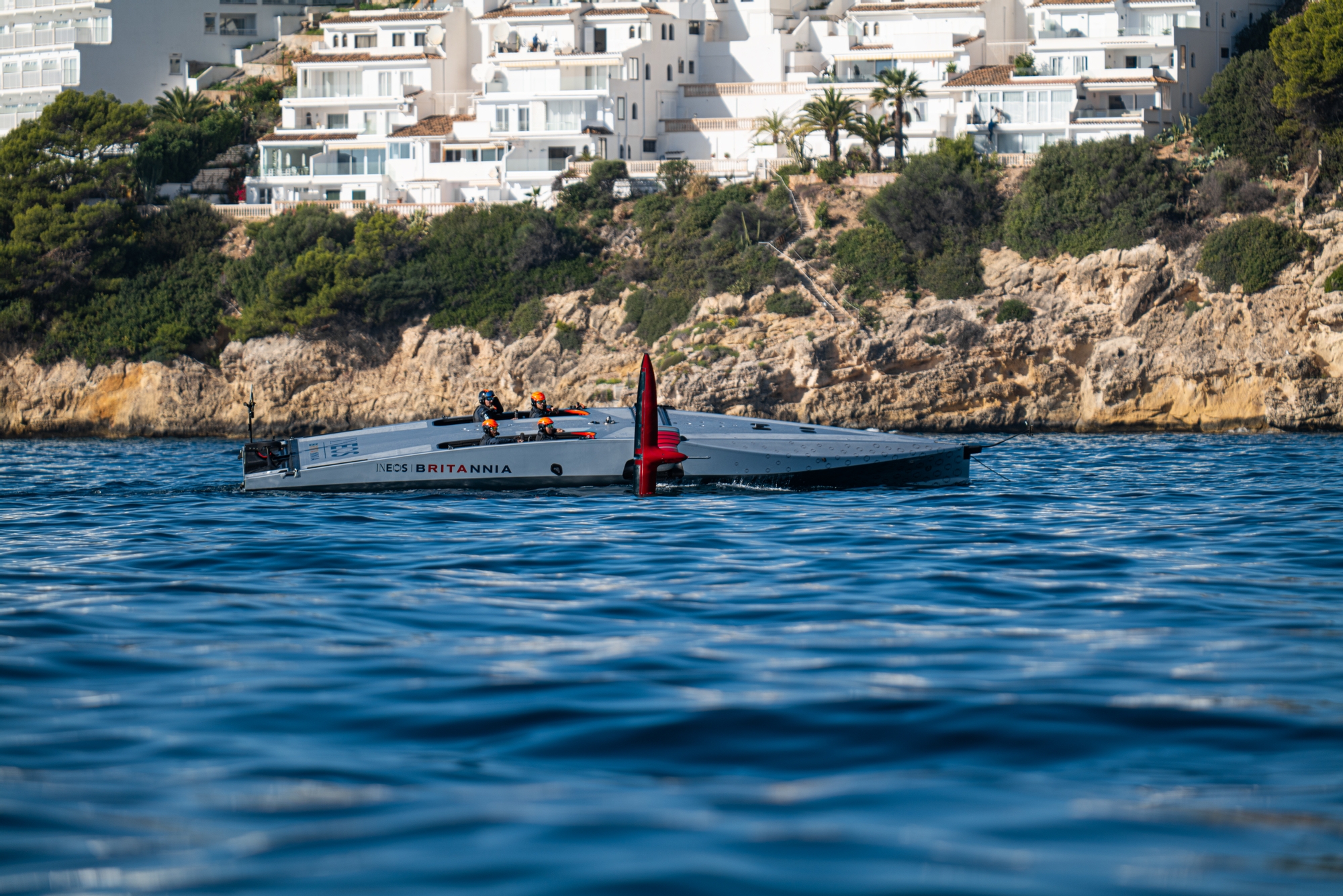
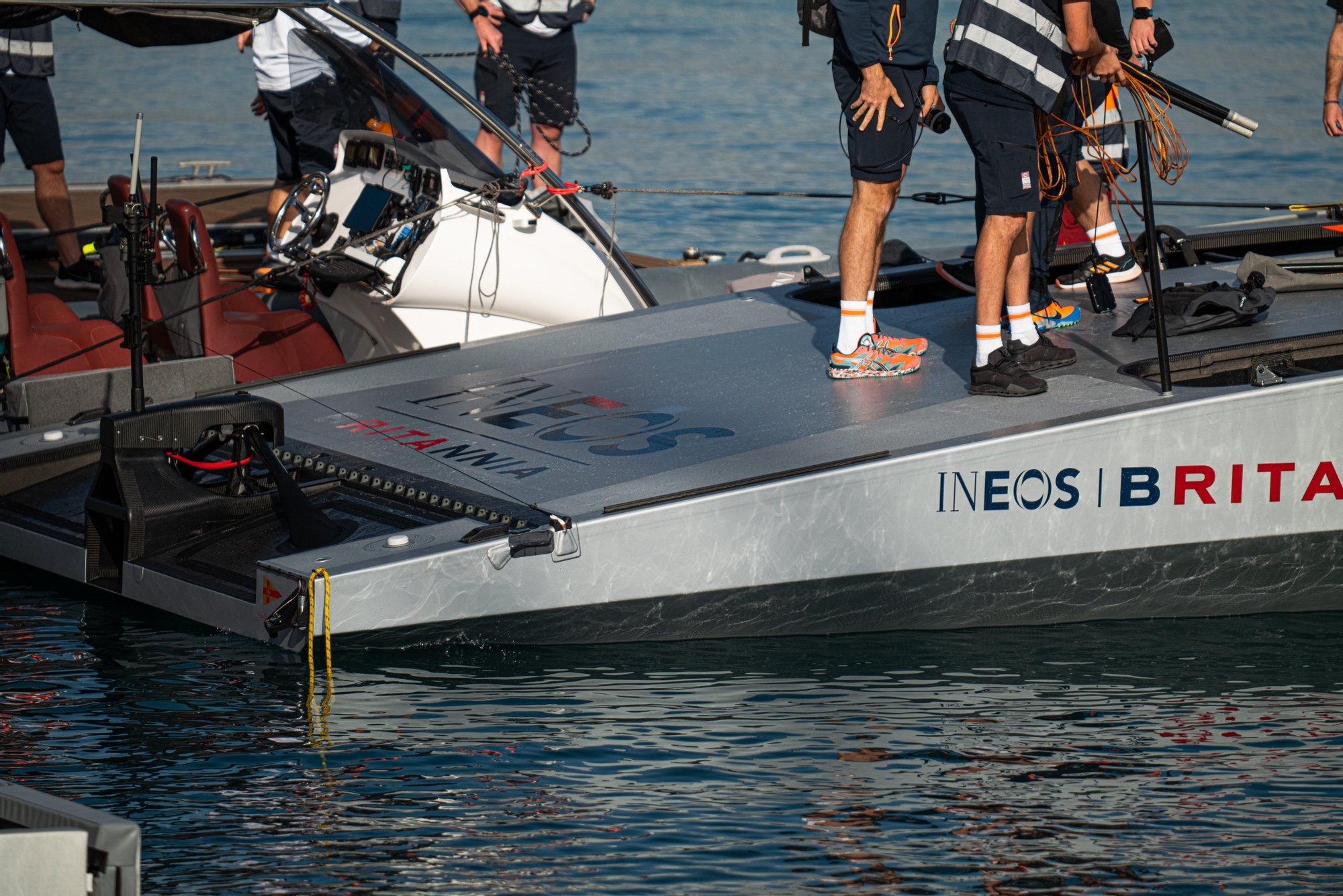
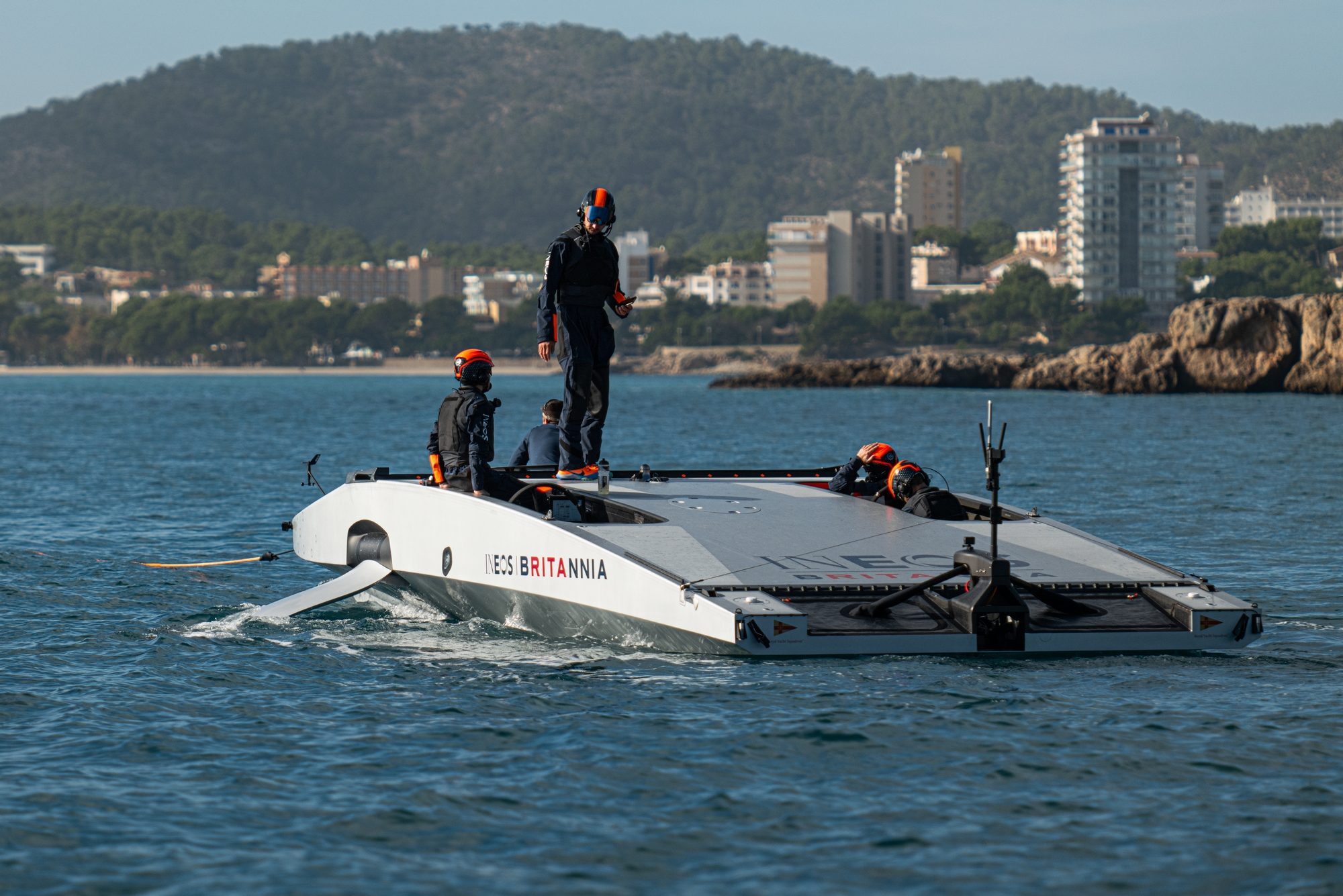
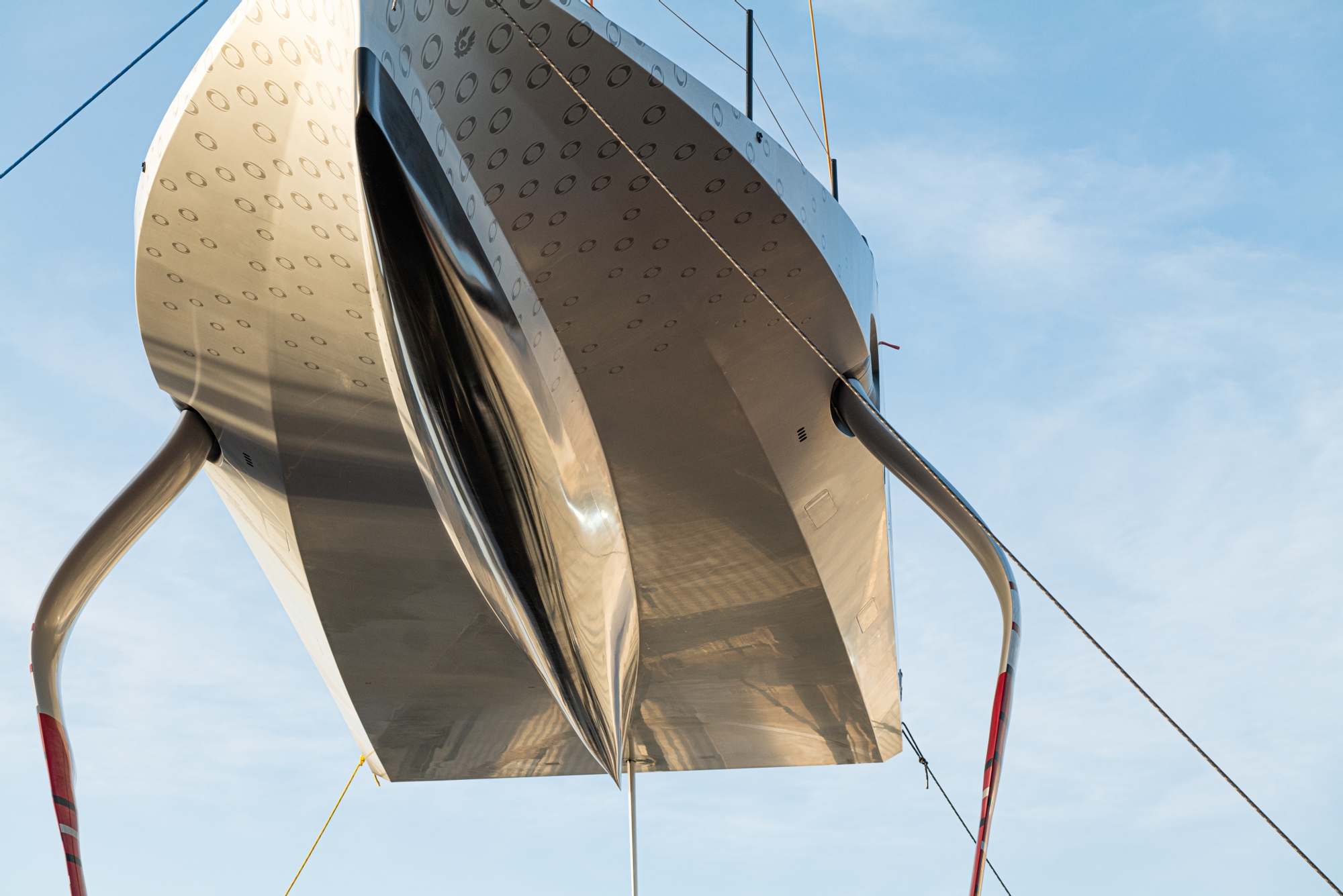
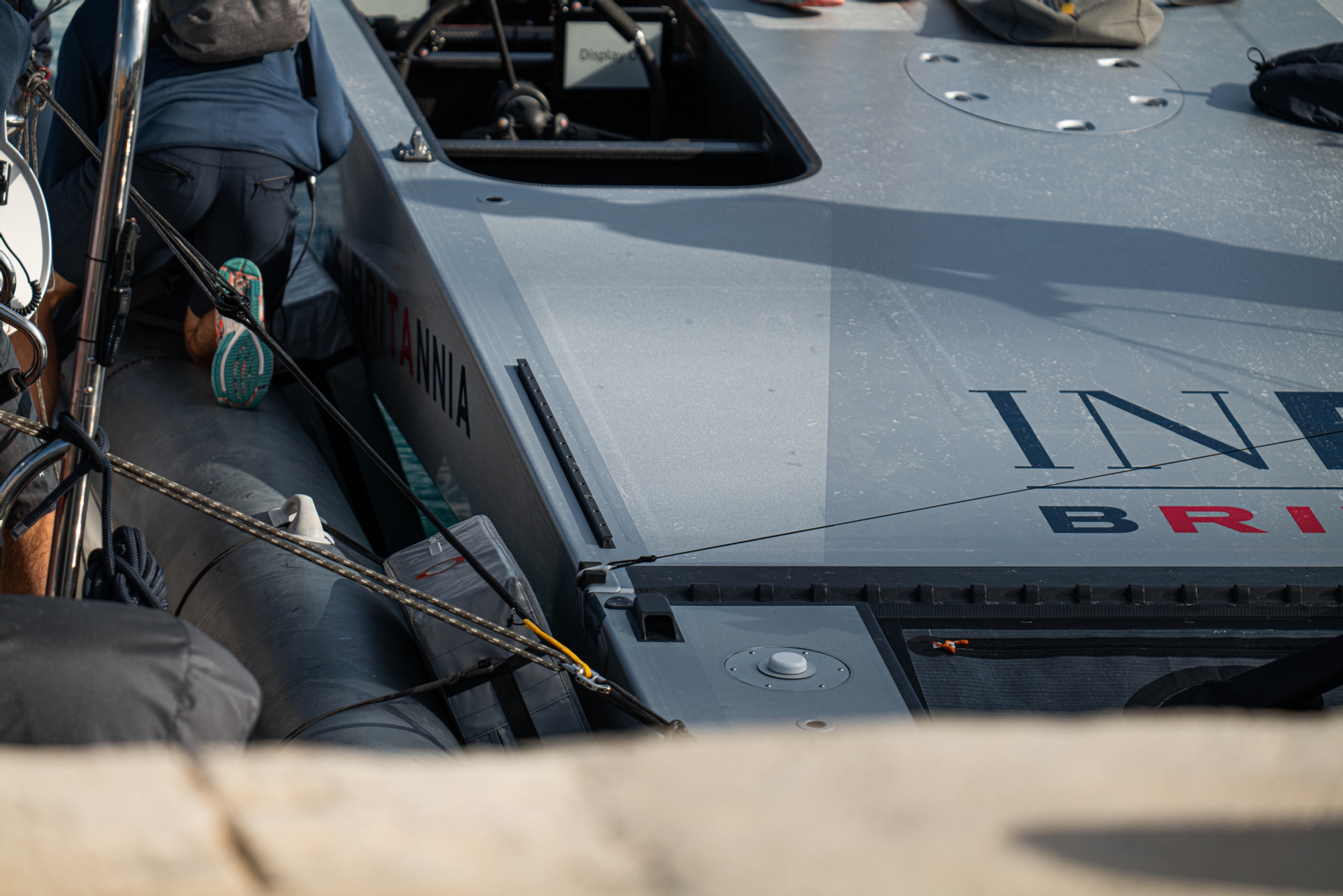
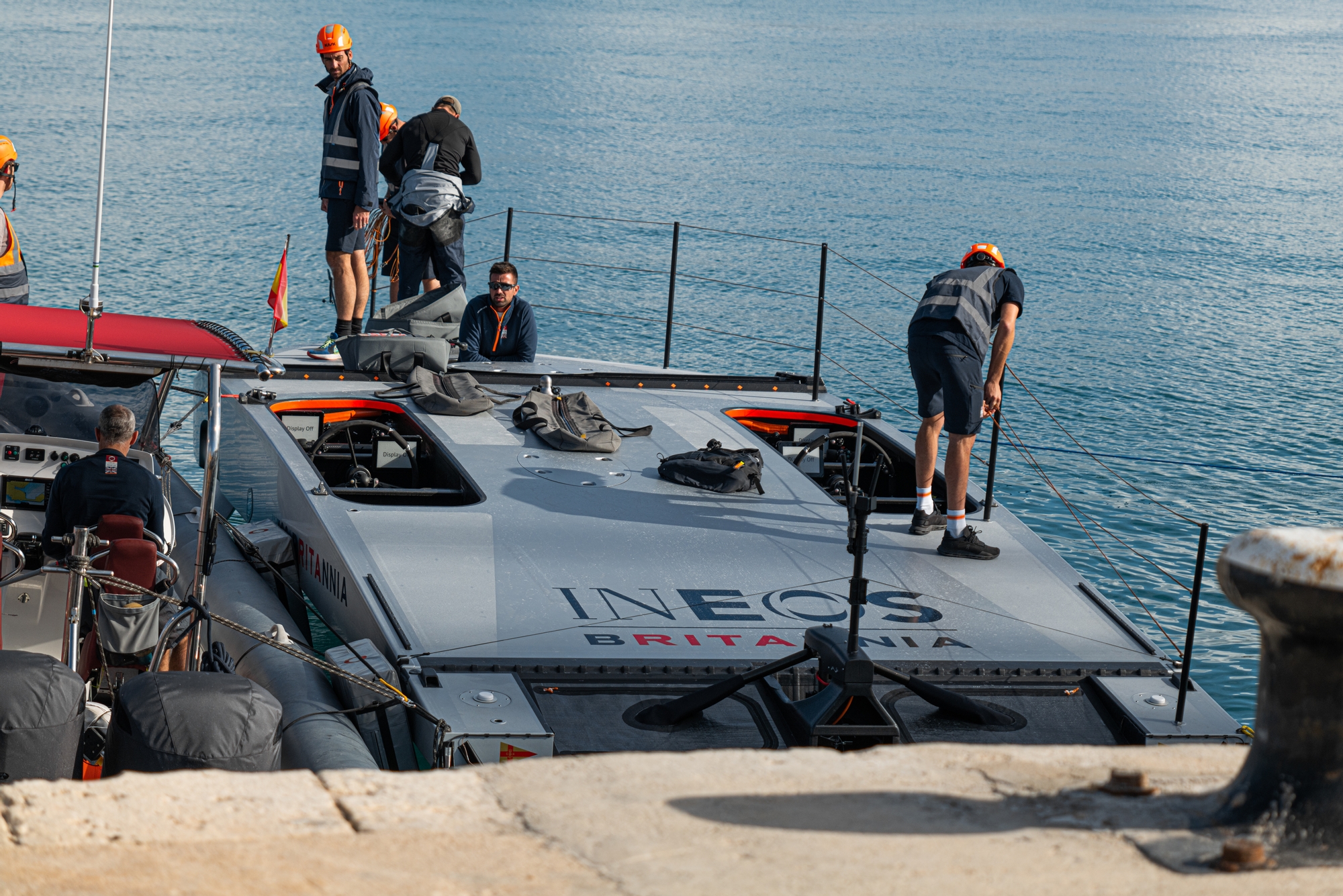
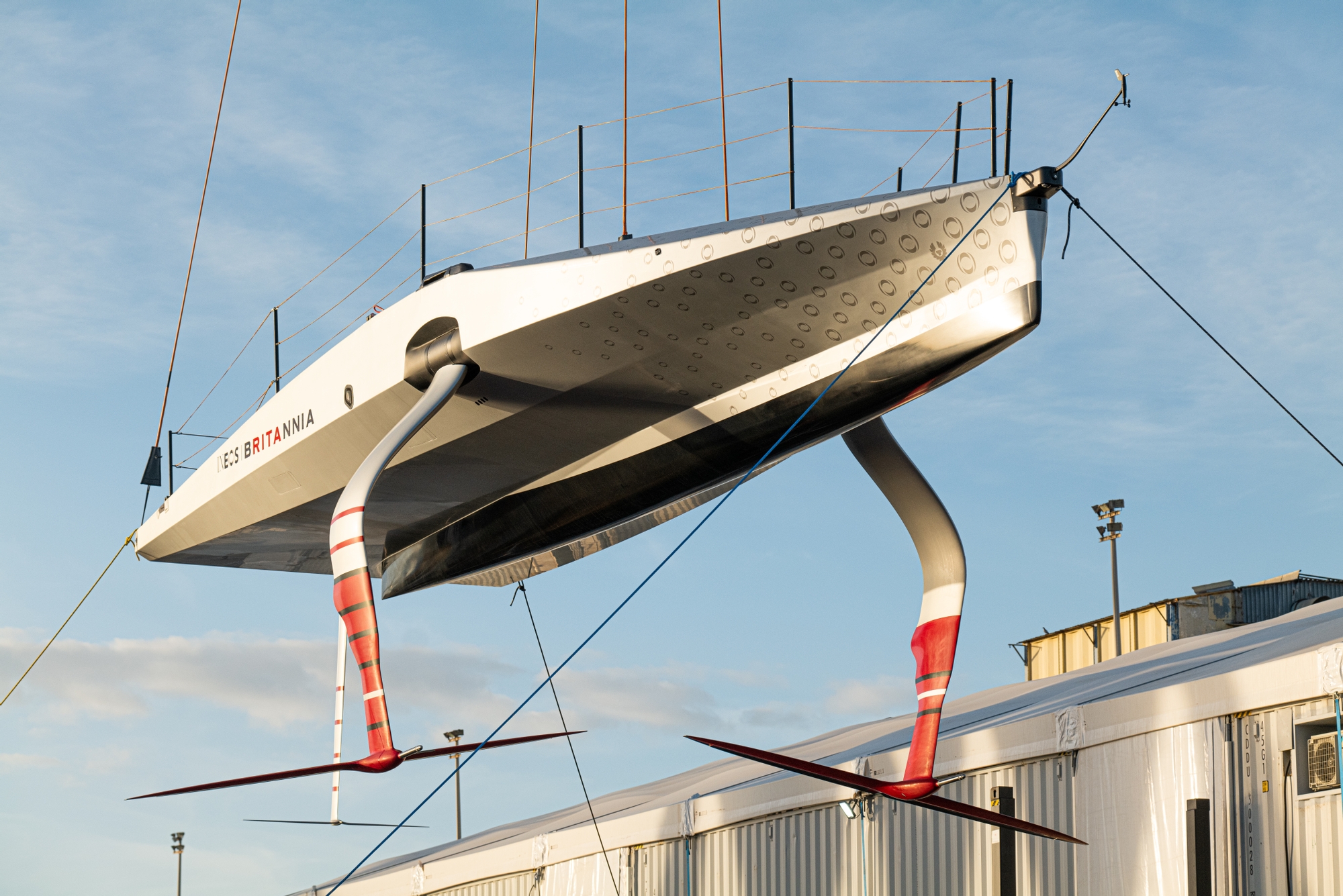
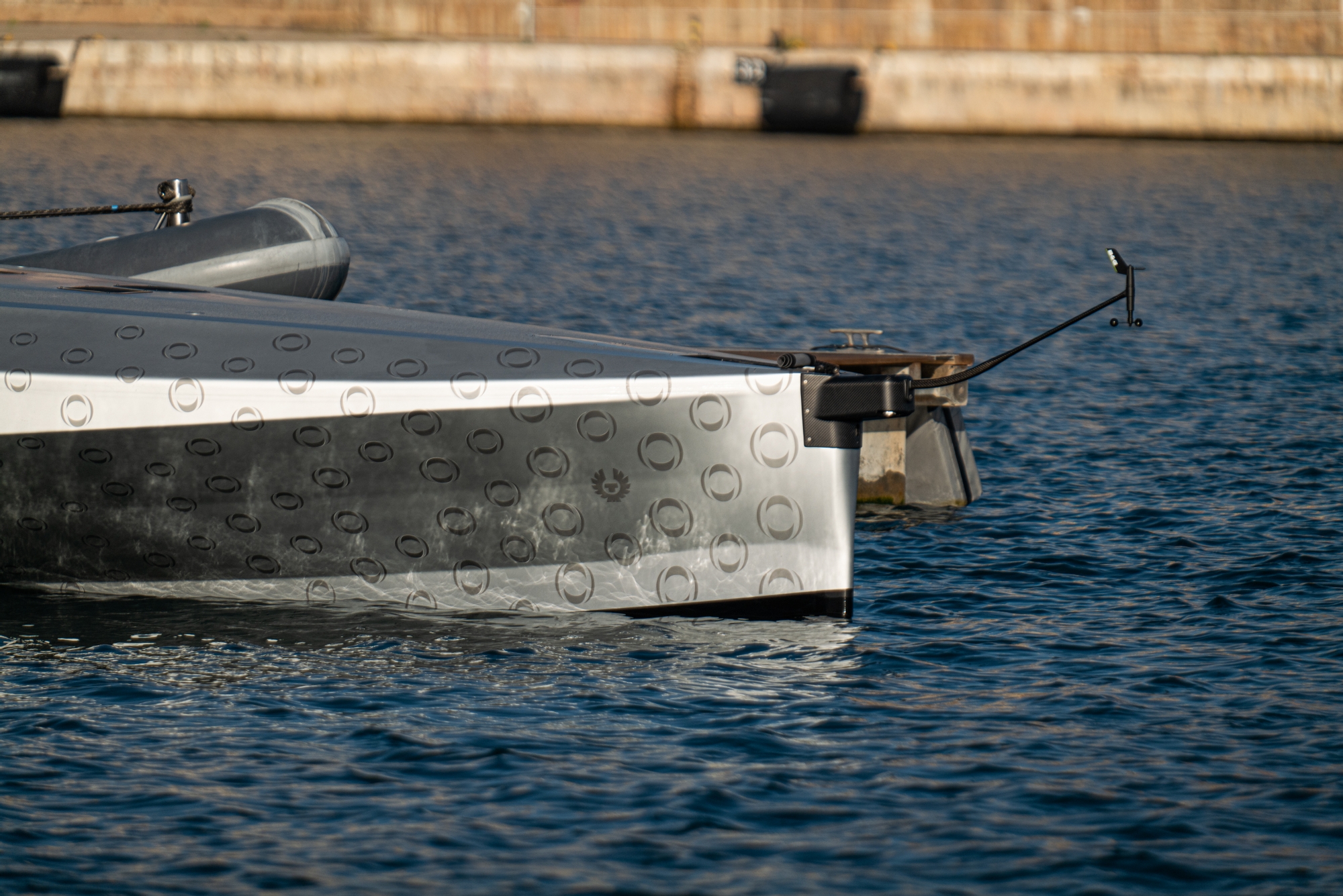
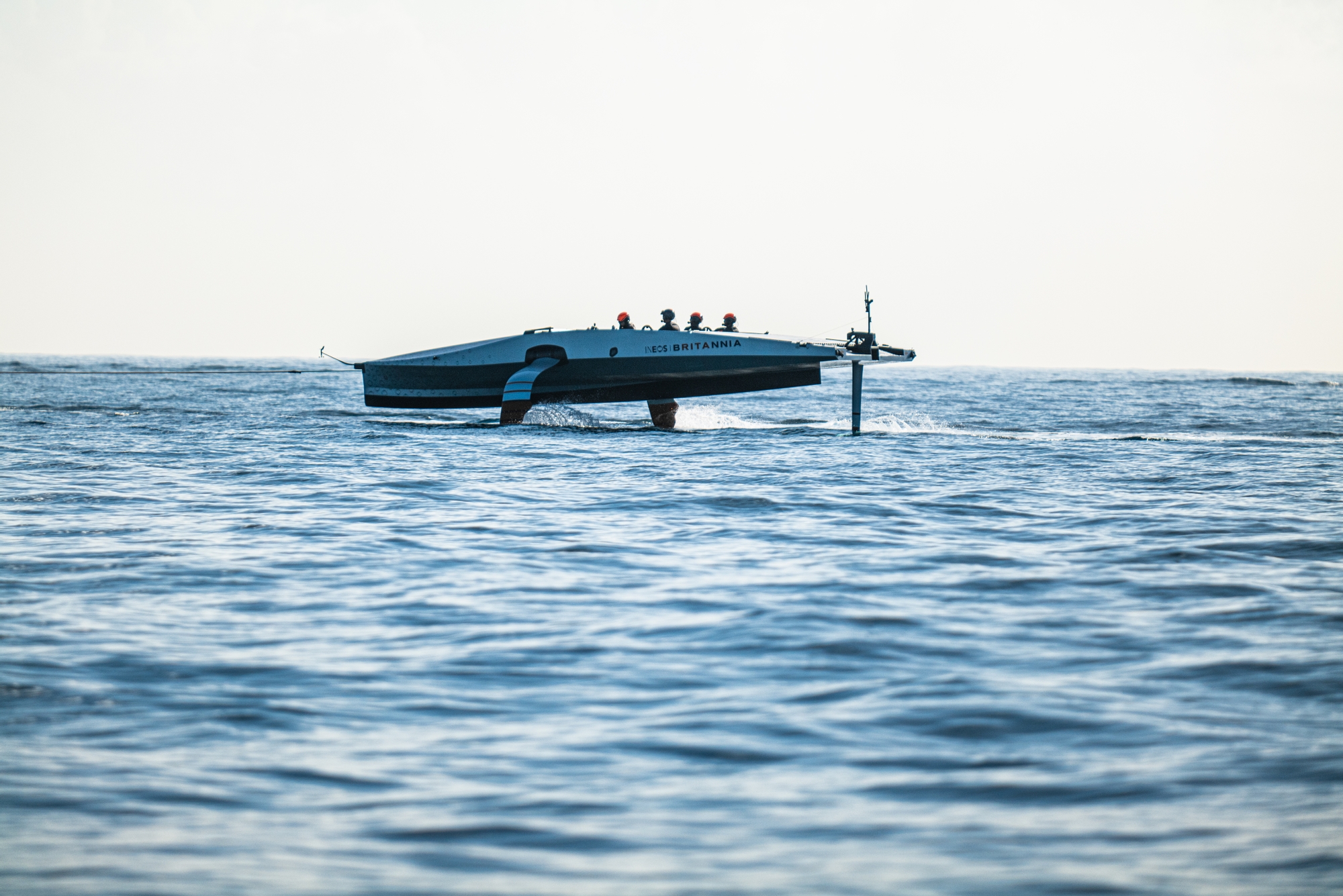
You have to go back to the 1930’s to find the genesis of the ‘Silver Arrows’, a nickname given by the German media to the all-conquering Mercedes-Benz Grand Prix racing cars of the era between 1934-1939. In the newspaper headlines they were called the ‘Silberpfeil’ and the distinctive livery has stayed with the team to this day. Out in Palma, Mallorca, at their winter testing base, the INEOS Britannia Team certainly looked every inch like they were honouring the Mercedes slogan of: ‘the best or nothing’ with their stunning, silver arrow liveried LEQ12 on this, day two of their tow-testing winter programme.
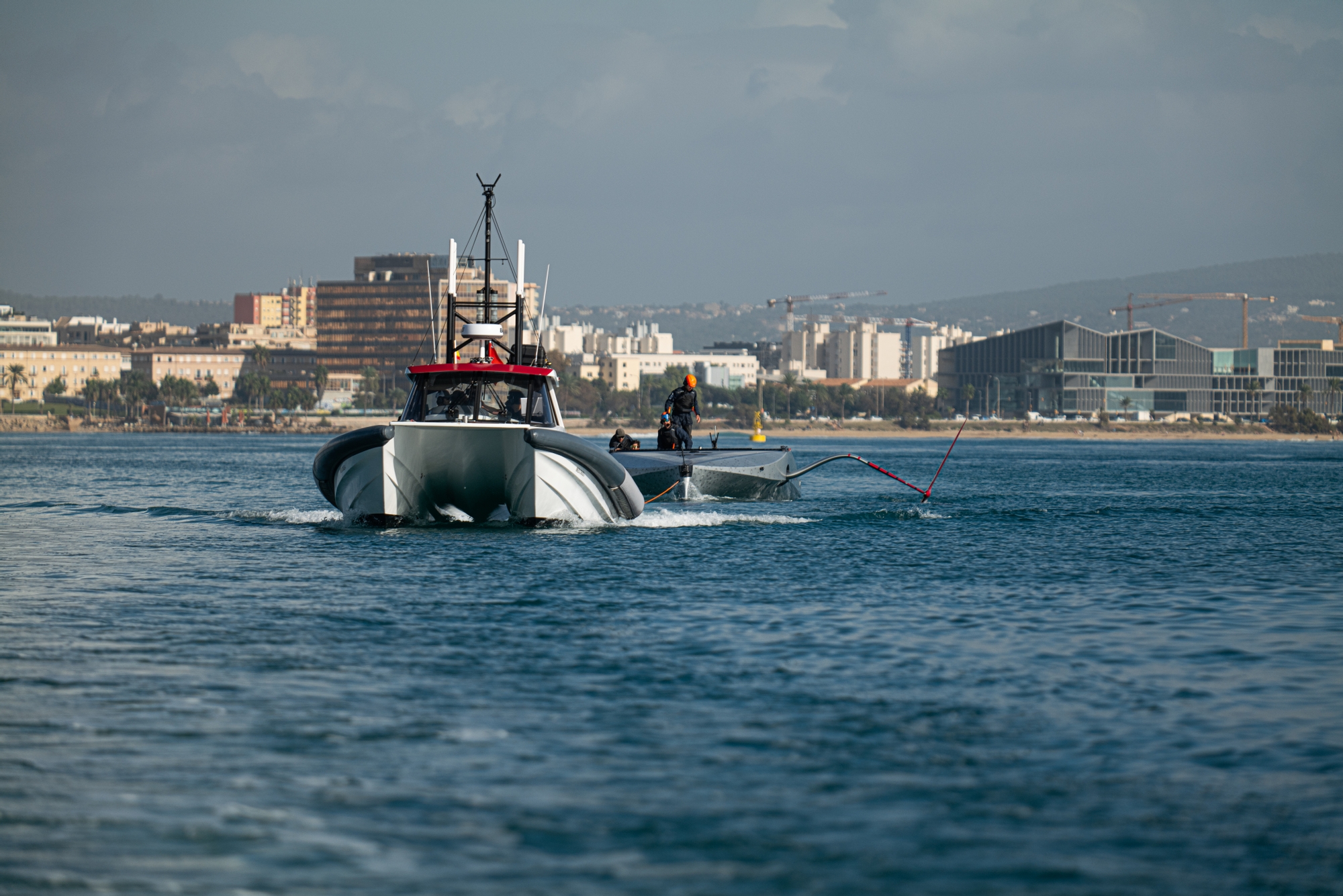
It was an early-start with the boat rolling out of the shed at 8.15am and in the water in short order at 8.36pm. At dock-out, and with Giles Scott, Luke Parkinson, Bleddyn Mon and Iain Jensen set in place wrapped in their team-livery drysuits and striking orange and black helmets, it was a short transfer from the tow RIB to the data mothership – a very fast, very powerful enclosed catamaran RIB – for a long, fast, foiling test on tow out to the edges of the Bay.

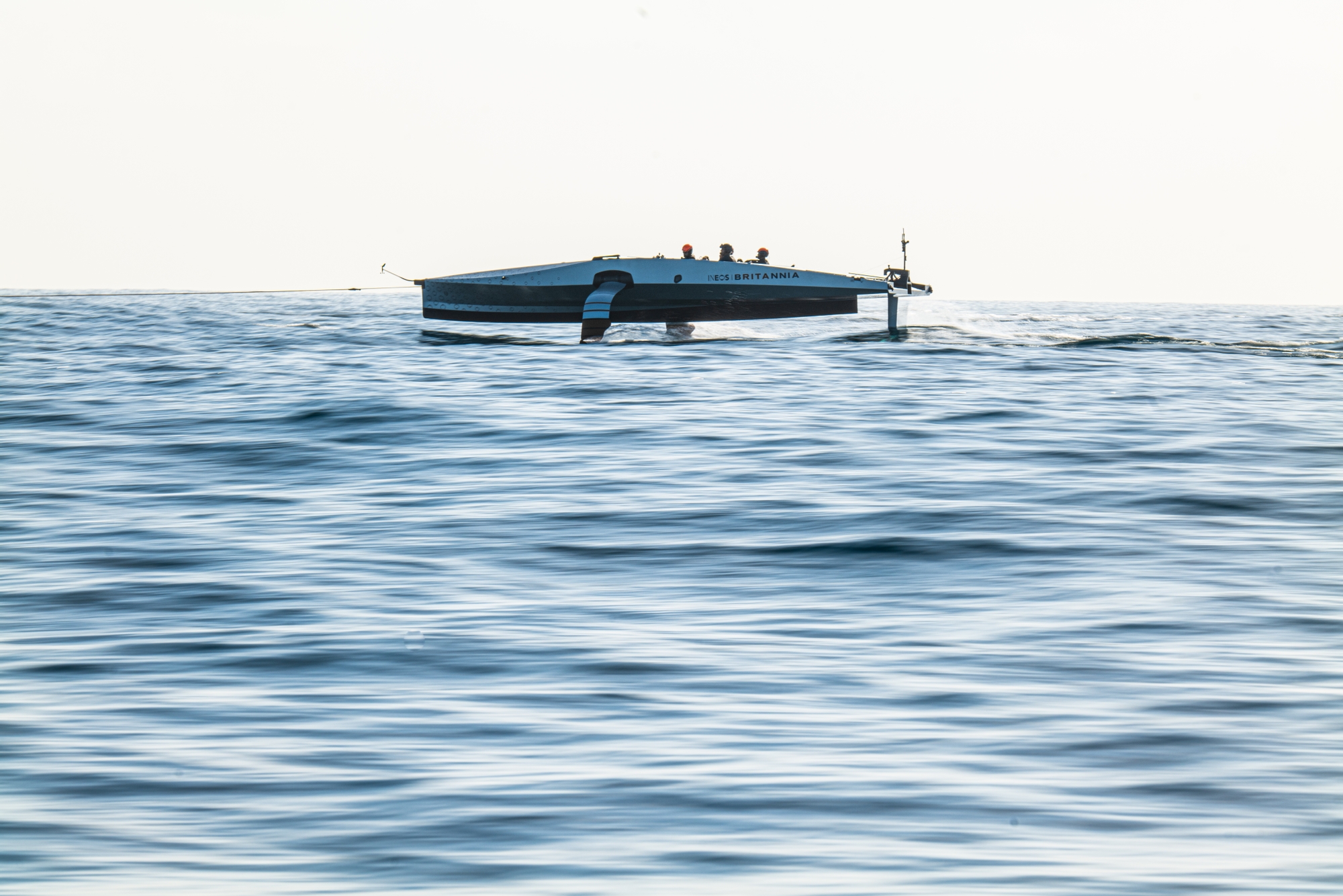
That first run alone was some 30 minutes up on the foils and it was noticeable that the Flight Controllers were running through a series of low-ride and high-ride modes as well as a lot of foil arm adjustments and list assessments. Everything looked very under control and impressive.
As a commissioning day, the conditions couldn’t have been better. After three days of what seemed like relentless wind and rain squalls, the team were greeted by blue skies, sunshine and 20 degrees – straight out of the travel brochure. And for those that like their America’s Cup history, just out of the harbour there was a fine juxtaposition between the 1934 J-Class yacht ‘Endeavour’ – Sir T.O.M Sopwith’s Challenger that came oh so close to winning the Cup against Rainbow – and the INEOS Britannia LEQ12. How far we’ve come…
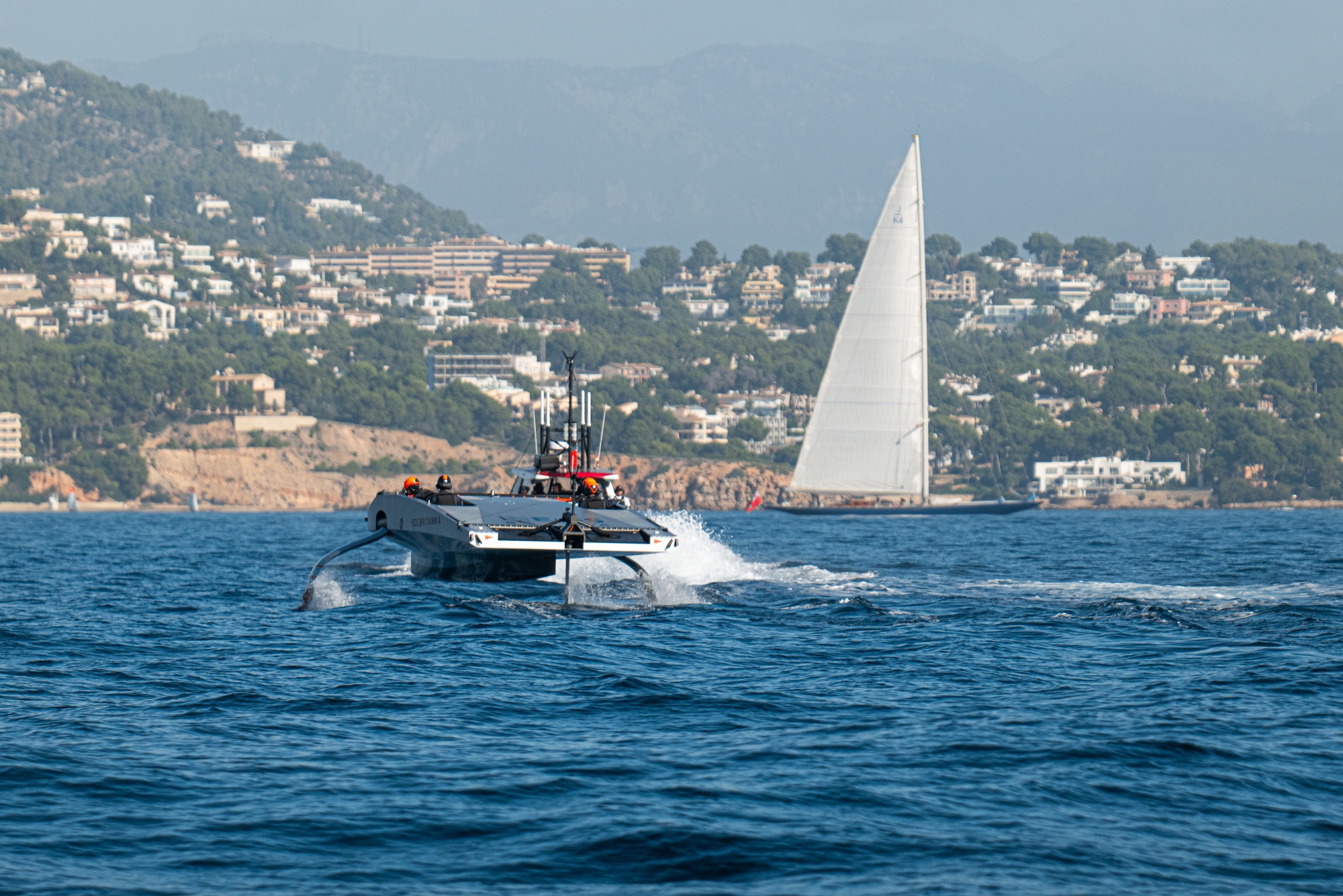
Speaking about the day, Bleddyn Mon, the mainsheet trimmer from AC36 seemed pleased with the days’ work saying: “Obviously it’s our second day here out on the water so we’ve got a long list of commissioning items to get through to make sure that we are happy with how this boat is behaving. So that was the main aim of the day…It’s just the foils and the rudder in the water so making sure the hydraulic systems for those are working correctly and as sailors, and the engineers following as well, everyone’s very happy with how the boat is performing.”
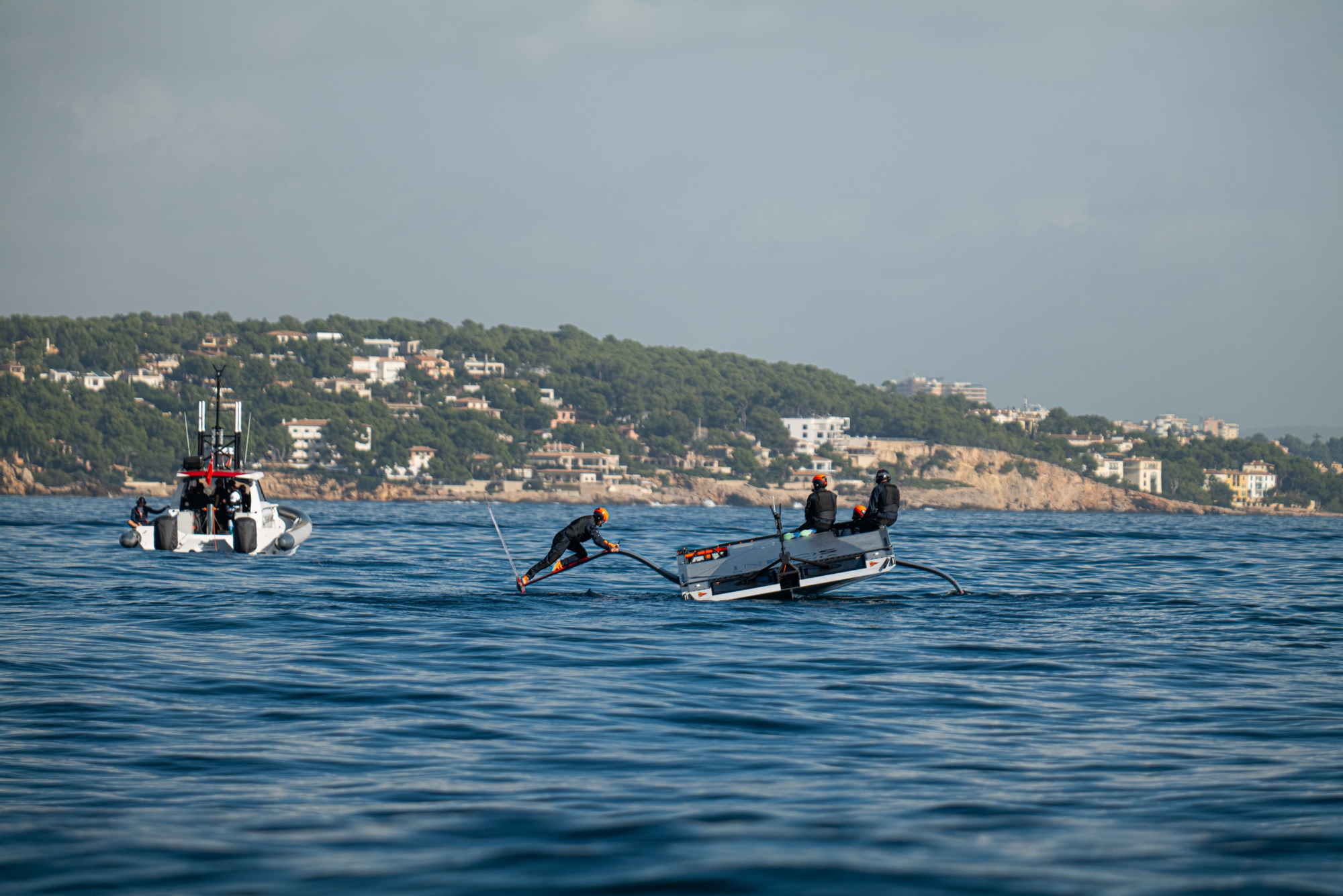
A small technical issue with the port foil curtailed the session with the Silver Arrow being towed back to base on its starboard foil as a precaution with Bleddyn Mon saying: “We were obviously a little bit concerned with something on that port foil, and obviously that needs to be checked now that we’re back on land and get it back in the shed. But we wanted to conserve our assets and get in safely so that’s why it (the foil) was up in the air.” A crewmember could be seen climbing carefully out onto the foil arm to take photos before the decision to abandon the day was taken and the boat towed home.
The British programme continues, and we can expect more long days of tow-testing before the team step the rig and get sailing as gathering the baseline of data to validate the software tools and design theories is the goal here, alongside the not inconsiderable commissioning process that occurs with all new boats. It will be relentless and thorough with data being live-linked back to both the Design Team and the Mercedes AMG-F1 Applied Sciences Team in Brackley, Northamptonshire but the team certainly looked pleased with how day two unfolded.
Much more of the same to come on this scientific approach to the race for the America’s Cup 2024. (Magnus Wheatley)
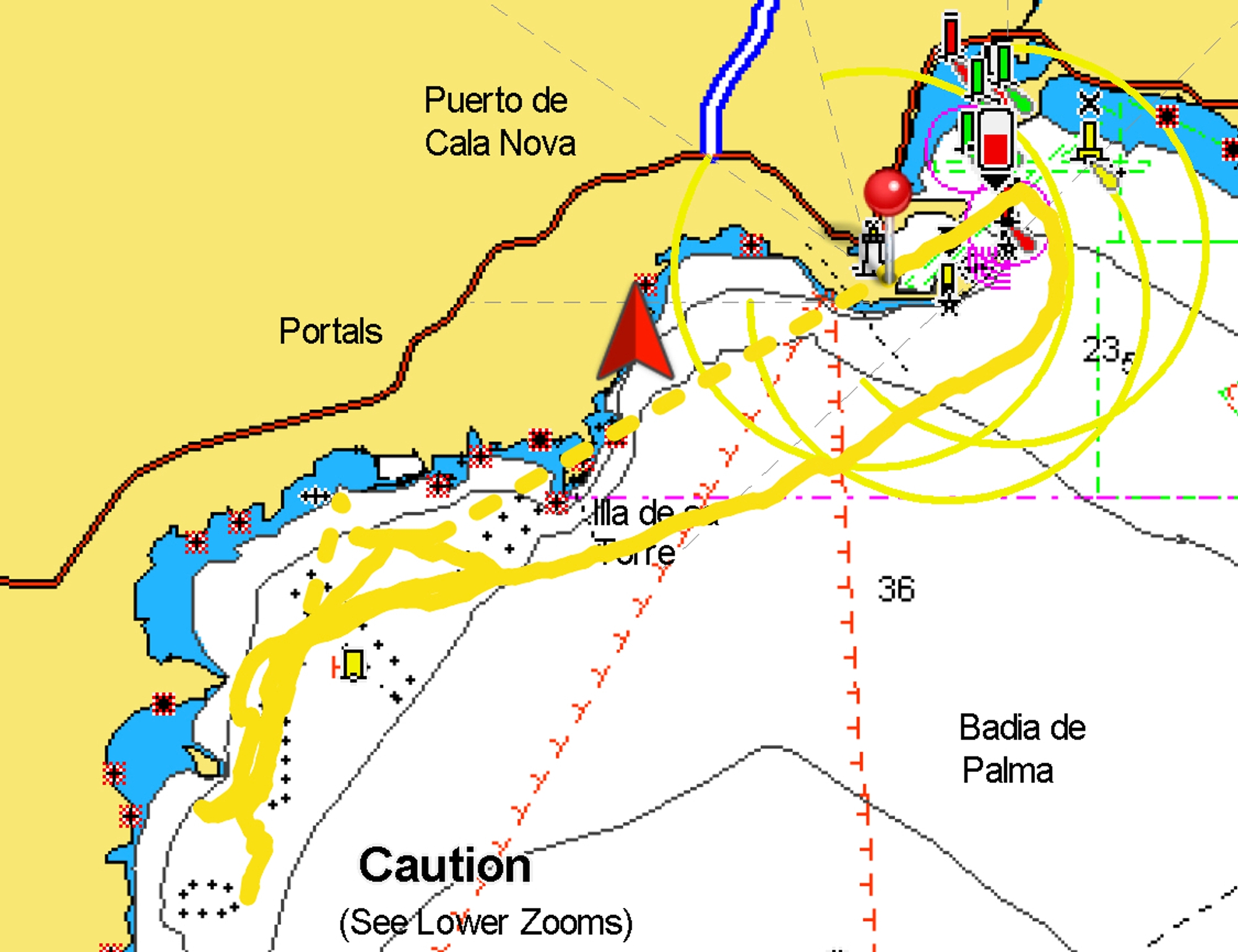
Some very interesting and thorough notes were gathered today by the on-water recon team, led by the highly renowned yachting journalist Justin Chisholm:
• The British LEQ12 rolled out of the boatshed bang on the scheduled time of 0815 this morning. With warm sunshine and next to no wind the shore crew made quick work of hooking the boat on the crane and by 0836 it was in the water alongside a team chase boat.
• Like last time a set of three large battery packs were craned on board the two chase boats.
• Meanwhile, as the stanchions were taken off and packed away in two bags, three smaller battery packs were carried in bags aboard the yacht and lowered below via the front hatch. Minutes later, one battery in its bag was carried off the boat and taken away on a trolley marked ‘Electronics Department.’
• While this was going on the shore crew removed the two forward supports of the cradle and took them into the shed using a forklift truck. These were later re-installed just before the boat was craned out after the training session.
• Nothing major looked to have been changed on the boat. A GoPro had been fitted to either side around mid-bow looking back at the foils.
• With helmsman Ben Cornish out sick with flu Luke Parkinson partnered up with Giles Scott as helmsmen, while the forward roles were carried out by Bleddyn Mon and Iain Jensen.
• Dock out was prompt at 1000 and once out of the harbour the team went quickly into their first foiling run, taking off at 1010 at an estimated speed of 17 knots and peaking at an estimated 25 knots on the 30-minute session.
• Flight 2 began at 1105. The boat started to foil at 16 knots before briefly touching down and then popping up again and then low foiling at 24 knots for a further 90 seconds.
• At 1126 an electronics expert visited the boat for 10 minutes.
• Flight 3 was at 1138 - 1200 with a take off at 16 knots and a top speed of over 25 knots.
• Lunch bags went on board at 1203 along with the boat captain who stayed for under five minutes.
• At 1214 another attempt at a run was terminated after 1 minute at 14 knots without the boat foiling.
• Flight 4 started at 1220 and lasted three minutes, Take off appeared to be at 15 knots with a top speed of 20 knots.
• After this run the crew spent 15 minutes raising and lowering the foils on either side. Eventually the port foil remained up and a crew member climbed out and spent around five minutes working on or examining the foil wing. At 1250 the tow home began.
• Some minor damage to the port foil wing was spotted at haul out.