FROSTBITE BLASTING

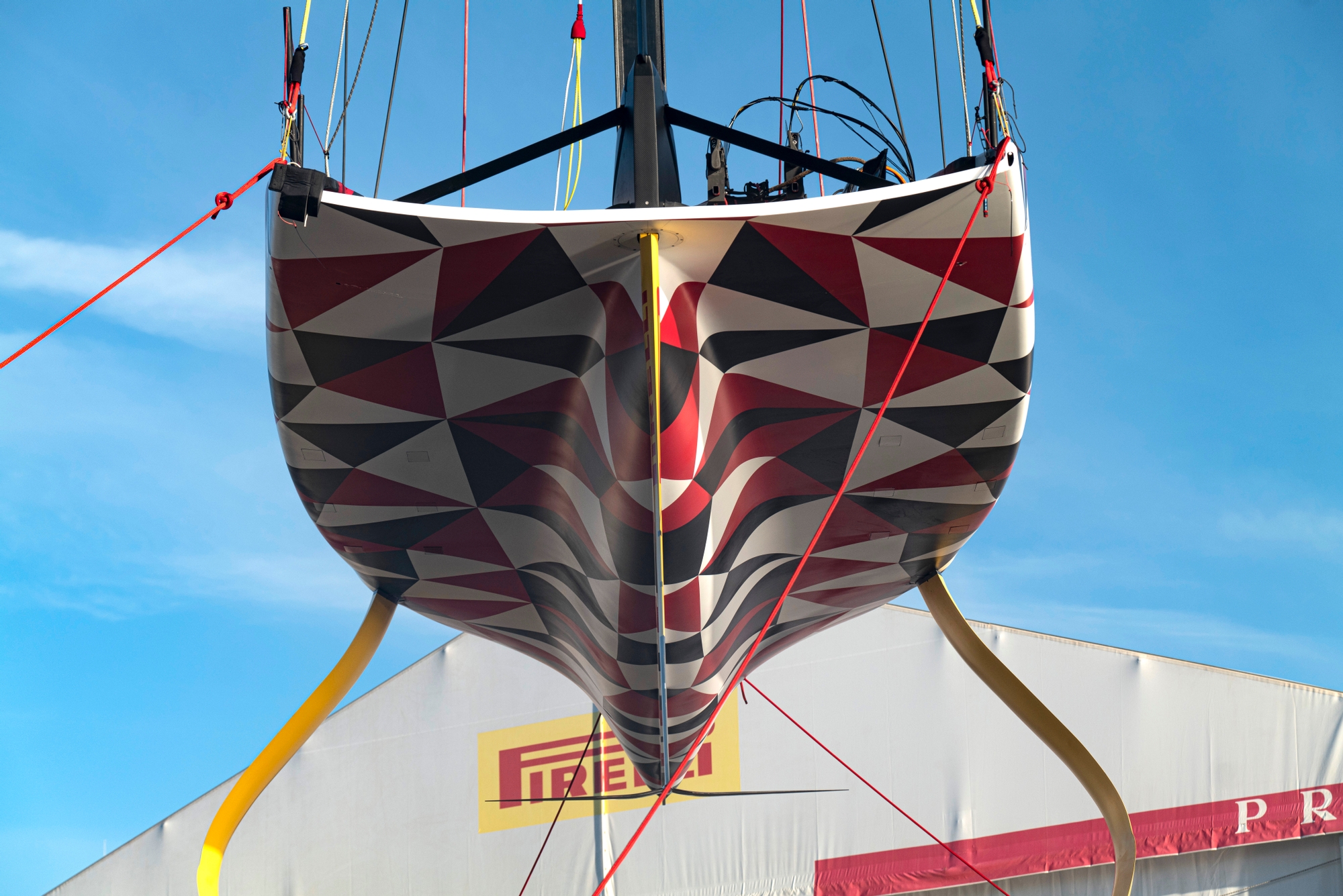
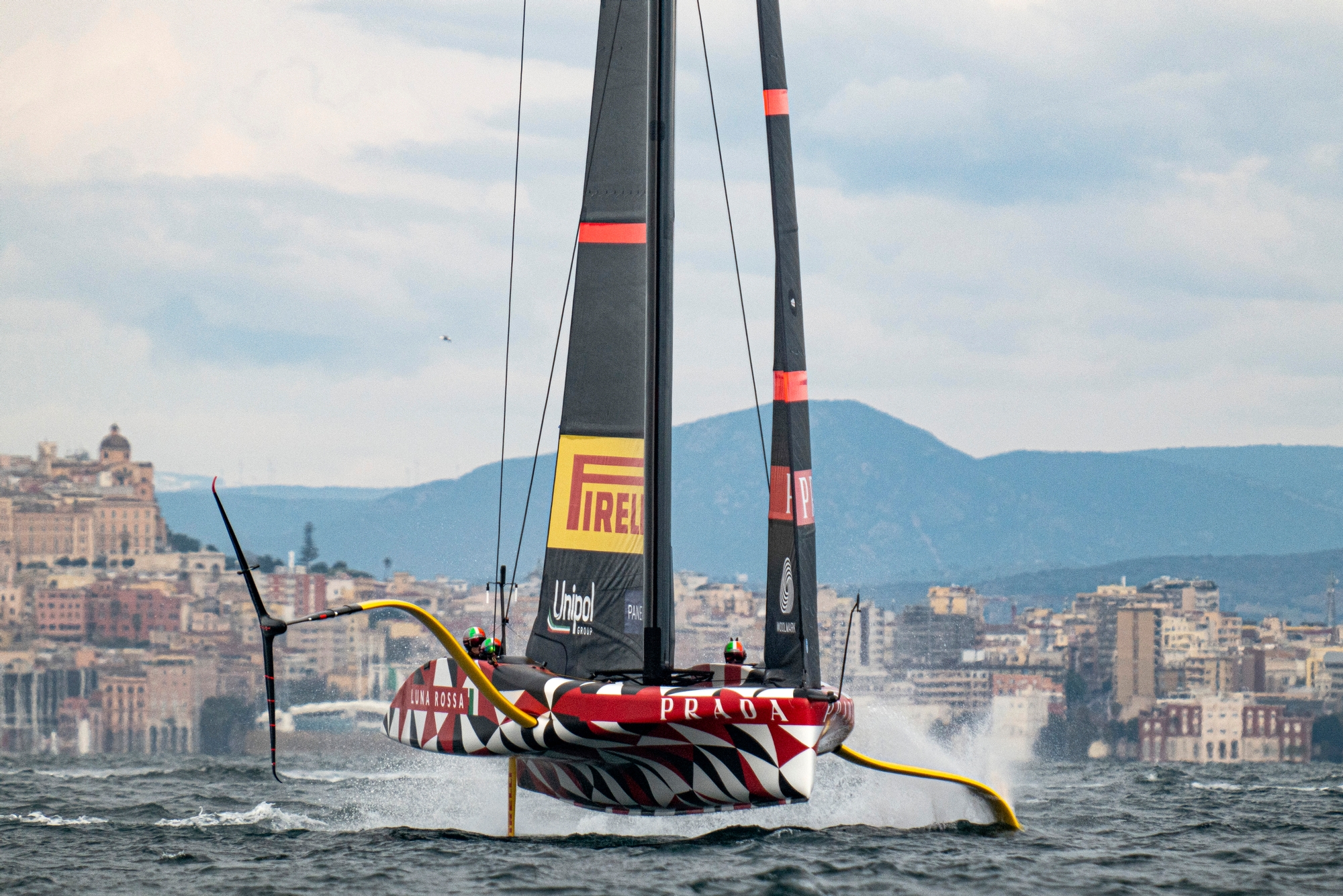
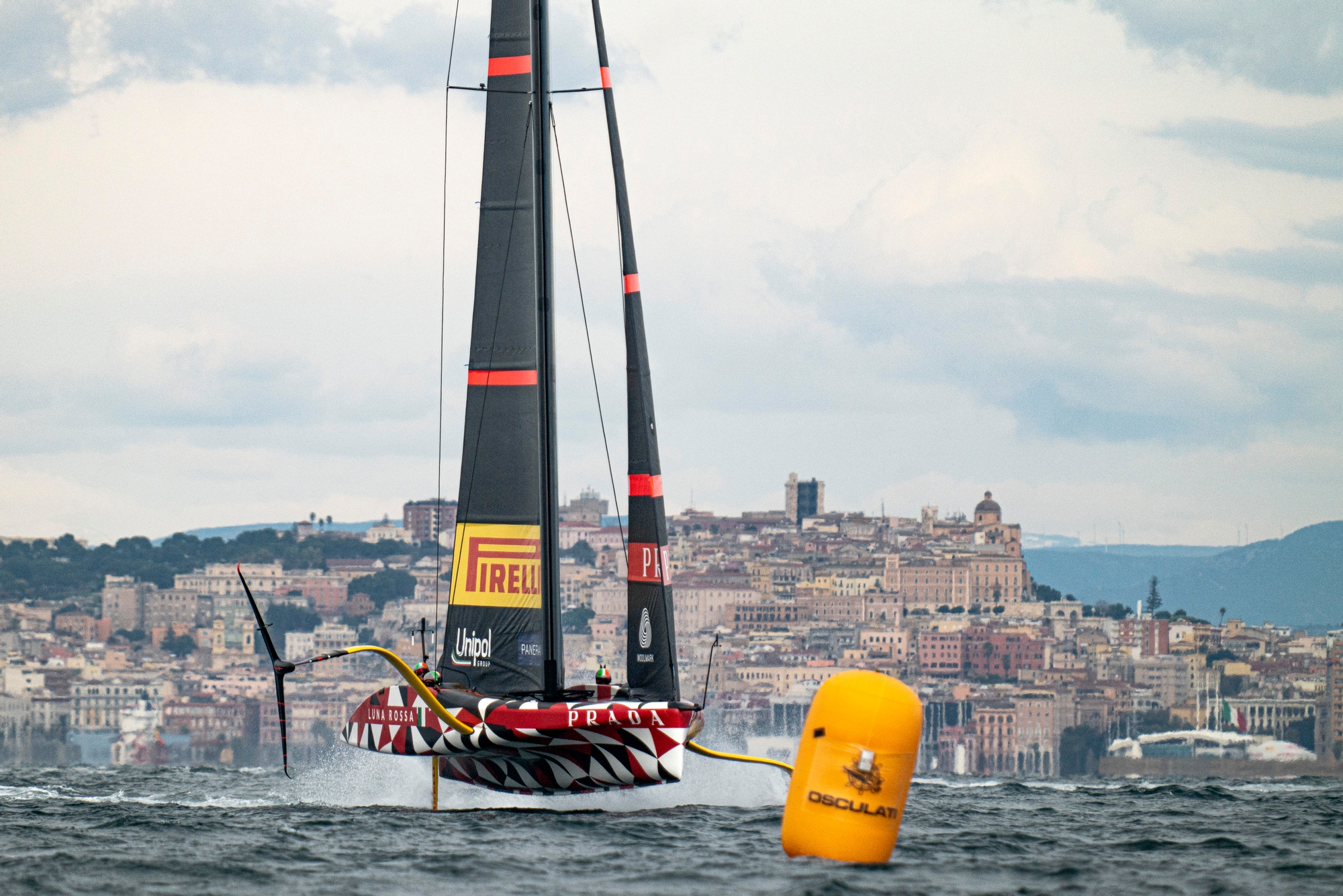
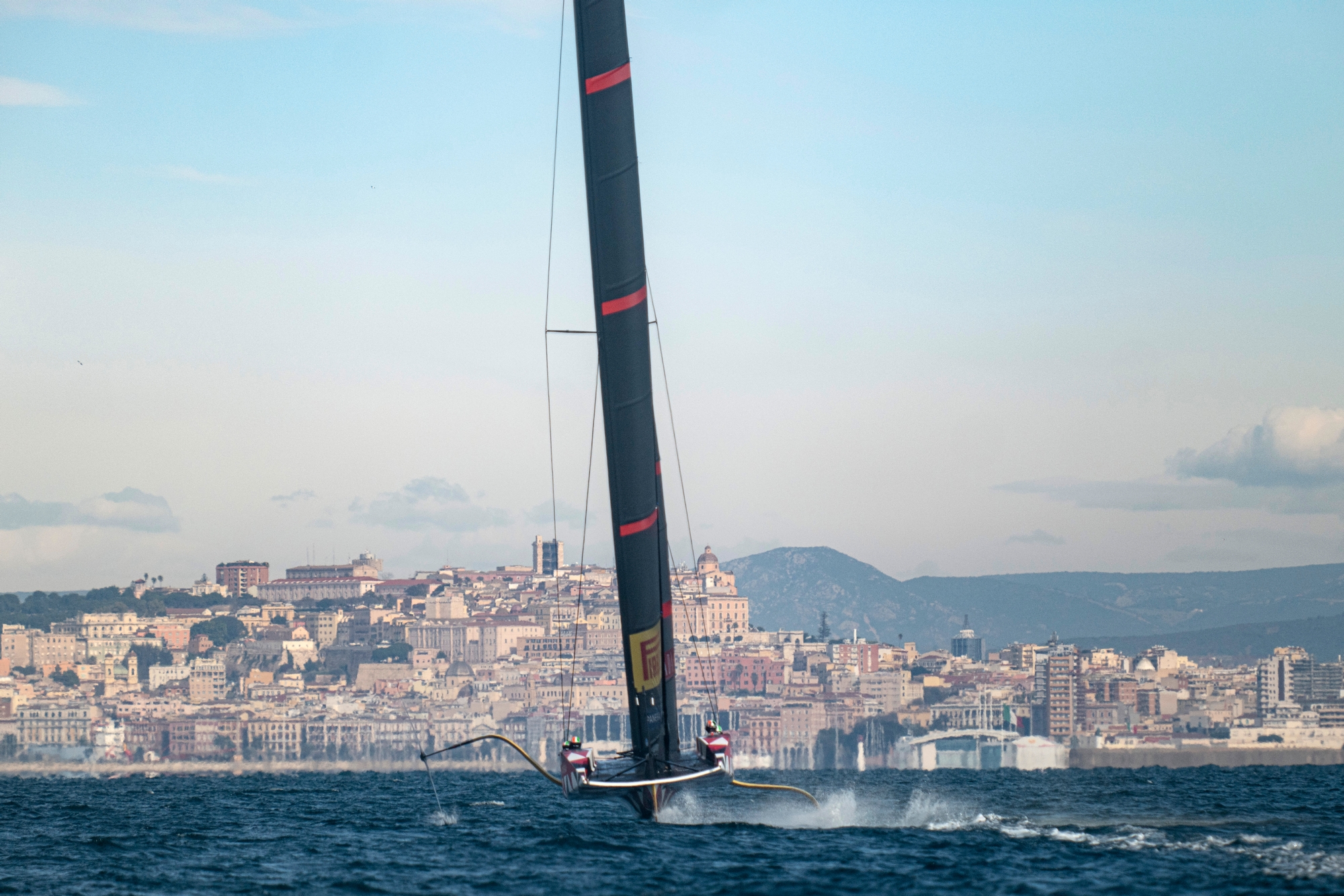
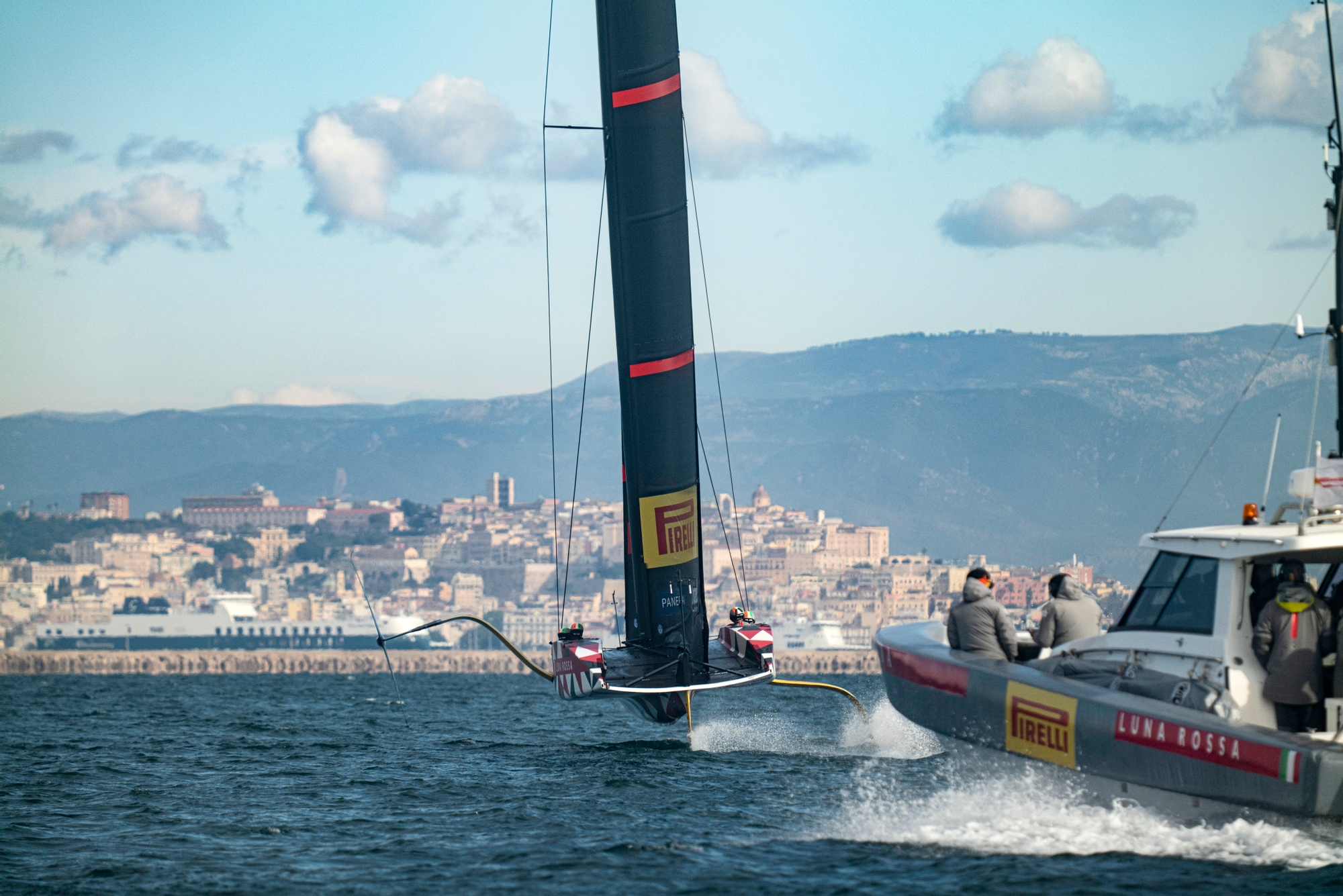
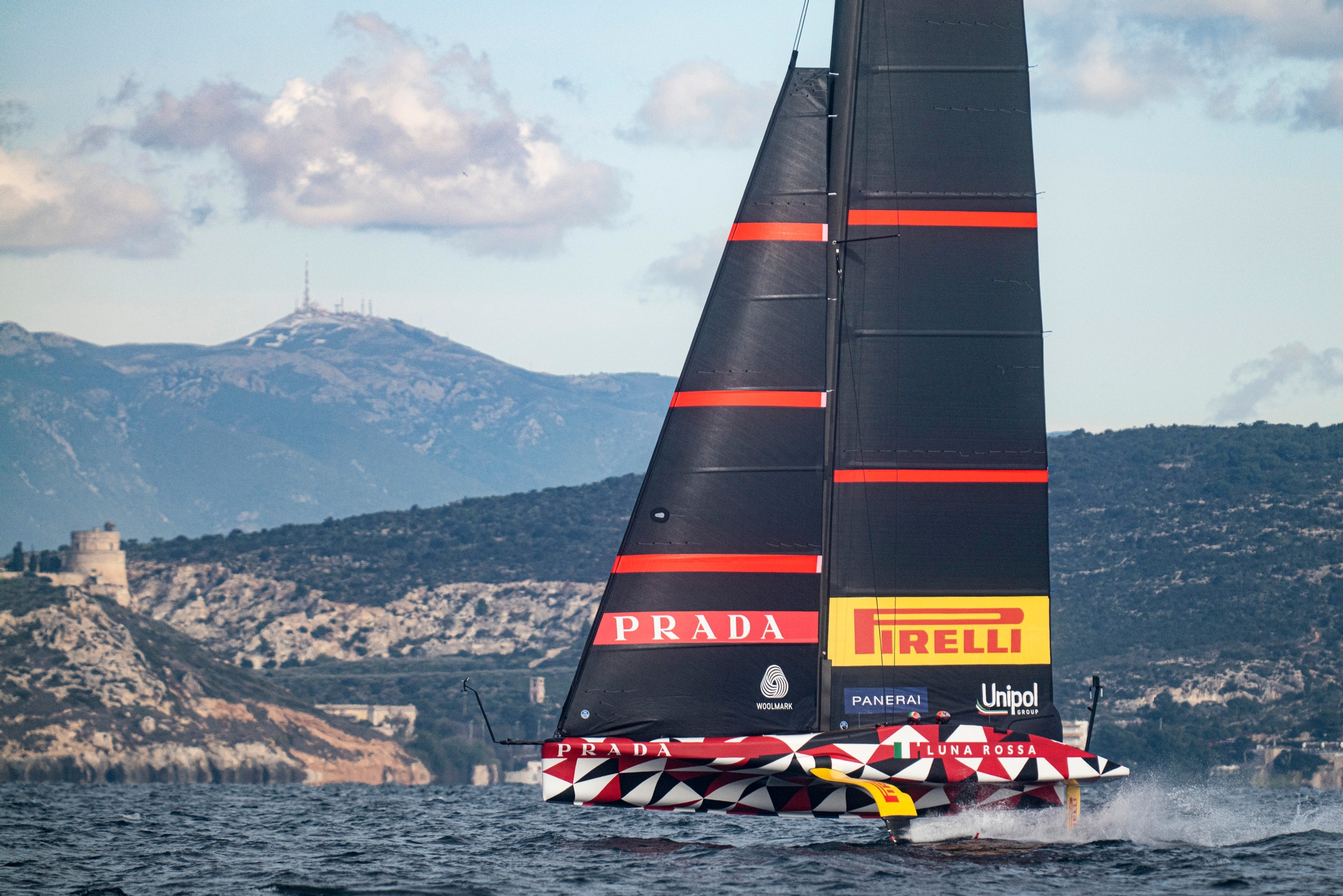
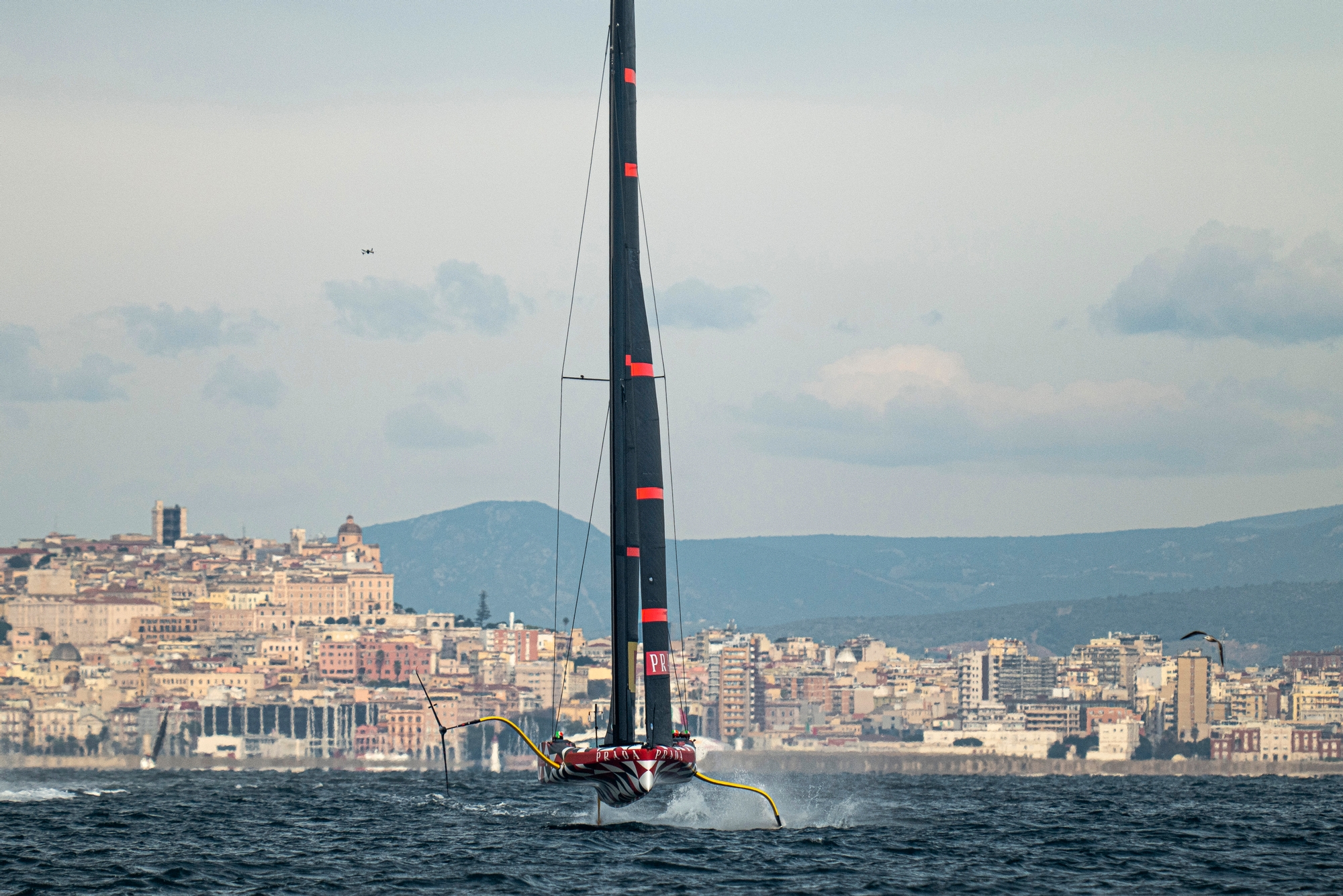
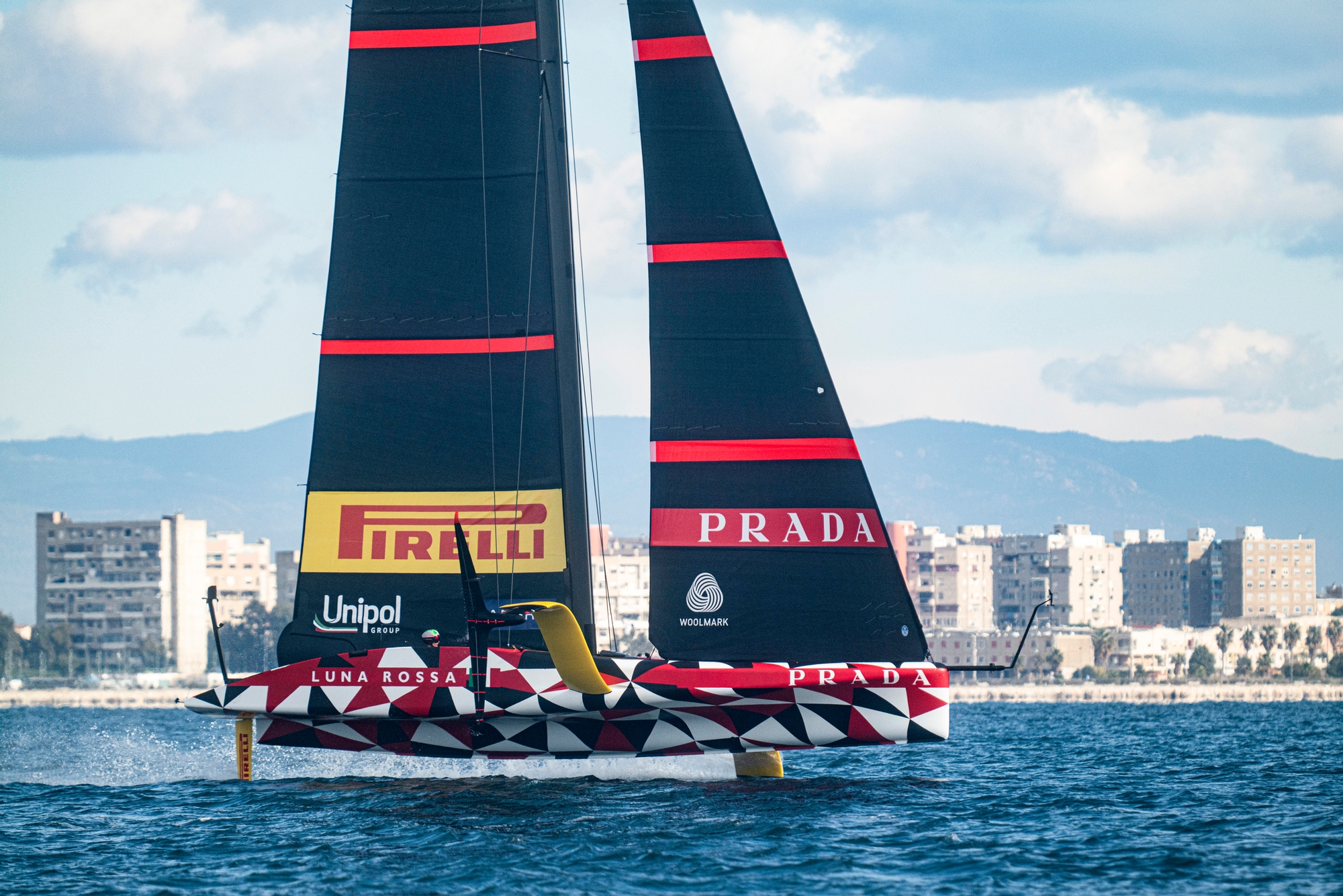
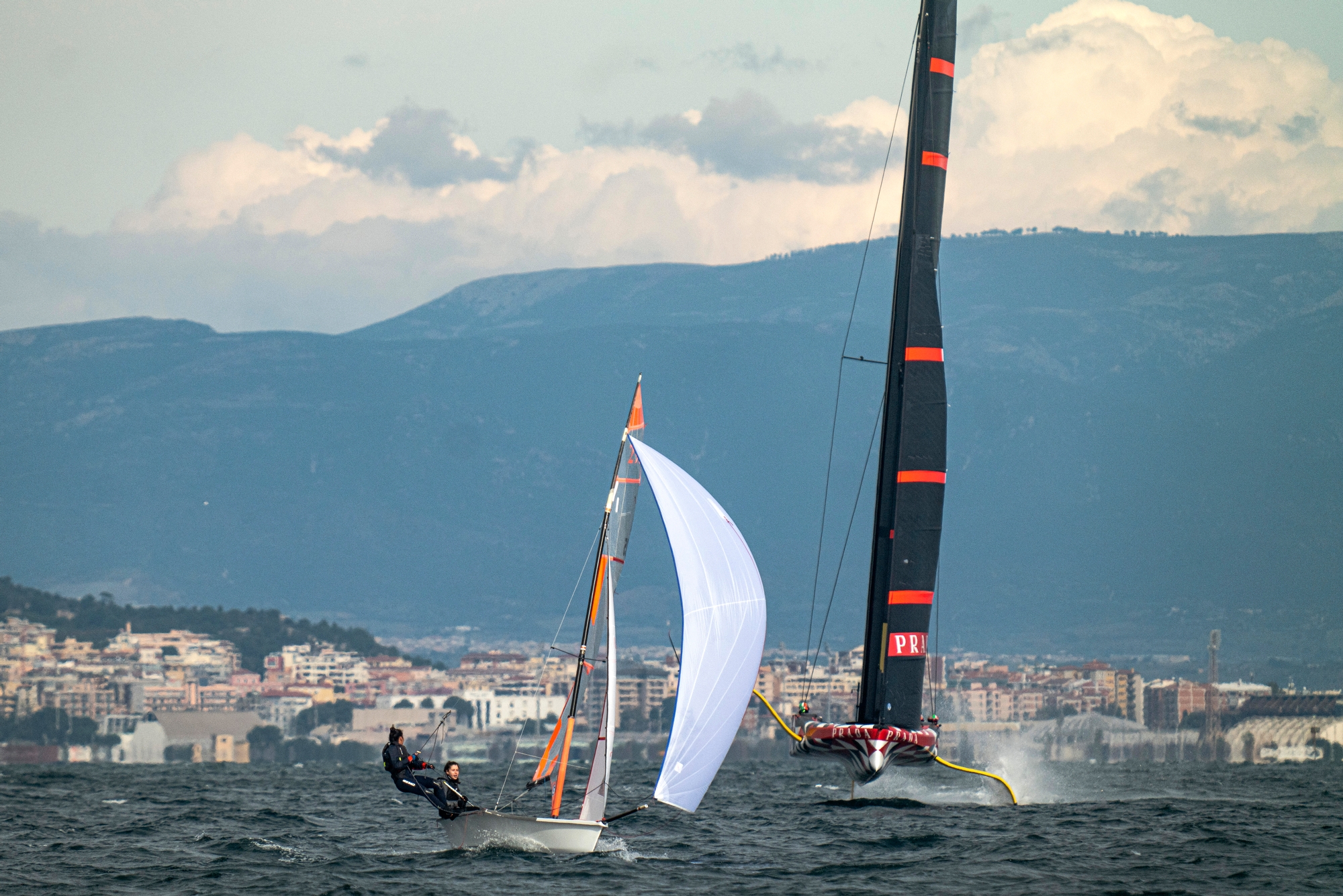
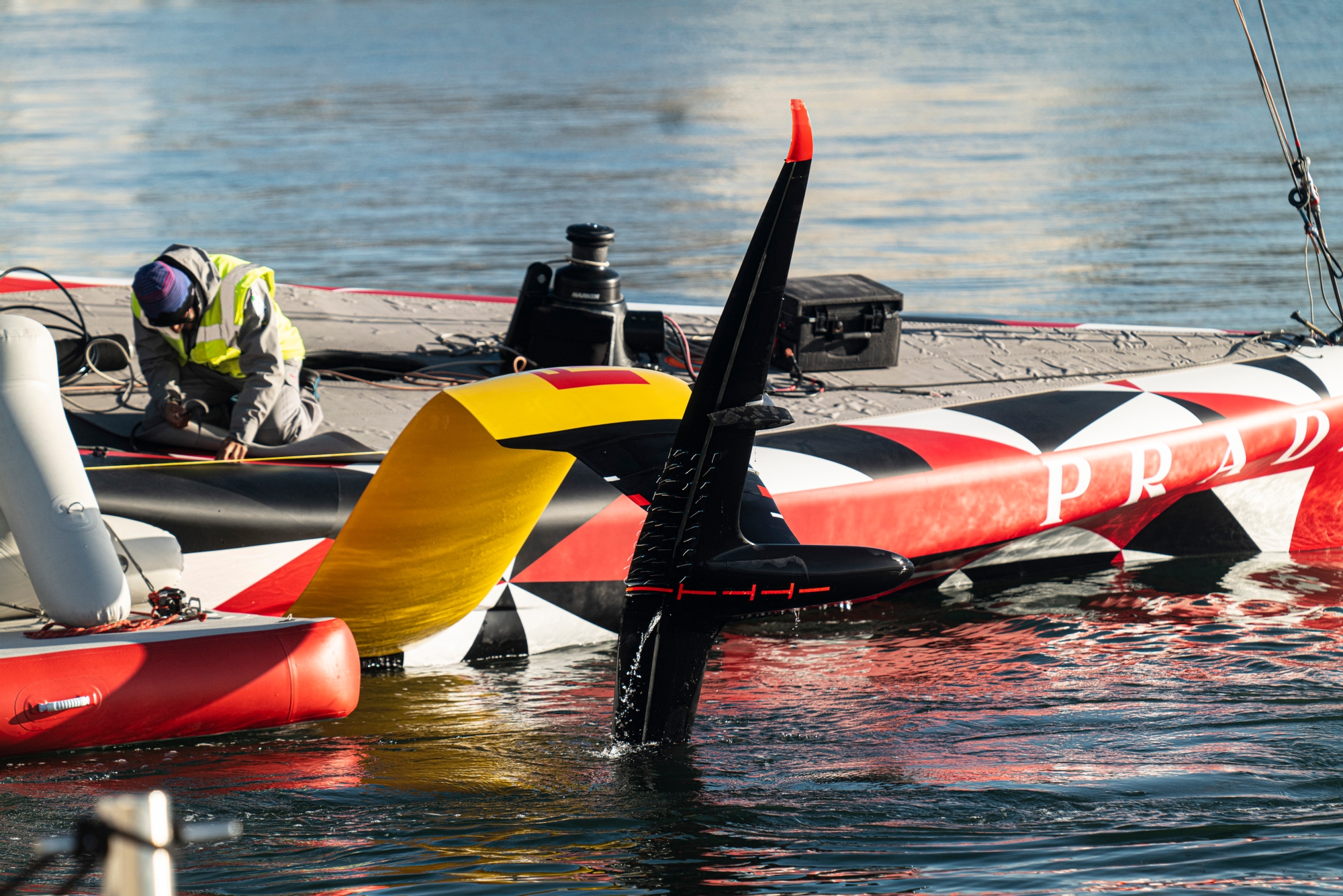
“It’s the first day I have ever been sailing in Sardinia with snow on the mountains, it was very cold,” was how a rather chilly Jimmy Spithill described a stunning session put in by the Luna Rossa Prada Pirelli team out on the Bay of Angels in Cagliari.
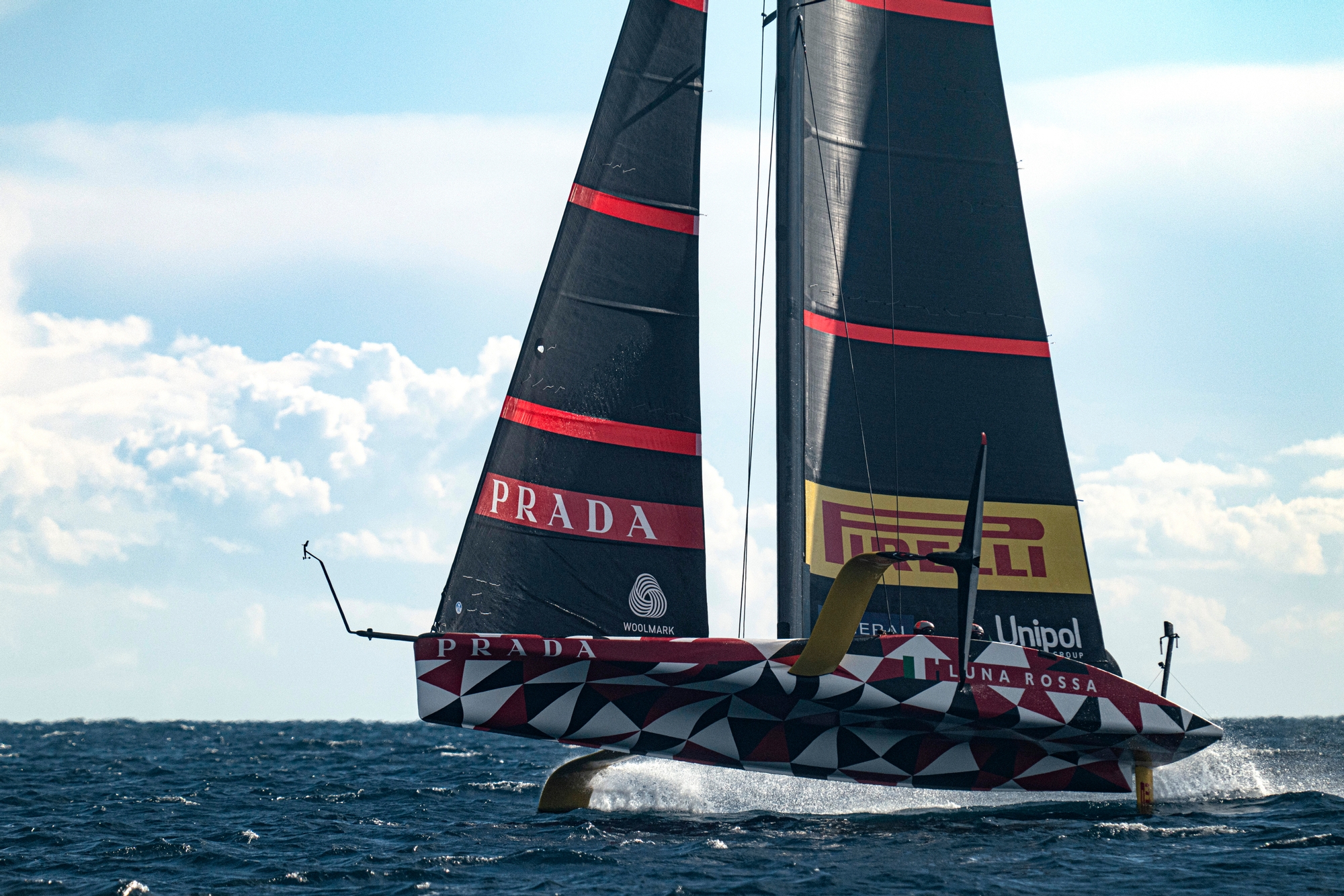
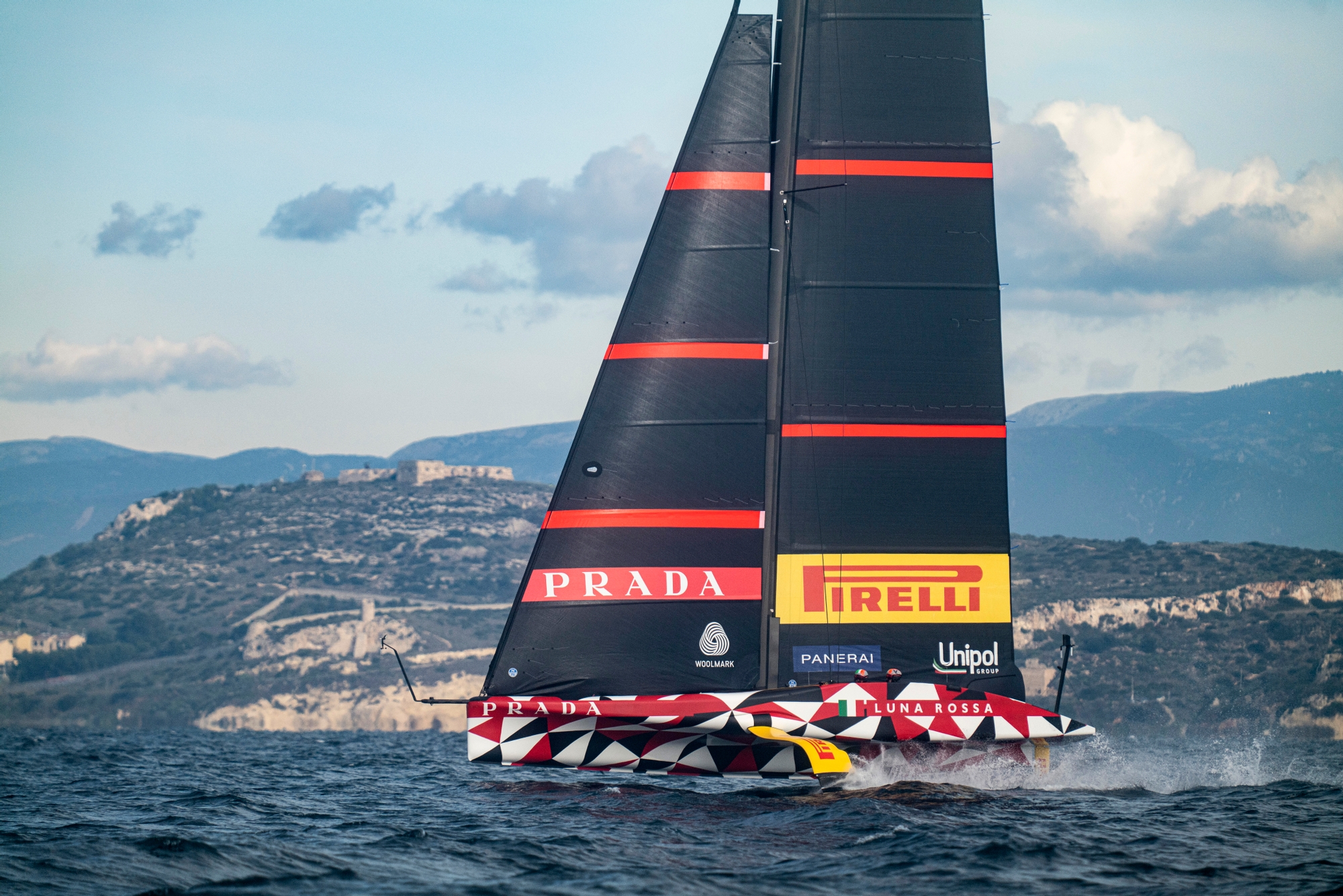
With snow-capped mountains as the backdrop, it was a day for the full thermals and drysuits as the team docked out at 10.30am before absolutely putting the pedal to the floor on their beautiful LEQ12 prototype. And with the wind approaching the upper ranges of 19 knot gusts but a mean of around 13 knots, the premium was on mainsail control as the Italians went in to some 55 manoeuvres throughout a thoroughly entertaining demonstration of high-speed sailing at near race pace.
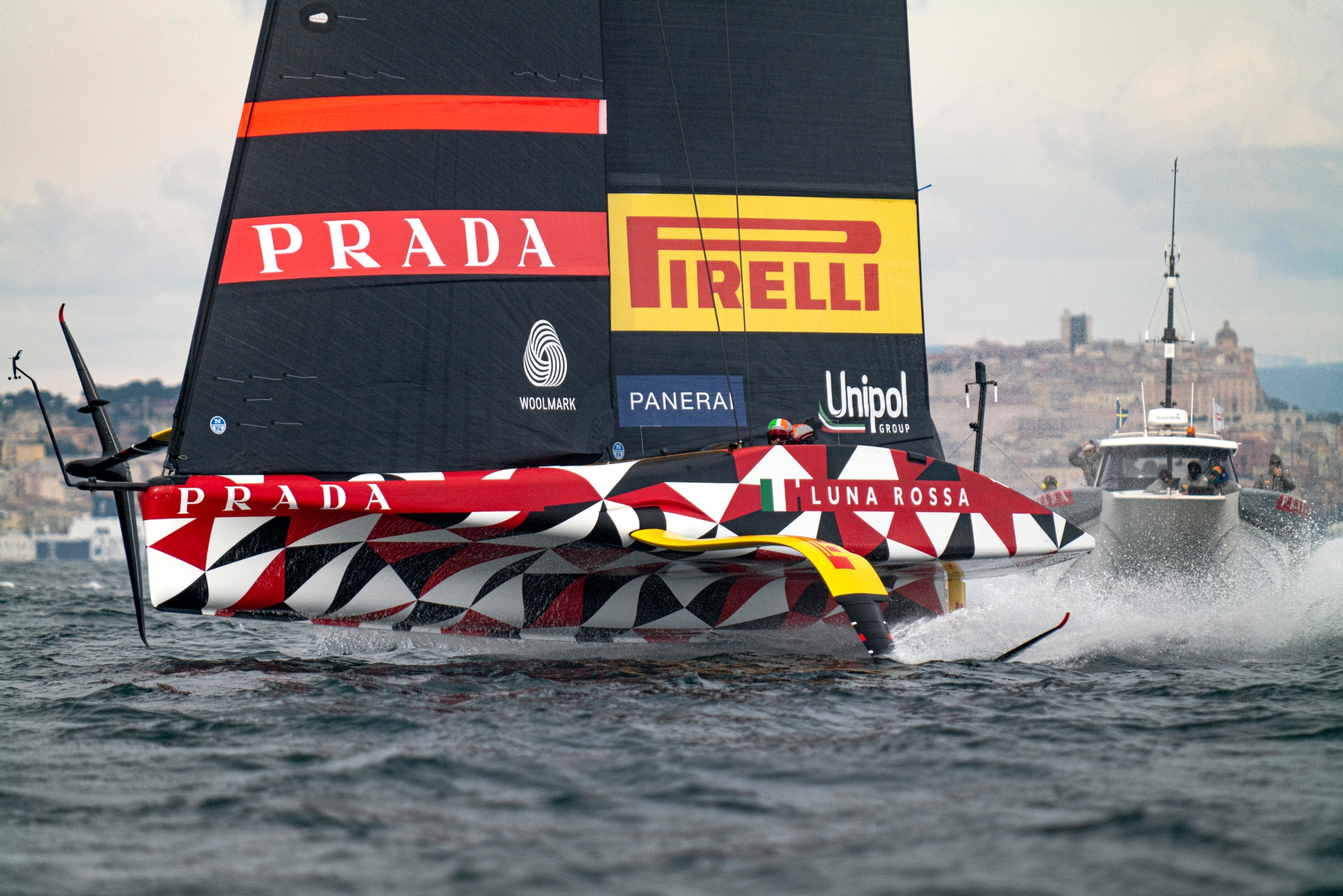
With so much concentration on the lower third of the mainsail, it’s days like today when we can see the results and understand why the brightest minds in the America’s Cup aero world are working so hard on this vital area of control. Through the tacks, noticeably, as soon as Luna Rossa Prada Pirelli complete, there’s huge movement, pumps if you like, on the traveller as the helmsmen fight for stability and the correct exit angle. On the longer runs at high speed, the sail controls seem more finessed with micro adjustments to angle and depth being controlled by the trimmers.
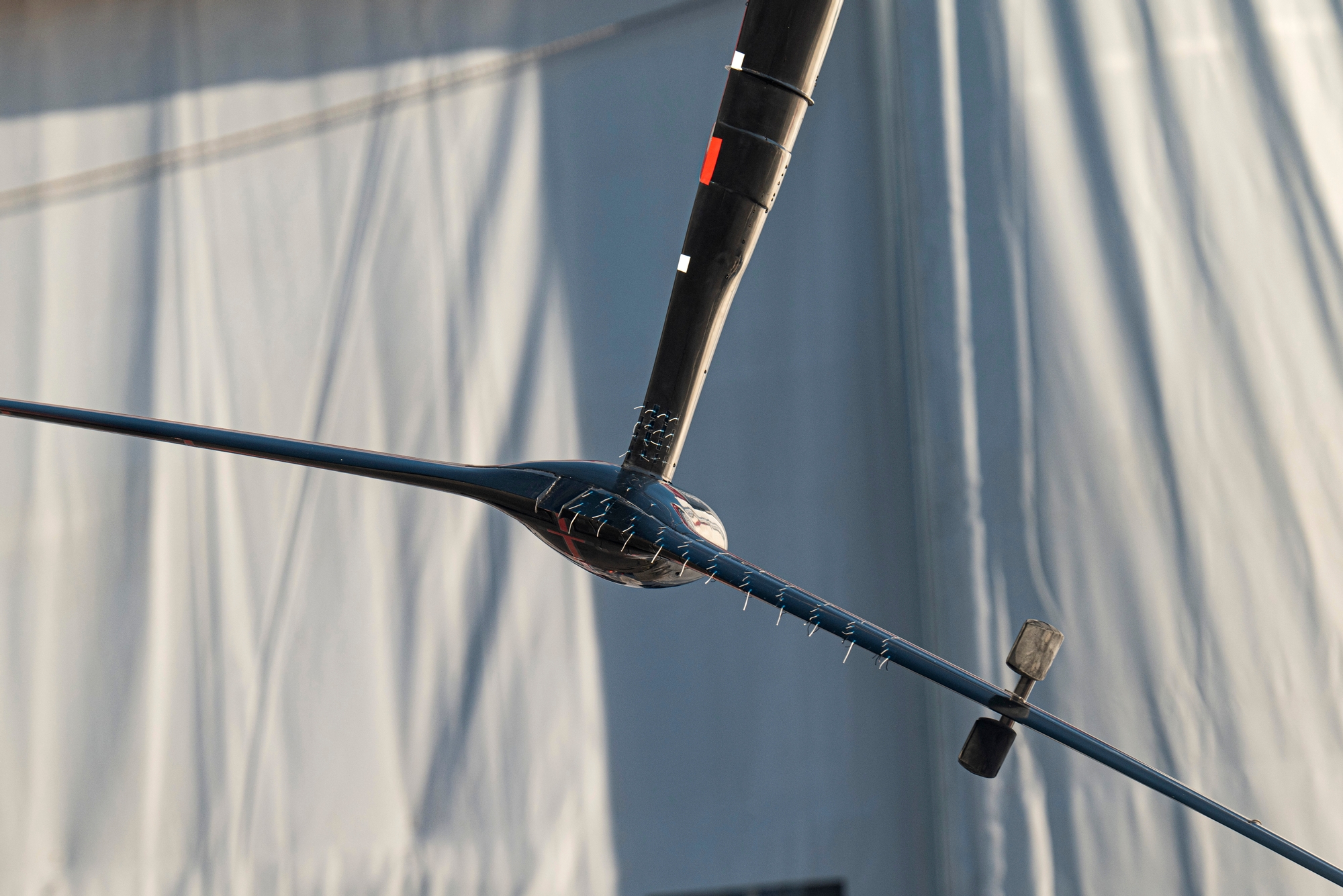
In a session that lasted just over three and a half hours, the Italian flight control appeared so spot-on to be almost perfect and with the new starboard anhedral foil being wired up with the now ubiquitous GoPro cameras and flow strips, aquatic tell-tales almost, it was expected that the team would spend a long time on the starboard foil. The recon unit however noted long runs on the port foil but overall, the day would have produced valuable data on both sides for the design team shoreside.
Speaking afterwards, Jimmy Spithill gave a good insight into where the America’s Cup will be won this time saying: “I think it's just getting used to sailing the boat in waves. This will probably be the first America's Cup sailing in swell, all the past America's Cups had pretty much flat water. In New Zealand we were always able to get into a flat-water spot and even San Francisco, even when the tide was bad, there was really only one small area of the course near Alcatraz so yeah that's what's going to be fascinating and seeing Alinghi you know in those waves it looks like a pretty challenging racecourse area.”
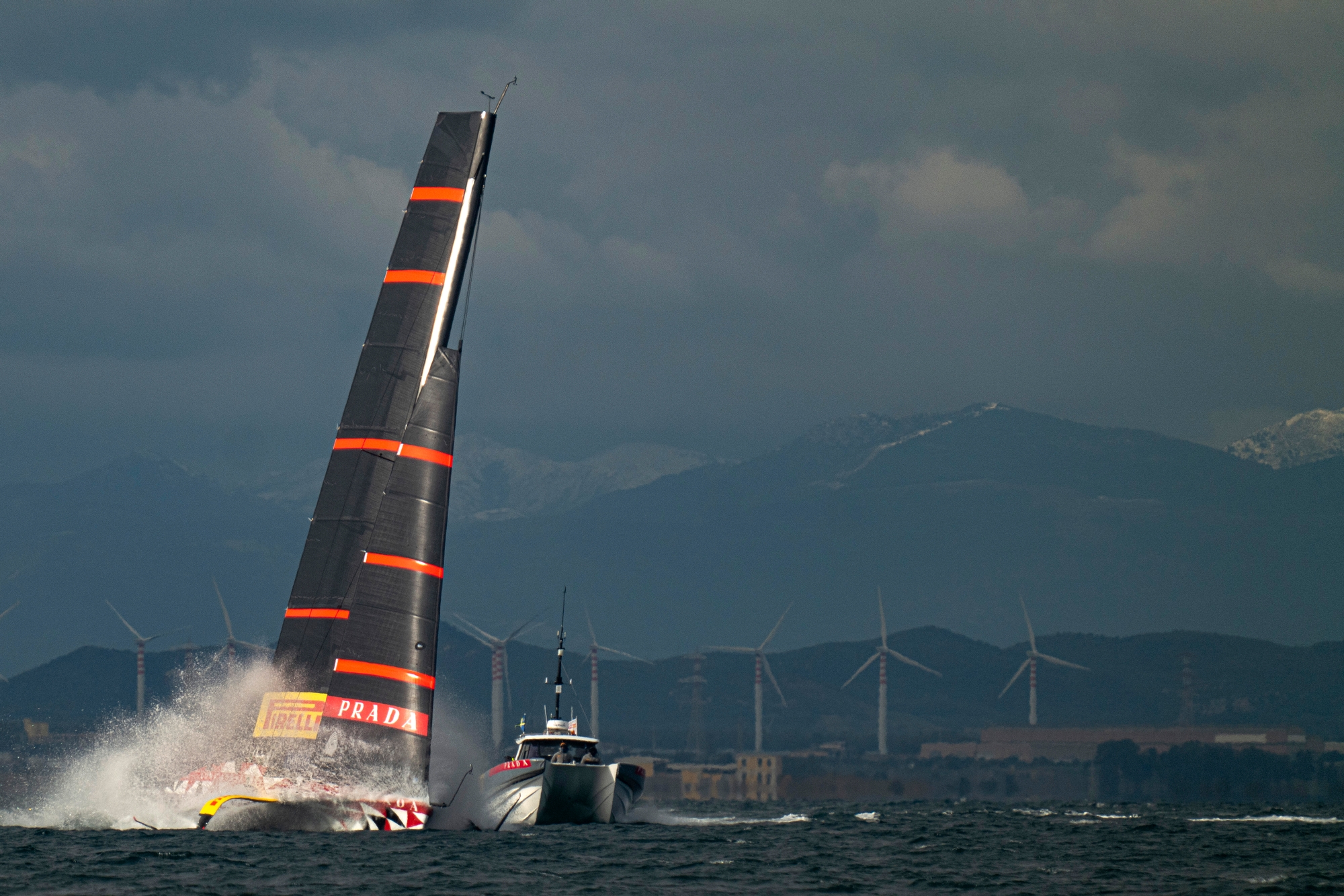
And with all the teams experimenting with the International Moth style windward heel, a great question from the recon team elicited the following response from Spithill: “When you're slow before the take-off and with not much boatspeed the flap is not that effective so at that point you're really just trying to use some windward heel to try and keep the boat down at a wider wind angle to accelerate and again these smaller boats they just don't sort of have the stability of the big ones have…when you're fully foiling you're looking for probably a little bit of windward heel anywhere from sort of flat to a little bit of windward heel once you're up and going.”
Luna Rossa Prada Pirelli was on rails today and the team thoroughly deserve a warm shower and a hot drink. Sometimes America’s Cup sailing isn’t all sunshine and bluebird days – as those training in the northern hemisphere are more than aware. (Magnus Wheatley)
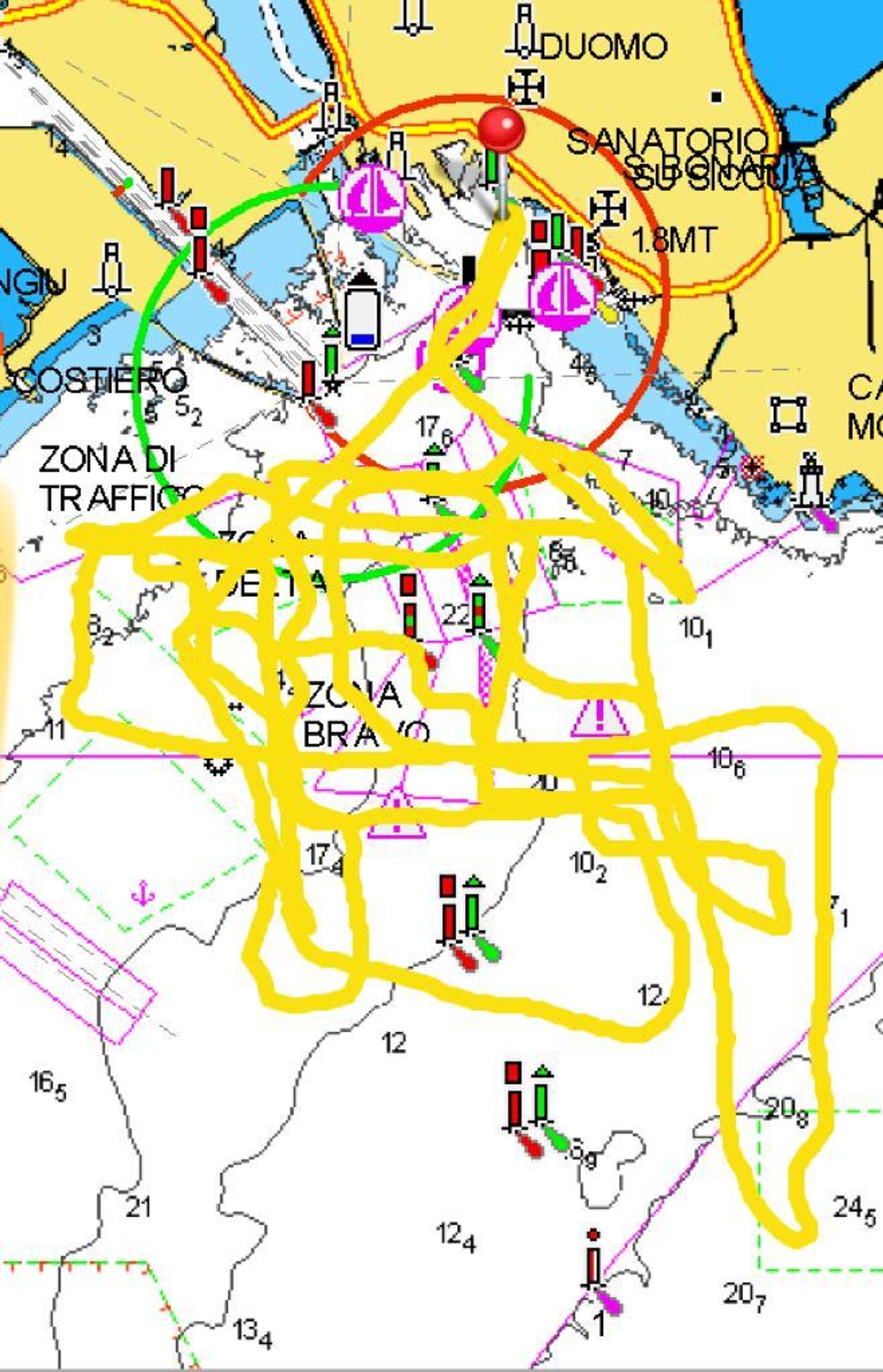
On Water Recon Unit Notes: After five days of seeking of good sailing conditions between stormy and very windy days, the Luna Rossa Prada Pirelli team finally finds an acceptable window with steady NW breeze and remaining south-westerly sea state on an unusual very cold and frosty day in Cagliari.
Starting the day at 8:30 the Italian LEQ12 rolled out with some of the previously seen GoPro setup on suction and pressure sides of the starboard wing facing foil arm stock and flaps where some attached strips, in addition to the already seen red marked lines on suction side outboard this time, have been observed. It remains to be clarified what exactly is to be monitored, perhaps any occurrence of ventilation, cavitation or simply the flow streamlines for any separation.
The usage of cameras for these investigations has started on day 24 on which the team declared a new version F of the starboard wing as the rules demand. After docking out at 10:30 the team hoisted main+J2 and this time only four crew members boarded the prototype self-taking off on most of occasions while some swaps of sailors have been observed between the four available helmsmen. During these breaks some checks were made on the jib sheeting systems and inside the cockpit, request which are certainly targeted by the RU and well hidden by the team.
In the Gulf the team seemed to alternate between long straight line sailing in more windy & wavy conditions with rest of the south-west swell and decent offshore chop and lots of manoeuvres more inshore. It seemed that the crew were flying the LEQ12 lower than usually for end-plating and when flying upwind on starboard tack the portside board was piercing the waterline slightly more than usual perhaps due to different cant angle or more windward heel.
Again, considering the ongoing data gathering on the starboard wing, foiling on the portside tack seemed to prevail with observation of several radical sudden bear aways & headings up manoeuvres, both boards down and slowing the LEQ12 down until picking up pace again.
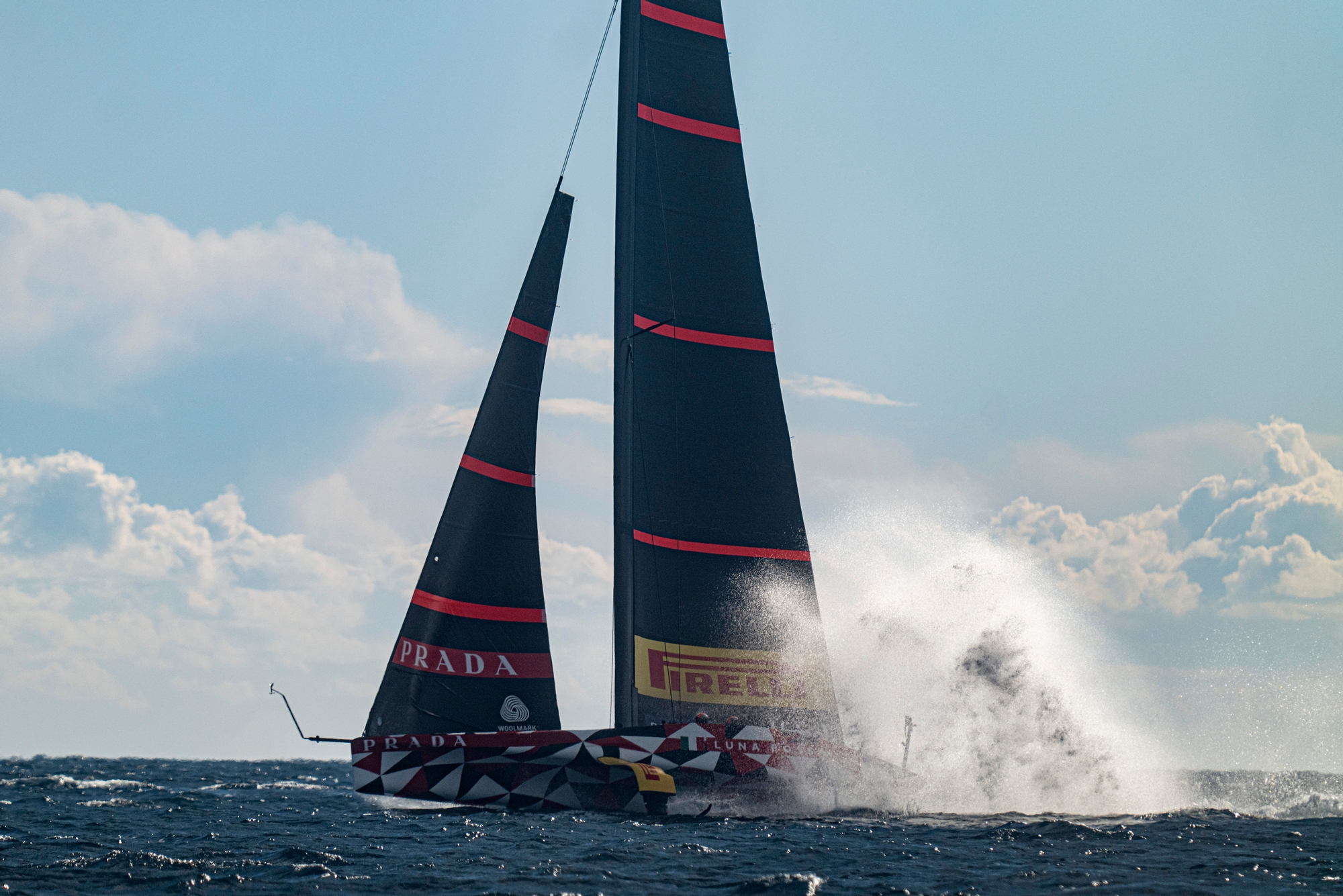
A significant bow down splash has been observed after a tack self-taking off a second later. At 13:00 the team dropped two marks for the last hour of training and the recon unit were placed on downwind mark for observation. With a total foiling time of 92 minutes, the LEQ12 covered approximately 54 nm completing approx 55 manoeuvres with increasing success rate as part of the training recipe. As usual, to complete successfully the manoeuvres, the Italians were observed heading up slightly exiting the gybe before bearing away again and bearing away slightly after the tack before heading back up again.
Dock out: 1030 Dock-in: 1400
Onboard Today
Helms: Francesco Bruni / Ruggero Tita / Marco Gradoni / Jimmy Spithill
Crew: Umberto Molineris / Vittorio Bissaro
Recon Notes: Back to 4 crew setup
Sails Used:
Mainsail (MN1-1S): 3 hours 40 minutes
J2 Jib (J2-1-B): Jib: 3 hours 20 minutes
Total Tacks: 32 –24 foil-to-foil, 4 touch & go, 4 touchdowns
Total Gybes: 23 – 18 foil-to-foil, 2 touch & go, 3 touchdowns
Recon Notes: 2 tow-to-flys, 6 self take offs
Foiling runs minutes: 11, 9, 12, 10, 29, 5, 6, 8,2
Wind Strength:
10:40 NW 10kn/ 12:05 NW 16kn (Offshore)/ 13:10 NW 10kn, Classic Maestrale breeze with some rest SW swell. 7 degrees and Cloudy
Take-off speed: 15 knots (estimate) at 80 degrees TWA