EDGE FOUND IN PALMA
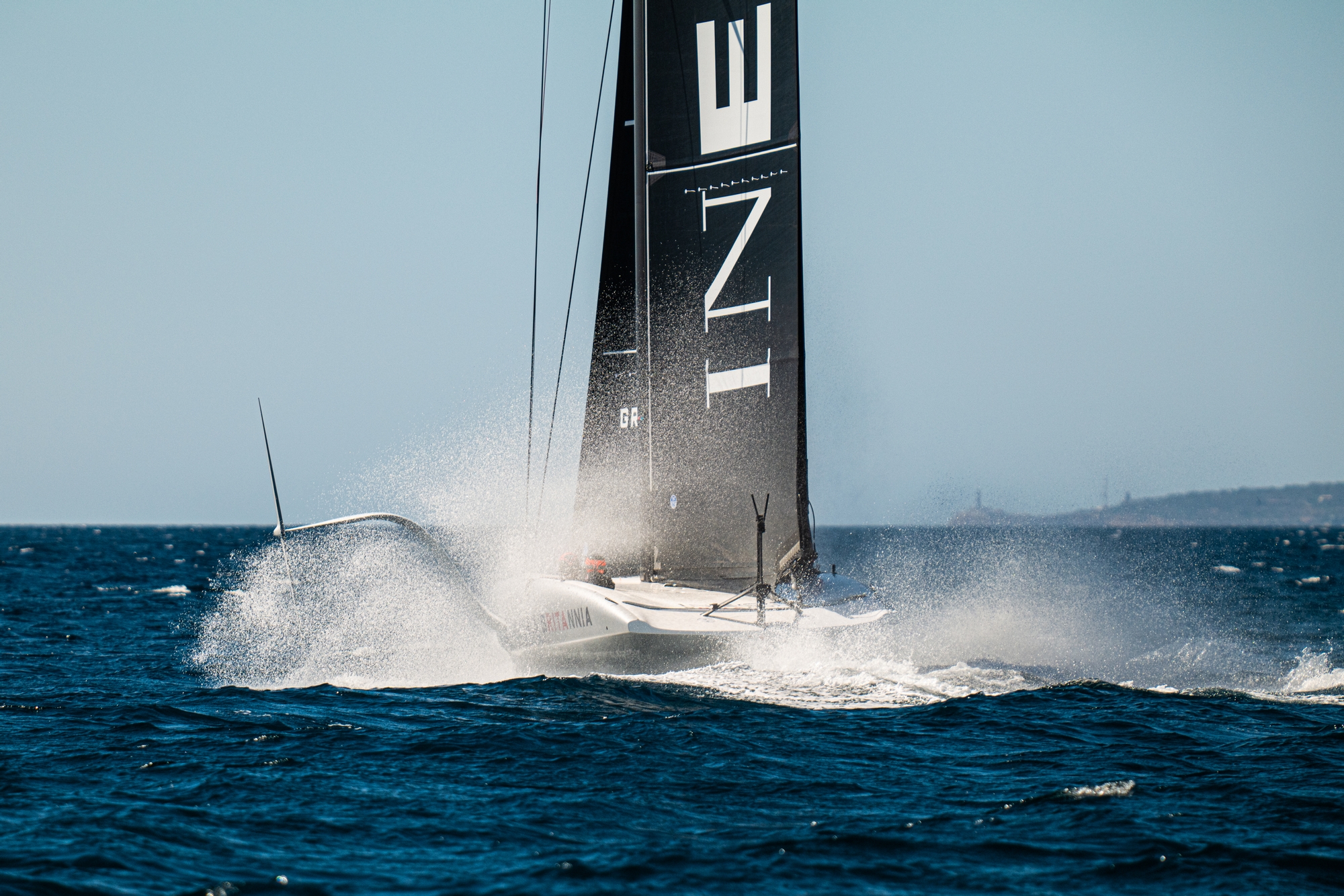
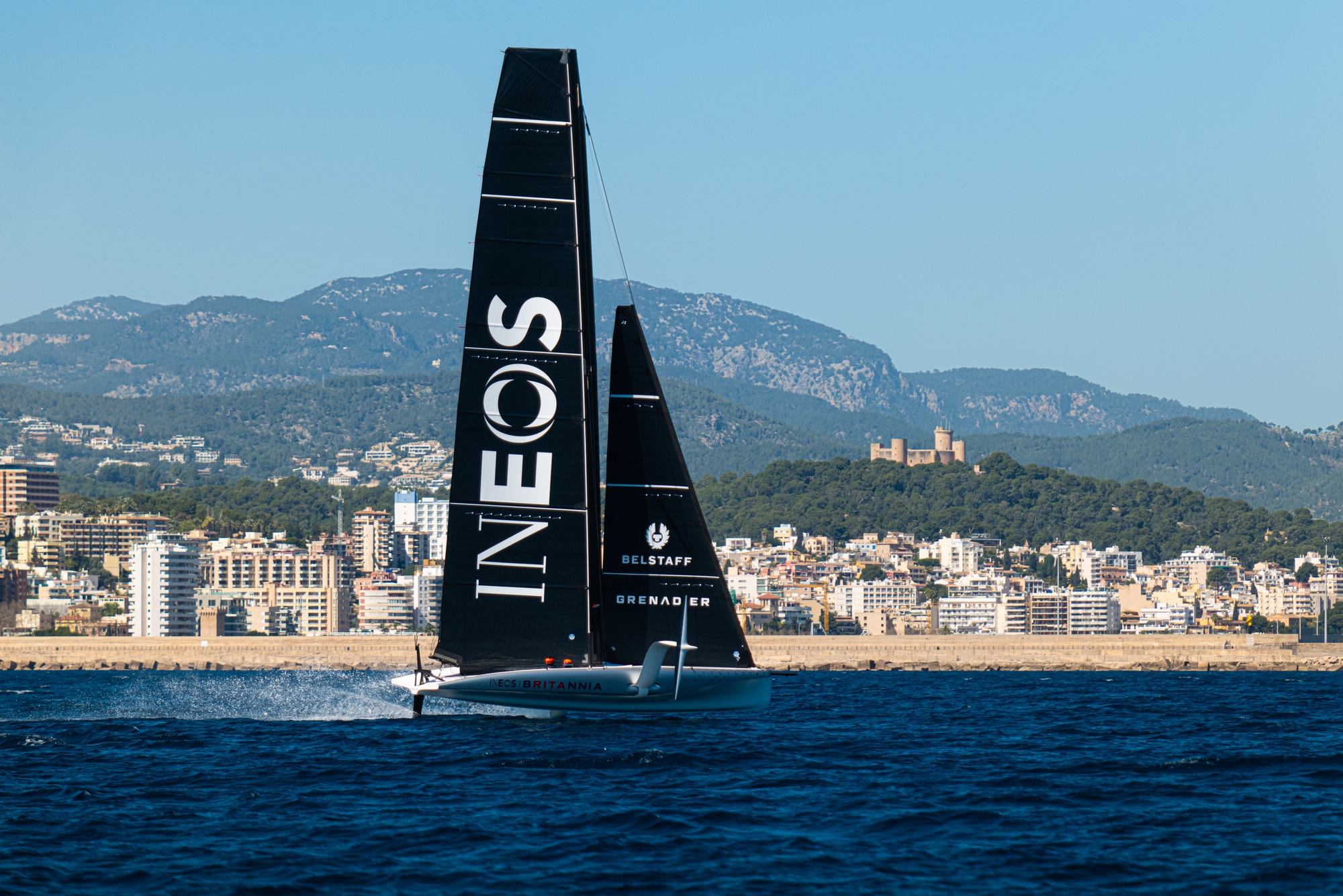
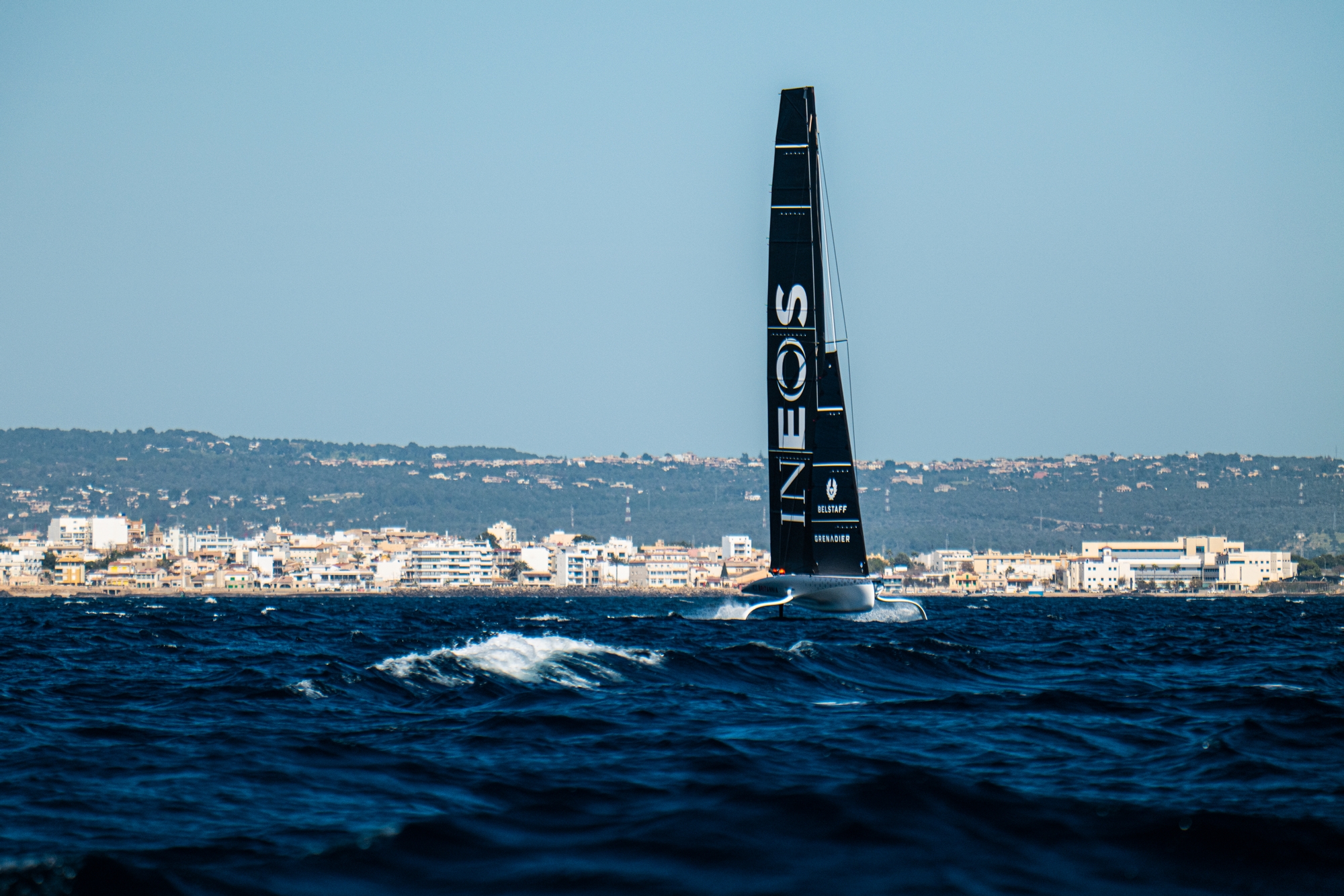
The INEOS Britannia team had been keeping an eye all week on the weather for Thursday as the Bay of Palma promised some top-end breeze to allow the sailors to explore the extraordinary performance parameters of the world’s most exciting new foiling class – the AC40. And the Bay didn’t disappoint. 17-19 knots of south-south-easterly rattled across choppy seas that had the flight controllers on high alert as they wrestled with low flight upwind on the margin for stability desperate not to catch the bustle. Downwind it was all on as Giles Scott in the port pod and Dylan Fletcher-Scott in the starboard pod sought excellence on the waves, weaving through angles, desperate not to lose the rudder.
It was a hugely entertaining, high-speed, high-jinx session lasting just over two hours with the British looking well up for the breezier conditions and absolutely sending it as they found the ragged edge of control time and time again. Electric sailing from some of the best foilers in world sailing today and very much of note was a 100% success rate foil-to-foil/touch & go on 25 manoeuvres – in those conditions, that’s nigh on brilliant. If you want to see why the world is sitting up and taking notice of the AC40 as a class – watch the video of INEOS Britannia at warp speed, blasting around Palma – amazing stuff.
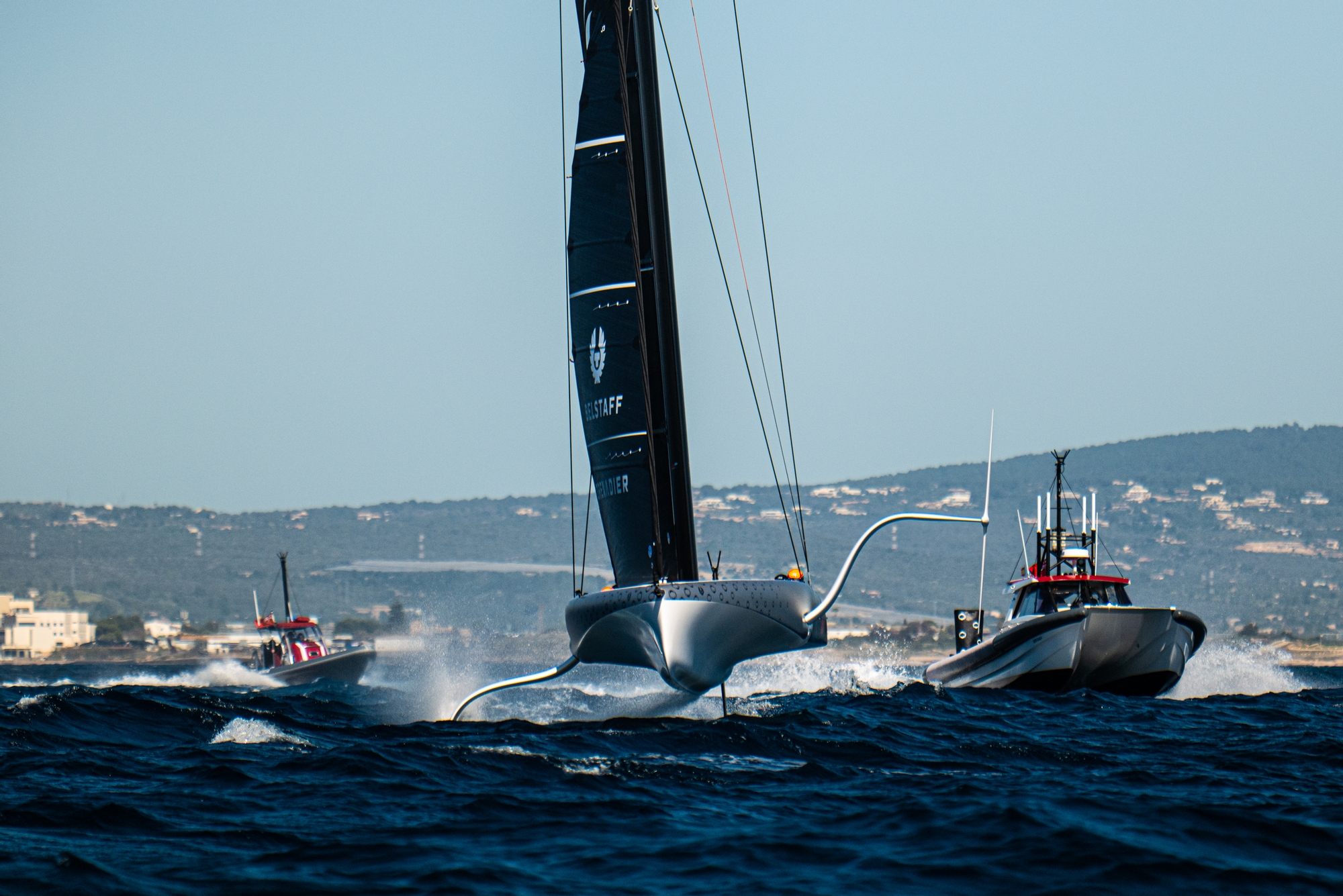
After the free-sailing laps of the Bay, the support team dropped marks and laid a racecourse that was a red rag to this very bullish team – suddenly ‘Athena’ was on another plane. Great co-ordination between helms and flight control with gorgeous windward heel upwind and scary high flight downwind as the AC40 surfed from wave to wave. The sailors looked masterful – Leigh MacMillan and Bleddyn Mon were different class today - and they looked to be in total sync in the top-end breeze. Fabulous to witness.
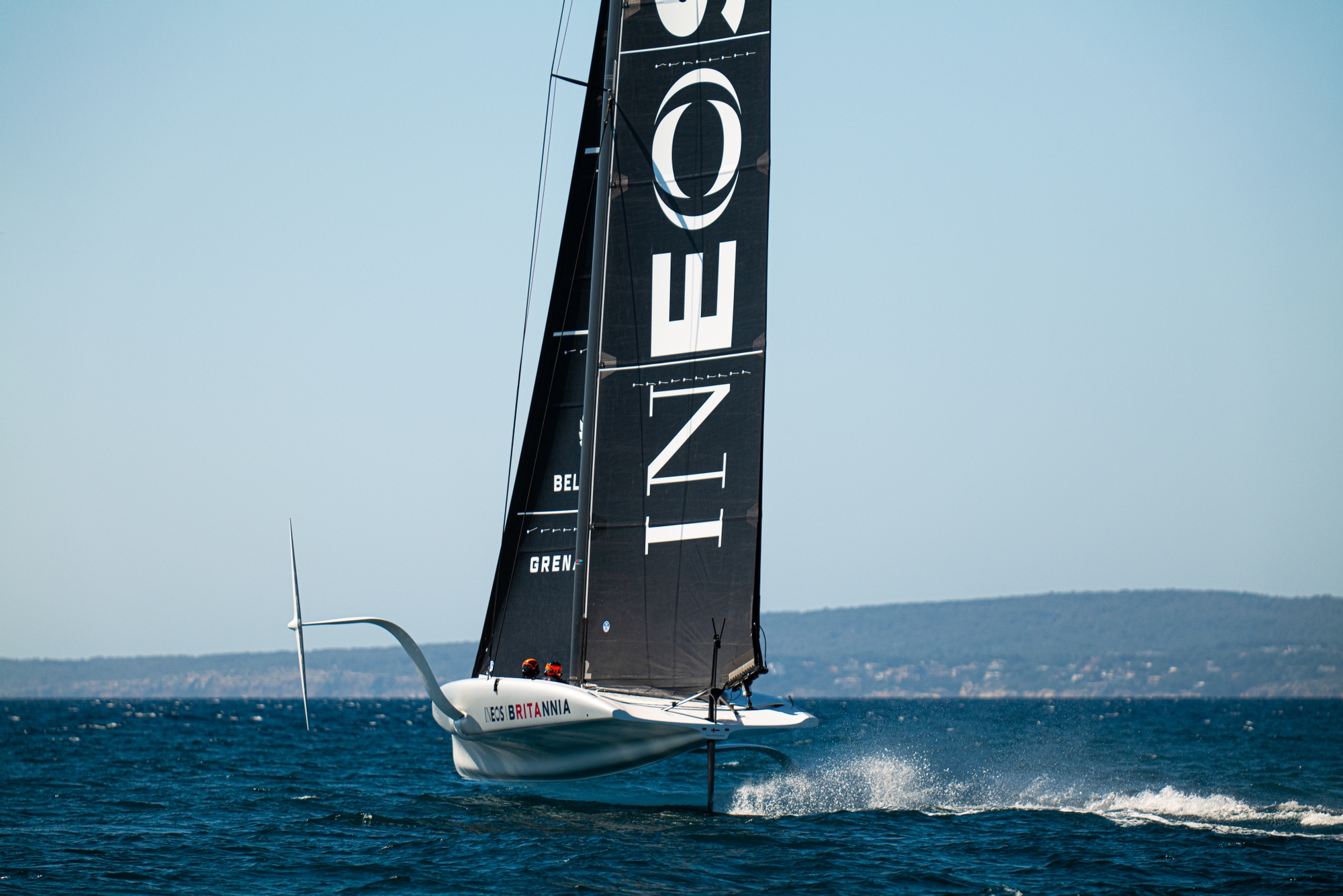
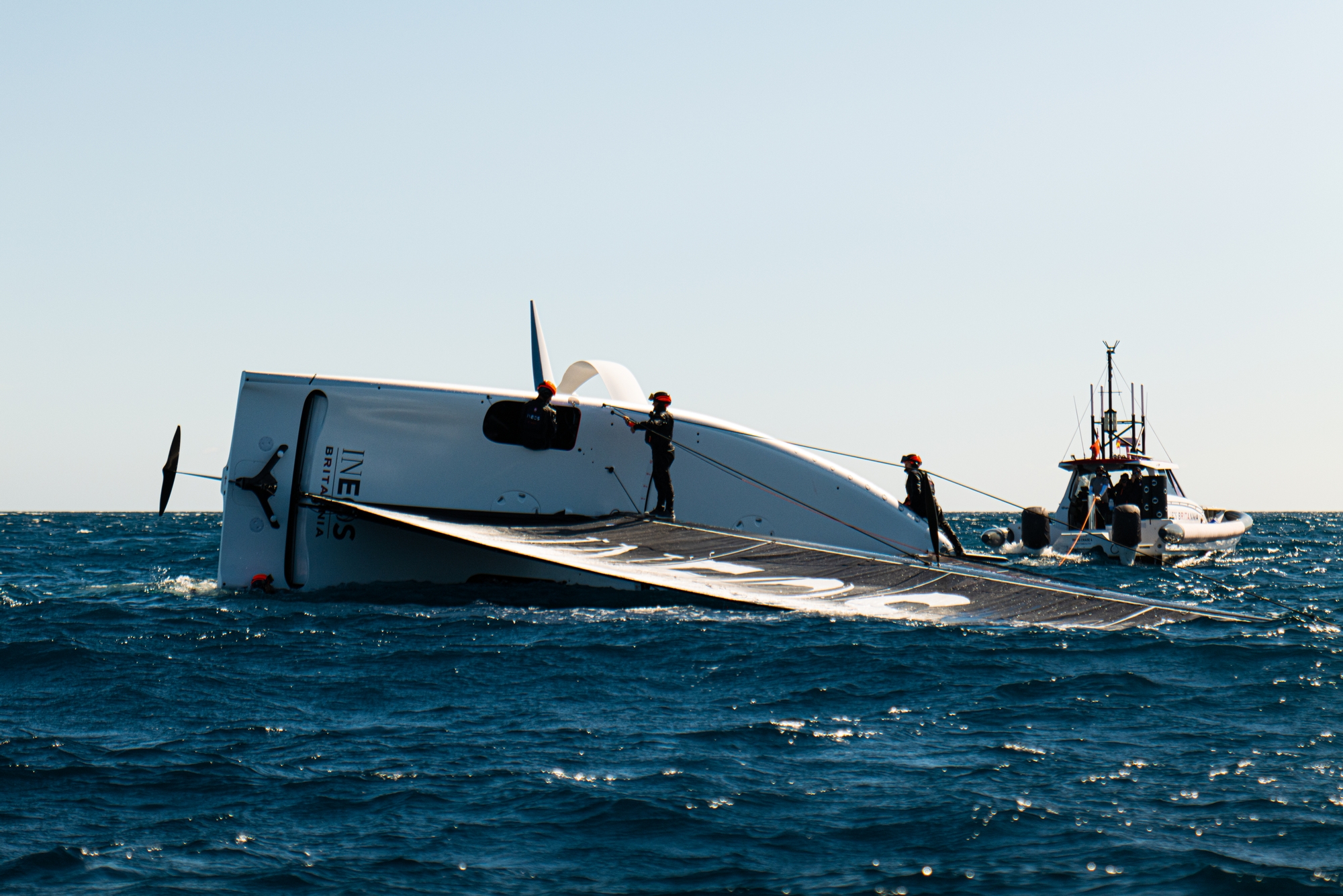
But, as the team pushed ever harder, the inevitable occurred as a rapid-fire bear-away at the windward mark saw the team hurtle off downwind before throwing a fast gybe in, losing the rudder on a waveform causing the boat to nosedive and screw into the inevitable capsize. It’s all part of the game now in the America’s Cup in these small foilers and Giles Scott, always sublime in interview, was nonplussed by the one-water shenanigans saying: “We had a little mishap on the exit of one of our gybes and ended up losing the rudder - which is pretty easy to do in these boats - and then ended up with a nosedive and yeah, we rolled over unfortunately. But I think given the day and how hard we’re pushing, and you know we are pushing this boat as we want to see it at the corner of its performance, not that we aim to ever capsize but not necessarily a surprise, and certainly something that we are seeing all our competitors do as well.”
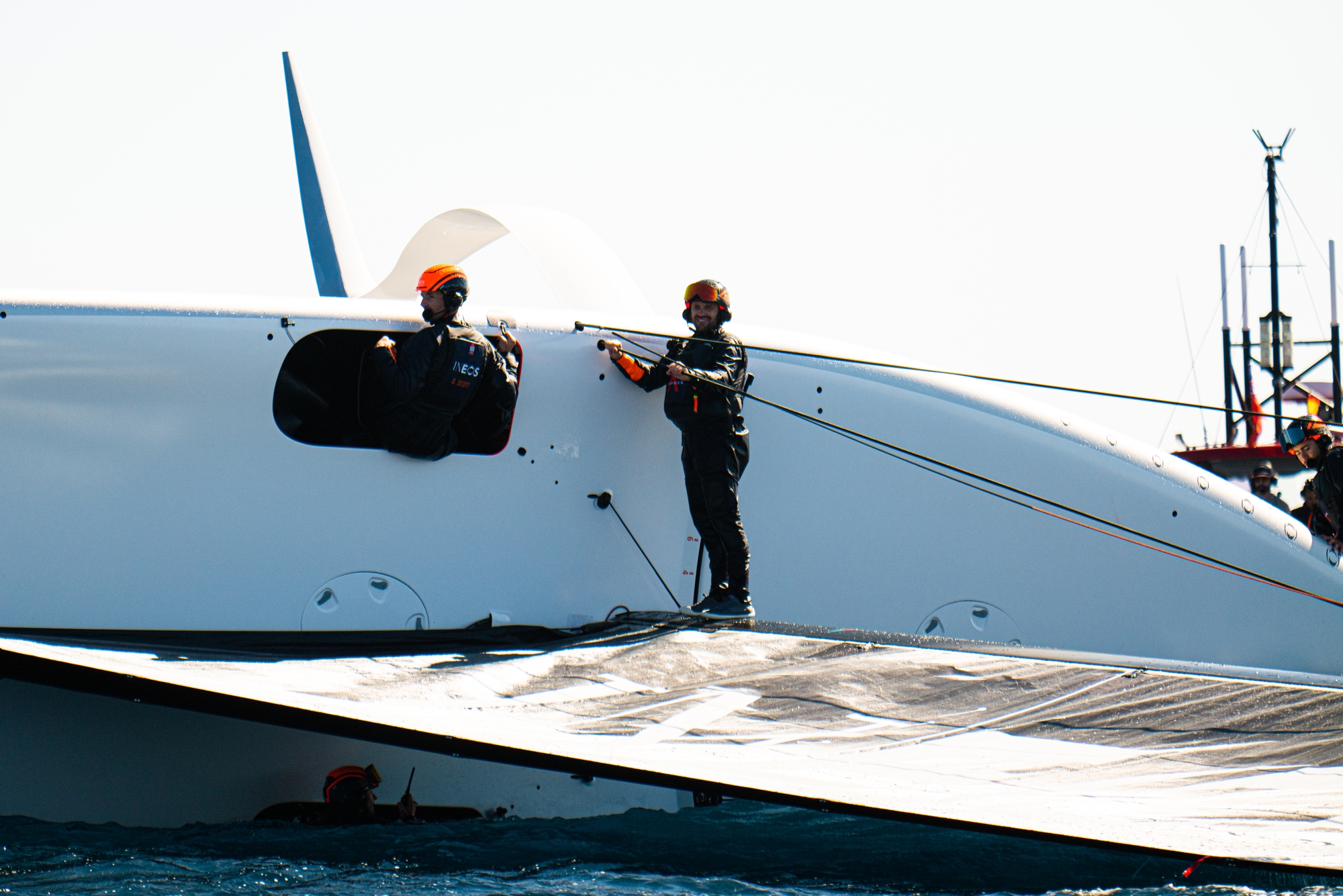
Asked whether the sailors now had a pretty good handle on where the edge is, Giles offered a good insight into the challenges of sailing an AC40 in big breeze, saying: “Yeah for sure, I think especially with the sea state that's really what makes it tricky with these boats. The margins between being able to foil and being able to hit your cant angles and not touchdown with the bustle, your margin is almost nothing in a sea-state like that…it was a great day and unfortunately ended with a capsize which is frustrating but that's all part of it.”
The capsize though was quite a while before the INEOS Britannia chase boat team could get the boat righted as the team battled an issue with the starboard foil arm that looked jammed down. As a precaution the chase boat attached an orange buoy to the masthead to prevent any turtling – lessons learned there and Giles gave the low-down saying: “For sure the capsize happened because of user error. We had a bit of an issue with the boat once it was on its side, it took us a reasonably long time to get it upright because we lost authority over one of the one of the cant arms but yeah fortunately no major dramas and we were able to get the boat back to the dock safely.”
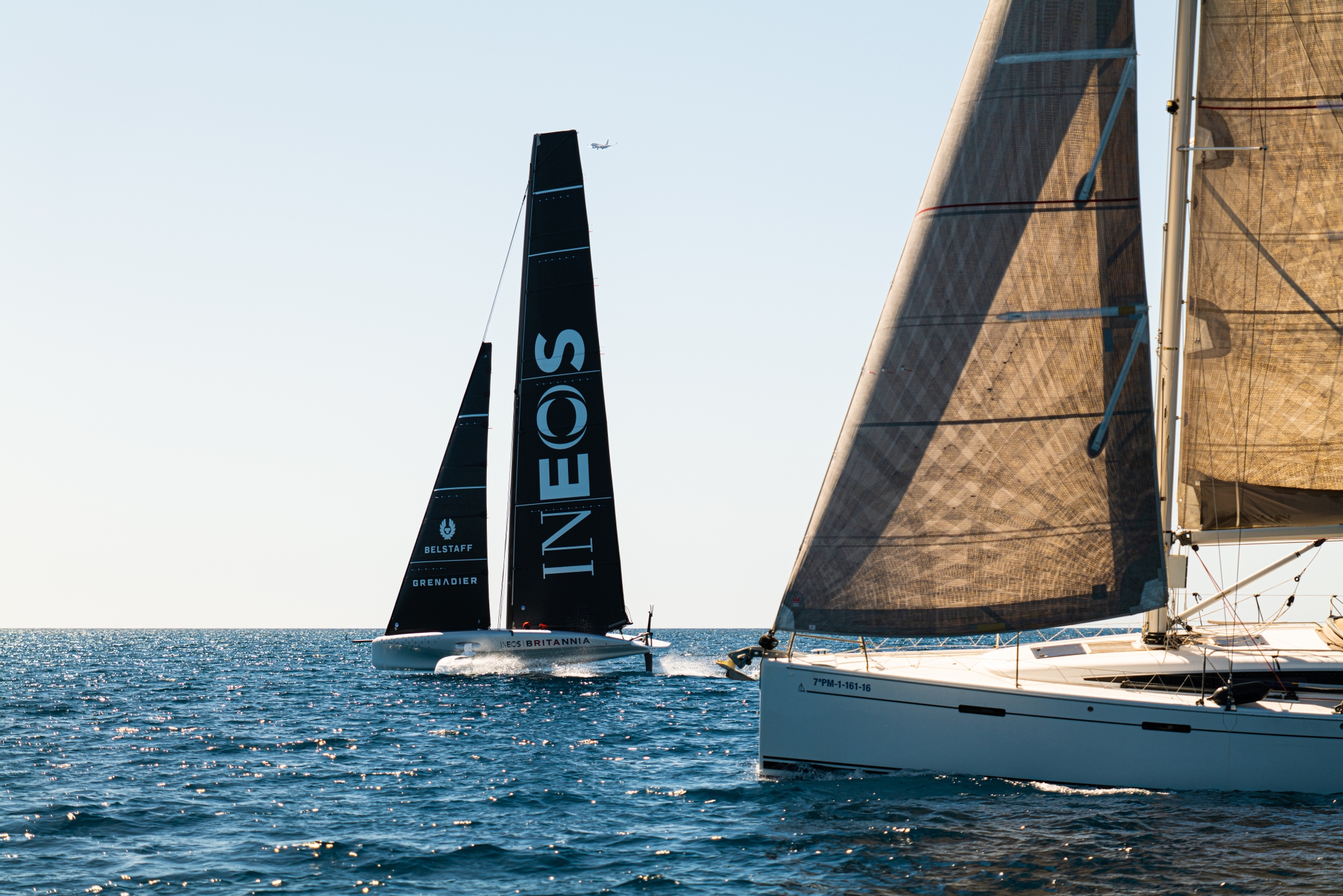
Whether the team would have been able to sail on Friday remains an unknown as the damage to the cant arm system will need to be inspected and resolved. Regardless, the team informed the Recon Unit that no sailing will now take place until Tuesday next week.
‘T6’, the team’s LEQ12 prototype is still in the shed after its refit and upgrade and close, hopefully, to a re-appearance so the team will perhaps have options there next week. A frustrating end to what was a very good day on the water – the edge was found, and the Bay of Palma was glorious.
More to come in the coming weeks from INEOS Britannia. (Magnus Wheatley)
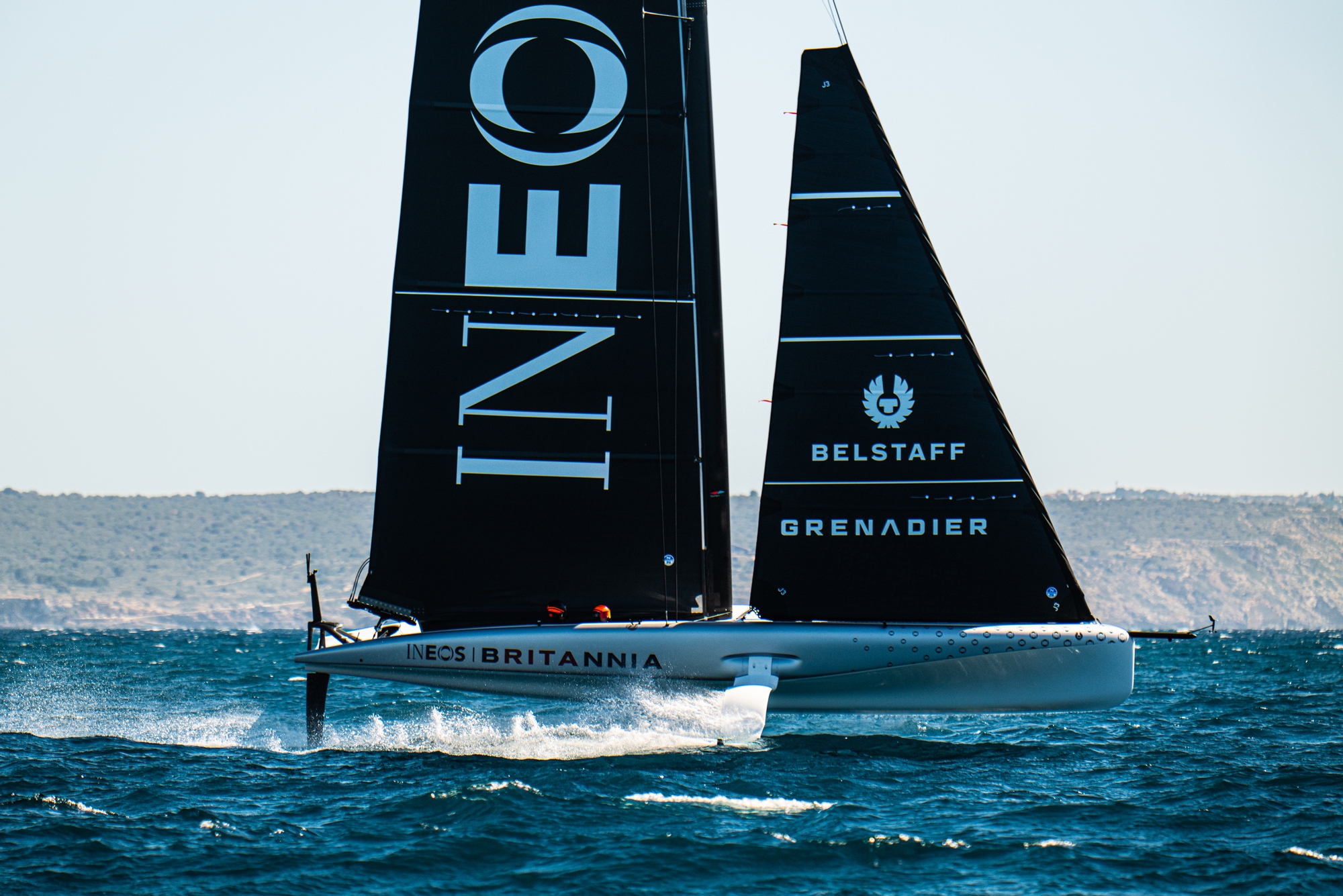
On Water Recon Notes: Today Palma Bay finally delivered some the of the conditions it is famous for, with a rock-solid southerly wind ramping from midday to a peak of 19 knots kicking up a steep 1 metre sea state in warm sunshine under clear blue skies.
The British team timed their roll out and launch to perfection and by 1300 were outside the harbour with sails up just as the forecast southerly started to arrive.
Having chosen the J2 headsail, the crew – helmsmen Giles Scott and Dylan Fletcher, with trimmers Bleddyn Mon and Leigh McMillan – were quickly into the action, getting airborne on starboard tack to begin a 30-minute session that saw the team tear around several laps of the Bay at increasing speed as the wind steadily ramped up into the high teens.
After a short break to switch to the J3 headsail, the British AC40 was off again – initially for a couple more high-speed laps of the Bay , before switching into racecourse practice around an approximately two-mile windward leeward course.
After ripping around two or three laps of that configuration at high-speed and pulling off multiple tacks and gybes seemingly with ease, a boat-handling error on the exit of a fast gybe, shortly after a windward mark rounding, saw the rudder break the surface of the water resulting in an immediate and dramatic nosedive, followed quickly by a capsize.
The team's support boats were quickly into action and a tow line was rapidly attached to the capsized boat, but a technical issue onboard meant it was around 20 minutes before the boat could be righted. During this delay the support team attached an inflated buoy to the top of the mast to prevent the boat turning turtle. It was a frustrating end to what had been up until the capsize a very productive day for the British team.
Whether the capsize caused any damage to the boat's systems is unknown – we observed four buckets of water coming from down below afterwards – but the team later announced there will be no sailing before Tuesday next week.
Dock out: 1225 Dock-in: 1540
Conditions: AM: Sunny with clear skies 16° – 19° c. PM: Sunny with clear skies 19° c. Wind Observations: AM: Flat calm PM: 1245 6-8 knots 180; 1300 9 knots 180; 1330 9-13 knots 180; 1400 17-19 knots 180
Onboard Today.
Helms: Giles Scott / Dylan Fletcher-Scott
Crew: Leigh McMillan / Bleddyn Mon
Sails Used:
Mainsail (M1-1): 2 hours 30 minutes
J2 (J2-1): 35 minutes
J3 (J3-1): 1 hour 25 minutes
Total Tacks: 13 – 13 foil-to foil.
Total Gybes: 12 – 11 foil-to-foil, 1 touch & go.
Take-off speed: 16 knots at 50° TWA