POWERED UP IN AUCKLAND
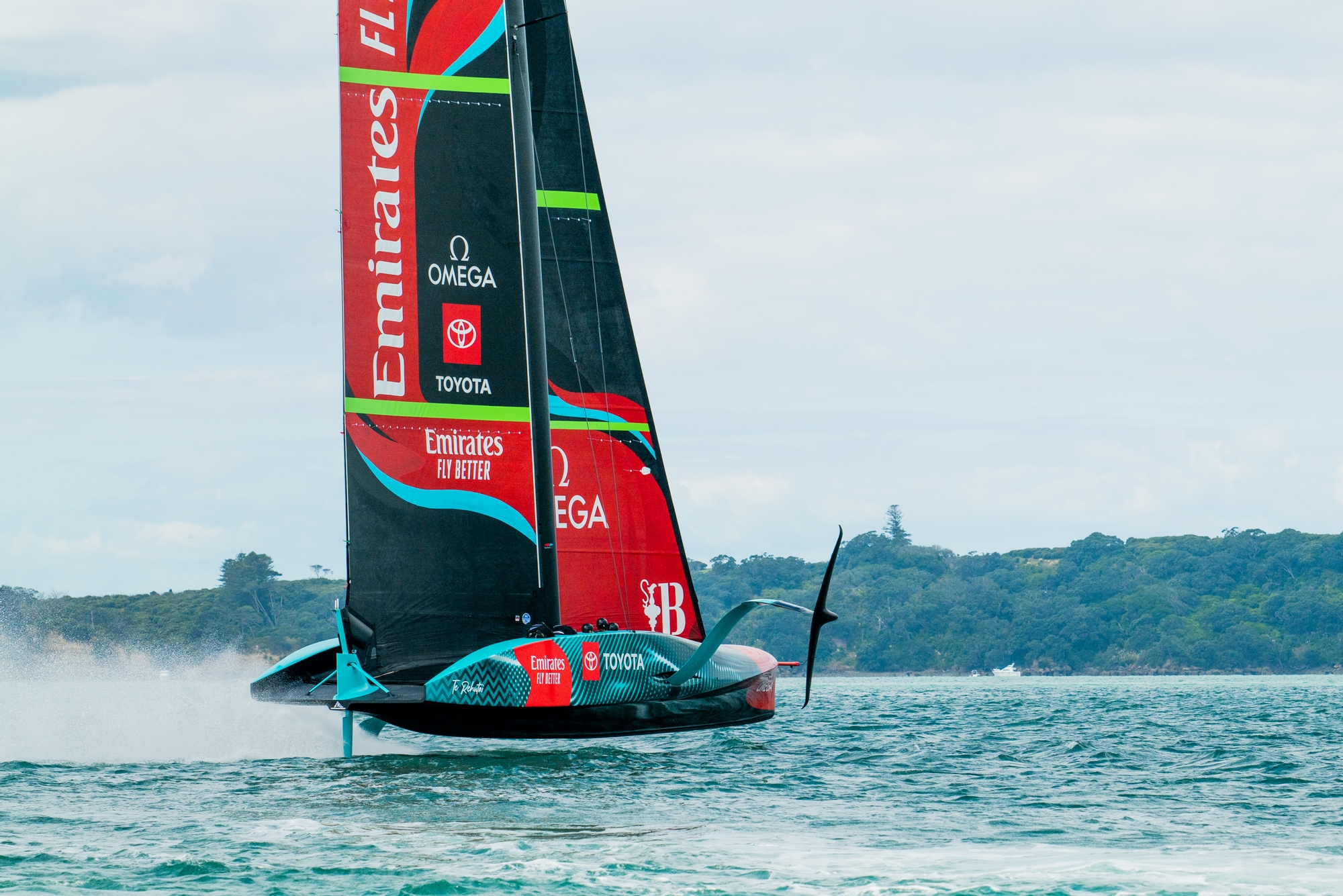
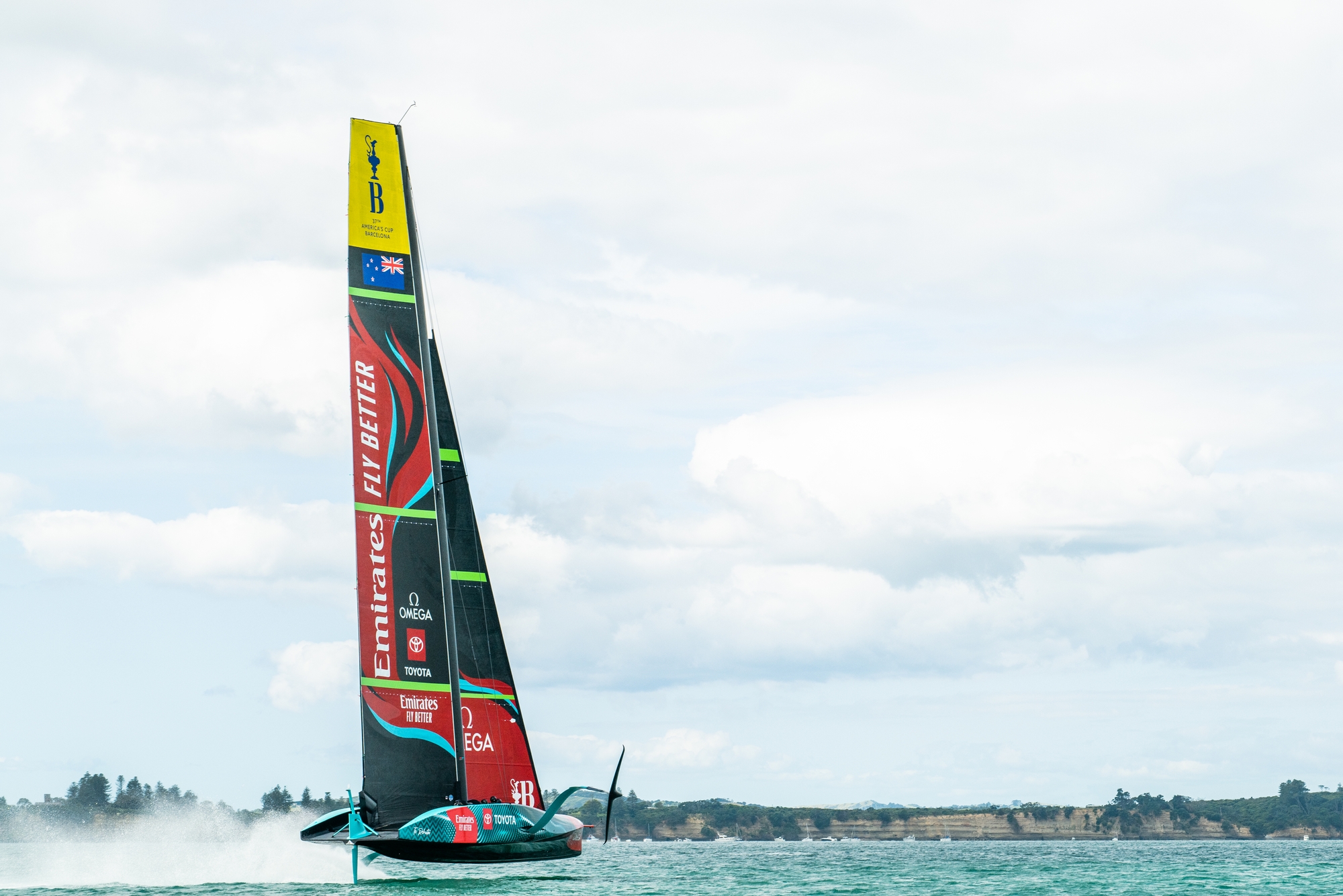
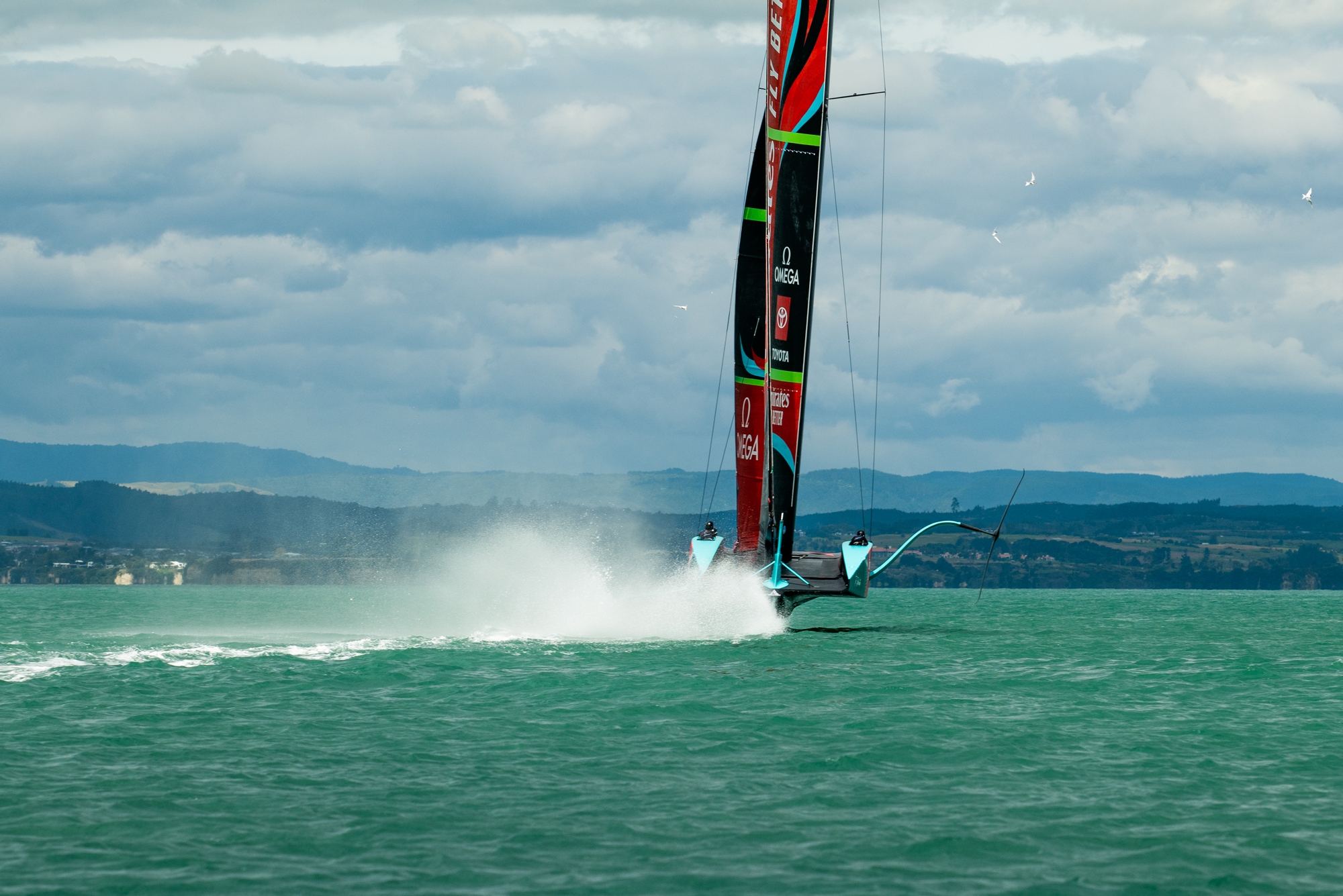
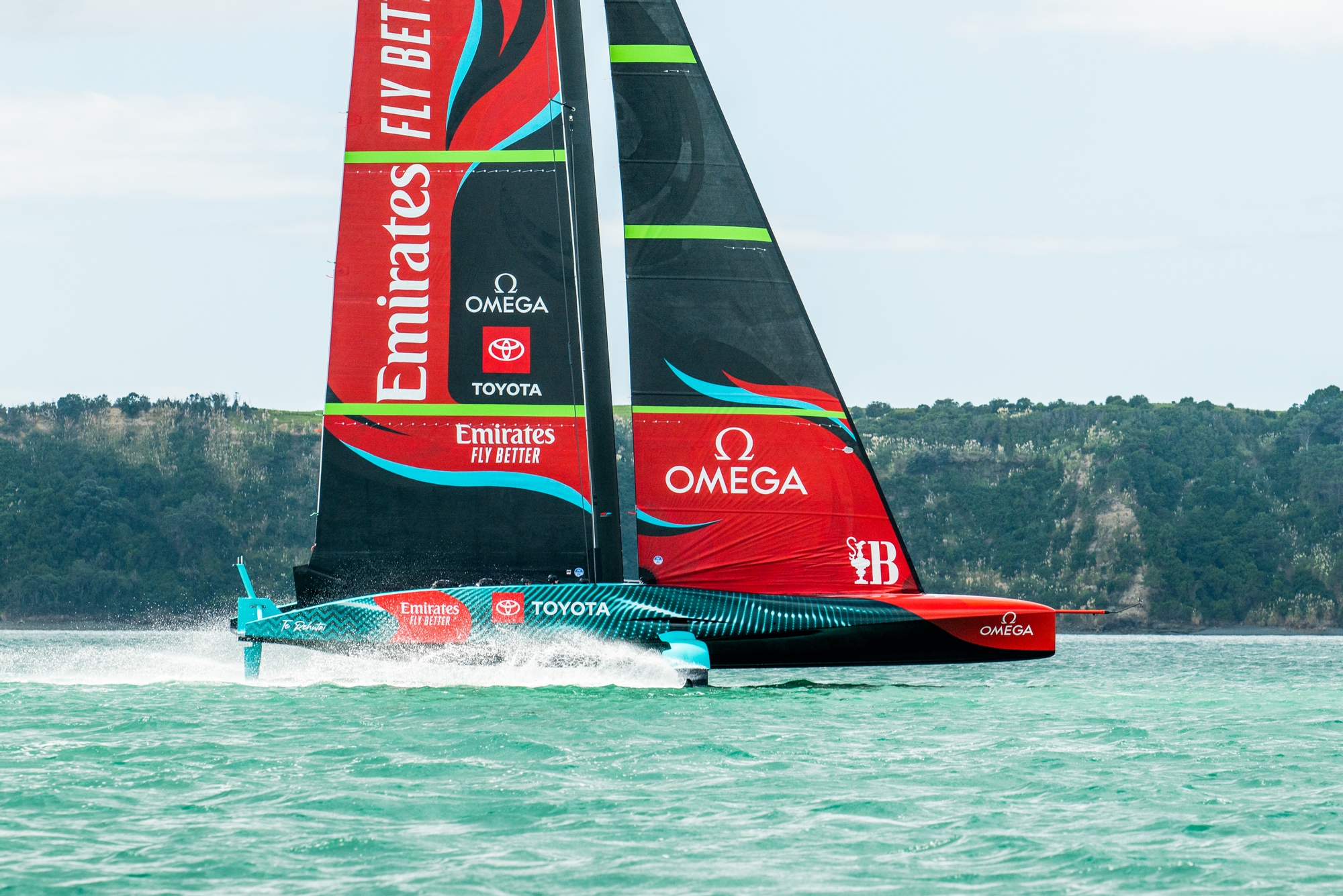
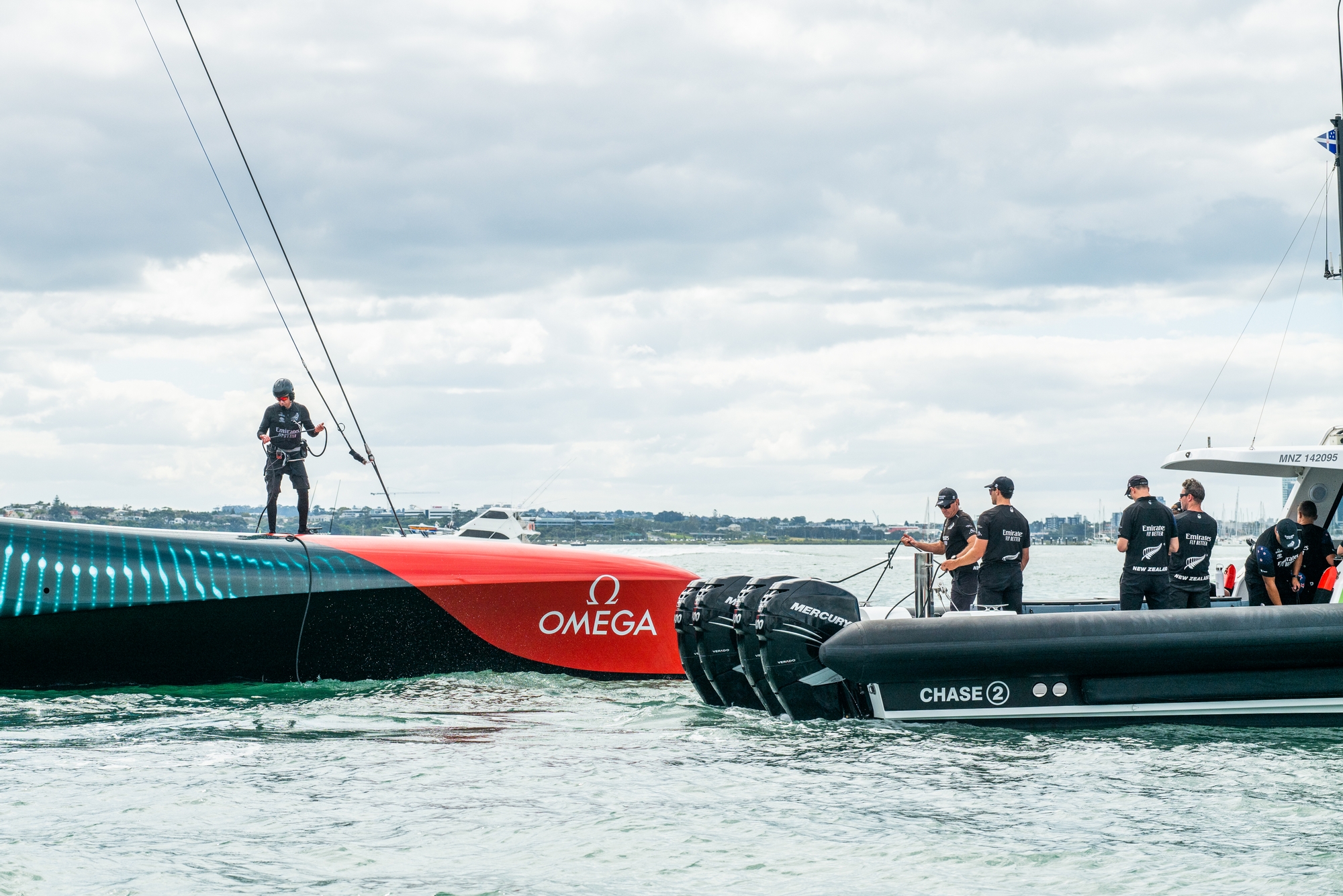
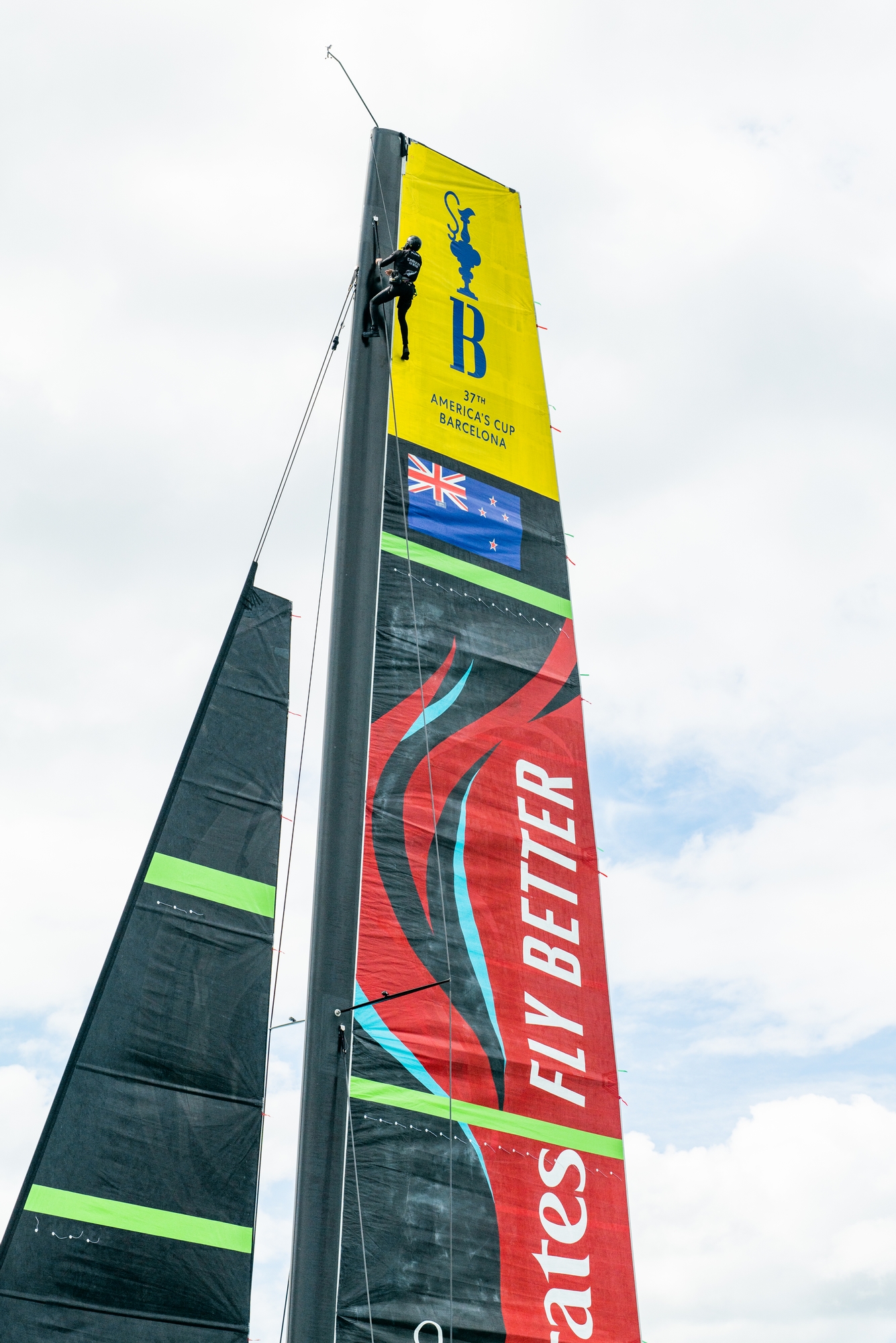
Emirates Team New Zealand put on quite a show out on the Hauraki Gulf on Saturday with ‘Te Rehutai’ the team’s much modified AC75 at full bore with the recon unit struggling to keep pace. Initial estimates suggest that speeds in excess of 50 knots were recorded but the team kept tight lipped about the performance with Elise Beavis, the team’s Performance Engineer, only confirming that it was “the fastest we've gone this campaign.”
Te Rehutai, lightened and modified, looks to be hitting a performance profile that is in excess of what we saw at AC36 and on Saturday the Flight Controllers held her low upwind whilst the sail control on the mainsail was highly impressive. The Kiwis have worked hard on the internal controls within the double-skinned mainsail and the result is a very even break of the leech all the way from the traveller to the square sectioned top which gives the trimmers immense control to both power-up and de-power at will. Emirates Team New Zealand’s sail control is next level stuff and the power required is being provided highly efficiently from the four-man cyclor team who are almost hidden in the aft pods with a very low aero profile.
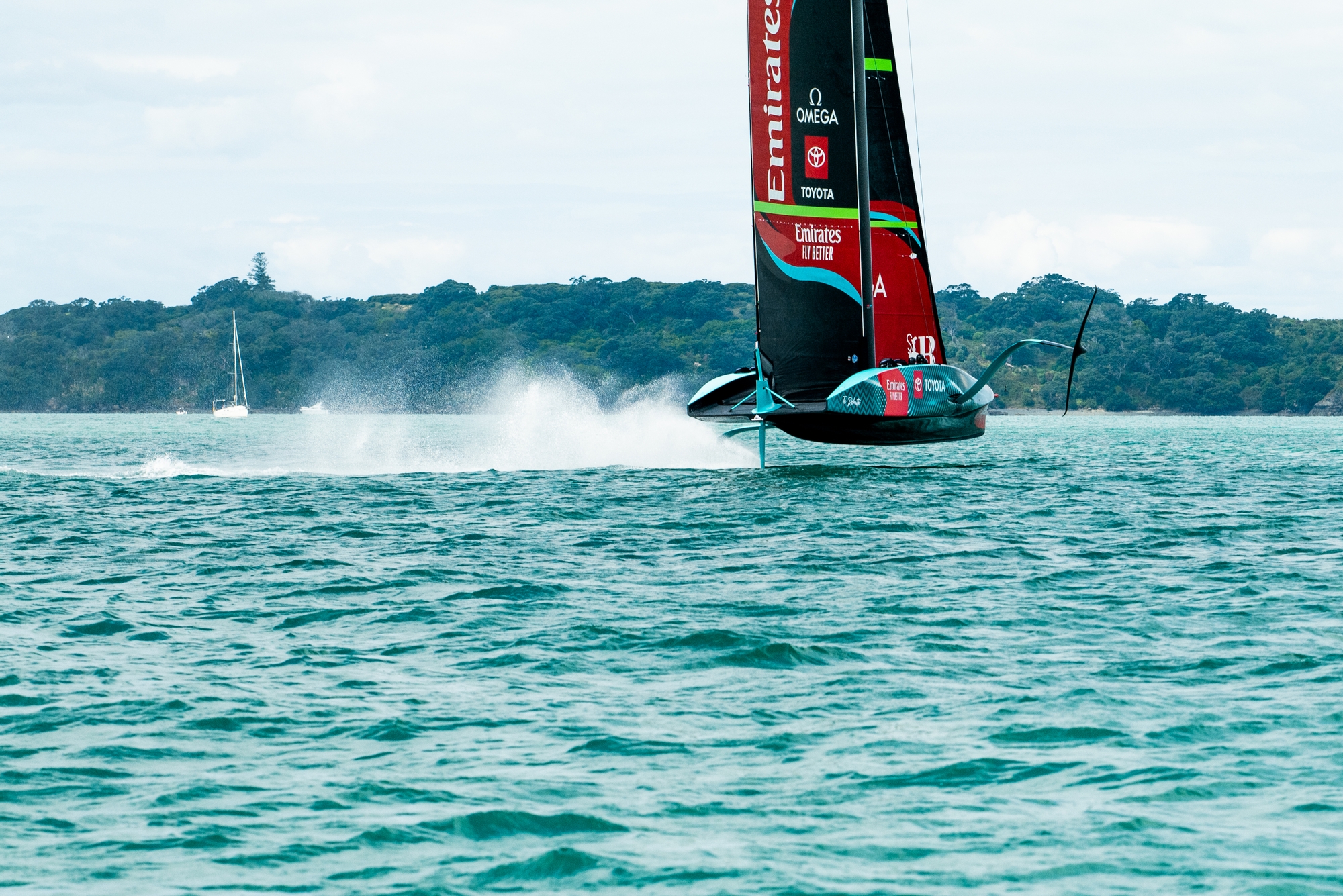
It was a two-hour session on the Gulf with a building breeze that topped out at around 18 knots and made for some super-fast passages. With no new foils to test, this is an exercise in systems controls and sailing team dynamics. On both metrics, the Kiwis look sharp and the changes that have been implemented, most noticeably in the reduction of all-up weight gives Te Rehutai effectively another gear from what we saw in the Match in 2021. Talking about the changes, Elise Beavis gave a fantastic interview afterwards, saying: “Well it's really that light air range, especially as we saw these past two days and later on today when the wind backed off a bit, just the lighter weight, the boat is better in that range. We’ve still got the foils from last time and obviously we will have that the whole time with this boat so we won't see the benefit of increased span which actually comes with the V2 boats until that gets on the water.”
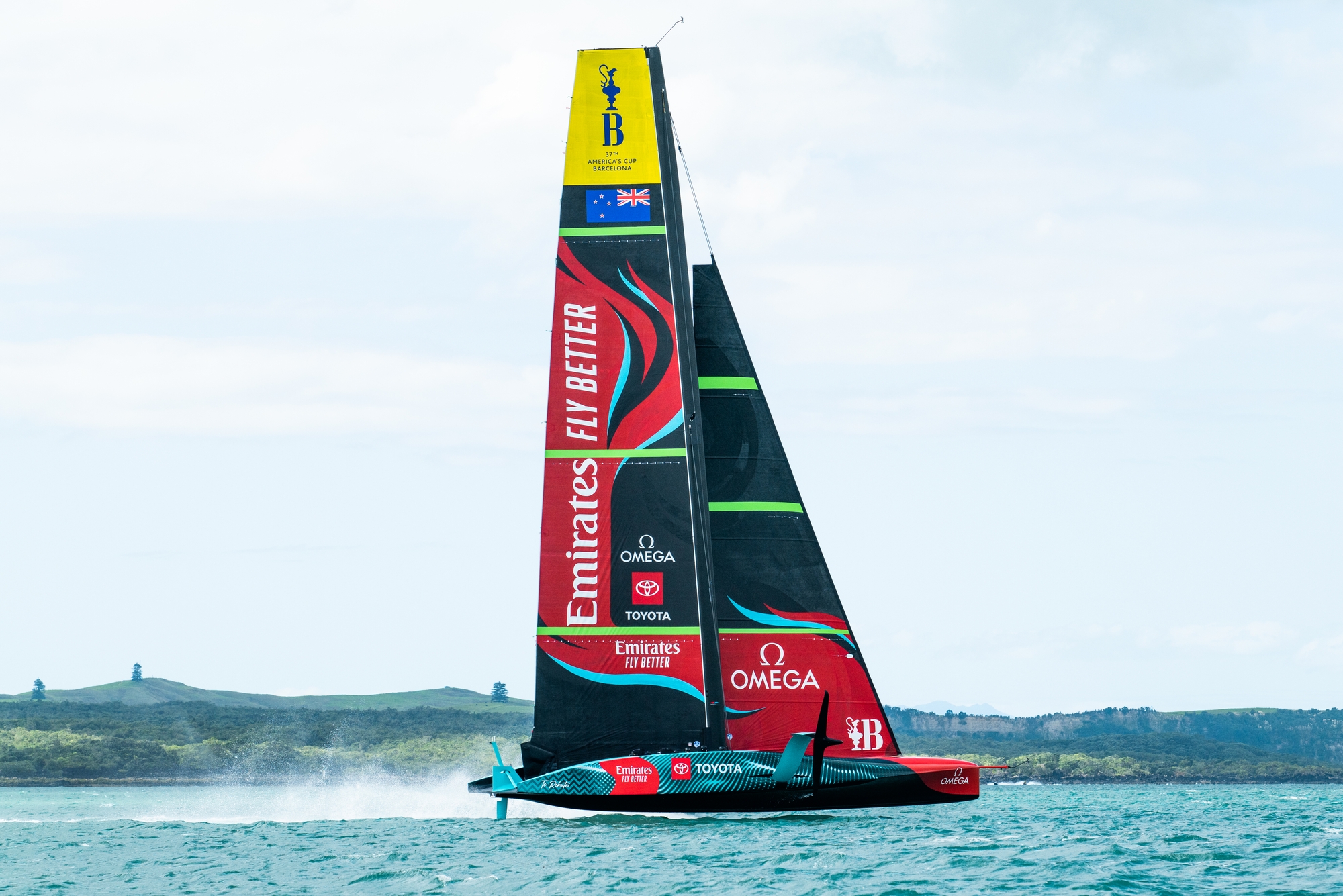
Talking about those foil and the increase in performance they will offer when the team’s one-build AC75 hits the water next year, Elise commented: “It's more efficient having a longer foil so last time we were allowed to go to a four metre span, every team went for a four metre span, this time you're allowed to go four and a half…you're trying to maximise that span and reduce your induced drag…it's more the less drag that will help us through the whole wind range, it will help in that light air but will also account for some of the performance losses from the boat getting lighter will be made-up by the fact that we’ve got the increased span foil.”
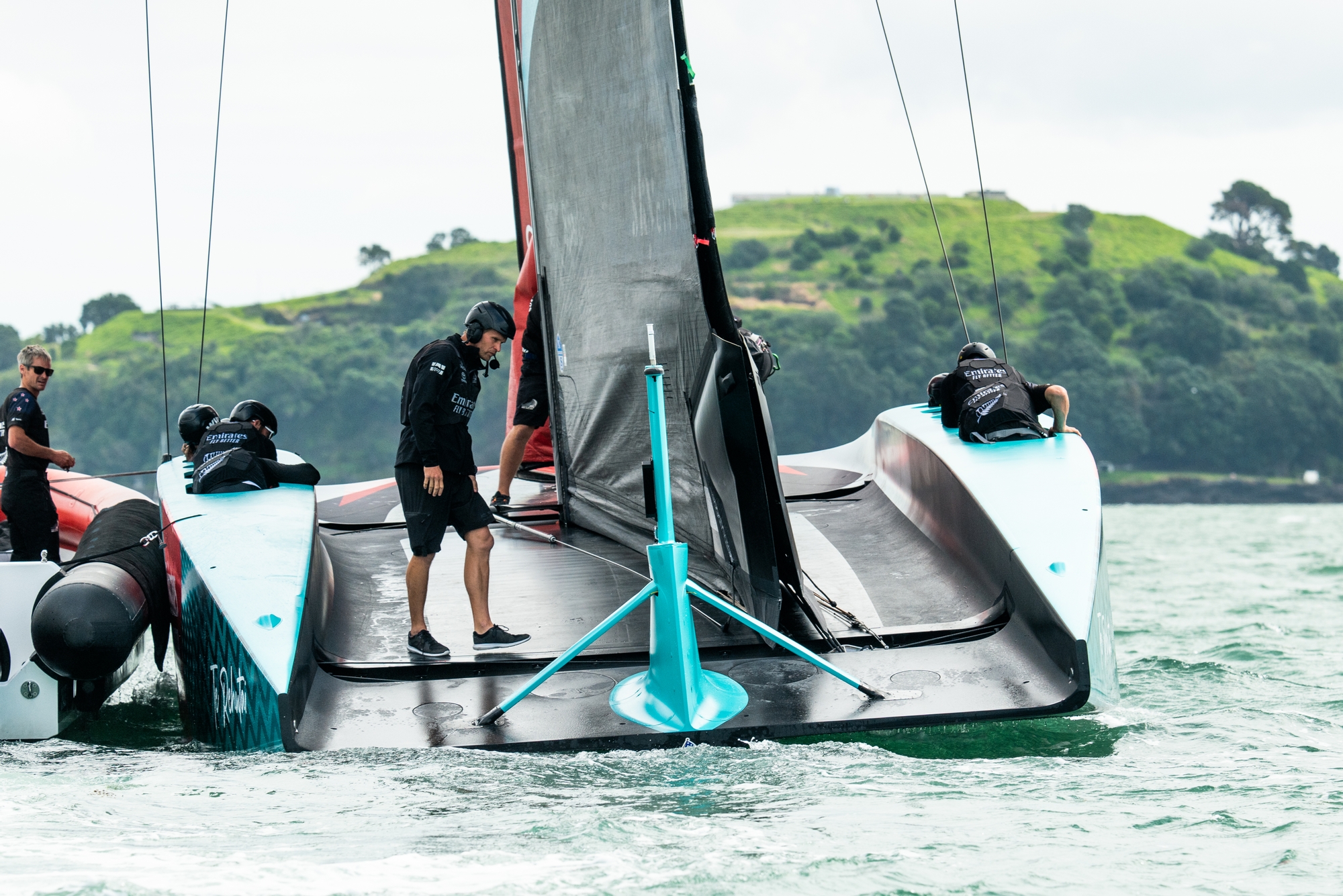
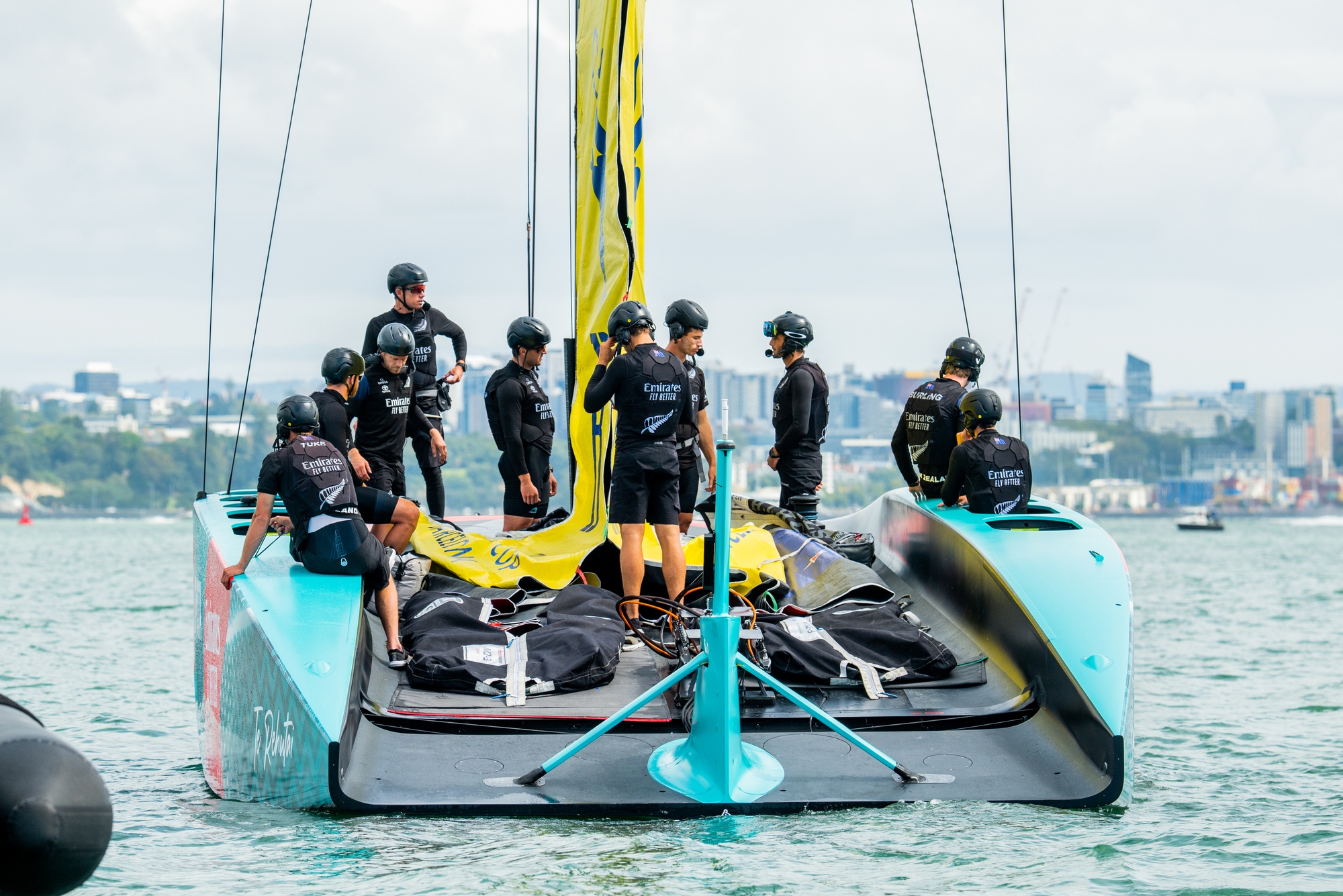
And with so much concentration on reducing aero drag of the crew down at deck level, Elise made the following observation: I think we’ve seen it with the boats all along, you're trying to cover up your people as much as possible. In the class rule writing at the first time around and it got reviewed and again this time there's a whole lot of debate on all the crew coverage because from an aerodynamic perspective ideally you put everyone below deck but from a TV perspective everyone wants to see people and see them working and what's going on so it's tricky to find that balance and everyone's going to push right up against the limits of covering the crew as much as possible.”
These are valuable days for the Kiwis, the great innovators of the America’s Cup. Every team will be watching their progress with interest. The relentless programme continues this week.
Recon Unit Notes: The race yacht was rolled out of the shed just after midday, the rig was lifted into position and stepped by 12.30 and she was in the water in the pen at 12.45. At 14.00 she was side towed from her berth and just outside the breakwater she was taken under bow tow from chase 2.
Te Ruhutai dropped her tow just north of Bean Rock where main and J2 were hoisted together with the jib in the lock by 14.20 and the main not too long after at 14.23. The team now had a short 17-minute sailing session with a short 2 min upwind and then a run down to the beginning of the ‘Back Paddock’. Often speeds were greater than the recon boat could achieve with breeze about the 15-16 knot range with some big holes in it.
Chase 1 was back alongside at 14.59 where I watched a change of Jib from the #2 to #3. She was sailing again at 15.24. Now the breeze was steady around the 15-knot mark and with the flatter water she really lit up! Charging down towards the bottom end of Waiheke she started to horizon.
Onboard today:
Helms: Nathan Outteridge / Pete Burling
Trimmers: Andy Maloney / Blair Tuke
Power Group: Simon van Velthoven / Marius van der Pol / Louis Sinclair / Louis Crosby
Sails Used:
Mainsail M1: 2 hours 21 minutes
J2: 17 minutes
J3: 1 hour 38 minutes
Manoeuvres:
Total Tacks: 6 – 5 foil-to-foil, 1 touch & go.
Total Gybes: 12 – 10 foil-to-foil, 1 touch & go, 1 touchdown.
Take-off: 90° TWA (True Wind Angle) Speed not recorded
Recon Comments: 1 tow-up, 5 self-take-offs. Easy up on the #2 jib, 20-30 seconds longer on the #3 jib.
Conditions: 6-10 WSW on hoist quickly ramping to peak 18 then moderating to 11-14Weather AM: Fine, light breeze, sunny. PM: 40% cloud. Fine, 23°c. Sea-state: Calm - Slight (PM)
Dock Out: 1400 Dock In: 1708