WAVE SEEKING IN AUCKLAND
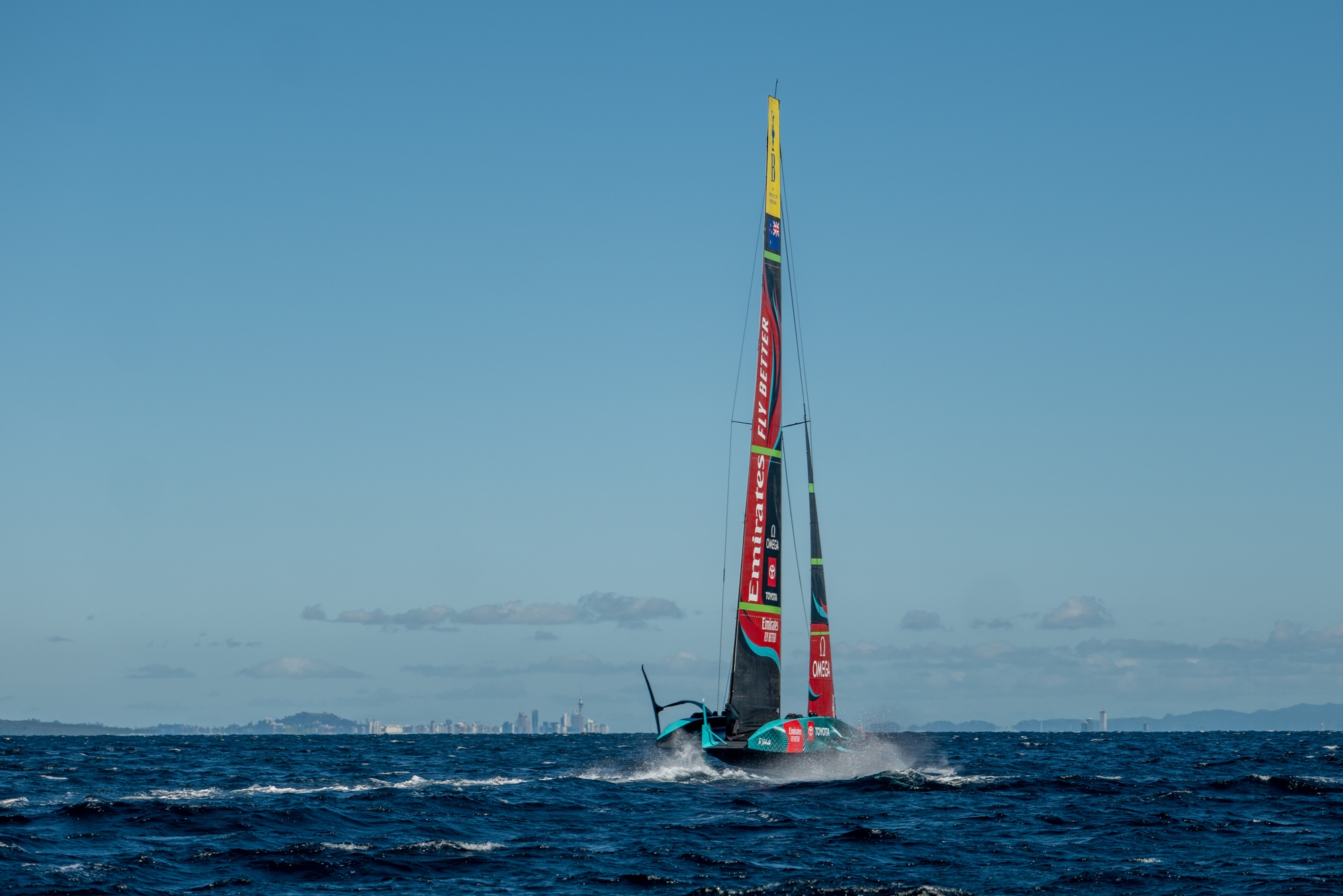
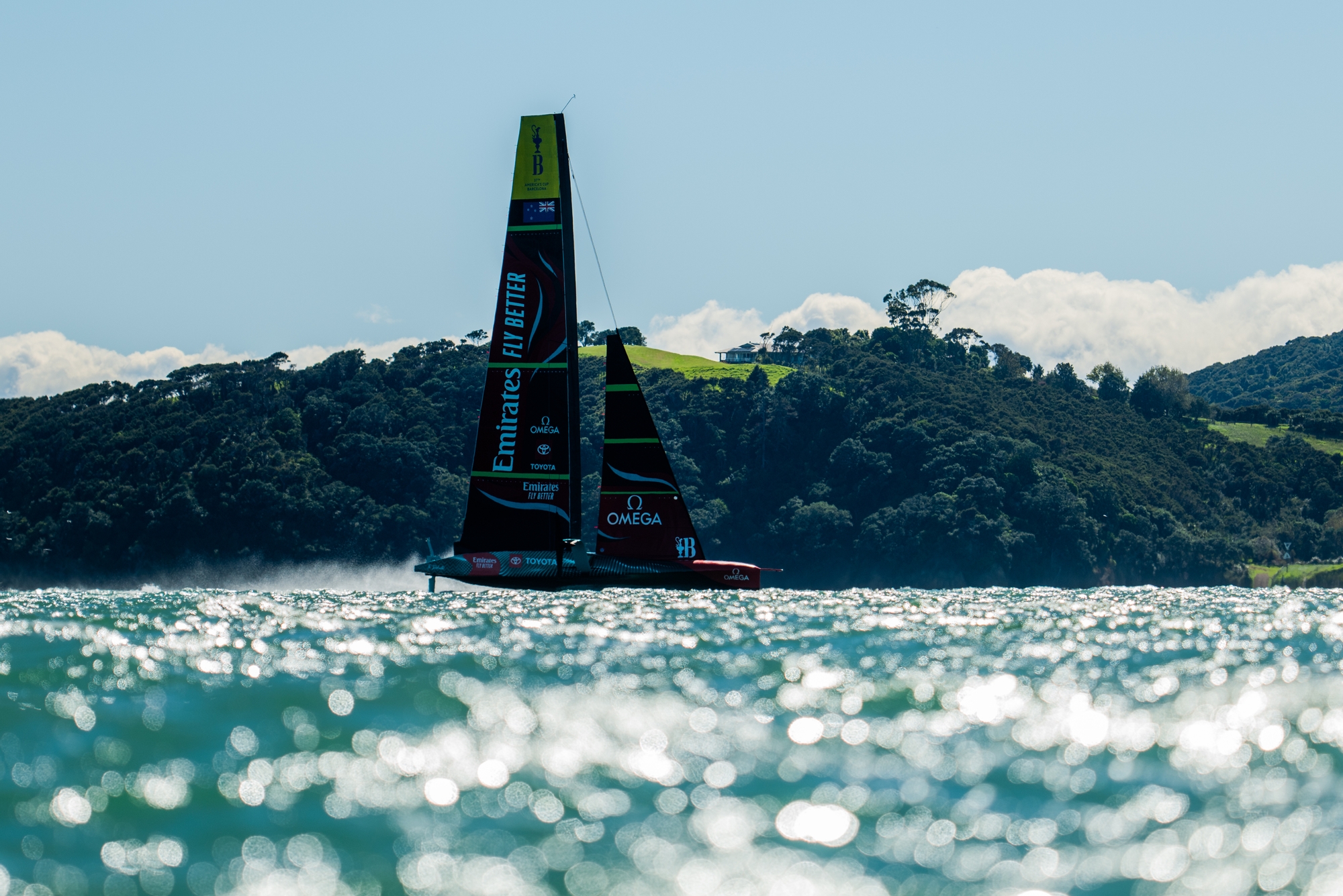
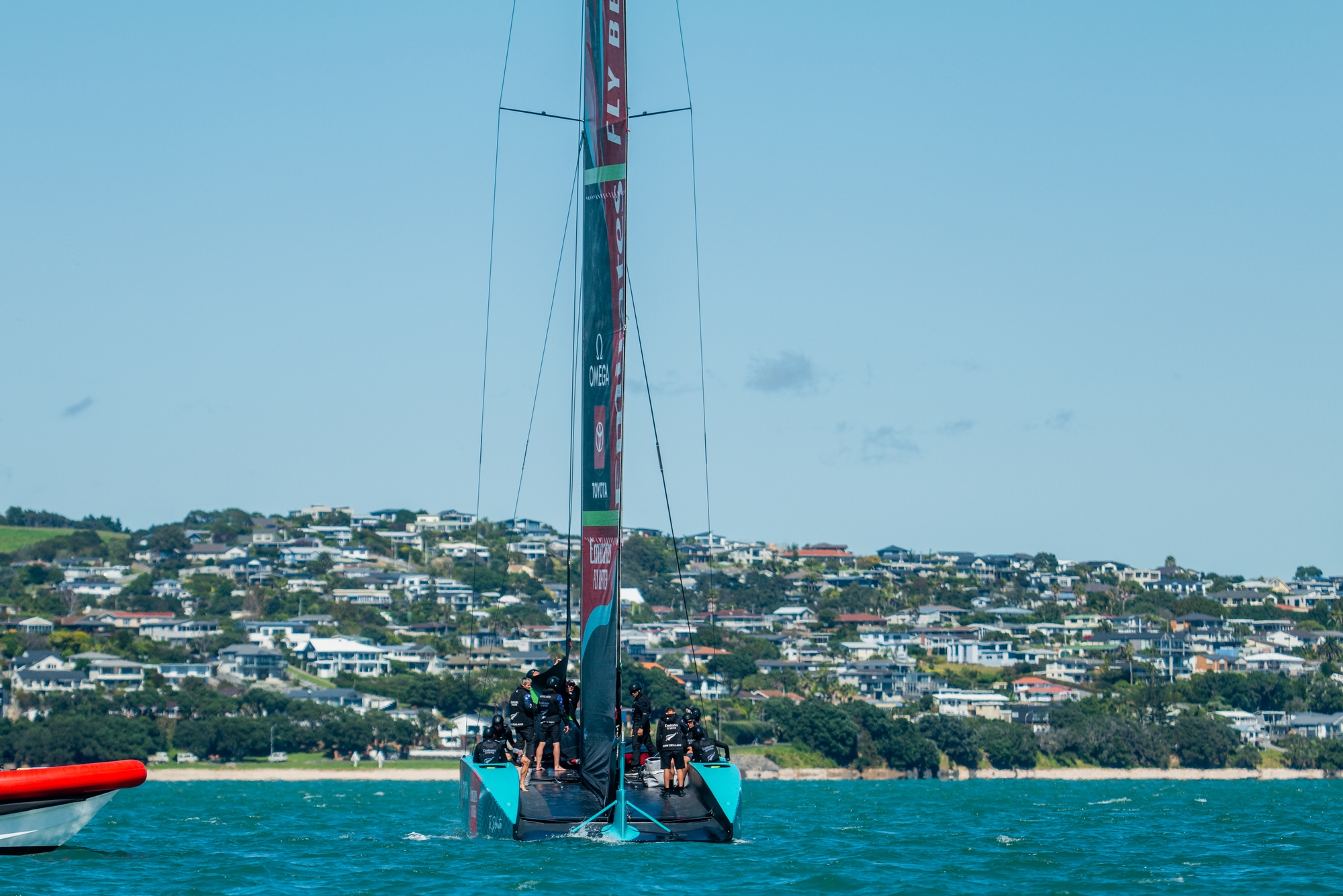
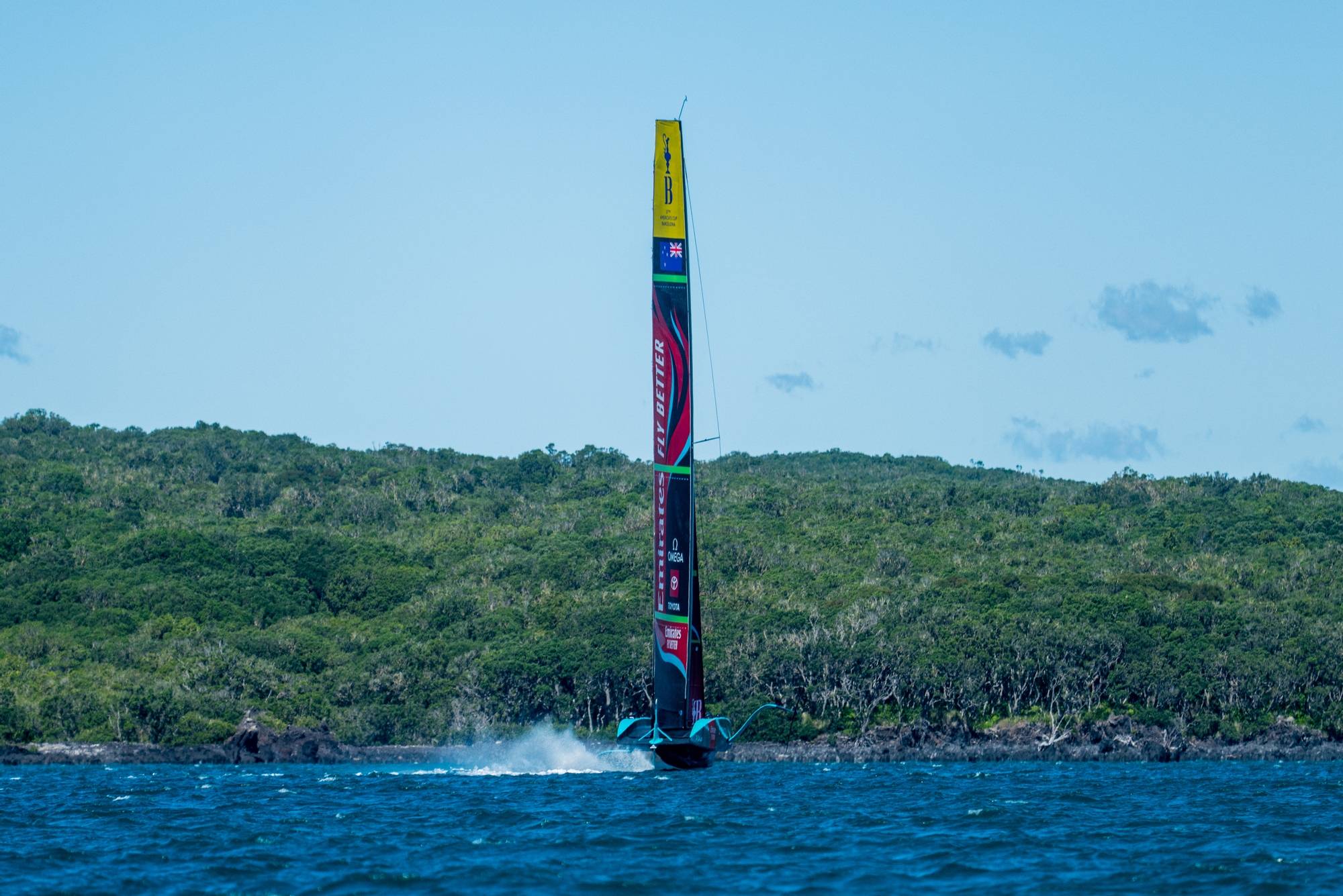
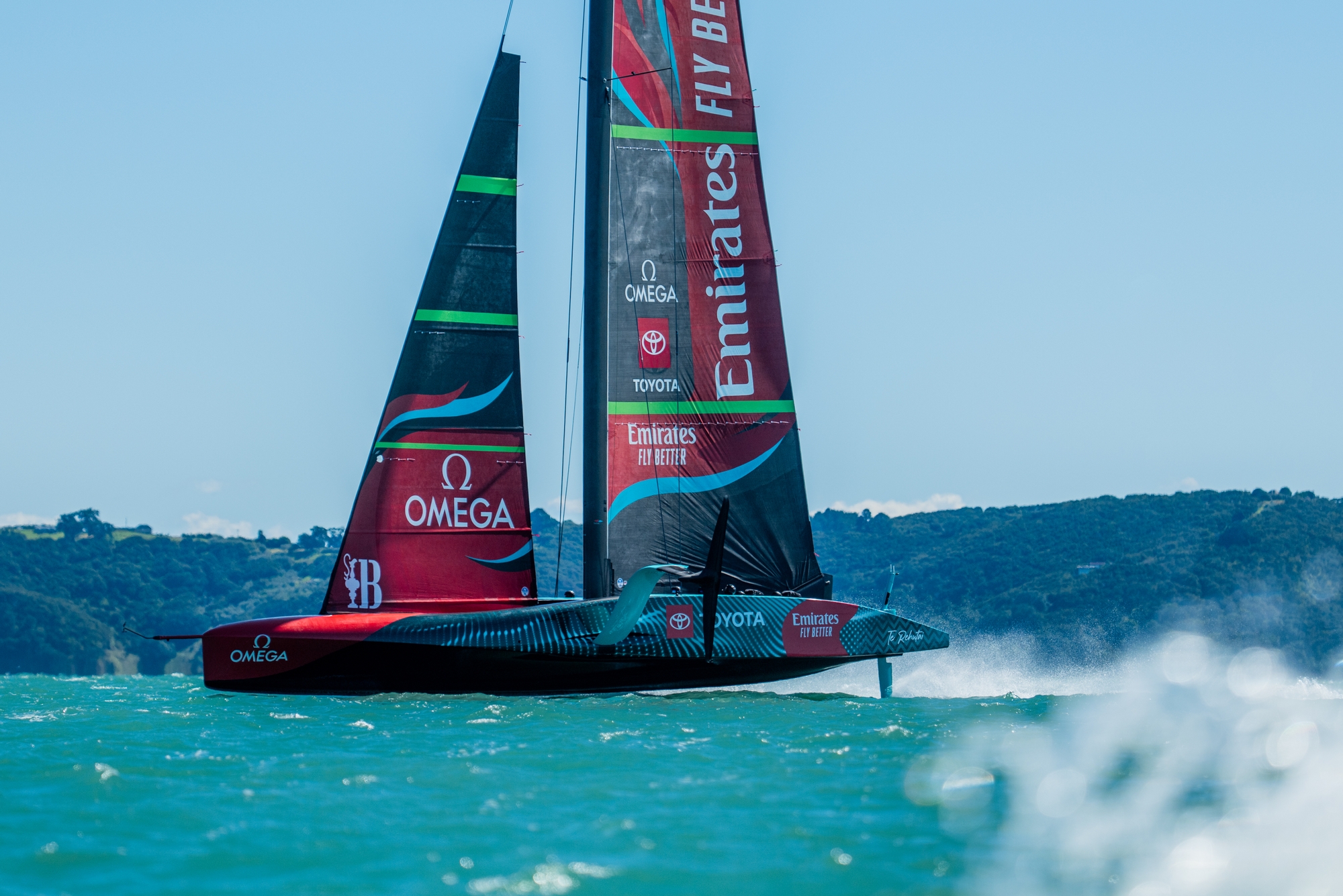
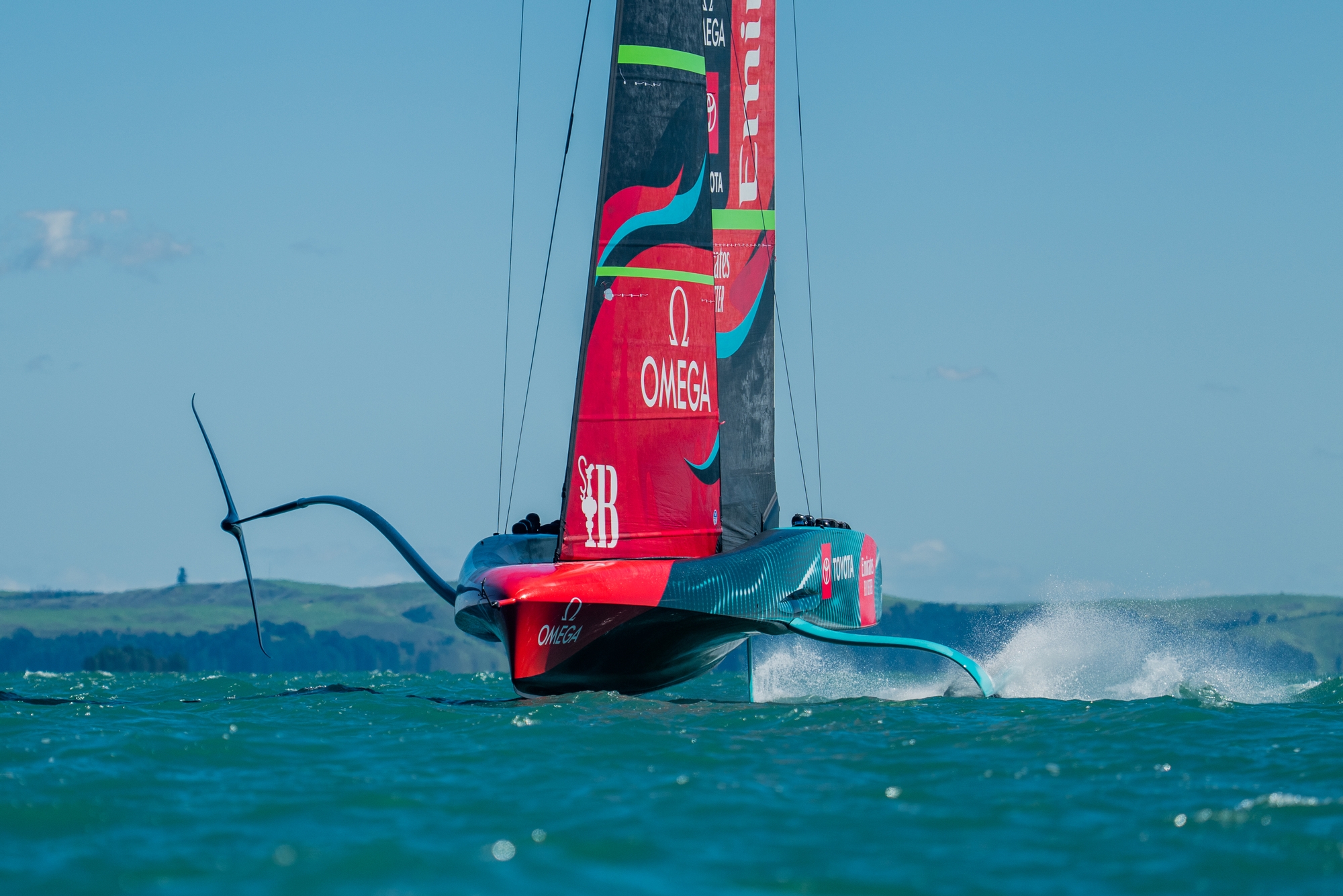
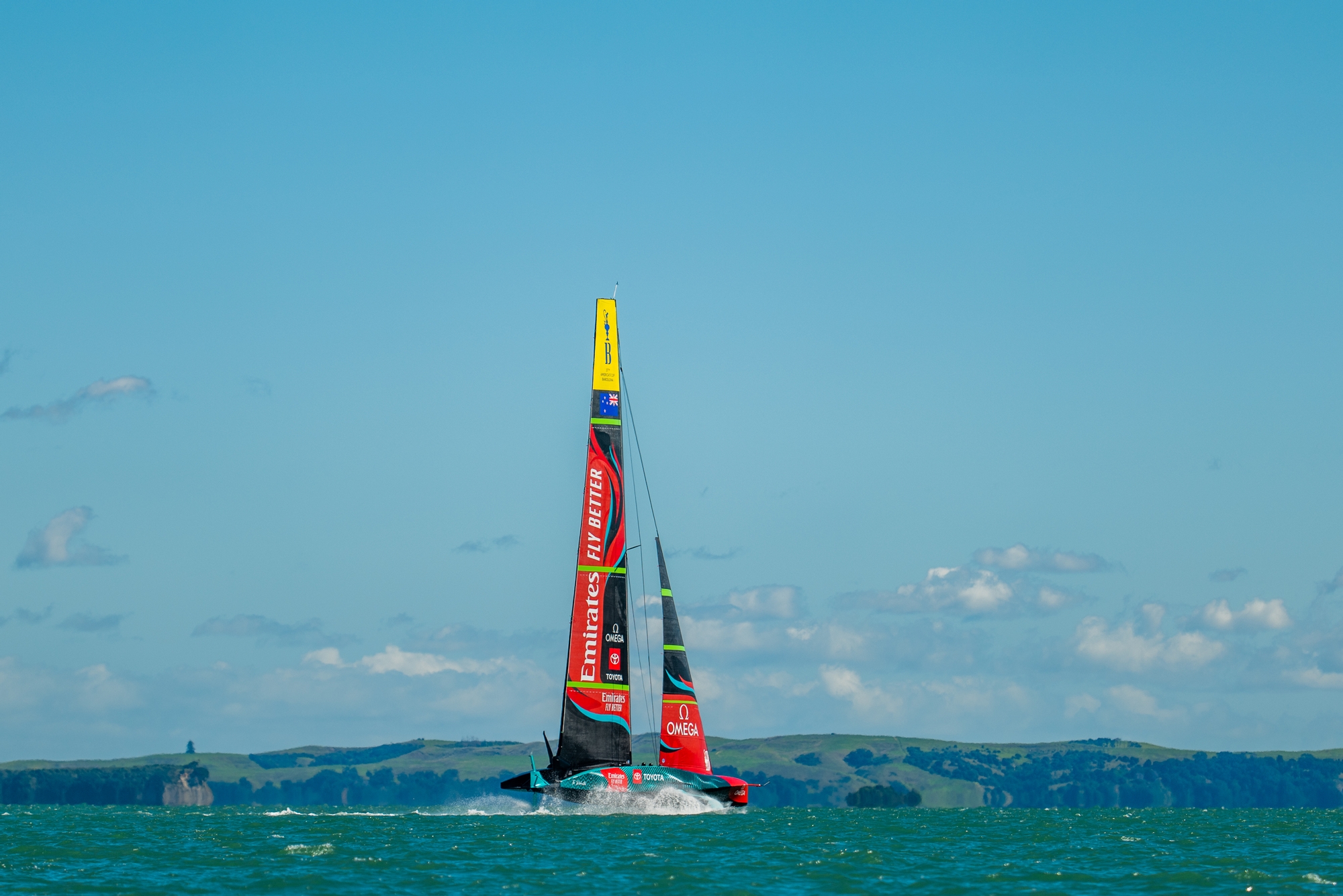
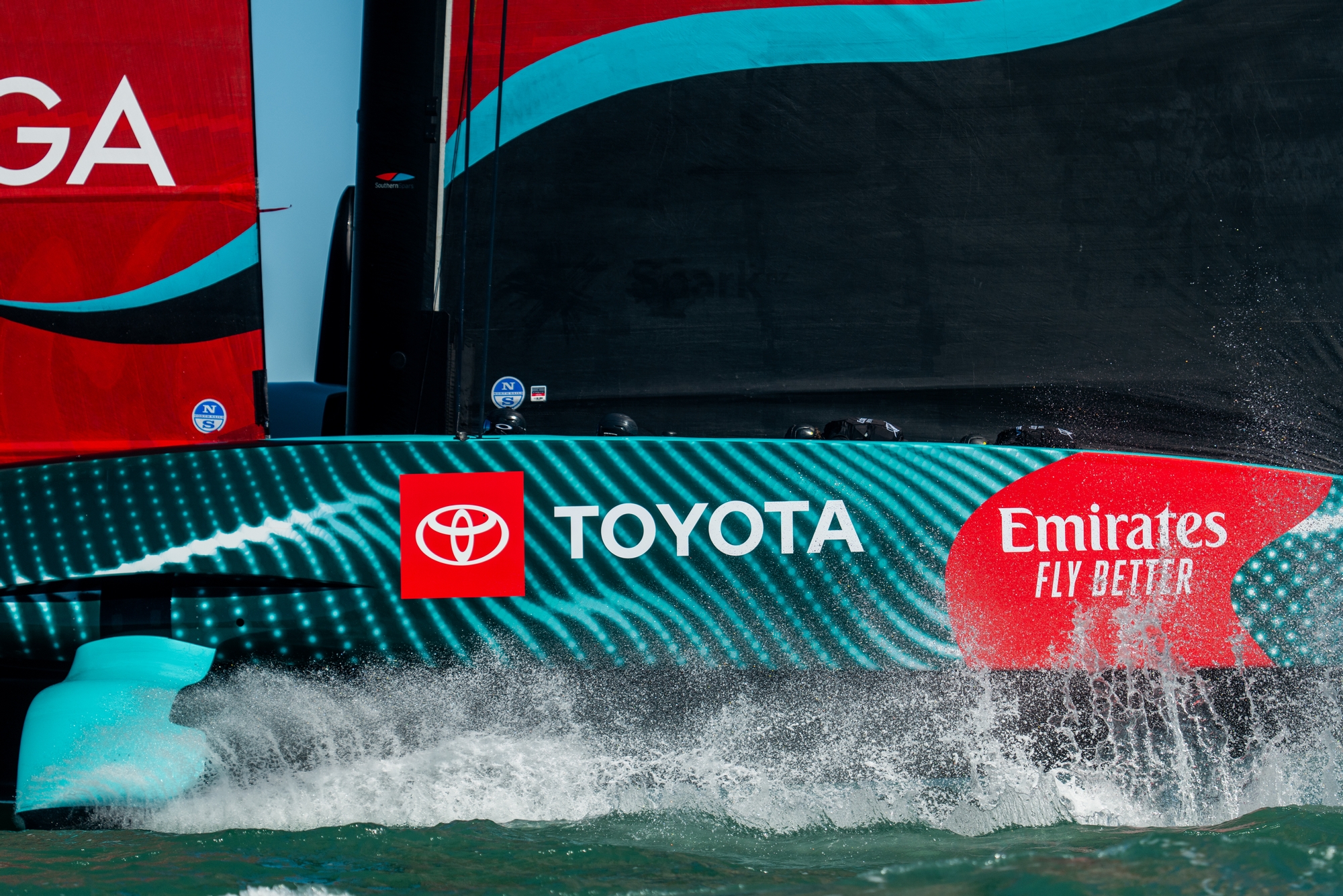
Ray Davies describes Emirates Team New Zealand’s re-built America’s Cup winning platform as being “almost a new boat” and as such, the Kiwis are revelling in their new toy and today (Wednesday) put in a mammoth session covering 120 nautical miles in just four hours with plenty of breaks for changes and crew rotations. Astonishing speed was witnessed for a while until ‘Te Rehutai’ dropped the Recon Unit as they found a 1 metre waveform far offshore and distanced the RIB that has a top speed of around 46-47 knots.
It was a classic Auckland day with a firm 15-18 knots of south-westerly that was set to drop marginally later in the afternoon but stayed consistent through the early afternoon training session. It was short, but ultimately sweet on this the third straight day in a block of training that on the face of it looks highly valuable from a systems, sailing and sail control perspective. The sailors though were keen to find waves. They know that come Barcelona, the unique swell that we’ve seen Alinghi Red Bull Racing as the only team onsite, tackle, could be a major factor in the outcome of the America’s Cup Match so any opportunity to line into swell is a bonus. They found it but it was miles offshore – did they mimic Barcelona? Debateable but still there’s a huge value in wave sailing of any kind.
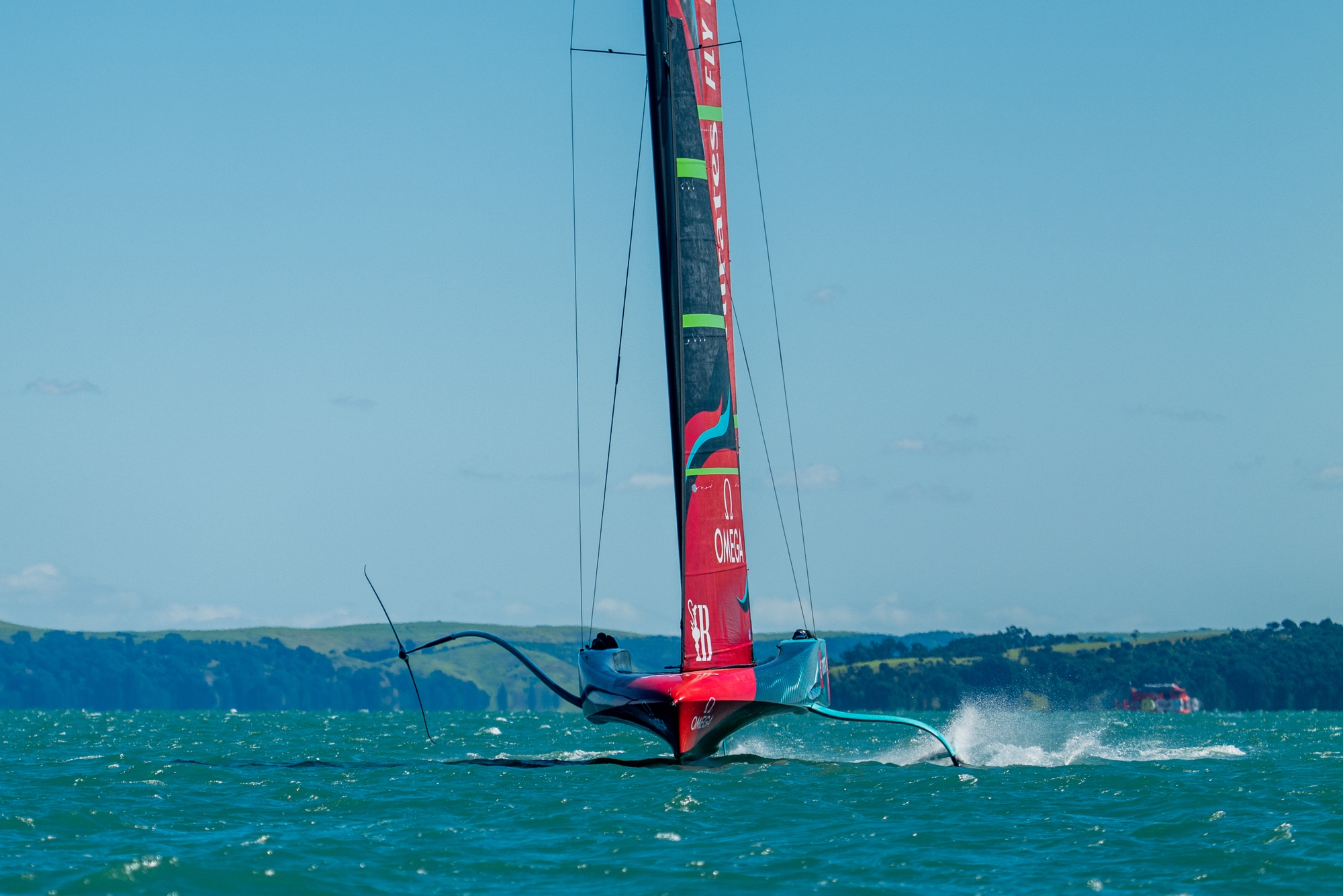
Sail shape was a crucial area of concentration today and it was noticeable that the Kiwis had deployed three wide green strips on the mainsail covering the upper two thirds whilst on the jib, another three strips, two wide in the upper third and one skinny along the mid-point were observed. Cameras were trained relentlessly on these shapes with the outer/leeward skin trim being worked on heavily on the mainsail.
Clew tension on the main was massive with visible speed creases from the mid-point angled downwards whilst the loads on the cunningham, particularly in the breeze, looked eye-watering. The battening at the headboard on the mainsail also looked to be enhanced. ETNZ run a stiff ‘top’ across the head and then a lattice work of two, possibly three, battens feed up to the leech point at the head whilst another stretches out the leech out about six feet down within the delineated yellow panel. Likewise on the jib, very neat mini battening can be seen supporting the head on both the J3 and J4 that they used today. Controlling the sails aloft appears key to the sail programme.
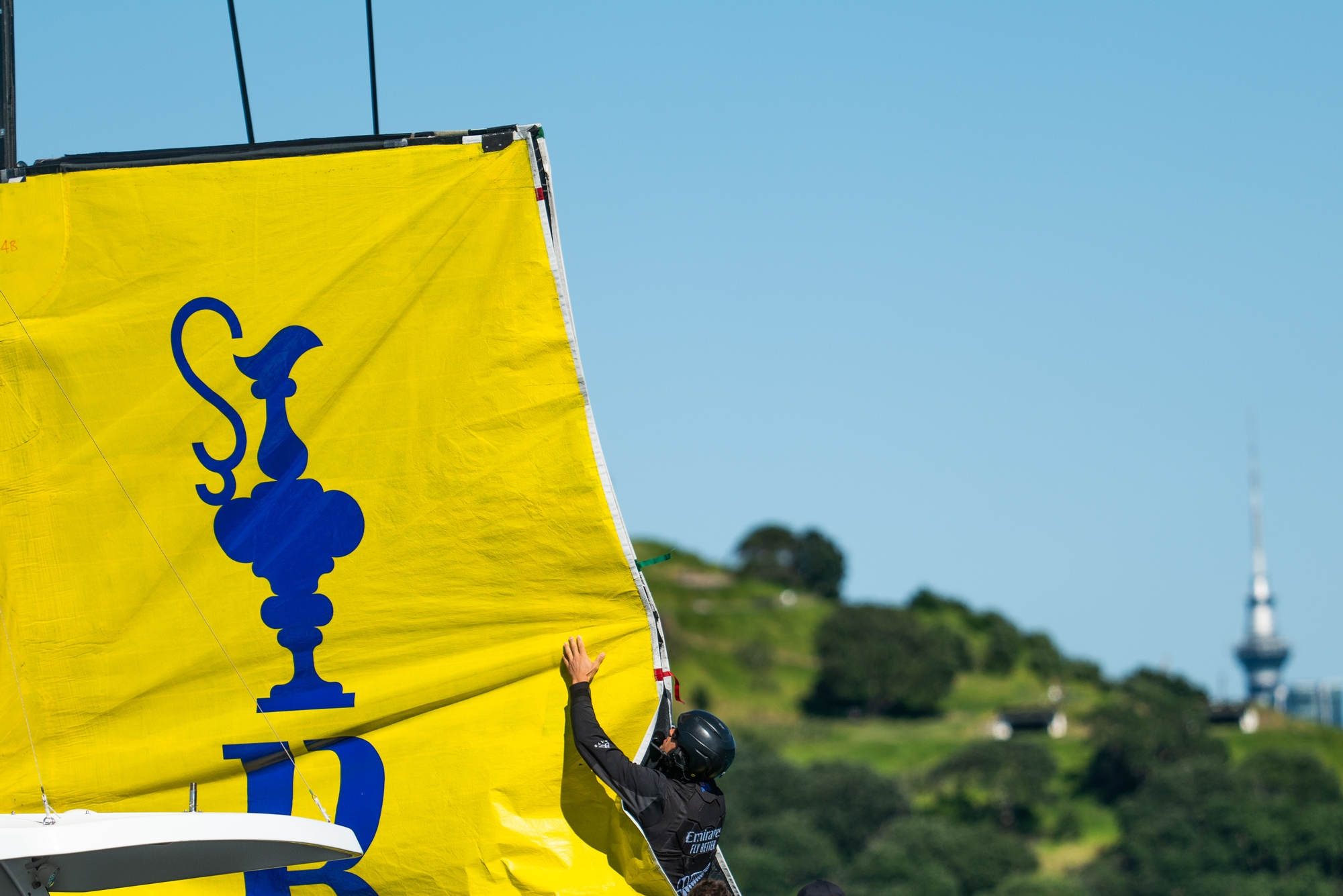
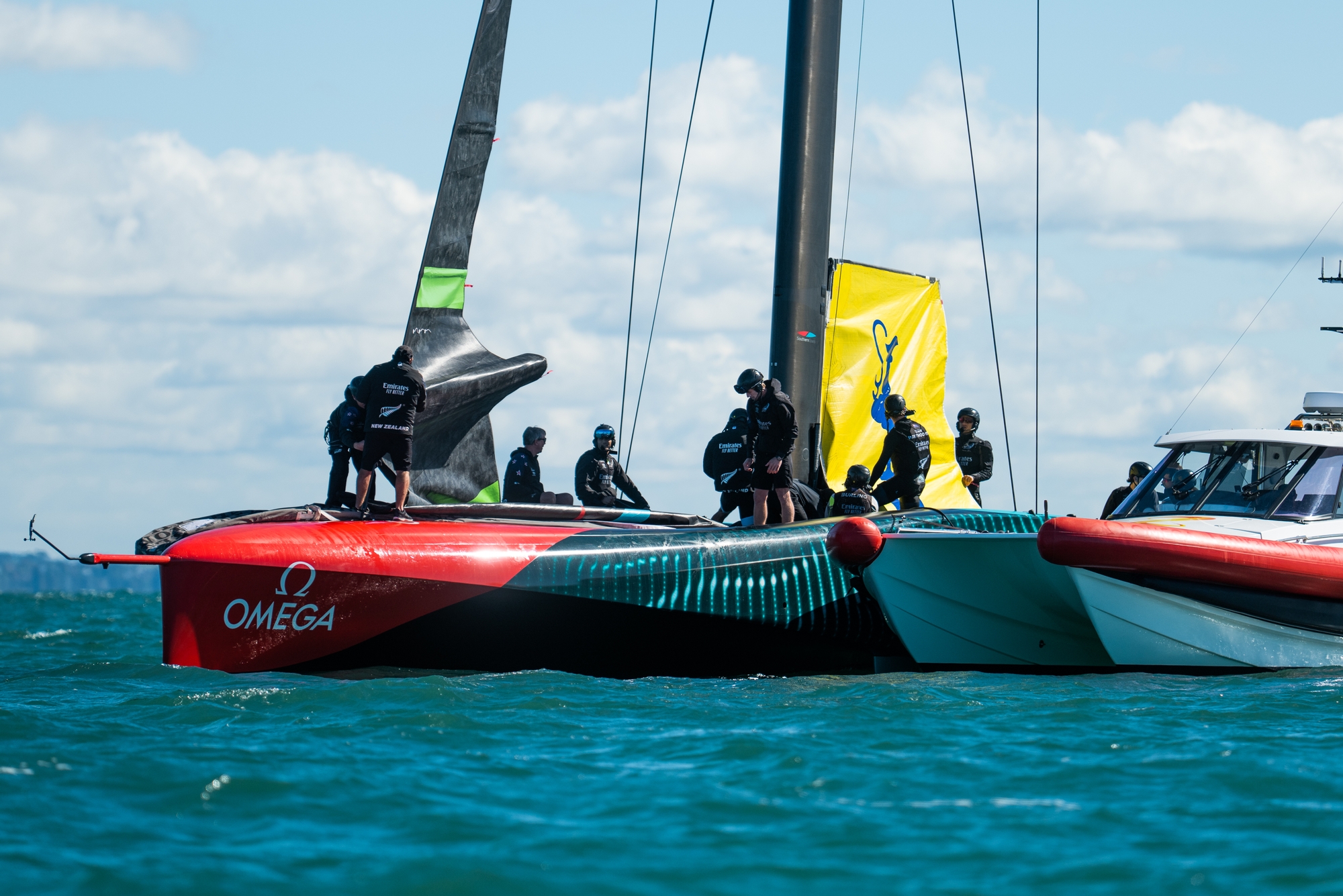
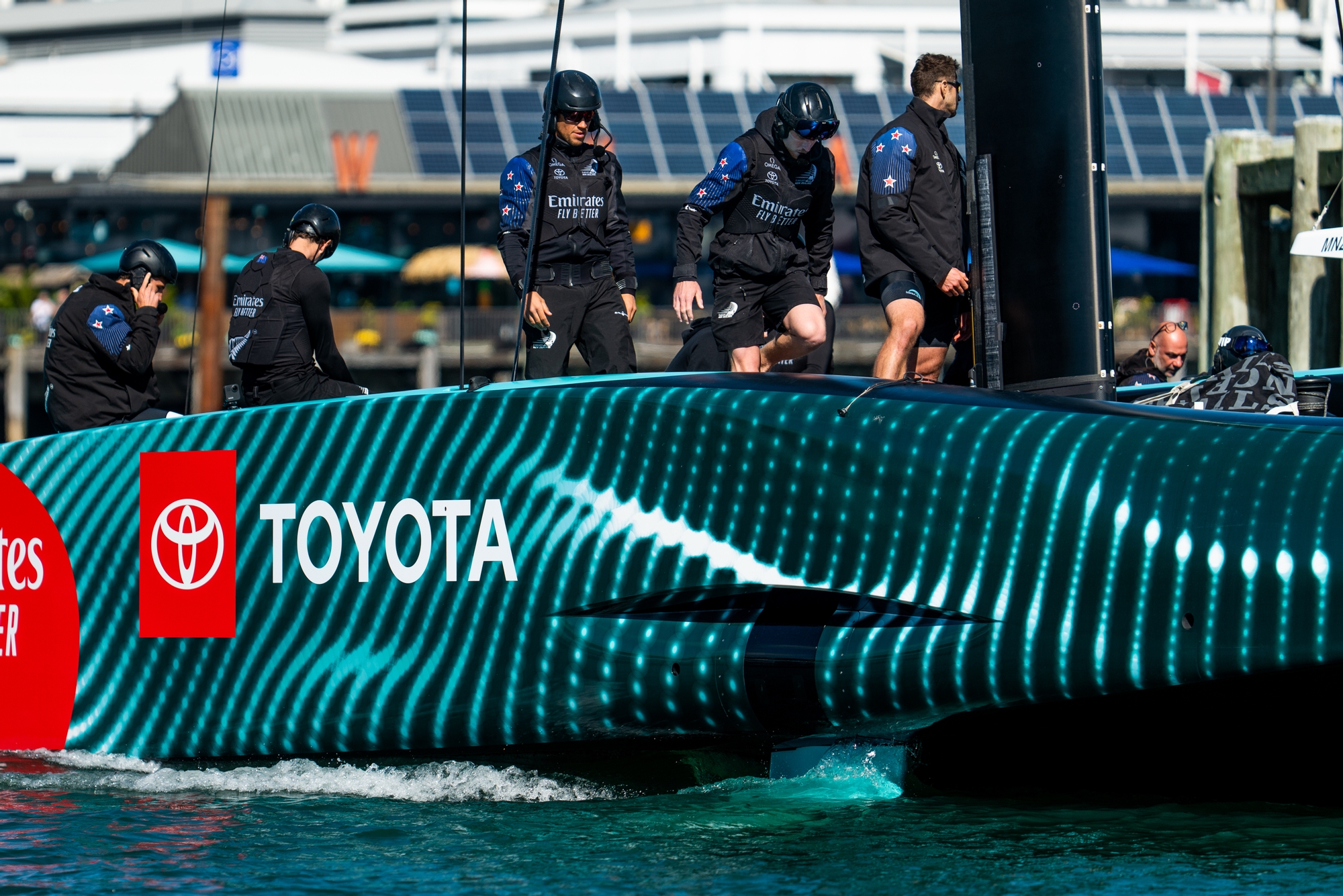
At launch, the Kiwis opt to hoist and lock the jib first on the AC75, a move known as the ‘Simo’ hoist or simultaneous hoist, which is valuable when the team want to be able to change headsails offshore away from the tender. Ray Davies explained it further in interview afterwards saying: “Yeah, the old SIMO hoist, we’ve got a couple of winches on board to help us get the sails up and down, that’s made life a lot easier. It was quite puffy where we were doing our sailing and quite shifty so I thought we should spend some time away from the Chase Boat, and we did a sail change away from the Chase Boat. If you’re rolling around a lot alongside the Chase Boat, there's potential for the foils to actually hit the bottom of the boat even when they're down so that was the reason why we thought we’d just stay off it in those puffy conditions, but I think you feel a little bit more comfortable with the boat alongside as you’ve got a bit more steerage. All in all, we actually learned quite a lot today, we have to put our big boy pants on, Barcelona is going to be lumpy, and we did that today.”
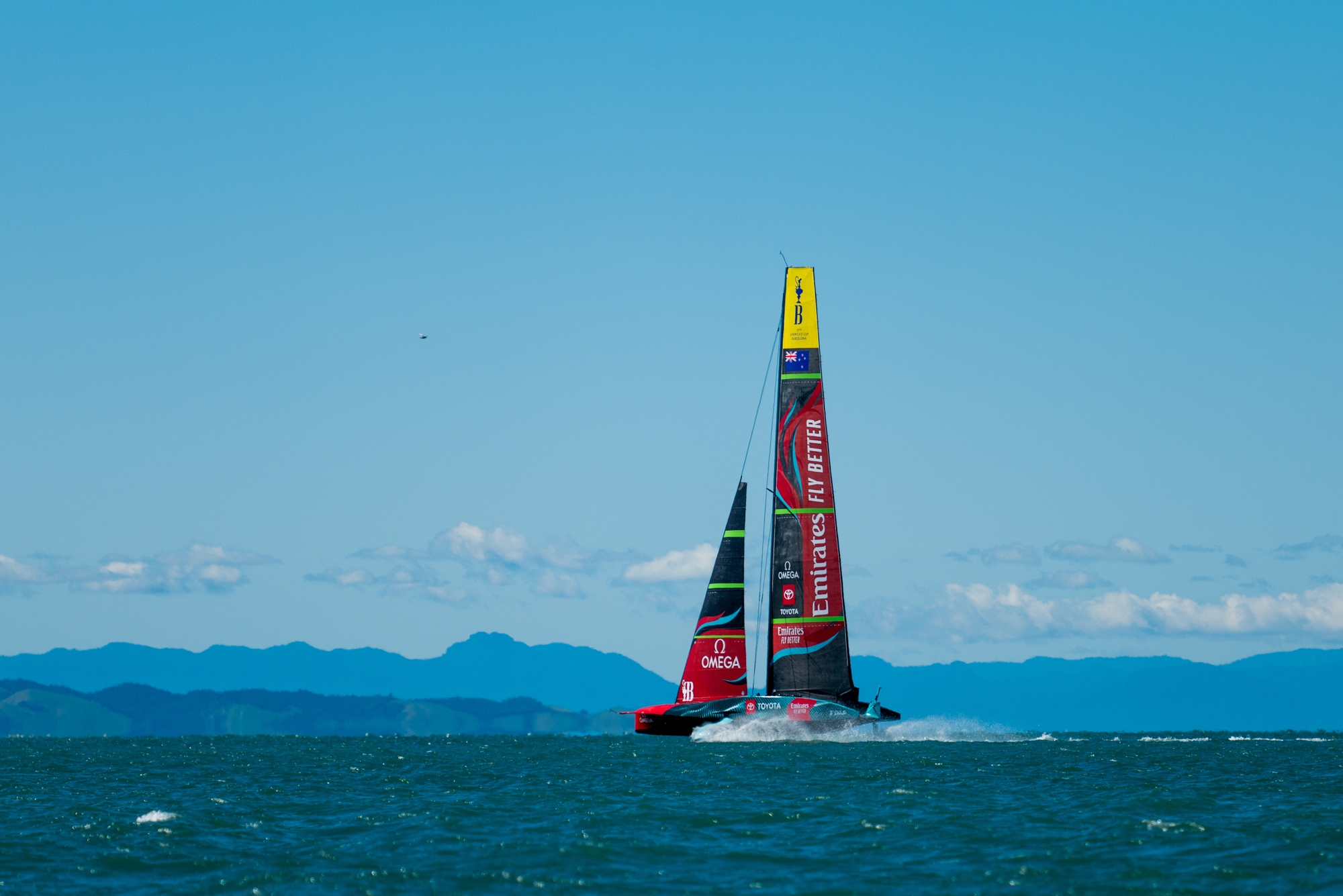
With so many of the tech upgrades unseen either below deck or within the sails, it’s difficult to gauge the value of these sessions and the learnings from the outside looking in but from within, the message coming out is that there’s a huge learning curve that the team are on and steps forward are being taken. Ray Davies summed it up succinctly saying: “The boat’s going really well, internally we're very happy with it. Obviously, no one knows what's going on inside the boat but we're happy, it’s kind of like a new boat for us…all credit to the team and the shore crew to be able to produce such a reliable boat after such an extensive rebuild.”
Emirates Team New Zealand recorded a 100% success rate on foil-to-foil tacks across 25 manoeuvres and a 93% success rate foil-to-foil on 14 gybes. Relentless efficiency and dedication to the cause – it’s a mighty defence of the America’s Cup and the programme both on and off the water is in full flow now.
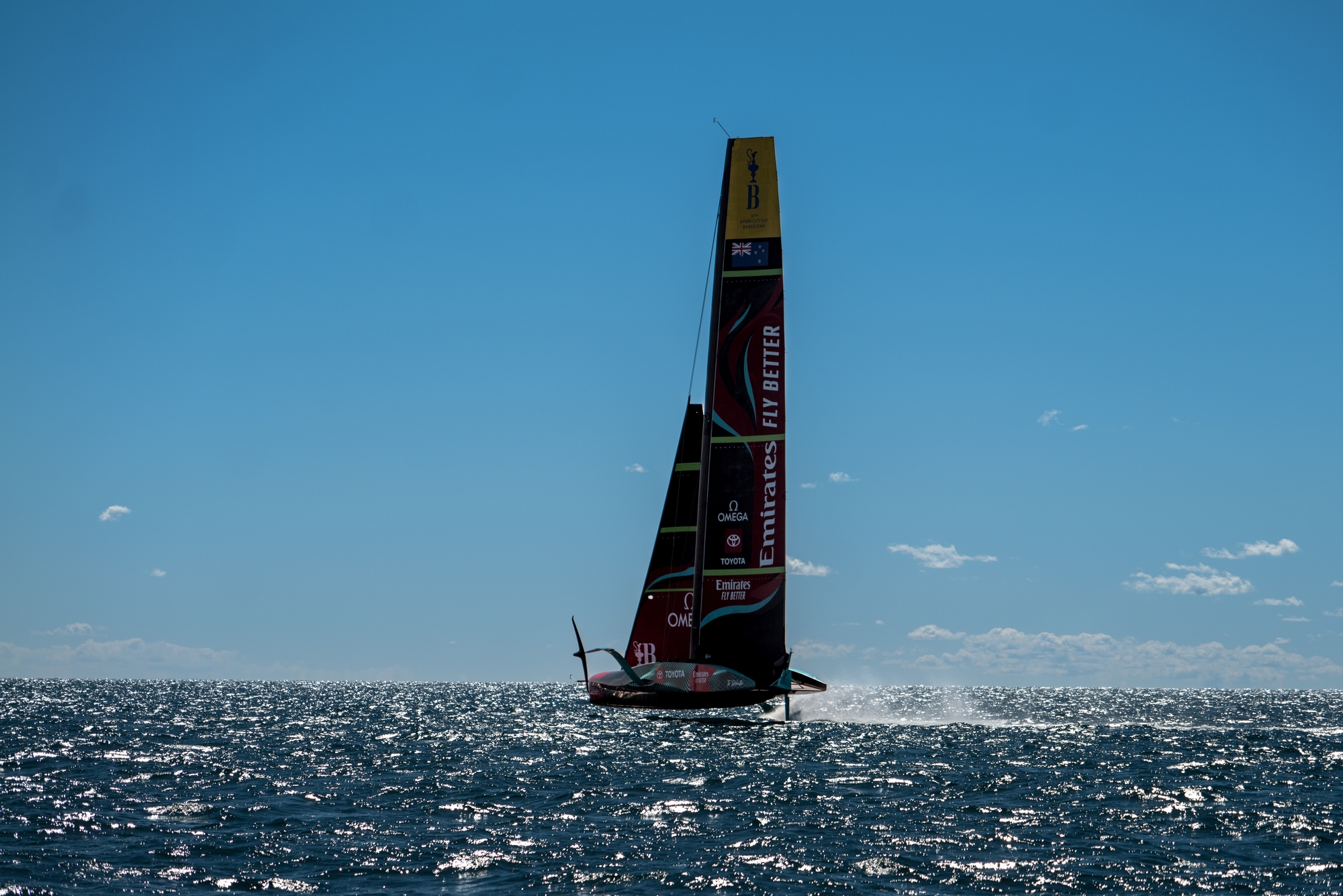
Recon Unit Notes: The race yacht was out of the shed at 09.26 and in the water in the pen by 10.15. Ray Davies gave us the heads up that it was going to be a big day and the team did not disappoint with over 120 NM covered in less than 4 hours sailing time! That is with a few stops for crew rotations and a jib change! The yacht was towed from her berth and taken down to the Rough Rock area just off North Head to plug in and hoist sails. The Jib was hoisted a solid 7 minutes before the main, with the yacht dropping her chase boat at 11.42 to start the days testing.
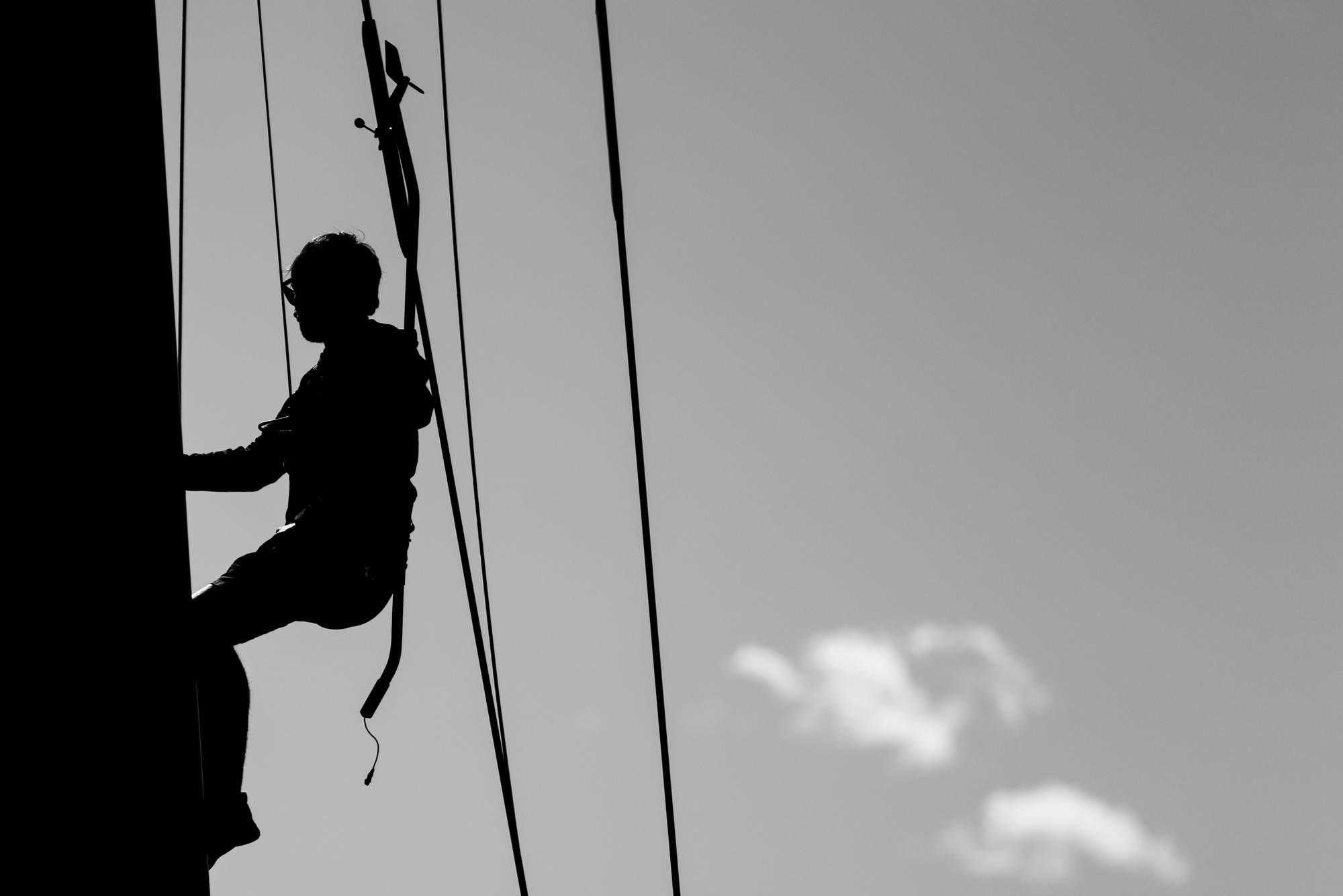
She set off down the Motukorea channel at breakneck speed heading for chase 2 and her marks set 1 NM windward leeward off the eastern beaches. Here I saw the jib come down at 12.12 with no chase alongside, Nick Burrage was pulled to the top of the mast as the jib was hoisted up to him at the lock.
Chase 1 alongside at 12.31 to rotate crew, sailing by 12.38. Here we had three laps of a 1 NM windward/leeward course in 14-18 knots of SW breeze and flat sea state. At 13.00 chase 1 was back alongside with chase 2 retrieving marks, at 13.10 they were sailing again this time on a huge run taking them west of Waiheke Island and between Rakino Island and the Noisies. By this time the yacht had put about 5 miles on us, so we slowed and headed toward Tiritiri Martangi with the yacht disappearing over the horizon toward Little Barrier island. After doing our best to count gybes and then tacks quicker than we knew she was on top of us again beating into a strong 18 knot cold southwester heading towards Rangitoto Light where she stopped at 14.27 to have Chase 1 alongside at 14.31.
She was sailing again at 14.38 beating for home and did one run up the harbour to tack off the squadron and head back out to Okahu Bay to meet up with chase boats and douse he sails. All team and kit back on the dock at the base by 15.40. Big day and I now feel an inch or two shorter.
Onboard today:
Helms: Nathan Outteridge / Pete Burling
Trimmers: Andy Maloney / Blair Tuke
Power Group: Simon van Velthooven / Marius van der Pol / Louis Sinclair / Louis Crosby (Two rotations of power group was watched)
Sails Used:
Mainsail M1: 3 hours 46 minutes
J3: 2 hours 16 minutes
J4: 1 hour 10 minutes
Manoeuvres:
Total Tacks: 25 – 25 foil-to-foil.
Total Gybes: 14 – 13 foil-to-foil, 1 touch & go.
Take-off: 90° TWA (True Wind Angle) Speed not recorded
Recon Comments: 6 self-take-offs.
Conditions: Strong SW breeze slowly dropping through the day. Cool with bright sunshine. PM: 15% cloud cover bright sunshine cool at 17 degrees. Sea-state: Slight/Moderate
Dock Out: 1206 Dock In: 1630