SKY-TECH KIWIS
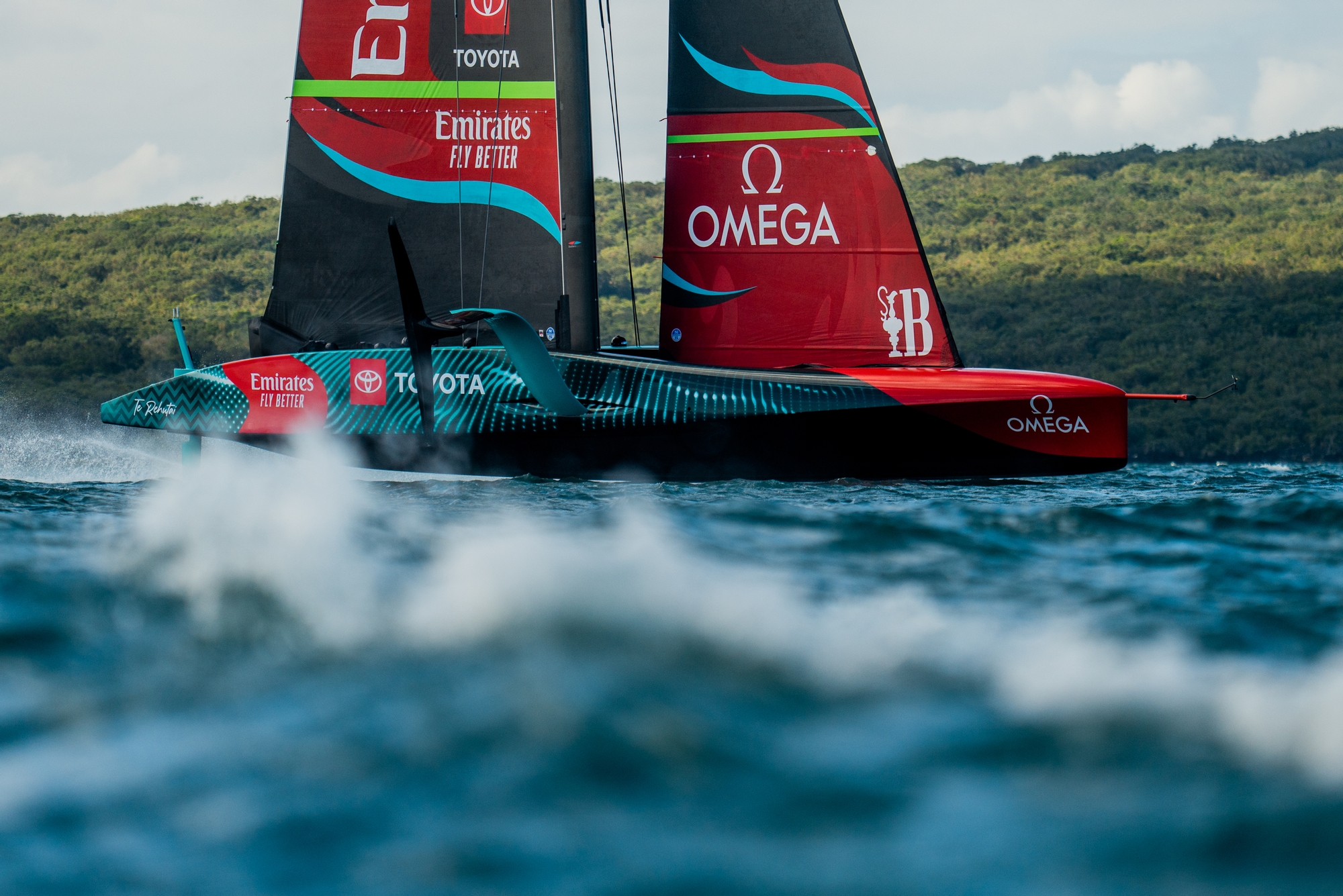
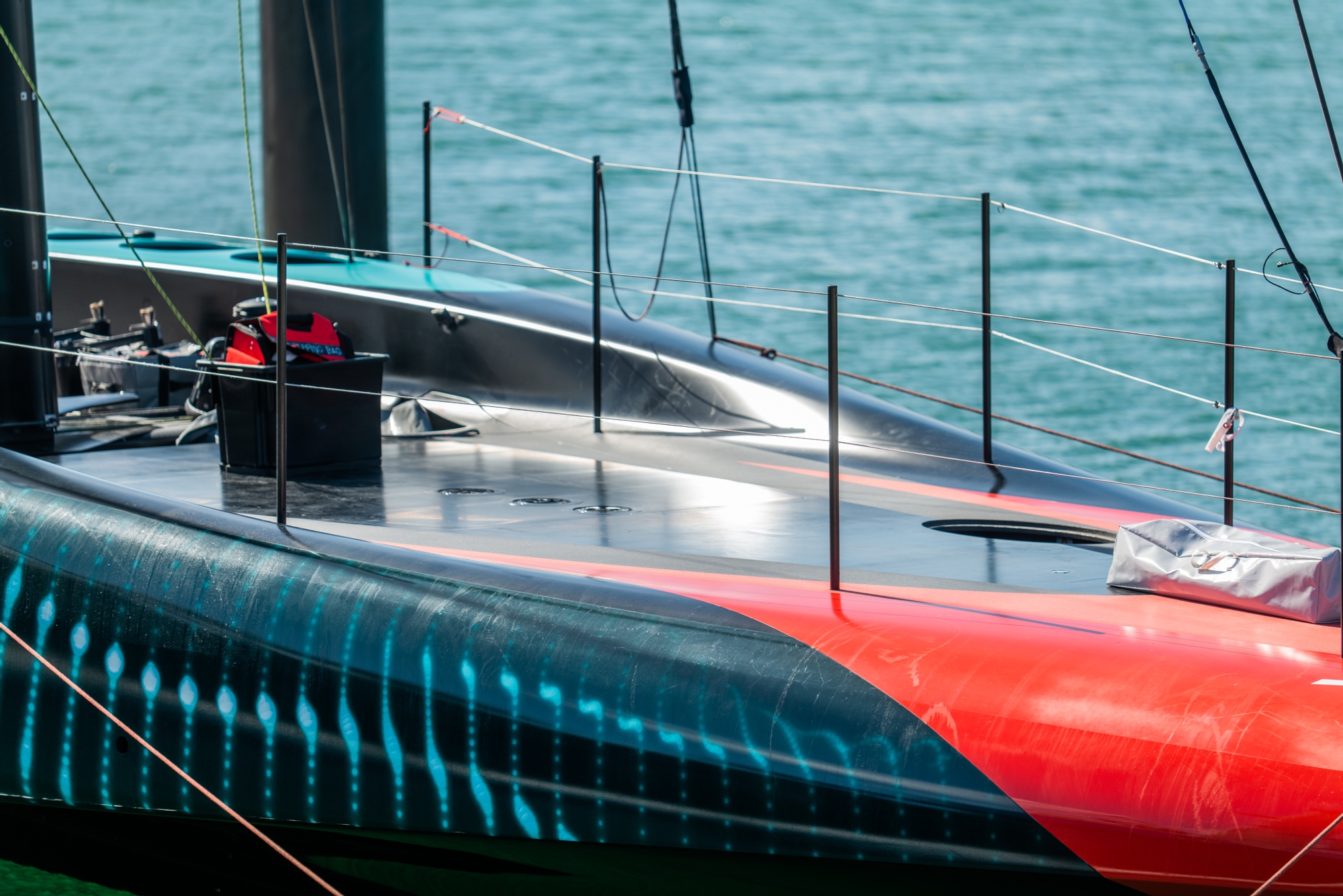
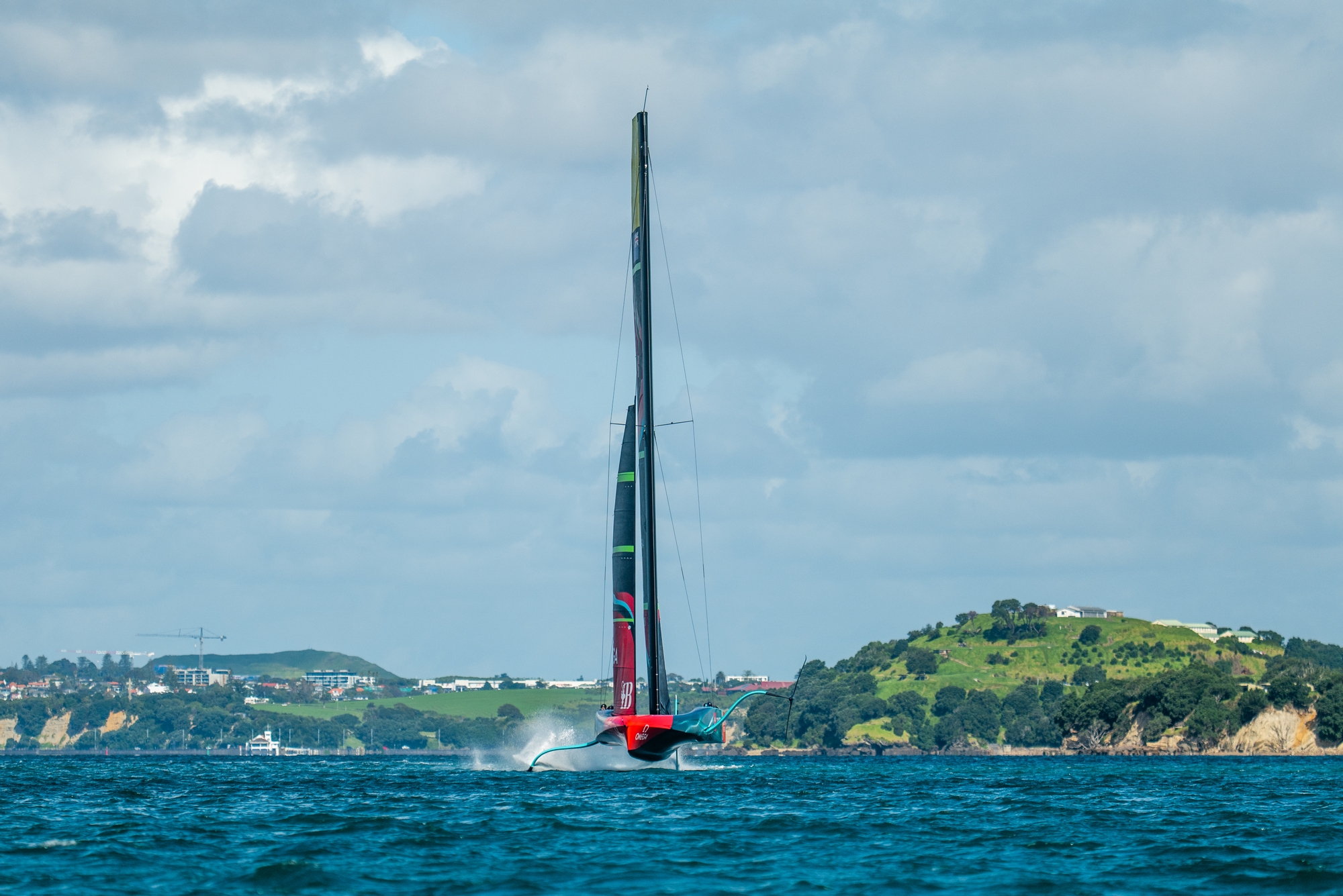
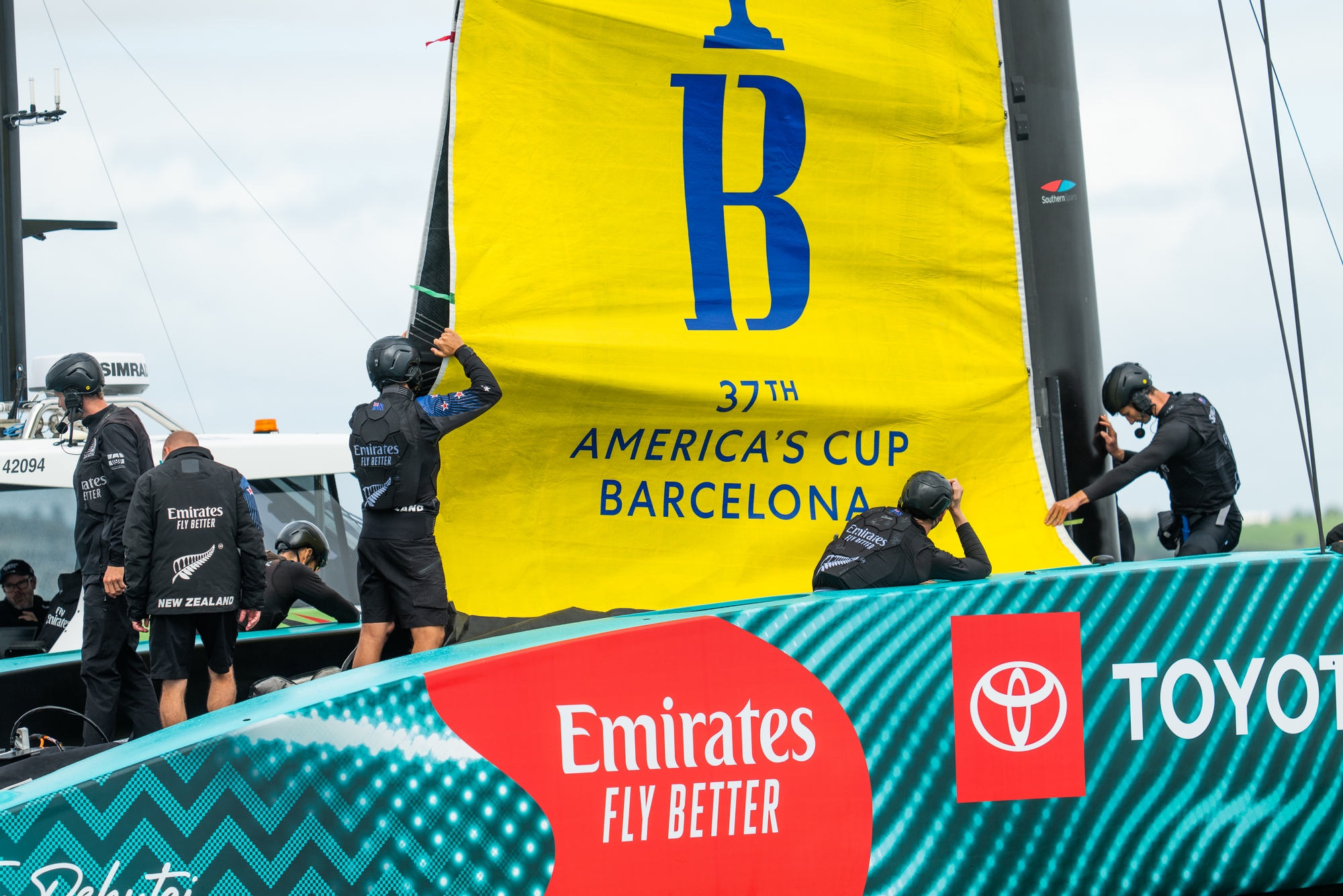
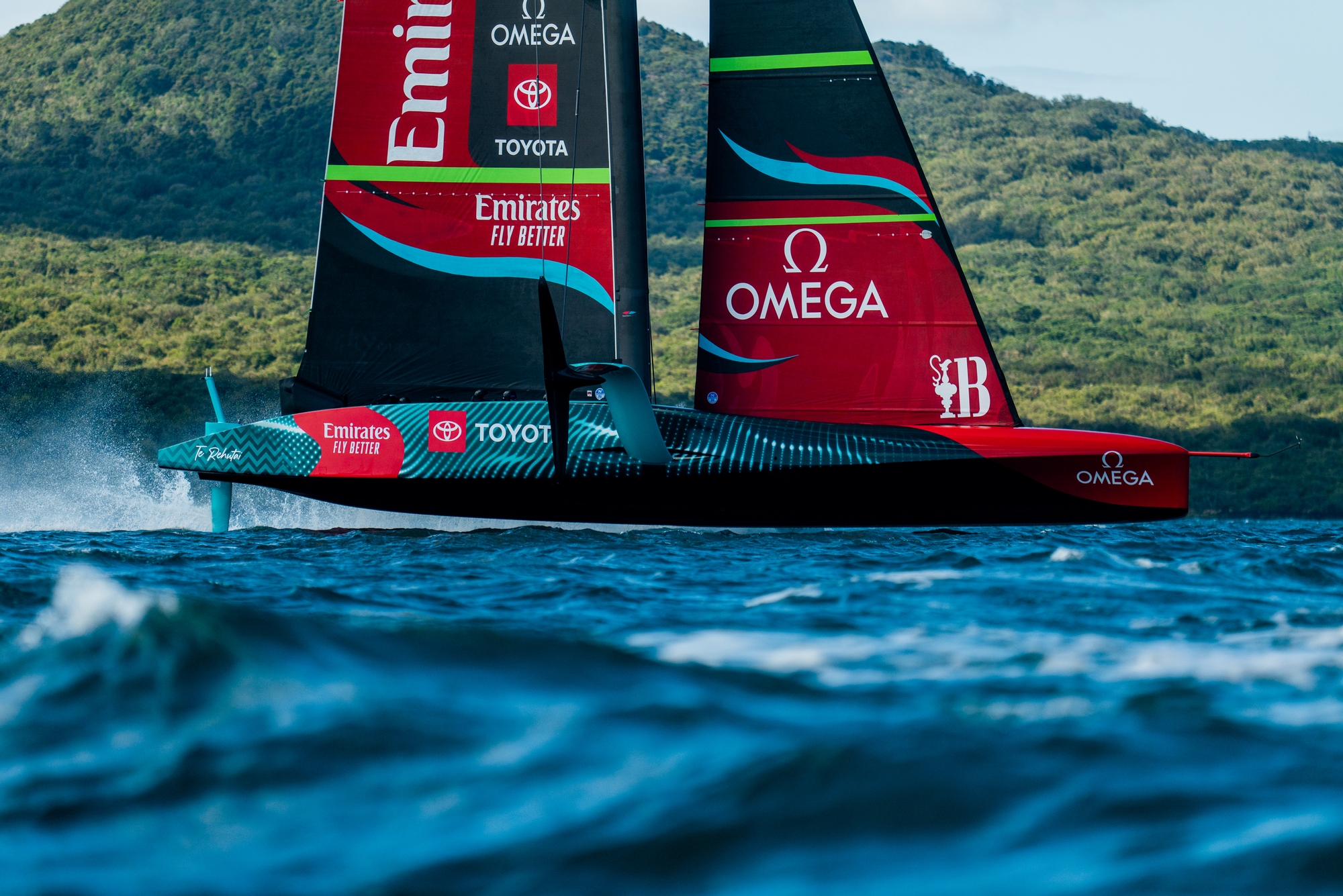
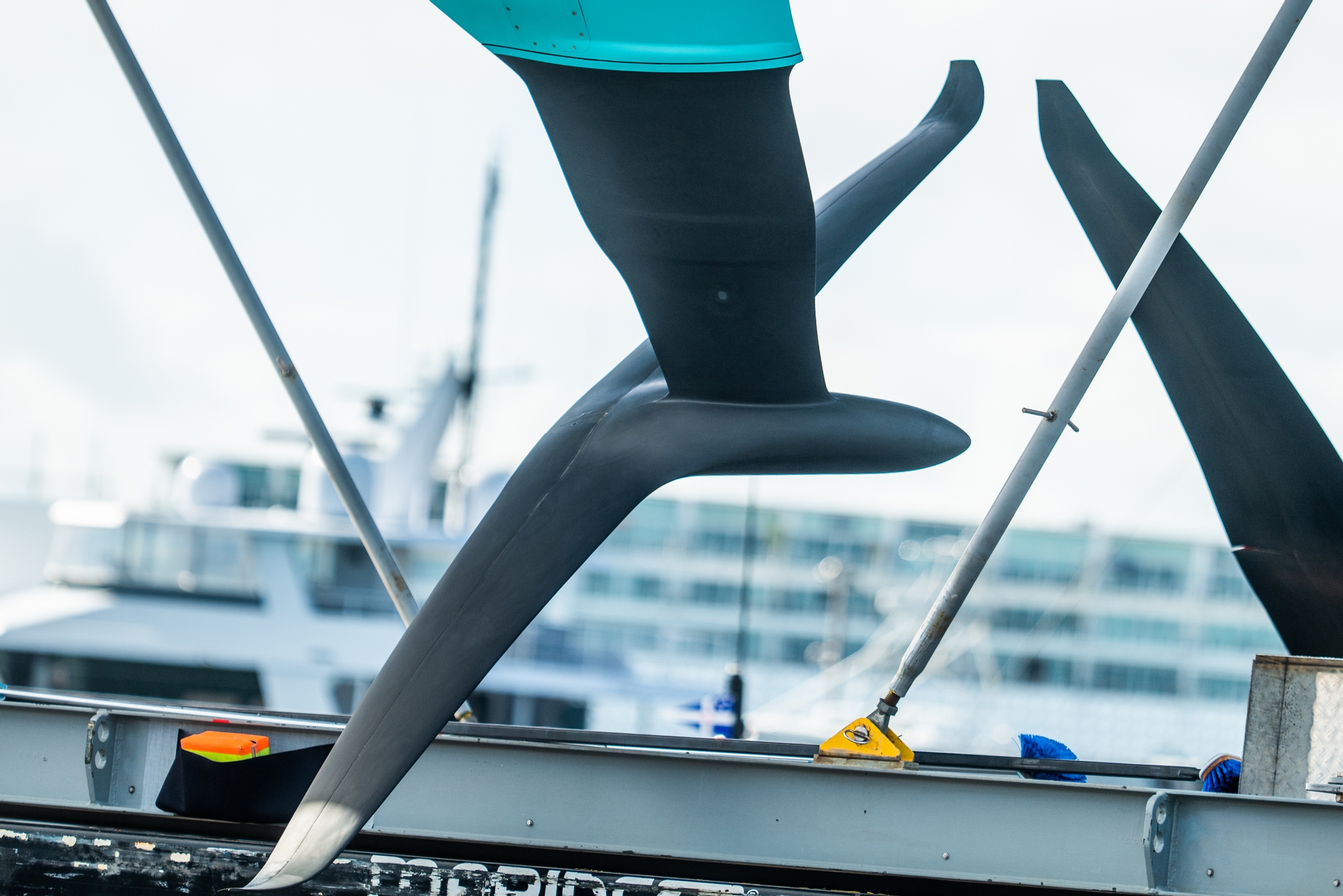
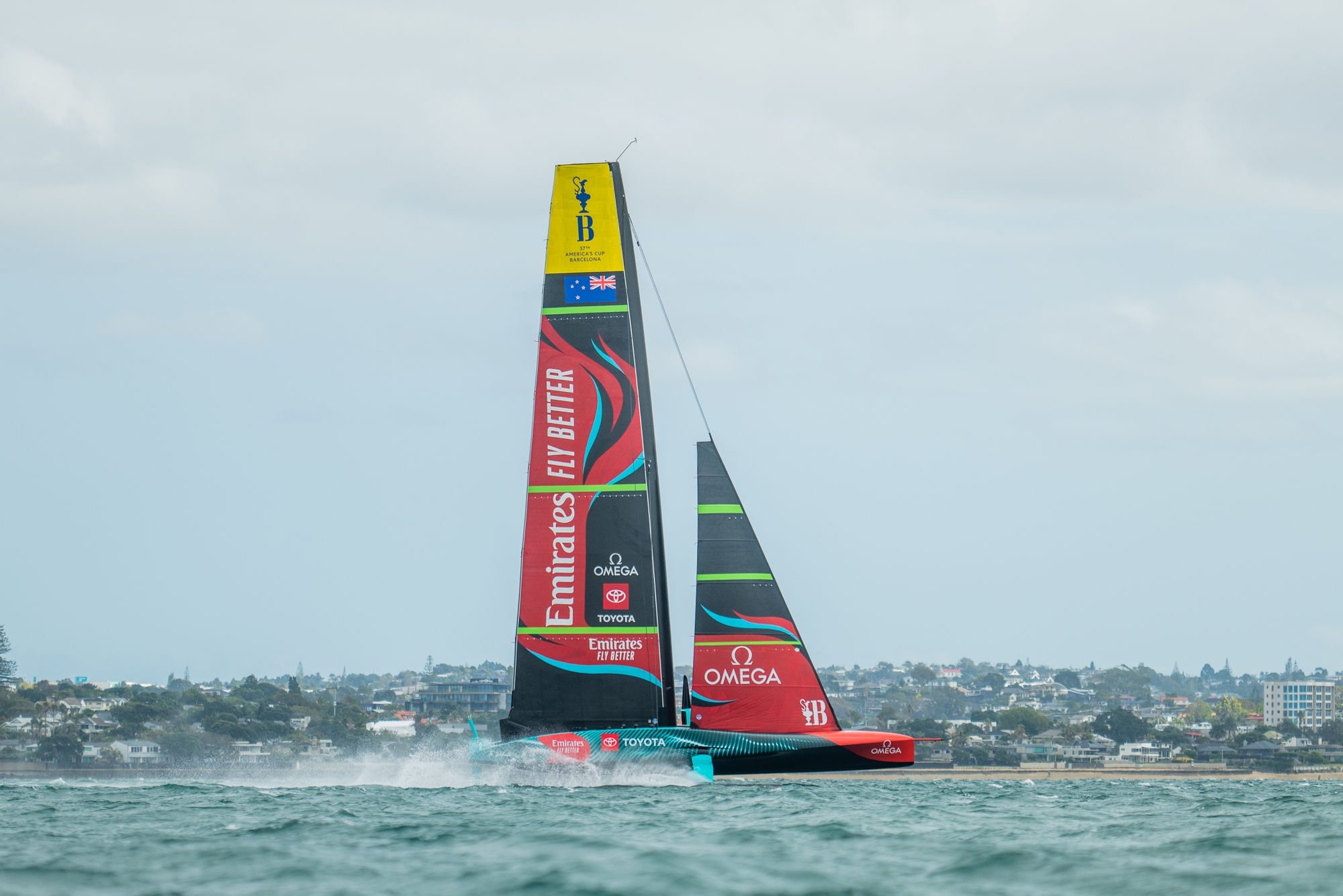
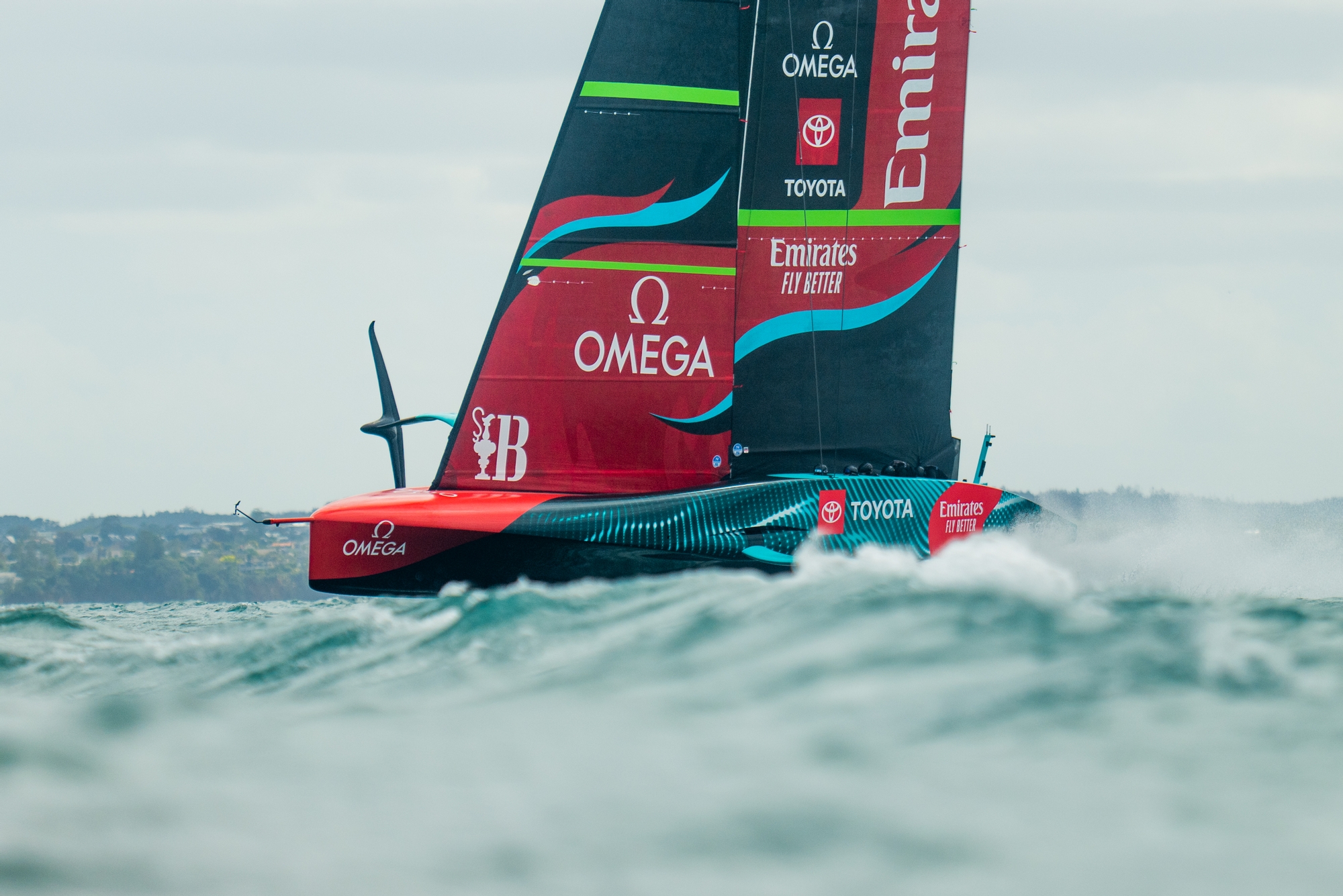
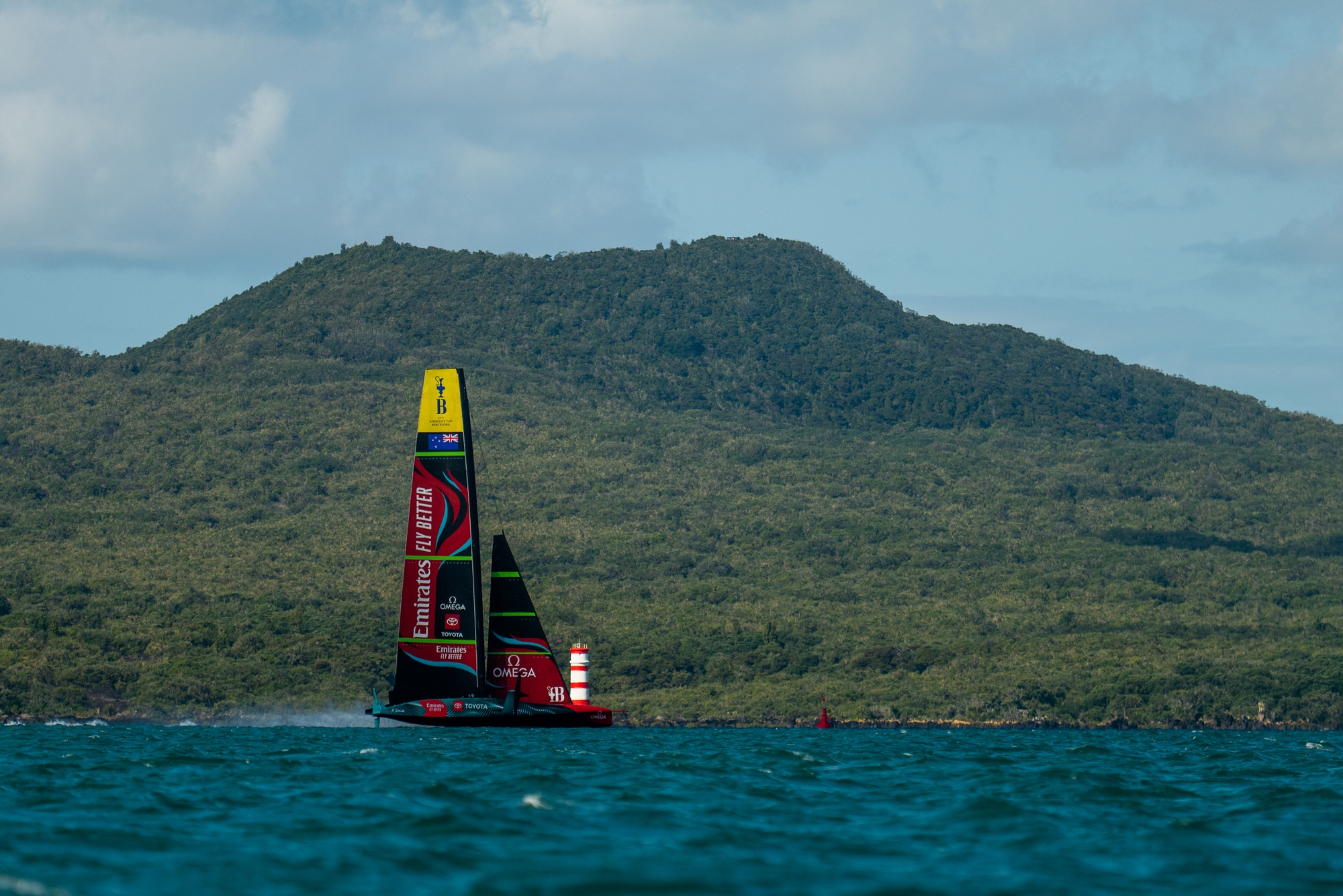
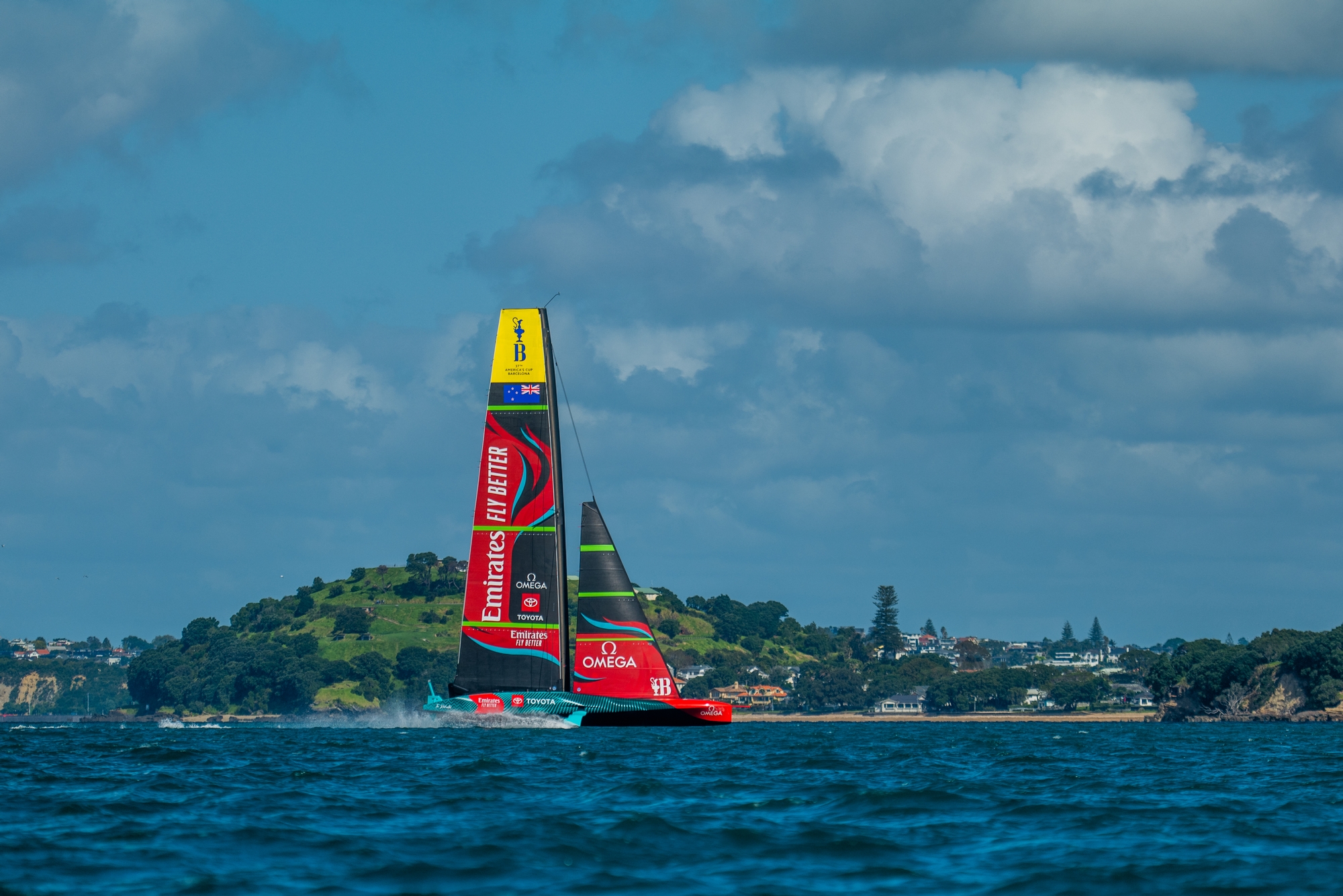
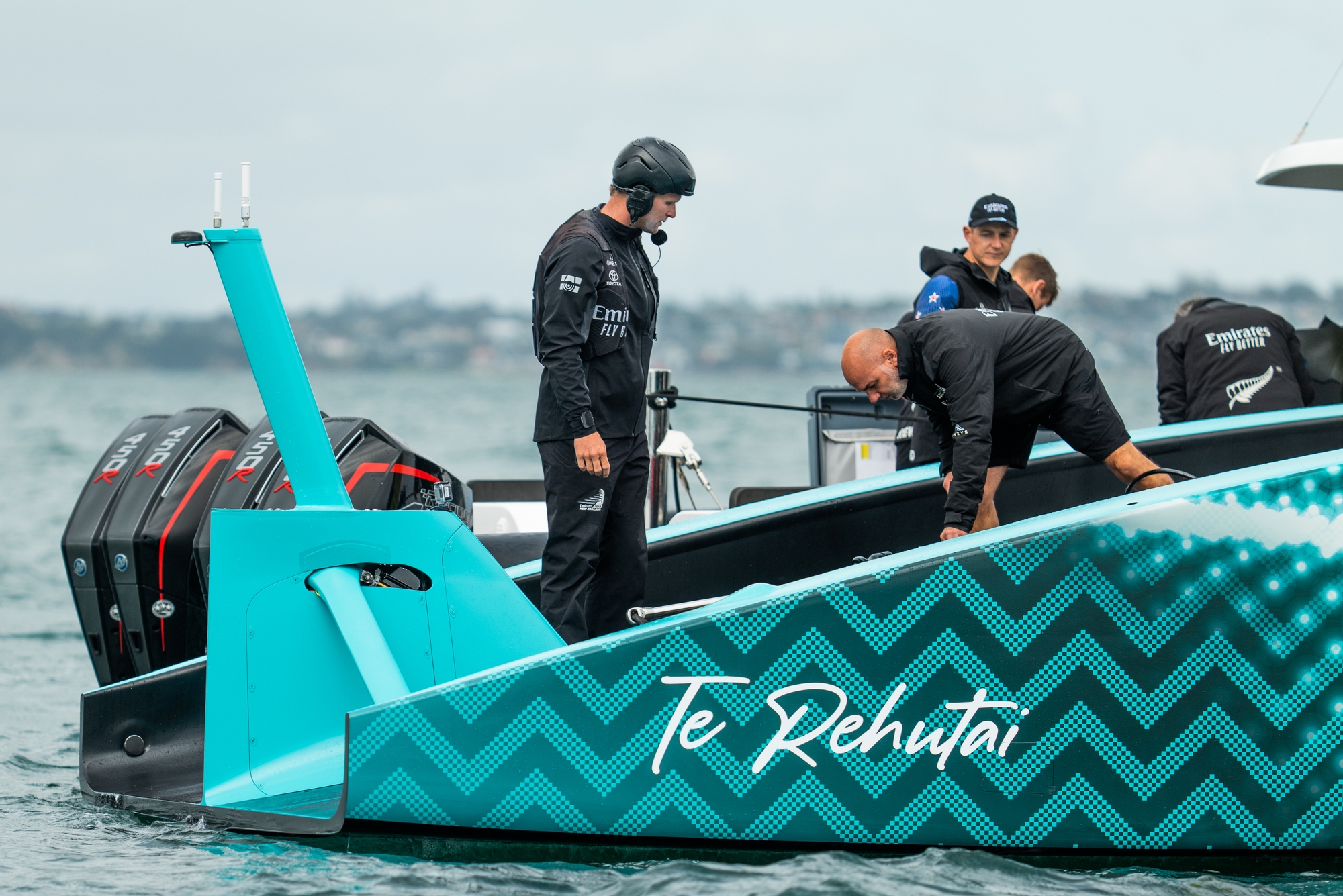
There are many valid reasons for Emirates Team New Zealand re-launching ‘Te Rehutai’ and operating at scale on Auckland waters in the run-in to the team de-camping to Barcelona for the European summer and sailing AC40’s both at the venue and the September pre-regatta in Vilanova I la Geltru.
Systems are the primary gain and the whole powertrain of cyclors mounted aft throws up a wealth of issues that no doubt will be refined, re-refined and refined again and again over time. Getting a full sailing team of helms, Flight Controllers and trimmers out and performing at 50 knots + is also a huge added bonus as the time clock clicks over but with no foil testing allowed in the legacy AC75s, the notion of blasting around far offshore, distancing the reconnaissance efforts who simply cannot keep pace in waves, perhaps hints that the most innovative team in the America’s Cup is up to something.
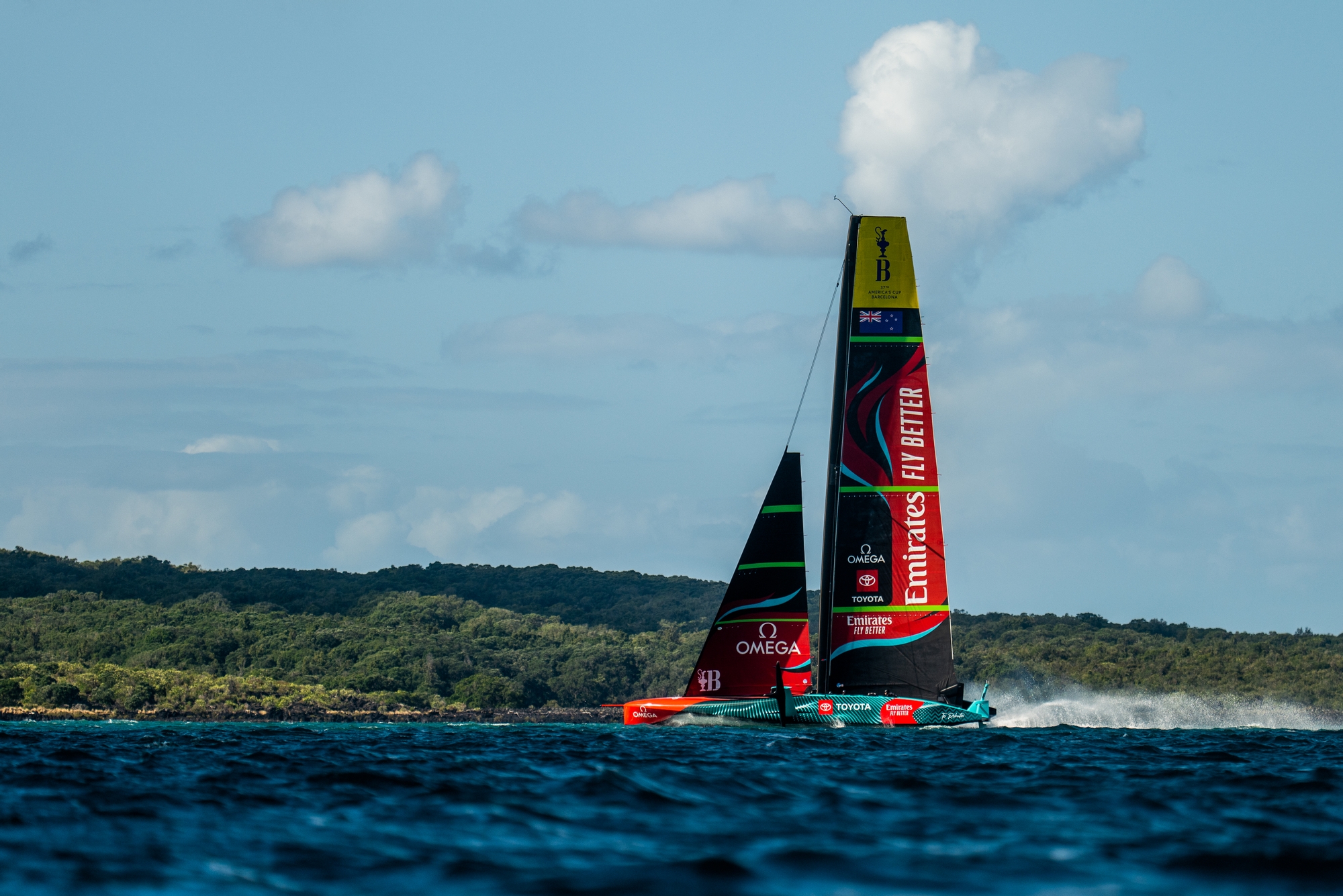
Try as they could, bouncing around in a relentless Auckland chop, the recon team had to use deft corner-cutting skills to get the shots today as they have had to do also in the past two sessions. The recon video captured when close revealed little – a smidge of windward heel upwind as the Kiwis canted over the monster rig to the perpendicular (no more), a couple of flat tacks upwind and a lot of spray jettisoning off the foils. All well and good but when the long lens of the photographer was brought into play, suddenly we saw something that we didn’t expect.
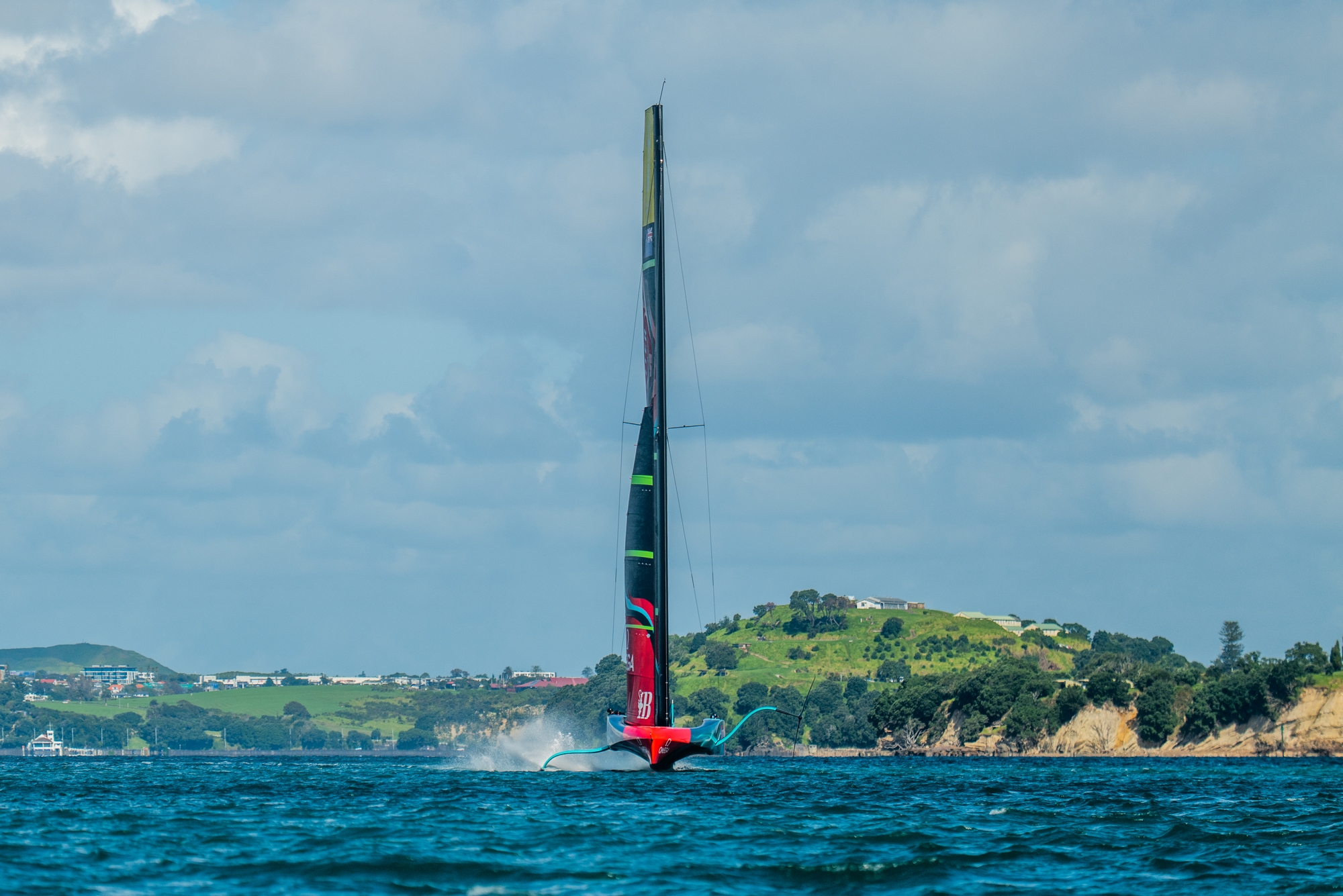
Emirates Team New Zealand have made little secret of the sail control development work that has gone in on first the AC40 in LEQ12 development mode under the genius of Burns Fallow that has then been translated across in part, but one suspects in whole and more, to Te Rehutai. The even break on the leech of the mainsail, beautifully in sync with the headboard lattice-work of battening as it spills breeze is a sight and the long hoists, that have got far shorter in recent sessions, with much attention at the clew box area and the battening running back to it, suggest much development work there.
But what the long lens of the photographer caught today was worthy of a second look. In several spy shots, ETNZ appeared to be sporting running backstays but not running backstays in a traditional sense where the windward backstay is wound on tight. What the Kiwis appear to be playing with is reverse running backstays with the ‘leeward’ runner and a checkstay wound on. The windward runner and checkstay appear to be billowing in the wind. Are they looking at altering the shape of the leeward skin of the sail through this mechanism? And how? Questions to be answered. But something is going on and with only a couple of spyshots to work from, side-on from a distance, it’s impossible to gauge the effect or see what’s really happening.
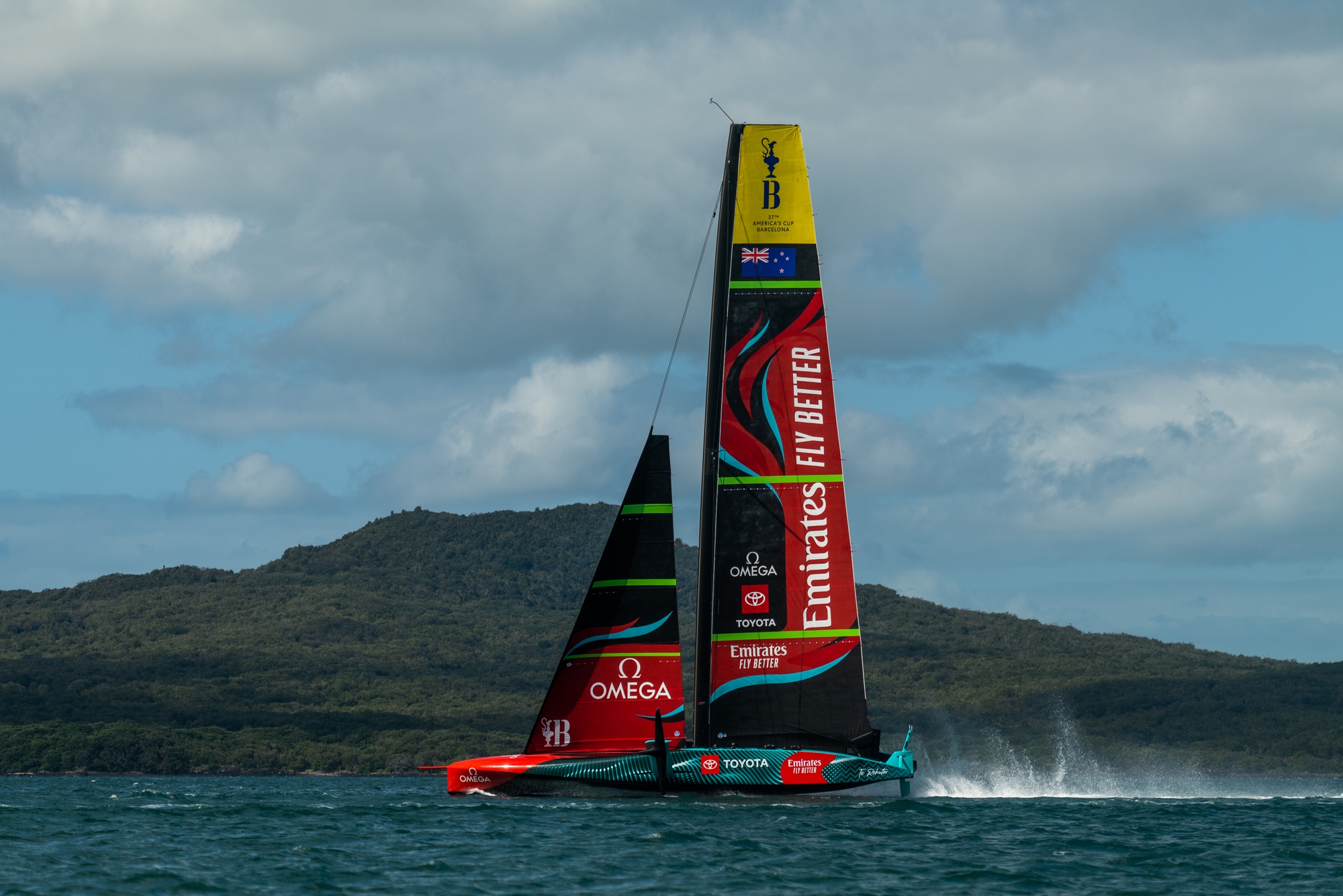
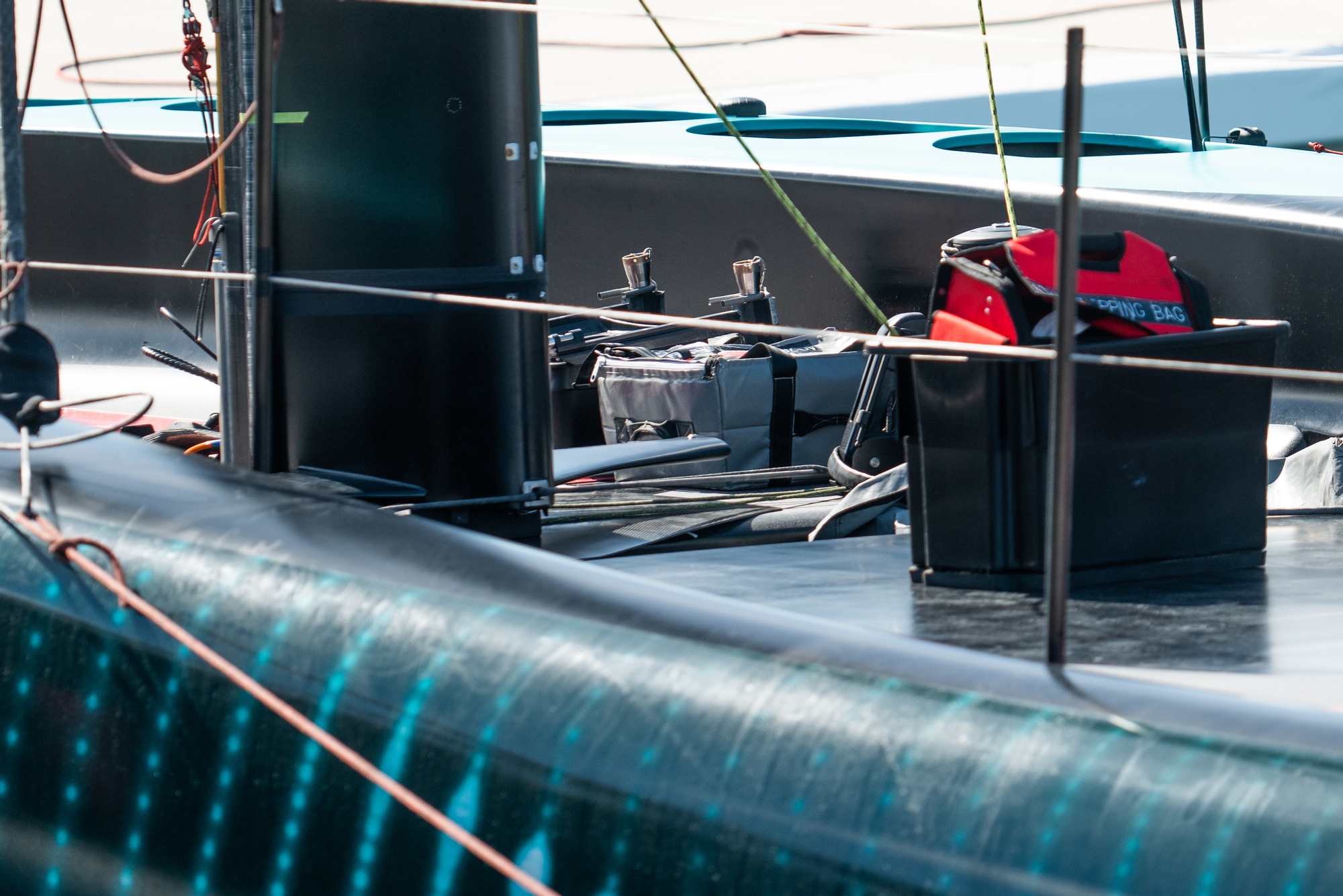
The top runner appears from the photos to join the mast at about mid-head point, or the middle of the graphic ‘B’ for Barcelona. The checkstay looks to attach perhaps two feet below the main spreader on the second green band of the mainsail. Noticeably and perhaps tellingly, there was no sign of the ‘runners’ when the team came close inshore towards the end of the afternoon session or at de-rig although small rope-width holes can clearly be seen, one aft of the rear cyclor and one just forward of the front cyclor.
Te Rehutai was off far offshore again today, perhaps by design, perhaps just a consequence of being able to outpace the reconnaissance teams as they flew high and blisteringly fast above the waves. On flat water, the recon RIB has a top speed of circa 46 knots and as the team’s report states: “at times out wide, the sea state had us down to under 20 knots boat speed to keep all onboard, onboard!”
Inshore, as the water flattened, the team were able to capture Te Rehutai up close and after the Kiwis had weathered through an intense gust in displacement, the recon unit observed a “large kink in the forestay, just above the head of the jib.”
Sail technology is looking to be one of the key battlegrounds in the 37th America’s Cup. Look up, it’s all going on.
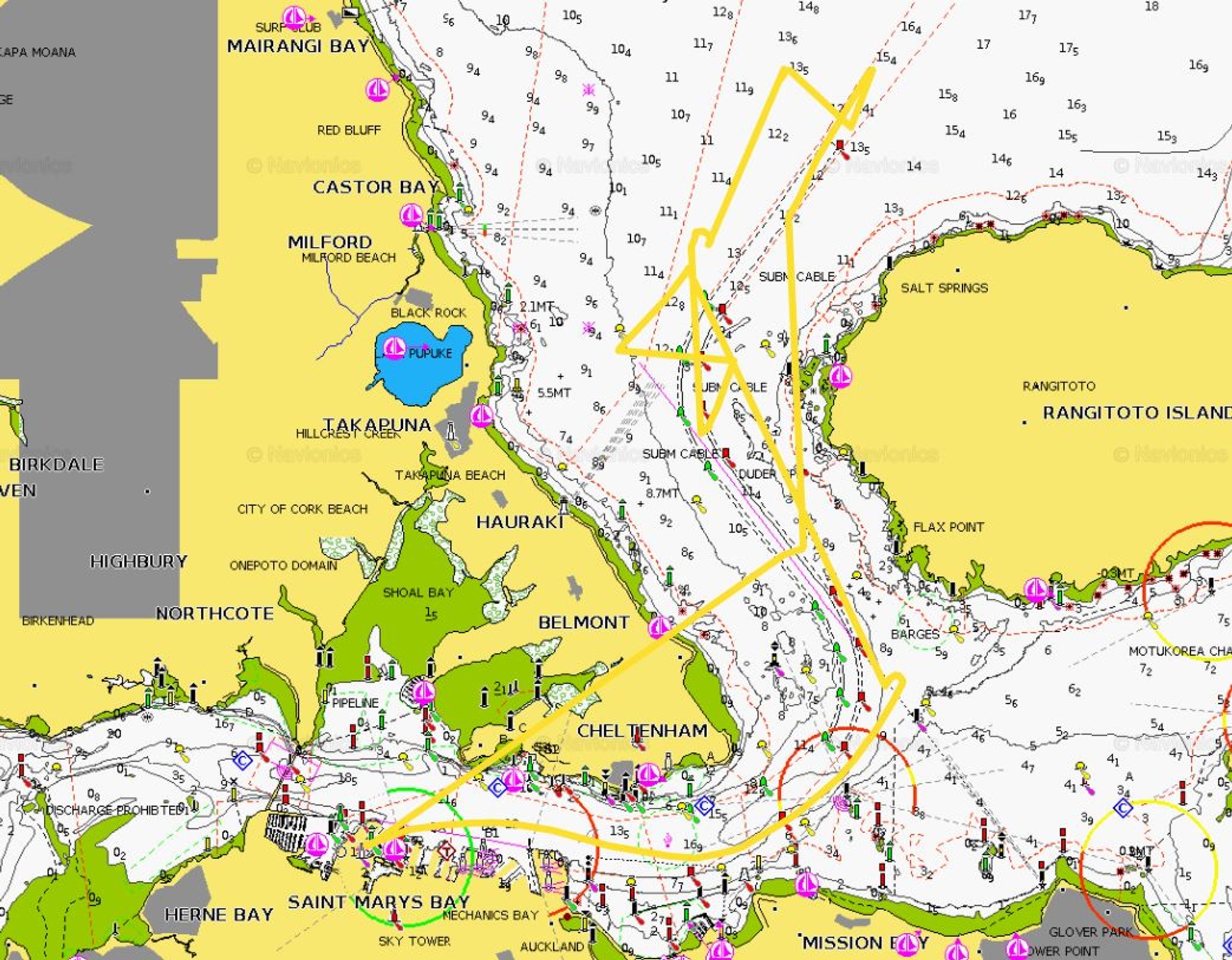
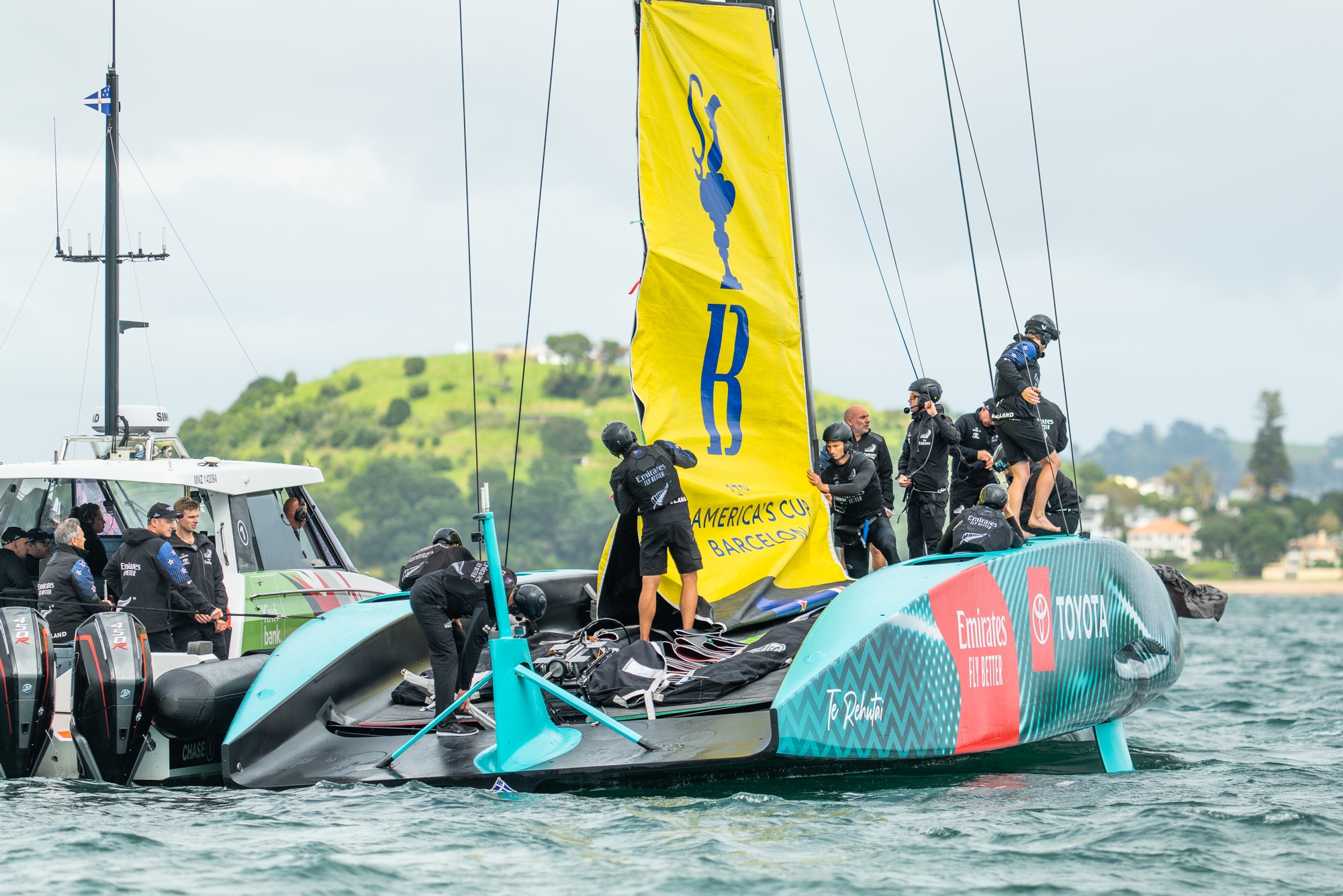
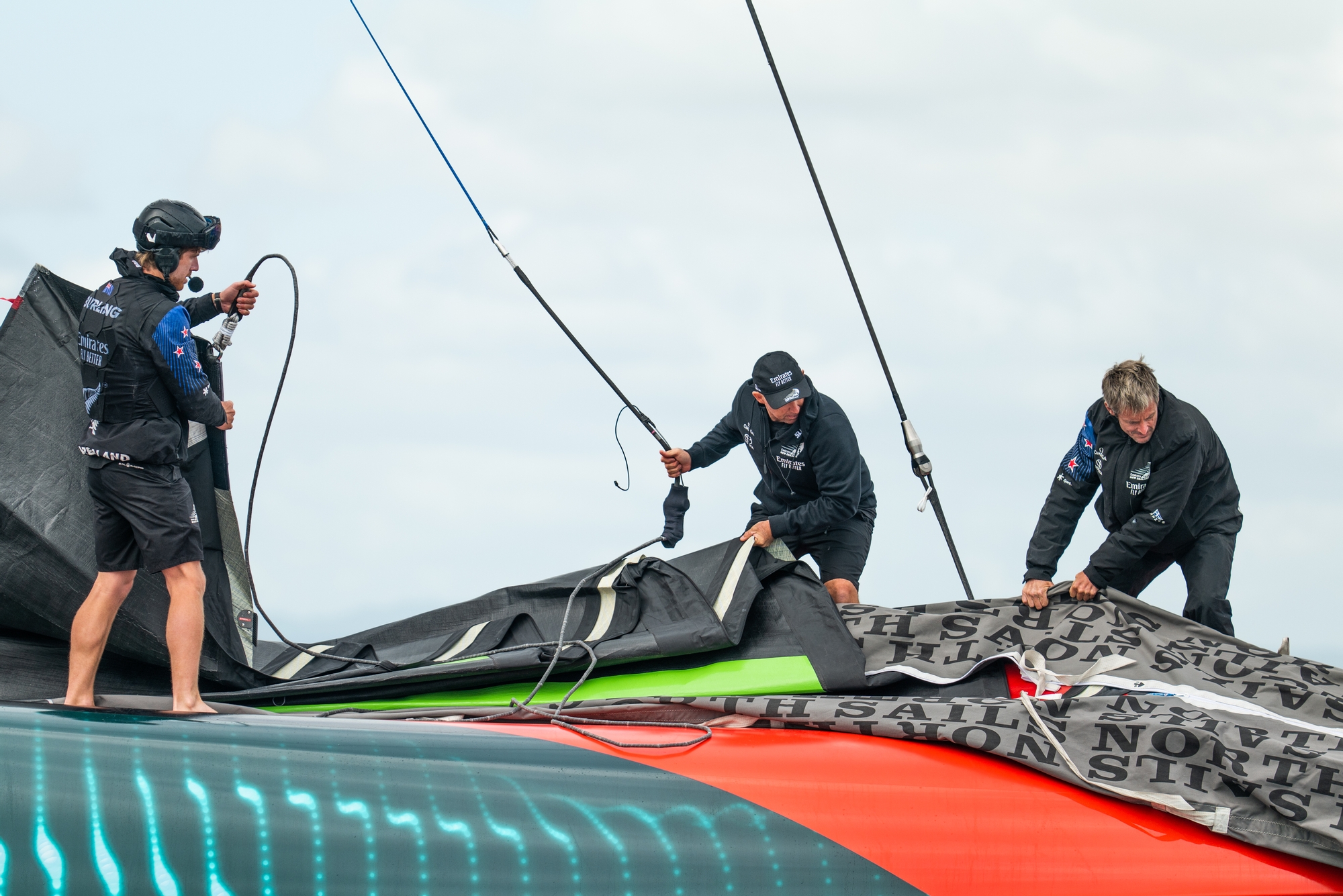
Recon Unit Notes: Te Rehutai was rolled from her shed at 9.45, had the mast on its ball at 10.02 and in the water in the pen by 10.30. The headboards were loaded while alongside the dock, she was eased from her berth and towed down the harbour to about 1NM NNW of Rough Rock where she dropped the tow and took Chase 1 alongside. At 11.43 the main sail was on the lock quickly followed by the #3 jib.
At 12.16 Te Rehutai dropped the chase and set out about her testing schedule. Starting with a big run out towards Tiritiri Martangi, here she just legged out in front of us putting about 5 miles on the recon boat before we stopped and watched her come on the breeze and start working her way back towards Takapuna.
She came off her foils about 12.40 in a big puff and looked to feather through it in displacement mode for approximately 5 minutes before getting foil borne at 12.45. Catching up with her after this time in displacement mode for the last part of the beat up into Takapuna a large kink was observed in the forestay just above the head of the Jib.
The yacht stopped sailing at 13.36 and did a power group rotation and was sailing again at 13.49. Here she followed a similar pattern with a 7-9 mile run out towards Shearer Rock before hardening up and beating back in towards Takapuna.
With no marks set and the extreme speed meant getting close was very hard work, at times out wide the sea state had us down to under 20 knots boat speed to keep all onboard onboard. At the end of the session, we observed two laps of Rangitoto channel in flat water with breeze in the upper teens we had no hope of keeping up in a straight line and had to cut the corners to stay close. Te Rehutai came to a stop at 14.27 just north of Northern leading, took Chase 1 alongside and doused her sails before the tow back to base.
Onboard today:
Helms: Nathan Outteridge / Pete Burling
Trimmers: Andy Maloney / Blair Tuke
Power Group: Simon van Velthooven / Marius van der Pol / Louis Sinclair / Louis Crosby / Hamish Bond / Marcus Hansen
Sails Used:
Mainsail M1: 3 hours 43 minutes
J3: 3 hours 43 minutes
Manoeuvres:
Total Tacks: 18 – 18 foil-to-foil
Total Gybes: 16 – 16 foil-to-foil
Take-off: 90° TWA (True Wind Angle) Speed not recorded
Recon Comments: 5 self-take-offs.
Conditions: 12-18 on hoist-building slightly through the session to max 22 knots SW stable direction. Weather AM: SW 12-18, showers, clearing. Cold dense breeze. Weather PM:
15% cloud cover bright sunshine. 15-22 knots SW dense and cold. Sea-state: Moderate (AM-PM)
Dock Out: 1120 Dock In: 1500