MODING ‘AMERICA’
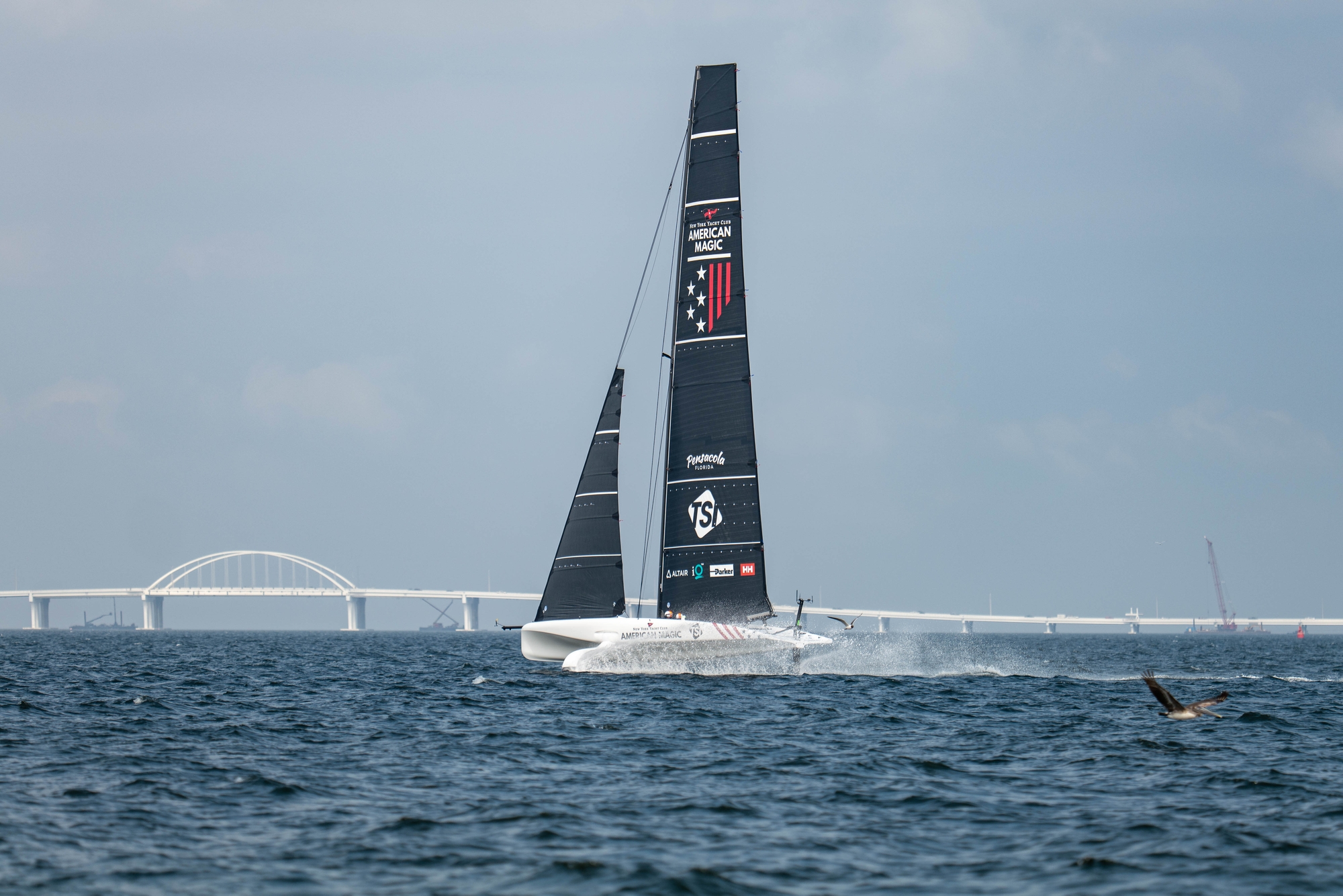
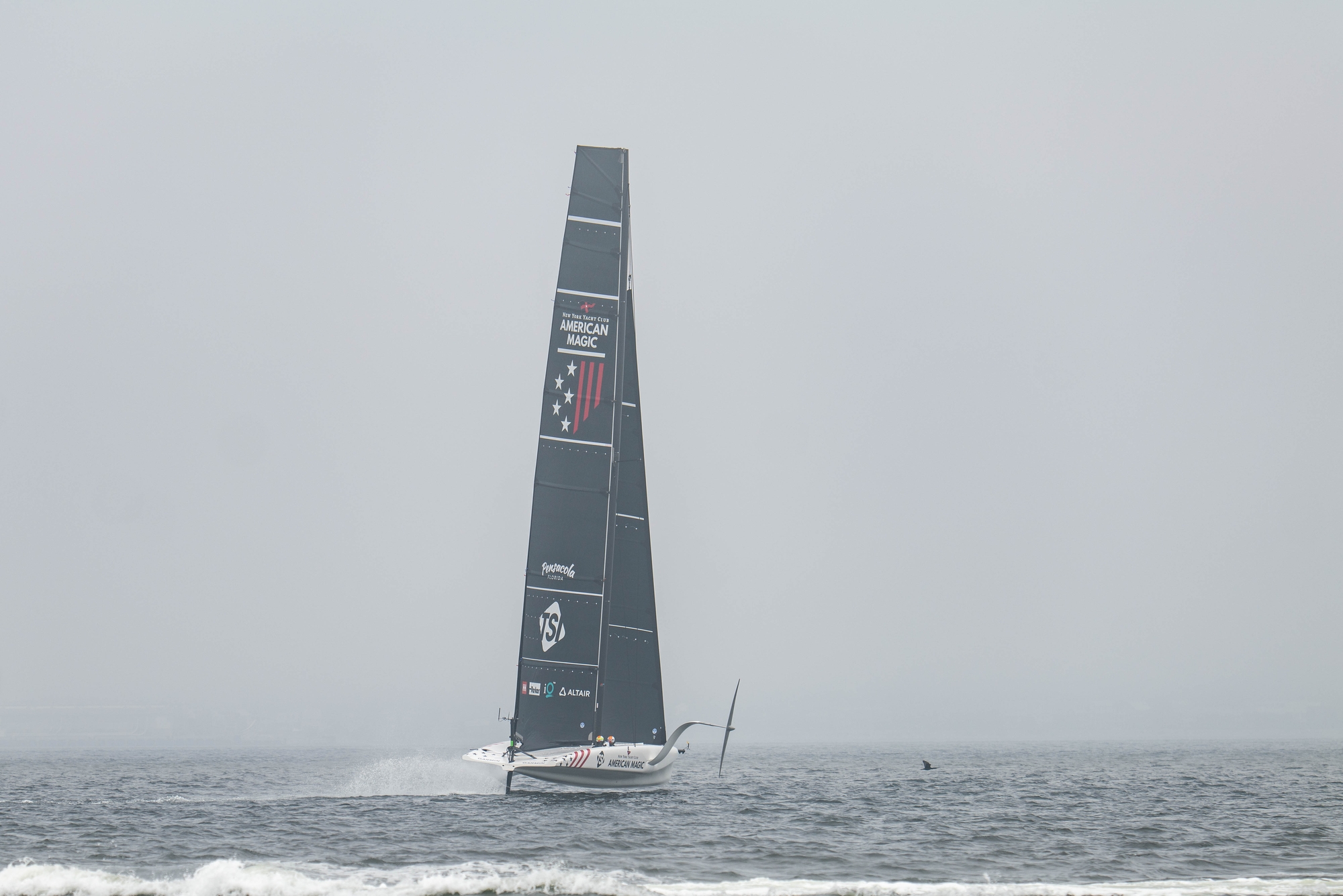
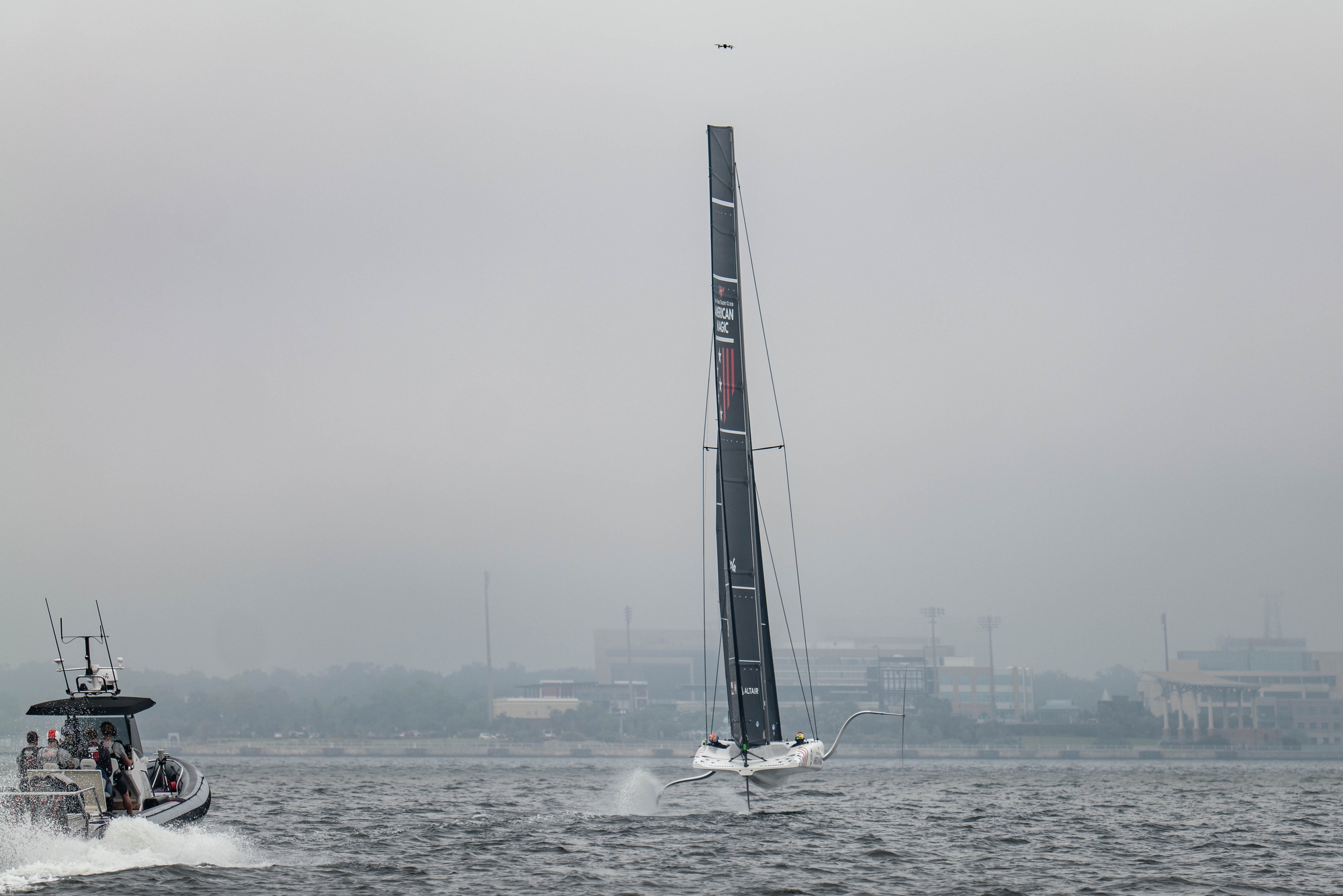
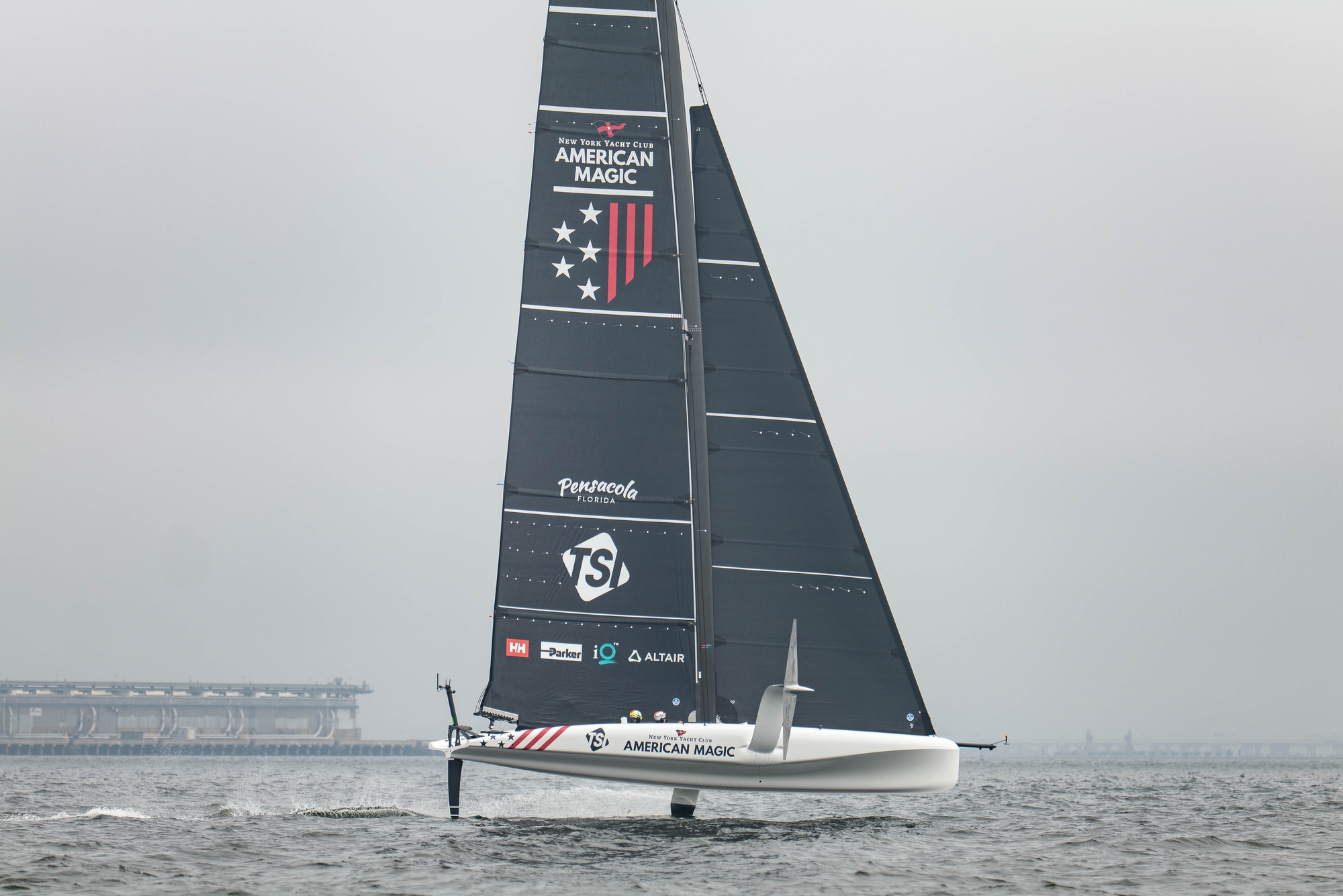
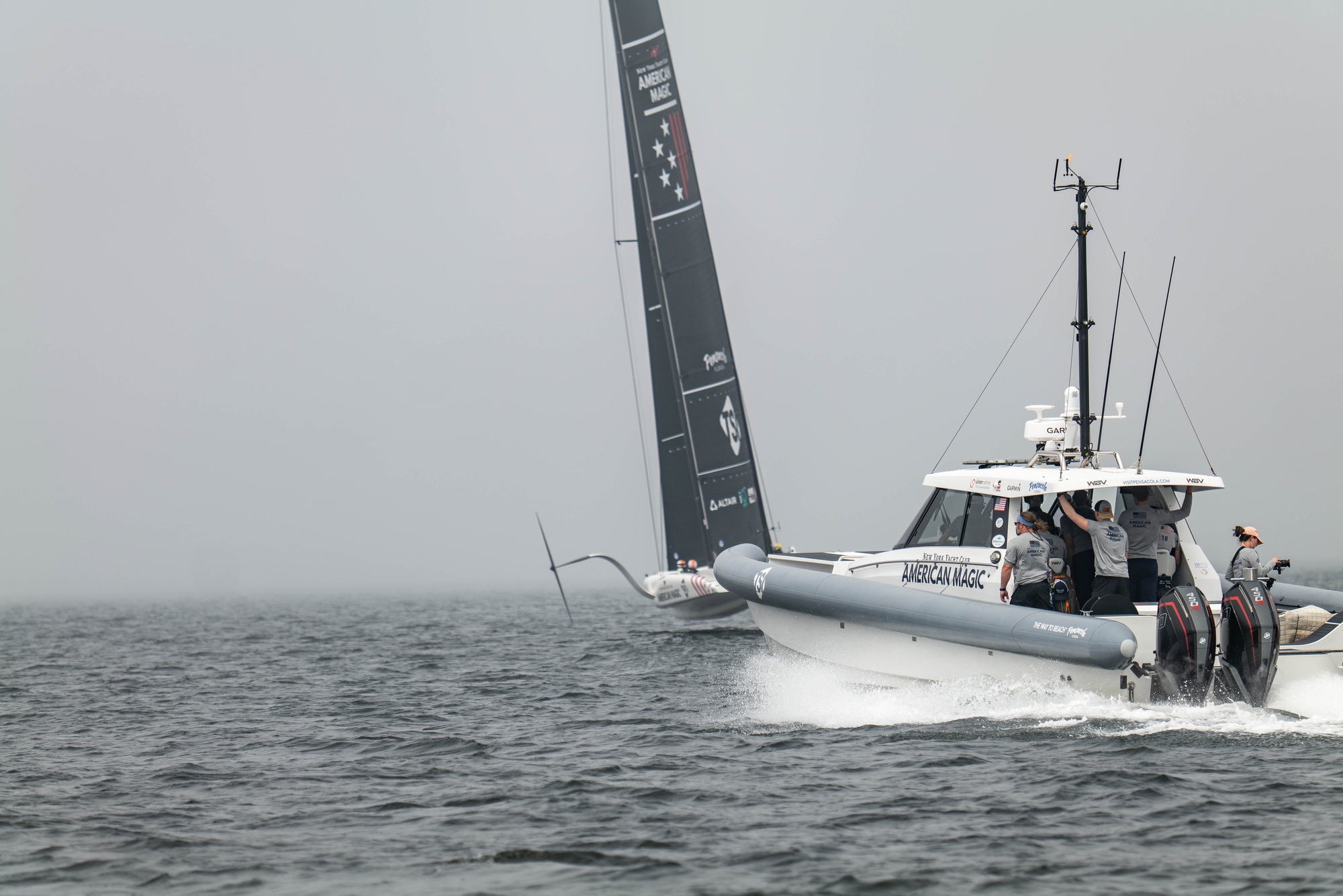
Setting out into dense Pensacola midday fog, the NYYC American Magic Team had a clear focus today (Tuesday) to push their new starboard foil outside of the comfort zone and start imagining real-life race scenarios that the team will face in the upcoming pre-regattas later this year. Much attention was being paid, in relatively marginal conditions, to stalling out ‘America’ by dropping to the bustle and then re-powering on quickly and that transition from low to high power was perhaps more of a sail trim and crew positioning exercise than anything foil driven.
As usual, Tom Slingsby and Paul Goodison were masterful in execution, delivering the duo’s customary windward heel once in flight and keeping what appeared to be maximum cant angles on the leeward, immersed, foil. As they ran through the clearly pre-ordained session plan, the sailors held long stints of flight and a 100% record of tacks and gybes being either foil-to-foil or touch & go simply underline the level at which American Magic are sailing at the moment.
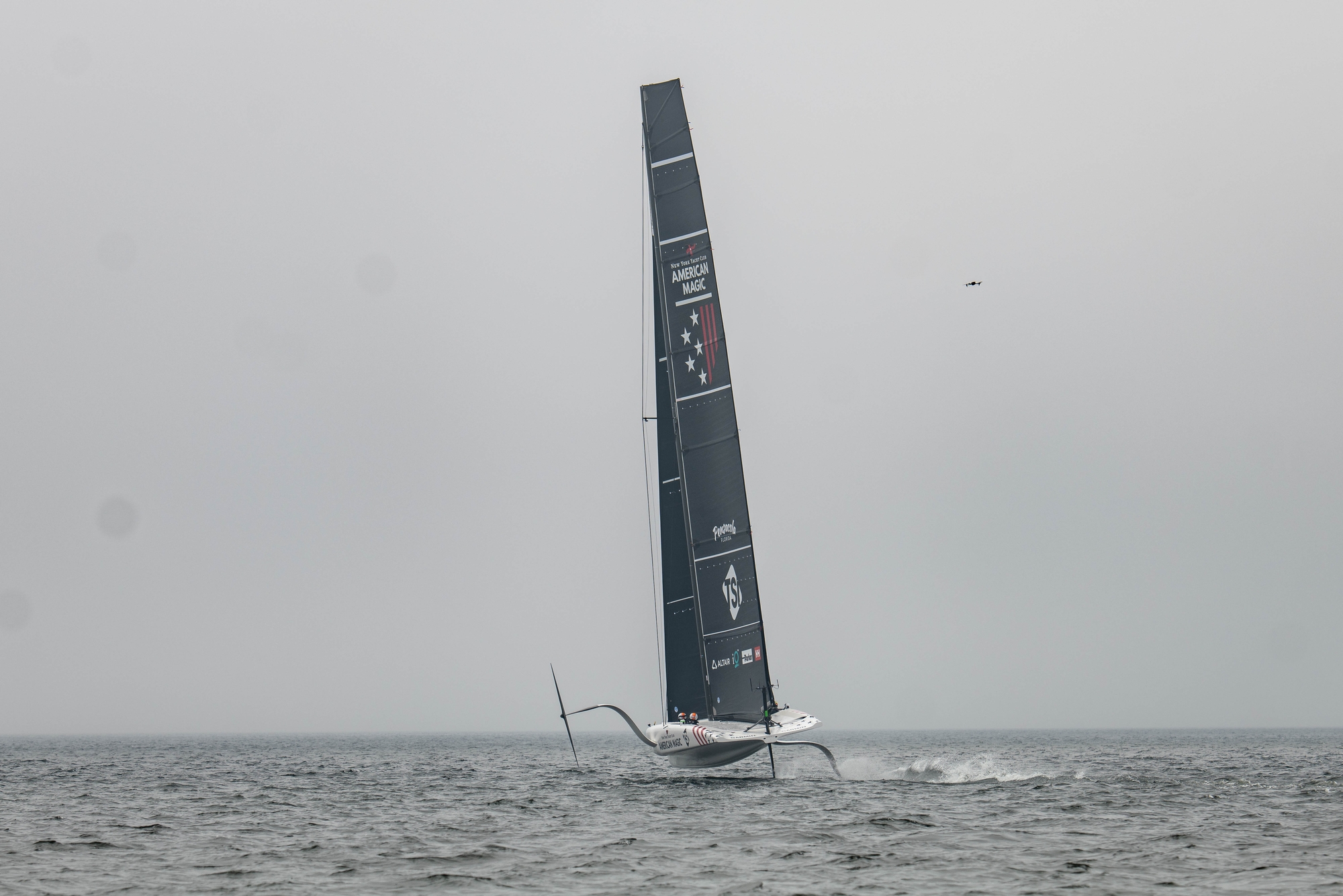
On marginal take-offs we saw again, a crew member pop up from the leeward side and hang off the shrouds as the AC40 trundled to target speed before disappearing around the front of the mast and back into the leeward pod. It’s an effective move in these AC40s and LEQ12s when the wind is light but once flying, the apparent wind takes over and it’s all down to sail trim to maintain power – American Magic’s trimmers of Lucas Calabrese, Michael Menninger and Trevor Burd look like a seriously competent unit in that regard.
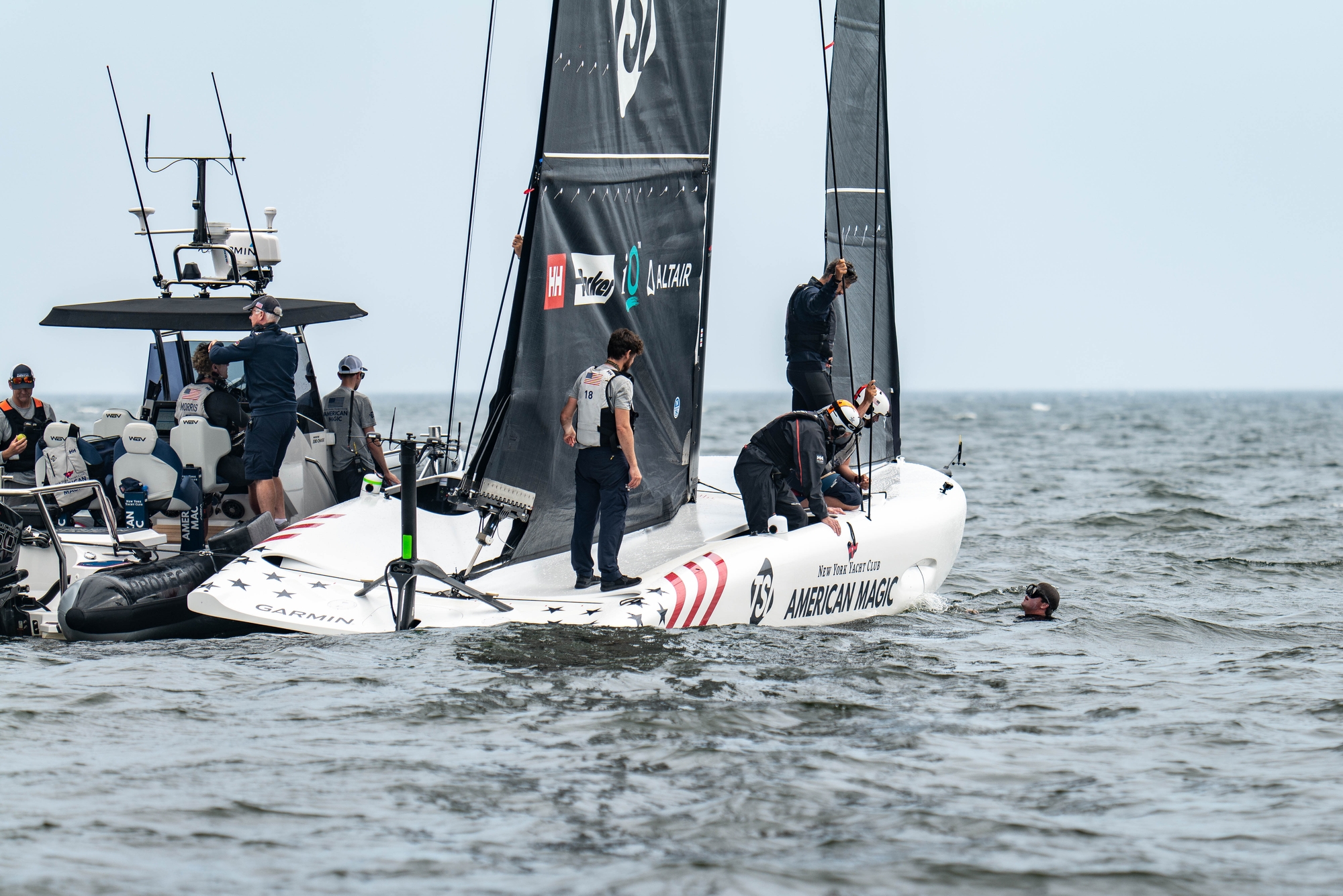
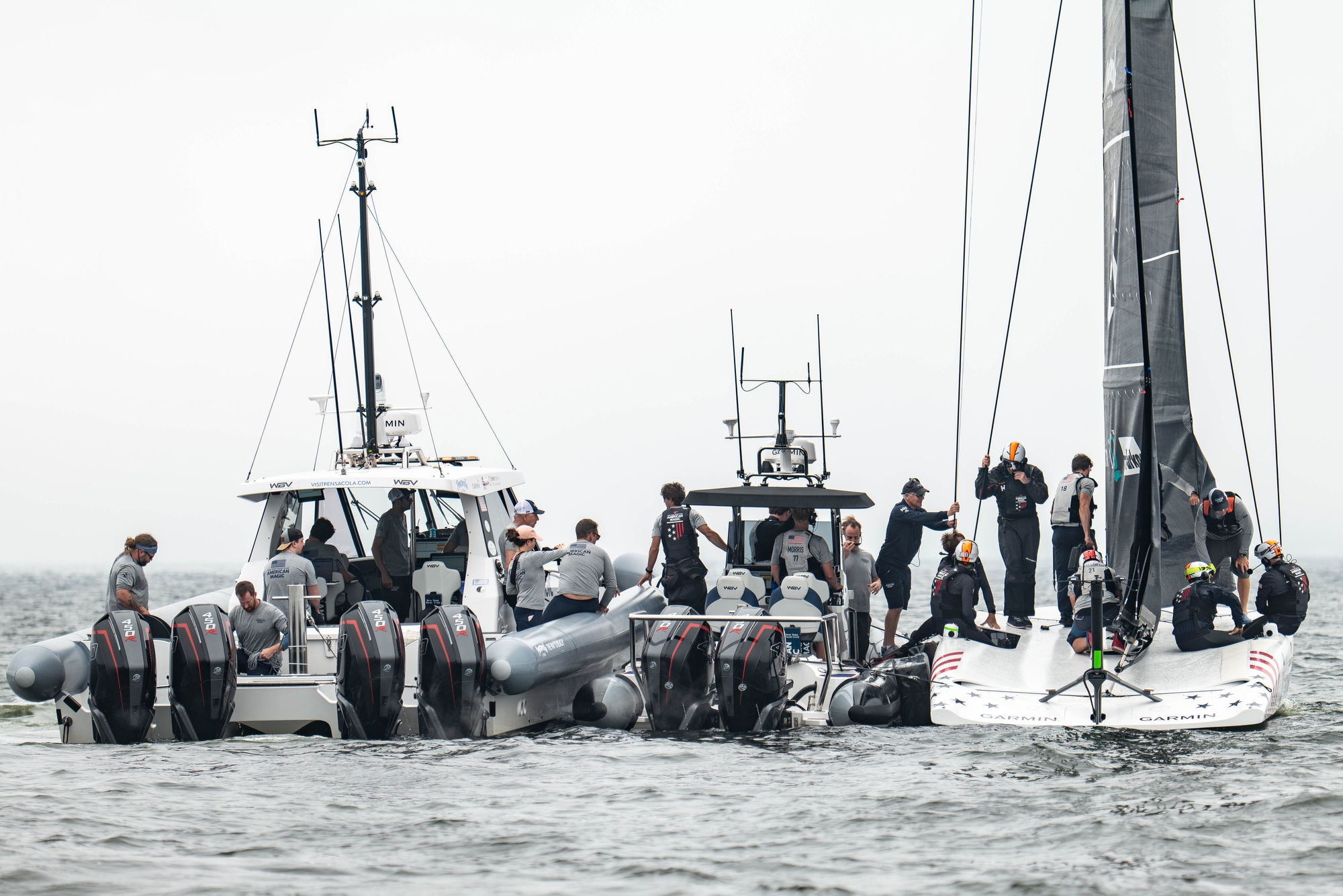
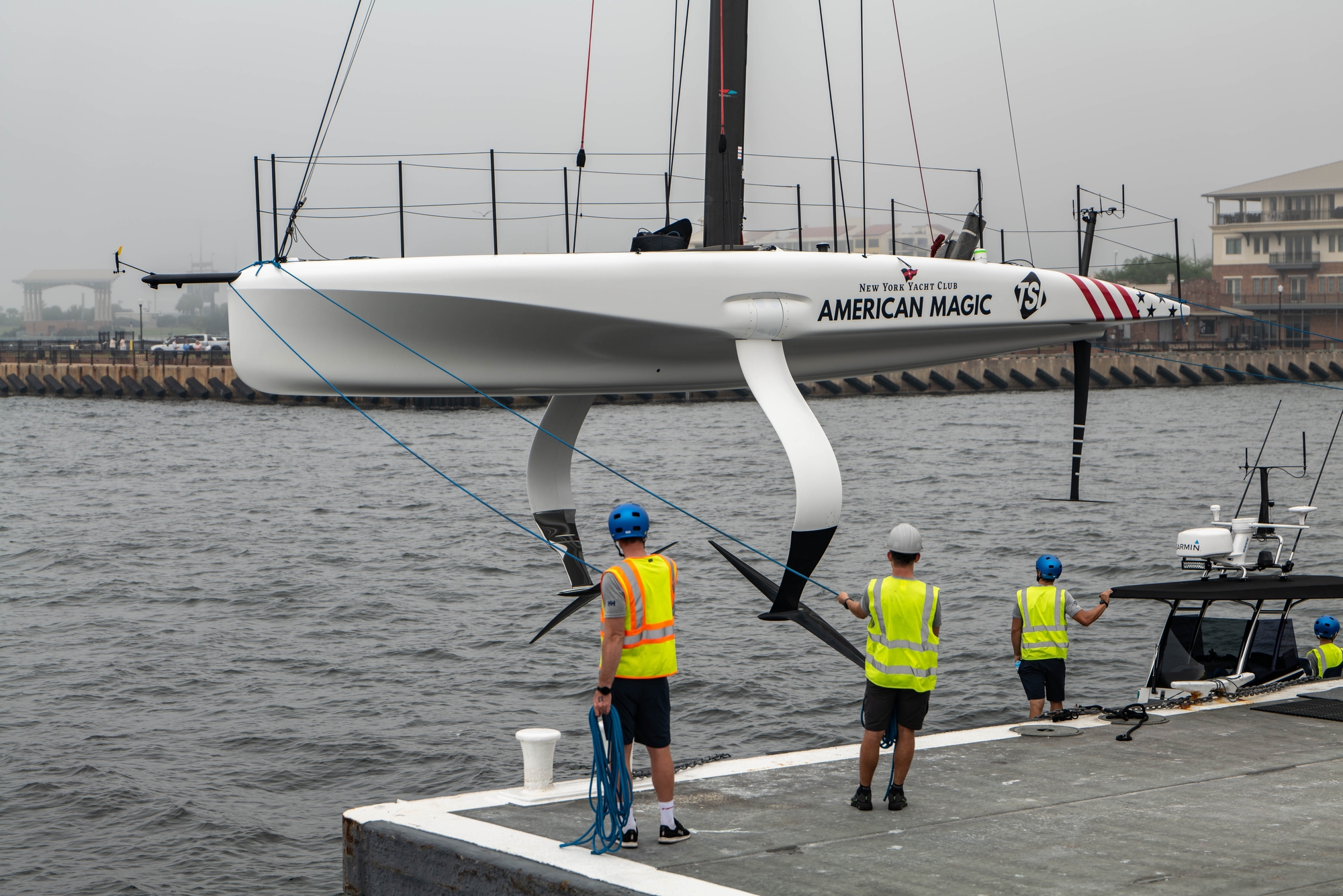
Late in the afternoon, ‘America’ stopped and sent a diver down to inspect the starboard foil arm with crew members seen pointing at and inspecting the patch where it’s presumed the innovative actuator is housed and speaking afterward David Oliver a member of the American Magic design team gave little away but did say: “We were just assessing the condition of the boat, you know they're complex machines and we have to be sure we're on top of all the maintenance, everything going on inside the boat and outside and so if anything potentially looks out of the ordinary we always want to make sure we're doing a full assessment to avoid any bigger problems down the road .”
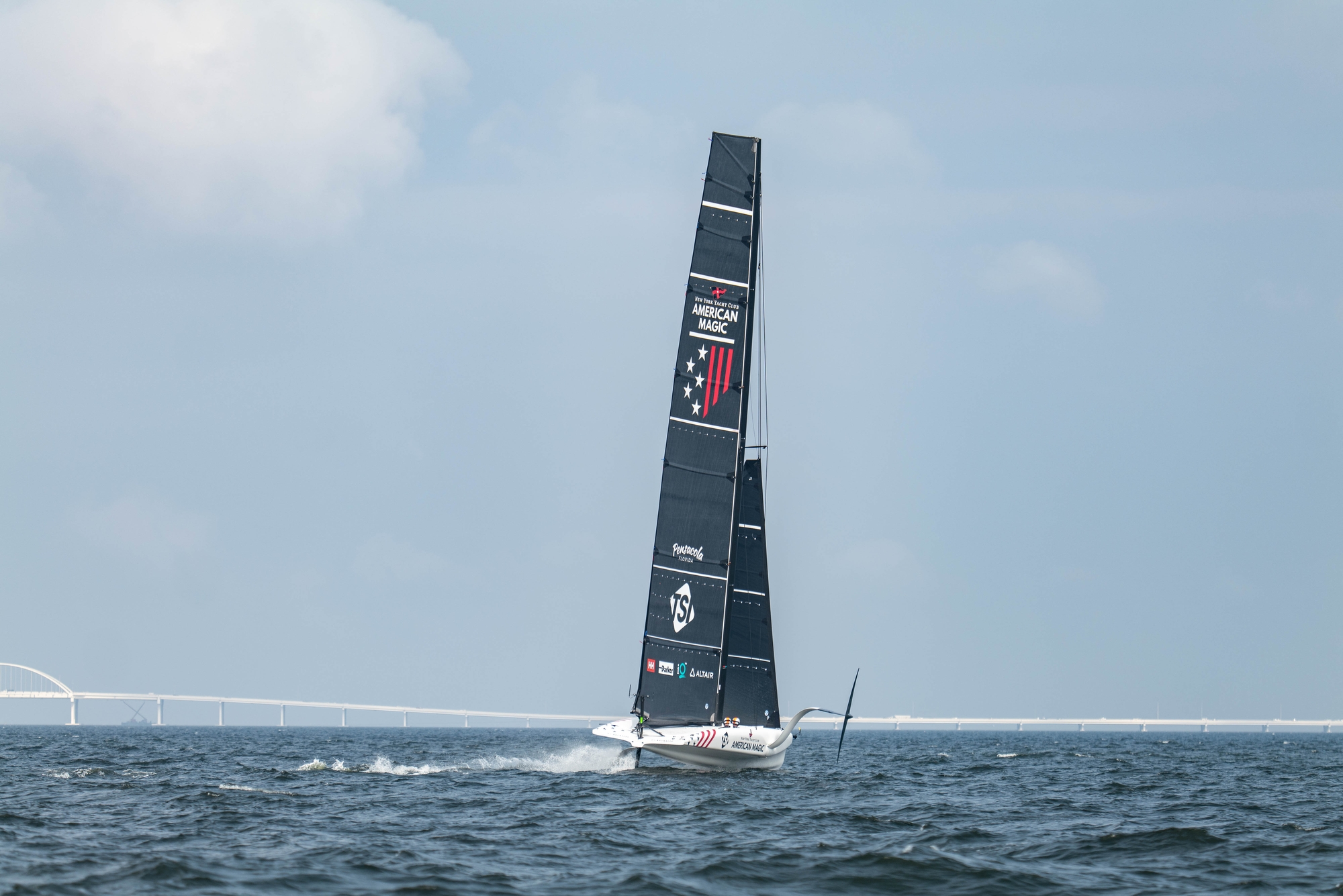
‘America’ sailed back into harbour on her port foil only and was craned out for immediate inspection. Talking about the day’s exercises and goals, David offered a hint that this was a race simulation day as opposed to a design testing or data gathering day, saying: “We've been doing a variety of testing on the water a lot of it trying to learn more about the different modes that we can sail with this boat and understand not only how it will test for our own purposes but also how we will race the boat when we are ultimately in competition.”
The countdown to racing is on and American Magic are arguably the sharpest team of the moment. They’ve been pushing super-hard all winter and the technique sailing on display is of the highest order. A summer in the Mediterranean sailing two AC40s on the beautiful waters of Barcelona will offer further clues as to where this impressive challenge for the America’s Cup is at. It will be electric to watch. Bring on the racing.
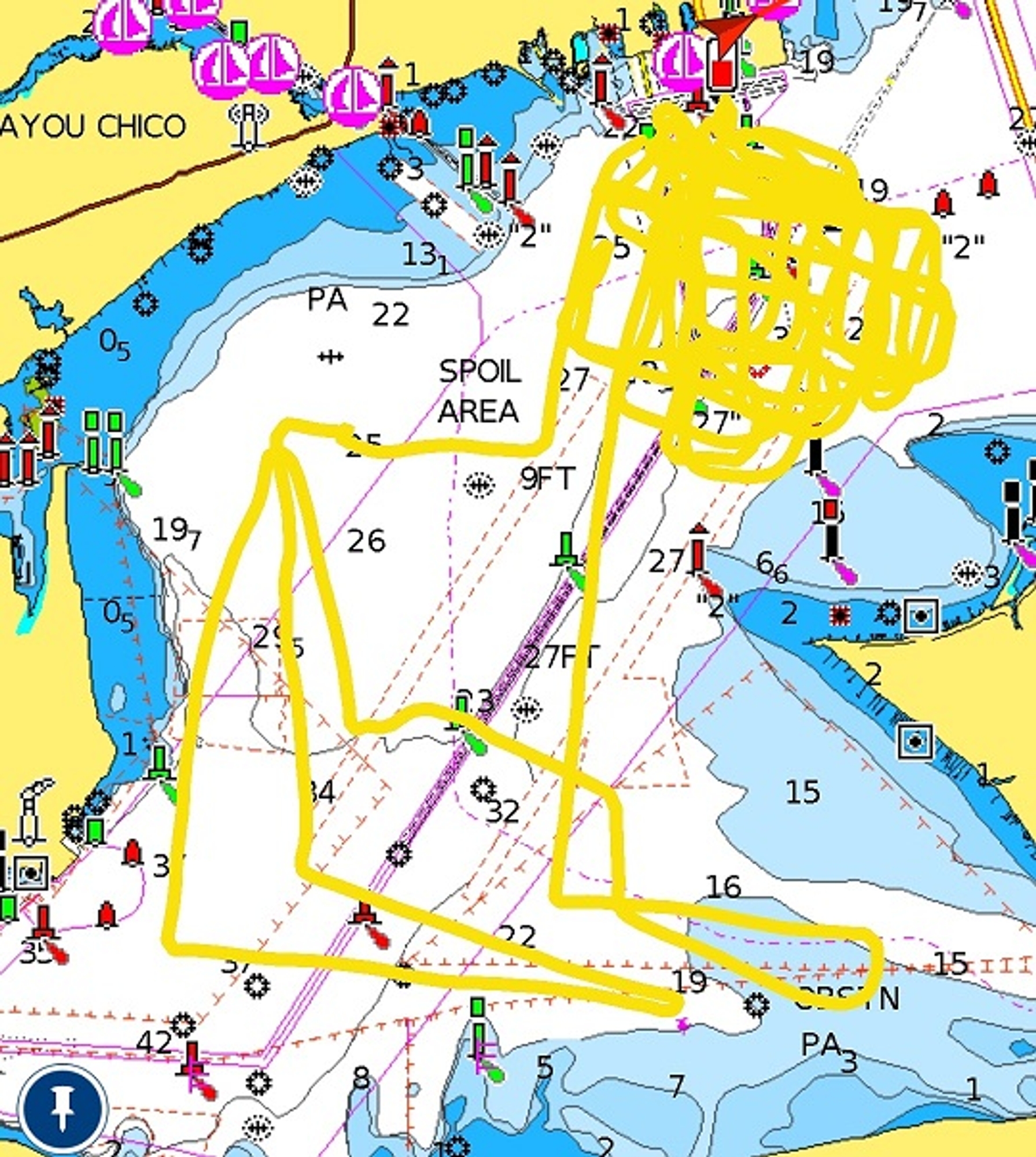
On-Water Recon Unit Notes: The AC40 docked out at 11:28 into heavy fog. The LEQ M1 and J1 were up in record time and the team began sailing at 11:38 in about 1/8th mile of visibility. The crew elected to sail in a tight area of the Bay close to the base. The first stint of sailing involved turning into the wind until the bustle started to touch, then bearing off and accelerating. This process was repeated many times both up and downwind.
The team paused at 12:34 to change to the J2 while the laptops were brought aboard. Sailing on the J2 was more of the same for about an hour. The crew switched to the J3 at 13:40 and practiced the same manoeuvres (possible pre-start or paddock) for 13 minutes.
The majority of the morning session Chase 4 was observed performing "S" turns behind the race yacht at varying distances. The Main was dropped twice for a short time throughout the day for inspection/adjustments to be made between the skins. At 13:59 the yacht touched down for a quick lunch and battery change, then began sailing again at 14:26. The yacht sailed south for the entire length of the bay and began doing long stints on one board for around 35 minutes.
At 15:02 the yacht came head to wind and touched down. The crew (and chase boat crew) quickly inspected the starboard foil. A diver was sent in shortly after touchdown. No damage was noted by the recon crew. At 15:21 "America" sailed back to base (without using the starboard foil) and an end was called to sailing at 15:25.
In all, America completed 43 manoeuvres, 22 W/L's, sailed approximately 61nm, and had a total flying time of 120min. Top speeds were approximately 30k upwind and 37k downwind.
Total Tacks: 21 – 18 foil-to-foil, 3 touch & go.
Total Gybes: 22 – 18 foil-to-foil, 4 touch & go.
Recon Notes: America was on foil for a total of 120 minutes (22, 1, 16, 2, 22, 5, 13, 15, 20 and 4 minutes respectively)
Take off speed: 15 knots at 90° TWA (True Wind Angle)
Recon Notes: Initial take off was self, 9 additional self-up’s, 0 tow up's
Onboard AC40 Today:
Helms: Paul Goodison / Tom Slingsby
Trimmers: Lucas Calabrese / Michael Menninger /Trevor Burd
Conditions: 11:38 SE 10k/ 12:16 SE 10-12/ 13:00 SE 10-12/ 14:12 SE 10k. Wind speed measured 8ft above sea level using a handheld anemometer. Weather AM: 75° Heavy Fog. Weather PM: 80° Sunny. Sea State PM: 1ft chop.
Sails Used:
Mainsail (AM-LEQ-MS1): 4 hours 10 minutes
Jib J1 (AC40 OD): 1 hour
Jib J2 (AC40 OD): 40 minutes
Jib J3 (AC40 OD): 1 hour 50 minutes
Dock-Out: 1128 Dock-In: 1540