DATA AT THE POINTY END
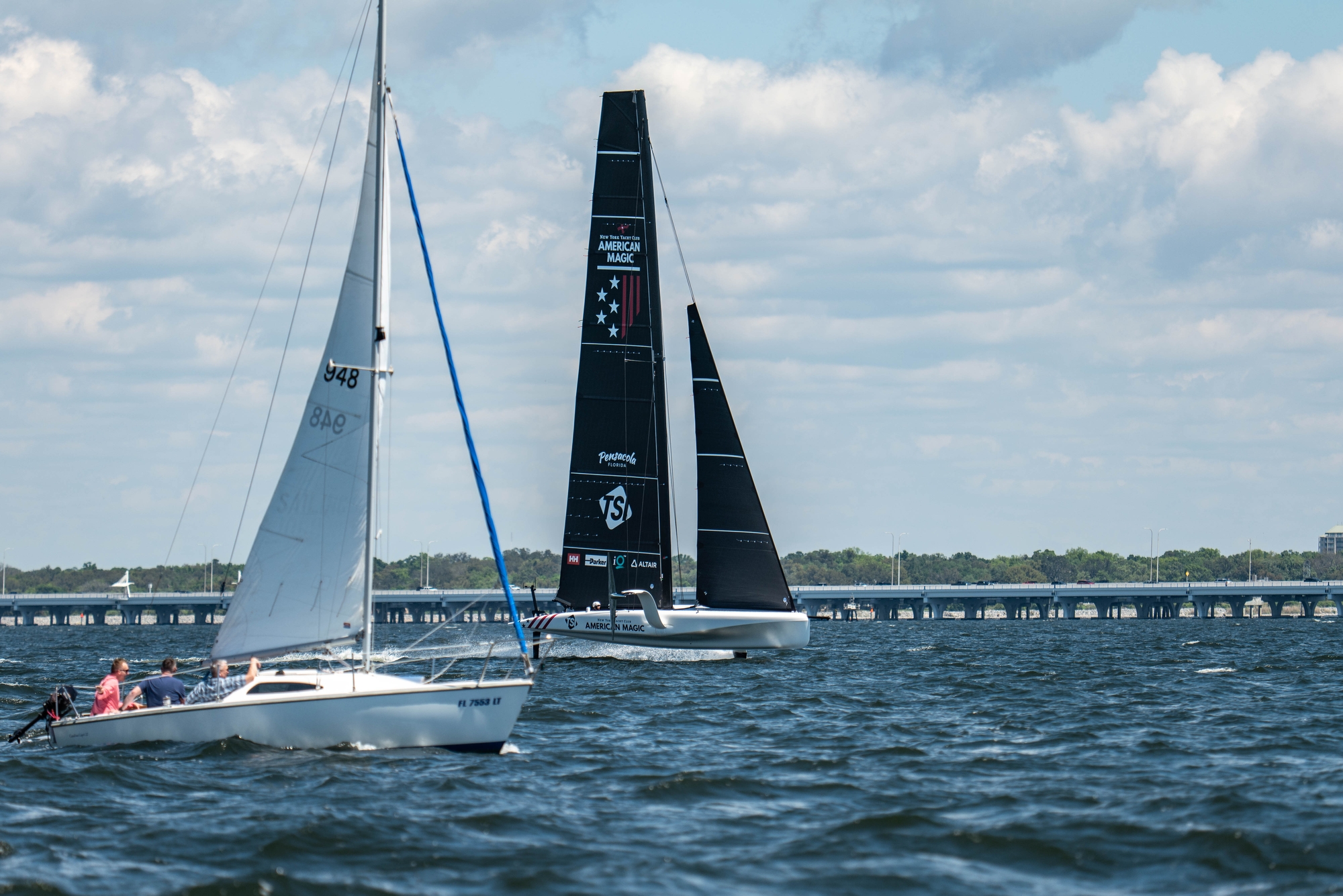
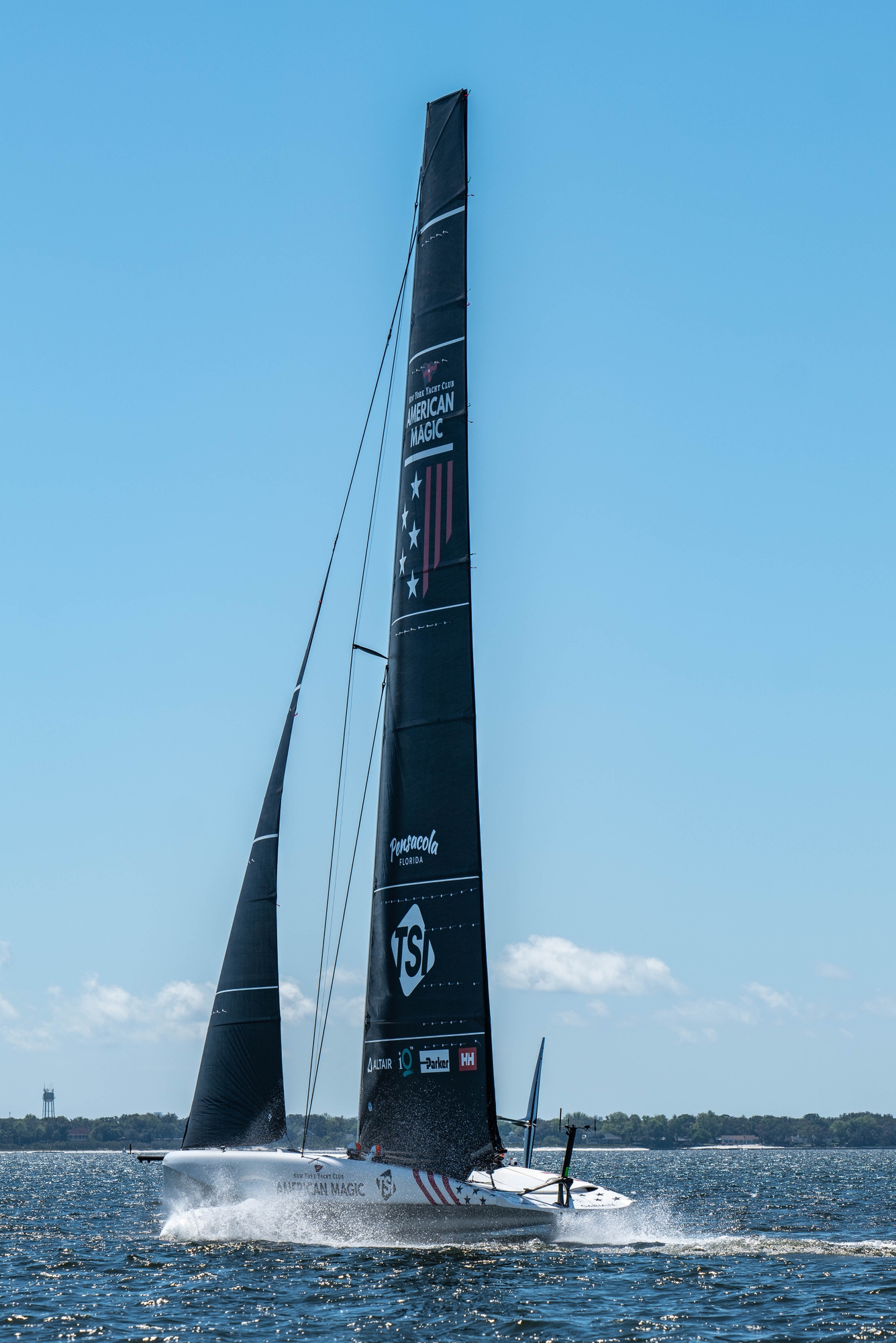
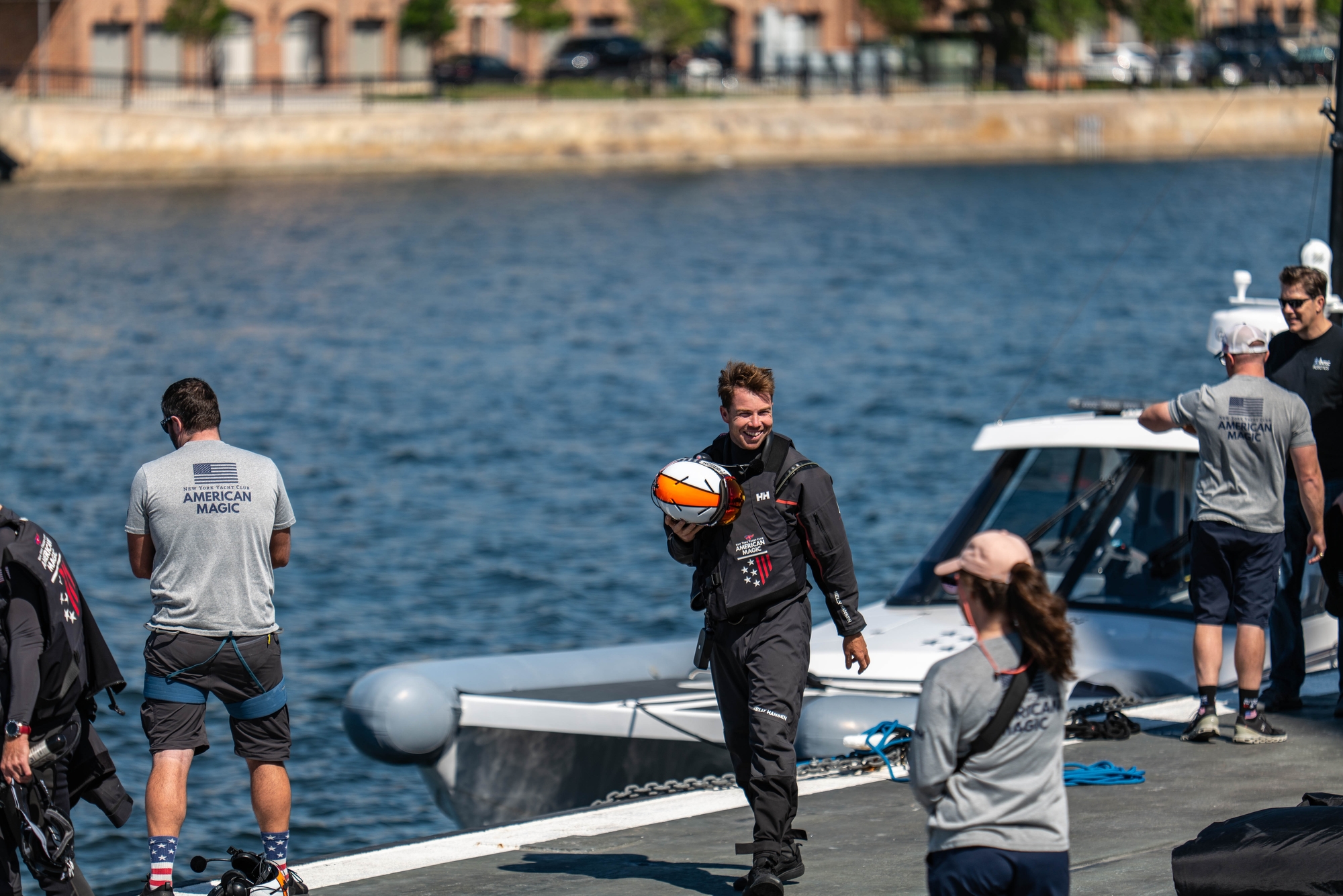
There’s a very different air around NYYC American Magic at the moment. No longer are the sailors sailing in their comfort zone and merely blasting around on training exercises. That phase is over and new technology and a newly upgraded starboard wing are sharpening the minds with a focus on data, data, data. This is what Riley Gibbs described as the “pointy end of the campaign” and serious decisions are being taken shoreside with regards the design direction of the team’s one-build AC75.
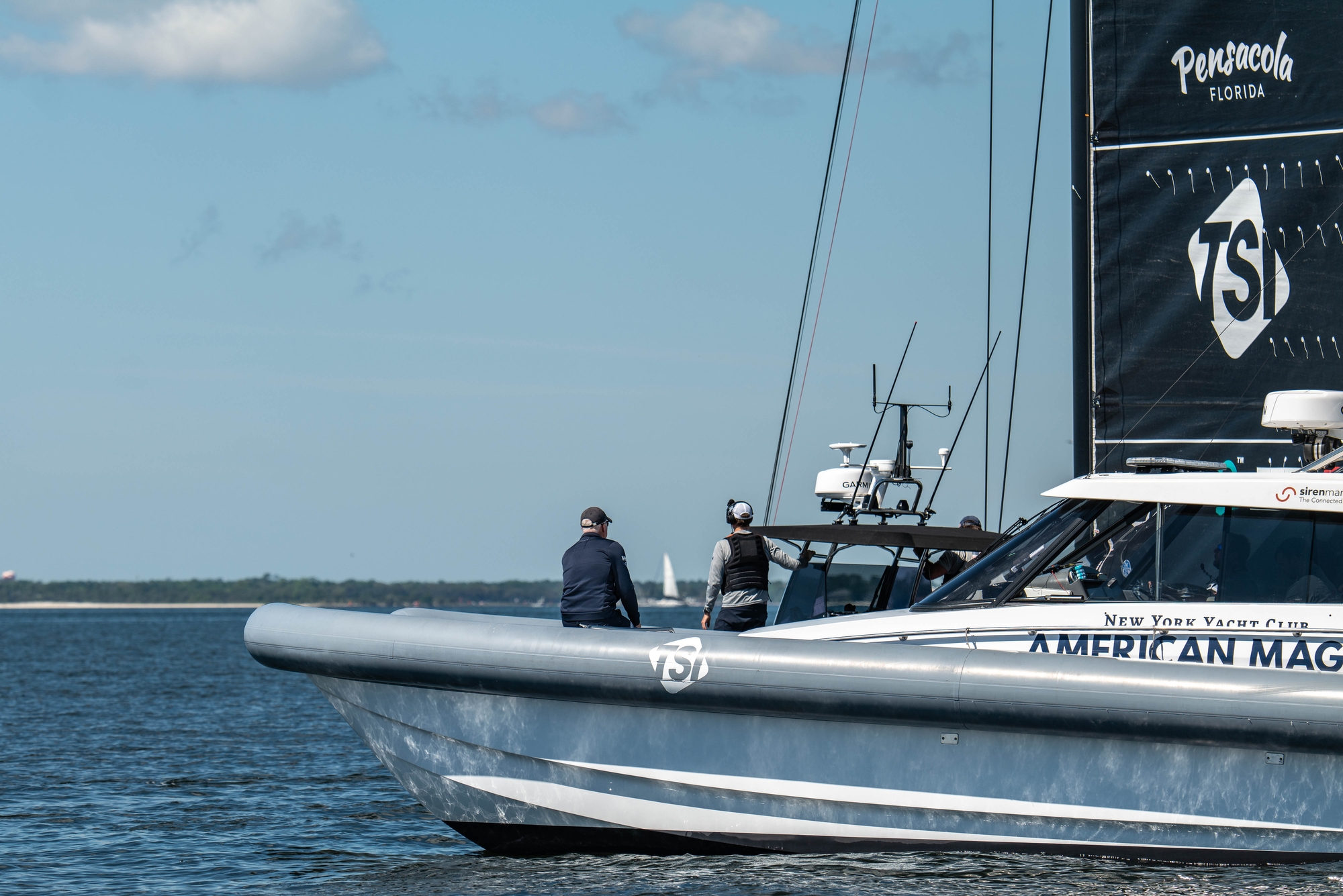
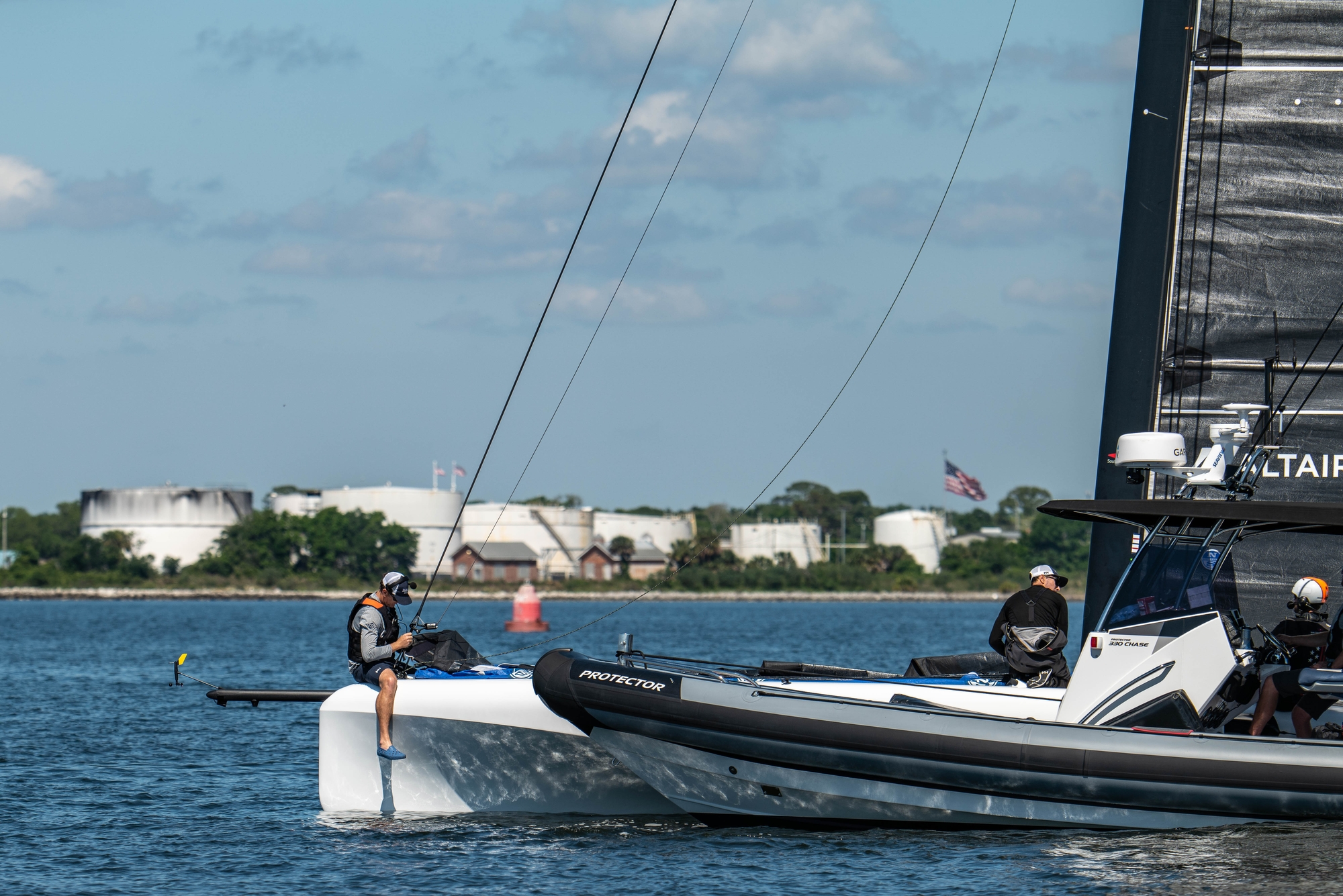
‘America’ now fully in LEQ12 development mode looks twitchier than we’ve seen before but once in flight with the team’s signature windward heel and bow down mode, she looks rapid and graceful. Of note today (Friday) was the presence on the dock and the chase boat of personnel from IHMC Robotics Lab, the creators of humanoid robots, and human-machine systems design. From the outside it’s impossible to know what IHMC Robotic’s involvement with the team entails but it’s an interesting direction that the Americans could be pursuing.
On the water on Friday, the session was notable for lengthy runs bookended with a number of stops, some quite long, that the team made, calling in the Chase Boat team to analyse and re-set systems controls onboard ‘America.’ It was certainly a day for gathering valuable A/B foil data whilst the recon unit noted that harden ups and bear-aways were “a little better today but still nervous.” American Magic appear to be treating the starboard foil with a lot of respect and seem determined to dig into the design as much as possible, recording some 81 nautical miles of distance covered and a flight time of some 150 minutes – impressive by any measure.
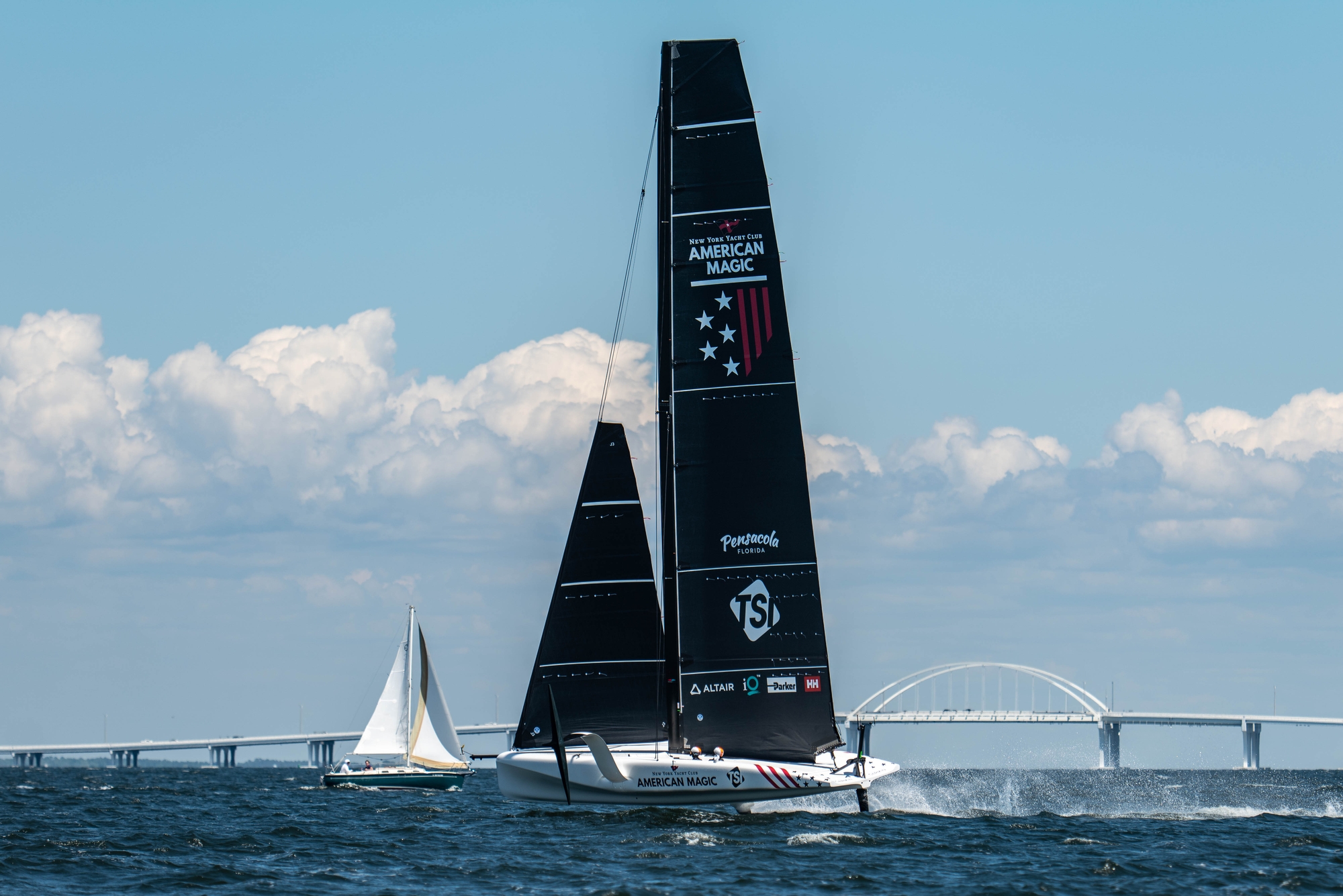
As the breeze filled in the early afternoon to around 18 knots, ‘America’ was looking better and better completing some 17 windward/leeward legs and despite a few small nosedives in the chop, was hitting some impressive speeds with the recon team clocking 42 knots downwind on the new starboard foil. The sailors appeared very focussed on keeping trim and pitch consistent to extract meaningful data on both tacks and gybe angles.
Riley Gibbs confirmed in interview afterwards that these are crucial days for the campaign saying: “You know a lot of our development in the AC40 kind of leads our design decisions in the AC75 and it's kind of coming down to the pointy end of the campaign as far as with the hull design and as far as we're concerned with the whole design. So, you know, we're trying to tick boxes off to kind of make pretty big decisions here coming up shortly so a lot of our sailing on the water from day-to-day stuff is ticking those boxes.”
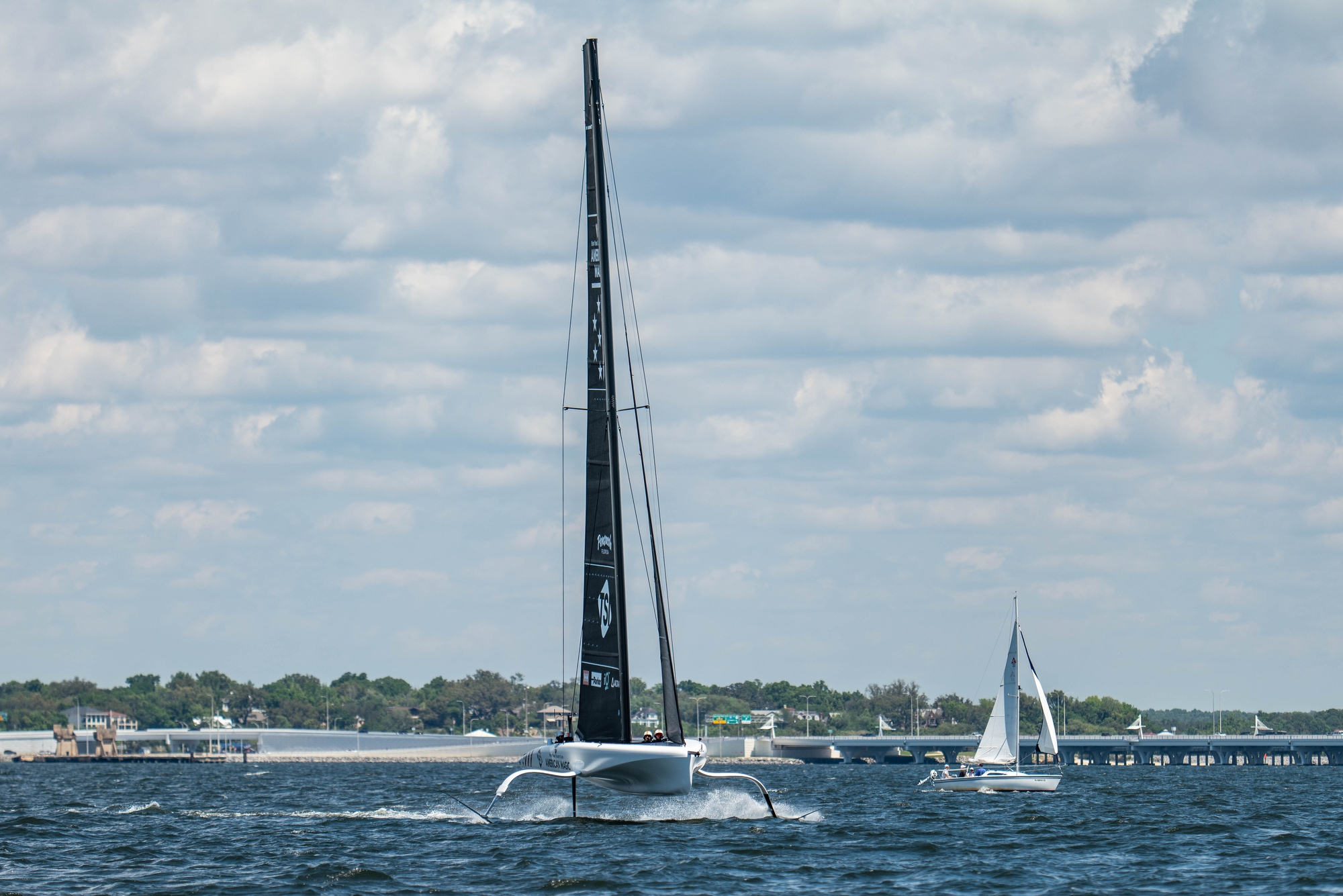
Talking about the team’s signature mode of bow down and windward heel, Riley gave an insight into what the team are trying to achieve saying: “Yeah I guess you're always kind of trying to understand leeway and how the boat sails and how you trim the sails as a trimmer, helm, or whoever really on board, and trying to get the balance right all the time.”
When asked about the downtime on the water today, Riley was pretty clear when he said: “Just you know simple stuff on the boat from displays not fully lighting up and getting all the right data across each display across the boat. You know, these are really complicated boats and just the tiniest little thing can set you wrong.”
American Magic are well into the final stretch of the design runway and with so much resting on getting the design right for the AC75 we can expect more long days on the water in the coming weeks before the team says goodbye to beautiful Florida and heads to Barcelona in July.
Fascinating to watch on the water, ‘America’ is being pushed hard by some of the best foiling sailors of this America’s Cup cycle and being overseen by some of the brightest minds in technology anywhere on the planet. More to come next week.
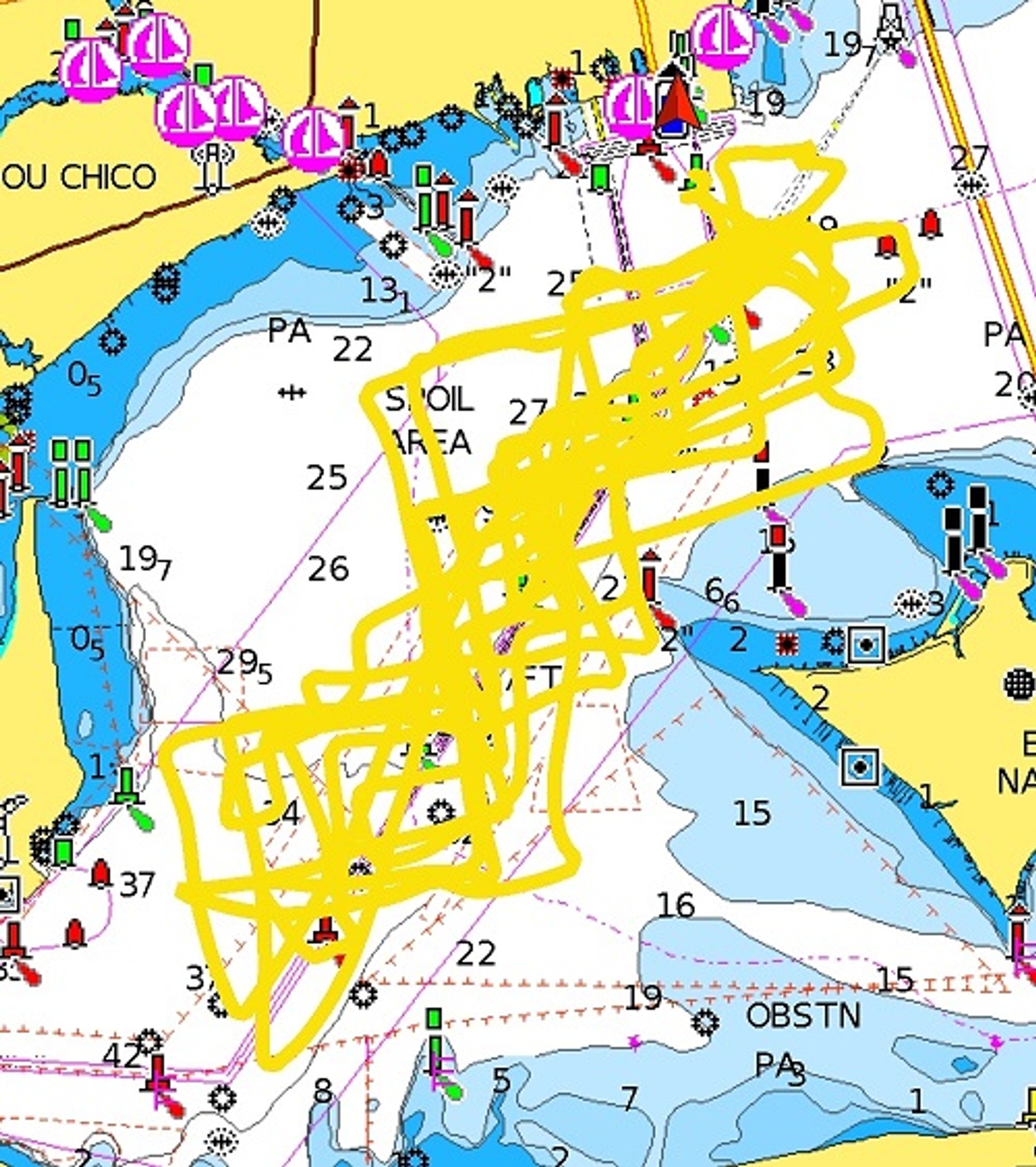
Recon Notes: The AC 40 craned in at 0915. Two men were observed boarding the race yacht (one wearing a IHMC Robotics shirt) and focusing on the controls in the pods. The two men were observed on Chase 2 for the majority of the day.
The Main and the J1 went up shortly after dock-out, but as the breeze filled in quickly the J1 was swapped for the J2. Sailing began at 11:04, after a 17-minute stint the crew stopped for 27 min. Several of these breaks occurred today, the longest of which was at 1409 lasting 32 minutes.
The sailing today consisted mostly of long runs on a single board displaying bow down, windward heel, both upwind and downwind. The breeze filled in all day (up to 18 knots per interview) but the sailing mode seemed to remain the same. Harden-ups and bear-aways seemed a little better today but still nervous.
There were four notable (medium to small) bow stuffs. The final stint began at 1453, lasted 35 minutes and ended just outside the base. A conclusion to sailing was called at 1528. In all, America completed 71 manoeuvres, 17 windward / leewards, sailed approximately 81nm, and had a total flying time of 150min. Top speeds were approximately 27k upwind and 42k downwind (on the starboard foil).
Conditions: 10:48 S 7k/ 10:58 S 8-12k/ 11:25 S 10-12k/ 12:12 S 12-15k/ 13:15 S 12-15k/ 14:20 S 12k. Wind speed measured 8ft above sea level using a handheld anemometer.
Weather AM: 70° Sunny.
Weather PM: 75° Sunny.
Sea State AM-PM: 1-2ft chop.
Total Tacks: 39 – 27 foil-to-foil, 9 touch & go, 3 touchdowns.
Total Gybes: 32 – 26 foil-to-foil, 5 touch & go, 1 touchdown.
Recon Notes: America was on foil for a total of 150 minutes (17, 18, 14, 6, 51, 9 and 35 minutes respectively)
Take off speed: 16 knots at 100° TWA (True Wind Angle)
Recon Notes: Initial take off was self, 6 additional self-up’s, 0 tow up's.
Onboard AC40 Today:
Helms: Paul Goodison / Riley Gibbs
Trimmers: Lucas Calabrese / Michael Menninger / Andrew Campbell
Sails Used:
Mainsail (AM-MN1): 5 hours 10 minutes
Jib (J1): 10 minutes
Jib (J2): 1 hour 12 minutes
Jib J3 (AC40 OD): 35 minutes
Dock-Out: 1030 Dock-In: 1550