INEOS BRITANNIA SCORCHING IN BARCELONA SWELL

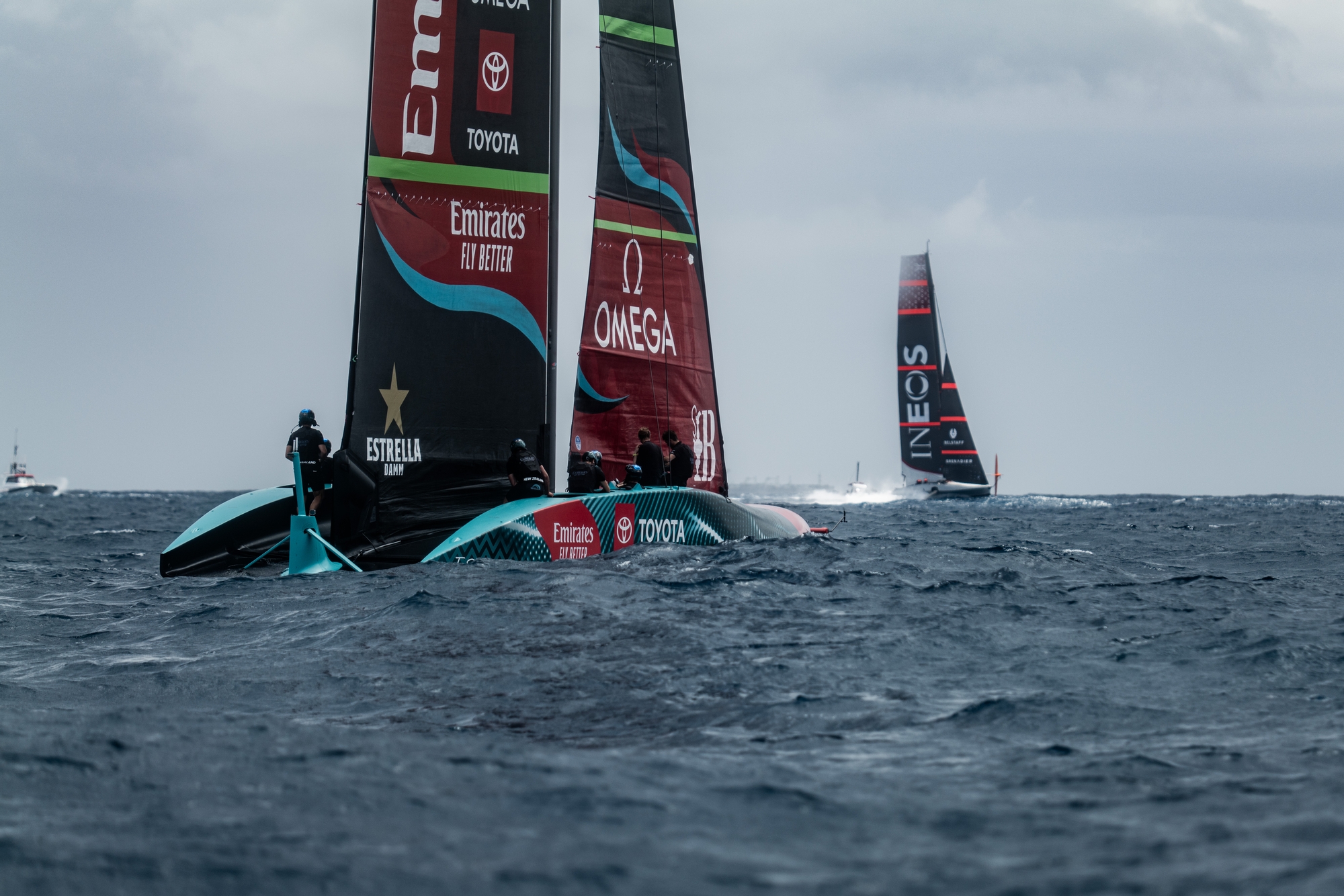
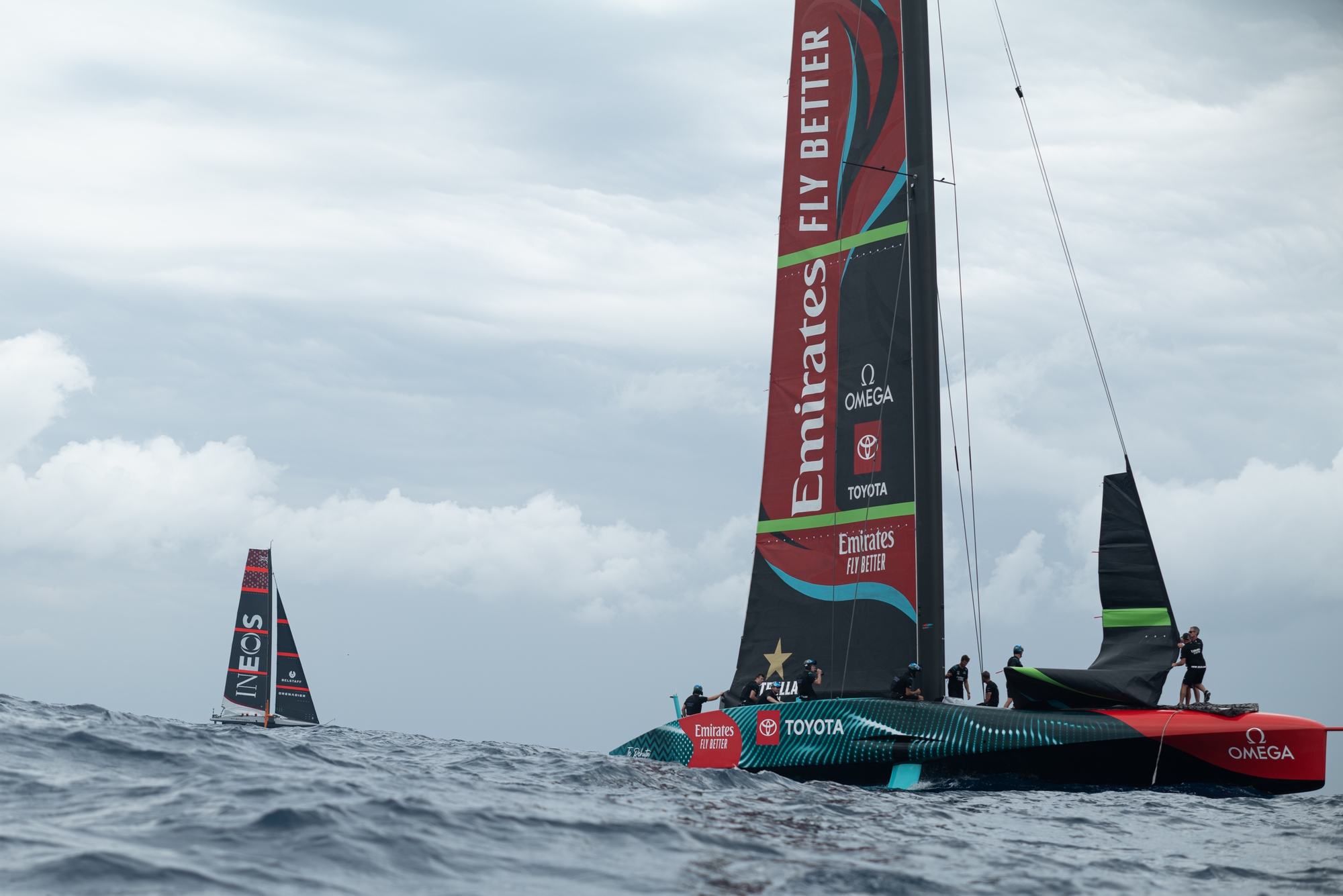
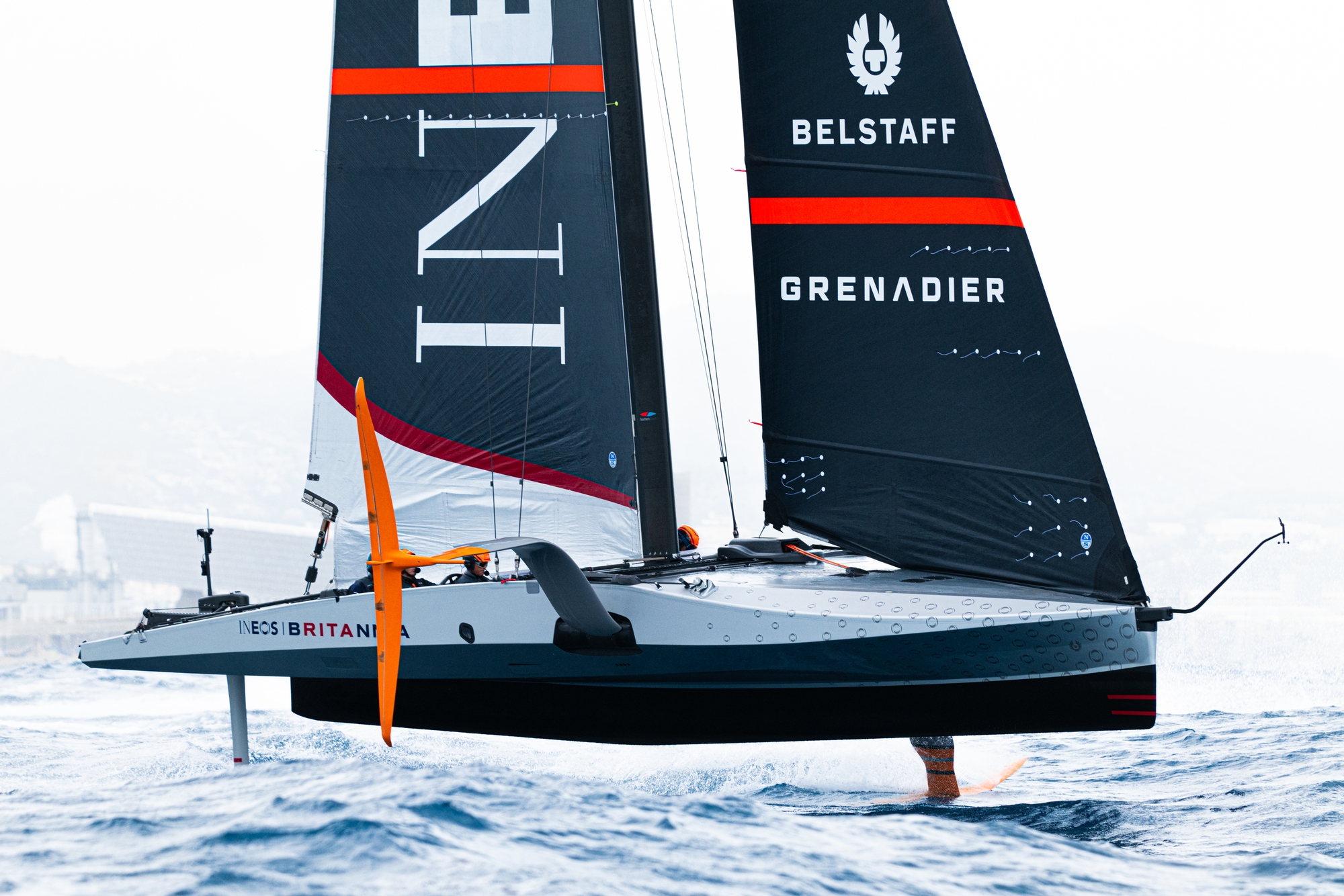
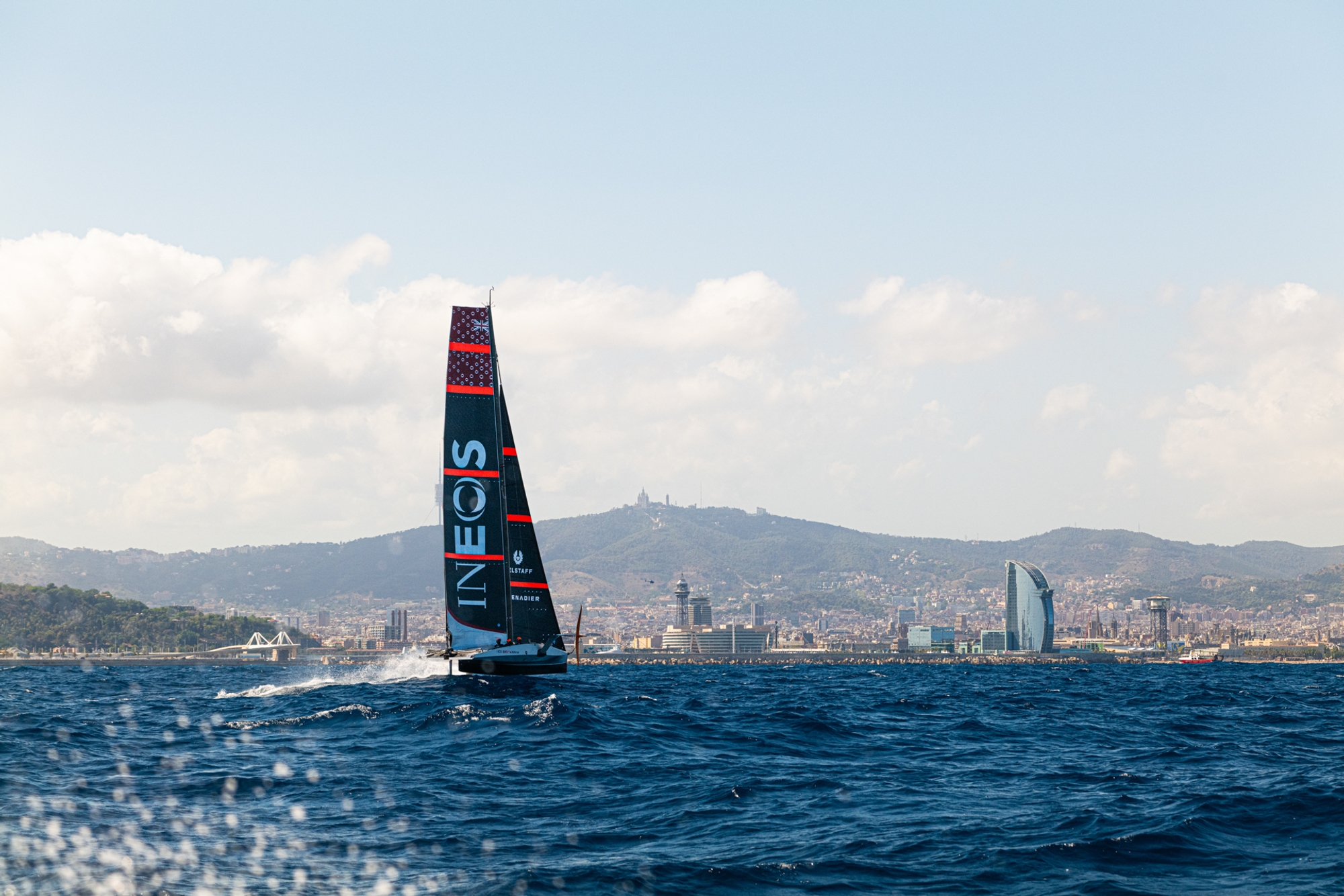
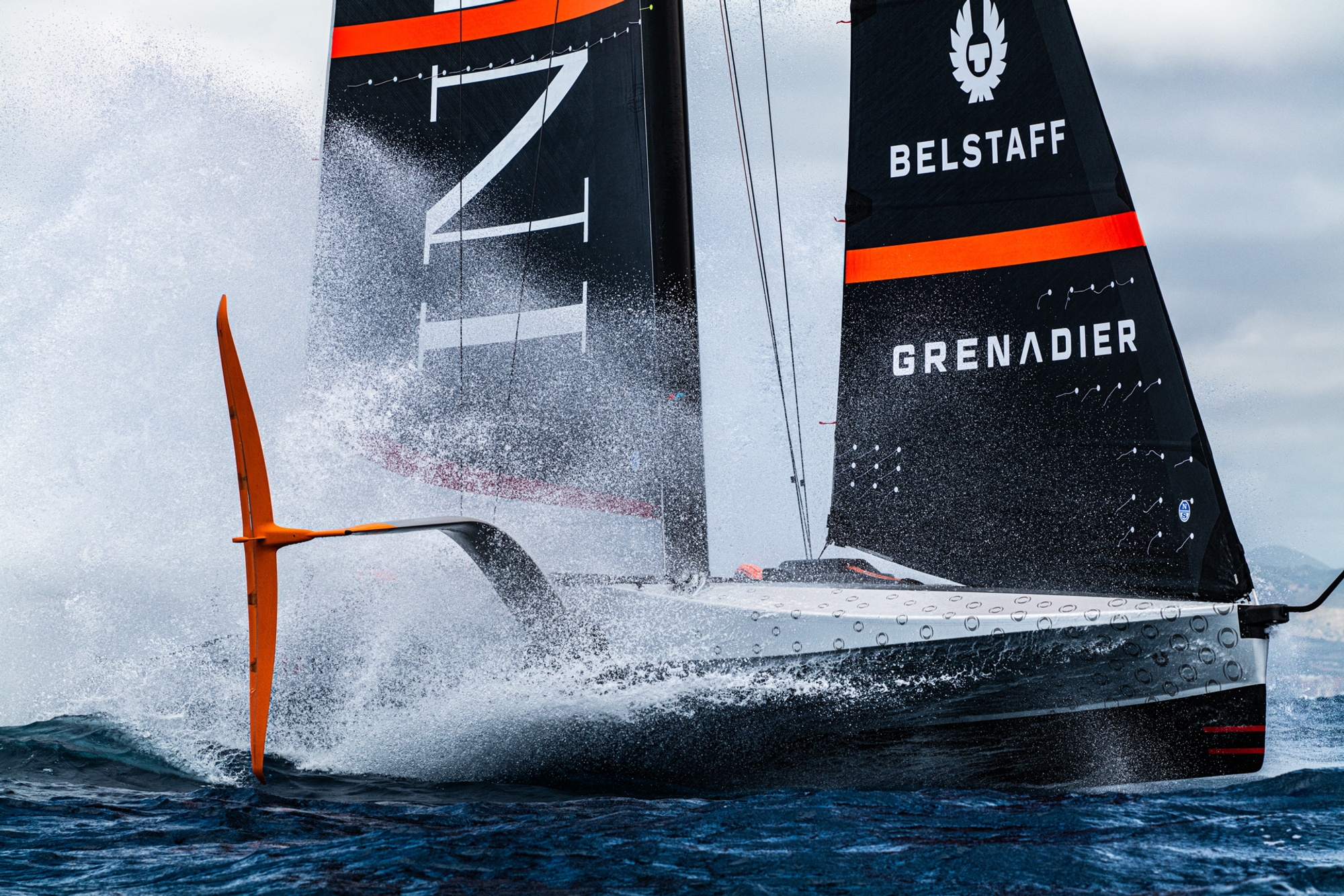
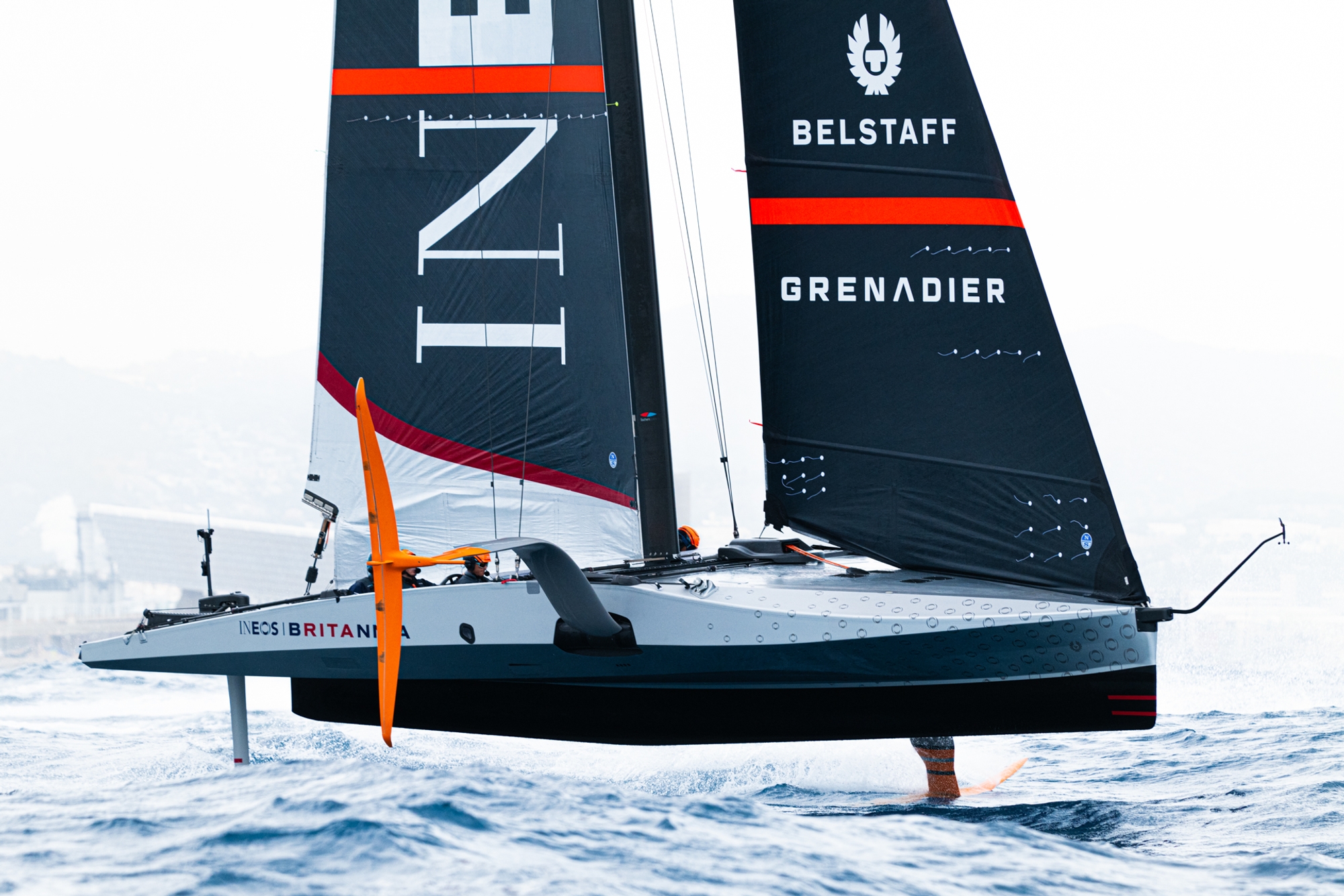
The British team’s extraordinarily technical prototype test platform, ‘T6’ launched into some ‘extreme’ swells in Barcelona today where the sheer skill of the sailors was thoroughly tested as they rocketed around the racecourse area, trying to make sense of the, at times, two metre swells.
The last time ‘T6’ was in action was back on the 15th June in Palma, Mallorca but the team trained on their one design AC40 last week and are getting fully acclimatised to life in Barcelona at their new, impressive base in the heart of the Port Vell. Today’s session was billed as a ‘commissioning sail’ but proved to be far more with T6 absolutely on rails with the wind speed that built and faded through the day between 8-15 knots never really matching the lumpy, confused easterly-running sea state.
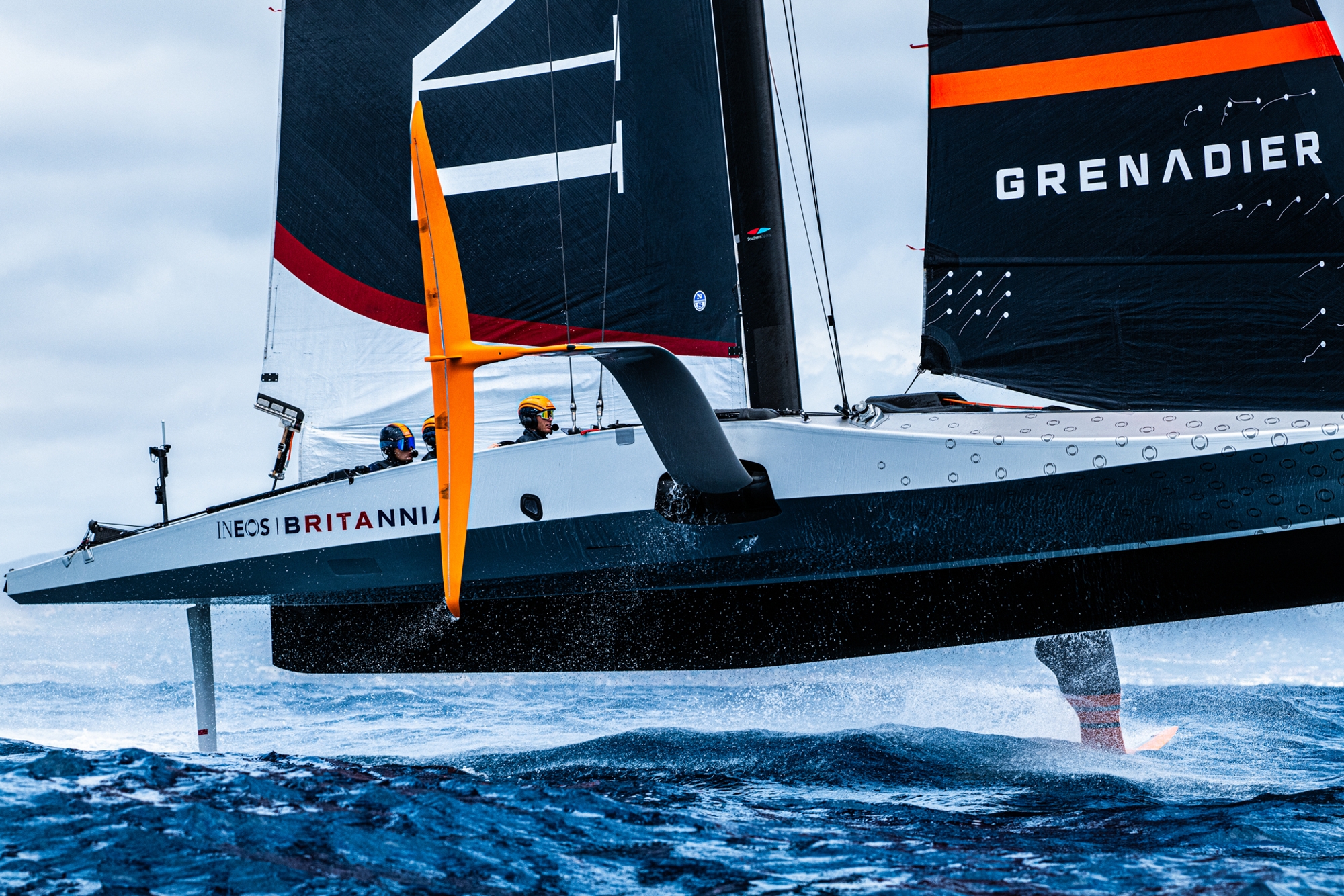
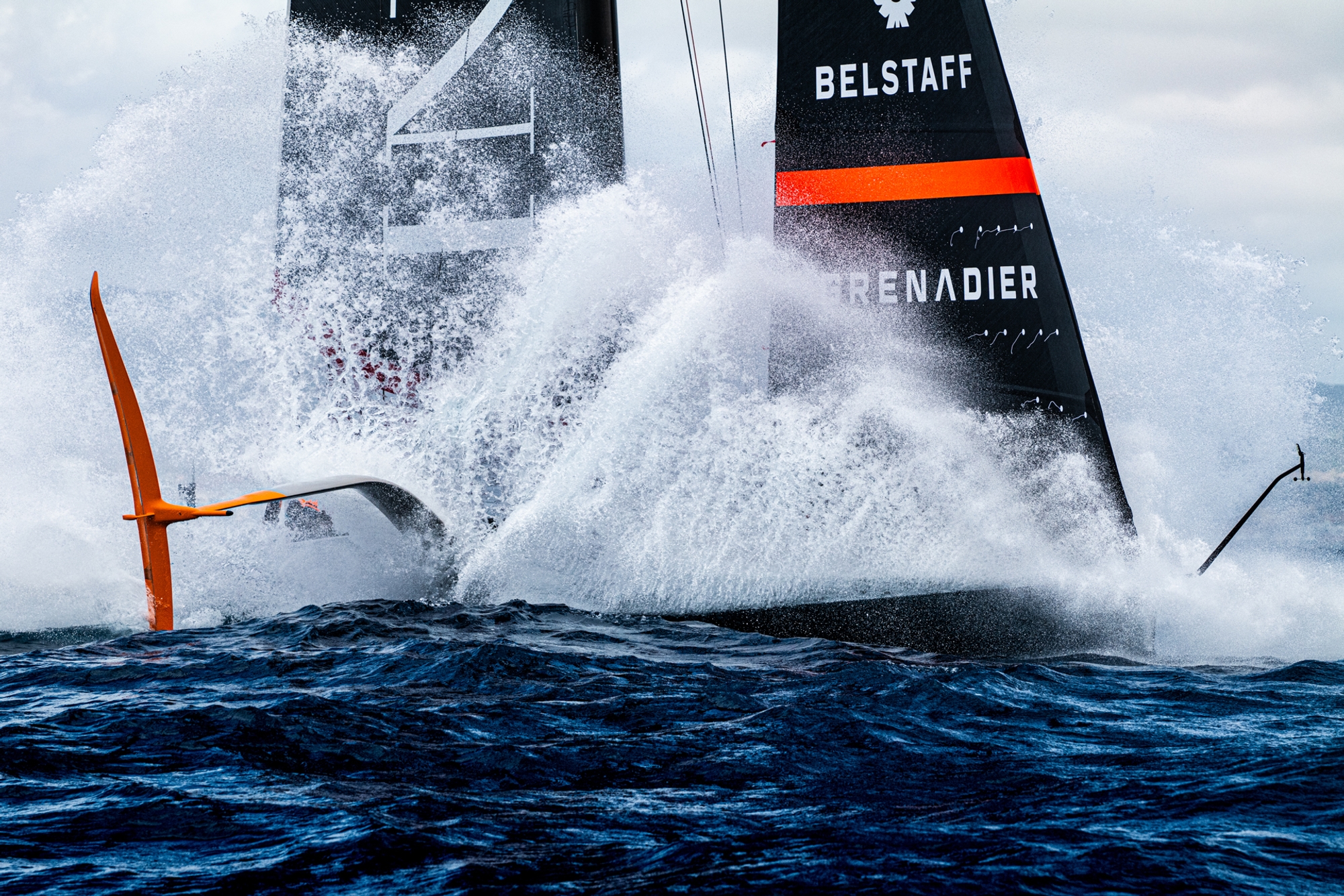
It was anything but easy. The swell was simply extraordinary and challenging for the 40 foot length of T6 with Giles Scott and Dylan Fletcher-Scott really having to sail over the wave-forms upwind almost as if they were back in dinghies. Huge credit to Luke Parkinson and Iain Jensen who were playing the mainsail track relentlessly and in high-co-ordination with their helms’ courses whilst downwind they dared with high flight that was almost scary to watch. A few touchdowns and some big angles on gybes were to be expected but ultimately those dunks damaged the manoeuvre percentages with 58% being either foil-to-foil or touch and go.
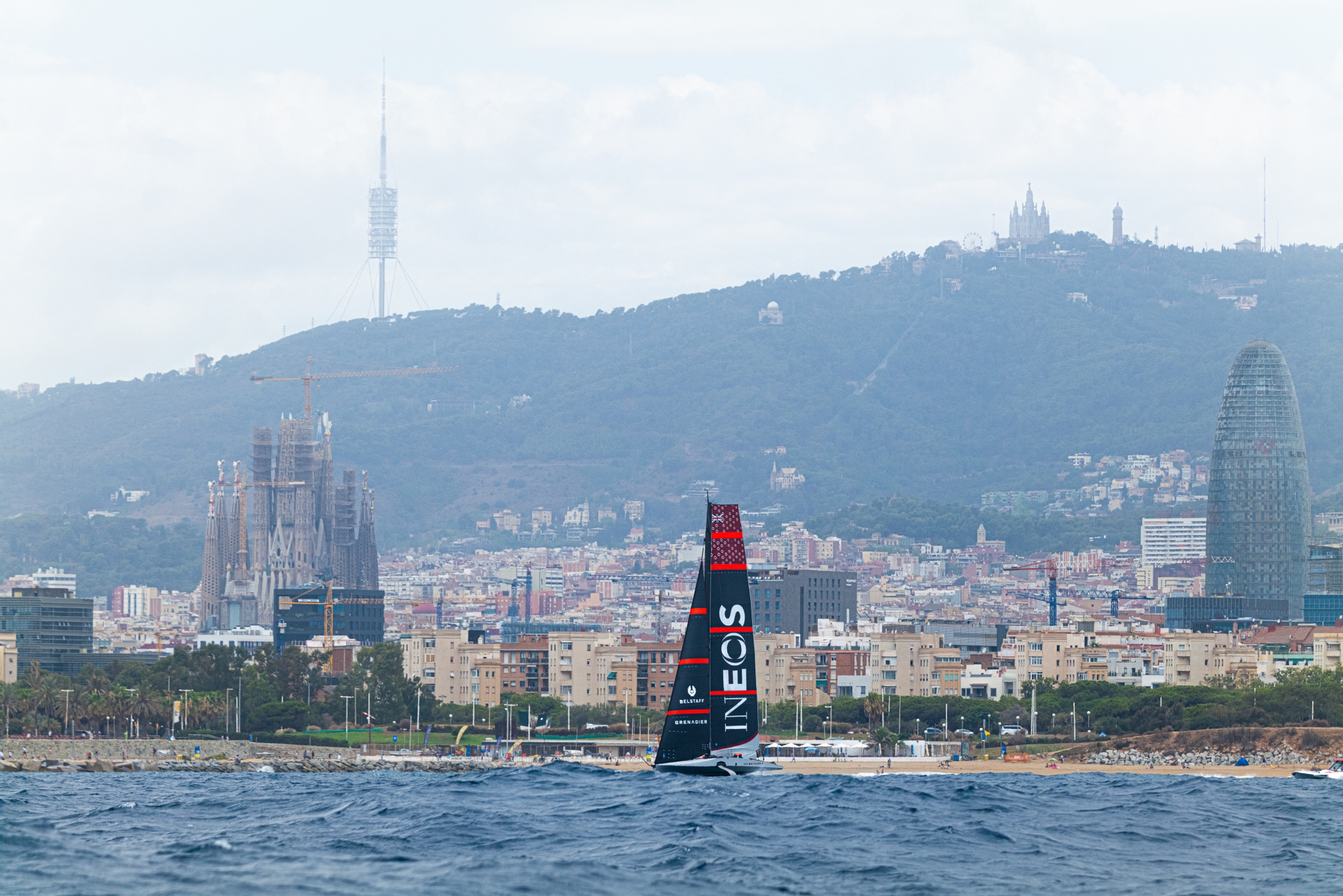
Speaking afterwards, the peerless Giles Scott gave an update on the issues the team faced yesterday that stopped them going out, saying: “It was just some of the data link set up that we had between the base, the boat, and back in Brackley, so it got sorted throughout the day but unfortunately, we missed our window. The breeze picked up in the late afternoon, I think it got north of 20 knots and we weren't that keen to push out on that with a with a re-commissioning day… there's been plenty going on in the background but as you probably see from today there's no major component changes but for sure there's been little tweaks here and there and I'm sure if you look at in detail some of the photos they'll be a few little things of interest there.”
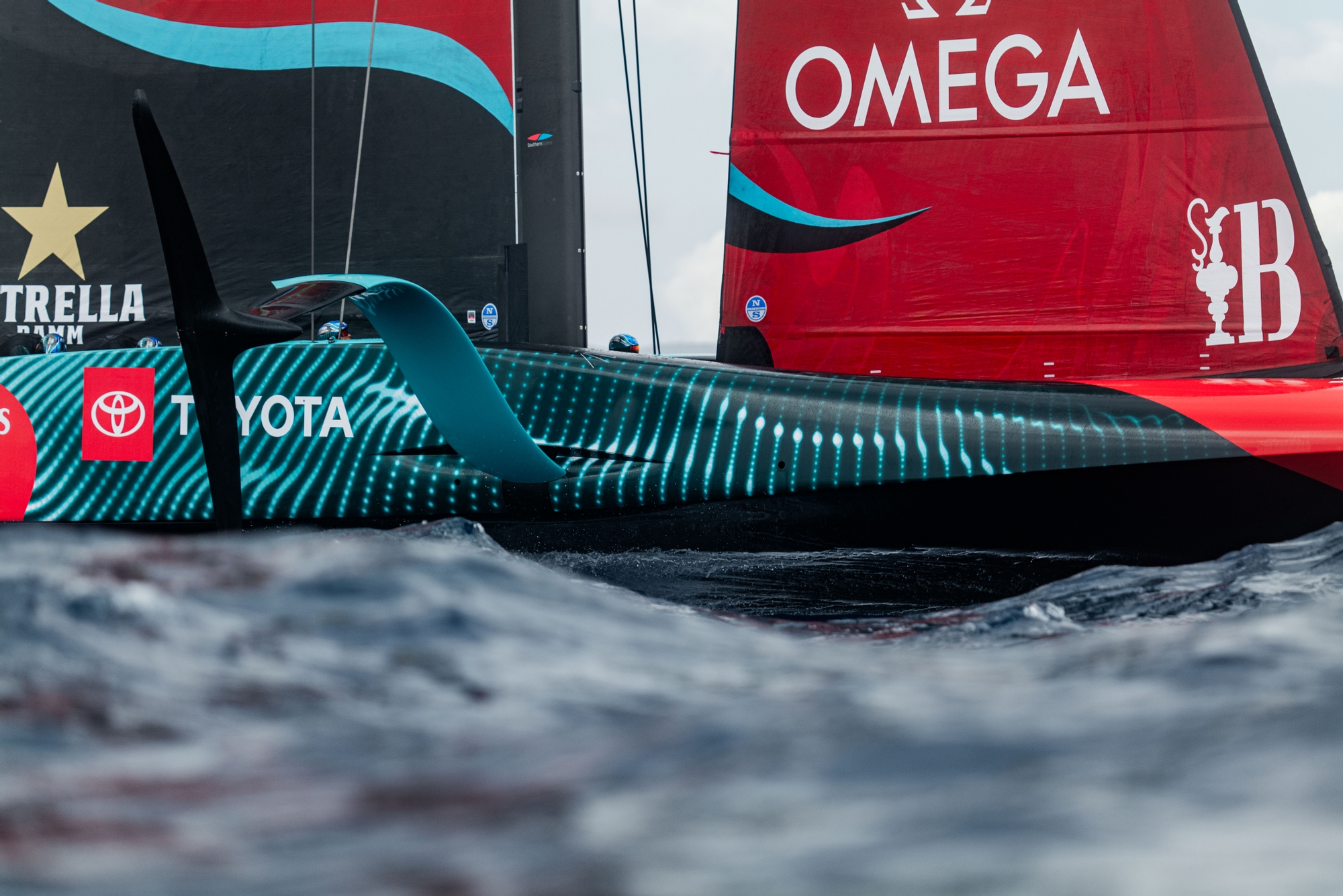
The most visible is the LED jib trim aid that even the team are calling “the Knight Rider edition” and Giles commented: “To be honest I'm not 100% sure what it does at the moment. It helps with trim, I'm not sure if it's aero or hydro oriented at the moment. It can be configured either way.”
Talking about the challenge of sailing in Barcelona in conditions like today, Giles commented: “I think the sea state today certainly changed a lot, looking back to last week when we were selling the AC40 we had some lumpy days but for sure today was a big step up on the conditions…so yeah, I'd say it was good for the wind speed and wind direction. The sea today was pretty extreme, certainly very tricky in the 40-footer.” And talking about sailing style in the waves, he added: “Yeah it changes absolutely everything. I mean as a sailing group we've got to adjust to it and you're changing sail shapes all the time, you're having to steer around waves, the pilots have got a lot on trying to keep the foils in the water as well so yeah it certainly makes the sailing a lot more challenging.”
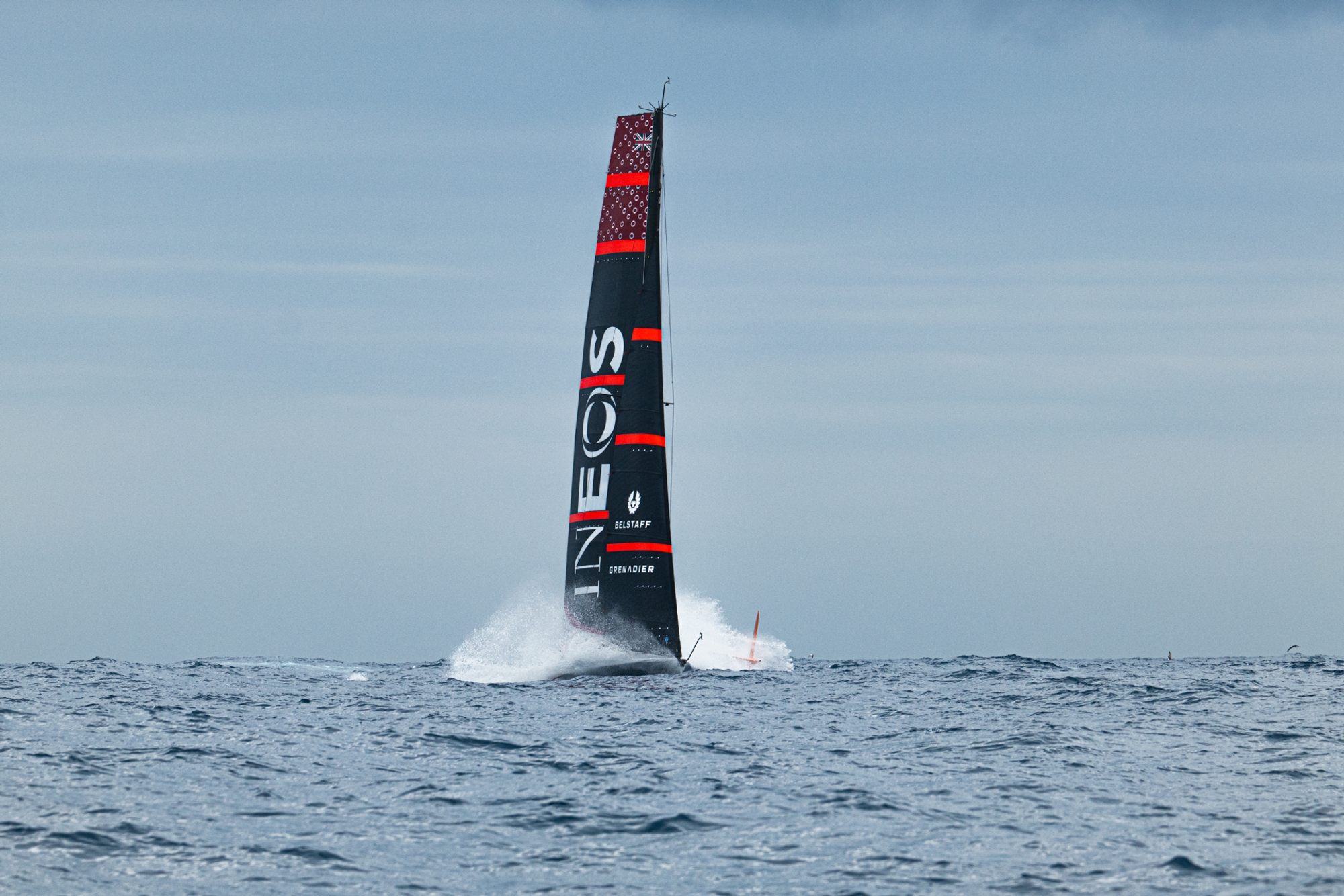
And summing up what was a very entertaining day full of top-class technique sailing, Giles said: “A solid commissioning day and certainly an eye opener for some of the conditions that Barcelona can offer so, yeah, it was a good day…let's give it an eight out of 10…a generous eight.”
INEOS Britannia have declared a tow-day on Friday but are expected to be back on the water at the weekend and have marked out the whole of August for sailing. More to come. Tough day but entertaining to watch.
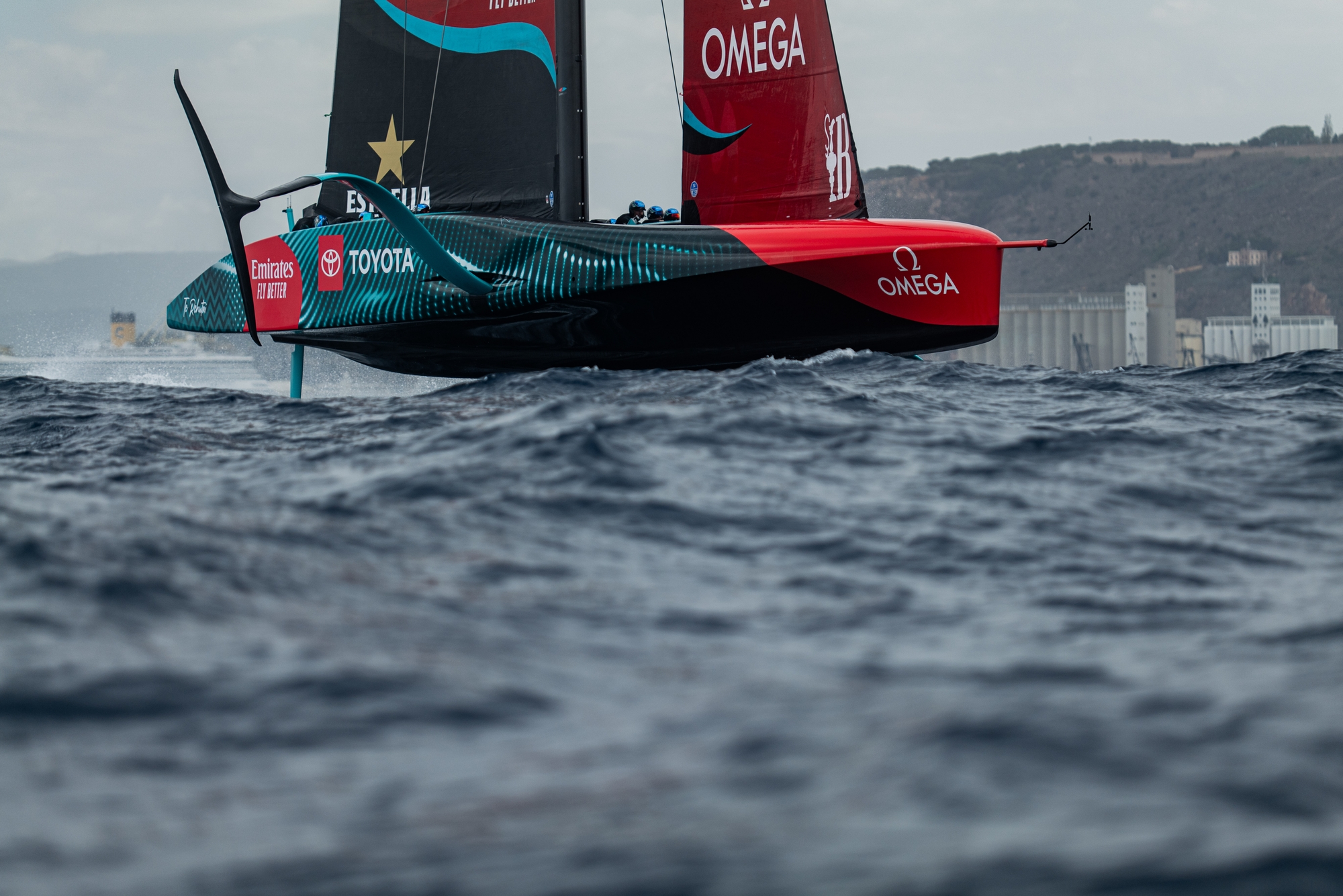
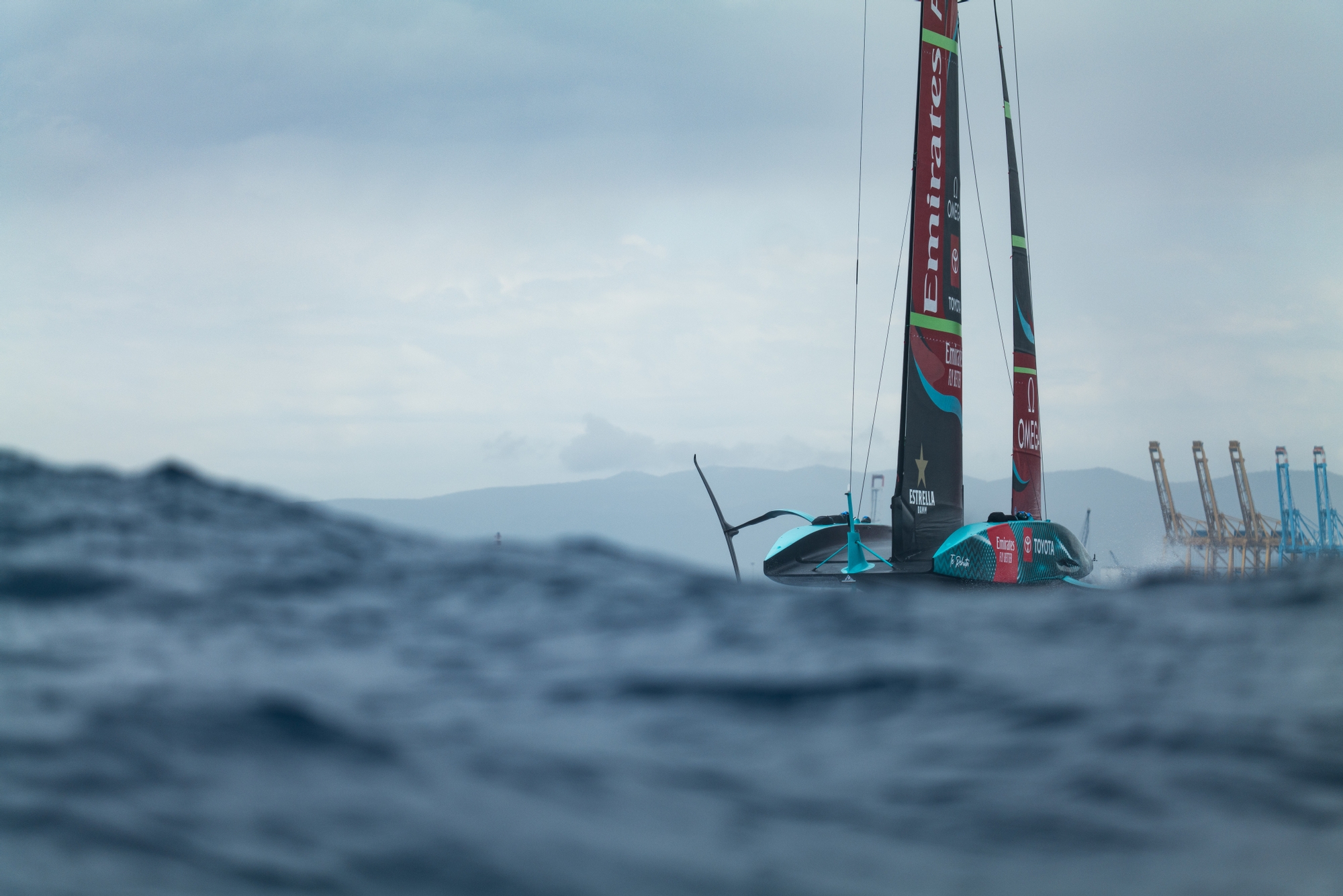
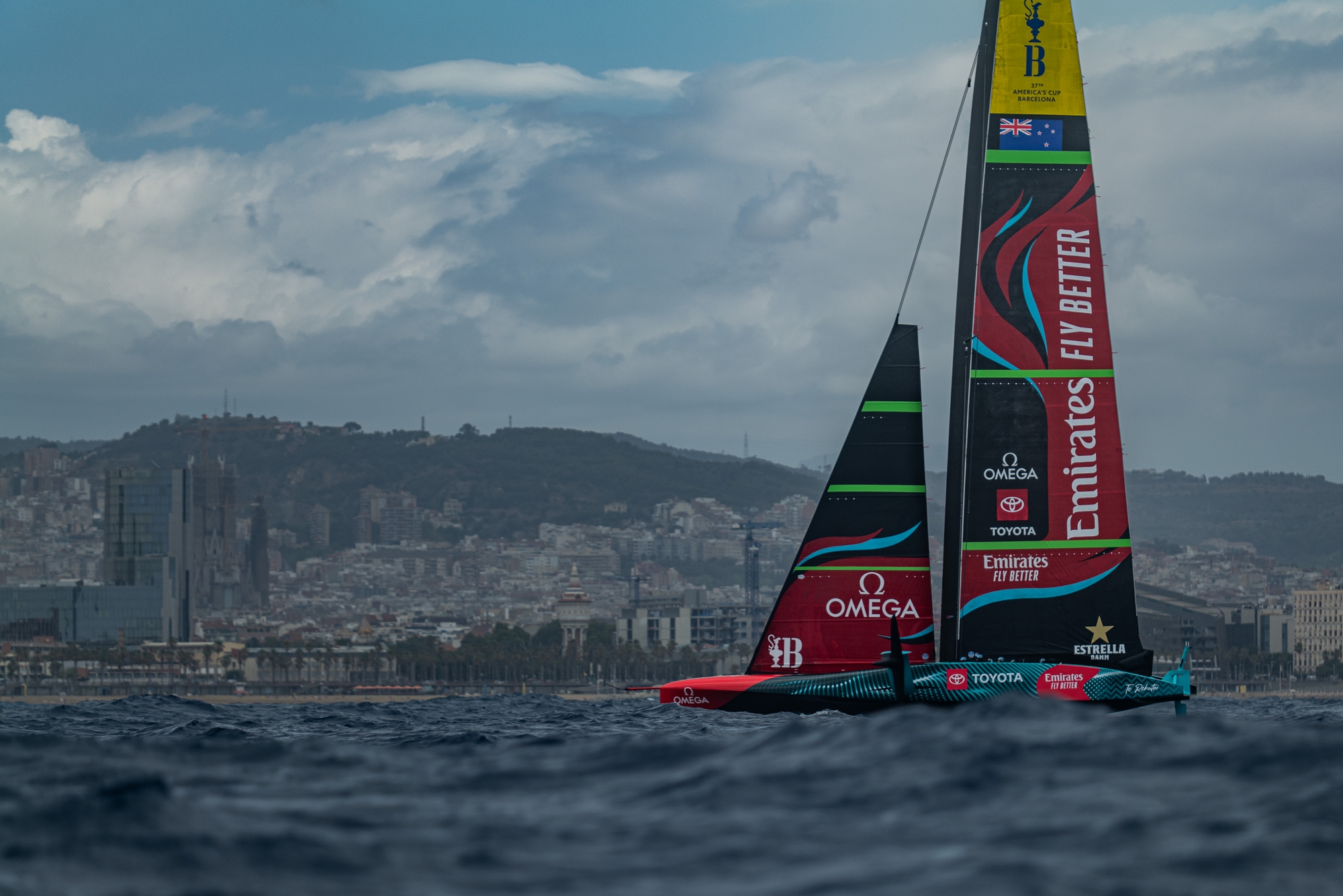
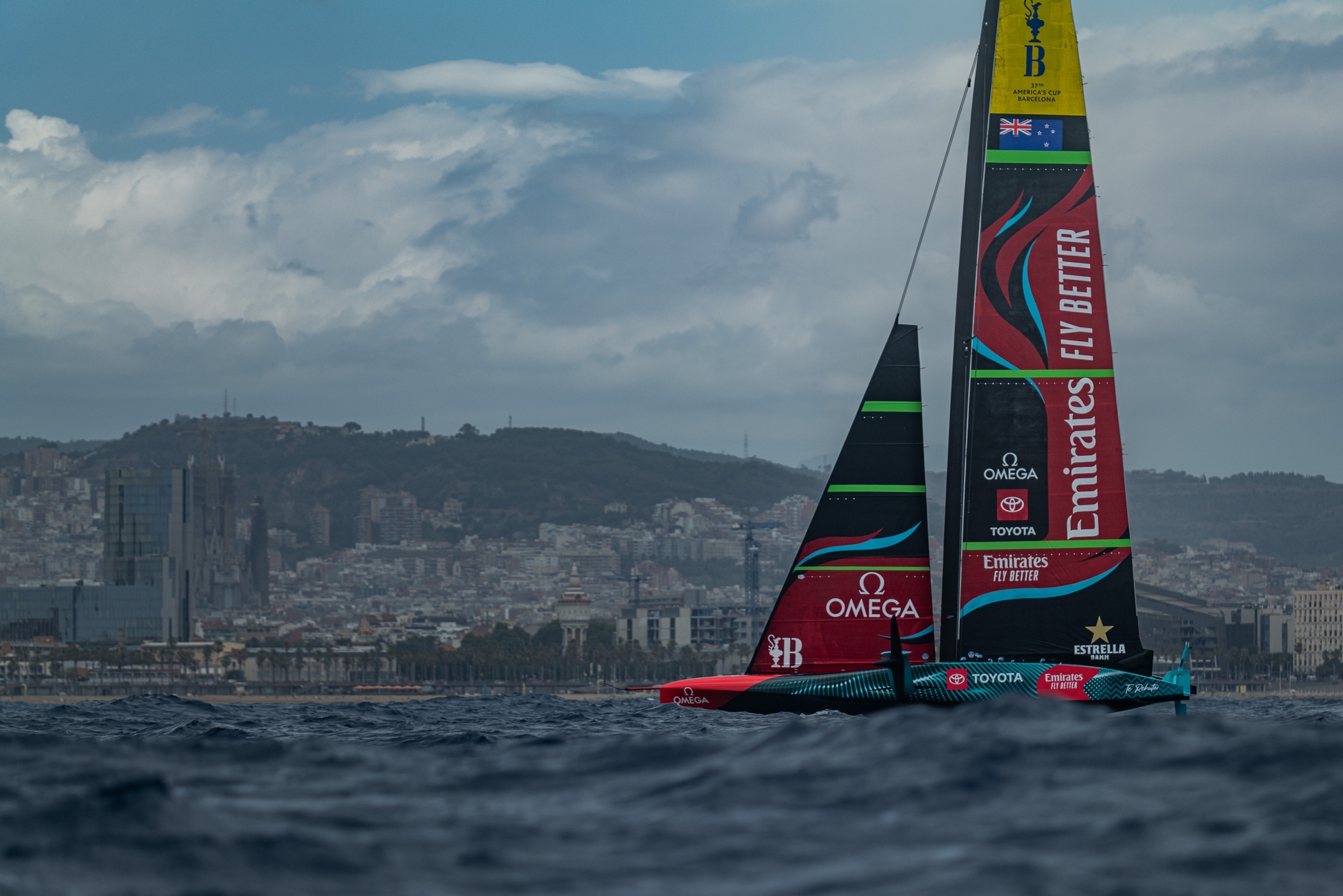
Another team riding high at the moment are Emirates Team New Zealand who are certainly making the most of their sailing window in Barcelona and putting in some serious performances as their intense training continues. Sailing the AC75 ‘Te Rehutai’ in lumpy conditions more akin to autumn in Auckland, even the Kiwis struggled in the challenging sea state.
Tacks from port onto starboard and into the swell were tough to get right and Pete Burling and Nathan Outteridge were trying all manner of steering angles to adapt to the wave pattern. Blair Tuke and Andy Maloney had their work cut out on flight control and trim, dancing on the fine line between the demand for low flight and power generation, particularly in the lighter winds early in the session.
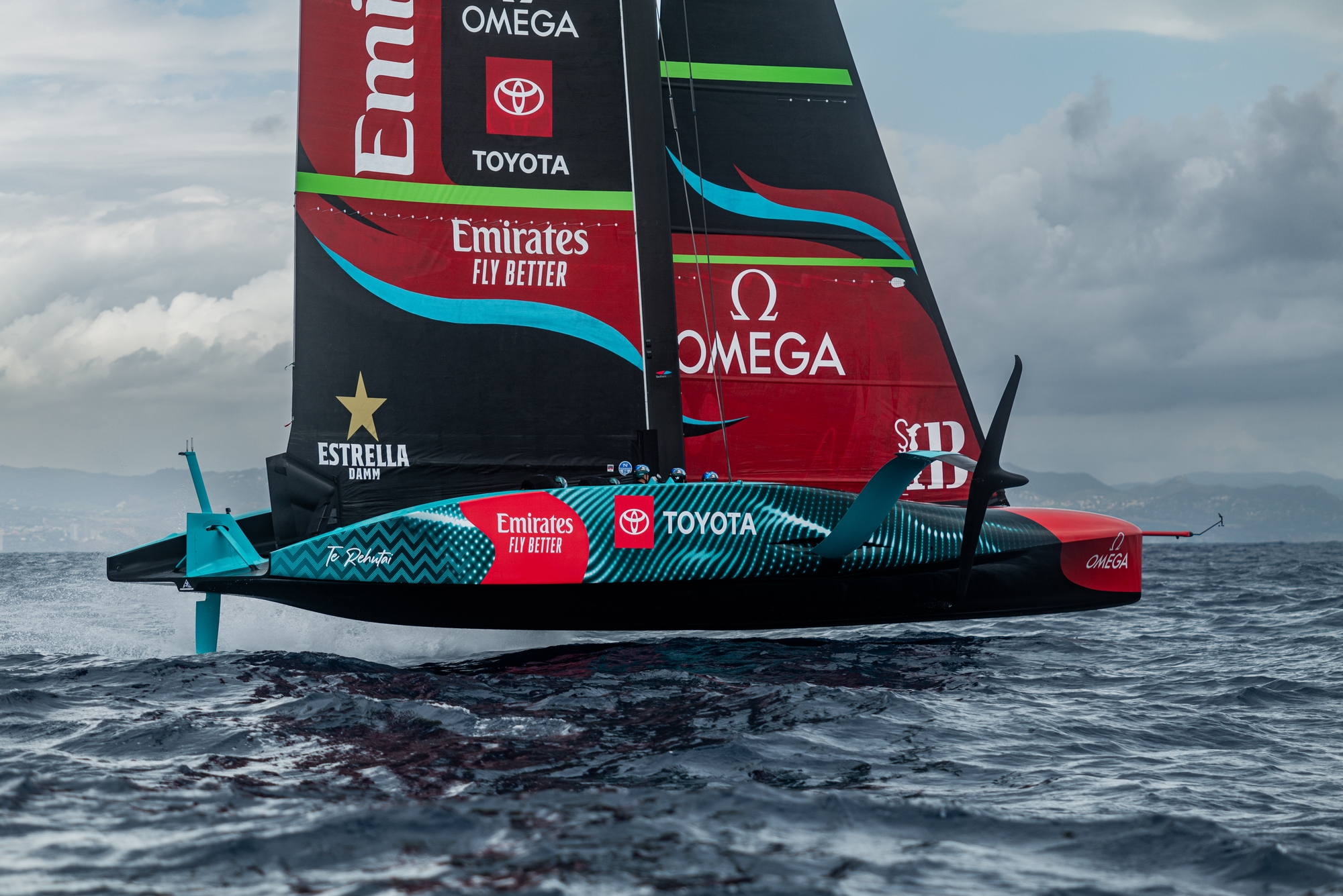
The team went into a number of pre-start scenarios on the designated America’s Cup racecourse, dialling low into an imaginary box and coming back to the line with two boards down before raising the windward foil with seconds to go on the countdown and hitting the line at speed. Interesting to watch their control of time-on-distance and the stalling techniques using both steering lines (S bends) and the double-board down system. Once over the line, more often than not the team completed a couple of laps of a short course before coming back for another starting sequence.
Speaking afterwards, Josh Junior, who wasn’t onboard today commented: “Those were the biggest waves we’ve seen here in Barcelona, I’m sure some of the other teams have seen bigger but it's basically all generated from the mistral coming out of France and the big amount of wind coming out of there pushes the waves and the waves rap into and Barcelona but unfortunately we didn't get the wind so I was a little bit lighter. We got the waves but not the wind.”
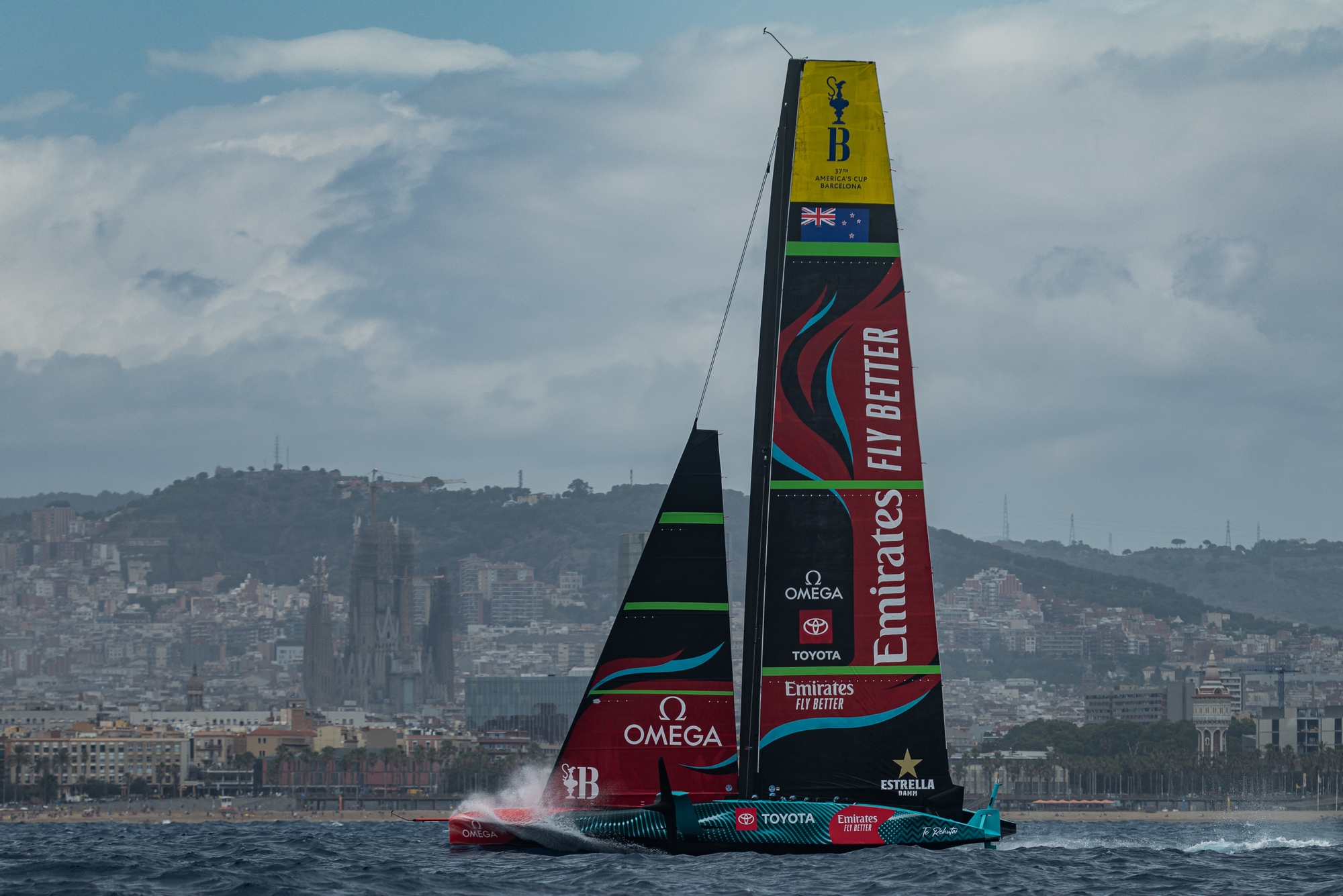
And talking about the challenge of sailing in those conditions, Josh added: “For sure the waves make a massive difference to how you have to sail the boat, so it gets a lot trickier when the waves get big and that's where the skill of the crew comes in. So yeah, I guess punching into them like all boats is always harder than going down them so depending on which way the waves are skewed, the boat can be easier or harder to sail.”
A solid afternoon of training for the Defenders of the 37th America’s Cup, the team were on the water for a little over three hours and put in a total of 36 tacks and gybes (20 tacks, 16 gybes) with an 80% foil-to-foil percentage. Tough work but rewarding. (Magnus Wheatley)
On-Water Recon Unit Notes – INEOS Britannia: INEOS Britannia's first on-the-water session in Barcelona aboard their 40-foot T6 LEQ12 test boat proved to be a testing day for the British crew who had to contend with a shifty and variable strength breeze that ranged from 7-15 knots and moved from 260 to 160 during the day, and a horribly confused sea state made up of a one metre plus swell and an unpredictable chop.
Perhaps no surprise then that the British crew (helmsmen Giles Scott and Dyland Fletcher, with trimmers / flight controllers Luke Parkinson and Iain Jensen, plus cyclor Neil Hunter in the fifth man position) struggled to achieve their normal smooth flight performance that we had become accustomed to in Palma as they carved out multiple windward leeward laps up and down the Barcelona shoreline
After the first tow-up, take offs appeared tricky with often several attempts required before steady flight was achieved. There were also plenty of splash downs – upwind and downwind – as the crew tried to get their heads around the lumpy and unpredictable sea state. Starting on the J2-2 in 12-15 knots of wind the boat looked somewhat overpowered and difficult to control.
Things appeared to improve when the switch was made to the J4-1 with tacks and gybes appearing smoother and more under control. However, when the wind eased to 7-10 knots and shifted hard left, T6 appeared to be lacking enough power to take off because of the sea state. A switch back to the J2-2 (and a breeze increase back to 12-14 knots) corrected that issue, but the British crew still had to work hard to get T6 into the correct angle of attack to attempt take-offs. This involved heavily backing the jib to push the bow away and piling two to three extra bodies to windward to help get the boat up to a speed where there was enough flow for the foils to deliver righting moment. On at least one occasion this required Neil Hunter to scramble under the foot of the mainsail to cross to the windward side. The final run of the day was a hair-raising downwind blast which saw T6 deal admirably with the sea state as the crew headed for home. Sails were dropped by 1650 and dock in took place at 1705. Tomorrow (Friday August 4) has been scheduled as a non-sailing tow testing day. Justin Chisholm
On-Water Recon Unit Notes – Emirates Team New Zealand: ETNZ rolled out their B2 AC75 from the shed at 10.33 am. The boat was craned to the water at 11:08 and the team docked out at 12.45, after a forty-five-minute postponement due to lack of wind. The M2 and the J2 were hoisted inside the port at 12:54 and 12:57, respectively.
Today´s training consisted of sailing around a virtual course during most of the day, doing two to four tacks on the upwind legs and two to three gybes on the downwinds.
The main challenge was related to the sailing conditions. Today was the day with the biggest swell since ETNZ started their activities in Barcelona. A one-meter average swell from 105 deg, combined with unstable wind direction and intensity made it very difficult to have a stable boat at all times, and even more challenging when manoeuvring. More specifically, it was harder to achieve stability in the vertical axis on starboard tack when sailing in opposite direction to the swell, and in particular, when coming out from the tacks and the gybes from port into starboard. Accelerating after the manoeuvres in opposite direction to the swell was not an easy task today and it required greater changes of course and bigger adjustments on the sails trimming and flight controlling.
At 13:50 when the wind increased in intensity, the J2 was replaced by the J4 and there was a cyclists´ rotation.
At the end of the day ETNZ practiced two pre-starts in 14 to 15 knots of wind, using their two chase boats as marks. The first one entering on port tack and the other one on starboard tack. Both starting sequences were followed by a short two-lap upwind-downwind virtual course.
They did in total 20 tacks and 16 gybes, standing on their foils on almost all of them. At the beginning of the day, when the wind was lighter and when manoeuvring from port tack into starboard tack, it was the only moment when they ended up landing or touching and going in some of their tacks and gybes.
As regards boat tuning, ETNZ continues to sail with little tension on the lower shrouds, even in choppy and wavy conditions like today.
Sails were lowered at 15:25 once inside the port, the boat was back in the dock at 15:37, craned out at 16:07 and back in the shed at 16:30.
A good day at the office for ETNZ in the most challenging conditions they have seen in Barcelona so far. Sebastian Peri Brusa – Recon on ETNZ