BARCELONA’S SOUTHERLY ‘BUSTER’

Late summer and into autumn in Barcelona is a magical time. The city casts long evening shadows off its monuments and buildings with the golden light of the year’s seasonal high achievement draping it in majesty and intrigue. On the water, it’s anyone’s guess with Barcelona serving up such a rich range of conditions that detail the AC75 designers to sharpen their pencils again.
Today was a classic building Mediterranean southerly buster that caught some unprepared and over the limit whilst for others it was another day of boat-handling learnings that will extend the debriefs long into the night.
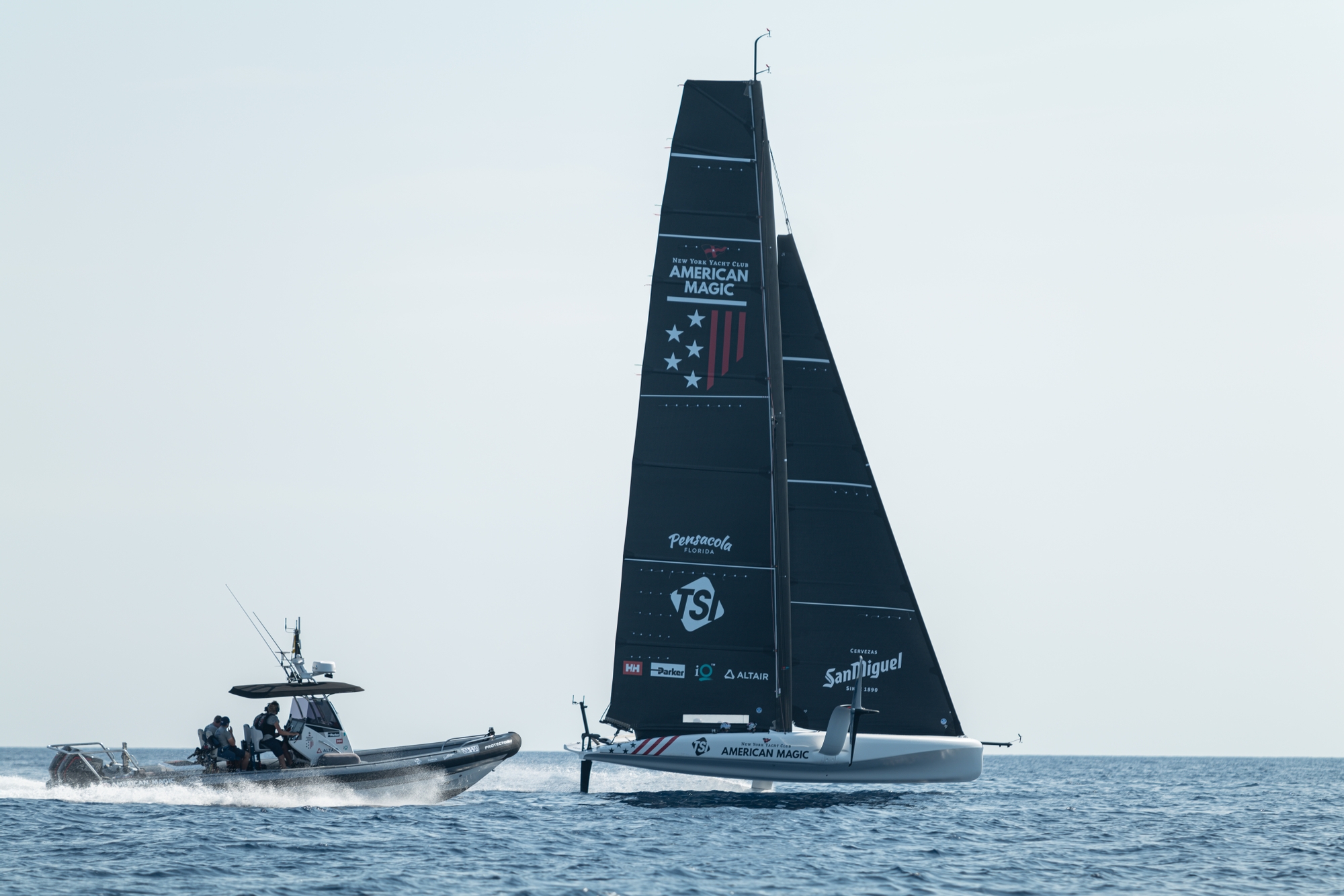
NYYC American Magic were back out with their highly modified AC40’s running bespoke wings on both ‘America’ and ‘Magic’ whilst keeping the aero one-design to extract meaningful data. The main take-away from the session was the sheer accuracy of their testing schedule set by coach Tom Burnham and his team. The line-ups were purposeful over long runs and notable for their quality as the team ran out into the early lighter airs before the big build required jib changes down before setting off on long courses. The other take-away for NYYC American Magic is just how they have built not one team but two teams of very capable sailors who all are comfortable inter-changing across both boats and are sailing at a super-high level. Real magic is happening at American Magic right now.
The foil analysis from the on-water recon team led by Argentinian Olympic Coach Sebastian Peri Brusa made some interesting observations saying: “When speed testing upwind on starboard tack, ‘America’ was faster and higher both times, standing on foil #3 vs Magic on foil #1, consistently and for a considerable difference. On the other hand, when speed testing upwind on port tack, while America was slightly higher standing on foil #2, Magic standing on the new foil #4 was much faster achieving a much better upwind VMG overall. On the downwind, on port tack America was slightly lower at times doing the same speed, while on starboard tack no reliable conclusion could be achieved.”
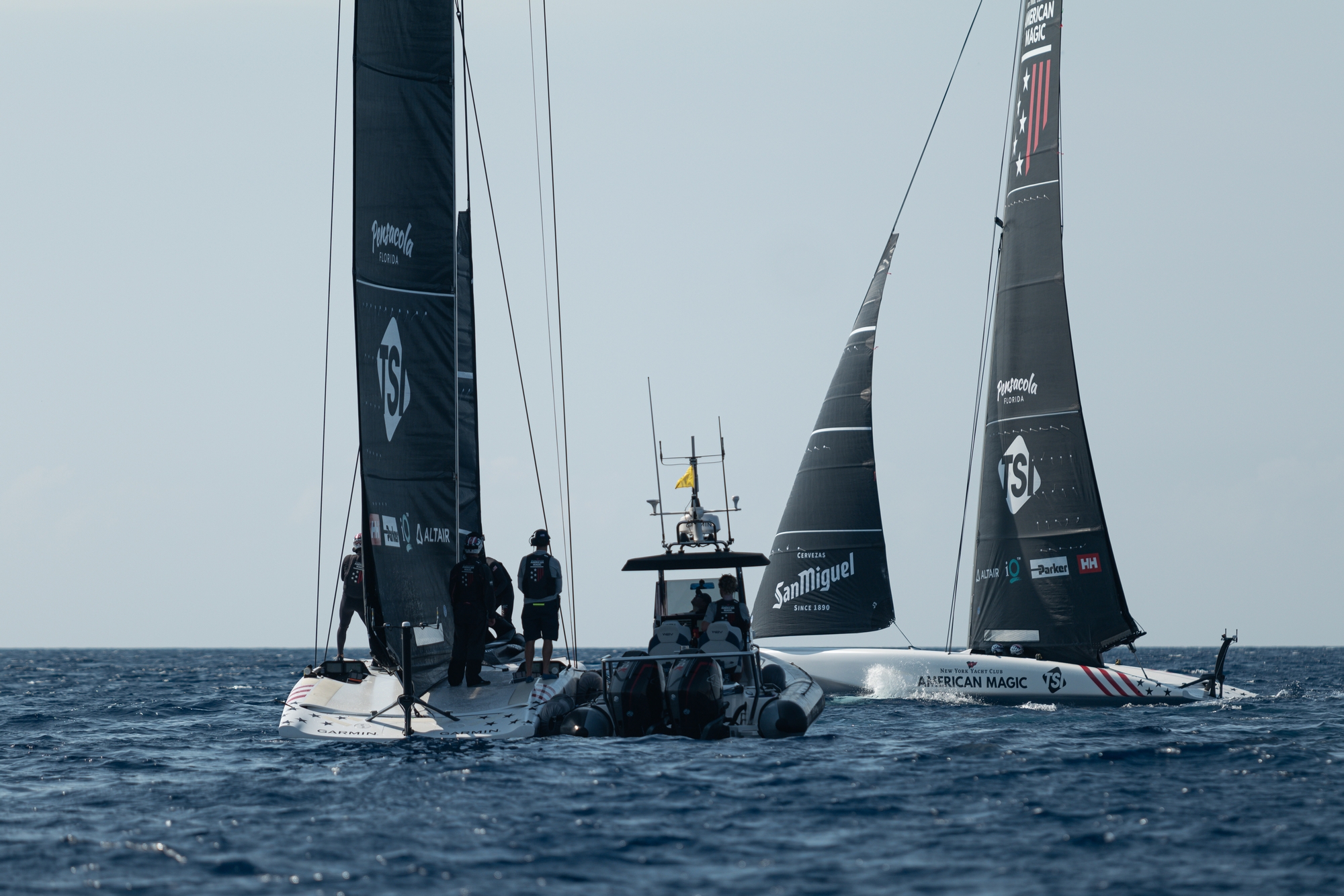
Speaking afterwards, one of the quieter superstar finds of this America’s Cup cycle, Riley Gibbs, gave an insight into the parameters that the team are working on and the process they are all deeply bought into, saying: “We're sailing on the extremes of the wind limits prescribed by the Cup in the Protocol so yeah I'd say it's hard to take any performance data away from either day you know it's just second day in our full configuration with all of our own designs on each side and just trying to make the most of it… When we're testing like this, we’re kind of given parameters to stay within, given true-wind angles, boat speed and heeling, all these different variables that our testing manager prescribes to us, and we’re meant to stay within those bandwidths so not really allowed to explore too much.”
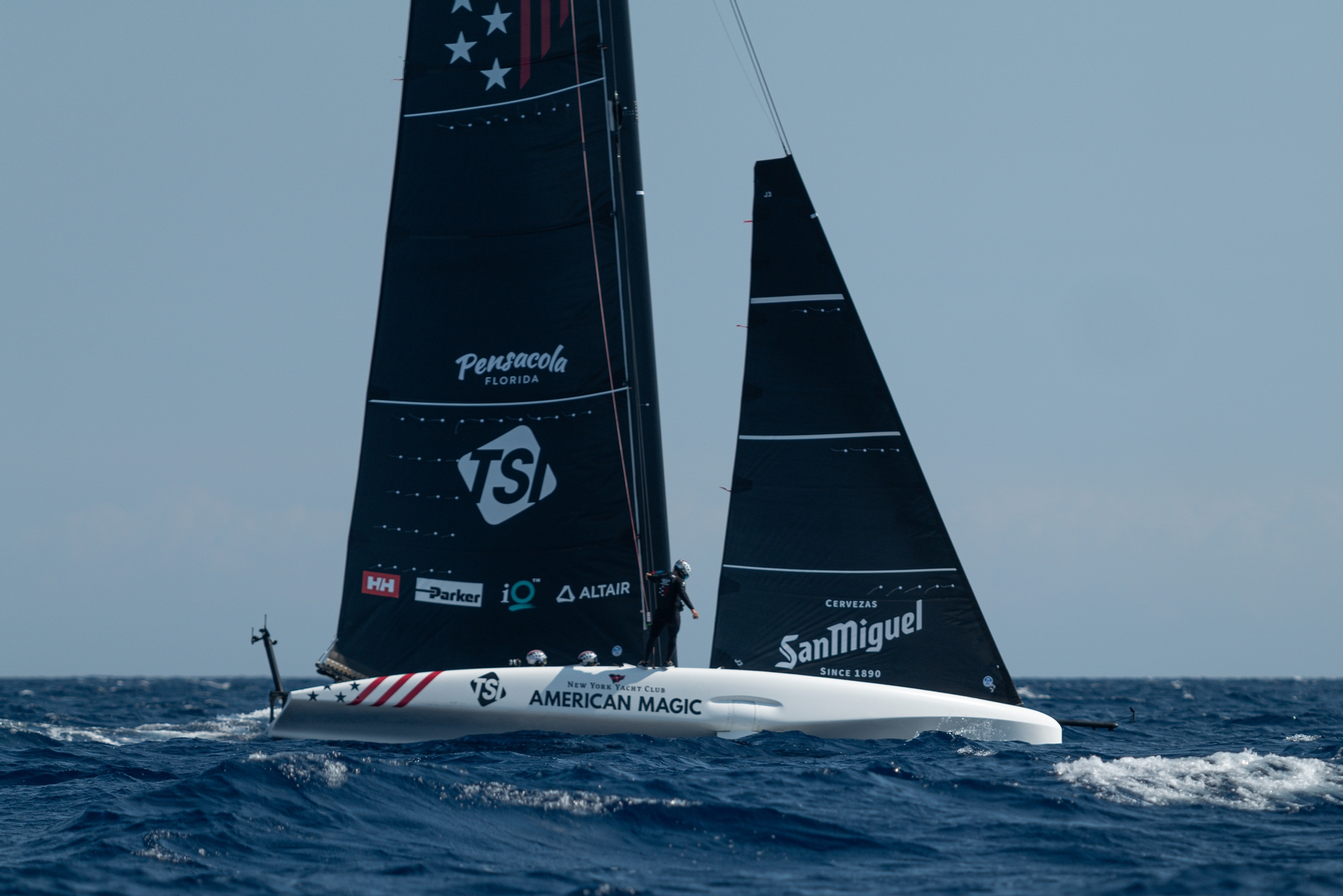
Lots of take-aways on the foils but finding the balance between height and speed upwind and VMG and speed downwind is the conundrum for the American design team to analyse. Riley wasn’t giving too much away but commented: “It depends on what we're testing each day and what variables were allowed to change whether it's pitch, cant, or T-sync.” Interesting times for the American team who are really making progress.
Two of the three AC75’s currently in town (Patriot remains in her shed at American Magic) in the form of Emirates Team New Zealand’s ‘Te Rehutai’ and Alinghi Red Bull Racing’s ‘BoatZero’ came out for a simply blistering session that had chase and recon boats struggling to keep up, such were the speeds generated.
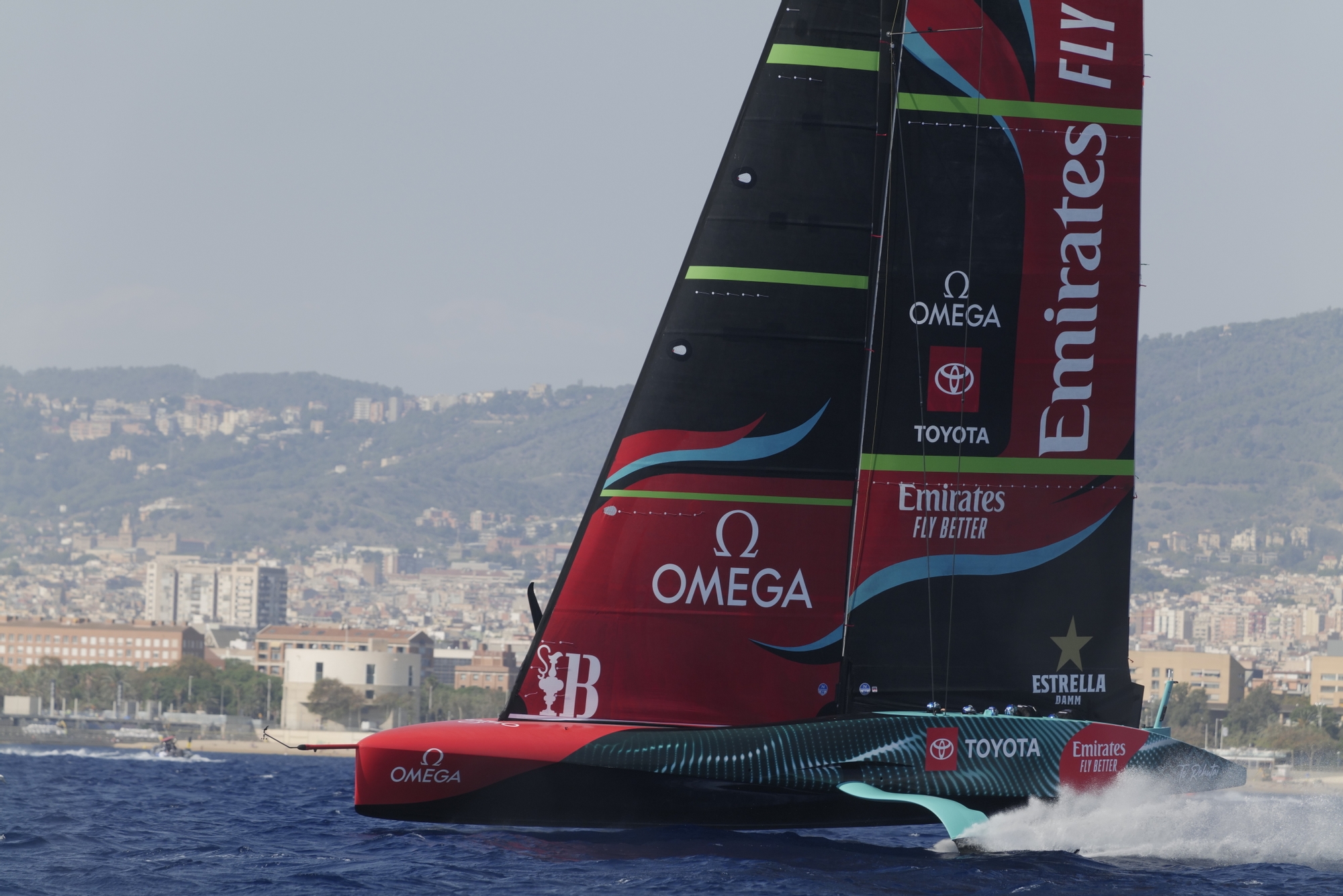
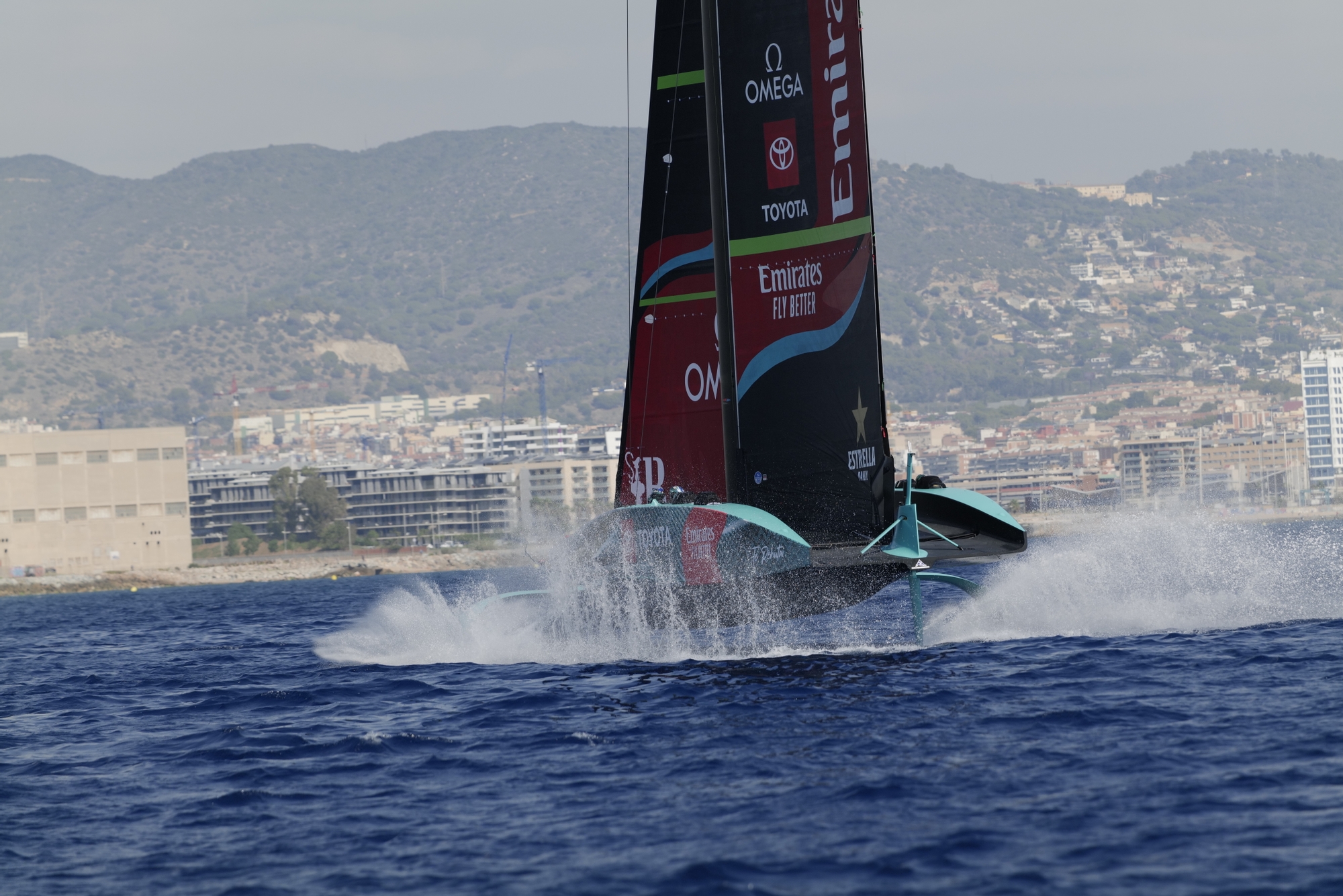
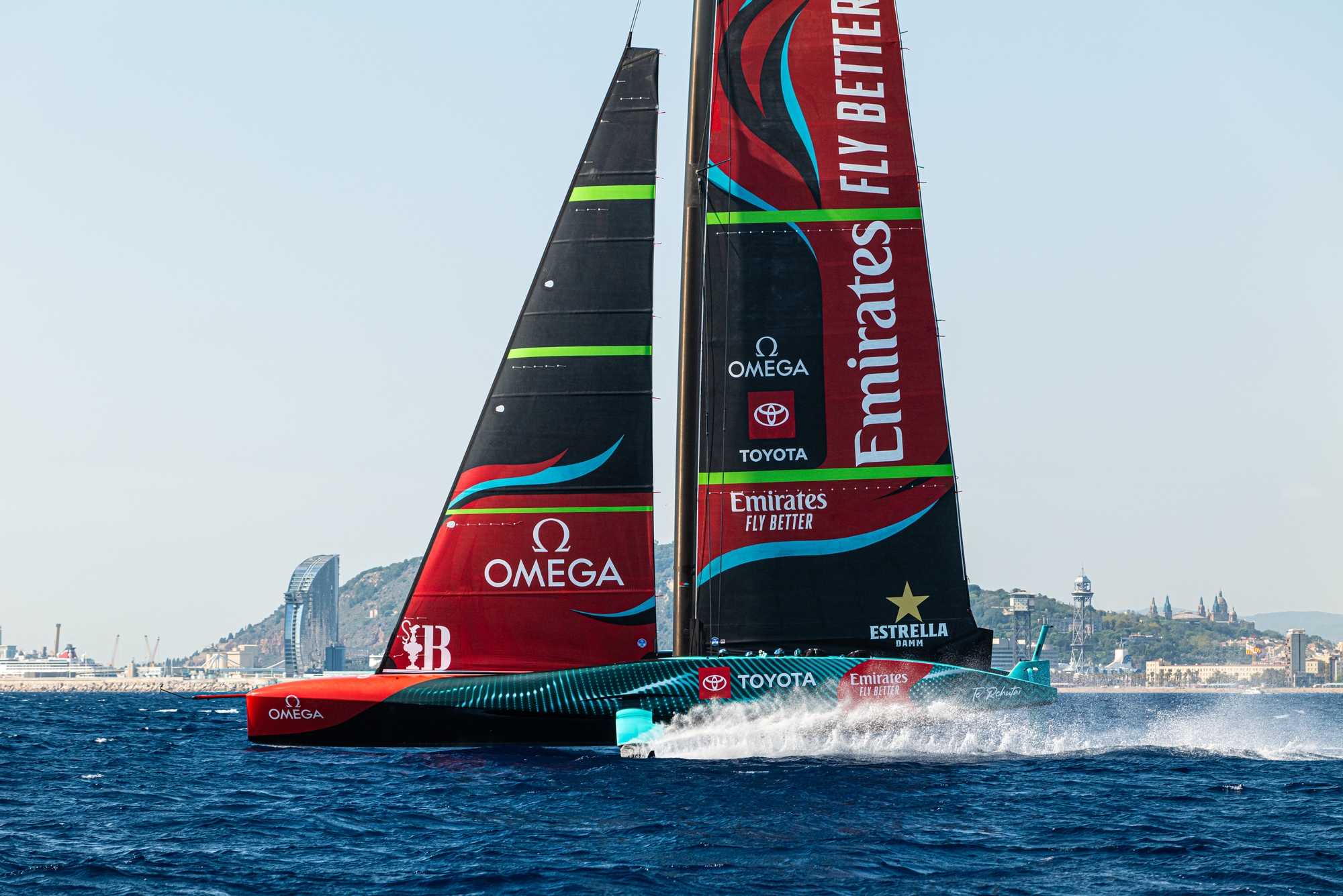
Emirates Team New Zealand had a short session truncated by some media demands but straight out of the Port Vell they were off and flying, setting the tone for a thrilling afternoon session of high-speed, full-on adrenaline pumping action. Blair Tuke and Andy Maloney, the Flight Controllers and Trimmers, were moding Te Rehutai desperately close to the water with an almost stern-down approach at times really pulling the aft run-off close to the water on wide cant angles that had the outboard tips breaking the surface upwind. The team rifled down the jib range as the breeze built, going from the proportionate J3 to the stretch-footed J4 and looked utterly comfortable on either. Pete Burling and Nathan Outteridge were going through the team’s standard test protocols to build in accuracy and all-round the team looked mighty on the water. A noted splash-down from the recon unit at the very end of the day and what looked like possible gear failure of a fairing at the very tip of the mast with a small cloth flapping energetically in the 20-knot plus gusts, brought the session to a conclusion and the team docked in just before 3pm.
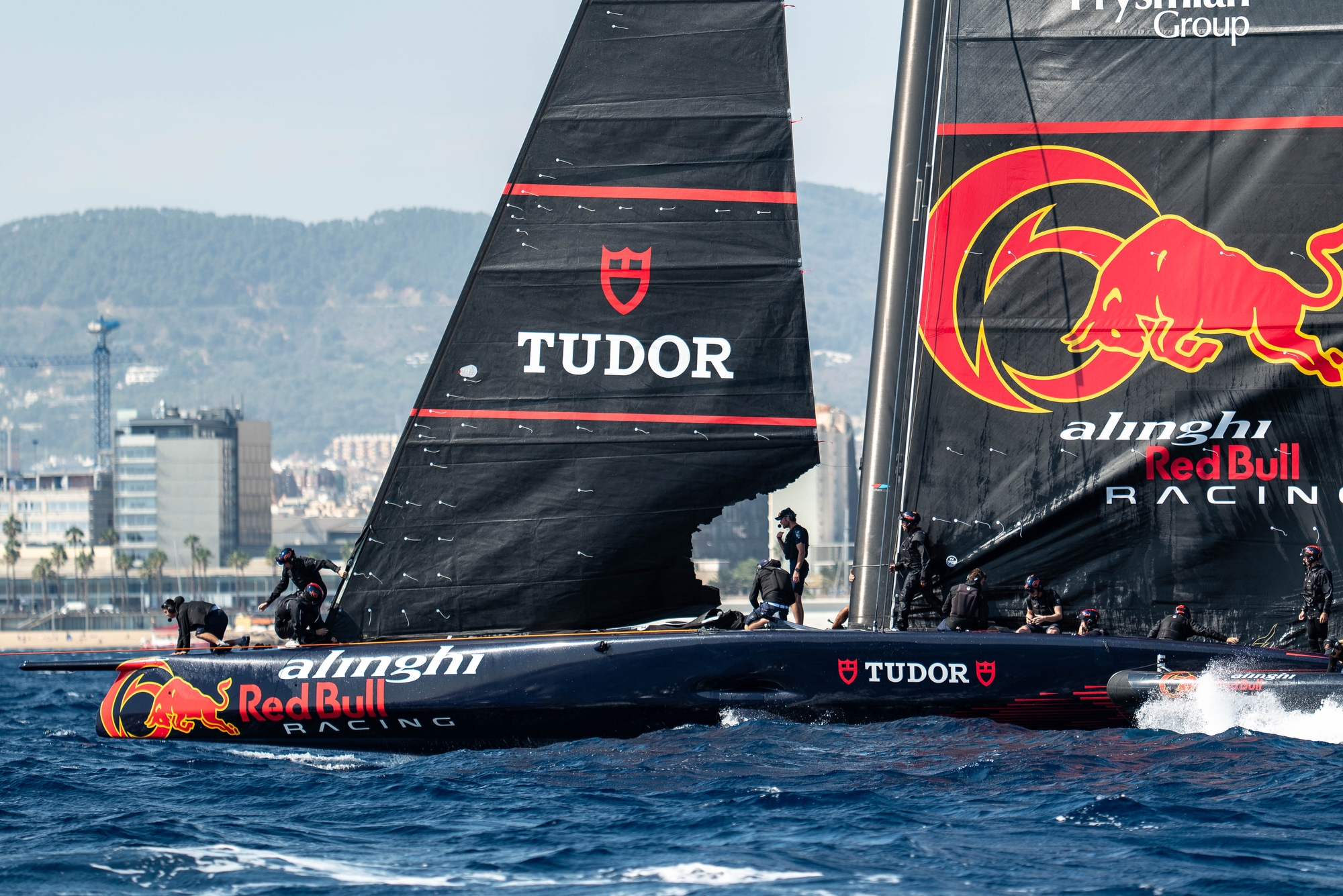
For Alinghi Red Bull Racing, it was a hyper-performance from the sailors who looked to be pushing the absolute extremes of what an AC75 can do. Having docked-out at a similar time to Emirates Team New Zealand they rode the rising breeze as it built from 8 to 20+ knots all afternoon and hit astonishing speeds estimated to be in excess of 45 knots over a series of runs upwind and downwind. Having started ambitiously on the J2, it was a sensible call to switch down to the J3 but the old sailor’s adage of “we put them up, God takes them down” that the offshore racers used to say about spinnakers, came to bear when BoatZero went into a full nose-dive just off the Port Olímpic harbour and the resultant loading on the jib took a shark-bite out of the clew and carried the wind-wand away for the Chase Boat team to recover.

This was full-on sailing in high-winds, but the Swiss sailors were really on another level today as the confidence they are starting to build back into their AC75 programme after almost a month away on their AC40 training, comes to bear. BoatZero, aside from when the limits were found, looked rapid and controlled. Jack Taylor, the Boat Captain for Alinghi Red Bull Racing summed up the take-aways accurately saying: “We're always trying to find that limit of the edge, and we're always going to try and keep pushing that. Today we saw over 20 knots which we haven't seen through last week's recommissioning of the AC75 so it's good to get the boat out and test some of the new developments in the bigger breeze.”
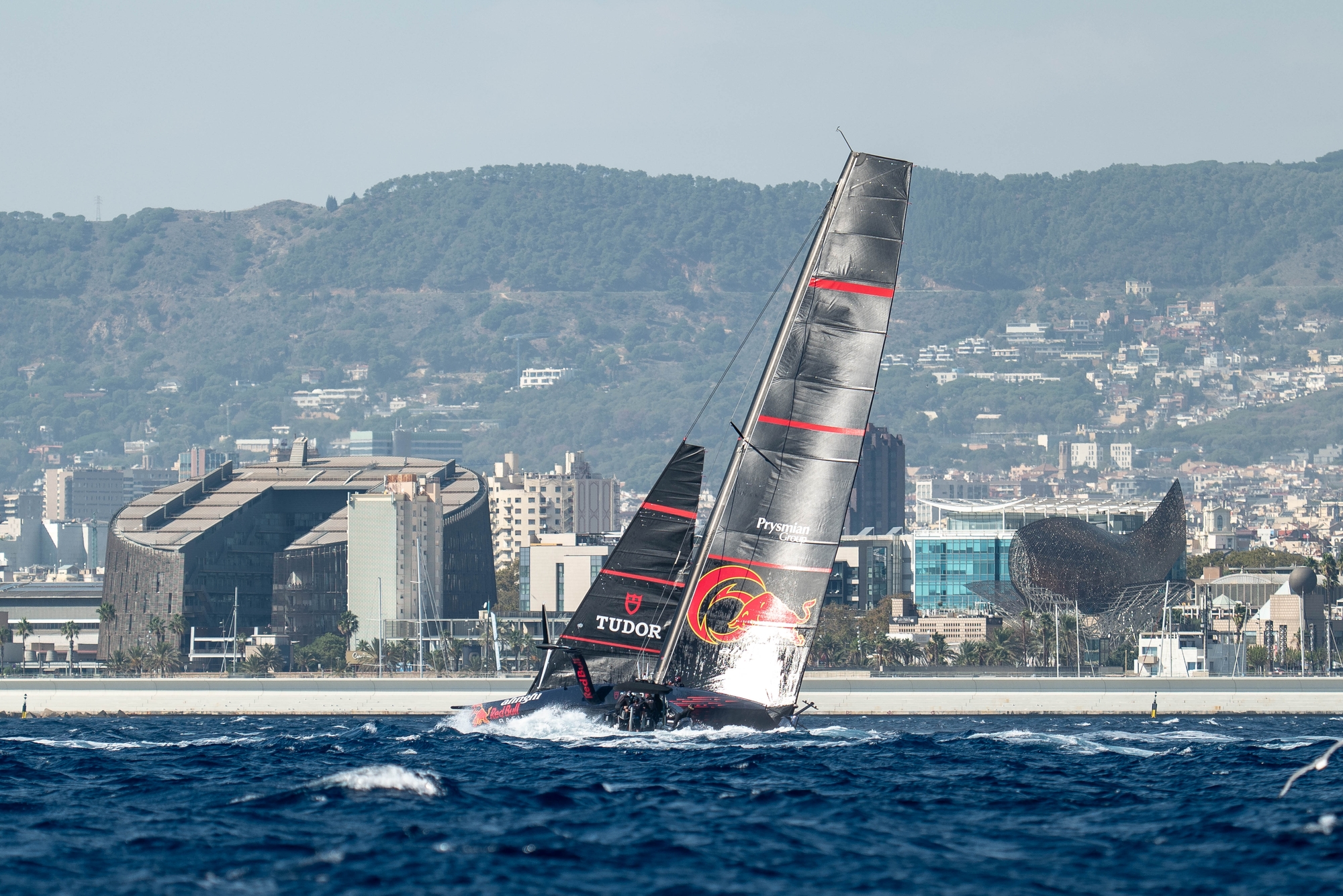
And Jack continued: “Every day for us is a learning curve what you saw with the jib today is something we will work on and will push forward and go back out tomorrow and fingers crossed we’ll succeed…the boats are built pretty strong, so we’ve pushed it through its paces. It's been out in this in the sea state and breeze before…today was a good day, we haven't had that breeze in a while so this is nice to get back out and get back familiar with it.” Epic session again from the Swiss. Real momentum building there.
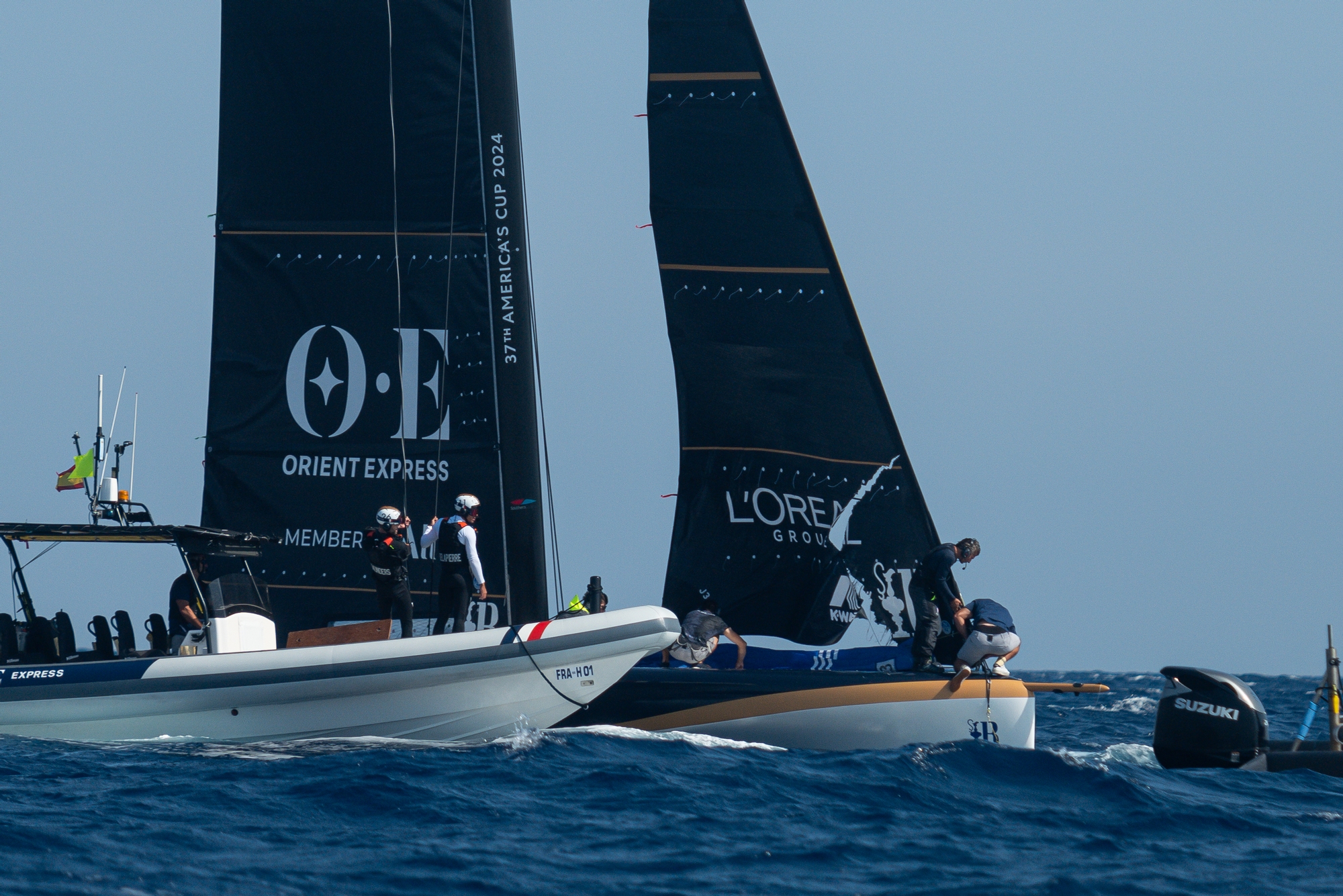
Completing the day, INEOS Britannia and Orient Express Racing were both out training in their pure one-design AC40s with the Jeddah Preliminary Regatta high on their minds. No recon reports for these teams but drama was captured towards the middle of the afternoon as the southerly raged with Orient Express ripping their jib, presumably on a nosedive. No updates from the team on this but photographic evidence captured by the NYYC American Magic Recon Team (above) confirmed a pretty vicious rip, typical of a bow-stuff. More wind forecast in Barcelona tomorrow. All action down here. (Magnus Wheatley)
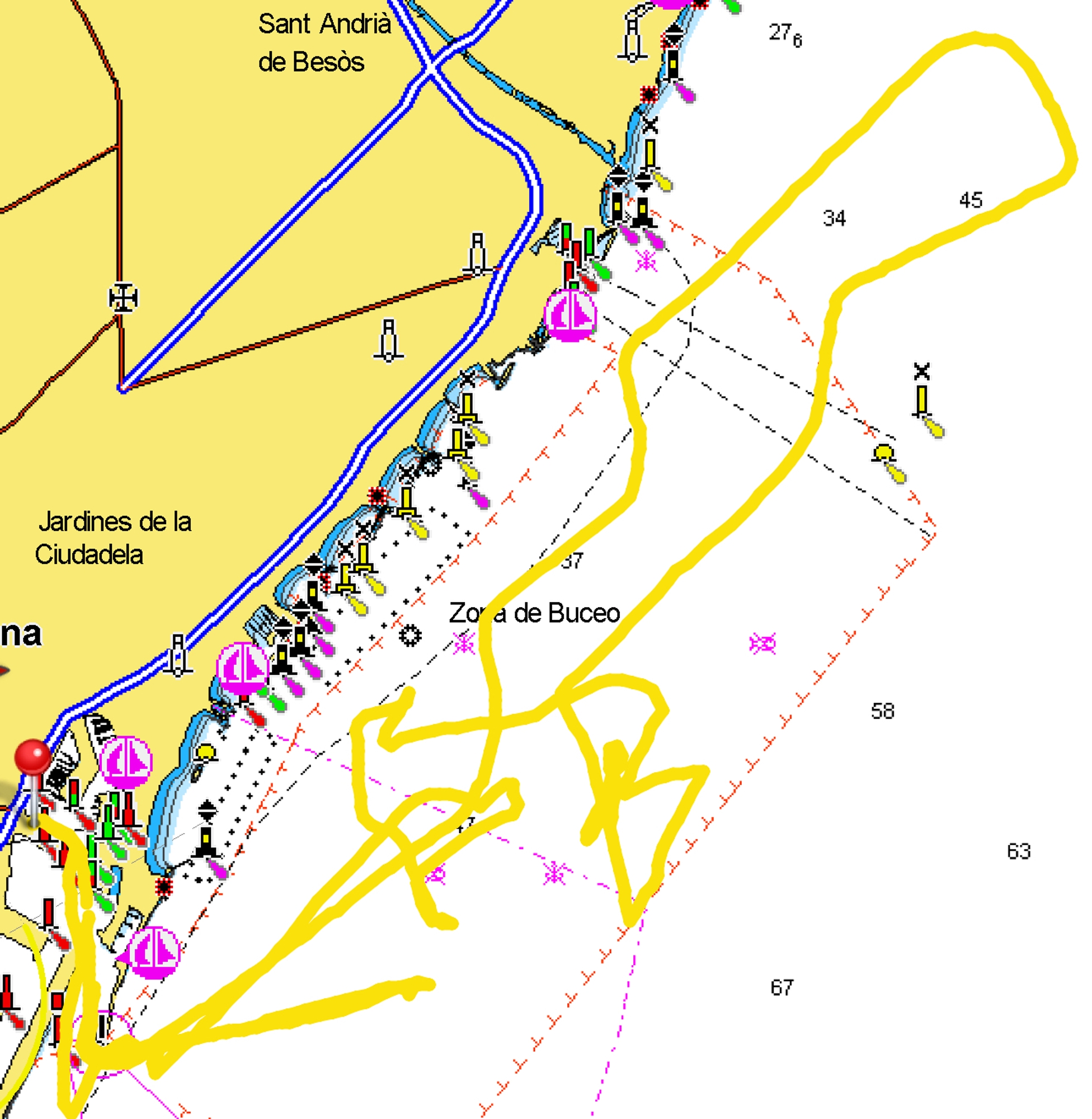
On-Water Recon Report – Emirates Team New Zealand: Emirates Team New Zealand's second day of training on their AC75 turned out to be a short but intense session sailed in winds that built from 9 knots to 18 knots over the two hours 45 minutes from dock-out to dock-in.
The Kiwi AC75 rolled out at 1030 on the dot and was rigged and launched by 1100 ahead of a midday dock-out. The M2-3 mainsail and J3-6 headsail were hoisted by 1215 with the boat out of the harbour at 1225. With the due south wind at 9-10 knots the New Zealand crew had the boat quickly up on the foils and when they bore away downwind accelerated rapidly to well over the 40 knots of our recon boat.
The sailors maintained this blistering pace during the few laps of free sailing to windward and leeward that followed, with the boat clocking up 12 nautical miles in under 15 minutes before a stop at 1240 to change to the J4-6. The next hour of sailing was taken up with a media drone shoot which saw the boat doing repeated upwind and downwind flybys of one of the team's chase boats.
With that footage in the can, the team set off again at 1350 by which time the breeze was up to 15-17 knots. During what turned out to be the final 20-minute session of the day, the boat was observed to lose control shortly after a sharp turn downwind with the bow lurching up before crashing down in a sheet of spray.
After a final windward / leeward lap with three foiling tacks and gybes. With the wind peaking at 18 knots at sea level, time was called at 1410. Sails were dropped by 1420 with the team docking at 1445. Another day of sailing is scheduled for tomorrow (October 5) when the team plan to sail both the AC75 and AC40.
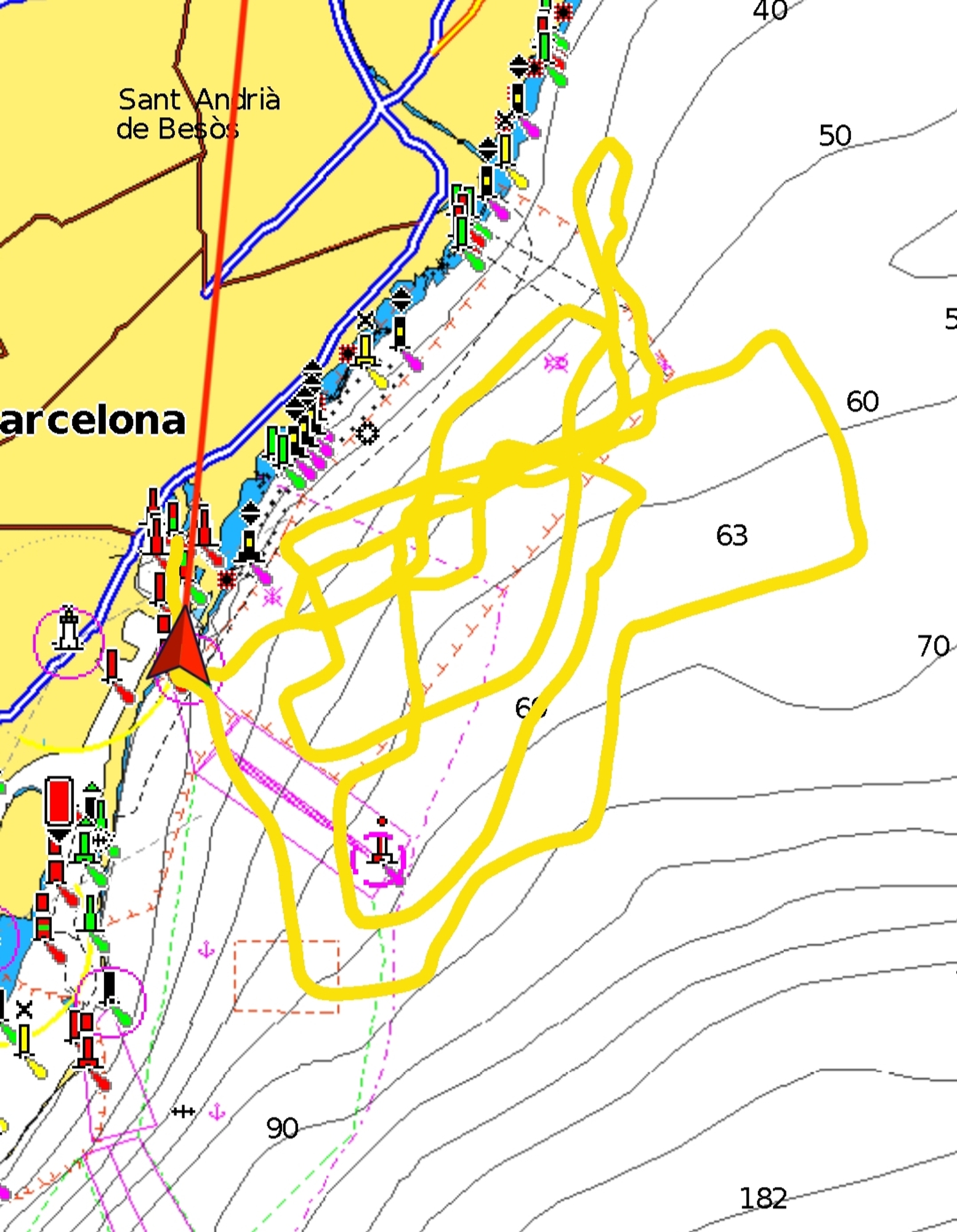
On-Water Recon Unit Report – Alinghi Red Bull Racing: Alinghi Red Bull Racing were sailing right on the edge around winds that built from 8 to 22 knots. The Swiss team rolled out their AC75 at 09:15h, and once rigged and launched, they placed the GoPros on the mast spreaders and the hull and left the dock by 11:30h. The M2-2 mainsail and J3-1R headsail were hoisted inside the port by 11:52h. Right after, the chase boat towed the boat out to assist in their first take-off of the day.
The wind was blowing 7 to 8 knots from the south when the Bull started to bear away downwind, maintaining 45 knots of speed between the 5 gybes that they did before stopping for a couple of minutes. They followed with one lap upwind-downwind consisting of 6 manoeuvres with a building breeze up to 16knts from 200º and 0.7m notable sea state.
At 12:32h, they dropped J3-1R and hoisted J5-1R with a square head, right under the spreader. After the hoist, they sailed in displacement mode and were stopped for half an hour as they were having some issues onboard. At 13:23h, with 19knts average wind-speed they did three more windward and leeward laps, until they nose-dived near the beach and consequently broke two meters of the jib clew. The AC75 apparently didn't suffer any other damage.
They dropped the broken headsail and hoisted the J6-L, following with a long bear away, manoeuvre right on the edge and ending the training upwind just in front of the port entrance.
The team lowered the sails at 14:50h and towed the boat back into the harbour, where they docked at 15:00h. They foiled for 1h and 22min around 55 nautical miles out of 3h 22min session out on the water.
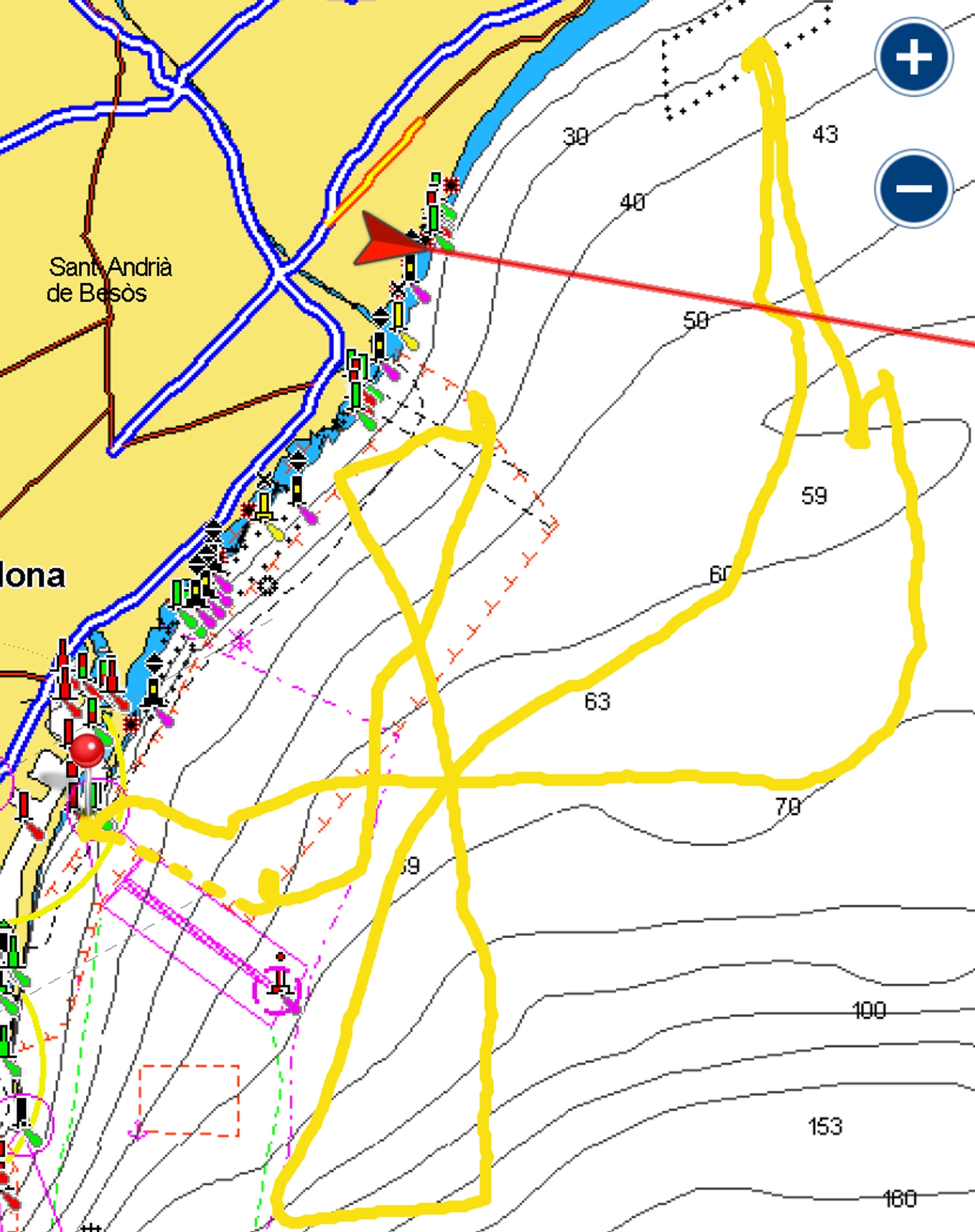
On-Water Recon Unit Report – NYYC American Magic: NYYC AM rolled out their AC40s from the shed at 09.00 (Magic) and at 09:30 (America). Both boats in LEQ12 mode, with the same foil configurations as last Monday in terms of arms, wings, and flaps. Magic with the new foil wing and foil flap on the starboard side (FW4 and FF4); and with foil wing #1 and foil flap #1 (FW1 and FF1) on the port side. In addition, the preliminary regatta event stickers were removed. The ones with the event logo from both sides of the bow, and the “37th America’s Cup” letters from the mast.
America was composed with foil wing and flap #3 (FW3 and FF3) on the port side with no skeg; and with foil wing and flap #2 (FW2 and FF2) on the starboard side. On America the colourful label on the stern, to easily identify it, was removed.
Both boats were craned to the water at 09:32 and 10:00, respectively; and they docked out at 11:25, as planned.
One-design sails were selected for both boats, probably with the intention to eliminate sail variables when testing, as the focus of the day was on the arms, wings, and flaps. The MN3 on America and the MN2 on Magic were hoisted, exactly as last Monday, combined with one-design J1s while coming out of the harbour at 11:40 approximately. Before even starting the first speed test of the day, the wind intensity increased considerably and the team changed their OD J1s for OD J3s at 12.00 on both boats, which remained for the rest of the day.
Two long upwind and one downwind leg were carried out with both boats speed testing, standing in proper positions. When speed testing upwind on starboard tack, America was faster and higher, both times, standing on foil #3 vs Magic on foil #1, consistently and for a considerable difference. On the other hand, when speed testing upwind on port tack, while America was slightly higher standing on foil #2, Magic standing on the new foil #4 was much faster achieving a much better upwind VMG overall. On the downwind, on port tack America was slightly lower at times doing the same speed, while on starboard tack no reliable conclusion could be achieved.
As regards the conditions, even though the wind intensity increased very quickly from 12 to 22 knots approximately, during the 2-hour sailing session, the differences on performance in between both boats on each tack were maintained.
There were three breaks during the day. One at the beginning while changing jibs from 11:40 till 12:10, a second one from 13:05 till 13:15 and the last one from 13:30 till 13:50.
Both boats were sailed back into the port, where sails were lowered at 14:25, docked at 14:30 (Magic) and at 14.50 (America), craned out at 15:12 and 15:50, respectively and both were back in the shed by 16:30. Sebastian Peri Brusa – Recon on NYYC AM