“IT’S KIND OF PERFECT FOR TESTING THINGS”
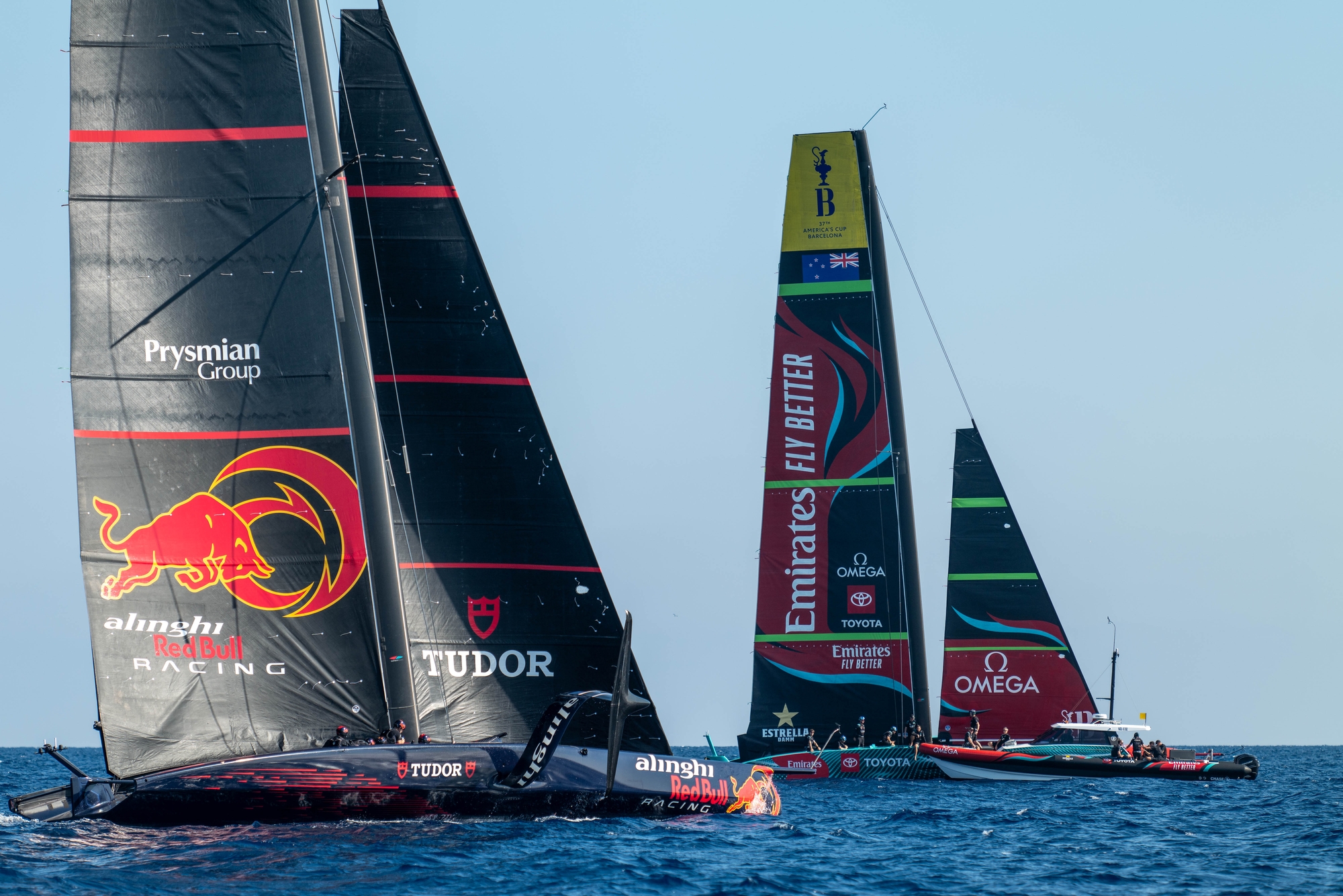
Flat water and 6-16 knots of breeze in Barcelona were the absolute perfect conditions for NYYC American Magic, Emirates Team New Zealand, Alinghi Red Bull Racing, INEOS Britannia and Luna Rossa Prada Pirelli to keep the pressure on their training and testing schedules and with the mercury still touching 26 degrees, there were happy sailors around the Port Vell this evening.
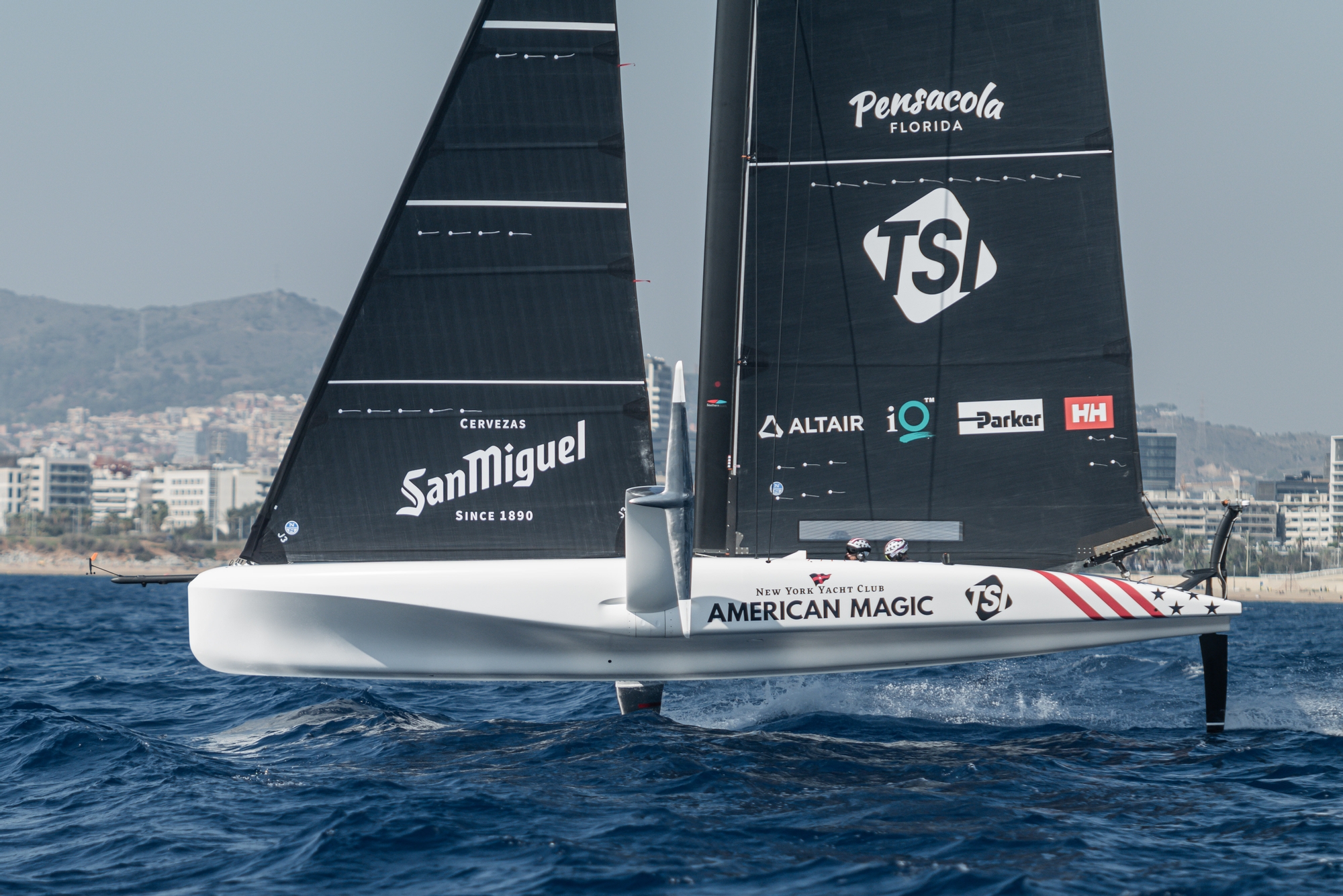
For NYYC American Magic it was another super-efficient day with the foil evaluation once again top of the agenda as the team grapple with varying wing volumes married to cant and moding settings to decide on their race foils for their AC75 currently in build over on the East Coast of the USA. These sessions are relentless exercises in straight-lining both upwind and downwind, with time on the water across a variety of sea state and wind strengths being key to the overall evaluation.
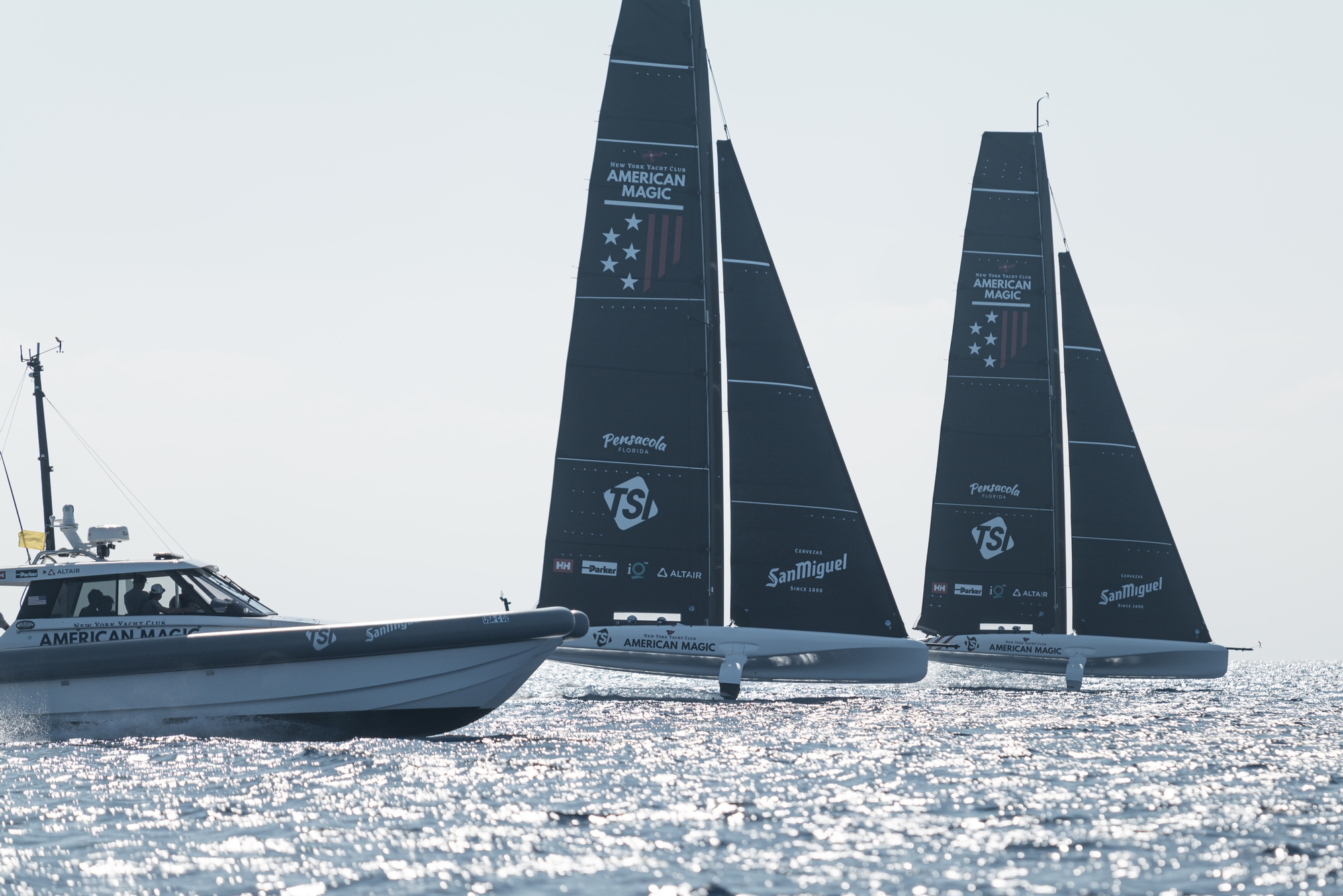
Again today we saw the biggest differences downwind with ‘America’ still able to sail deep whilst ‘Magic’ appeared to have acceleration when the two boats came back on angle. Tom Slingsby, who was sailing on ‘Magic’ today still thinks it’s too early to draw conclusions saying: “I’d agree that America seems to have a bit more moding abilities, seems that way but at the same time yeah, I think it was a pretty even split today on starboard upwind and downwind. I think downwind for sure that America might have had a little edge today on starboard.”
Looking upwind, the new starboard foil on Magic looked rapid when immersed on port tack and straight-lining against ‘America’s’ number two foil but Tom was going bigger picture with his response saying: “I don't think there's any conclusions, one is quite a bit bigger and one is quite a bit smaller so they obviously have a crossover and at certain times like the bigger foil will beat the smaller foil but as to how much distance it can get in that lighter air and then vice versa the other way, the small foil number two comes through pretty well when it gets windy but yeah like we've seen, obviously there's differences in the foils but being able to sail around a boat if a boat gets ahead of you on a tight race track with boundaries is another story.”
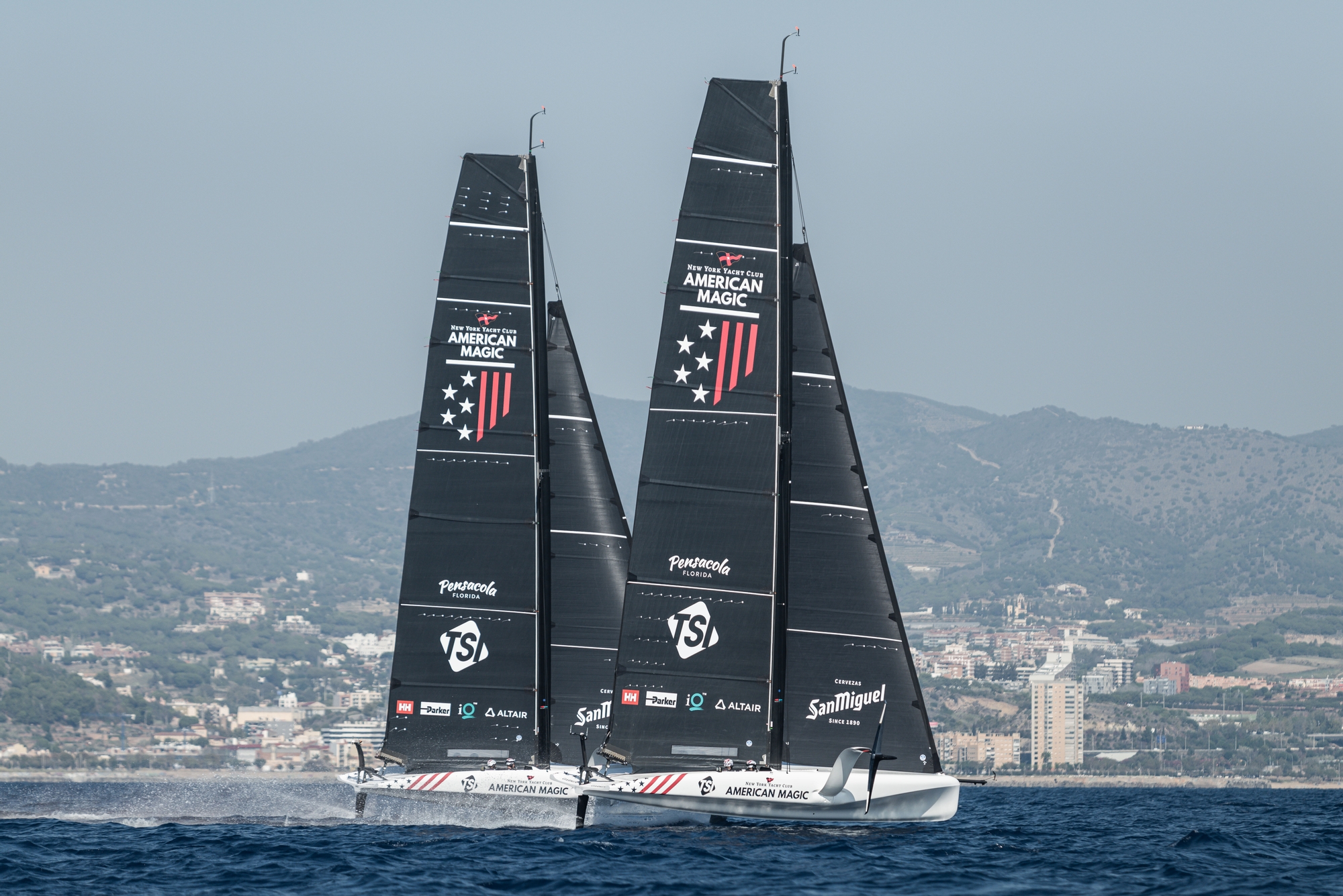
Unfortunately ‘America’ had to leave the sailing session early and was slow-towed back to the base with an unspecified but new issue “downstairs” curtailing what was otherwise a glamour afternoon that will have extracted a lot of meaningful data for the designers. Looking ahead. It’s going to be a busy week in Barcelona for American Magic with Tom saying: “It’s a beautiful forecast again for the next three days, sort of windy, flat water it's kind of perfect for testing things. Yeah, we've got a few things on our list whether its foils whether it's aero testing or whether it's moding and trying different cants and things like that and yeah which order we're going to do that I'm not too sure, but we will be going through a lot of things this week.”
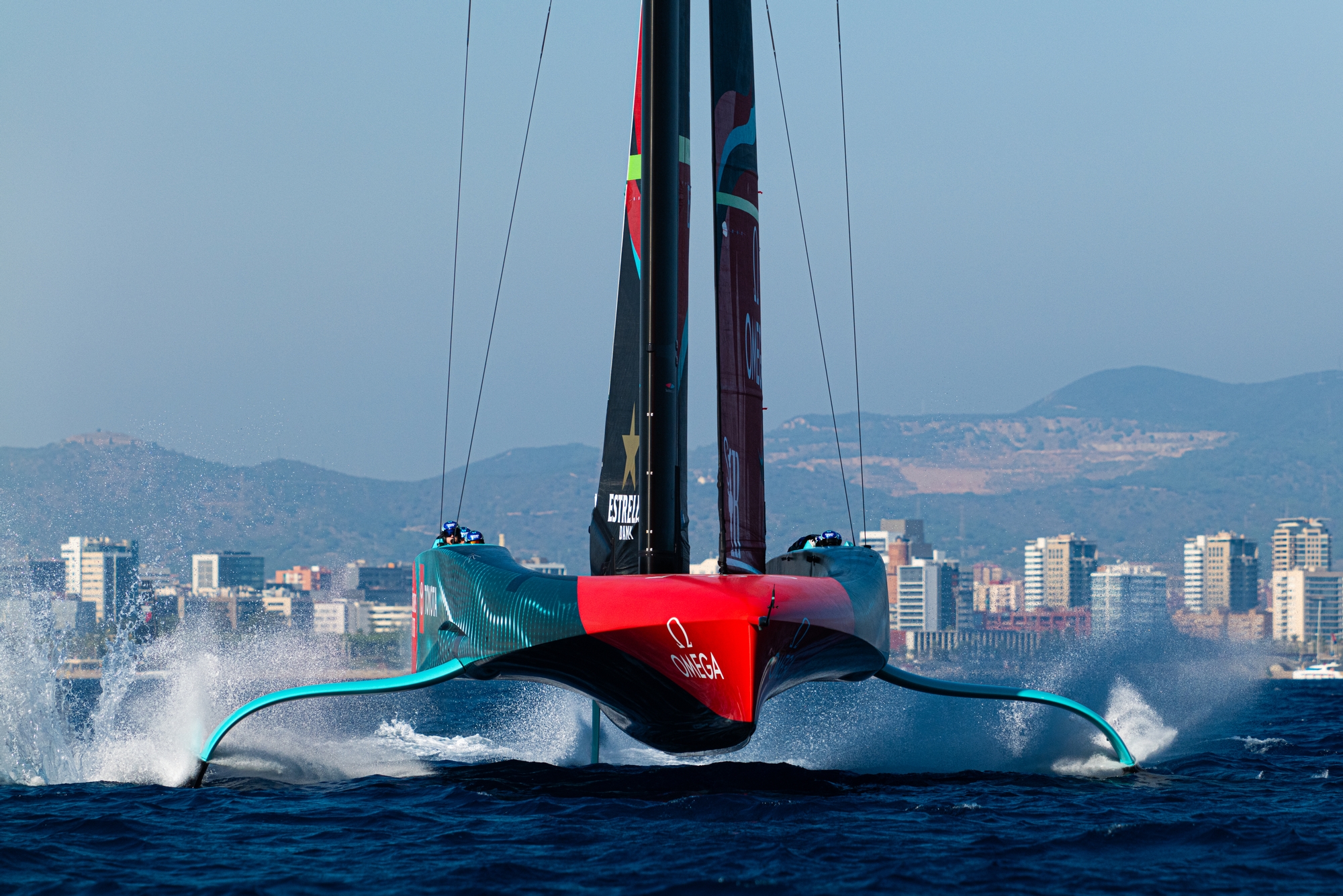
For Emirates Team New Zealand, it was a hypersonic kind of day with ‘Te Rehutai,’ the team’s AC75 absolutely rocketing up and down the La Barceloneta beachfront at speeds estimated in the high forty-knot bracket before coming into their now standard exercises of laps over a virtual course.
What was different today was the intensity in their pre-starts and some interesting sail handling with the rig noticeably twitchier between mainsail and jib and perhaps less tension in the forestay. Devastating to watch in flight, Te Rehutai’s opening shot down the beach was a marker of what we can expect come the Match in a little over a year’s time and if conditions are anything like today, we will be in for a classic America’s Cup.
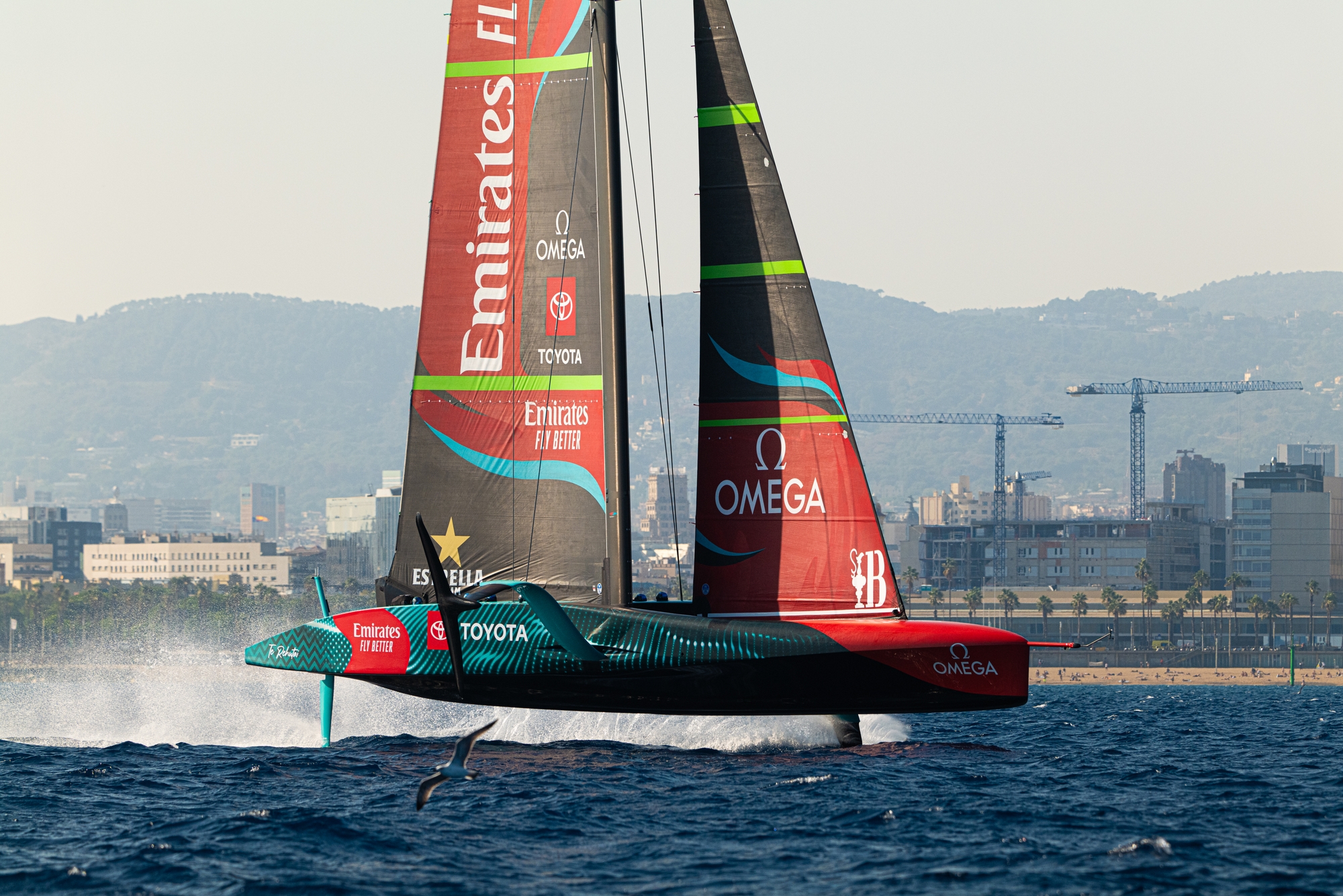
The Kiwis look comfortable in just about every condition but as they entered into some pre-start practice, it was apparent that they were pushing well outside the comfort zone. The cyclors will have been hitting the highest wattage to power the boat as Pete Burling and Nathan Outteridge went through some desperately tight circles, head-ups and bear-aways, shadow-boxing an imaginary opponent but it was controlled aggression and sheer power as they came into several starts at warp speed with Burling in the starboard pod getting his eye in on the time-on-distance. Impressive sailing.
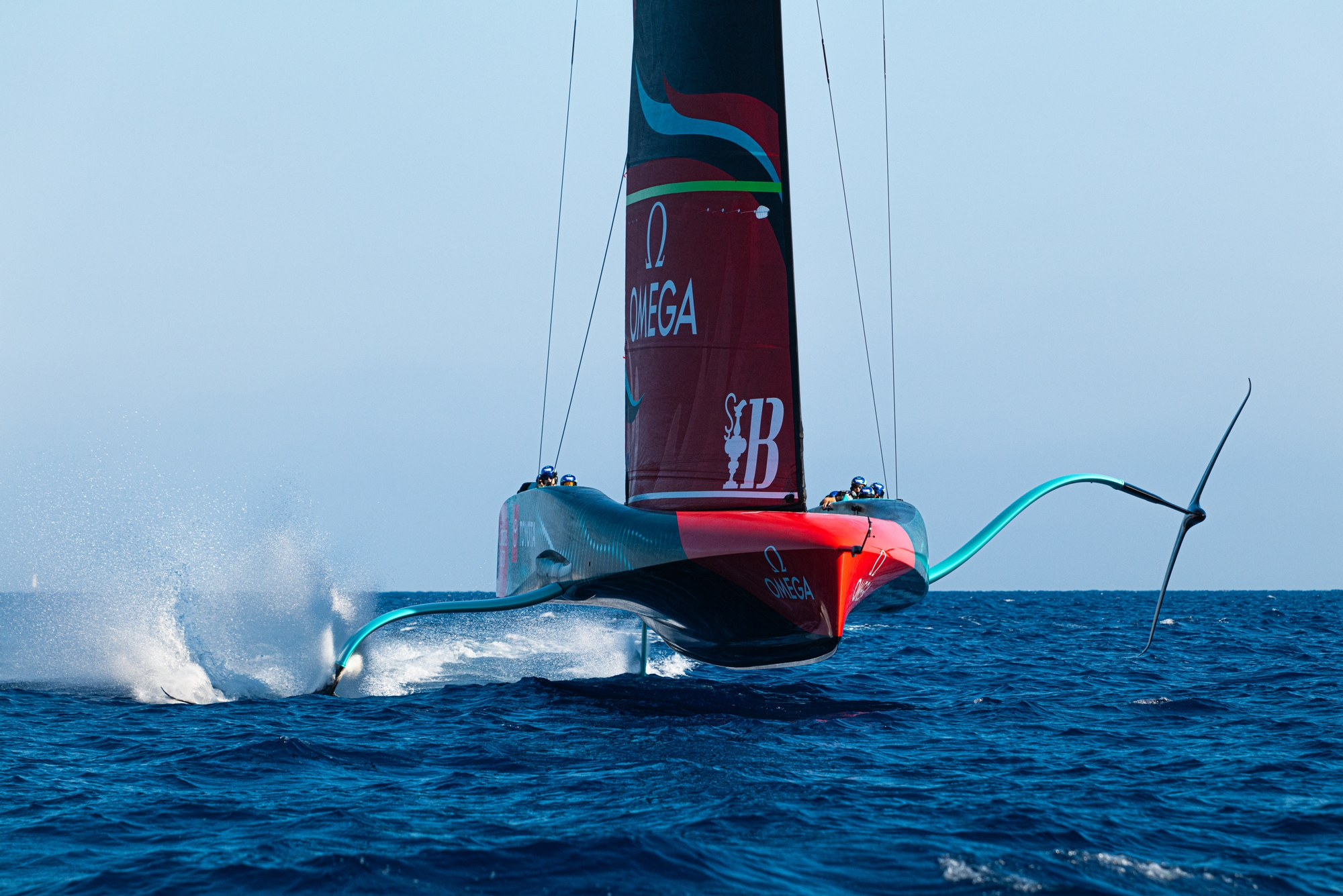
Speaking afterwards, Sam Meech, the bronze medallist from the Laser Class in the 2019 Rio Olympics and now a cyclor onboard gave an insight into where the Kiwis are at in their training saying: “We’re getting much more comfortable, you know the first day I jumped on the boat just the power of the boat and trying to cycle to make sure you’ve got enough power it was quite an experience…but the guys are getting fitter and fitter so it's getting easier, which is good.”
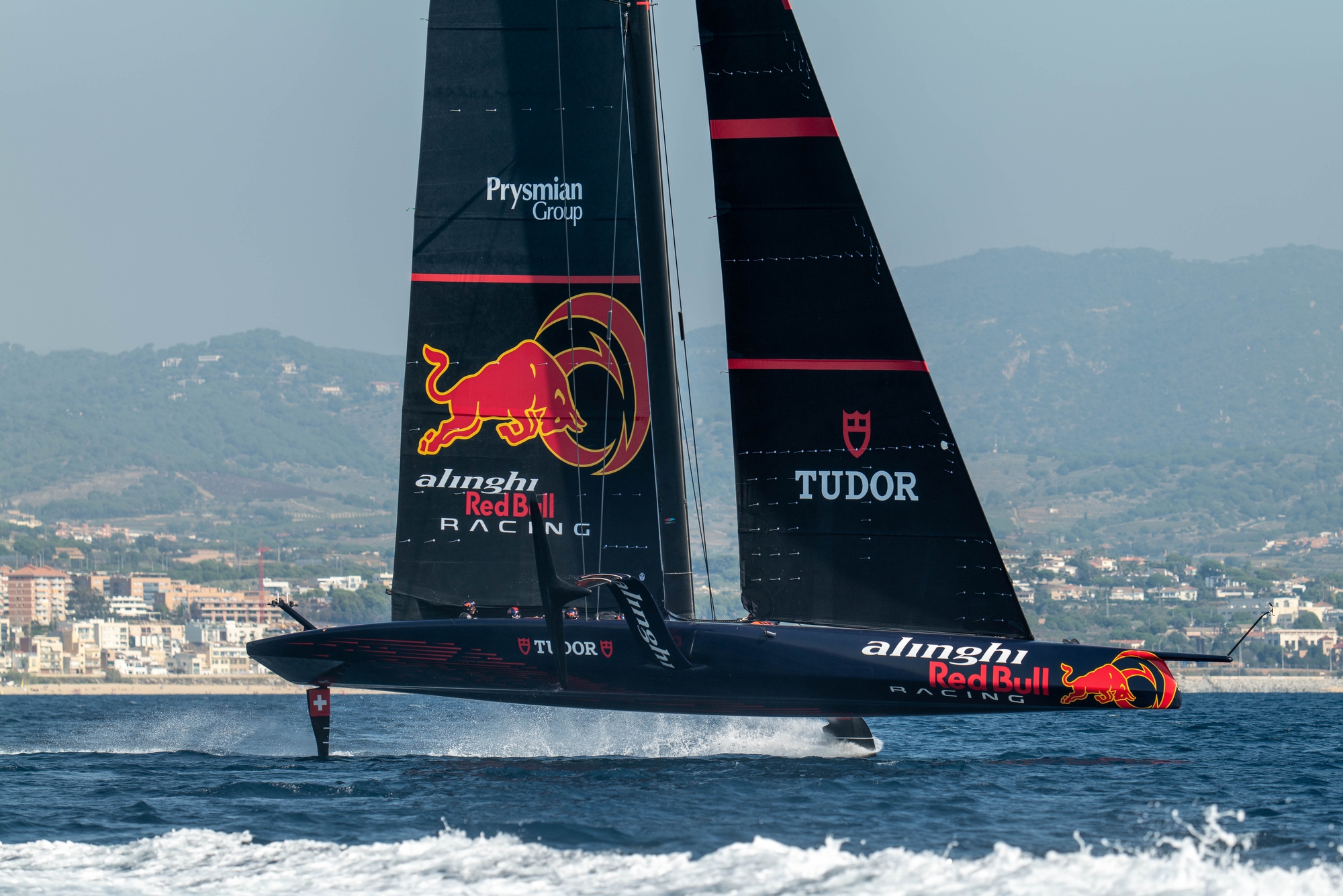
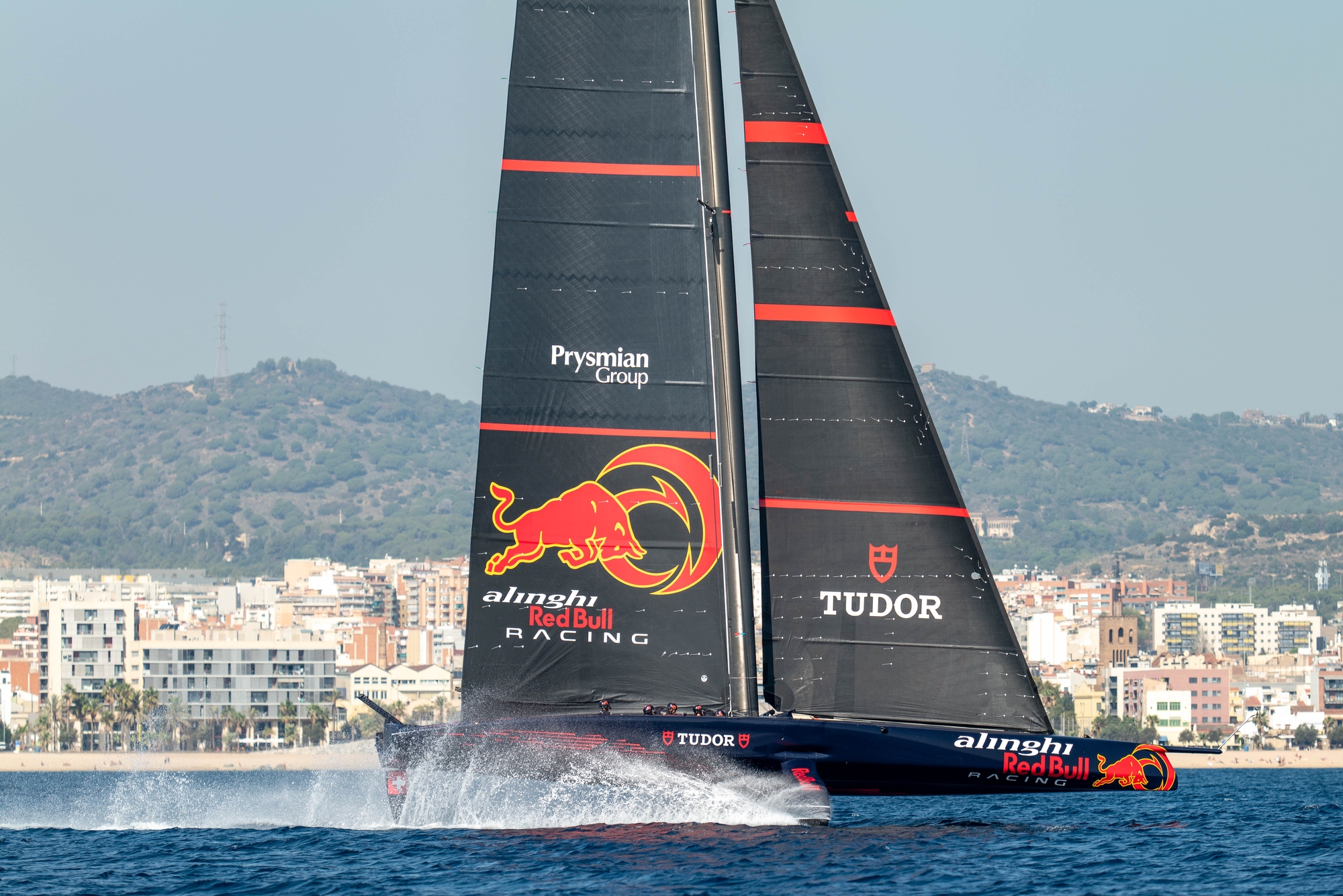
Alinghi Red Bull Racing were also out in their AC75 “BoatZero’ on pretty much the same stretch of water as the Kiwis all afternoon and were into both crew rotation and performance analysis presumably of the systems and controls over the asymmetric foil package the Swiss are forced to run. On a flat-water day the differences between the anhedral legacy American Magic foil on the port side and the Emirates Team New Zealand T-section foil on starboard are amplified with the Flight Controllers able to dial low and controlled to the water’s surface on port tack whilst flying higher on starboard tack. The Swiss have certainly got the hang of the optimum flight for ‘Boat Zero’ and pushed through some 40 manoeuvres over 70 nautical miles over a four hour session on the water that was punctuated by the port foil arm having what Nicolas Charbonnier called as “just a minor issue, just a little bit of oil leaking out of the system so it just took us maybe 15-20 minutes to fix it and then we were happy to go again.”
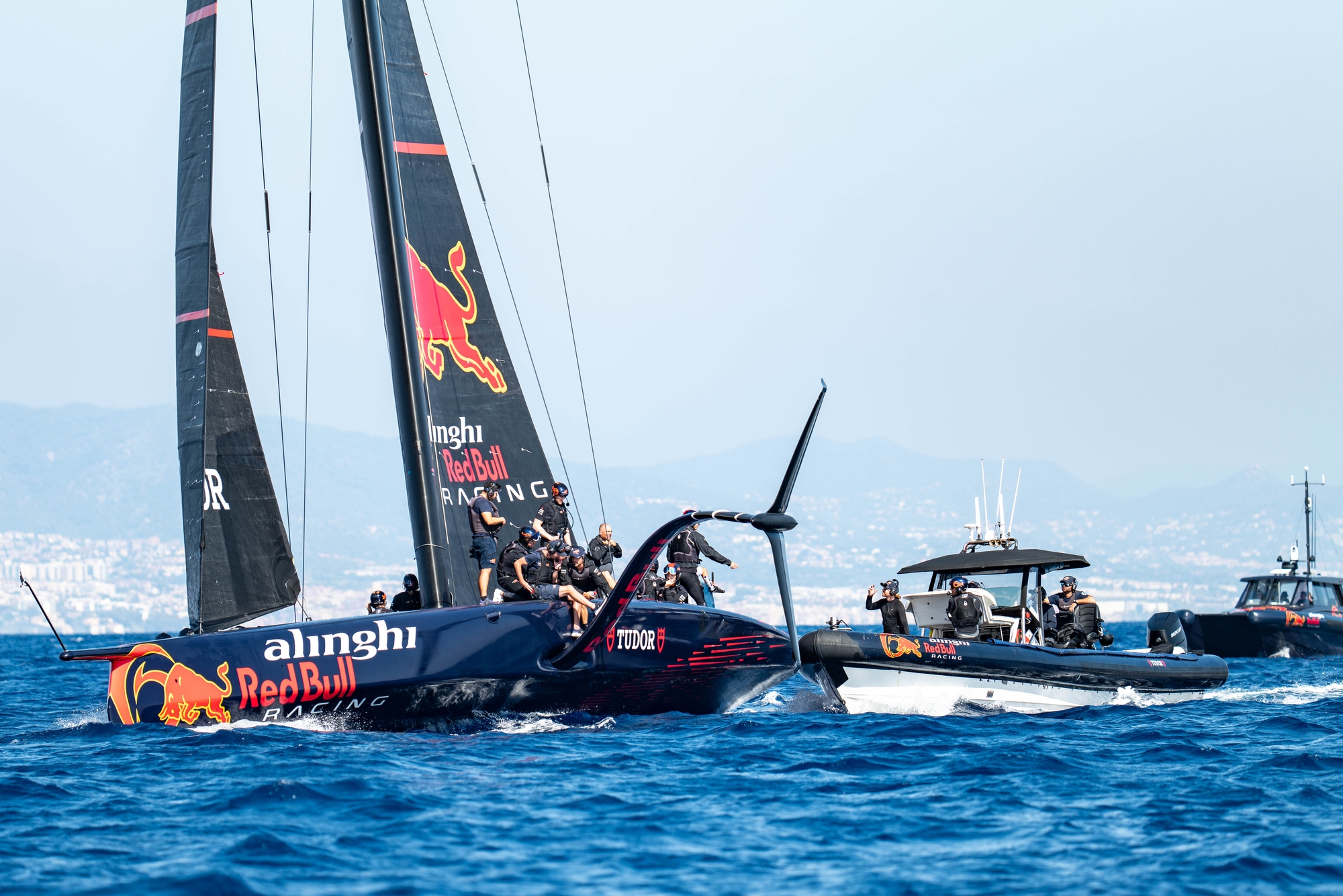
Nicolas, a member of the Driving Group, got his opportunity today to get some miles in the AC75 and it’s an interesting perspective that he offered on the foil differential saying: “The feeling is a little bit different. Obviously, the settings has quite different results - you could see some time with we more comfortable to sail bow down on one tack than another but at the end of the day the performances are pretty much the same, so it’s all good.”
Nicolas also offered a perspective on how important this period is for all the teams saying: “I mean this month is probably, for every single team, quite crucial in the perspective of the Cup because this is the racing period and everybody wants to get the most knowledge about the sea state and the wind in October in Barcelona so we already had last year as a background so this year is a second nice year for us and now we looking forward to be next year racing but we still have a lot of work to do.”
Luna Rossa Prada Pirelli and INEOS Britannia were also on the water this afternoon with both teams looking impressive and training hard for the next Preliminary Regatta in Jeddah, Saudi Arabia just a few weeks away at the end of November.
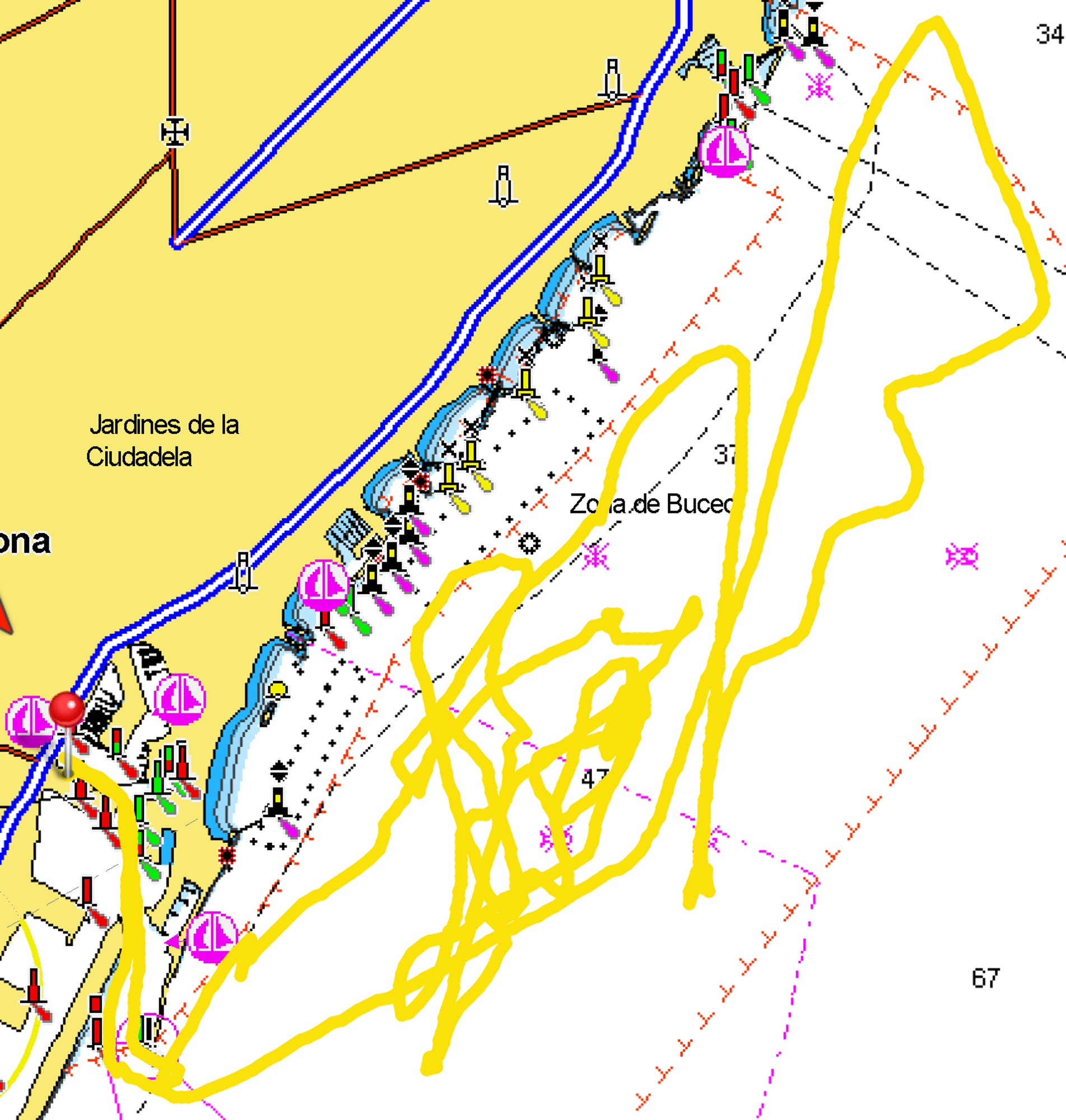
On-Water Recon Unit Report – Emirates Team New Zealand: Emirates Team New Zealand began the week with a three-hour session aboard their last generation AC75 sailed in close to perfect training conditions with the breeze in the 12-14 knot range and flat to very light chop sea state. The Kiwi yacht began rolling out of the hangar at a fraction after midday and with the mast setup completed in just 30 minutes the boat was craned into the water at 1236. After docking out on time at 1330 the team had the M2-3 mainsail and J4-6 headsail hoisted by 1350 and were out of the harbour and up on foils at 1355.
Making the most of the then 12-13 knots of southerly wind and the super flat sea state the crew set off on a long fast downwind run at speeds estimated to be in the high 40 knot range. After four smooth and fast foiling gybes the boat turned up for a long upwind run with six foiling tacks. Another long windward / leeward lap followed immediately before two more shorter (half distance) laps preceded a stop at 1420.
When the crew set off again 15 minutes later, they began a series of 'races' around a virtual windward leeward course. Based on the prestart manoeuvring and the highly unpredictable pattern of tacks and gybes around the racecourse it seems likely the crew are racing against some sort of virtual competitor – although how that 'ghost' boat might be being controlled is impossible to say. After three of these practice races there was another stop at 1450 to rotate the cyclors. Although this stop lasted, in the end, for 30 minutes there were no obvious signs on deck of a breakdown with the crew simply sitting or standing as they waited to get under way again. Two more 30-minute, three-race sessions were held (with a 15-minute break in between) before time was called at 1625 with sails dropped by 1645 ahead of a 1655 dock in.
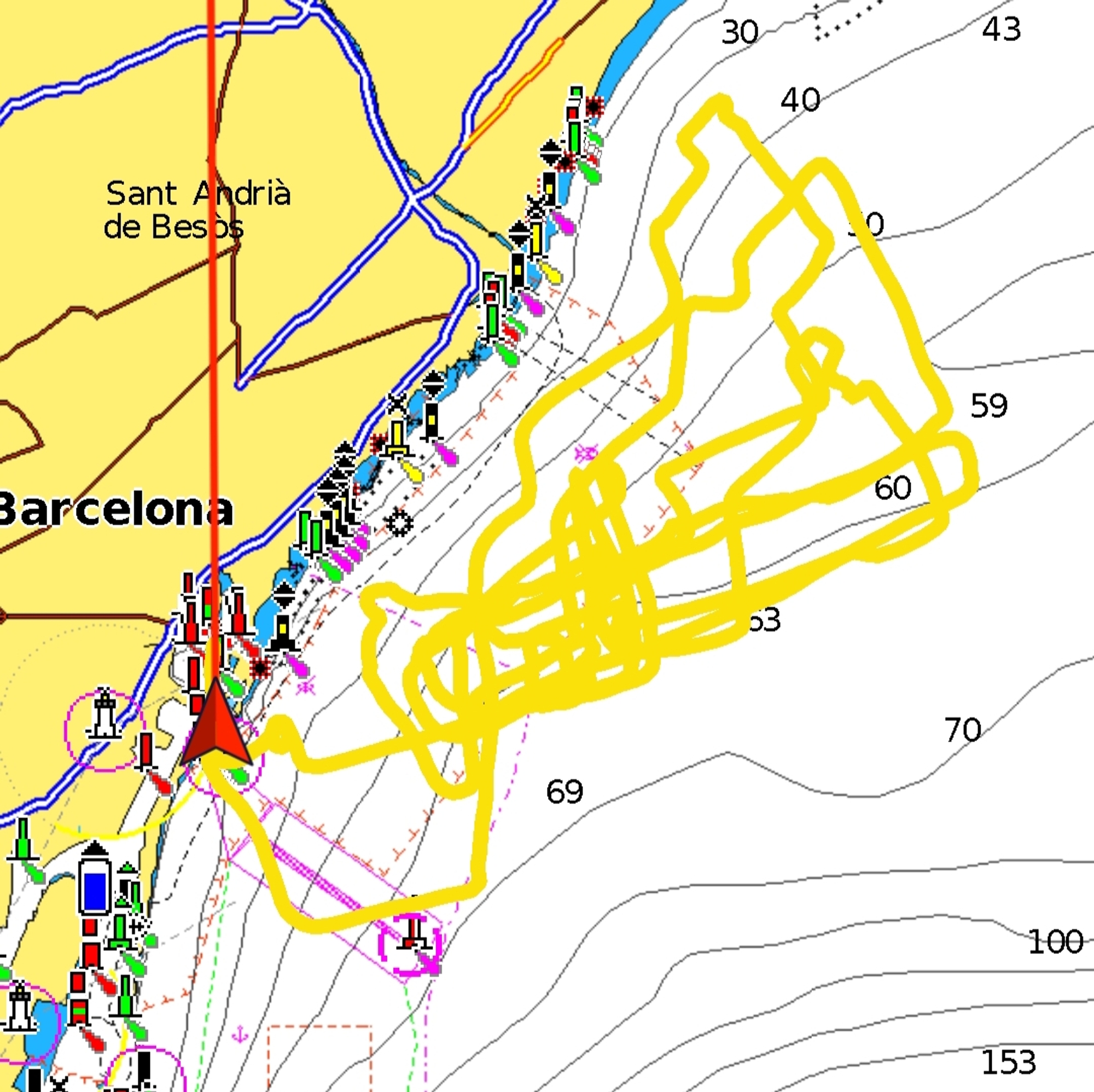
On-Water Recon Unit Report – Alinghi Red Bull Racing: Champagne conditions for Alinghi Red Bull Racing team, who did 40 manoeuvres around 70 nautical miles in almost four hours of sailing session.
The Swiss rolled out their AC75 at 10:00h. The yacht was craned in and pre-sailing checks were carried out, with electronic, system, hydraulic and IT engineers onboard. The team docked out at 12:00h, hoisting the M2-2R mainsail and J1-2R headsail inside the port and being towed out by 12:22h. The wind conditions outside were 10knts from `Garbí´ 220º with clear skies and fairly flat sea state. Today's session was focused on manoeuvres and to check on the performance of the boat in those wind and sea state conditions.
At 12:24h, they started sailing in front la Barceloneta beach. The first stint consisted of nineteen manoeuvres during two laps upwind-downwind making 40knts average. With the breeze raising up, they did a jib change.
At 13:18h, they were sailing with their bow down low on their starboard foil compared with the other tack, crashing with the waves and touching-down in both of the tacks that they did during that period. Following, they did another jib change, hoisting the J3-1R with the repaired clew that they broke last week during a hard nose-dive.
At 13:40h, on the third stint, they did two more laps with nine tight angle manoeuvres playing with the cant angle. They stopped after a tack and changed crew configuration. Beside the chase boat, they spotted oil leaking out of the system on their port foil arm and after twenty minutes, they managed to solve the problem and call It a minor issue.
At 14:35h, with 12 knots average from 220º, they started bearing away for a long run on their port foil, following with two more laps and a zig-zagging downwind with hard luffs approaching to the coast.
At 15:15h, they started the last stint, which consisted of nine fully foiling manoeuvres during two laps of twenty-five minutes. By 15:40h, ARBR team lowered the sails and towed the AC75back inside the harbour, docking in at 16:10h.
At 13:40h, on the third stint, they did two more laps with nine tight angle manoeuvres playing with the cant angle. They stopped after a tack and changed crew configuration. Beside the chase boat, they spotted oil leaking out of the system on their port foil arm and after twenty minutes, they managed to solve the problem and call It a minor issue.
At 14:35h, with 12 knots average from 220º, they started bearing away for a long run on their port foil, following with two more laps and a zig-zagging downwind with hard luffs approaching to the coast. At 15:15h, they started the last stint, which consisted of nine fully foiling manoeuvres during two laps of twenty-five minutes.
By 15:40h, Alinghi Red Bull Racing lowered the sails and towed the AC75 back inside the harbour, docking in at 16:10h.
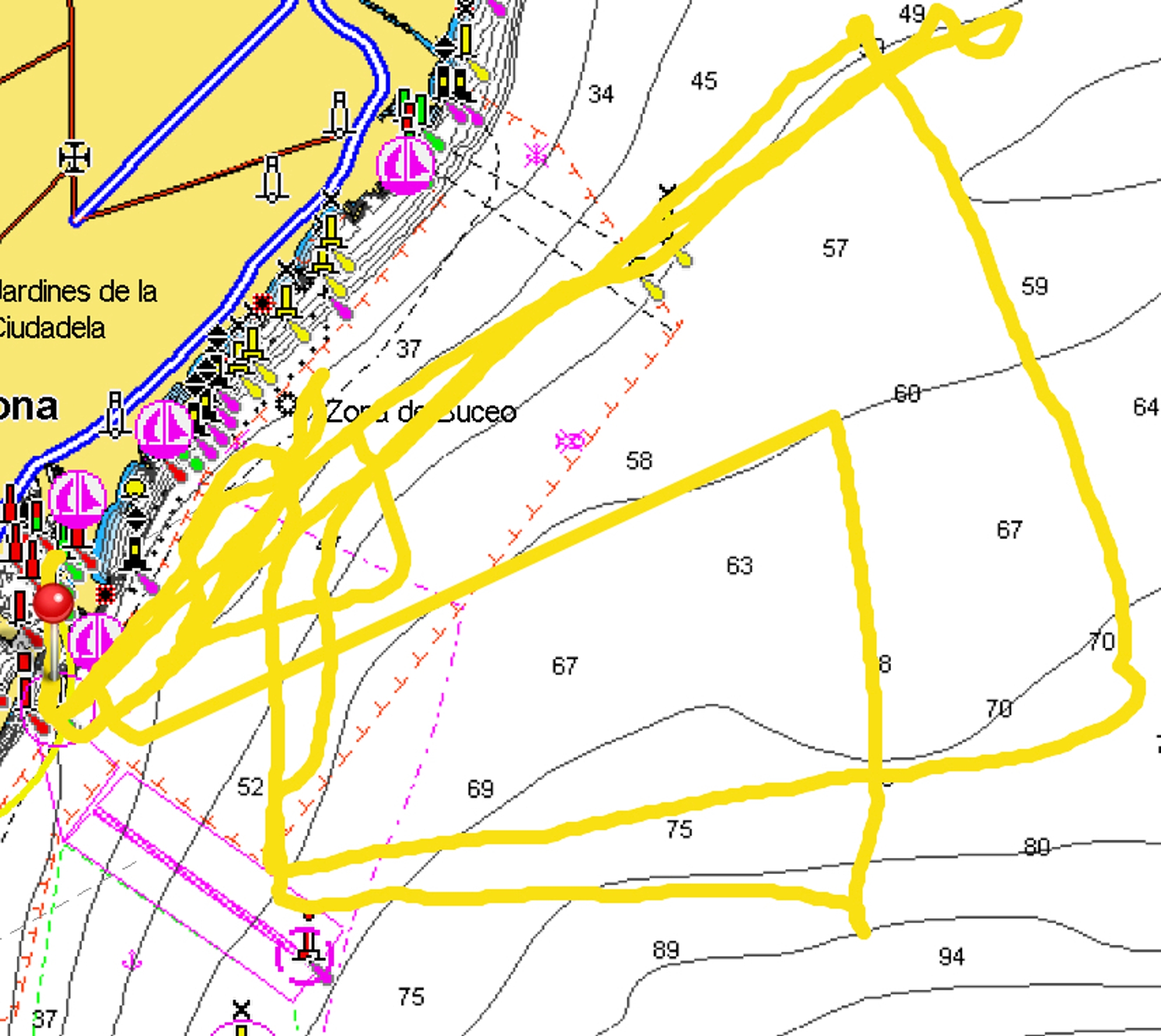
On-Water Recon Unit Report - NYYC American Magic: NYYC AM rolled out their AC40s from the shed at 09.00 (Magic) and at 09:12 (America). Both boats in LEQ12 mode, with the same foils’ configuration as last week, but both with modifications on their respective port side wings
Magic with foil wing #1 and foil flap #1 (FW1 and FF1) on the port side, with modifications on the wing, and foil wing and foil flap #4 on the starboard side (FW4 and FF4).
America was composed with foil wing and flap #3 (FW3 and FF3), also with modifications on this port side wing, and with foil wing and flap #2 (FW2 and FF2) on the starboard side.
America was quickly craned to the water at 09.40, while in contrast Magic stayed ashore for one hour until 10.45. During this time, the shore team checked the tension on the shrouds. First on the uppers with the lowers disconnected, and then with the lowers connected.
In addition, the system for adjusting the rudder rake was checked moving it forward and backwards multiple times. In the meantime, on America, a shore team member worked with materials on the port side steering cockpit, while another person worked on the inside of the back part of the starboard side trimmer´s cockpit. It could not be identified what they were specifically doing. Furthermore, blue circular Dacron insignia stickers were added on the masts of both boats, not sure for which purpose. Both boats docked out at 11:30, as planned.
The same one-design mainsails as last week were selected again for both boats. Once out of the port, one-design J1s were hoisted at 11:55 approximately, on both boats.
The first part of the day consisted of speed testing. Two long upwind and downwinds were carried out. On the downwinds, specially on starboard tack, America was lower at the same speed, with more ability to play different modes, while Magic was higher, at times faster, but not being able to achieve the same downwind VMG as America. On the upwinds on starboard tack, no conclusive evidence could be achieved, while on port tack Magic standing on foil #4 was slightly faster the two times.
At 12:50 there was a short break and the J1s were replaced by J3s on both boats, as the wind intensity was increasing quickly. Once on the J3s, while speed testing for 40 minutes, the comparative performances in between the two boats, both upwind and downwind and in the two tacks, were maintained.
At 13:45 while sailing downwind, issues onboard America were found and both boats came to a stop. After dealing with it for fifteen minutes, with shore team members going under the deck through the front hatch, no solution could be found, and sails were lowered at 14:00. Immediately after, America was towed back to the base in displacement mode at low speeds.
At 14:20 the training continued onboard Magic, which headed towards the racing area and practiced some upwind-downwind laps using marks, doing three to four tacks/gybes per leg, including some pre-starts manoeuvres. The hardest manoeuvres were tested such as double tacks just before the top mark rounding, sharp turns in the pre-start box area, double gybes just before the gate mark rounding, and also performing early tacks just after the gate mark rounding.
At 15:08 there was a twenty-minute break in which some crew members were rotated and then the training continued for twenty-five more minutes with the same focus.
Magic entered the port and lowered sails at 16:00, docked at 16:05 and then both boats were craned out. America at 16.20 and Magic half an hour after, approximately, indicating the end of the day. (Sebastian Peri Brusa – Recon on NYYC AM)