DATA CRUNCHING IN BARCELONA
What a difference a day makes. After the crash, bang, wallop of yesterday’s lumpy swell that tested boats and sailor’s patience to the limits, today was a more benign affair that allowed the teams to conduct arguably more valuable data crunching, fine-tune those pre-sets and work on the vital crew co-ordination that ultimately delivers performance.
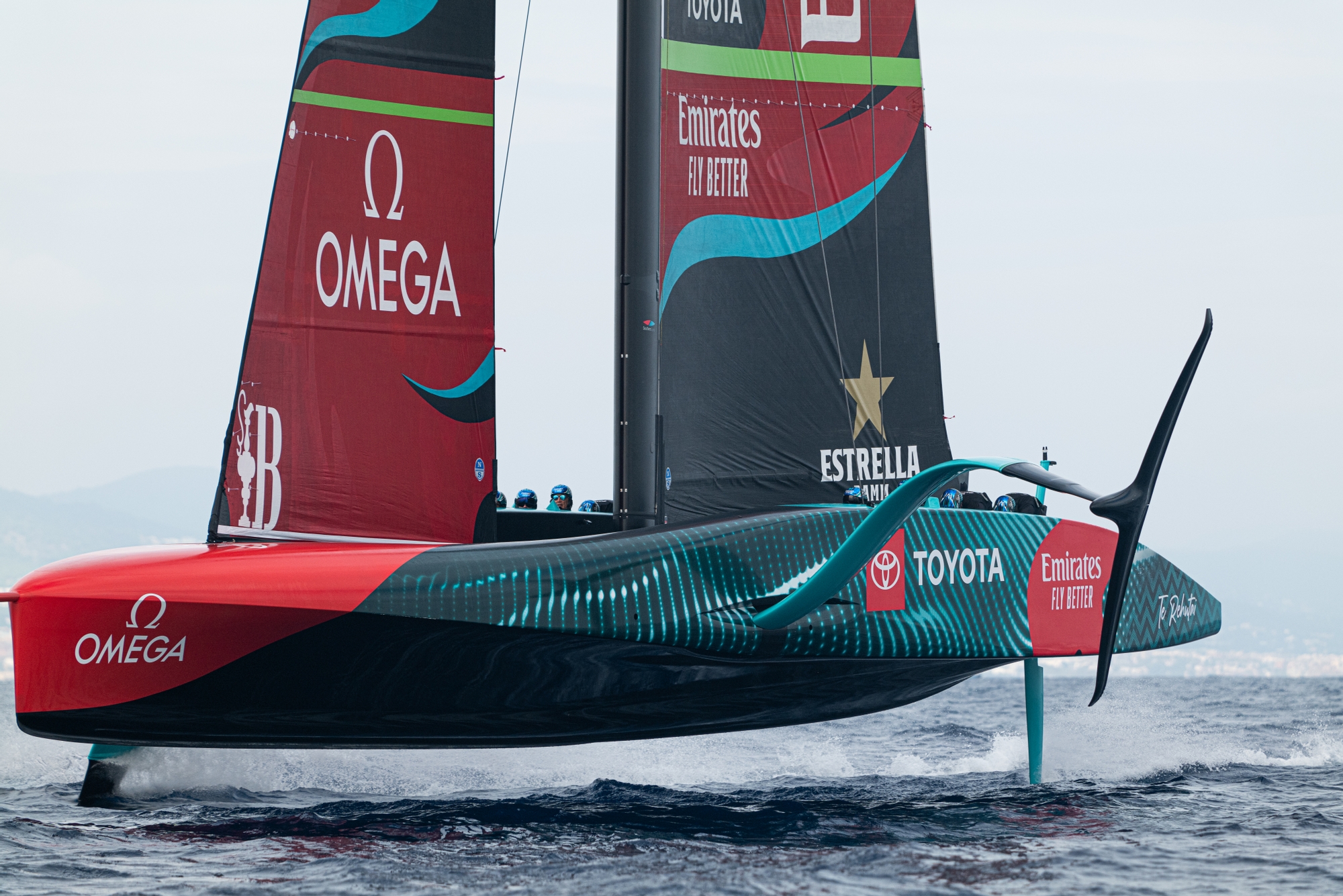
On every measure, Emirates Team New Zealand looked to knock it out of the park today. Far better than yesterdays at times wobbly flight, today was rock solid, dialled down to the water’s surface, utterly consistent with smooth steering despite an offset swell. The return of the south to south-westerly ‘Garbi’ – the beautiful breeze that filters up through the Mediterranean and arrives on Barcelona’s shores behaving itself and readable – made for a good later afternoon session on the water for the Kiwis who docked-out at 3pm and then put in a solid two-and-a-half-hour shift in greying conditions that are heralding the change in seasons.
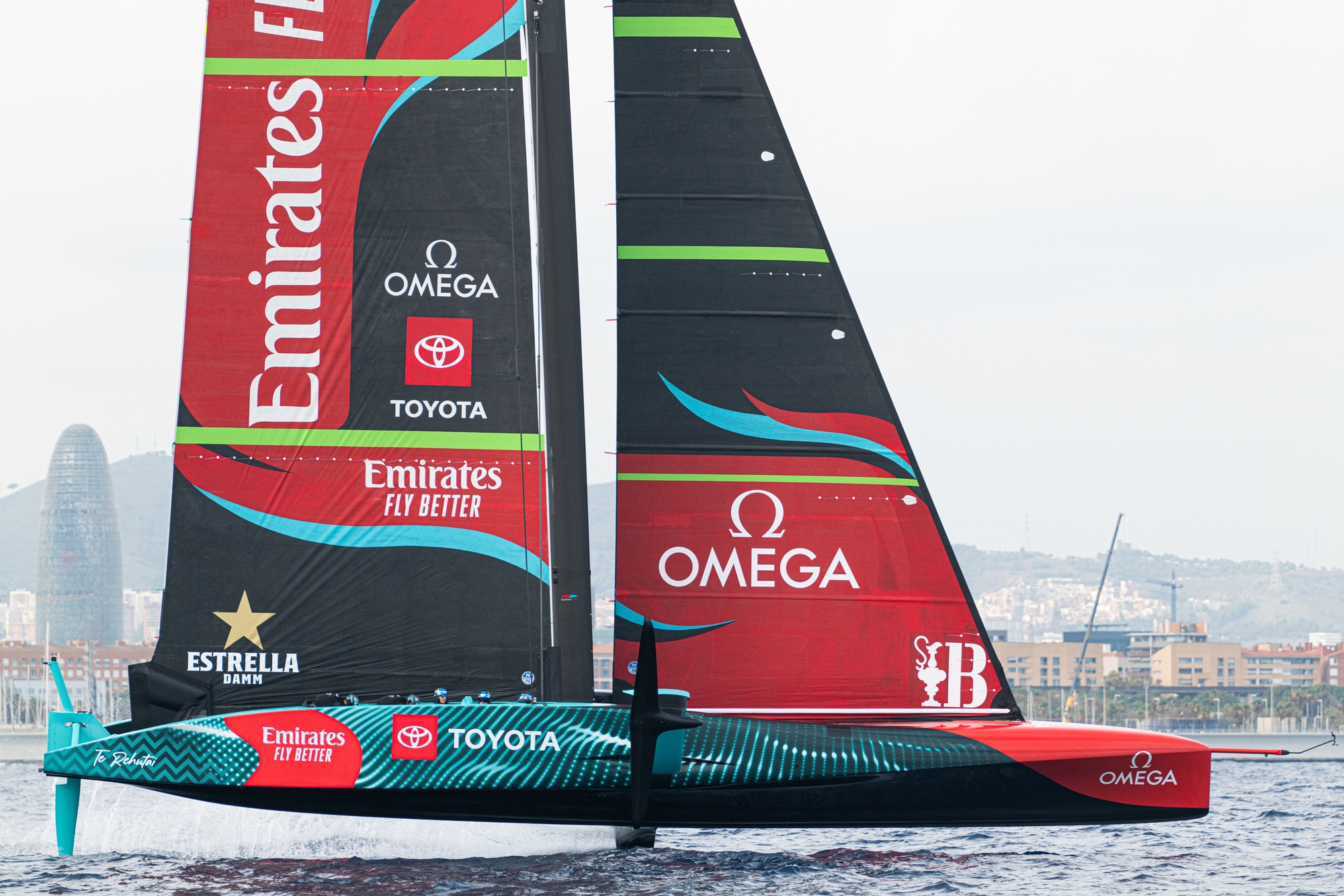
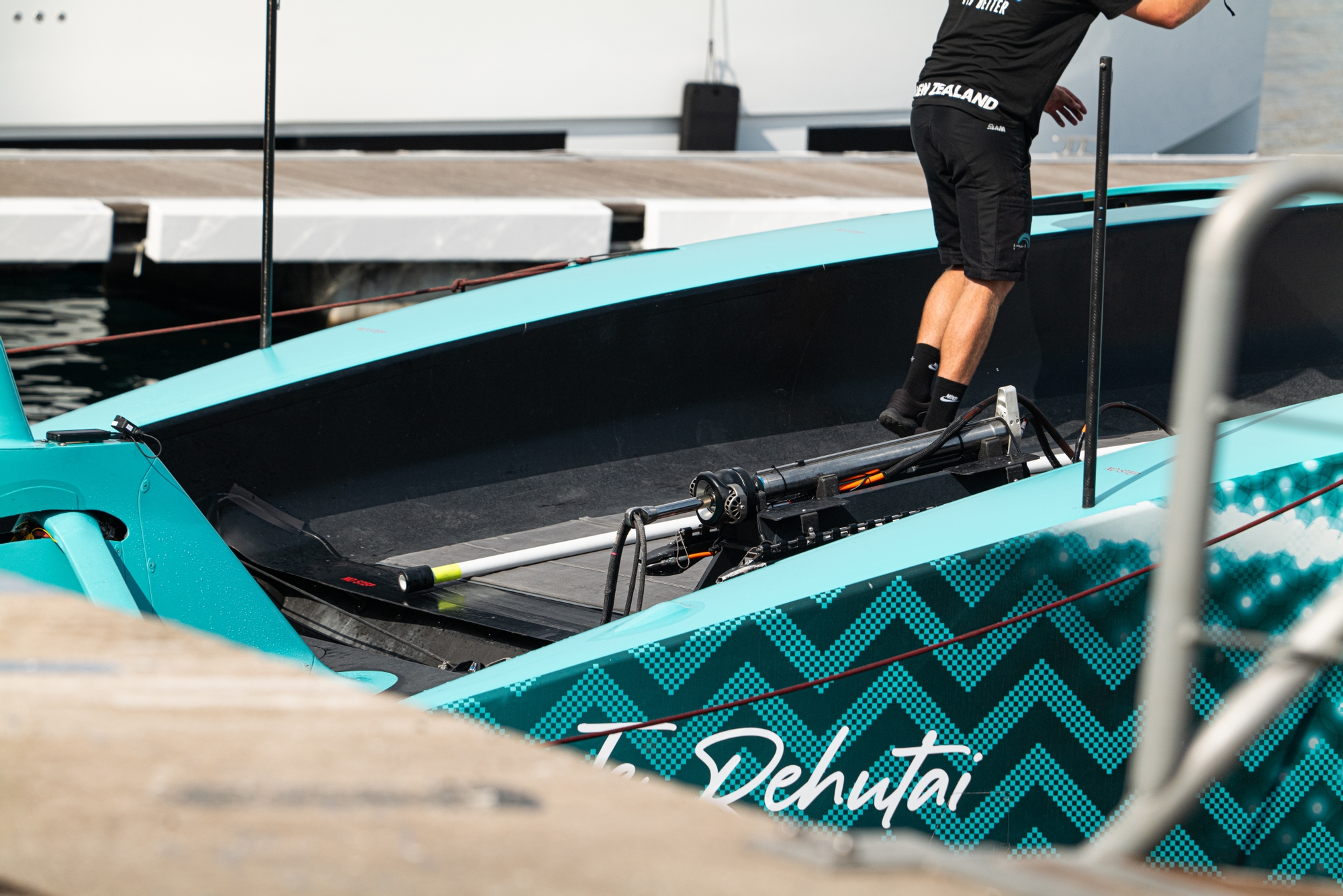
Pete Burling and Nathan Outteridge took ‘Te Rehutai’ through its early sighter moves of rapid round ups to get their angles in and then it was all down to the trim team of Andy Maloney and Blair Tuke to rifle through the settings on their J3 jib. Pitch looked very bow down with the razor-fine bustle skimming the water’s surface and despite the odd agricultural gybe, the flight crew kept the AC75 motoring through over-sheeting the main traveller, something they do relentlessly, and keeping big depth in the jib. Plenty of horsepower there in the 7-12 knot up and down conditions to play around with settings, try new deeper angles out of the gybes and even a touch of leeward heel on the tacks – something we don’t see too often except in the lighter airs such is the International Moth style windward heel that tends to be in favour upwind and down.
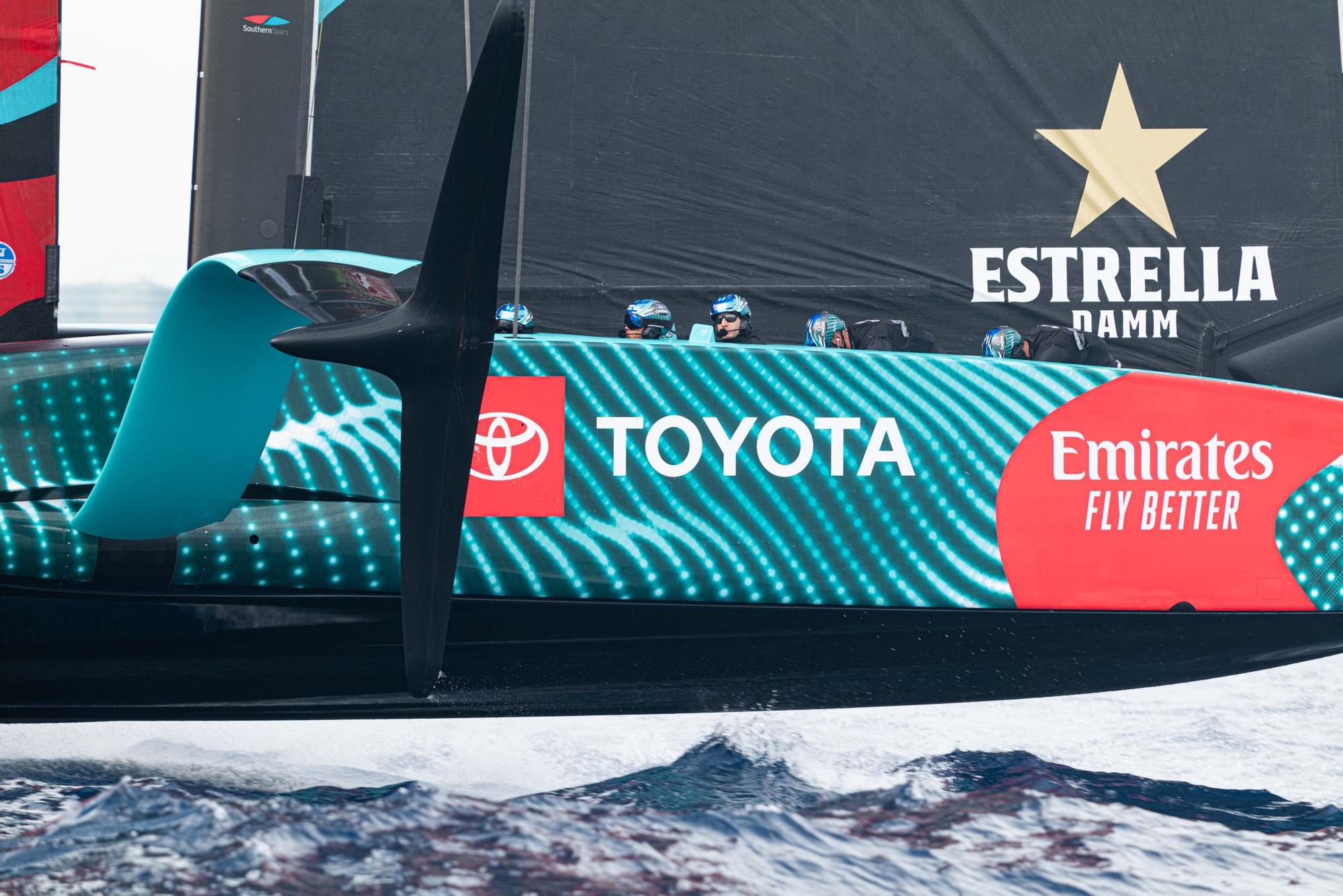
Speaking afterwards, Elise Beavis, one of the most coveted Performance Engineers in this America’s Cup cycle and an ever-present on the Kiwi chase boat day in, day out, gave a great insight into her daily routine. Describing the calibrations on the ‘wind triangle’ she educated us saying: “So on the AC75, same as on the AC40s, we've got the wind gear at the front of the boat, the cups that spin round and say what apparent wind speed it's measuring, and then you've got the wind vane giving a direction, and so we then do a little calibration on that because those numbers aren't perfect. And then we do calibration due to the presence of the yacht. So, we have what's called ‘upwash’ because we've got this boat and these big sails producing lift and that wind gear is not that far away, a bit further than the AC40, and we need some correction for the impact of the boat being there and then so that's one side of the triangle. Another side is how fast is the boat going and what direction and then from that we can work out what the last side is and that's our True Wind Speed and True Wind Direction.”
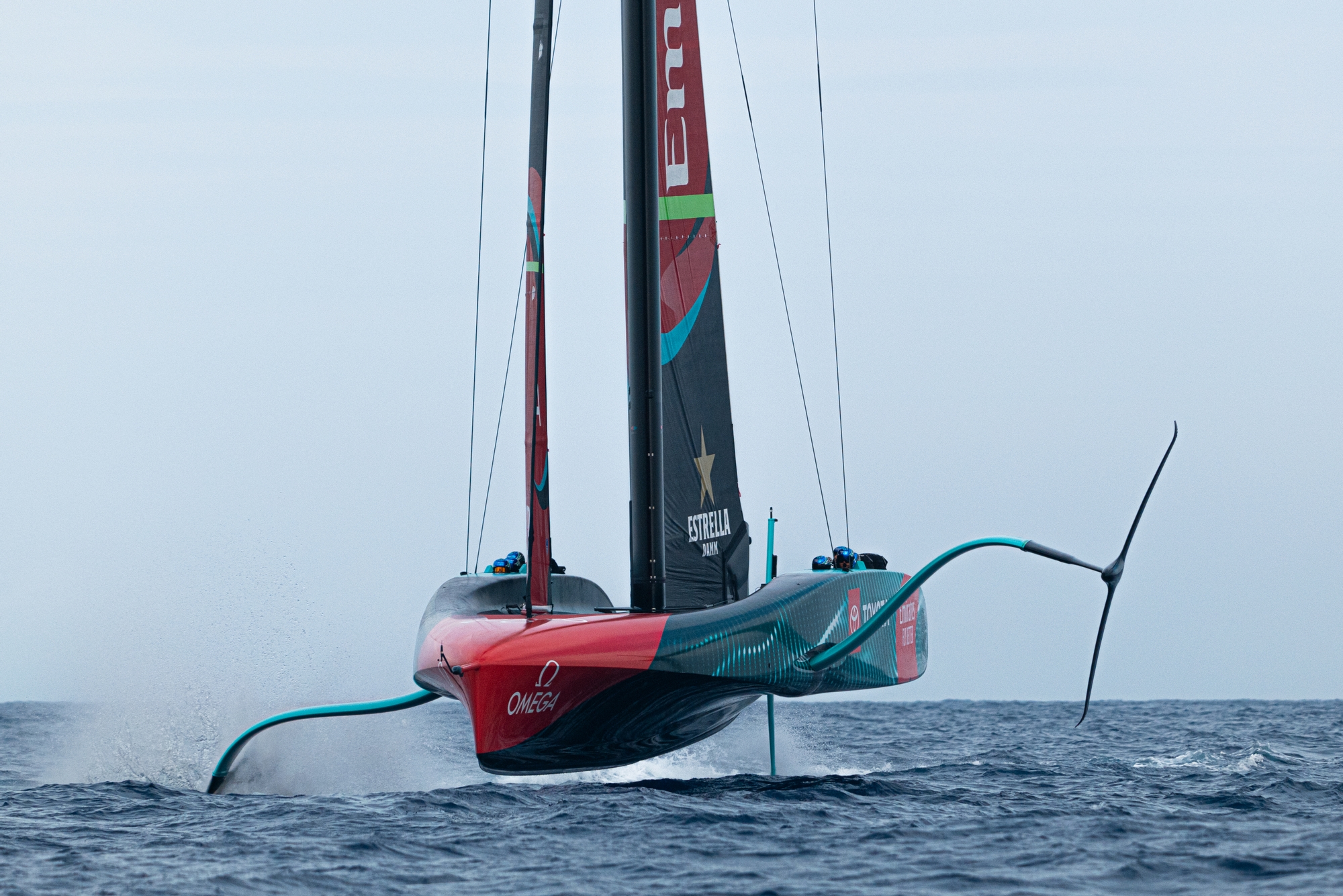
Elise also spoke about the importance of training during the time of the America’s Cup Match in 2024, saying: “So part of being up in Barcelona this year is sailing an AC75 in the conditions that we expect to see next year. It’s particularly interesting at the moment being October, so really the best guess at what we'll see next year. We can test more new components on the AC40s, we can't change much on this boat (the AC75) we can't change the underside, we can't change the foils, we can do some tweaks to the sails but no new ones, so we can't develop a huge amount in that area but we can learn about the conditions because obviously being bigger you know the foils and stuff are all bigger and as the waves get bigger it can deal with it better than the AC40… the waves today were quite skewed to the wind and it's not something that we really see at home in Auckland so that’s part of what's valuable being up here and that can really make some quite big differences between tacks.”
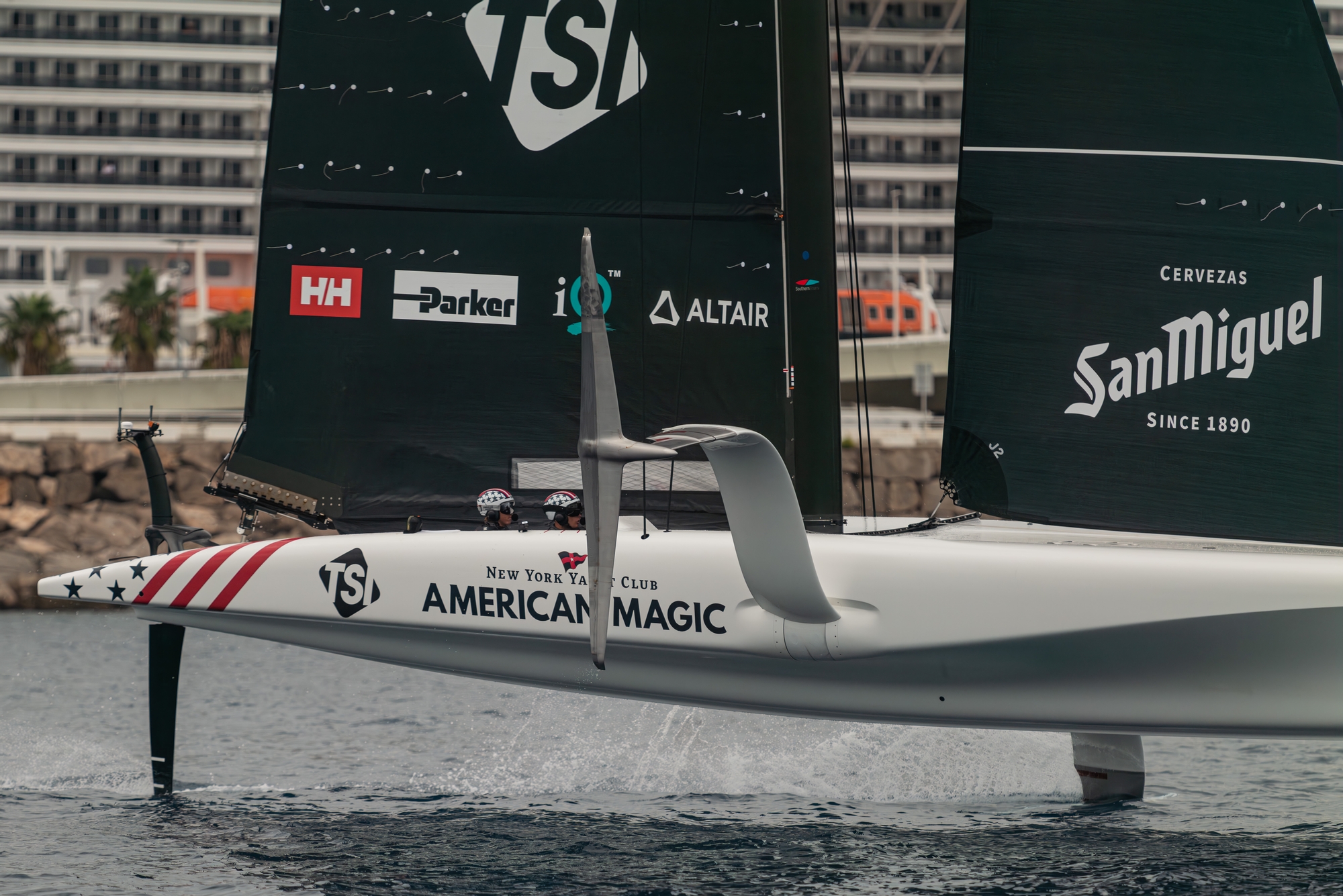
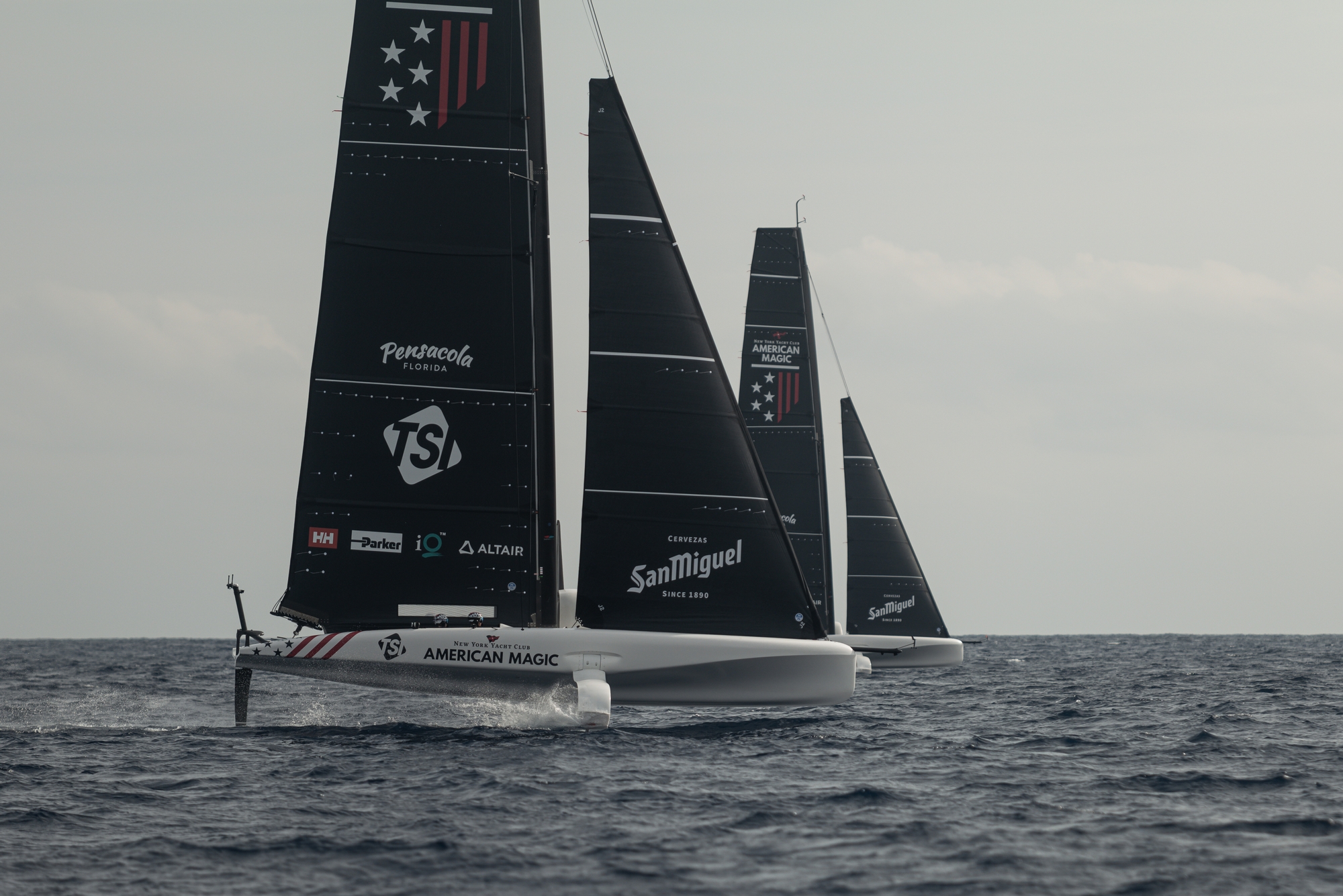
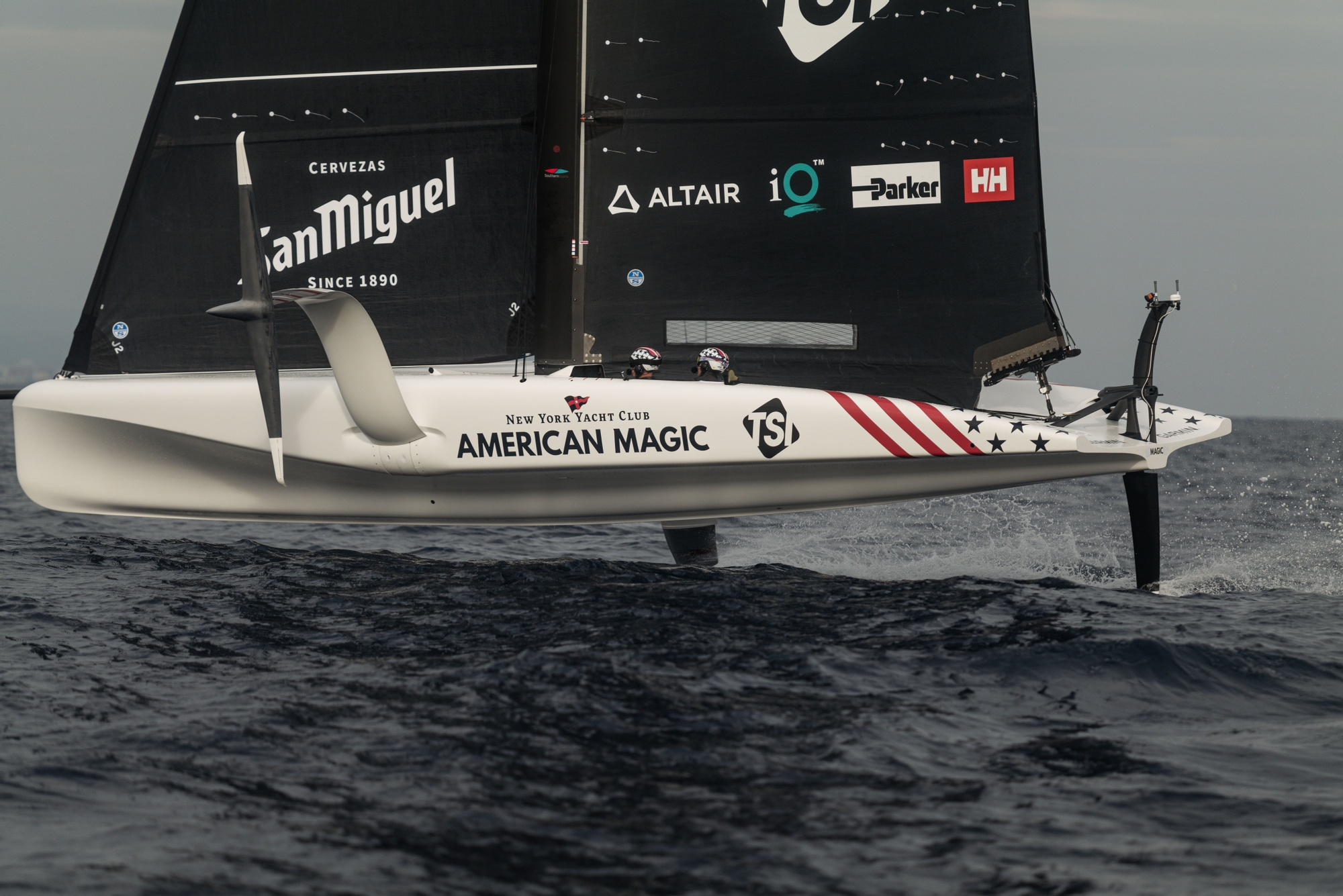
Equally eyeing up the potential Match conditions was NYYC American Magic who, after the almost survival conditions yesterday in the AC40s, came back out today determined to drill into the starboard foil comparison between ‘America’ running Foil 3 and the new-gen Foil 4 on ‘Magic.’ Conclusions and trends are beginning to be drawn but as ever the devil is in the data and there is so much data crunching going on with the American Magic syndicate at the moment.
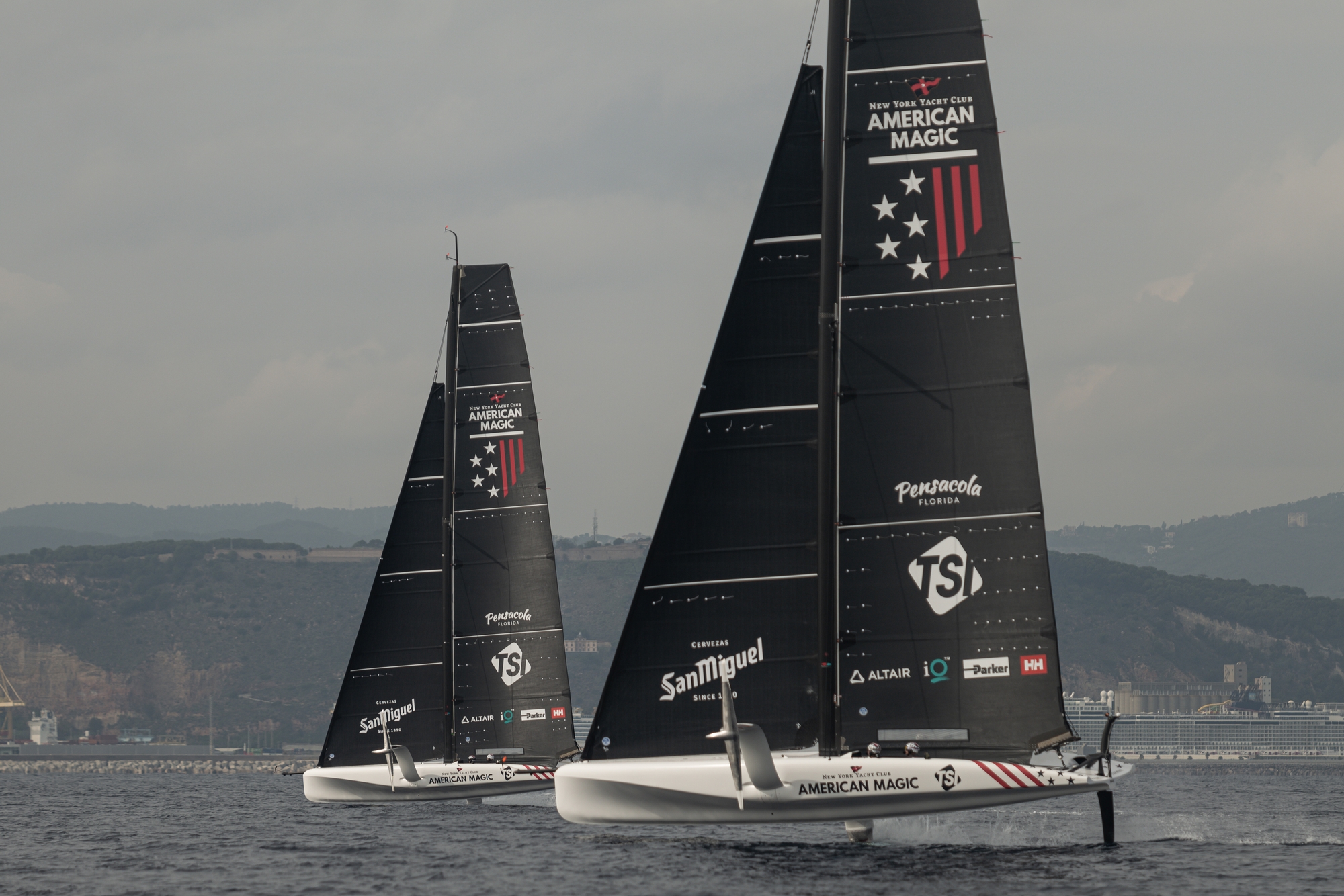
What do we know so far from what we can see? Well, the American Magic recon team, led by Argentina Olympic Coach Sebastian Peri Brusa observed that when ‘America’ is under pressure on the courses with boundaries in play, and forced to tack or gybe, the manoeuvres are less consistent with ventilations, nosedives, and splash-downs.
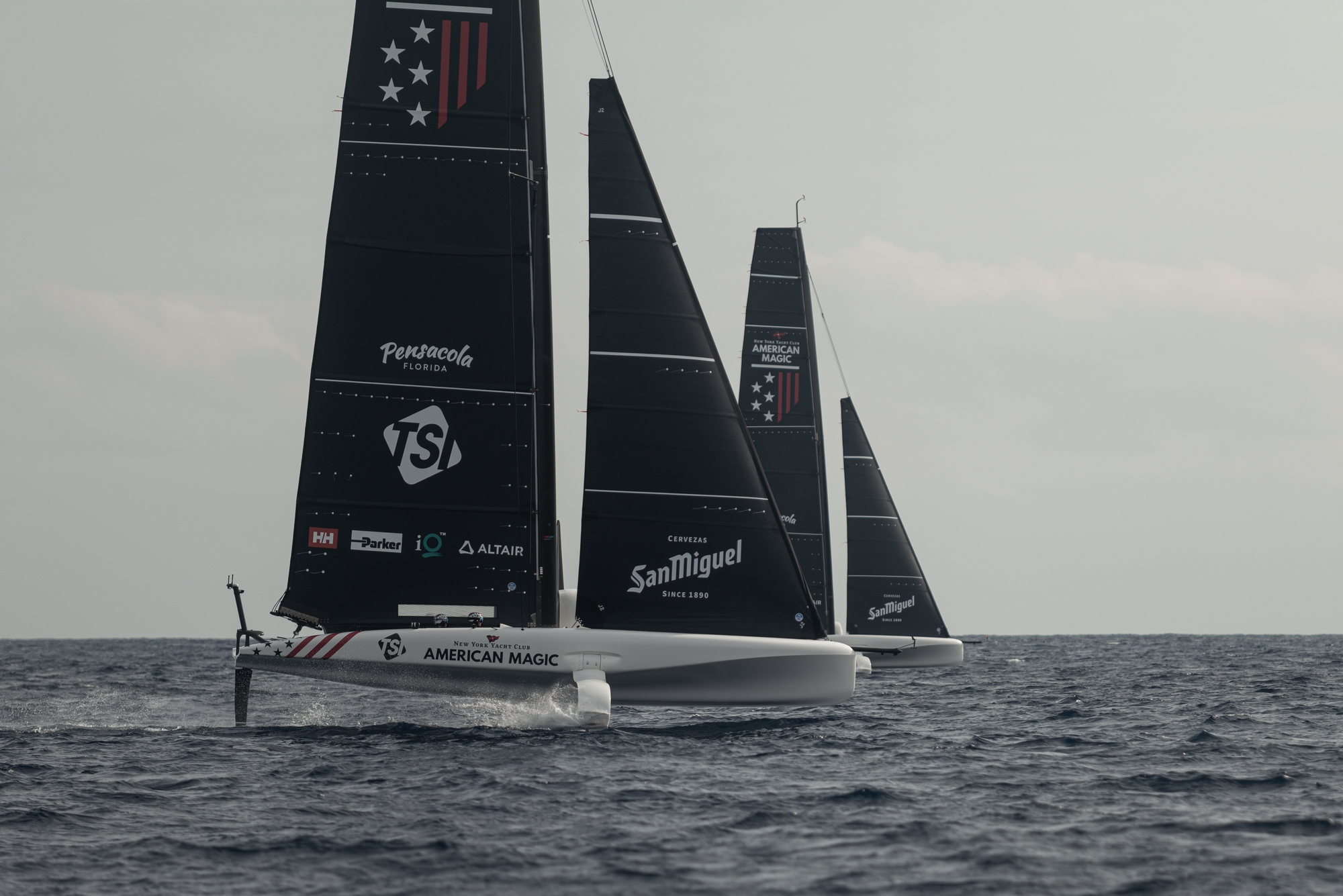
In the lighter airs, on the big J1 jibs, Magic looks super-fast and steady in flight but as soon as the wind gets up and both boats are down into the J2 and J3 ranges, the differences become minimal. Lucas Calabrese described it succinctly after sailing today and responded to the observations saying: “It's possible, the more forgiving foils are generally better in lighter air and they're slower when you're going at a faster boat speed so it's possible…but it would be hard to make a straight estimate of what it is.” Talking about when the two boats are in race mode and the observations made there, again Lucas pointed to a need to dive into the data and look at helming styles as well as settings saying: “We have to go and look at the data to look at if the guys that were sailing on ‘America’ were doing the exact same text techniques as we were on Magic and see what comes out of that and then make a conclusion.”
Talking about the foil switch on ‘America’ that now sees Foil 3 on starboard, Lucas offered: “We like to do that in case we have offset waves so we like to have the ability to feel how the foils feel basically with the waves in every direction and yeah we find subtle differences but also a lot was on the technique and the wind was quite unstable so we have to sit down look at the data and see what really was better out there where if I’m honest I'm not super sure.”
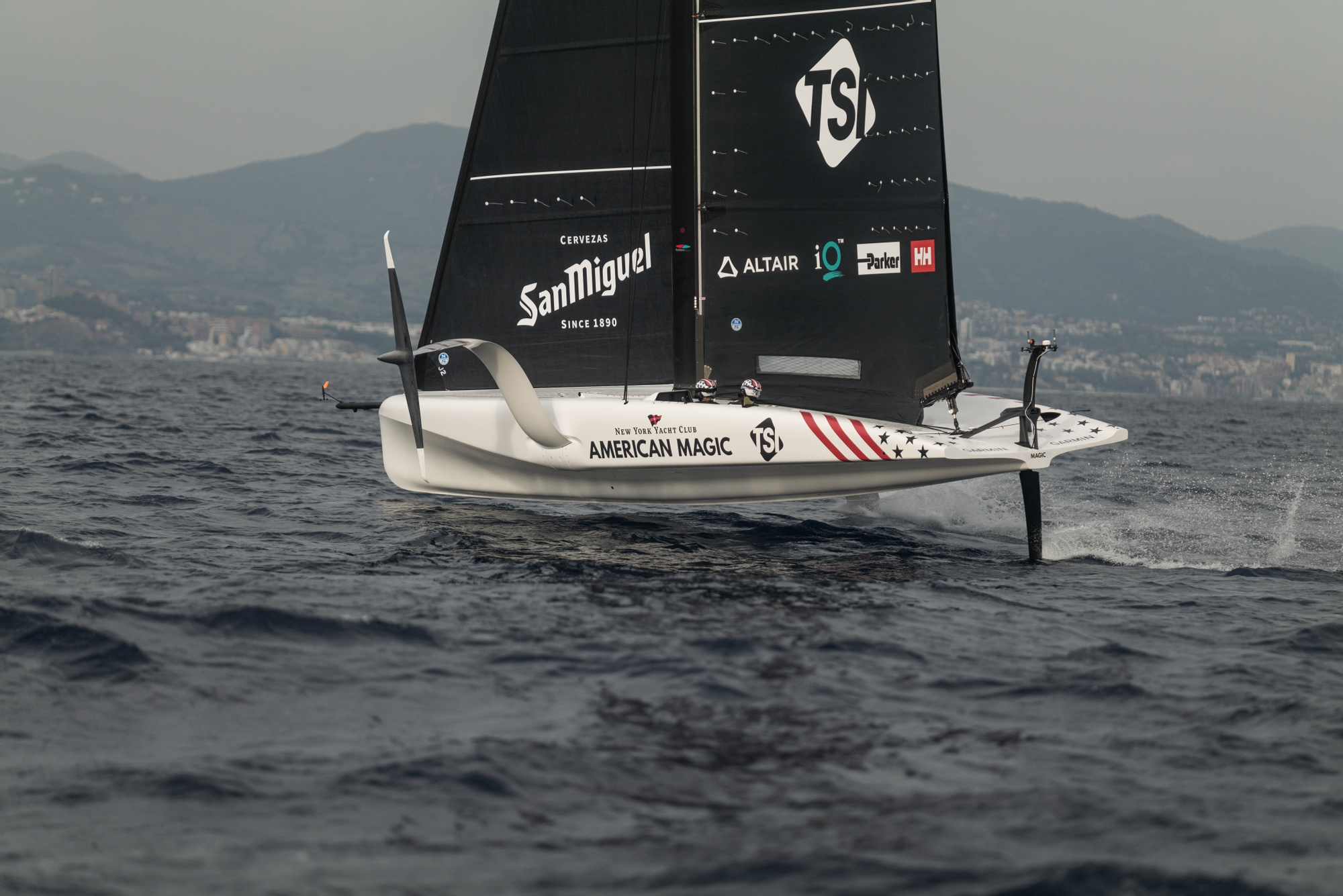
And furthermore, the sailing today was into a residual north-east swell despite the south-westerly breeze that is accentuated in the smaller AC40’s over the powerful AC75s that seem to glide above the peaks and troughs. Lucas highlighted a tricky day to be helming saying: “It's actually really hard. It was a really challenging day in that respect mostly because the waves were quite short, but they weren’t aligned with the breeze, so it was offset, it was making our job really, really, hard but you know we spent most of the day trying to figure out how to do it better, so it was a good learning day.”
Another cracking session for American Magic who are really extracting the maximum from every session in Barcelona at the moment.
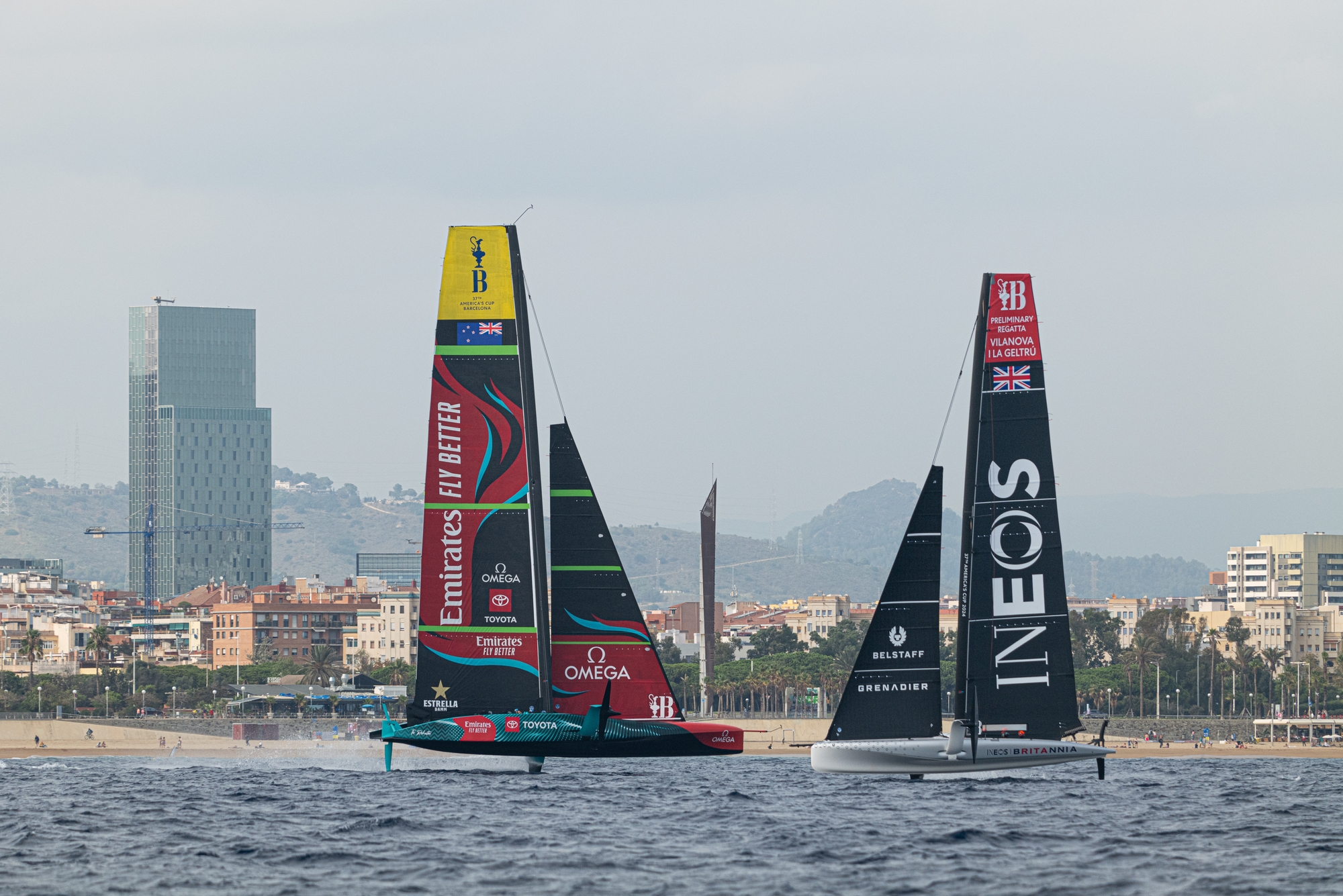
INEOS Britannia meanwhile were busy flying around the La Barceloneta beachfront in their AC40 and from background recon shots, certainly looked on the money and the team will be looking for a competitive performance in Jeddah, Saudi Arabia, at the end of November. Orient Express Racing Team punched out late in the afternoon also and again, this is a team to watch in this America’s Cup cycle, with much Gallic flair and sheer sailing ability, they will always cause an upset. No sign of Luna Rossa Prada Pirelli today nor Alinghi Red Bull Racing.
More to come this week from all the teams. (Magnus Wheatley)
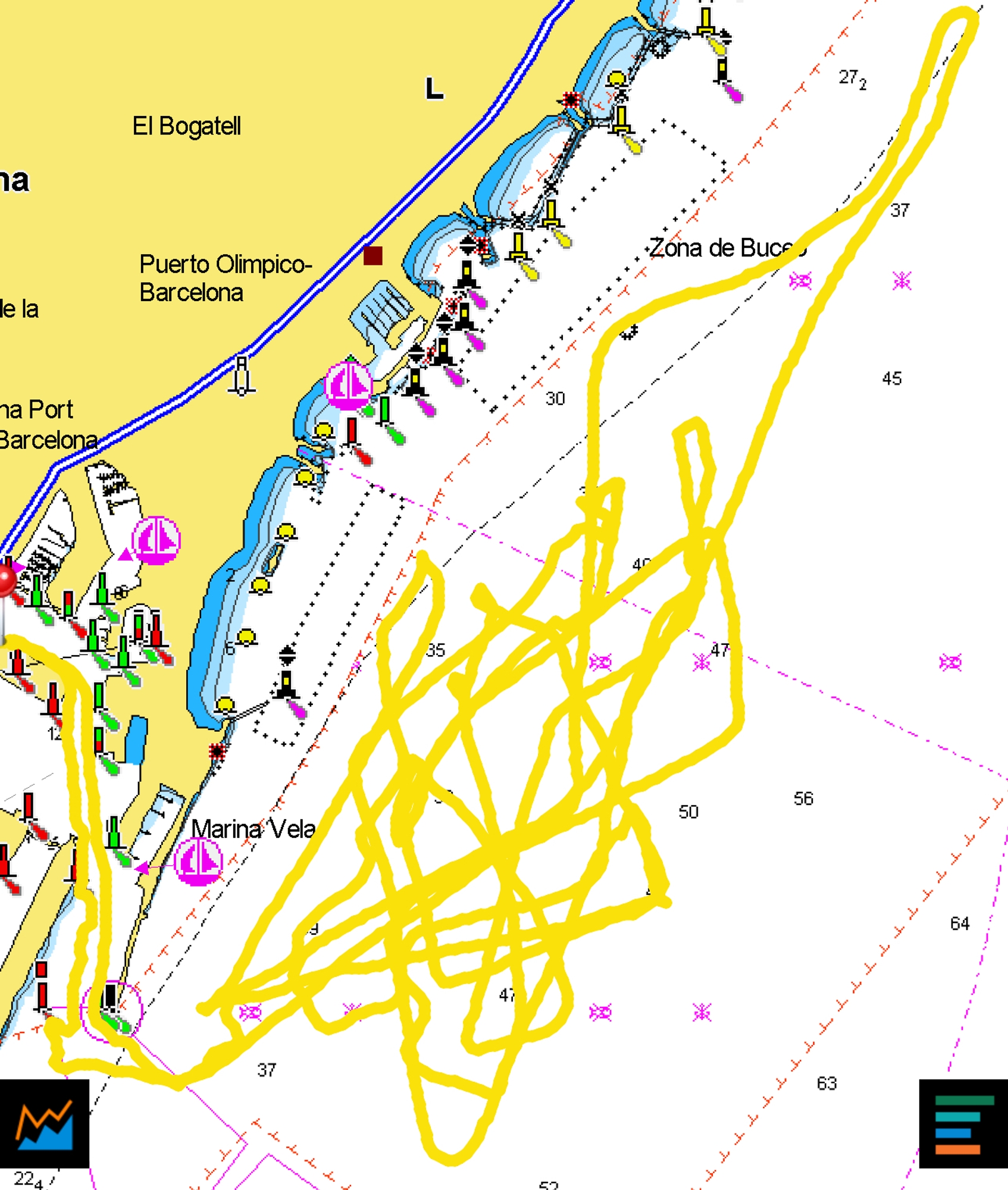
On-Water Recon Unit Notes – Emirates Team New Zealand: A forecast of light inconsistent breeze for this morning saw Emirates Team New Zealand set a 1430 dock out time for their second sailing session of the week aboard their AC75 in Barcelona. After rolling out on time at 1300 this afternoon, the Kiwi AC75 was rigged and launched by 1330 before – for reasons unknown – dock out was pushed back by 30 minutes to 1500. With the M1-3 mainsail and J3-6 headsail hoisted and two guests onboard, the boat left the harbour at 1522 and was soon foiling downwind in a 12-knot southerly breeze that kicked up a light chop that became mixed in with a long 0.5 metre swell from 060 that was left over from yesterday's stronger north easterly breeze.
After the initial long downwind run with several foiling gybes the boat turned back upwind for a slightly longer beat that took the boat south of the harbour entrance. A second windward / leeward lap followed before a 10-minute stop at 1600. The second sailing session lasted 25 minutes and saw more windward / leeward free sailing before the boat came to a stop at 1625 for a cyclor change lasting 10 minutes. The third session – lasting an hour and briefly punctuated by a minute and a half stop midway through – saw more windward / leeward free sailing but with a slight increase in the rate of tacking and gybing.
The final 20 minutes of sailing saw the breeze start to fall away below 10 knots making things tricky for the crew during the final batch of tacks on the last upwind section to the harbour entrance. Time was called at 1725 with sails down by 1735 and dock-in taking place at 1745.
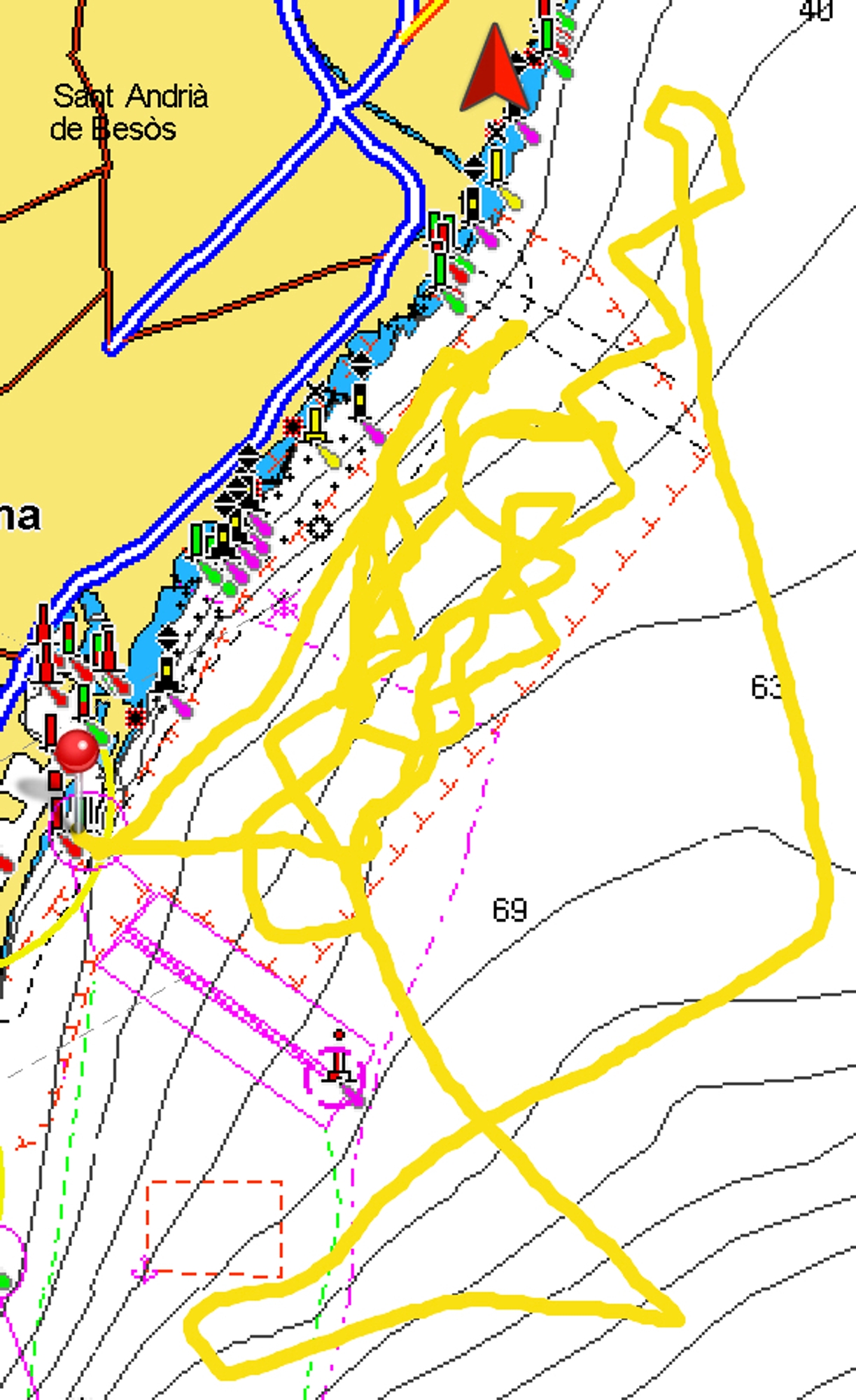
On-Water Recon Unit Notes - NYYC American Magic: NYYC American Magic rolled out Magic at 11.45 and America at 12:20. Both AC40s in LEQ12 mode. Magic with the same foils configuration as yesterday and the past two weeks, with foil wing and flap #1 on the port side and #4 on the starboard side; while America´s foils were switched during the last weekend. Foil wing and flap #2 are now on the port side, while foil and wing #3 are on the starboard side. Magic was craned to the water at 12:15, and then America followed at 12:45. Both boats docked out at 13:55, as planned.
One-Design mainsails were selected for both boats, which were hoisted at 14:05 while coming out of the port. Once out, one-design J1s were hoisted at 14:10. From 14:30 till 15:25 one long straight-line speed test upwind and downwind was carried out, in bottom-end southerly wind conditions, combined with an ENE swell that was left from yesterday.
Magic was consistently faster and higher on both tacks on the upwind, and slightly faster on starboard tack on the downwind. Nothing conclusive could be extracted from the downwind port tack speed test.
At 15:25 there was a break until 15:40, when the J1s were replaced by J2s.
At 15:40 another upwind and downwind was executed but focused on the tacks and gybes. Approximately, 9 tacks and 6 gybes were done per boat on each leg, respectively. Magic was more comfortable and consistent tacking and gybing, never falling from the foils, while America fell-off and landed completely on one tack and on one gybe. On top of that, in these conditions, it seems like onboard America the error margin is a lot smaller than in Magic and, as usual, when the wind gets lighter, tacking into the foil with the smallest area of the four (foil #2 on America) is hard. Magic was first at the top and at the bottom virtual marks.
After another 20-minute break, at 16:35 two one-lap upwind-downwind races took place, with virtual boundaries and virtual marks, doing rabbit starts, and seven to eight tacks on the upwind and five to six gybes on the downwind. Magic was ahead on the four mark-roundings for a considerable margin. Differences were larger in racing mode than in straight-line speed testing mode. America nose-dived at least once per leg. An extra upwind was sailed, heading back towards the port, performing some tacks in a dyeing breeze with J2s.
Both boats entered the port and lowered their sails at 17:40, docked at 17:55, and America was the first of the two to be craned out at 18:25 indicating the end of the day. Sebastian Peri Brusa – Recon on NYYC AM