KIWIS ENTER CRITICAL PHASE

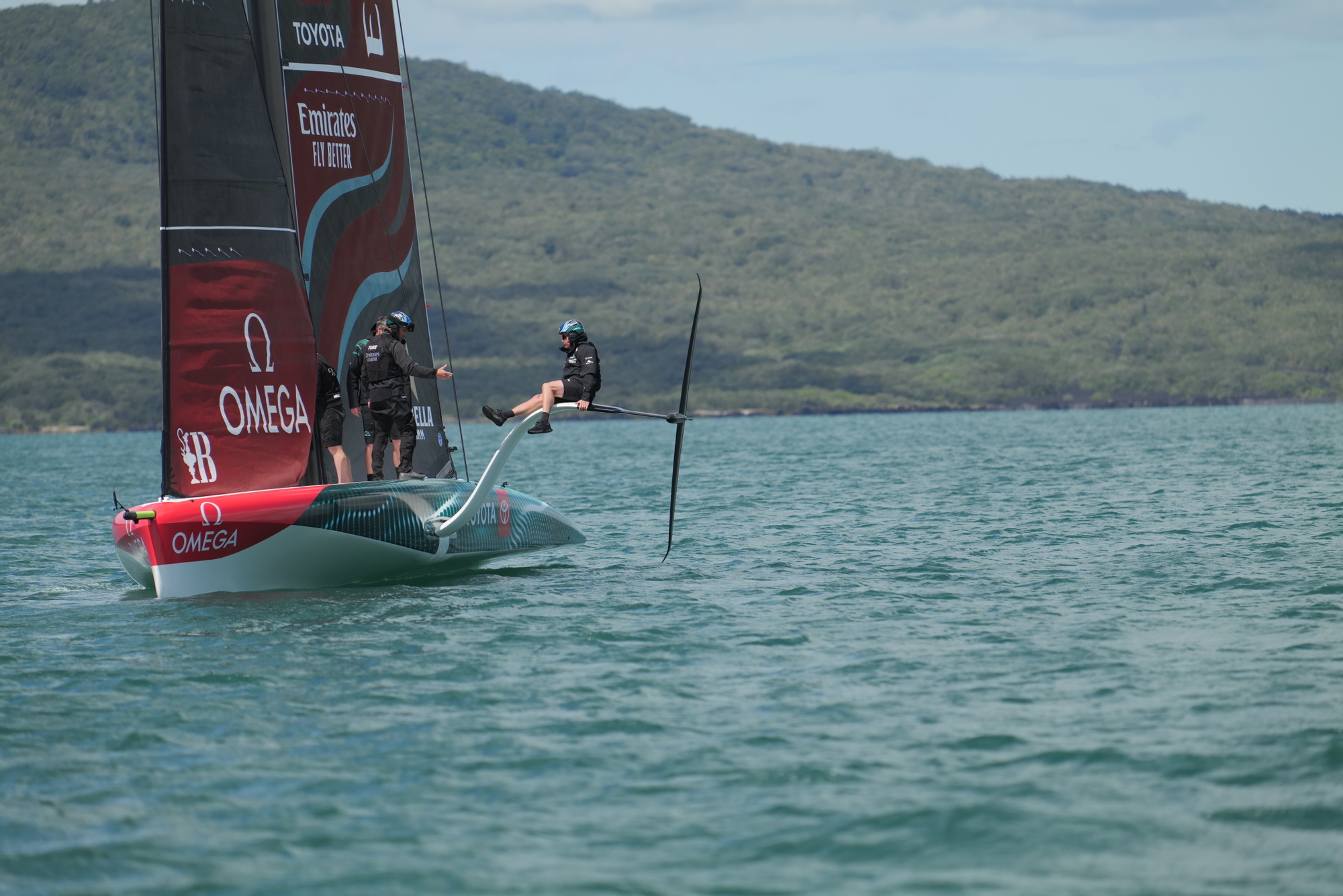
After an intense summer period in Barcelona, it was back to the critical business of development for Emirates Team New Zealand as they returned to their Wynyard Dock base in Auckland and wasted no time in getting back on the Waitemata on their LEQ12 moded AC40.
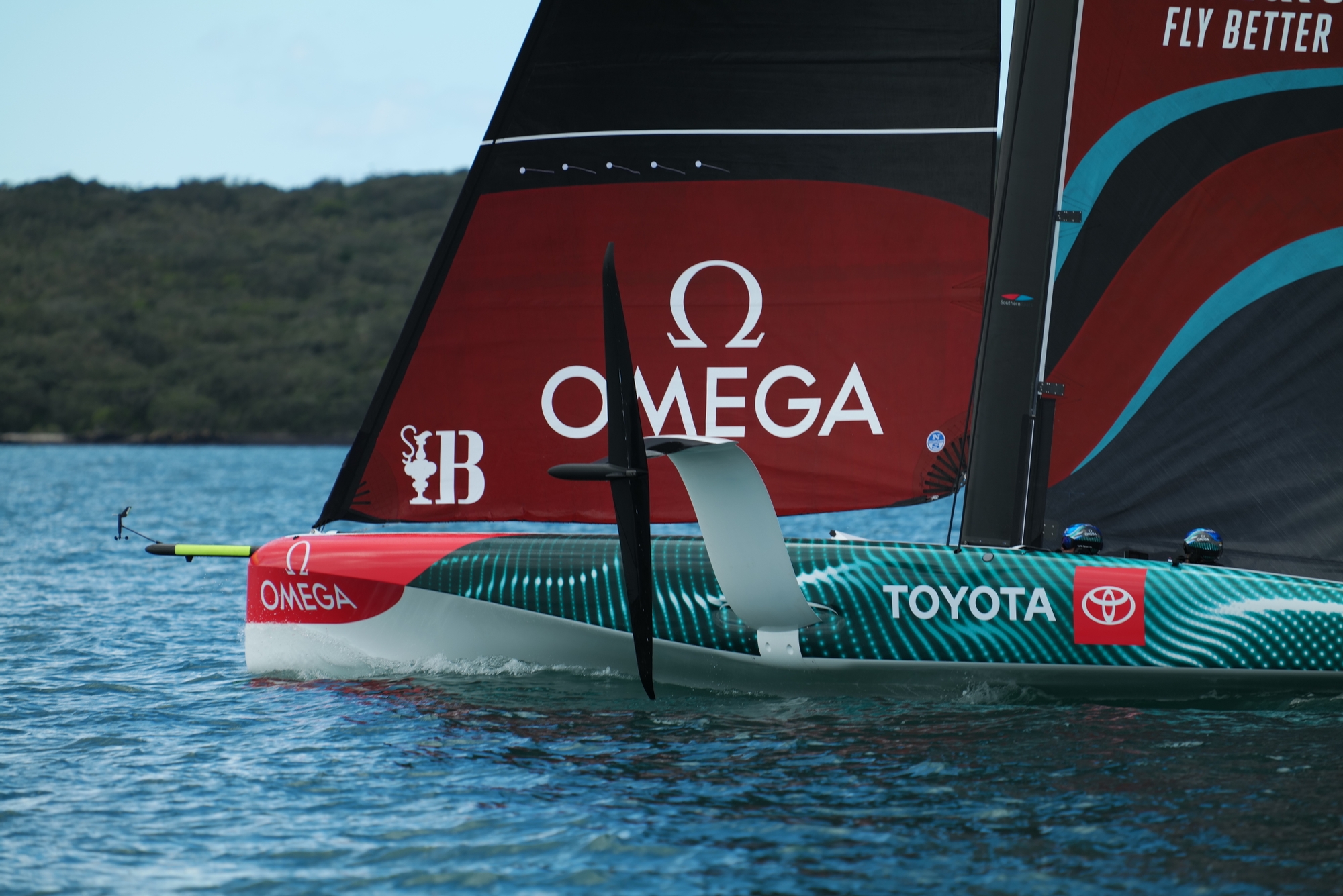
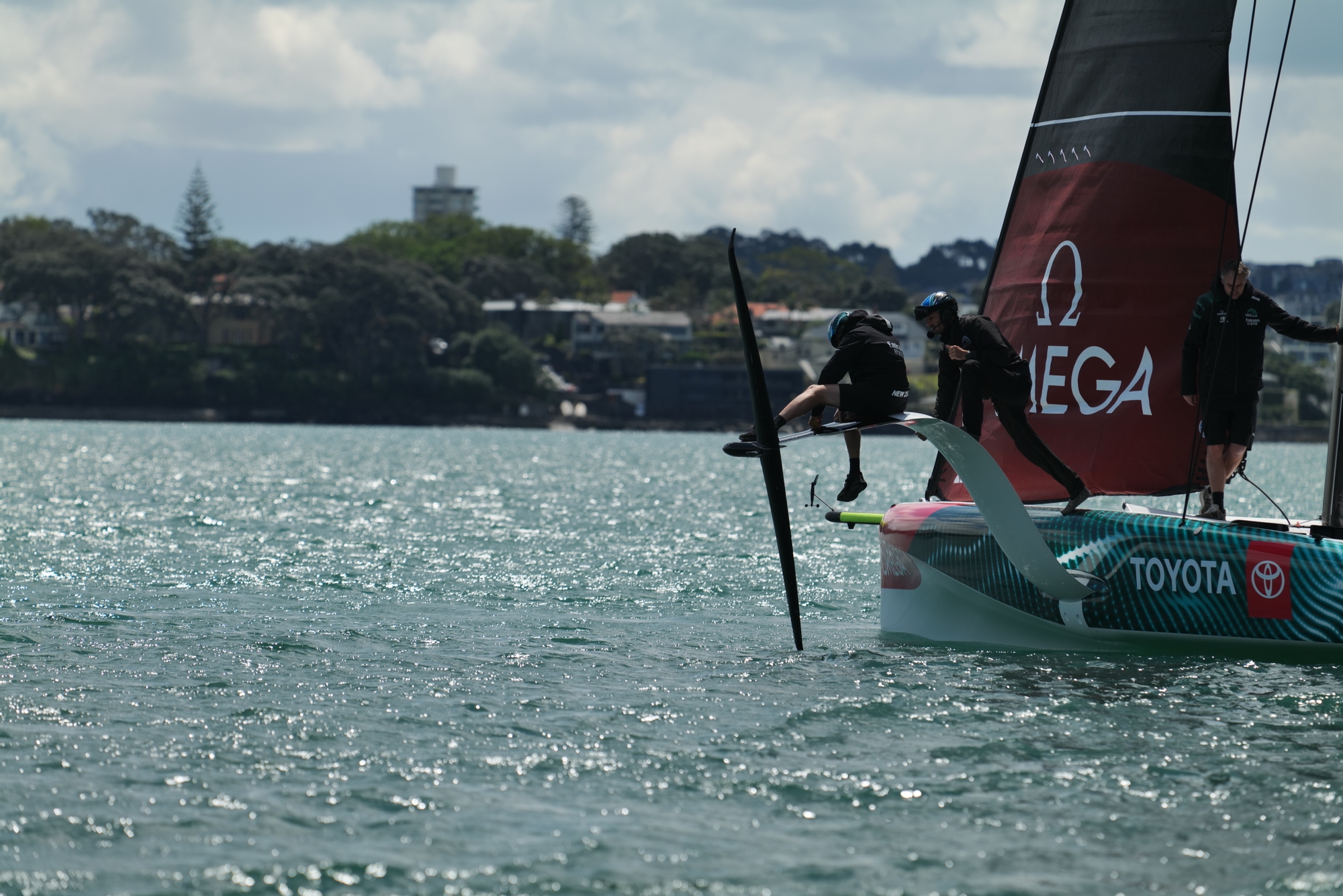
What greeted Peter Burling, Nathan Outteridge, Blair Tuke and Andy Maloney was a new shorter span foil on the port side with a tubular bulb, pinched aggressively at the flap join and a phalanx of cameras ready to capture every nuance of the wing-wash mounted aft on the bulb complemented by GoPro’s mounted on the hull. The design office at Emirates Team New Zealand will be keen to push on with the wing development having concentrated on systems, crew-work, technique and pre-sets heavily on their AC75 ‘Te Rehutai’ through the summer period whilst keeping their second AC40 in One-Design mode for training in Barcelona.
Now it’s down to business with a busy block ahead of the second Preliminary Regatta in Jeddah, Saudi Arabia, starting on the 29th November and we can expect to see some of the thinking that could well translate up to the new Emirates Team New Zealand AC75 that is currently under construction down in Auckland and slated for a late antipodean summer launch. Exciting times and it’s clear from the port foil design that the direction of travel for the Kiwis is incremental development of the slender, highly sculpted gull-wing form with upturned wing tips. With leeway being a serious battleground, the bulb design is critical and where others have beefed-up side-walls, the latest New Zealand and indeed Luna Rossa foil designs appear to be going more aerodynamic and arguably slender.
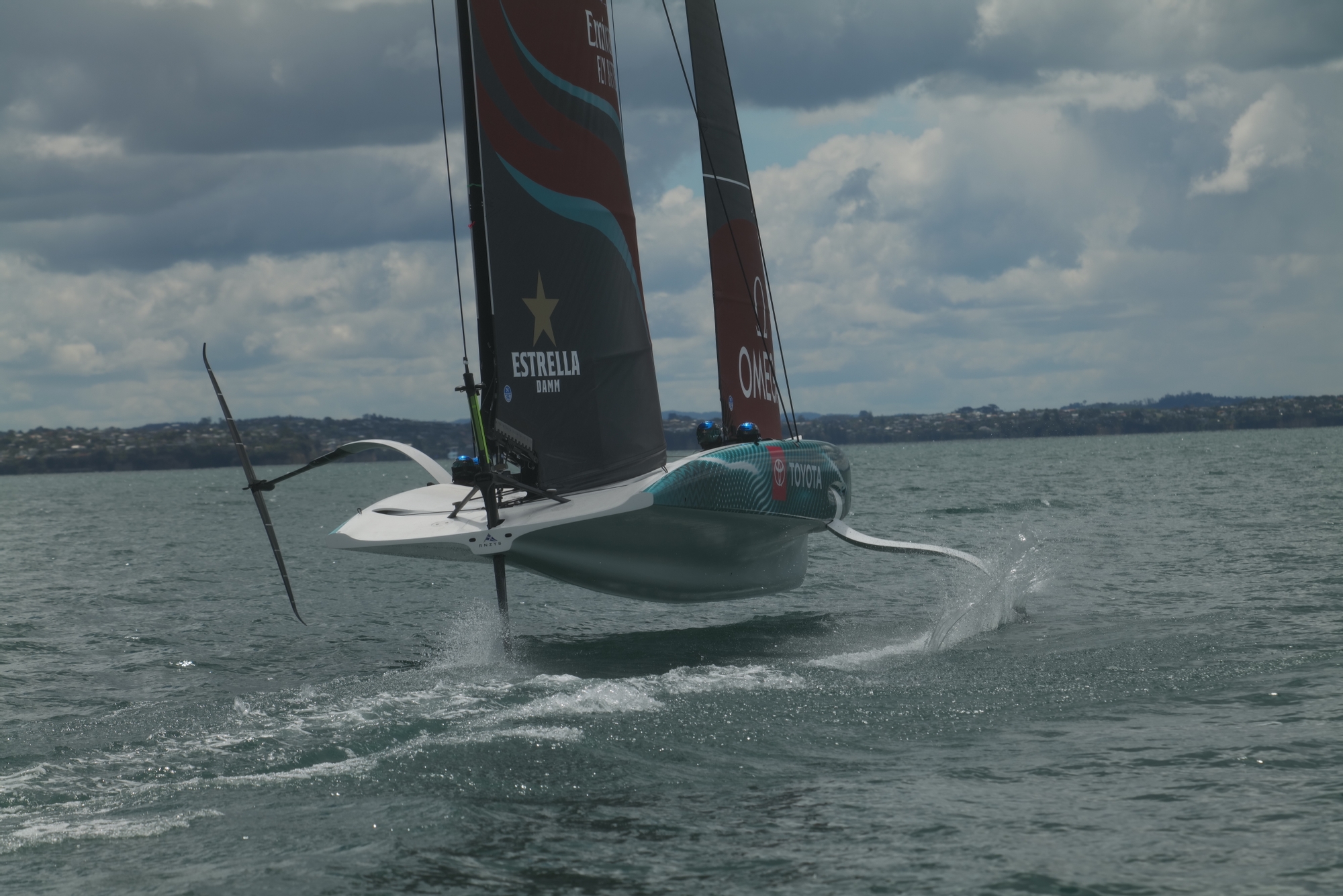
On the water, after a tentative start, the Defenders of the 37th America’s Cup were quickly into their stride as the breeze built and faded out near Rangitoto Island – a familiar stomping ground. The on-water recon team noted that after some initial splash-downs onto the new port foil, the sailors got it together and started to feel more comfortable, executing foil-to-foils across both foils – with the starboard foil having a new sensor patch and gate set-up. Perhaps as to be expected, the recon team noted slightly increased leeway onto the new port foil – a reflection, maybe, of the bulb-wall design but very likely a trade-off for speed. It will be interesting to monitor this over the coming days and see if sailing style and technique negates the leeway effect.
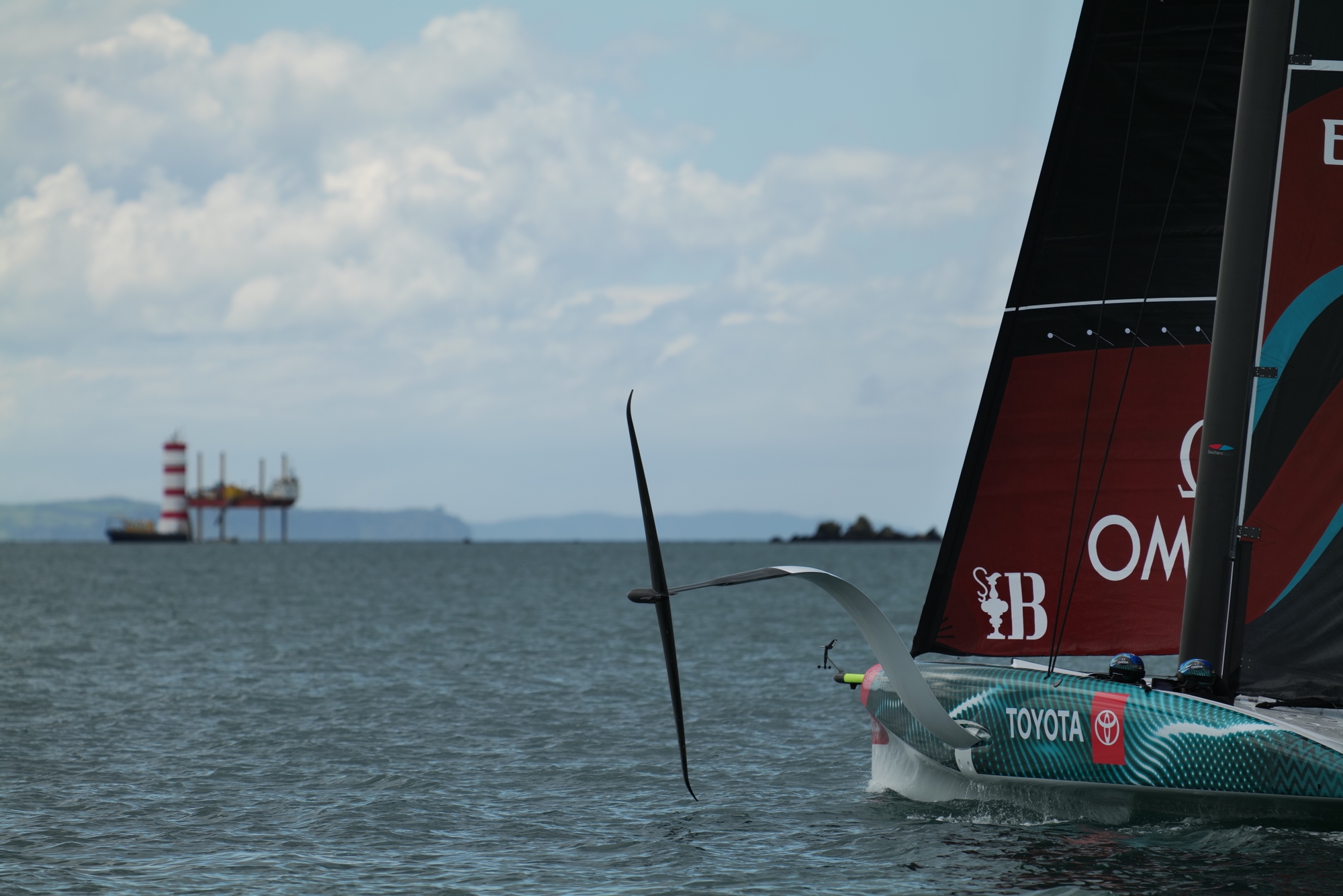
Pete Burling seemed happy with this first commissioning day back in Auckland and spoke afterwards saying: “It was awesome to get back out on the LEQ40 again and back into some more testing back here in New Zealand, and certainly pretty nice day to be out there it was that nor-nor-westerly so it’s super shifty, super puffy with a few rain cells and stuff going through so we kind of saw zero to 18 knots or something, pretty tricky day to get back into it but good fun.”
Talking about the foil, Pete added: we’re really happy with it didn't have any issues today so I'll be interested to go back and have a good look through the data and just check it was doing what we thought it would and yeah it's exciting part of the programme…we haven’t done a whole heap up range on either of those foils so it was really nice to get that little bit in today. Looks like it's going to be pretty nice for it later in the week as well but yeah just as a sailing team it’s been a while without the little boat so getting comfortable again and the kind of way we sail in the LEQ12 format."
The team were on the water for just over four hours, executing some 31 tacks with a 90% foil-to-foil ration and 24 gybes with a perfect 100% foil-to-foil completion rate – impressive stuff from Emirates Team New Zealand.
Looking at this training block, Pete added: “We’ve got a few more days of sailing and starting to build up the test programme through this platform. We don't have massively long in New Zealand in this little block before we head off to the next World Series event, so it's trying to make the most of the time.”
Time, as ever, is the great leveller in the America’s Cup but Emirates Team New Zealand looked impressive back home in Auckland today. (Magnus Wheatley)
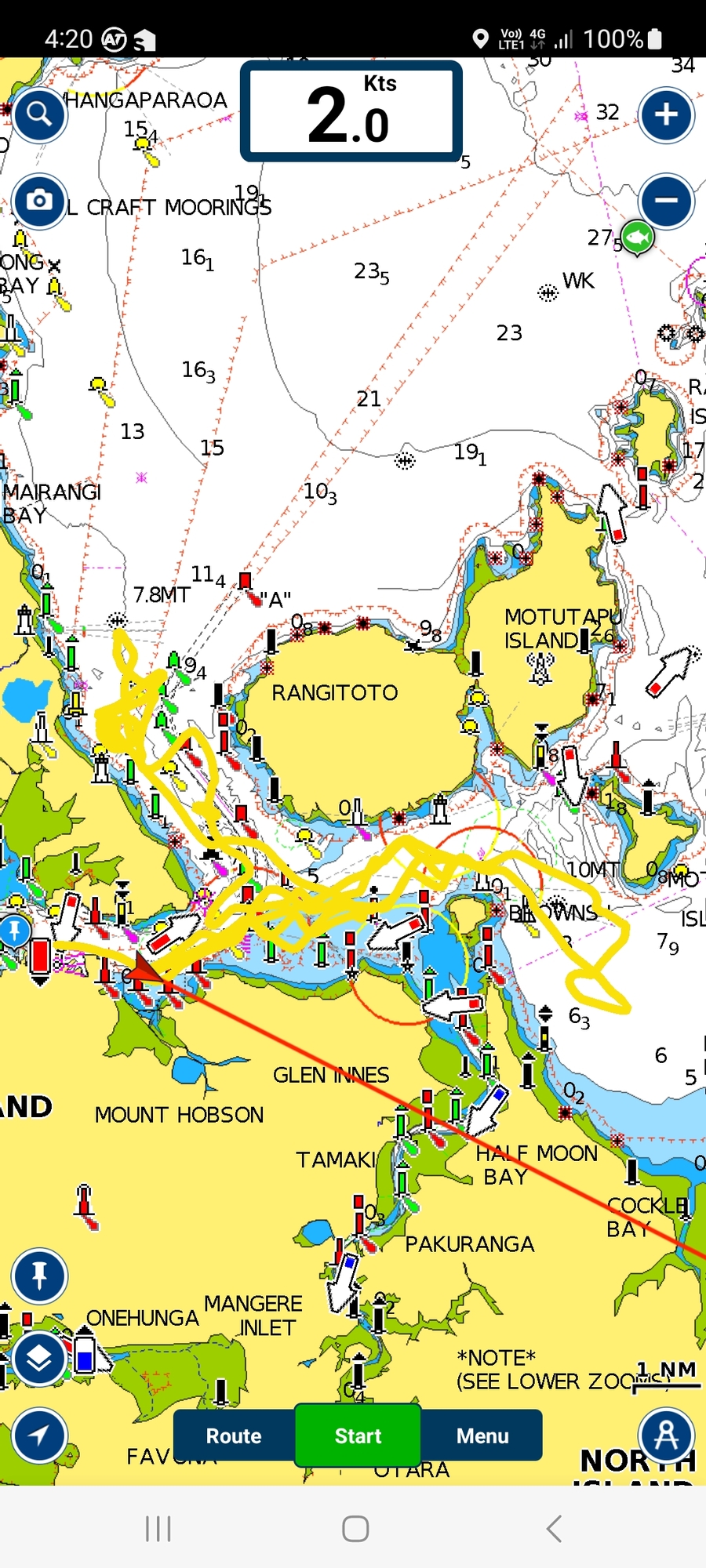
On-Water Recon Unit Report – Emirates Team New Zealand: After some time away from the LEQ12, it was good to see it back out on the water with some new additions. The boat rolled out of the shed with a brand-new port foil and different sensor/gate setup on the starboard foil with an extra stripe painted on.
Roll out was at 1020 and the LEQ12 was craned into the water at 1125. Looked to be some delays in stepping the rig possibly due to a new rigging set up. Dock checks happened fairly quickly which included a couple of FCS tests and general checks. The team departed the dock at 1230 and tow-foiled down the harbour and set up to hoist the sails off Mechanics Bay.
Slow main hoist with someone sent up the rig to possibly check starboard skin lock? Wind speed started off around 8-10 knots building to 12-13 knots further down the harbour with ideal flat-water testing conditions. The team started sailing at 1315 gybing their way down the harbour before a short reach on port around North Head and then sailed up the Rangitoto Channel doing a couple of tacks before coming to a stop off Wakatere at 1340.
(Side note, 2 out of 3 of the first tacks onto the new port foil ended in touch downs, seemed like they were easing into it.)
For the rest of the day all but 1 tack were full foiling. Off Wakatere they dropped the jib, looked to change one of the top batten tensions and rehoisted before continuing sailing off of the North Shore and Rangitoto Channel area for the next hour. The breeze dropped to variable at times but mostly 7 - 10 knots, with the gusts peaking at around 11 - 12 knots. The team practiced a few take offs in the lighter air, struggling on both foils at times but seemed more difficult to pop on the port foil in this marginal range.
Once up and foiling, all the manoeuvres were looking good and the boat on both tacks looked smooth and stable. At 1440 the team changed sailing locations and sailed downwind, gybing 5 or 6 times before stopping again in the Motuihe Channel. Breeze by now had built significantly to an average of around 13-15 knots. The team decided to drop the J2 at 1458 and changed to the J3 and rehoisted immediately. From here they sailed a long upwind up to Mechanics Bay, the boat looked locked-in especially on the new port foil. Slightly more leeway noticed on a couple of tacks however onto the new port foil.
At Mechanics Bay they bore away and returned back down into the Motuihe Channel before coming to a stop at 1539 and doing what looked like a battery change. By this time the breeze had built to average 15-17 knots. Commenced sailing again soon after the stop, practicing some longer runs in the flat water and a few manoeuvres in the lee of Eastern Beach before commencing a final upwind sail towards Mechanics Bay with speeds of above 36knots on the new foil at times and a lot of nice tacks on the way. Again noticed what seemed like more leeway tacking onto the new smaller foil compared to the starboard foil. Boat looked stable and moding well on both tacks.
The sailing session was completed at 1617 at Mechanics Bay and the sails were dropped. The boat docked back at the base at 1645 and lifted at approximately 1730.