RB3 TAKES FLIGHT IN BARCELONA
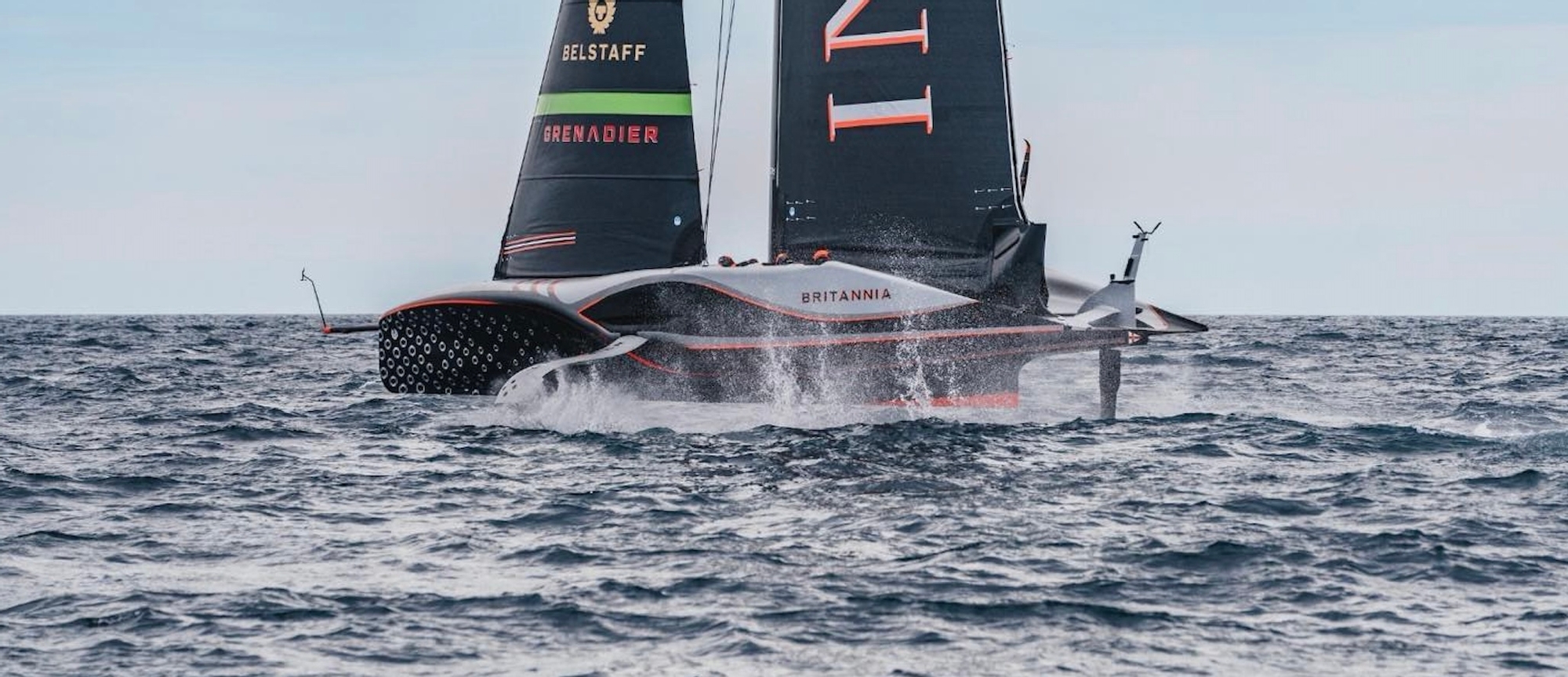
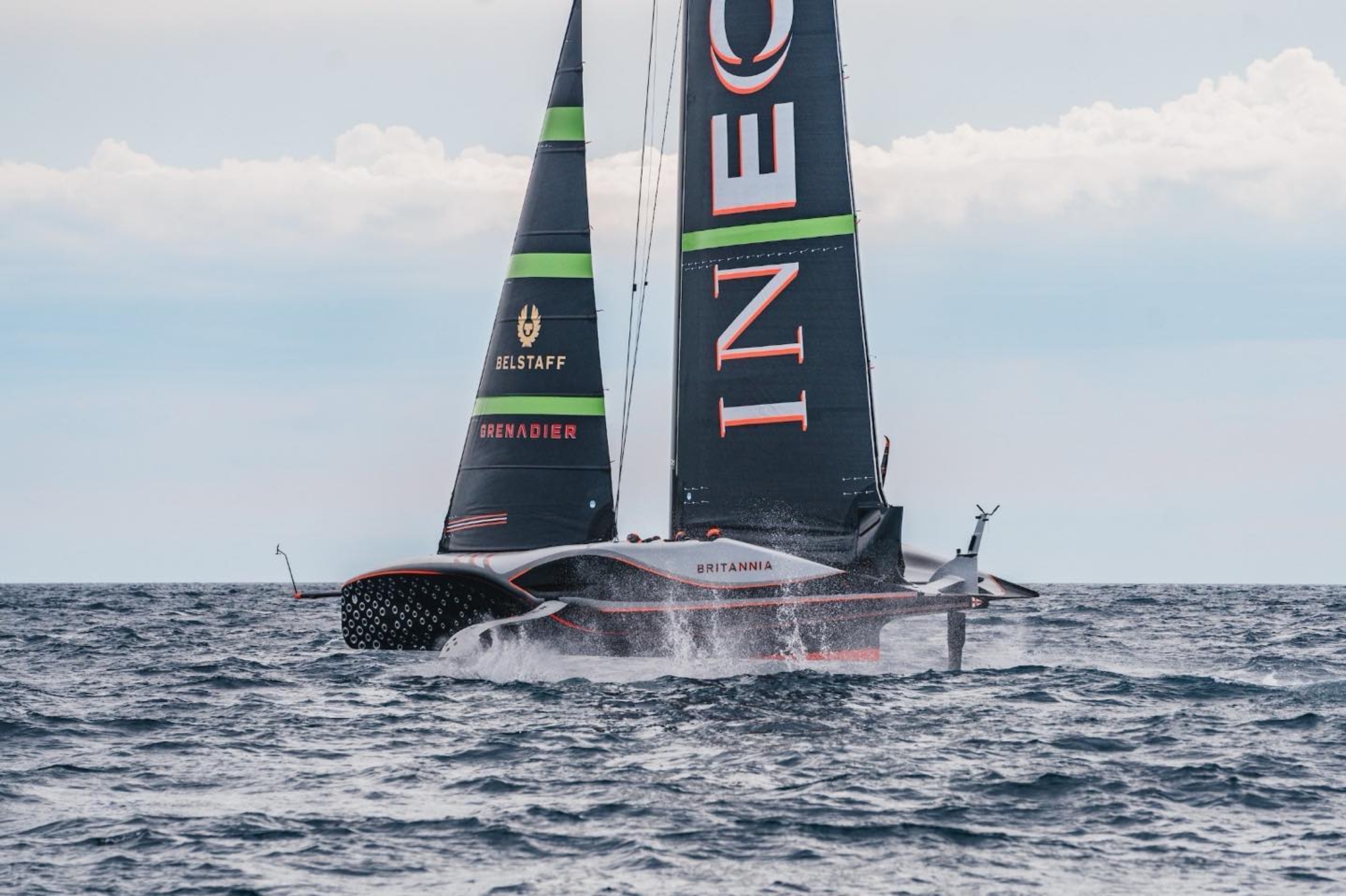
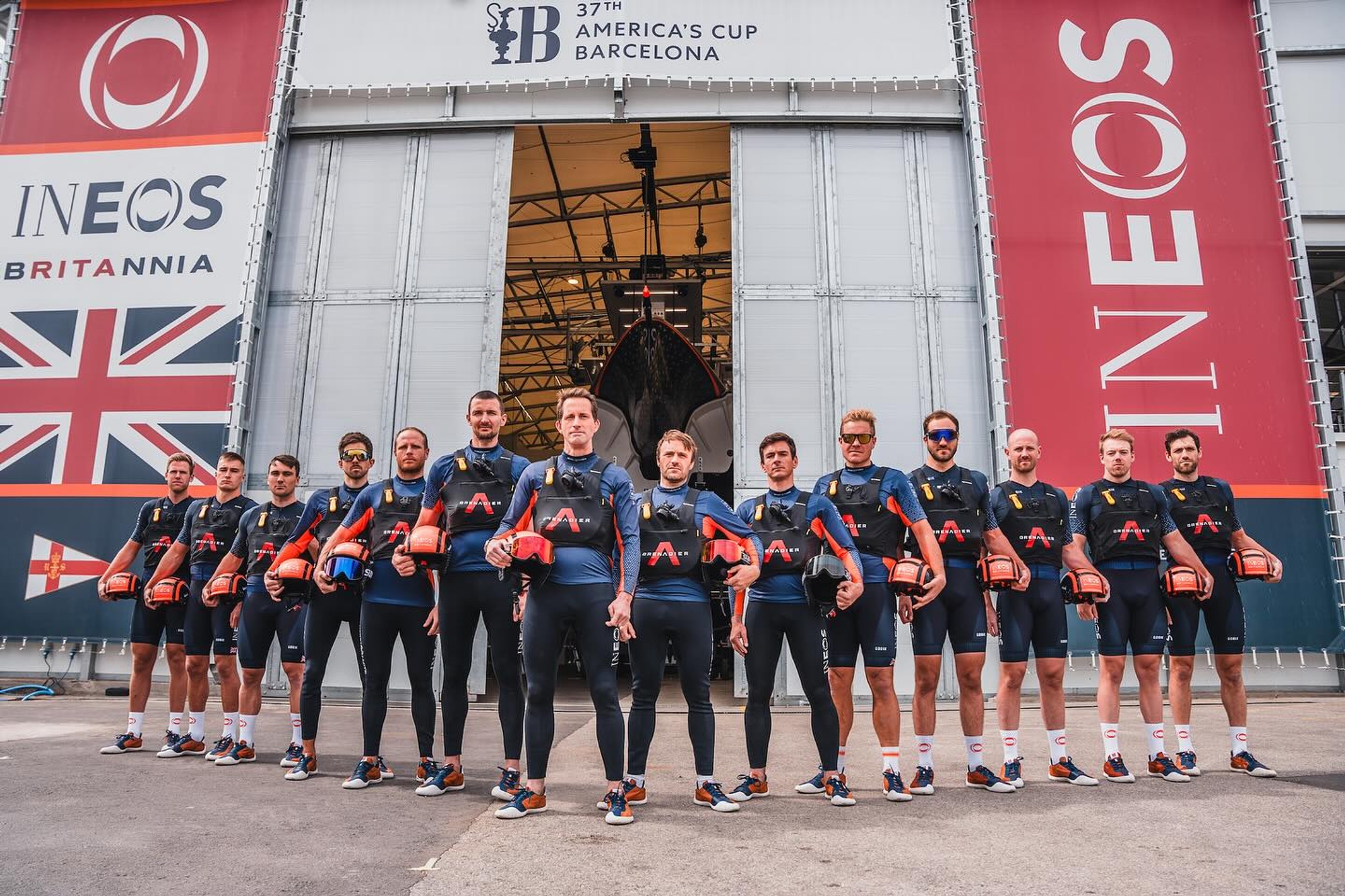
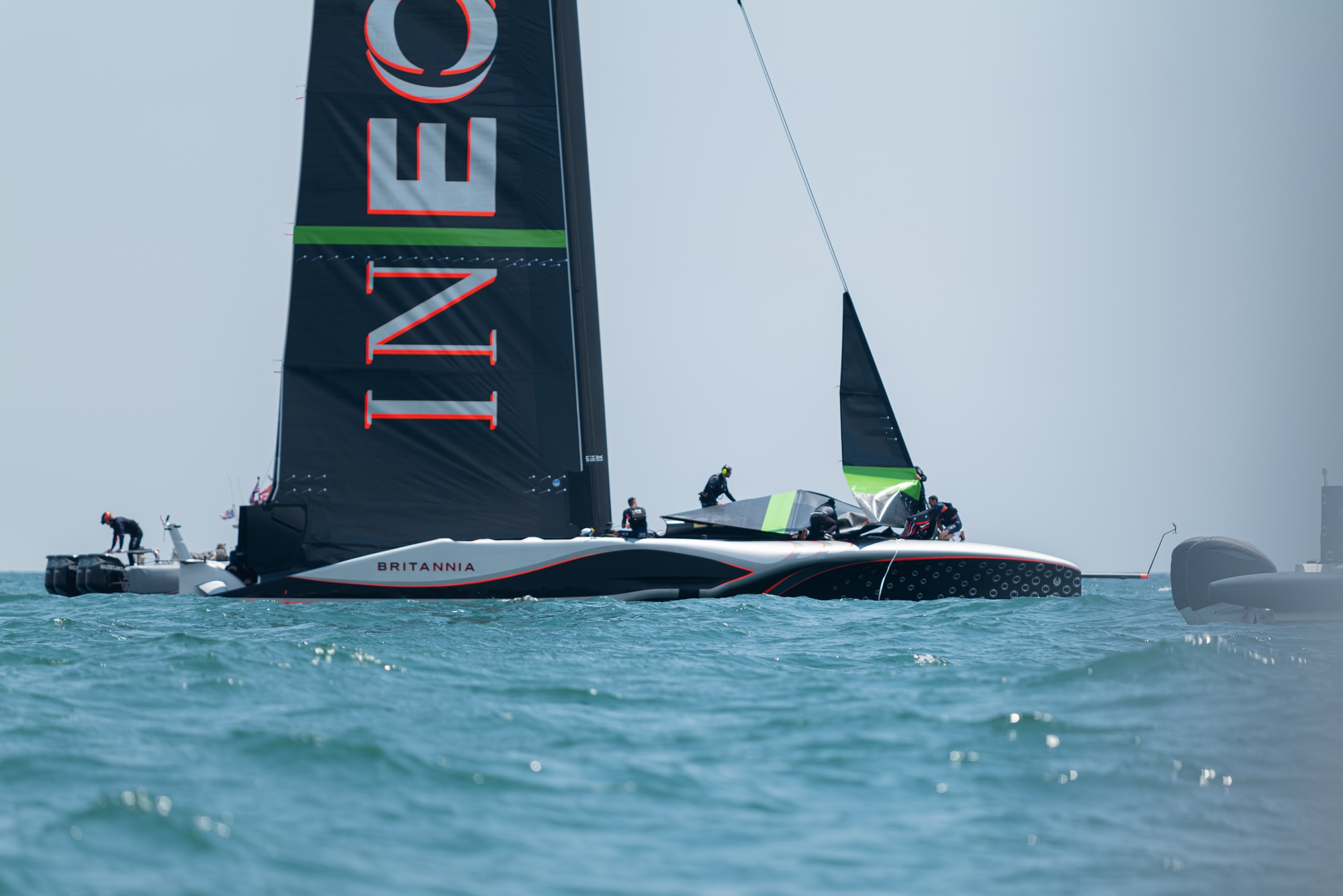
Big day for INEOS Britannia as the sailing team took over the programme after countless hours of detailed, relentless design and technical fit-out, led by Sir Ben Ainslie with a midday dock-out and a superb, if shifting, breeze in the range of 8-13 knots. Perfect for the first shake-down of a boat that looks supremely designed with every inch considered to the nth degree.
It was a long day on the water, a precursor for what is surely to come, as the British work up this fascinating platform to what they are hoping is a world-beater. Technical and tweaky, what’s going on downstairs with INEOS Britannia is what the rest of the teams in the Louis Vuitton 37th America’s Cup are all asking as with Mercedes Applied Science on their side, they are sure to be innovating.
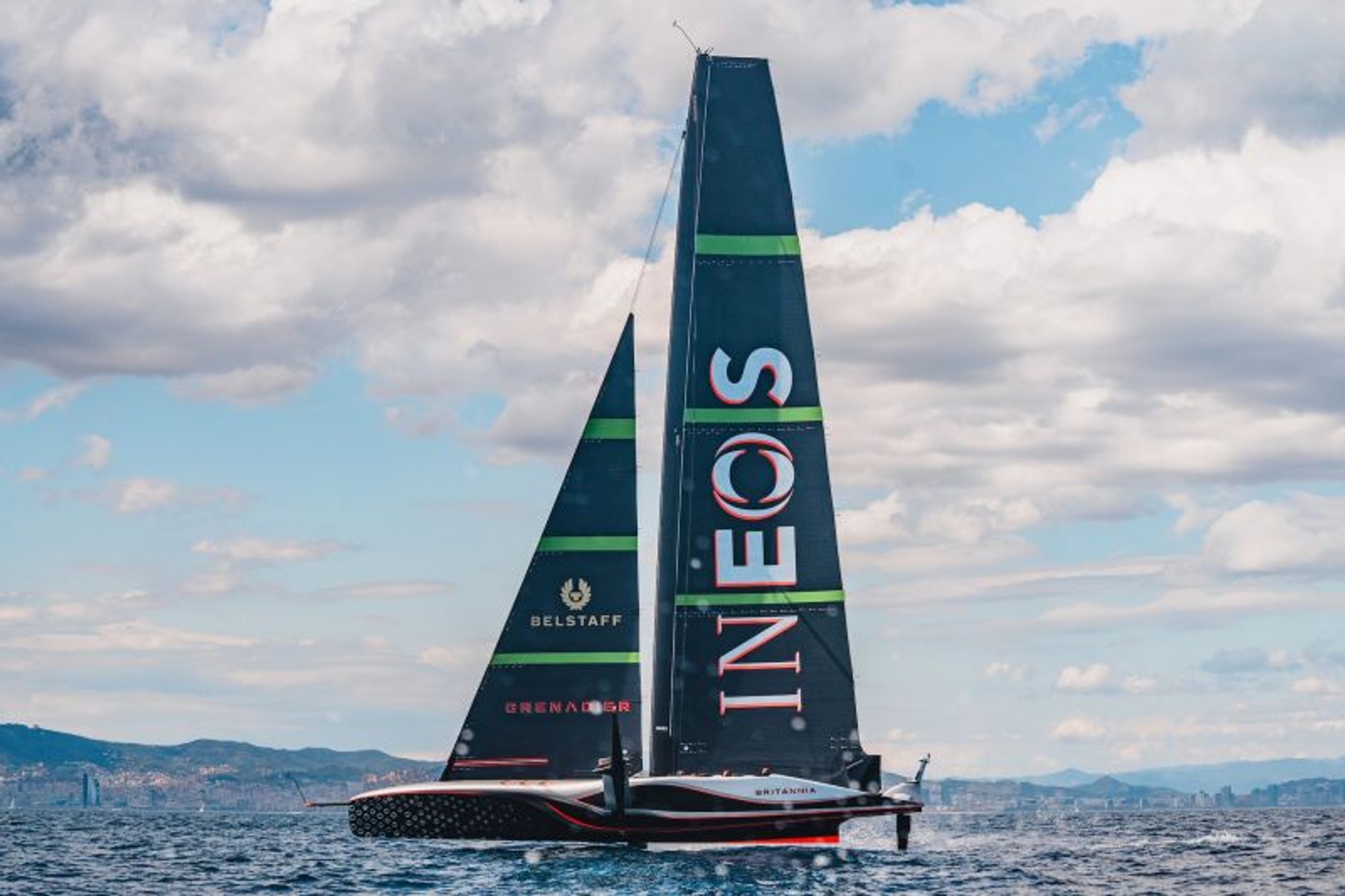
Dock-out understandably was delayed as the technicians pored over the data screens and laptops but finally the call was made, and they towed out some seven miles north to just off Badalona where the Athena Pathway team are located and pretty quickly got into their stride. As a first sail, naturally there was caution so it was a stop-start kind of session with the sailing team certainly feeling their way and the tech teams on stand by to assist.
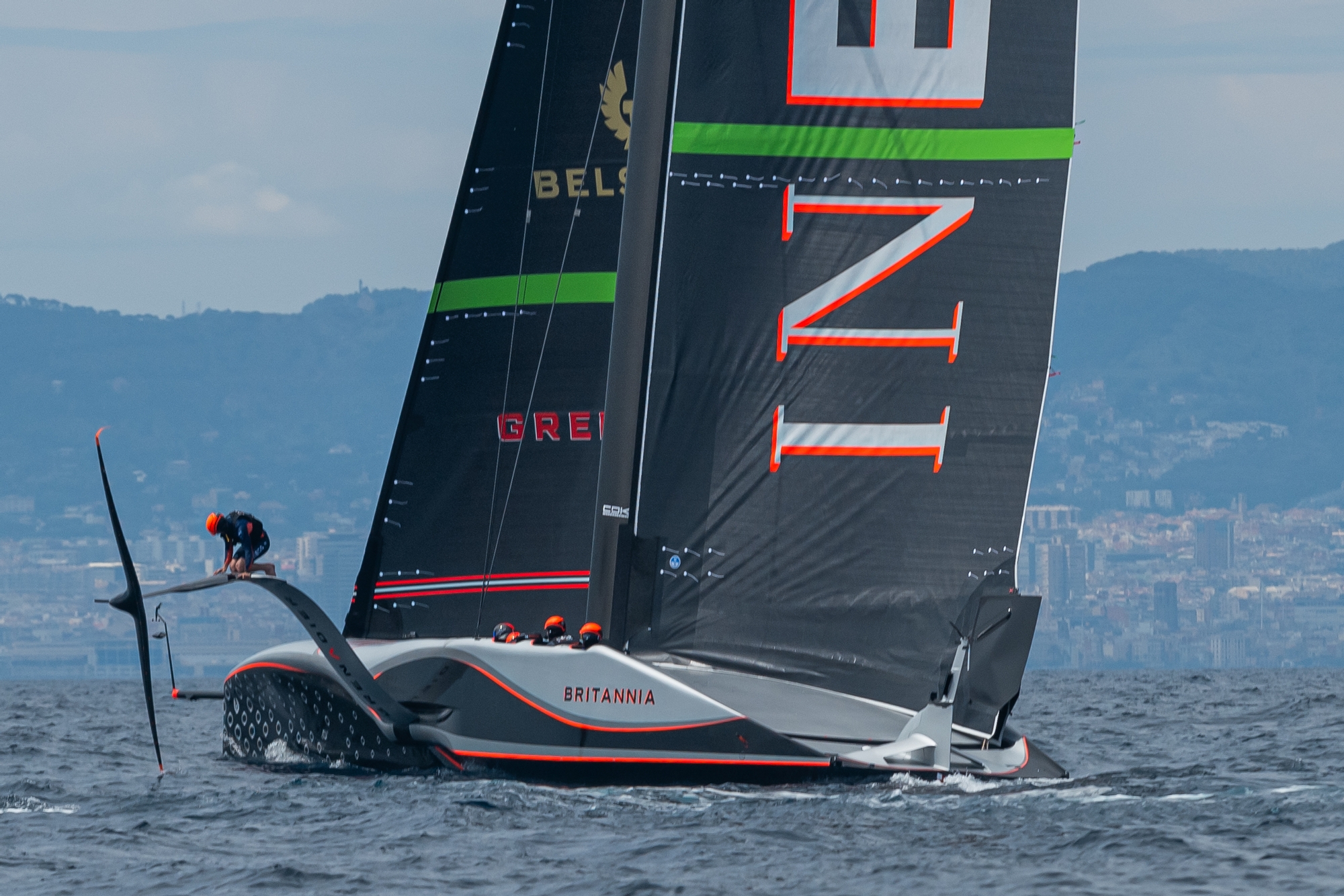
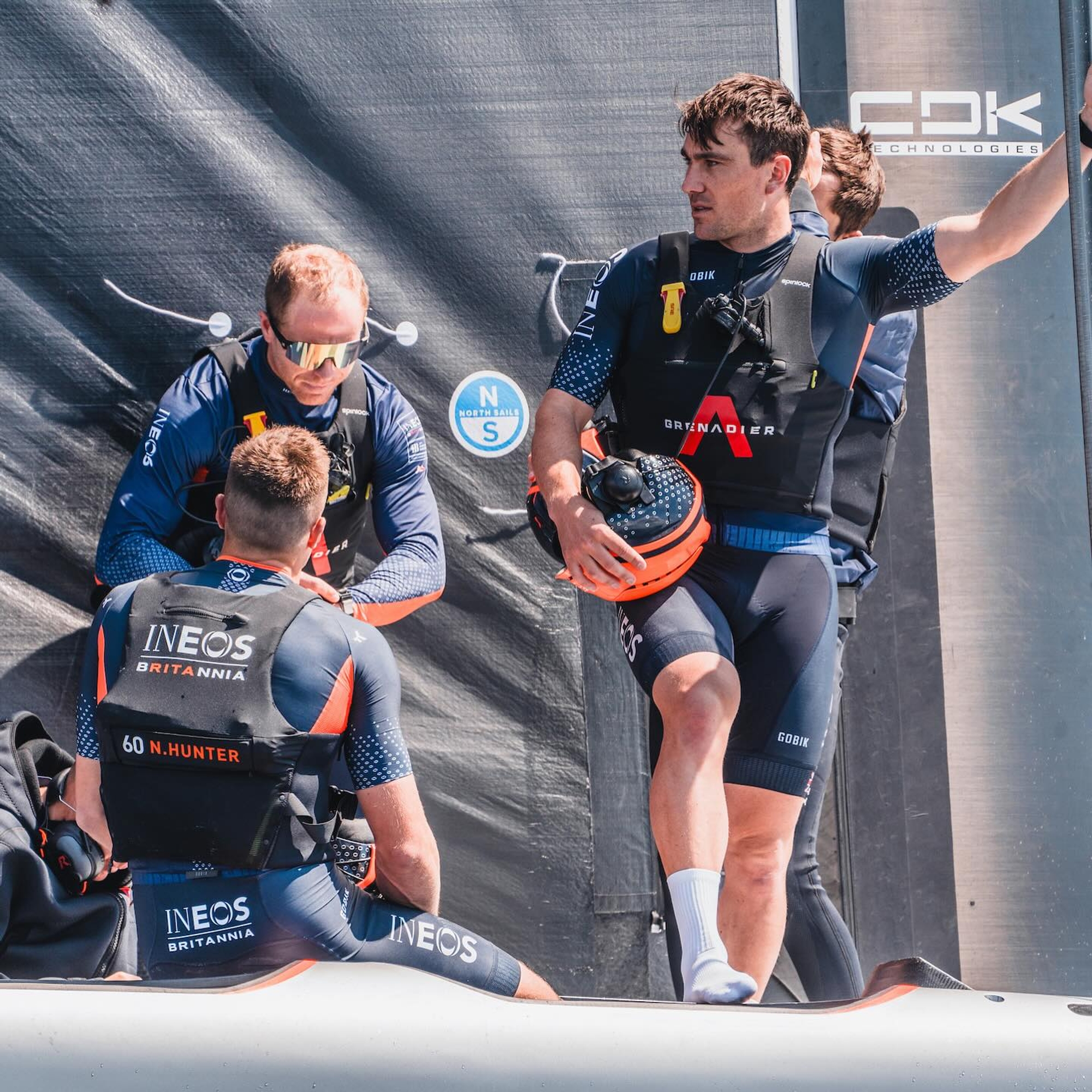
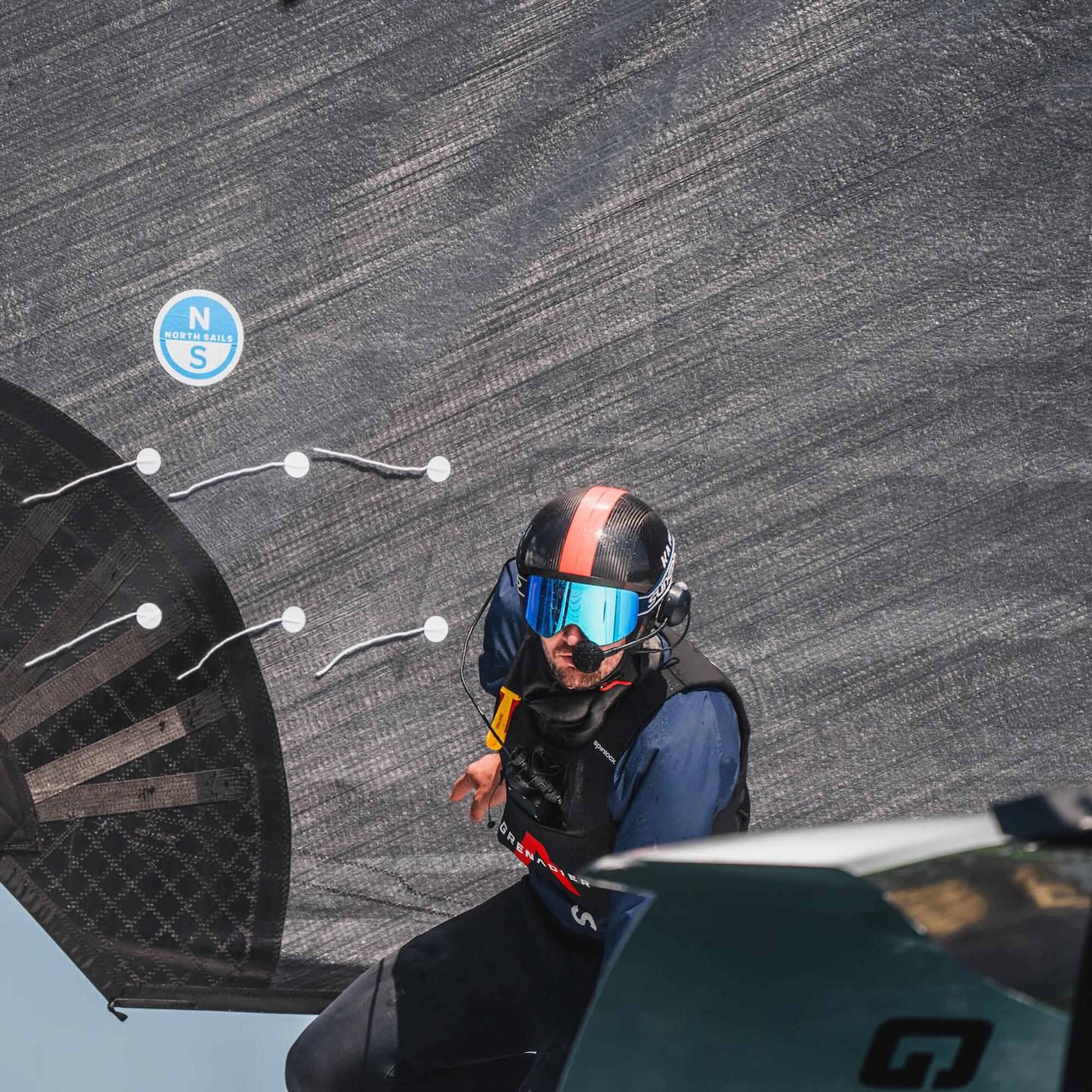
At just after 2pm, after final tech checks, RB3 was released for some displacement sailing checks before the first flight was attained on starboard tack. Some technical issues onboard precluded the team from taking the boat downwind today, so it was series of upwind foiling runs, but first sight and this is a boat that looks very right. Slightly bow-down to begin with, this was quickly corrected by a tweak on the rudder rake and Ben Ainslie and Giles Scott were sending it, loading up the rig and letting the trimmers do the rest. Flight Control could well be something very different on the British boat and possibly carried-out by the aft cyclors with Ben Cornish and Luke Parkinson sat in those seats – two first class foilers - whilst the powerhouses of Neil Hunter and Matt Gotrel are in the pods just behind the helms. Interesting set-up and something to watch.
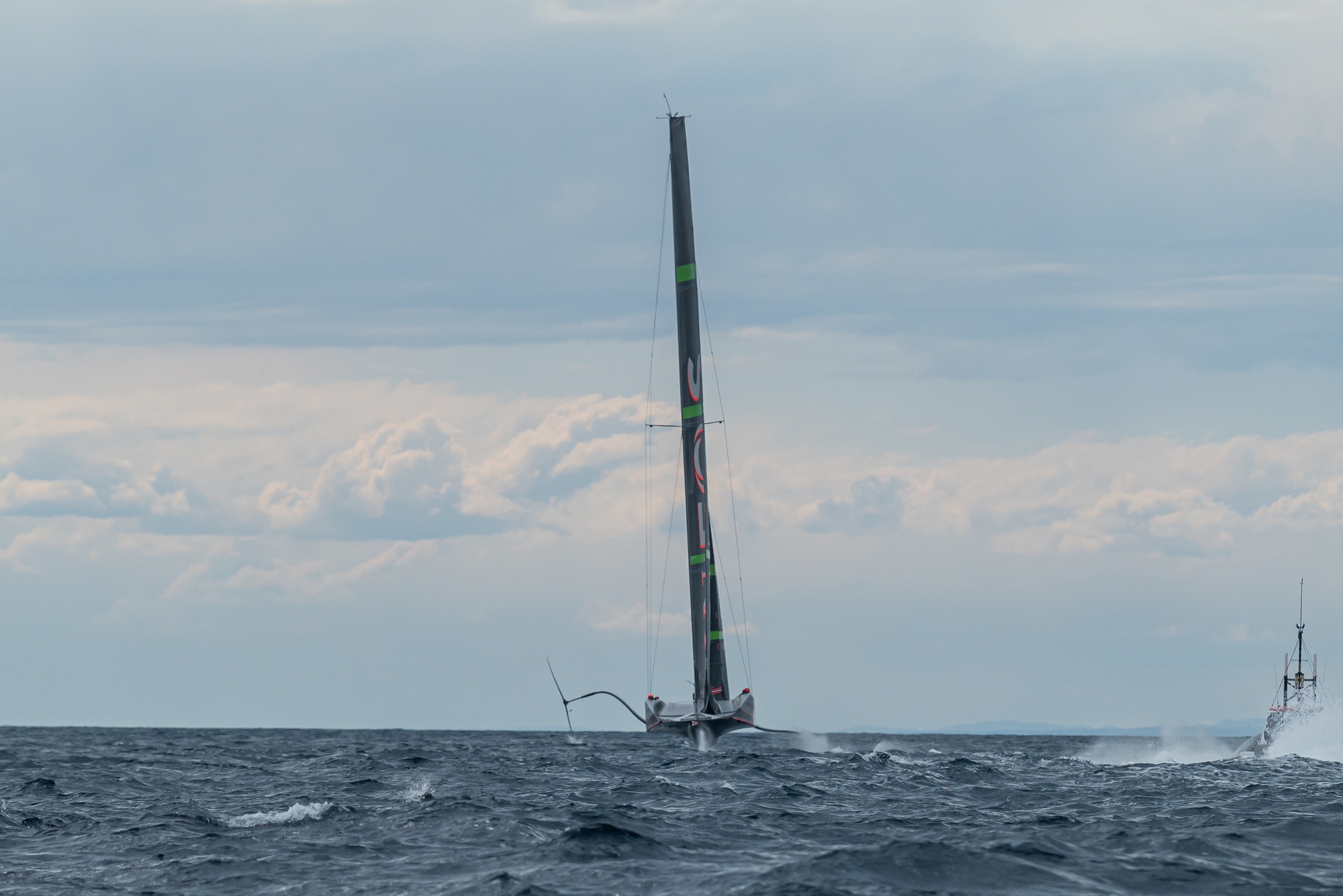
Speaking about that first flight, Ben Ainslie amplified the sense of caution that the sailors had saying: “I think you end up inevitably with some anxious moments when, you know, 75 foot boat, 6 tons, sheeting on for the first time and making sure that all of the stresses and strains of the boat are okay but we got through that and got up on the foil and we had some good moments and we had a few issues that meant we didn't want to take the boat downwind but we were able to do some good upwind sessions trying to get a feel for the boat and the control of the boat but yeah overall a positive day...It’s hard to explain to people just how complex these boats are and how much effort goes in on the design, engineering, and then of course the boat builders, the shore teams, to get these boats ready to sail and then to operate these boats so yeah I think for our team and I know for all of the other teams you got to give everyone a huge amount of credit.”
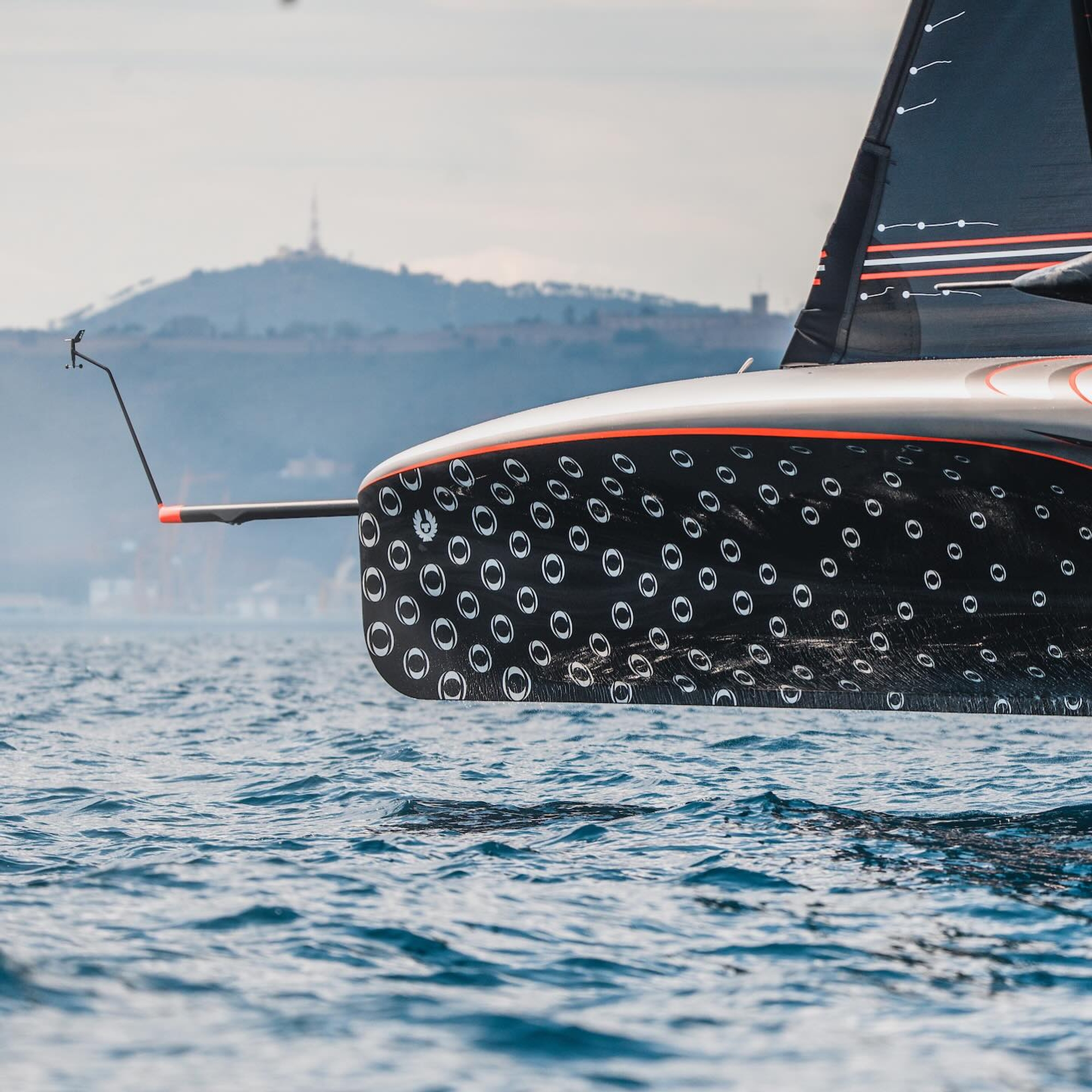
The last time Ben sailed an AC75, other than in a simulator was back in early 2021 so when asked about the differences he felt, it was an interesting insight: “The boat felt a lot different to RB2 that's for sure and already you just get a feel for the different area on the foils, take-off speeds, performance, very different boats and of course the systems as well, across the fleet that that's moved on a huge amount so I think the performance we know will be a lot better with these boats and early days but I think it could be a lot of fun to sail.”
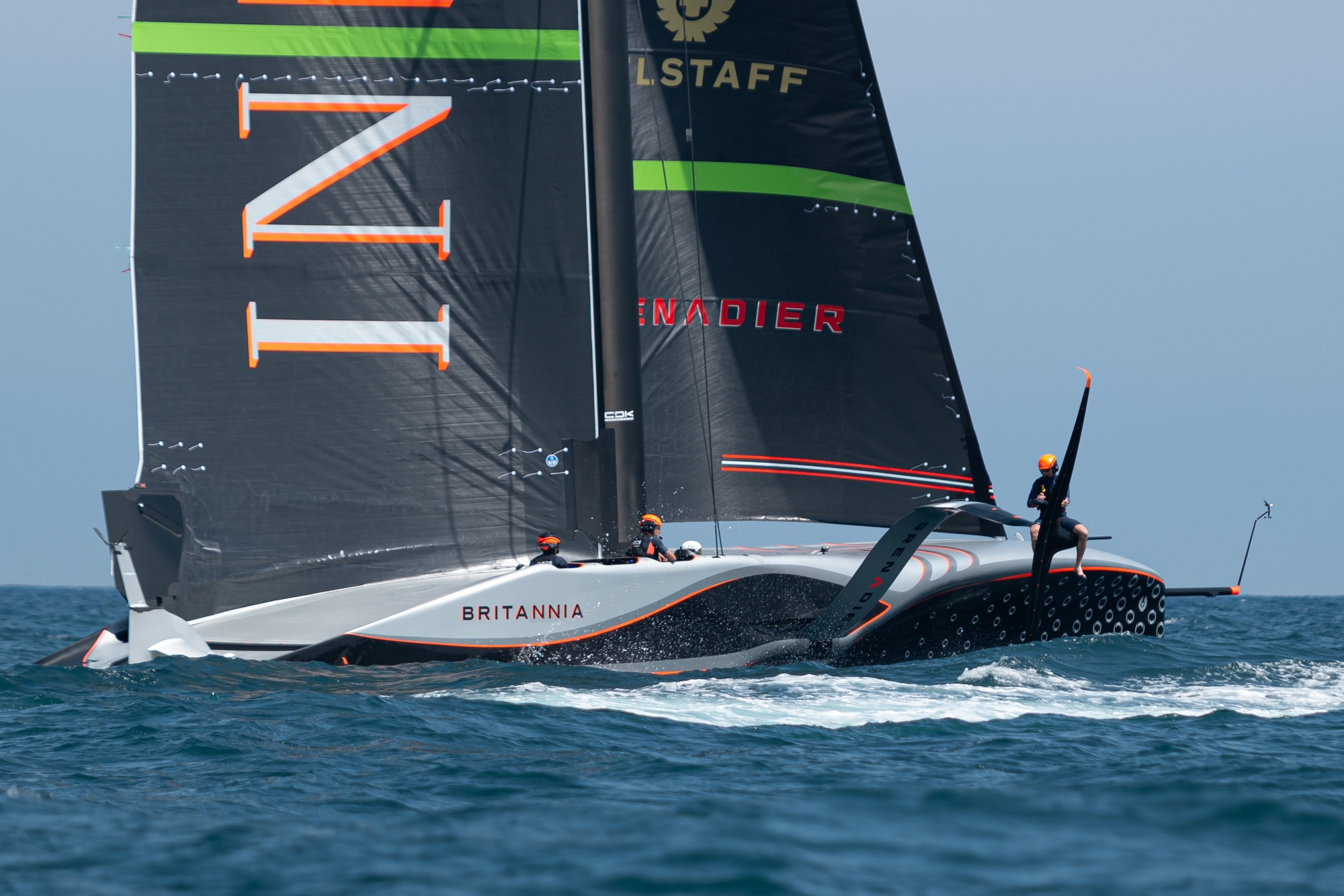
Looking at the competition but relating it back to the INEOS Britannia programme, Ben commented: “From what I’ve seen...some teams are already looking pretty stable out there and doing a good job. For us, it's early days, first day of sailing so we've got a few little tweaks we need to make in terms of the systems, how we're setting the boat up, but we can make those. We’ve got to go away, analyse the performance of the boat and we’ll get the boat in the shed, we need to do some good systems checks and structural checks after a day like today and make some of those changes that will give us a bit more stability and confidence to push the boat a bit harder.”
First day of a whole new and very exciting chapter for not only INEOS Britannia but for British sailing. The learning curve on RB3 will be steep over the coming weeks and months but there’s optimism aplenty that this is a programme very much on the right track and with a design that looks potent. (Magnus Wheatley)
On-Water Recon Report – INEOS Britannia: INEOS Britannia rolled out their AC75, RB3, at 07:30. The mast was stepped at 08:00, with small aero fairings mounted to all the vertical and diagonal shrouds (as in previous session). The yacht was then craned in at 08:25. Aero systems were tested with the manpower from the cyclors in all pods. Mast rotation was tested at different speeds. Four jibs were carried onto the chase boats: J1-1, J2-1, J3-1 and J5-1. The M1-1 mainsail was craned onto the deck, and the team prepared to dock out. The team was delayed further due to last-minute checks but docked out at 12:00, with the following crew onboard RB3: (from forward to aft): Starboard: Ben Ainslie, Neil Hunter, Luke Parkinson, Bleddyn Mon. Port:Giles Scott, Matt Gotrel, Ben Cornish, Leigh McMillan.
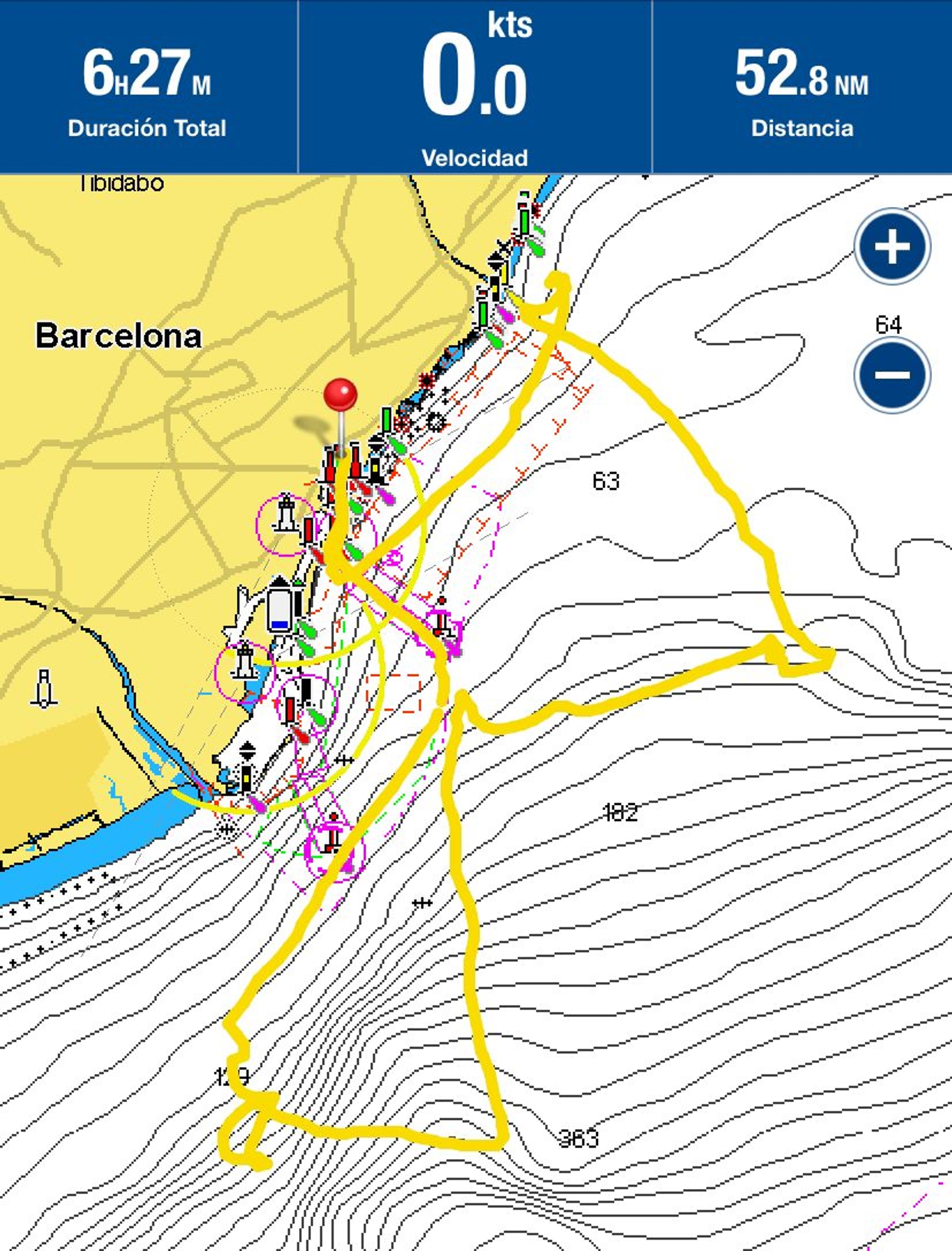
Once out from the harbour they towed RB3 for 7 nautical miles in a 50º E course at speeds that went progressively from 18 knots when full-up foiling until early 30 knots. The boat looked stable and the skeg parallel to the sea, level when towing. A wind of 8-9 knots was blowing from TWD 190 and the sea state was almost flat. When they arrived in front of Badalona harbour, RB3 released the tow line, headed up to the wind foiling on her own and landed with the hull into displacement mode. The M1-1 mainsail was hoisted in around 25 minutes and after connecting all systems, the J3-1 jib sail was hoisted around 20 minutes after.
Technicians from the INEOS Britannia team were double checking all systems before getting back into the Chase Boat and at 14:10 RB3 started sailing on port side in displacement mode, checking all systems were working fine. They tacked and checked the systems on the starboard side and when they were completely sure all was working, they started sailing at an 80-90º course, slowly trimming the sails so RB3 started foiling for the first time on starboard tack. We observed that when they started to foil the boat naturally wanted to pitch forward so the bulb from the bow (hull) was touching the surface until that was corrected by the flight controller through the rudder rake (we guess). Once the crew managed to have the boat in equilibrium with all the skeg out and in parallel to the sea-level the boat started accelerating. The boat was progressively gaining speed until they got to a stable + 30 knots sailing upwind. Wind at that time was 8-12 knots TWD 190°. They went back into displacement mode and tacked.
When sailing on port we observed exactly the same process than before: when taking off, the ‘nose’ naturally trended to pitch down, and they had to correct that from the rudder rake (again we guess). This time they were faster to equilibrate the pitch of the boat. On both tacks, a cyclor had to get over the foil arm and touch something on the foil that seemed to be stuck.
After around 5 minutes sailing on port tack, they stopped for some checks. They opened the bow-hatch and some technicians jumped onboard. After 30 minutes of checks they continued sailing on port tack on an upwind course. After a long 10-minute tack they bore-away into a downwind but the boat heeled to windward too much. They luffed and stopped. The wind had increased to 16 knots and the wave state had also increased so they swapped the J3-1 for a J5-1.
INEOS Britannia had some problems hoisting the J5-1 - the first time this jib was being hoisted so they needed time to adjust all the settings. When they were ready to sail, the wind shifted to TWD 240° and was quite gusty in between 10 and 16 + knots. The wave state also increased a little bit more. RB3 foiled for three long upwind tacks with the J5-1 jib at stable speeds of 30+ knots. They did two touchdown tacks and then by the beginning of the third tack we could see the boat foiling suddenly quite high but under control. They stopped, had a quick briefing with the Chase Boat and started dropping the sails at 17:15. Around 17:35 the Chase Boat started towing the boat back to the base and dock in was complete at 18:20. Jose Piñana - AC Recon