ZEPHYR TO ZEPHYR IN CALM BARCELONA

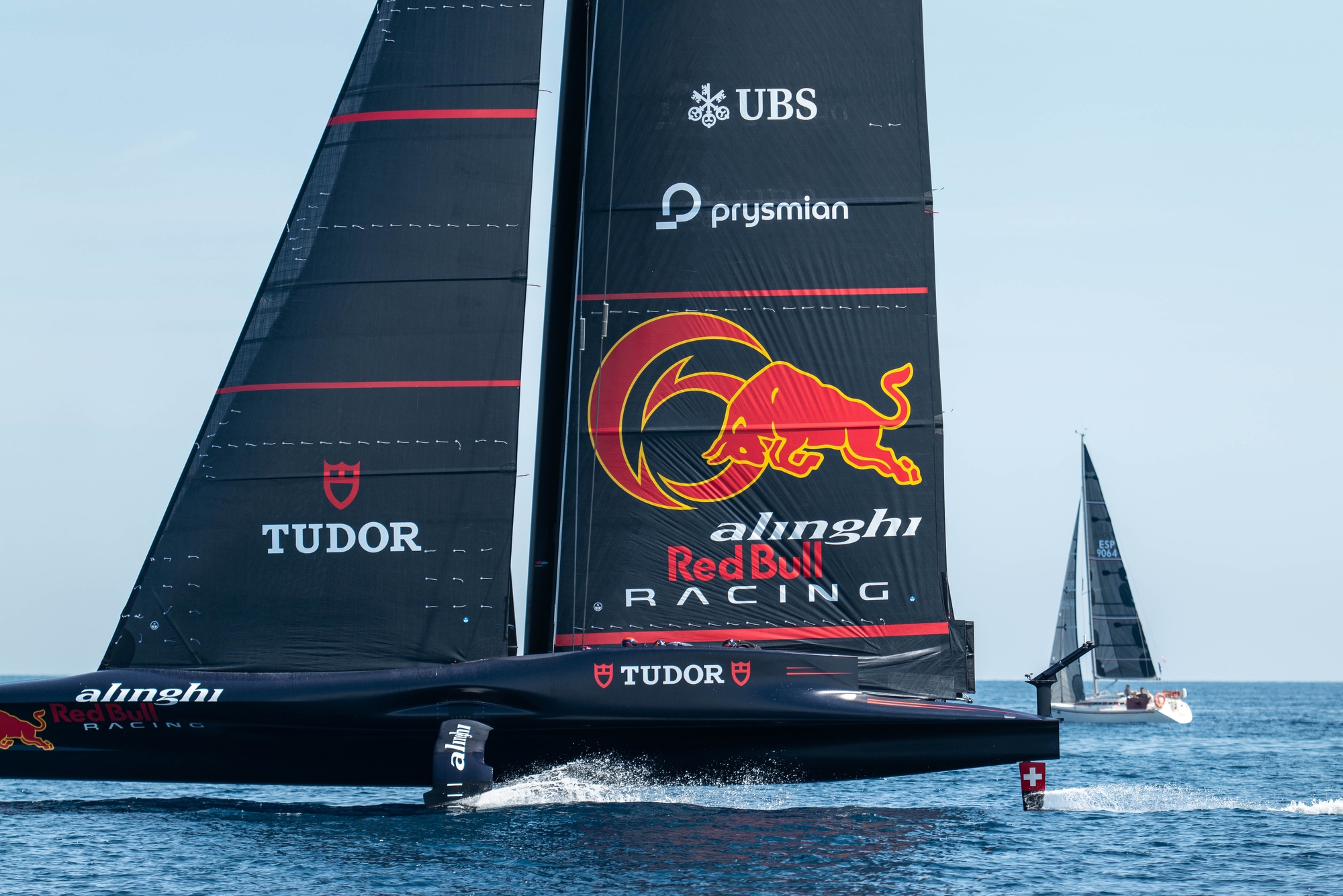
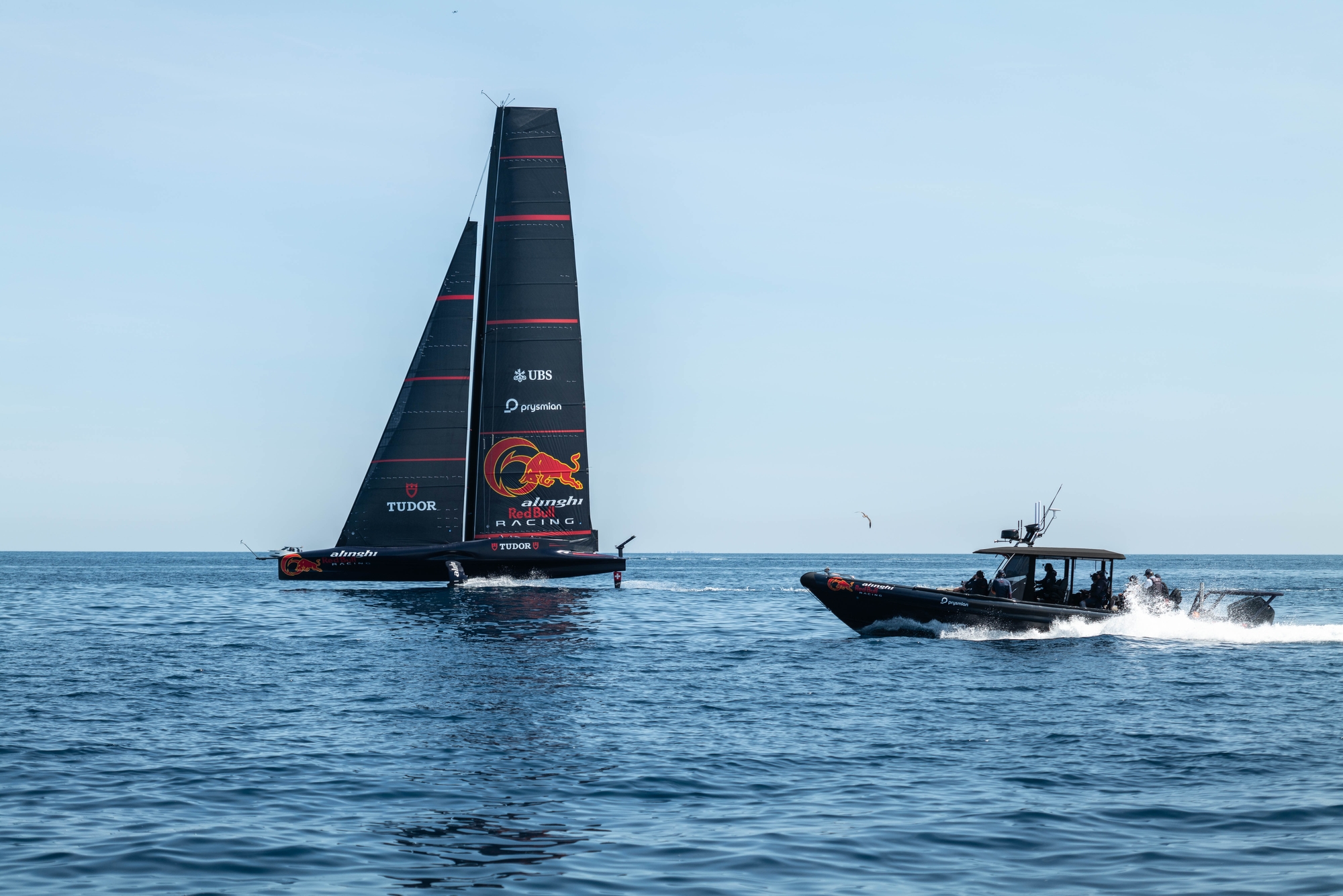

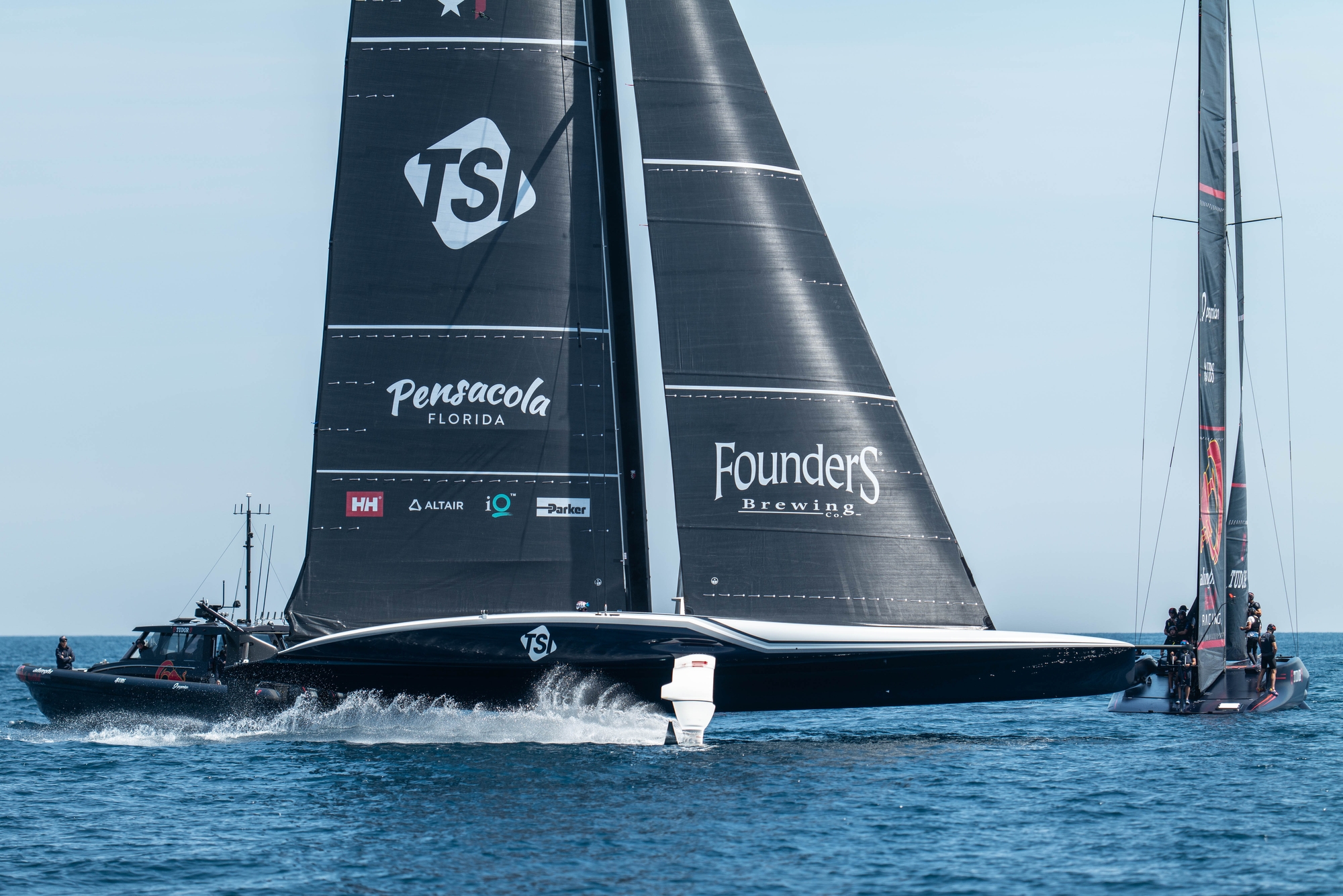
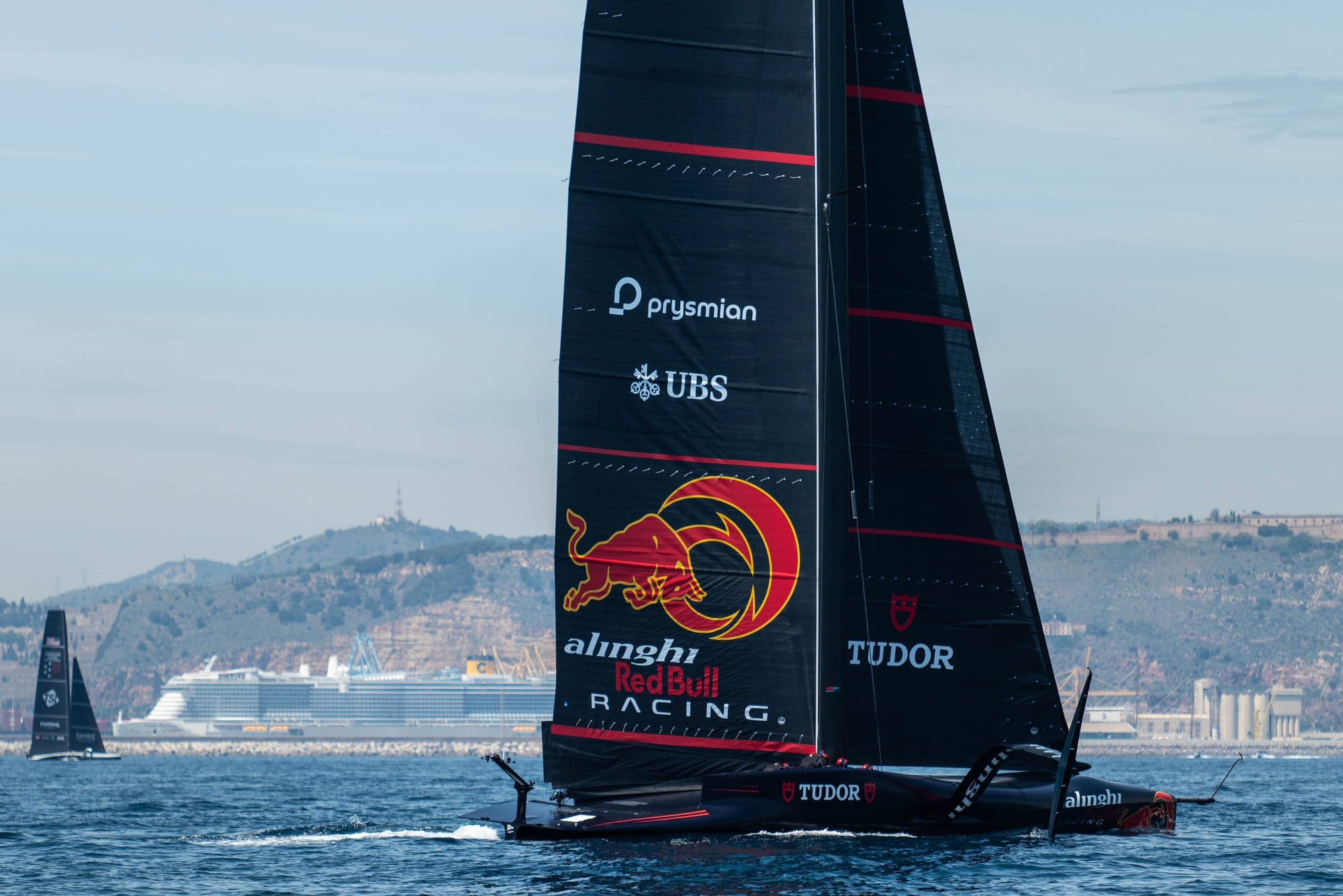
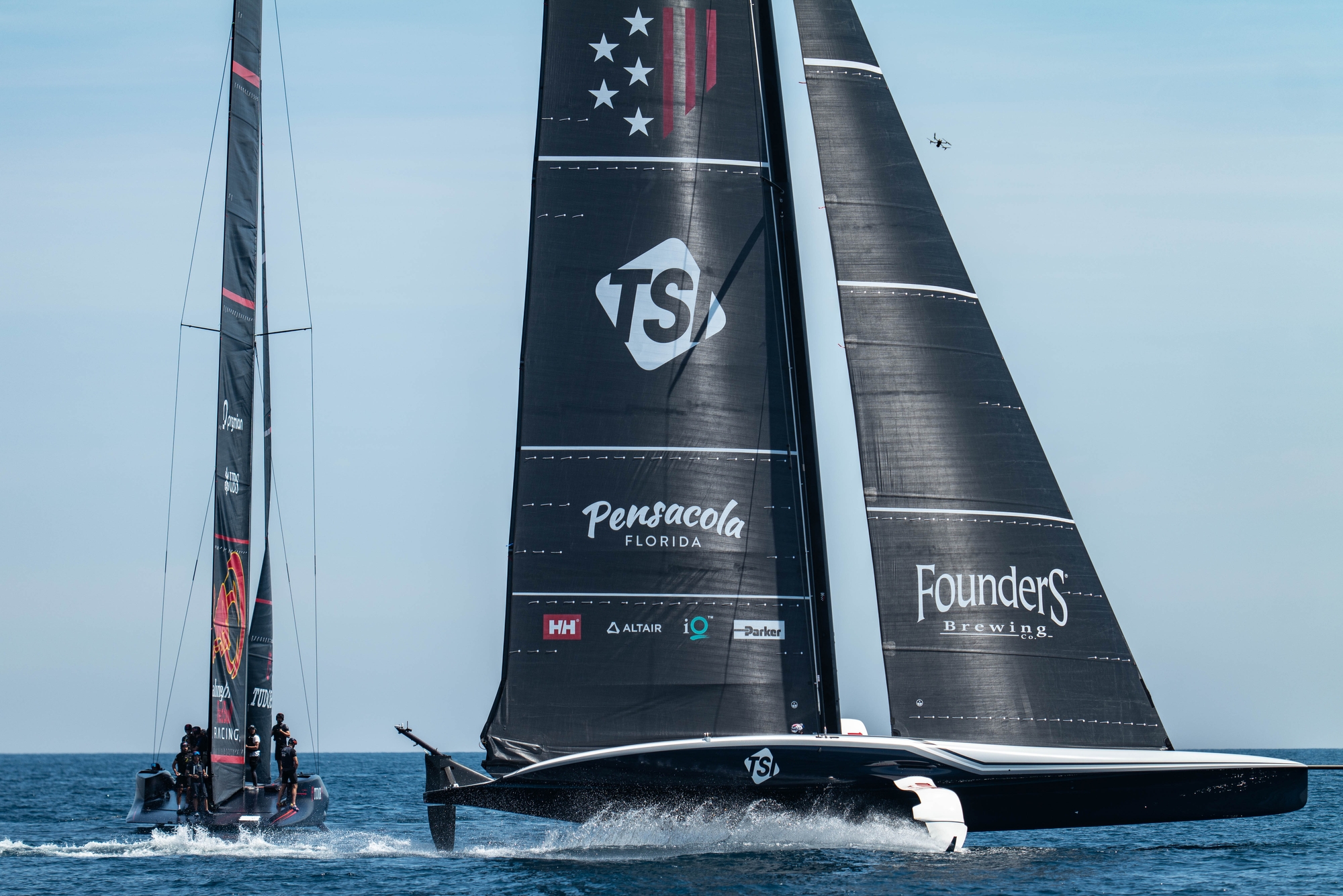
It was ‘one of those days’ in Barcelona where the tightrope was walked between a potentially building breeze from the east to cool the city as so often happens or a complete shut-down. Sadly today, the latter prevailed with the anemometer barely rising above 6 knots all afternoon for Alinghi Red Bull Racing and NYYC American Magic, the two new-gen AC75s both hoping to kick off the week’s training in style and continue their positive momentum.
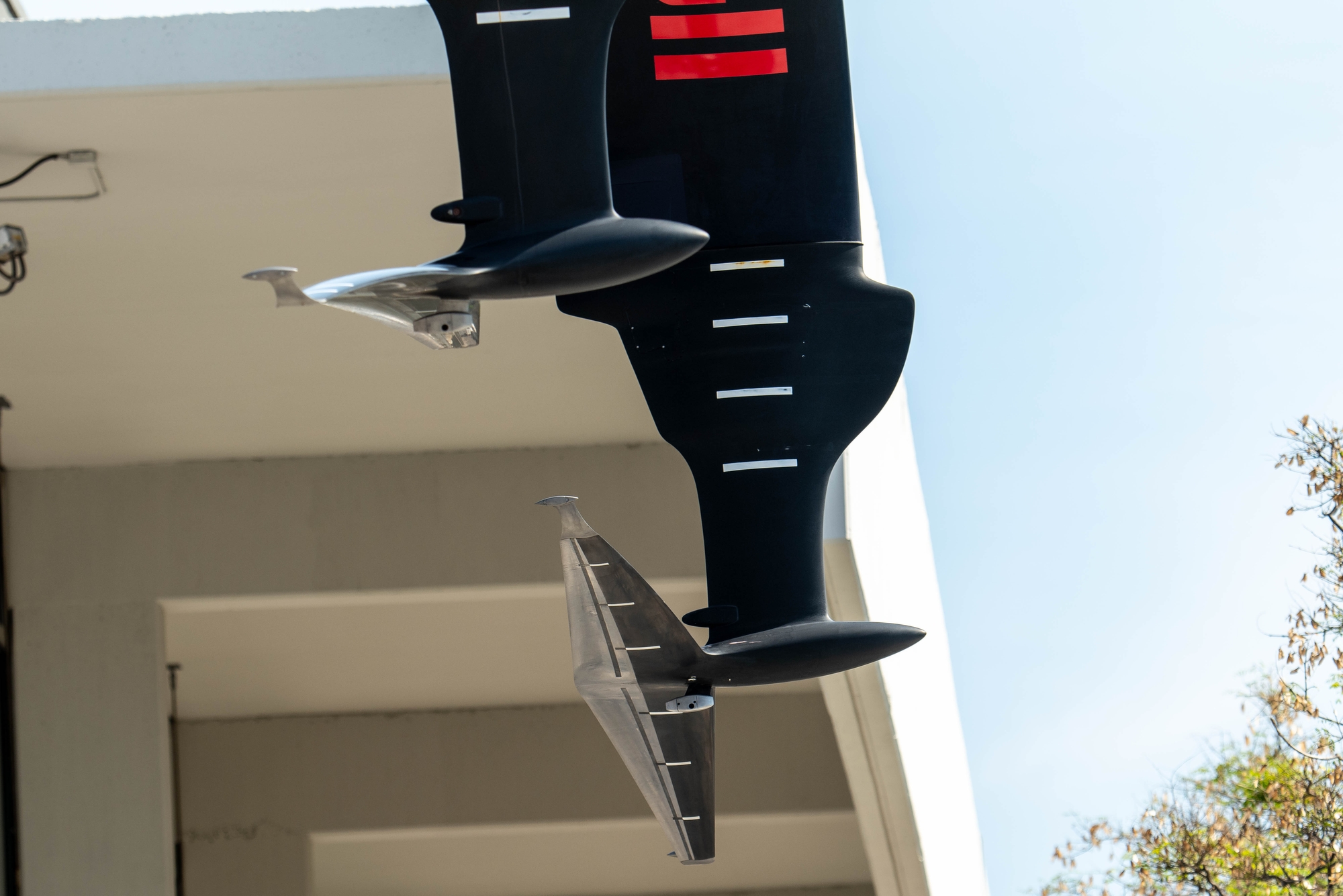
Over the weekend, news came through via official declaration of upgrades to Alinghi Red Bull Racing’s foils with new inner tips - that look symmetrical with the outers - and a change to the flap profiles. Small details but hopefully big gains. However, on a day where flight was tricky and speed-builds were desperate, it wasn’t the day to please the data analysts back ashore, but plenty to take away in terms of down-range trim.
Try as they might, it was a day of persistence and patience for the Swiss who were coaxing and willing ‘BoatOne’ to flight with the only realistic option being a tow-up from the Chase Boat. This they did four times and were rewarded with just minutes of flight time before the boat came down into displacement and the process of speed-building started again. After just over three hours on the water, the team called it a day and wisely headed back to base.
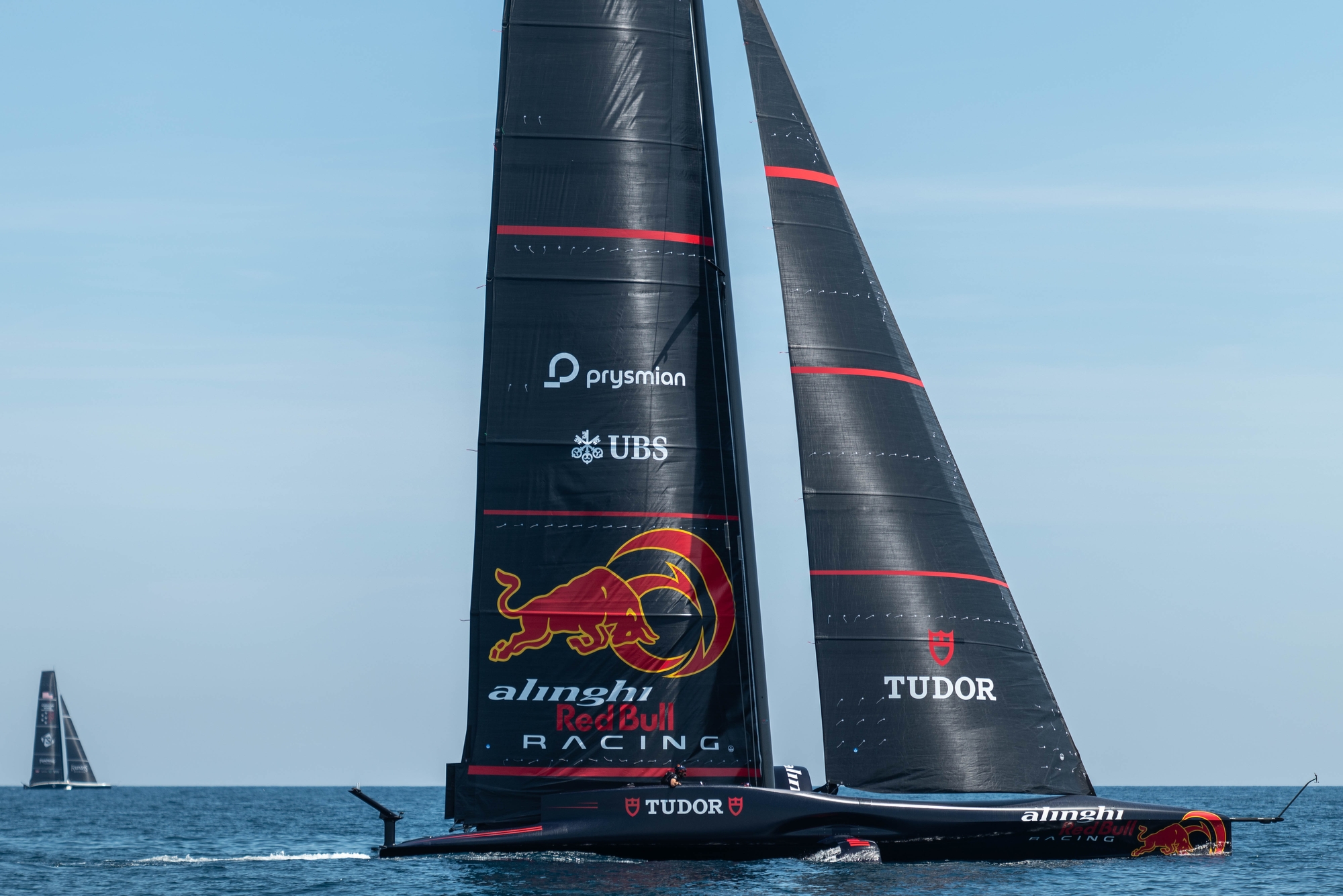
Speaking afterwards, Sam Manuard, naval architect of considerable repute and responsible for some incredible cutting-edge yacht designs in classes like the IMOCA, spoke to the recon team and summed up the day saying: “Today was a light wind day, we were on the bottom end of the True Wind Speed, so we practised a lot trimming the sails and getting to speed to try and take off.” As one of the team of naval architects for Alinghi Red Bull Racing, Sam spoke about the unique design of the hull shape on BoatOne saying: “The concept is to make the boat as much efficient as possible from an aerodynamic point of view and this is how we ended up with his shape.”
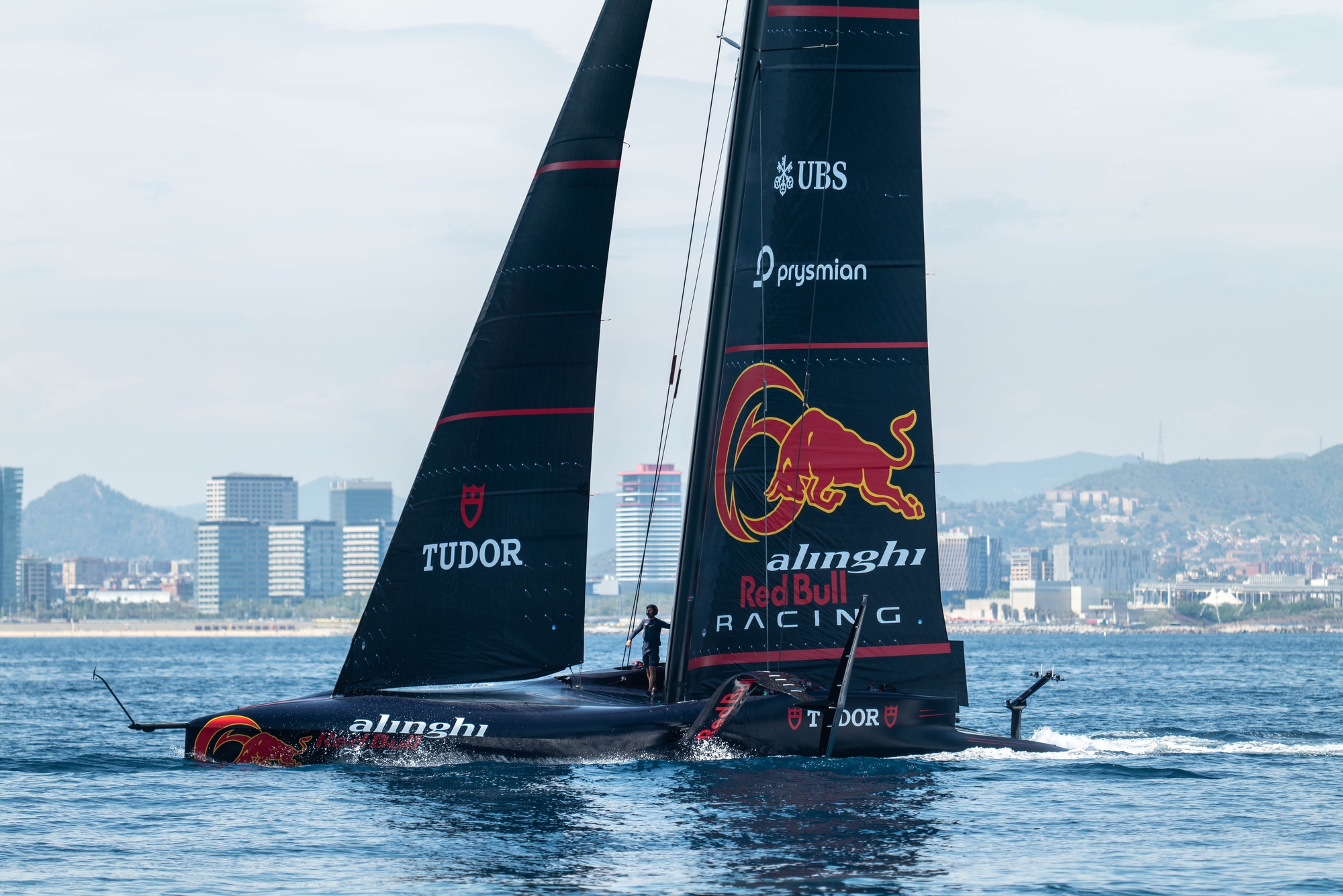
And asked about the other boats in the fleet, Sam added: “It’s super interesting especially through the eyes of the Recon and yeah we spend some time looking at them and trying to understand what could be their strengths and weaknesses.” Sam was then asked whether there were designs that the Alinghi Red Bull Racing team discarded in the design process of BoatOne and he coolly responded: “Actually, yes.” Interesting. Before adding further: “At this stage when you’re training alone, you're always the champion, so we need to work do our homework, progress, progress, progress, and there still is some progress to be made before the regattas.”
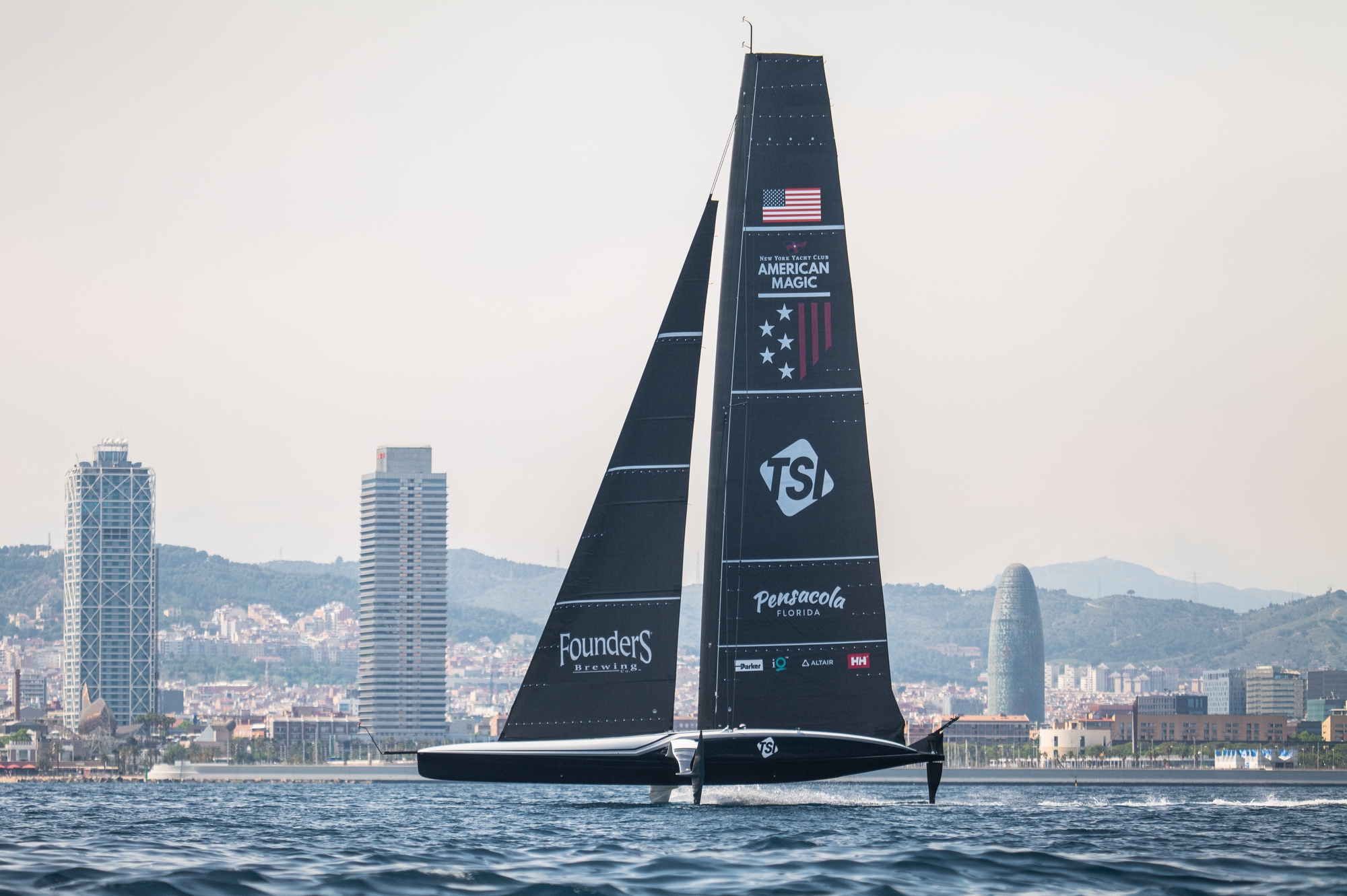
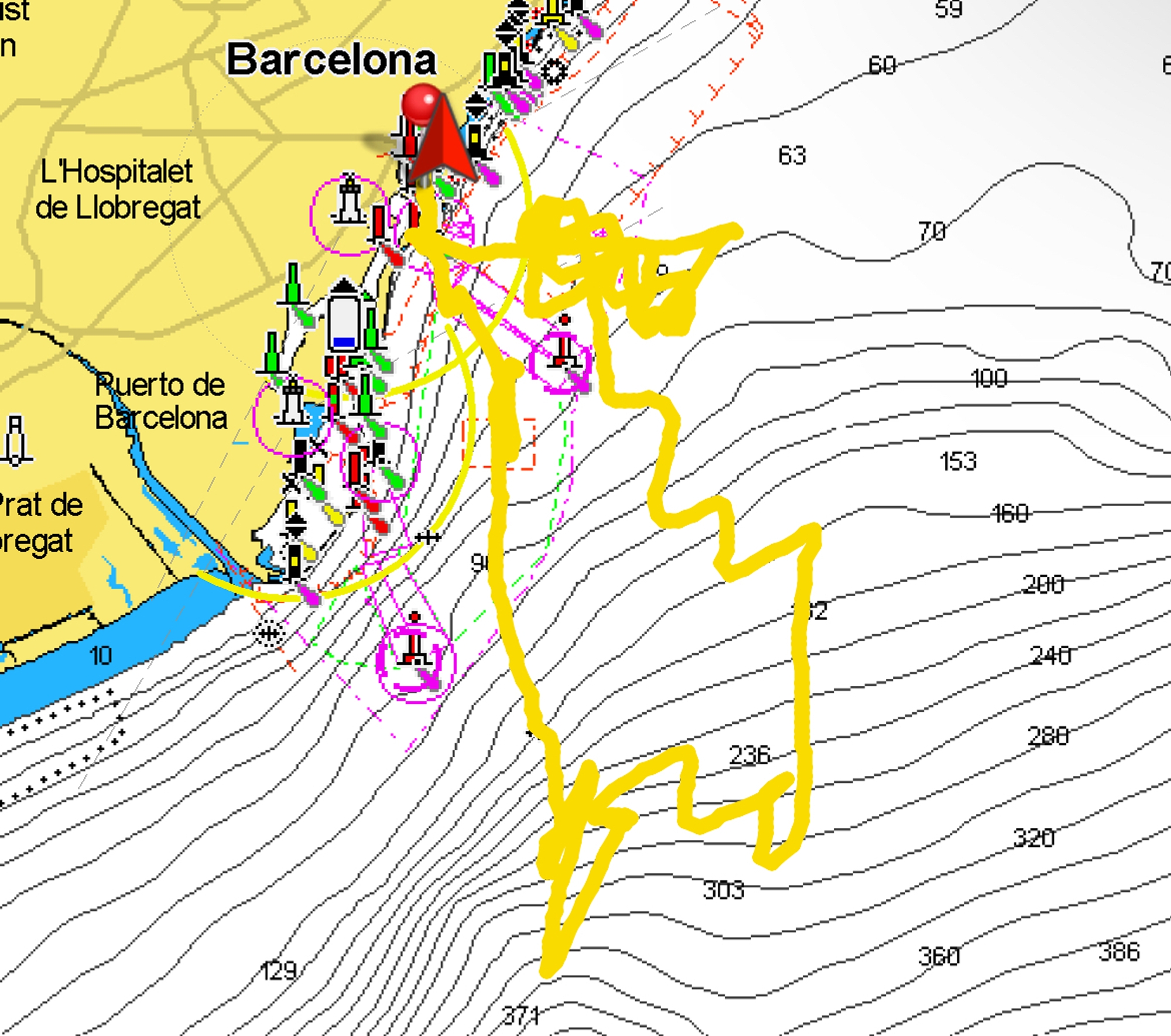
Meanwhile out on pretty much exactly the same stretch of water as the Swiss, NYYC American Magic were having similar struggles and after exiting the harbour at just before quarter to 1pm they were greeted by just 3.5 knots of breeze. Not enough to fly despite the team’s efforts at reaching – again this was a time for patience.
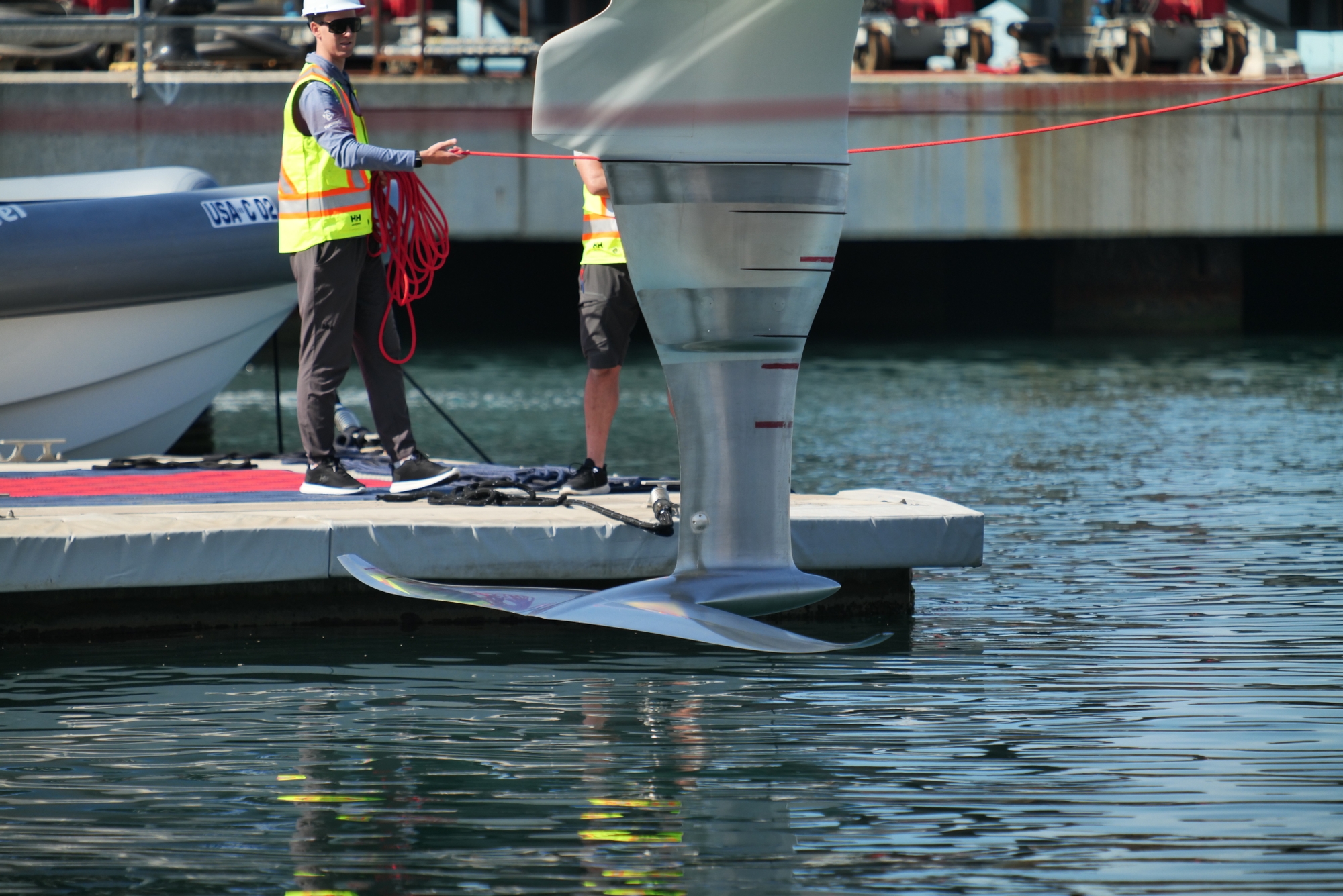
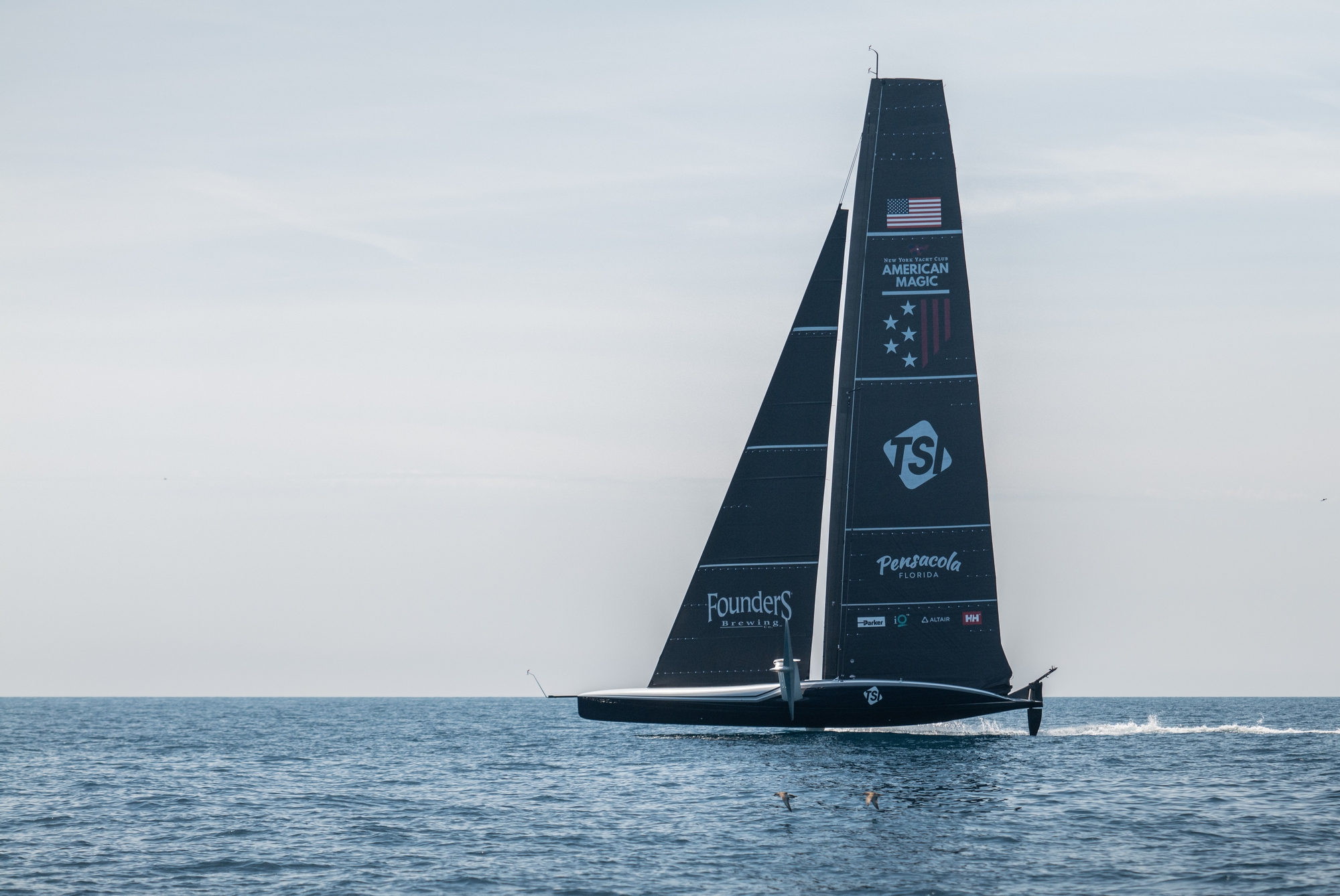
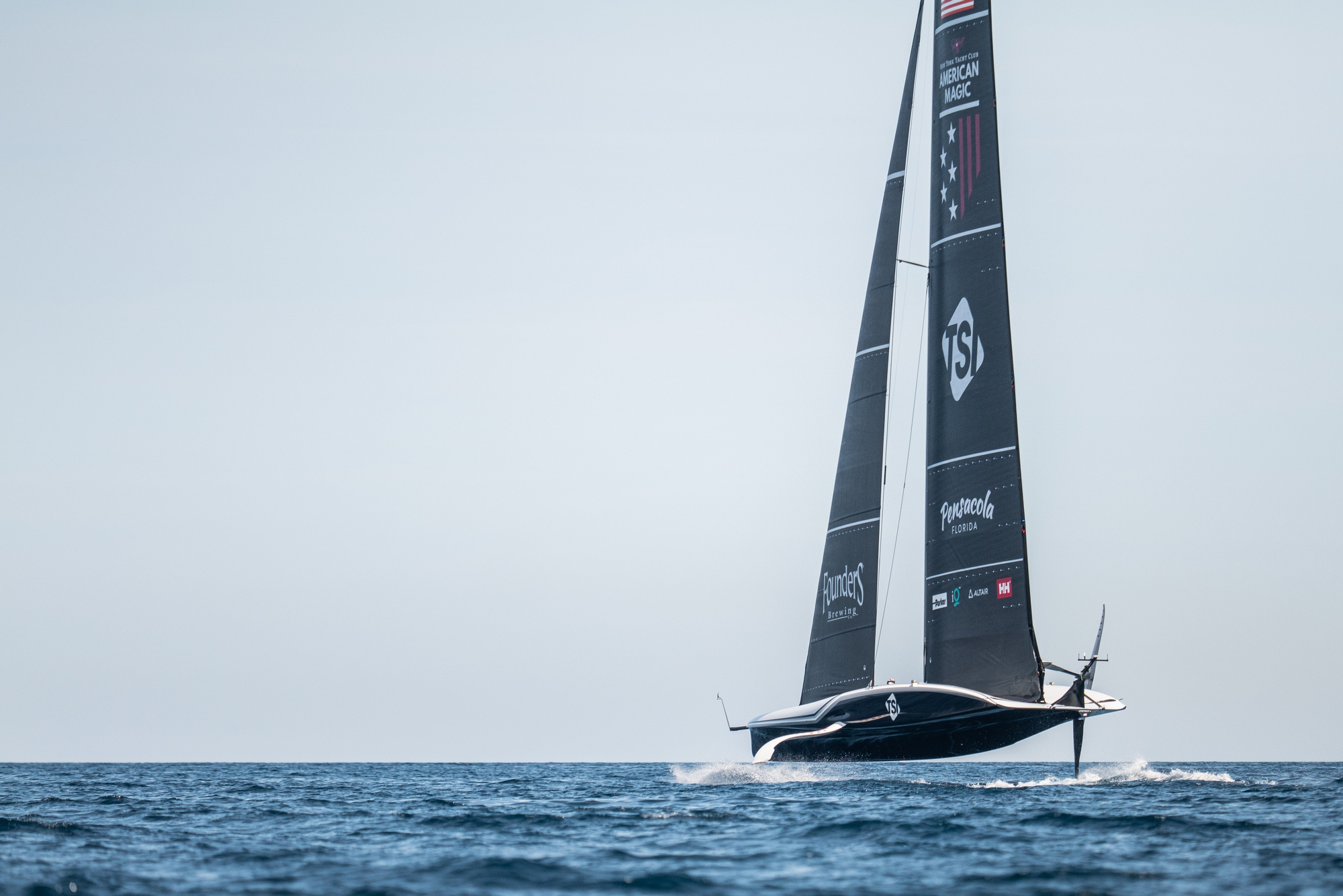
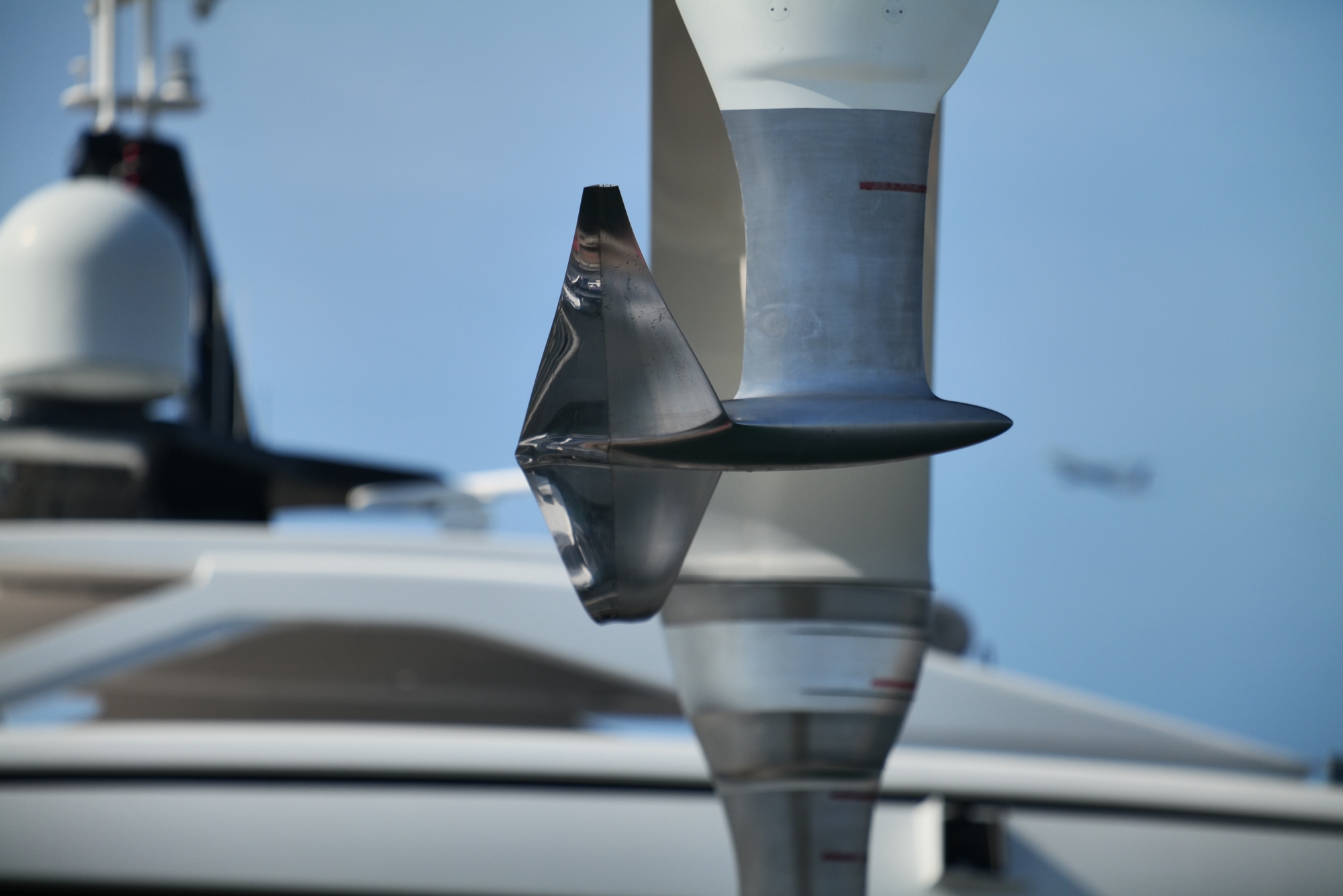
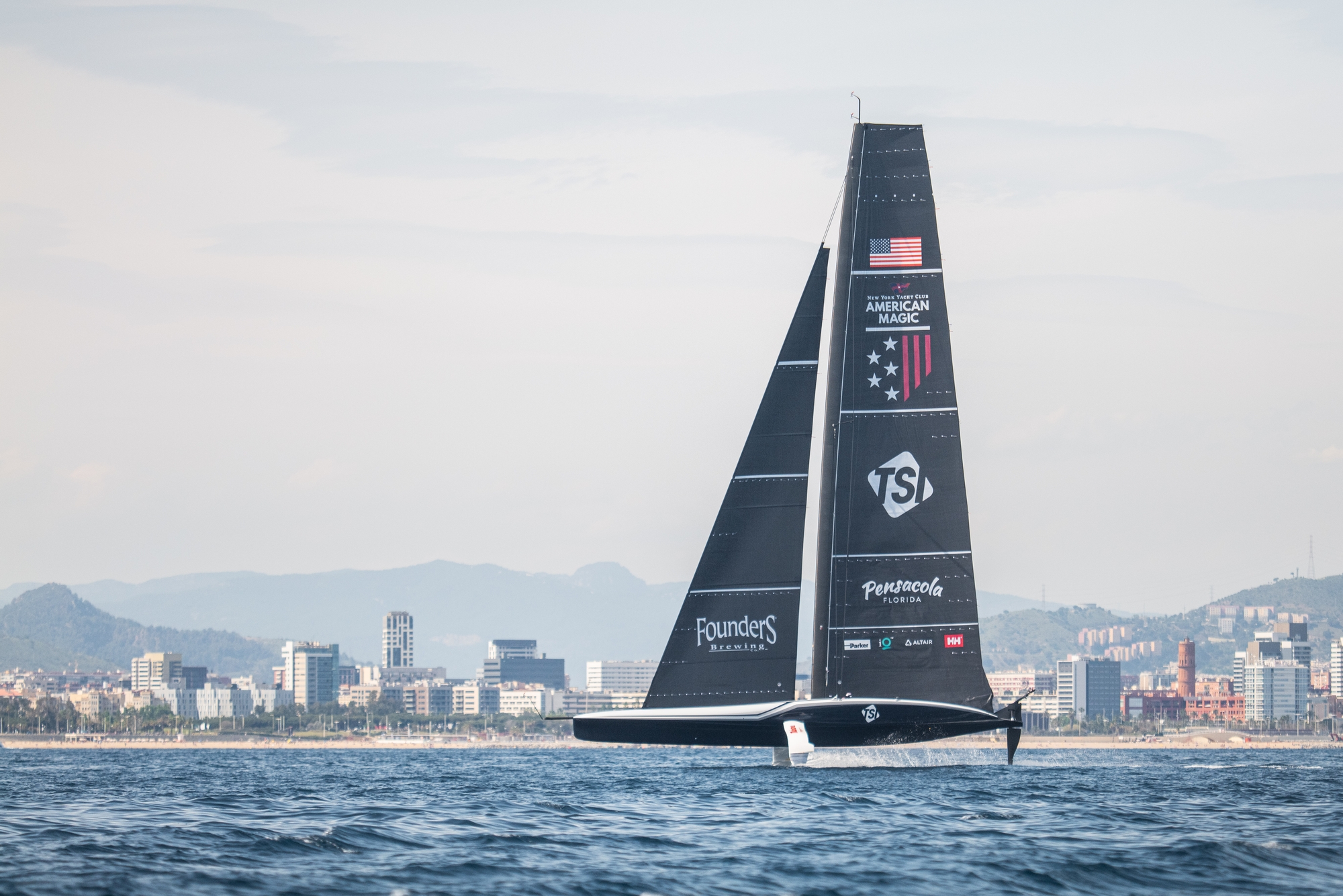
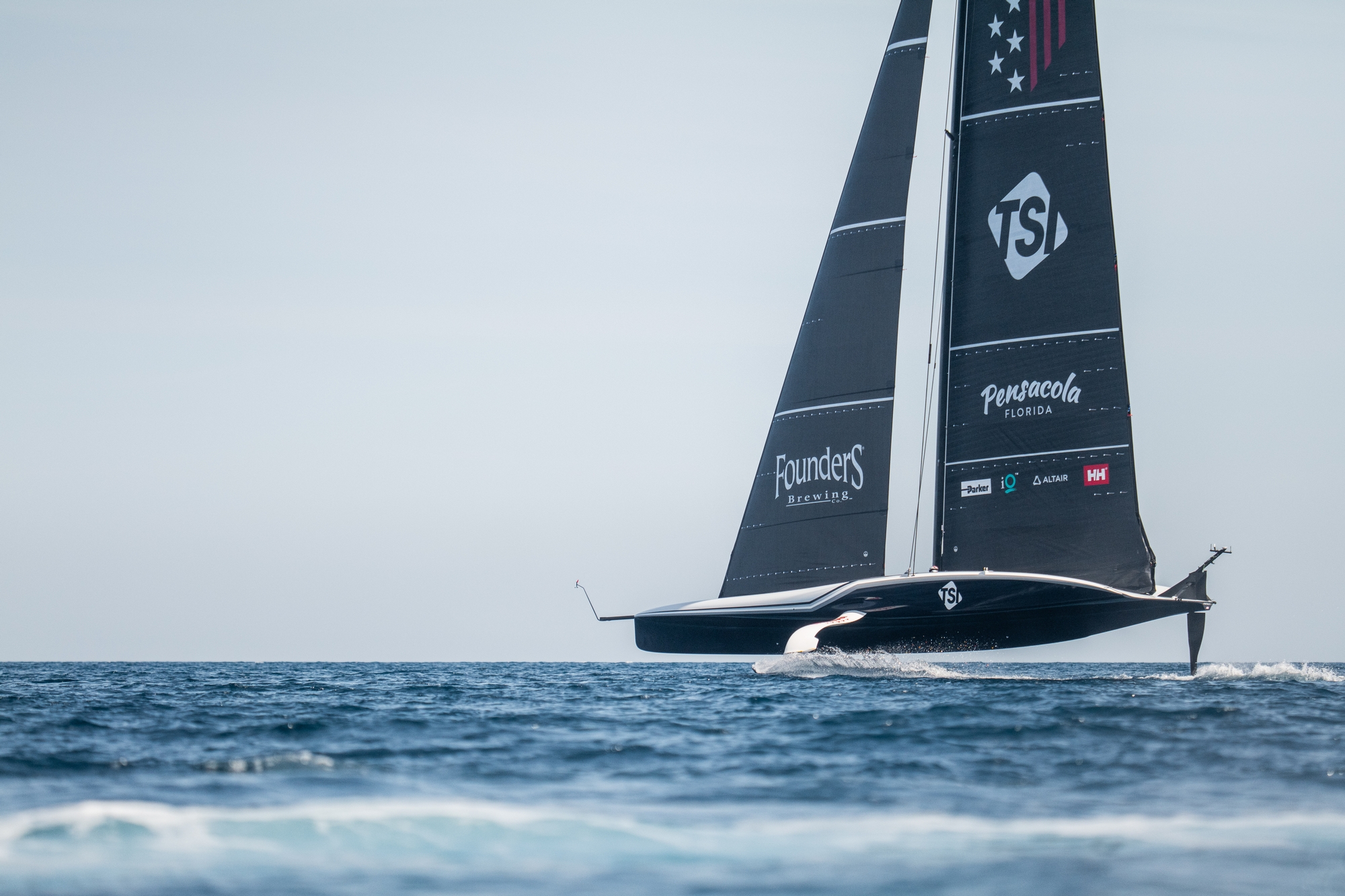
Today Patriot unveiled some upgraded detailing on the foils with what the recon team described as: “four spray rails of different lengths along the port foil arm stock starting from the leading edge, and one spray rail on the starboard foil arm stock below the skeg from the leading edge to trailing edge.”
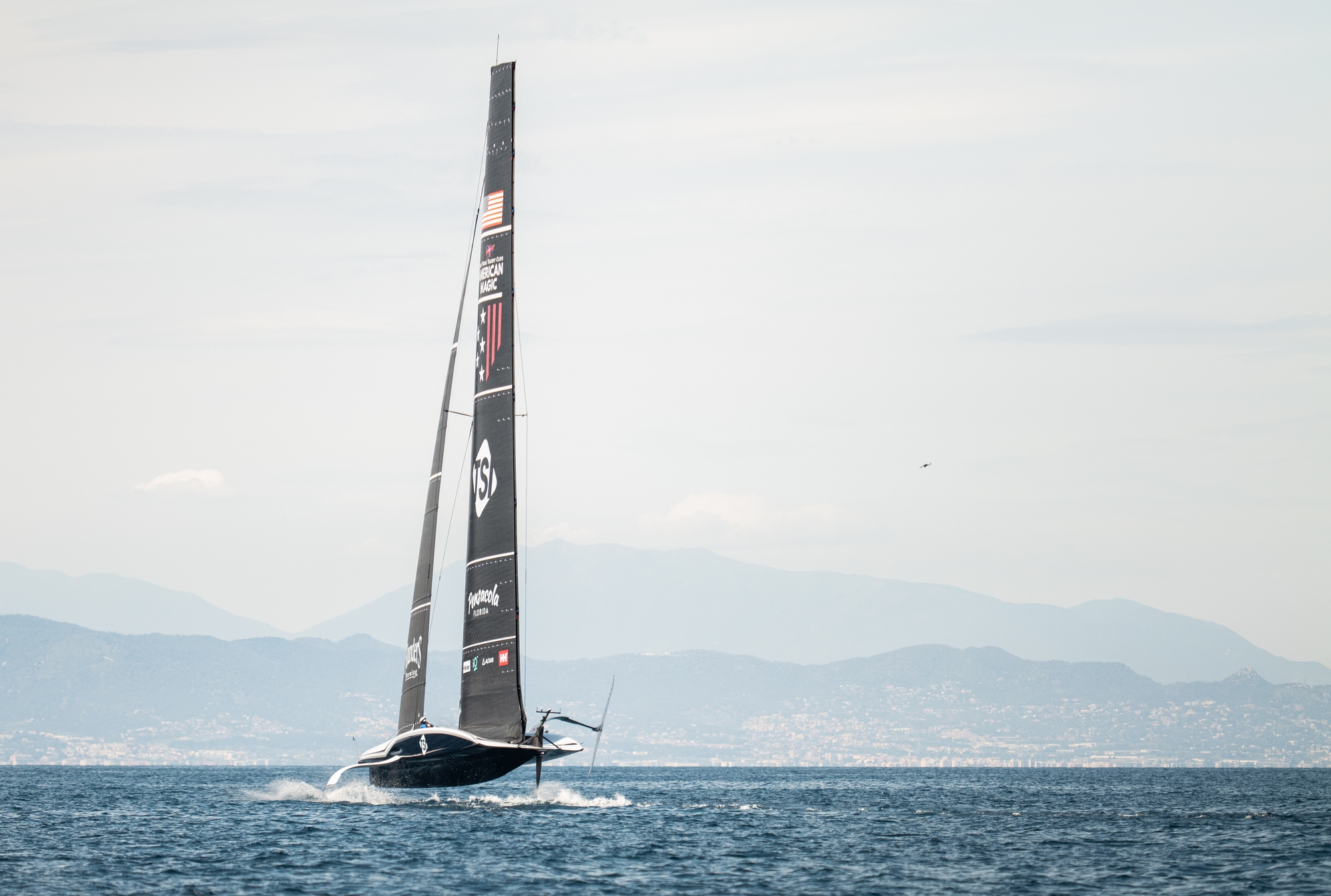
After a change up to the big J1 jib – the first time we’ve seen this on Patriot – the boat came alive and flight was secured some 45 minutes later after an estimated speed build to around 18 knots and a smart ‘pop’ to flight. It didn’t last long and on the first tack they were back in displacement with the technicians onboard examining the jib track on the foredeck.
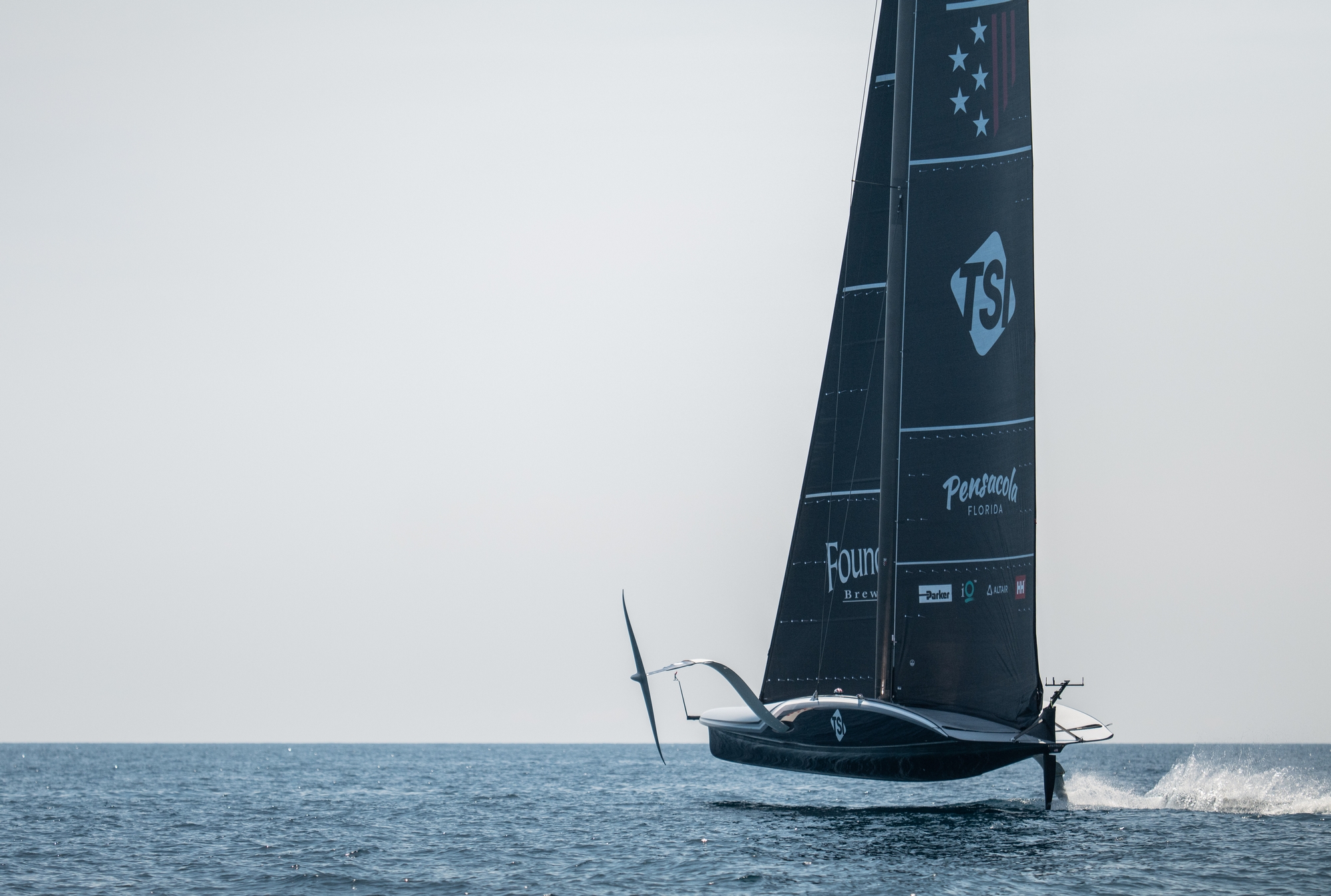
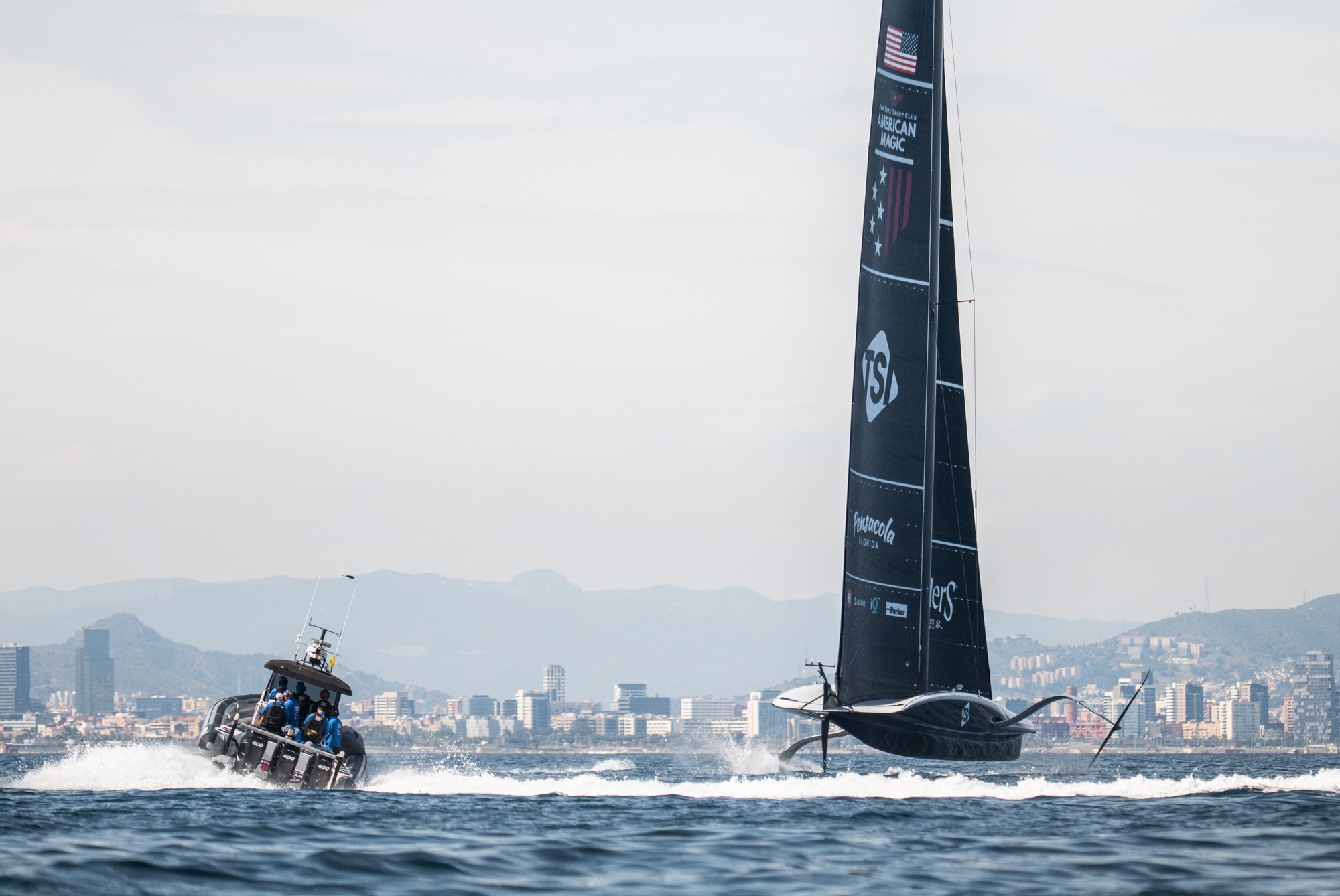
Whilst the Swiss called it a day, American Magic stayed out and, as is so often the case with sailing, a golden hour occurred late into the afternoon and the best breeze of the day filtered in for a short while producing 6.5 knots of maximum pressure. Plenty enough for Patriot, she was smartly up on her foils on a solid upwind with four tacks mirrored by a downwind leg with just three gybes – the best sailing of the day. An attempt at another lap saw touchdowns through the manoeuvres and the team called it a day, docking in just before 6pm after five hours on the water.
Speaking afterwards, John Croom the popular and energetic cyclor for American Magic spoke about the day saying: “The focus was take-offs in the light wind breeze, I mean I think it's what? Day three for us out there? So we're trying to get as much exposure as we can with the system and you know we had this light day opportunity and so I think it was a good opportunity for us to figure out if we can get up and get flying but it was pretty successful, even got into some race laps there so that's pretty cool."
Talking about the recumbent cyclor position, John gave an interesting insight into how the team are feeling saying: “Yeah I mean it's lower deck smaller frontal area so yeah I would think it would be a pretty big gain I mean I don't know I’m not an aero-physicist or anything so I don't really fully know but yeah I would assume smaller would be faster at least it was in cycling when I did it.”
Any worries about power output were completed dispelled as John added: “Actually, I think we're all putting out more power so we're not having any issues.” And in terms of how the cyclors, who rotated today, are physically faring in what he describes as a ‘hole facing backwards’, John said: “No, we're all pretty fresh I think it's more or less just giving everybody an opportunity to figure out what's going on, we only have limited time to sail so switching us out to just get the exposure and the idea we're all still learning so I would say that we're probably one of the younger more inexperienced cyclor setups in that sense and so we're learning comms and all those other things.”
Interesting day for both the Americans and the Swiss in conditions that were outside of the racing limits but offering many clues about the initial potency of each design direction. Plenty for the naval architects and engineers to pore over tonight. (Magnus Wheatley)
On-Water Recon Report – Alinghi Red Bull Racing: The Swiss team rolled out their AC75 at 10:30 after a thirty-minute delay. New versions ‘E’ of both foil wings were declared over the weekend, plus an only new version ‘B’ of one of the foil flaps. In relation to this, new wing tips on the inner sides of the port and starboard side wings were identified, which seem to be symmetric to those on the outer sides. On the other hand, the white hardware equipment positioned on the aft part of the deck which was described the past week, seems to probably be part of a Starlink hardware kit aimed to improve connectivity.
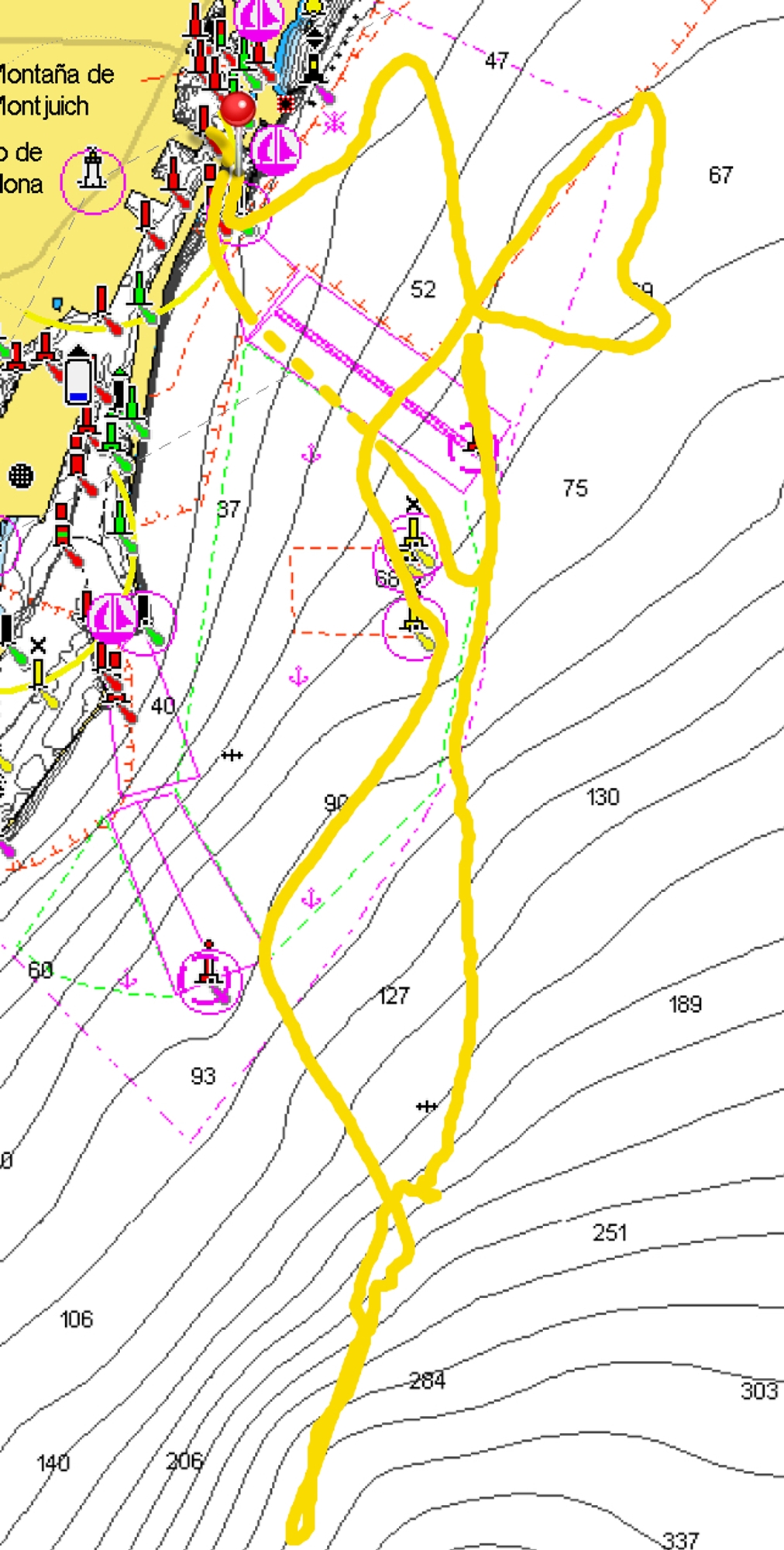
The boat was craned to the water at 10:55 and finally docked out at 13:00 after an extra one-hour delay, probably due to lack of wind. The M1-1 was selected for the session, combined with the J2-1. Both sails were hoisted just before heading out of the port at 13:25. Very weak easterly winds dominated the day, staying under five knots of intensity all the time. Most of the day was spent trying to take-off on both tacks in non-racing conditions. However, it was not possible.
During the closest moments to take-off, we recorded 16.0 knots of speed over ground, sailing with a true wind angle of 100 degrees approximately. Four towing take-offs occurred during the day, being able to stay flying for over a minute after two of them, maintaining a constant speed of 20 knots of speed over the ground. The jib-sheet position on the clew was adjusted and modified in various opportunities and minor works on the jib track were identified.
After towing around looking for wind, Alinghi Red Bull Racing decided to head back to the base at 15:45. Once inside the harbour, sails got lowered, and the team docked at 16:05. A good show of perseverance from the team trying to test performance in bottom-end wind conditions. Sebastian Peri Brusa – Recon on Alinghi Red Bull Racing
On-Water Recon Report – NYYC American Magic: American Magic rolled out Patriot at 09:50 ahead a day committed to light wind take-offs. Small changes to both foils were noted, with four spray rails of different lengths along the port foil arm stock starting from the leading edge, and one spray rail on the starboard foil arm stock below the skeg from the leading edge to trailing edge. Following 10:15 crane in, hydraulics tests were underway, with mast rotation and FCS testing observed. It looked like foil lifting was being synchronised with something below the foredeck, perhaps jib system, highlighted by (inaudible) communication between helmsman and techs in the foredeck, with two additional tech crew at the mast base. Further work was carried out inside the jib track.
The team docked out at 12:30 and hoisted the MN2-1 mainsail and J2-1 jib at the port entrance, with less than 5 knots measured on the anemometer at the harbour entrance. Patriot was sailed on a reach in attempt to take-off but to no avail, prompting the team to exchange the J2 for the J1-1 jib. This marks the first time this J1 was hoisted. After some time, the yacht managed to take-off at 90deg TWA, at approximately 18kn boat speed under six knots of wind. A foiling tack was attempted but the yacht touched down mid manoeuvre, as the tech crew jumped on board to focus on the jib system.
After an hour and a half of sailing in displacement, AM found some breeze and were able to sail an upwind/downwind, completing four tacks upwind and three gybes downwind, of which just one tack was a touchdown. Minimal traveller movement was noted while sailing. During this stint, the team focused on the port foil, with a drone observed flying directly above, before taking a short break. The team set off on another lap, with as much as nine knots TWS measured at the beginning of the stint, dropping back to six knots half an hour later. Another upwind/downwind lap was attempted, with only one touch and go tack observed and four touchdown manoeuvres. At this point the team called it a day and towed the yacht back to port to drop sails at 17:40.
The team docked in at 17:55 after just over five hours on the water, of which 153 minutes were spent sailing, divided into six stints. 22 manoeuvres were performed with a 32% fully foiling success rate. Light rust stains were noted on the foil arm hips, just below the skegs, though less significant than previous days.