LASER-FOCUSED IN BARCELONA
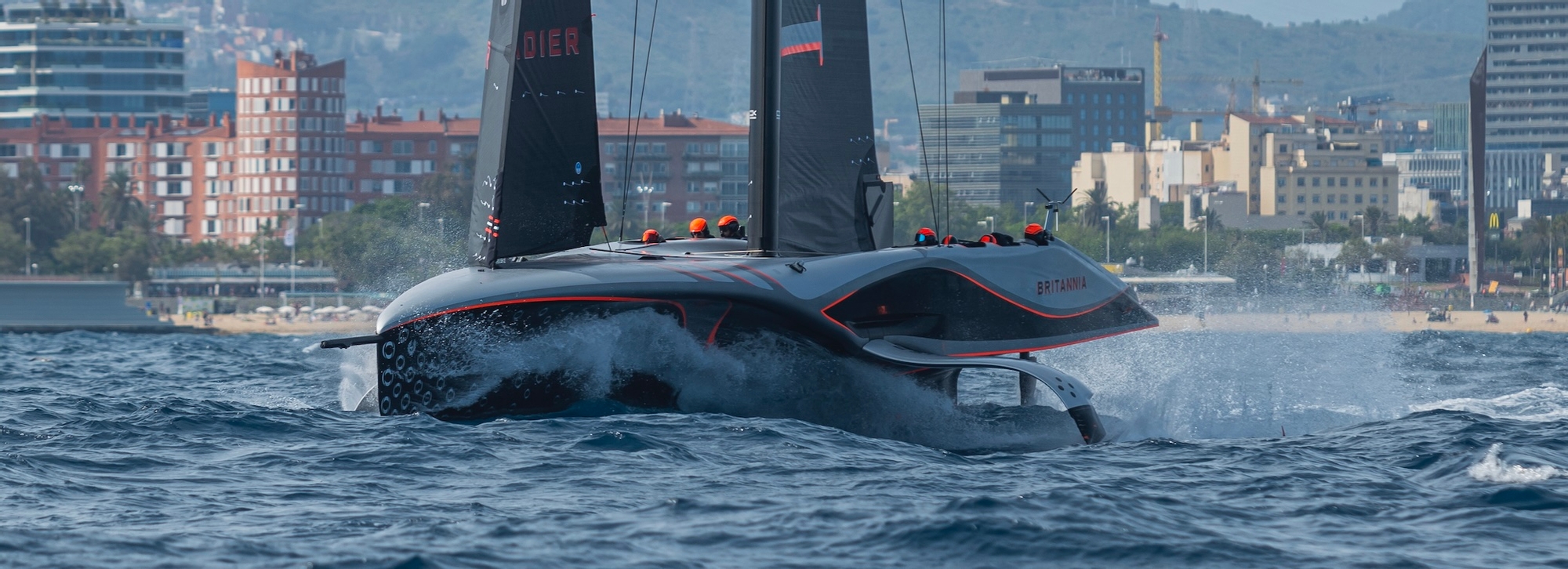
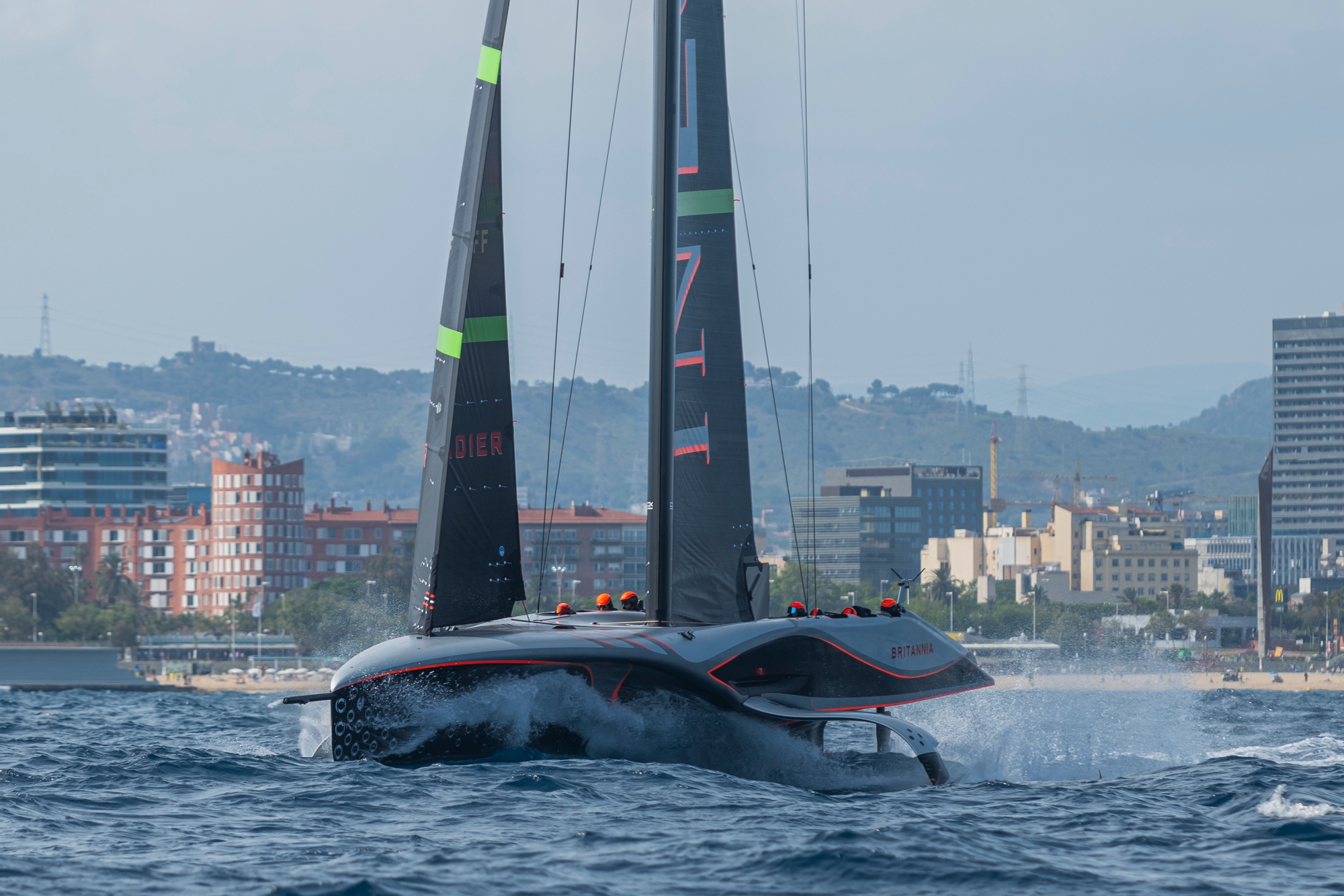
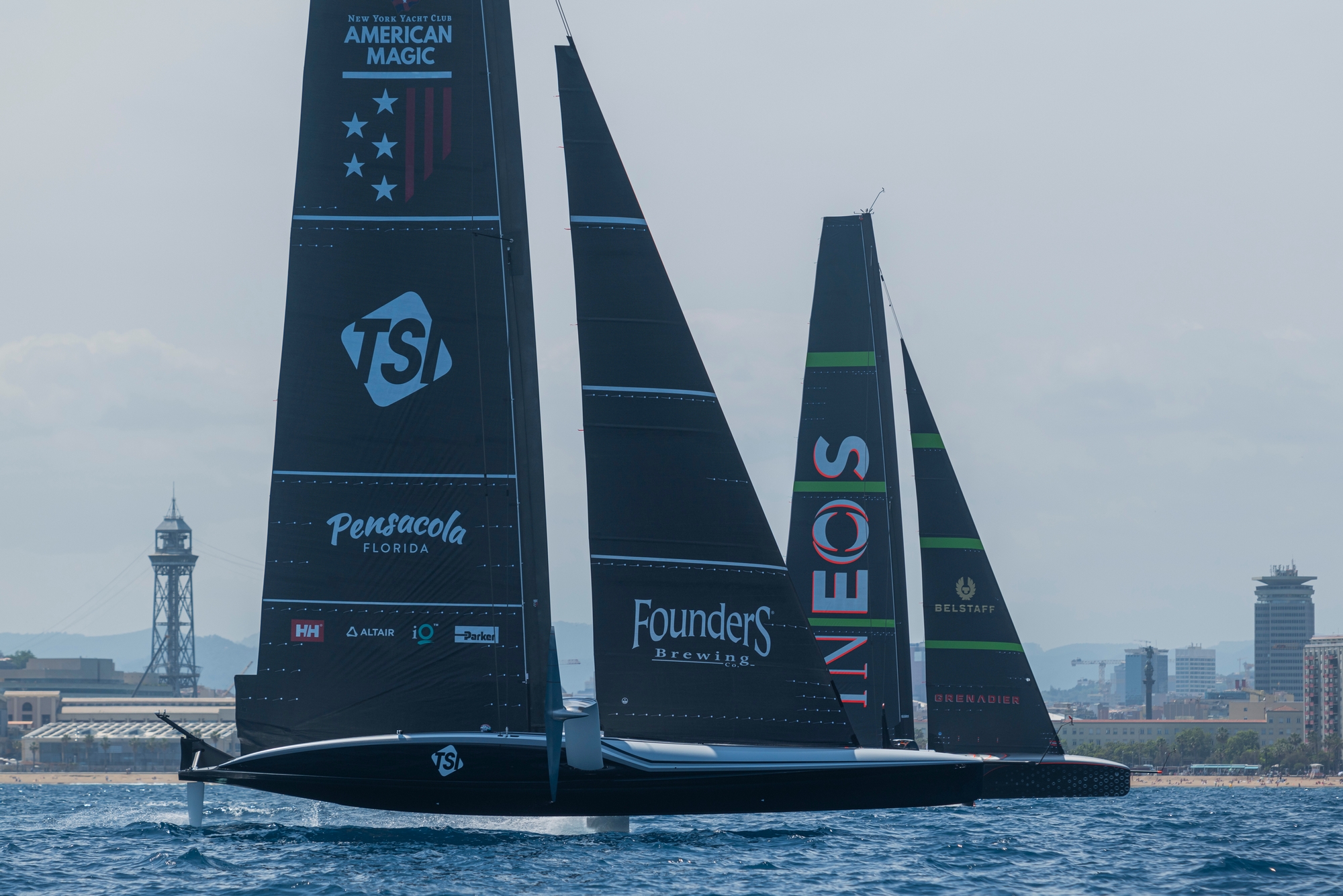
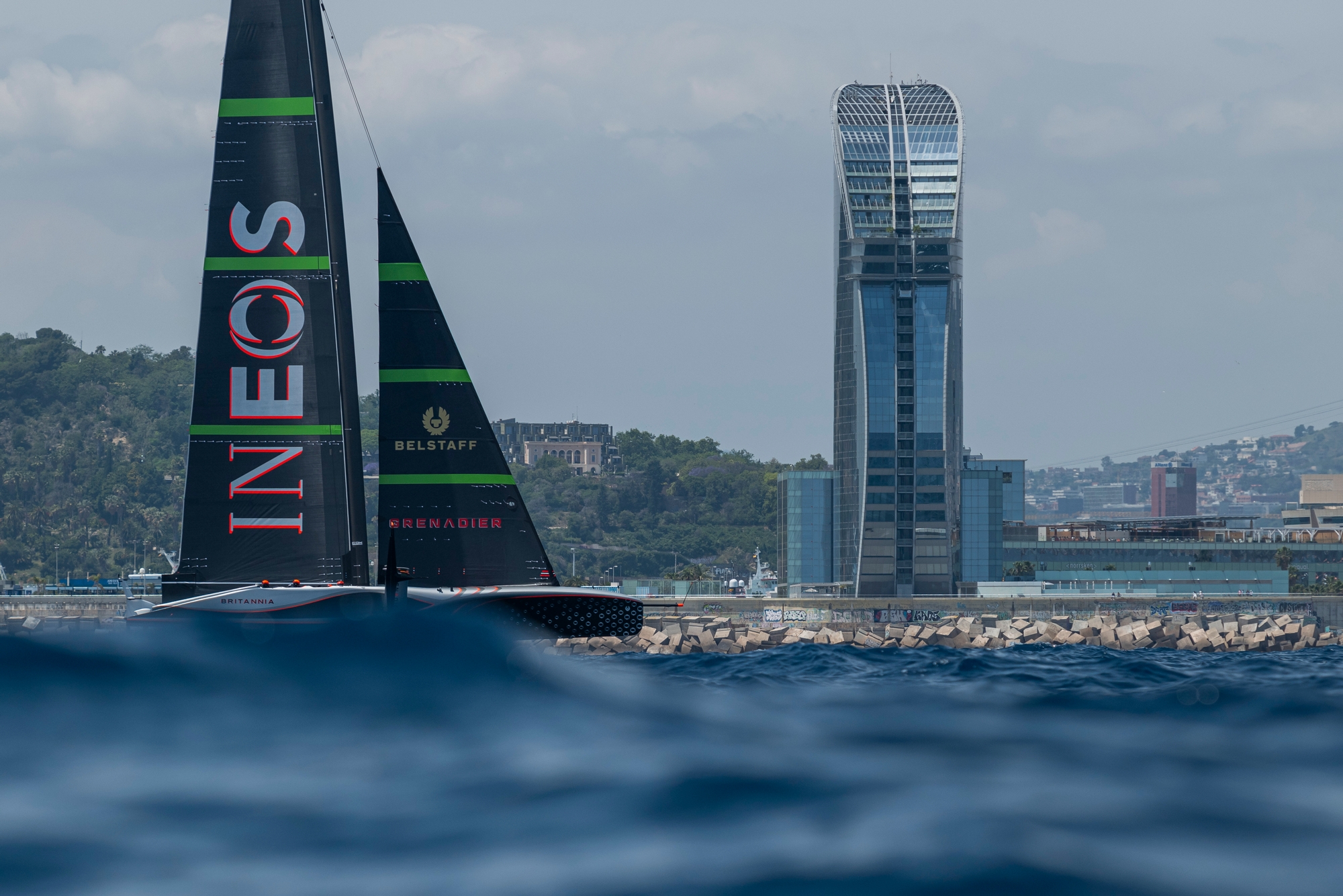
The drysuits may still be on but summer is fast arriving in Barcelona and on Monday it was NYYC American Magic and INEOS Britannia that kicked off their week of training with some entertaining sailing in a breeze that built to around 15 knots and then faded through the afternoon atop a sharp easterly wind-chop. Another day, and another clue as to the possible direction of the Louis Vuitton Cup but one thing is for sure, the British have a package that is set to take on the world.
Having docked out at 11am, INEOS Britannia was first to the racecourse area just off the Barceloneta beachfront and initially went in for some fast training with the team pushing the platform harder and harder. Sir Ben Ainslie and Giles Scott looked immense sailing together, transitioning well and nailing the manoeuvres both upwind and downwind. A possible collision with a piece of floating debris made the session feel dis-jointed but safety first, the team spent some 90 minutes checking that all was okay with Britannia before resuming sailing.
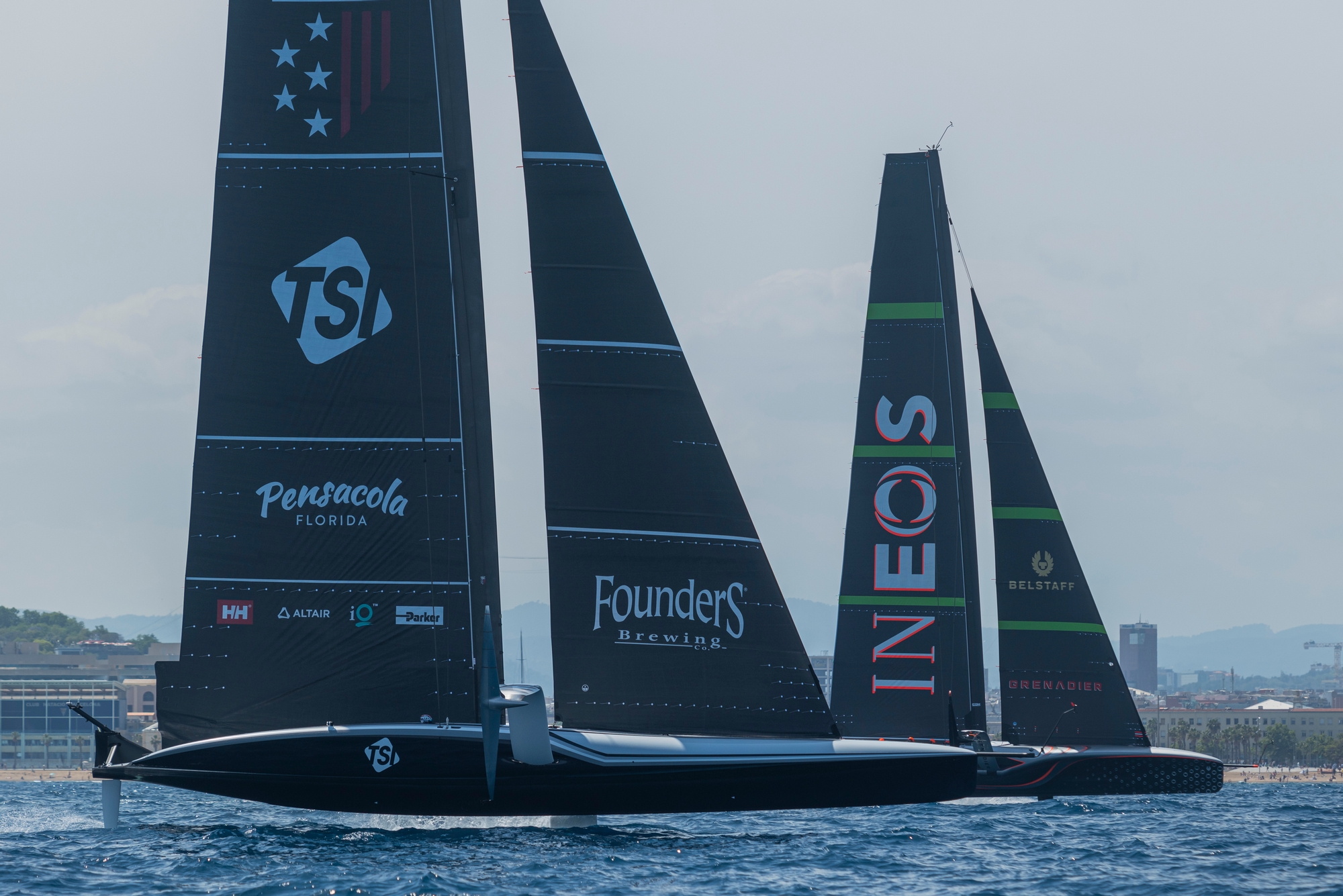
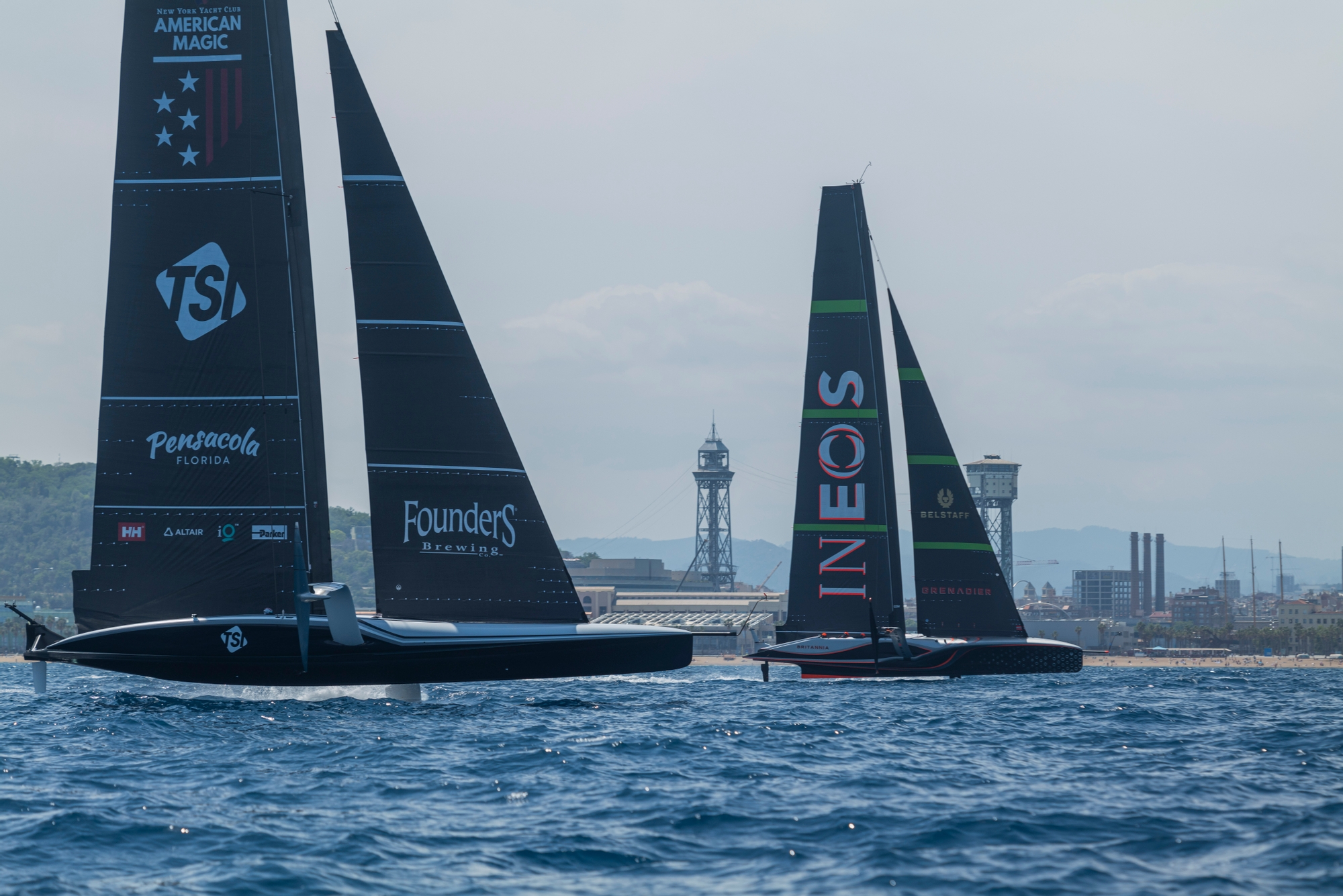
The take-away that will everyone sitting up was an unofficial line-up in the same stretch of water as NYYC American Magic and in a straight-line, INEOS Britannia appeared to very much have the edge. Many people’s tips to both make it to the Louis Vuitton Cup Final that starts on the 26th September, these two engaged for a short while before shearing away and continuing sailing.

Sir Ben Ainslie spoke to the recon team after sailing and summed up the day saying: “It was a long day for us, it wasn't our most efficient day that's for sure, we had a couple of issues there which stopped the boat for a while but good range of conditions and certainly some good learnings across that range that we’ll take away...We had an issue with the rudder, we weren't sure if we hit something or not and we were maybe being a little bit cautious but we really wanted to make sure that it wasn't something serious that when we started sailing again we might lose the rudder or worse so yeah that was what really what held us up there which is a bit frustrating, but it happens.”

The rudder area is a key focus for the team as Ben explained: “It's really interesting changing the immersion if you like or the length of the rudder and it does make a bit of difference to the set-up of the boat as you'd expect and the performance as well, and it's trying to find that balance particularly there was a little bit of chop sea-state around so trying to figure out just how hard we can push that without losing the rudder out of the water - we really don't want that to happen.”

Ben is clearly eyeing the next few months as critical to the campaign with the team working through both technique and systems upgrades, saying: “That's just ongoing, I think all of the teams will be playing with that all the way through up to and including the competition and I'm sure for us and I'm sure it's the same for the other teams there's so much more potential to come out of these boats and that's really the trick for all of us over these next 2-3-4 months is just how much can we fine tune the boats to get more consistency and of course improve that performance both straight-line and manoeuvres.”
When asked about reports in the New Zealand media that Emirates Team New Zealand had computer modelled all of the current designs in this Louis Vuitton 37th America’s Cup cycle and felt comfortable with what they saw, Ben added: “I hope it's wrong, but we all hope that's wrong. Sure we all know that the Kiwi models are very sophisticated so it may be correct, we do something similar within our own team obviously we have a slightly different opinion on that, but it's one of those things that each team's models are really exclusive to themselves and that's really critical as we know, not only in the design of the boat and the components but also the development of them and like I said earlier that refinement is going to be absolutely critical over the next three 4-5 months. We all know the Kiwis are going to be super-fast, they're the team to beat, and the rest of us are laser-focused on trying to get there.”

For NYYC American Magic it was a solid day on the water going through jib cross-overs and technique as helmsman Paul Goodison described: “It was just straight into a bit of race-training, we had a couple of things to try technique wise on some of the manoeuvres but mainly it was just about going around the racecourse and getting a bit used to that. The forecast looked really good this morning look like it was slowly ramp and ramp and get windier and windier and I think we met the peak breezes when we got out there like 14-15 knots and then then it slowly dropped and dropped and dropped so we had a good look at the J2/J3 crossover and also at the end in some of the lighter conditions with the J2, so it was quite a good day.”

The American team have been relentlessly playing with rails on their foils and Paul explained more, saying: “I think it's just about reducing the drag of the spray on the foil. And the reason we have so many that we've changed around is just to get a better feel for which ones we’re using more, which ones we use upwind, which ones we use downwind. You see today like the sea state was quite big compared to previous days, so you just get a feel how much they’re going in and out of the water and really just seeing which ones you think are working the best...I think you'd be lying if you could feel the difference, but I think it's more visual, just seeing what's going off and again looking at the cameras afterwards seeing where you're spending most of the time on the foil.”

And talking about the new rudder, Paul seemed more than happy with the latest iteration, saying: “The new rudder is a good step on from the previous generation, so it's definitely easier to drive the boat on, to push the boat a bit harder and I think it's a good step forward so we're really, really, pleased with the new rudder.”
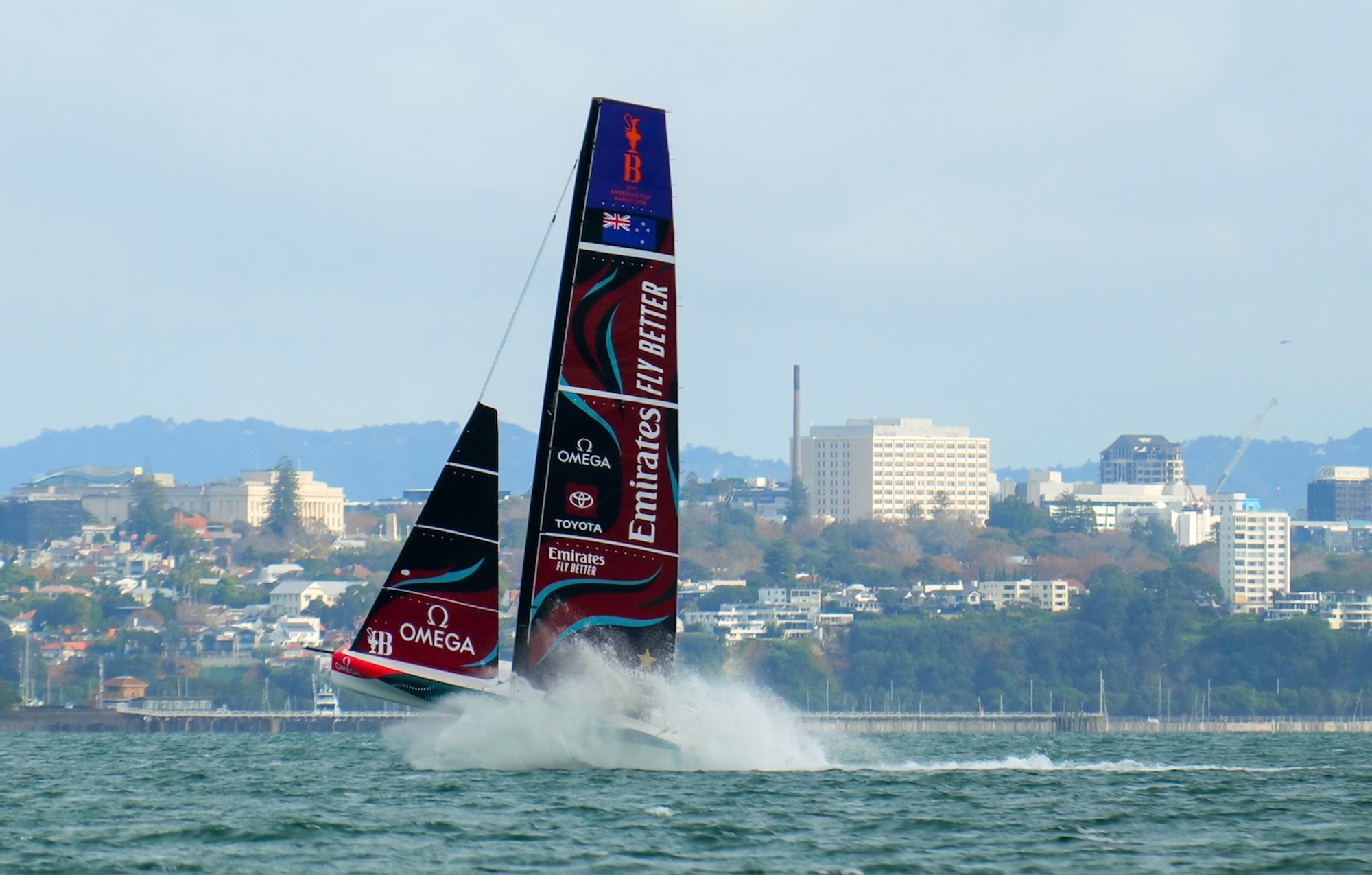
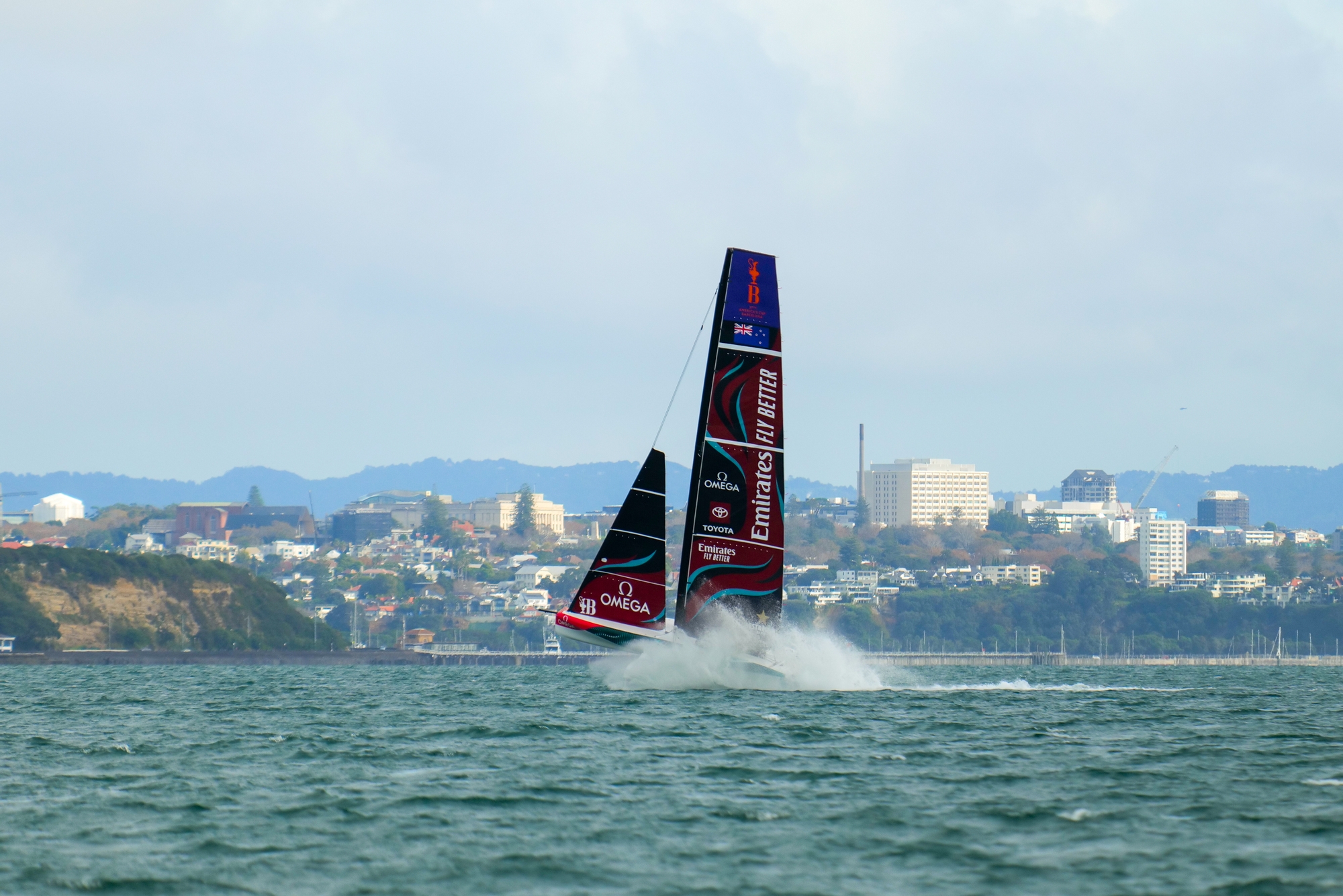
Down in wintery Auckland, it was another day for Emirates Team New Zealand operating at a very high pace with gusts of up to 18 knots at times making their two-boat AC40 session, a real screamer. The big focus was on pre-starts and crucially the final lead back into the line that was almost breath-taking to watch at the speeds they were doing. Both teams were on point today, giving very little away and the positional placement of the boats into the final run were executed with real intensity and usually dictated the outcome.
Speaking afterwards, Nathan Outteridge, port helm on the almost-equalised LEQ12 and a key member of the Emirates Team New Zealand squad, summed up the day, saying: “It's been good, clocking up the hours and doing heaps of match-racing starts and just going through the onboard comms between us and how the other boat’s operating and it just feels like everyone is getting more comfortable which is great...It is mostly just practise starts, I think you try and set up a few drills but it's effectively just pre-starts but with the wind being so dynamic you know very shifty up and down creates enough scenarios in itself and it's about us then doing the homework in the evenings to sort of lock in the learnings and keep progressing forward.”
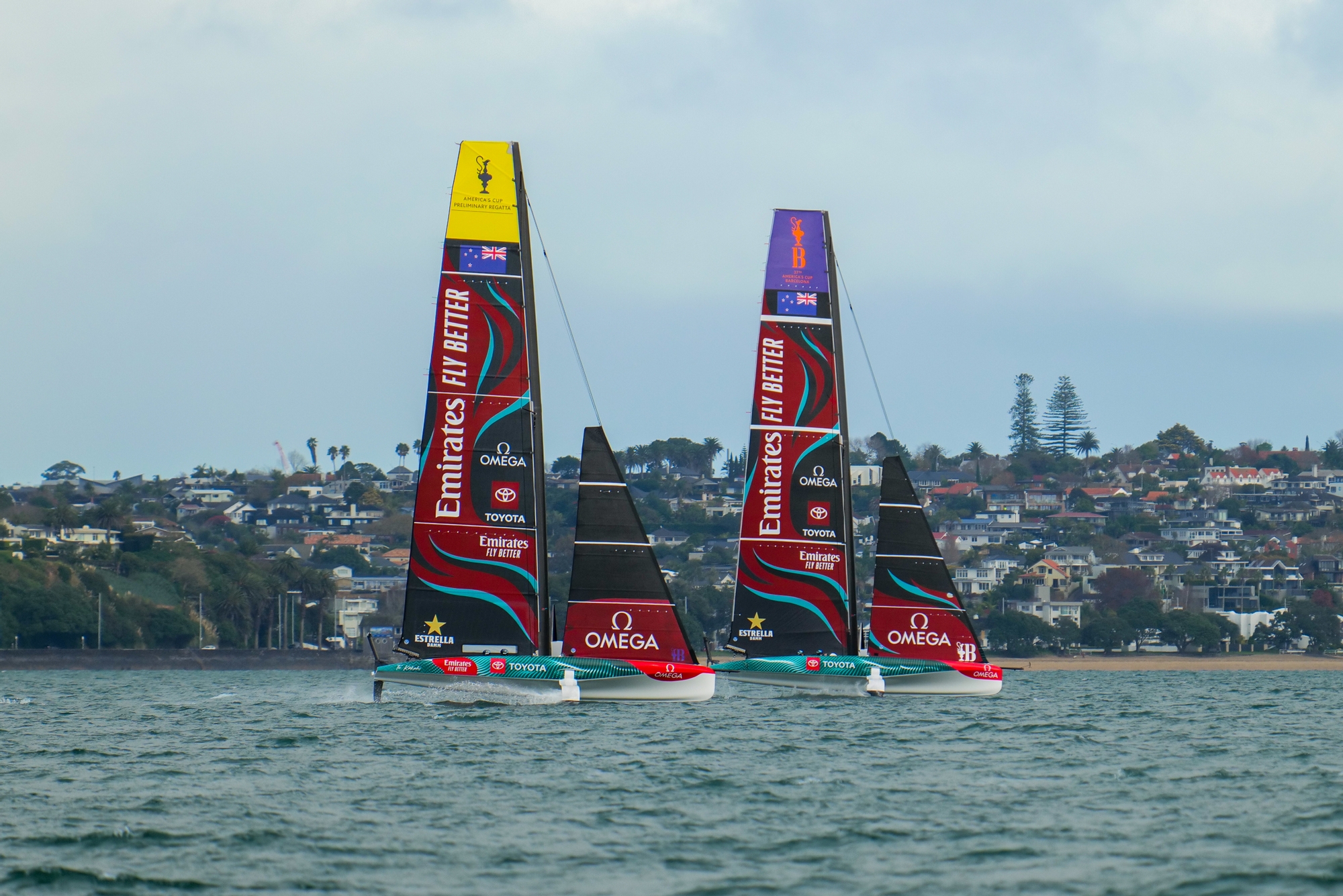
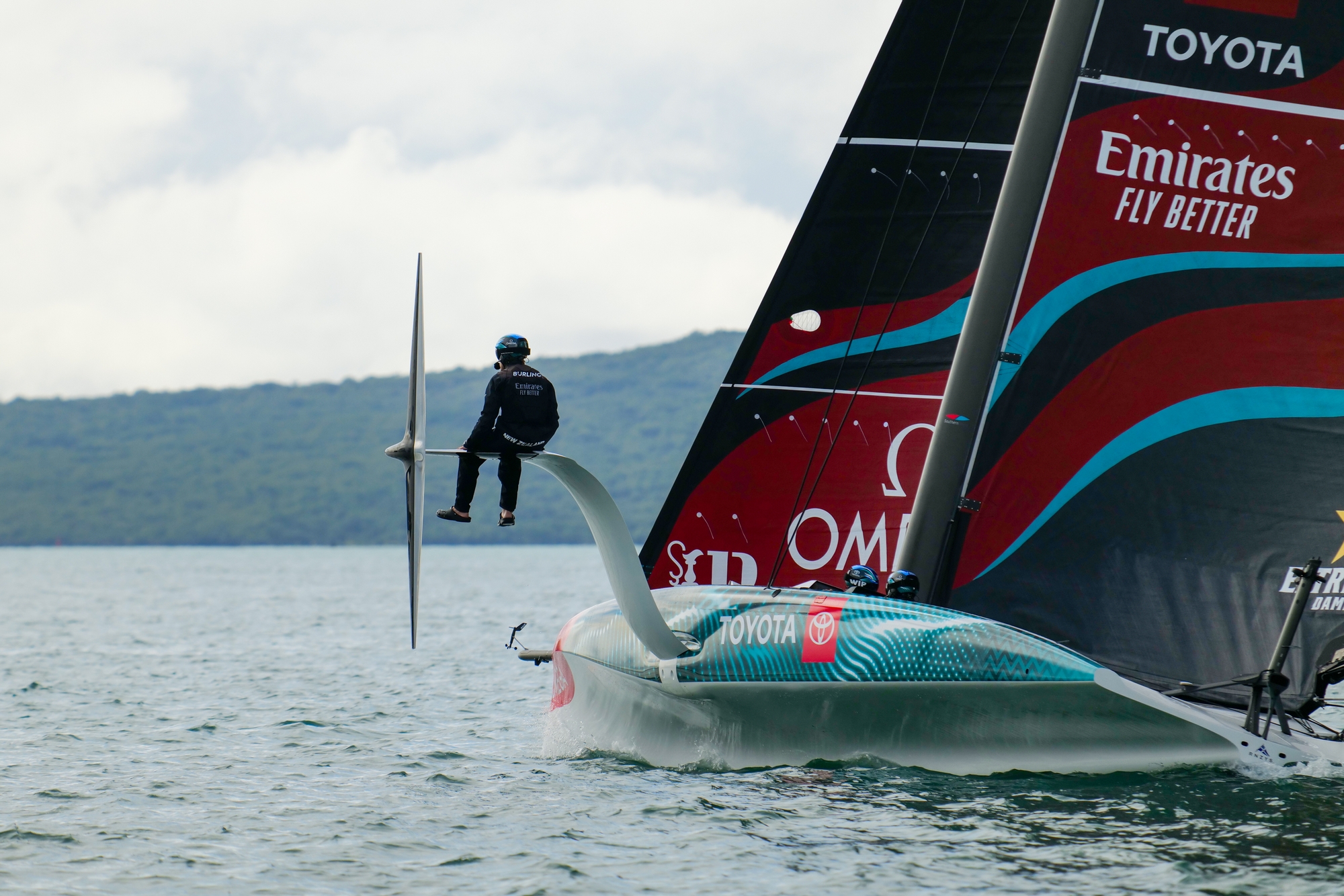
With the LEQ12 now running a one-design foil on the port arm which makes the starboard tack pretty much even, Nathan spoke about the decision, saying: “We thought it would be good to just check back into the one design foil for some of the stuff, obviously our development foils are a little bit faster so we were getting complaints from the other team that we had an unfair advantage so we tried to even it up a bit and that's definitely helped to make things a bit more realistic in the pre-start and it's been really good to have the boats line up equally at least on starboard tack.”
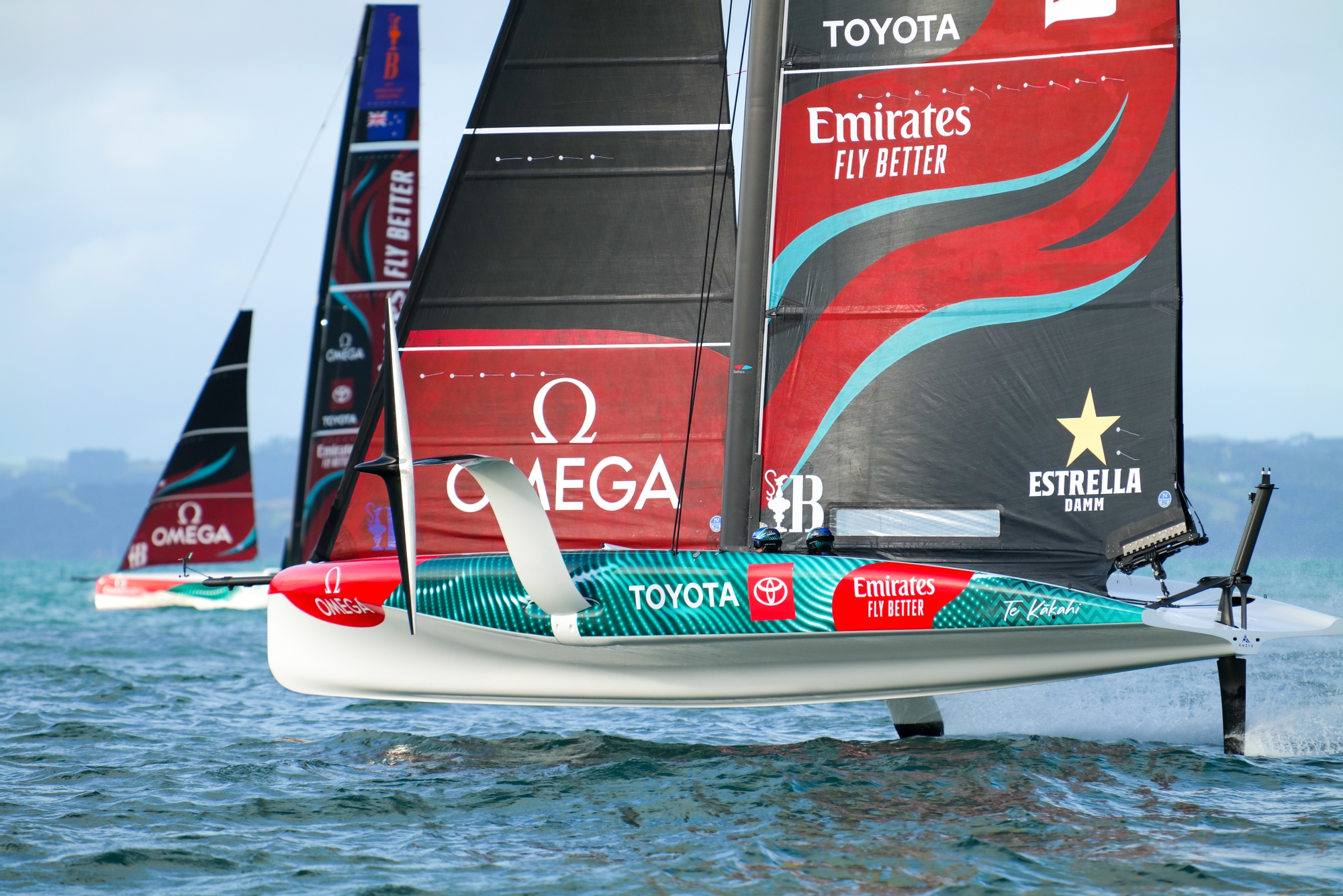
Complimenting the pressure that the ‘A’ team have been under in this sailing block, Nathan commented: “I'm sure if you ask us we'd like to be winning all the starts on our boat but from an overall learning it's really good to have such a good sparring partner. Josh, Sam, Marcus and Gemma have been doing a fantastic job on the one-design boat helping us create the scenarios and asking us the difficult questions of what we want to do when we're in certain spots and if we don't execute how we want to, they punish us, so it's good, fun racing out there.”
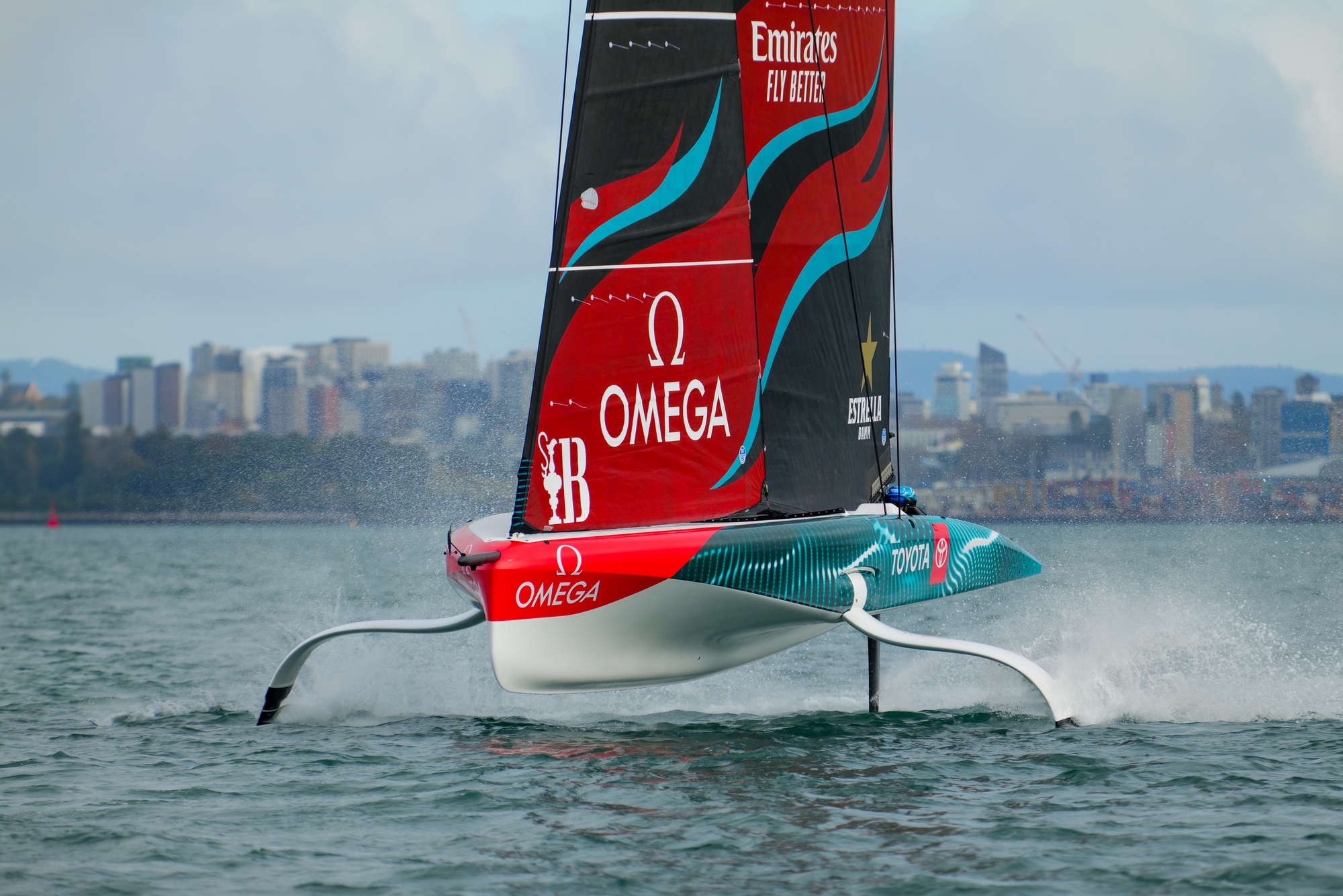
Emirates Team New Zealand will pause for the weekend coming up before another block of sailing ahead of the team de-camping to Barcelona and working up ‘Taihoro’ the team’s AC75 which is now safely on its way up to Europe. Tuesday will see Orient Express Racing Team conduct some mast-up tow-testing whilst the British and Americans will again be training. (Magnus Wheatley)
On-Water Recon Report – INEOS Britannia: INEOS Britannia rolled out their AC75 at 08:00 today and we could see the onshore operation team working with plumb lines, measuring tapes and total stations before stepping the mast. Crane in was at 09:30.
Same cameras as last sailing session were installed on both port and starboard foils. LiDAR cameras for the mainsail and jib were also on board. We could see also that a spray protection had been installed for the trimmers pods.
Dock out was at 11:00, when Britannia was towed to the entrance of the harbour where sails were hoisted. Mainsail MN2 was paired to a J2 jib. A wind of about 6-8 knots TWD 90 º @11:25 was blowing when they finished hoisting the sails and rapidly increased to 10-14 knots after sailing 1 mile out from the harbour. After 30 minutes sailing, 4 tacks and some straight lines were done and just after they bore away and touched something with the rudder. They had to stop and check that the rudder was fine so they could keep the sailing session running. This took around 90 minutes. Meanwhile they changed the jib to the J3 as the wind had increased.

Once they managed to verify that the boat was fine, they continued the training session which basically can be summarized in 9 upwinds and 9 downwinds where 32 tacks and 24 gybes were drilled. 4 of them (up & downwinds) were done as 2 x 2 lap races (10 minutes each lap) including a pre-start process at each of them. Mark rounding’s were practiced at almost every single upwind and downwind (sometimes with virtual marks, sometimes with physical marks) alternating the side of the roundings to starboard and to port each time.
One swap of batteries was done at 15:25, almost 4 hours after they started to sail (almost 2 hours of effective sailing). Two cyclor swaps were done: the first after 45 minutes of effective foiling, the second after 80 minutes of effective foiling. Three jib swaps were done: from J2 to J3 (wind increased from 6-8 to 10-14 knots); from J3 to J2 (wind decreased from 10-14 to 6-8 knots); from J2 to J3 (wind increased from 6-8 to 9-12 knots).
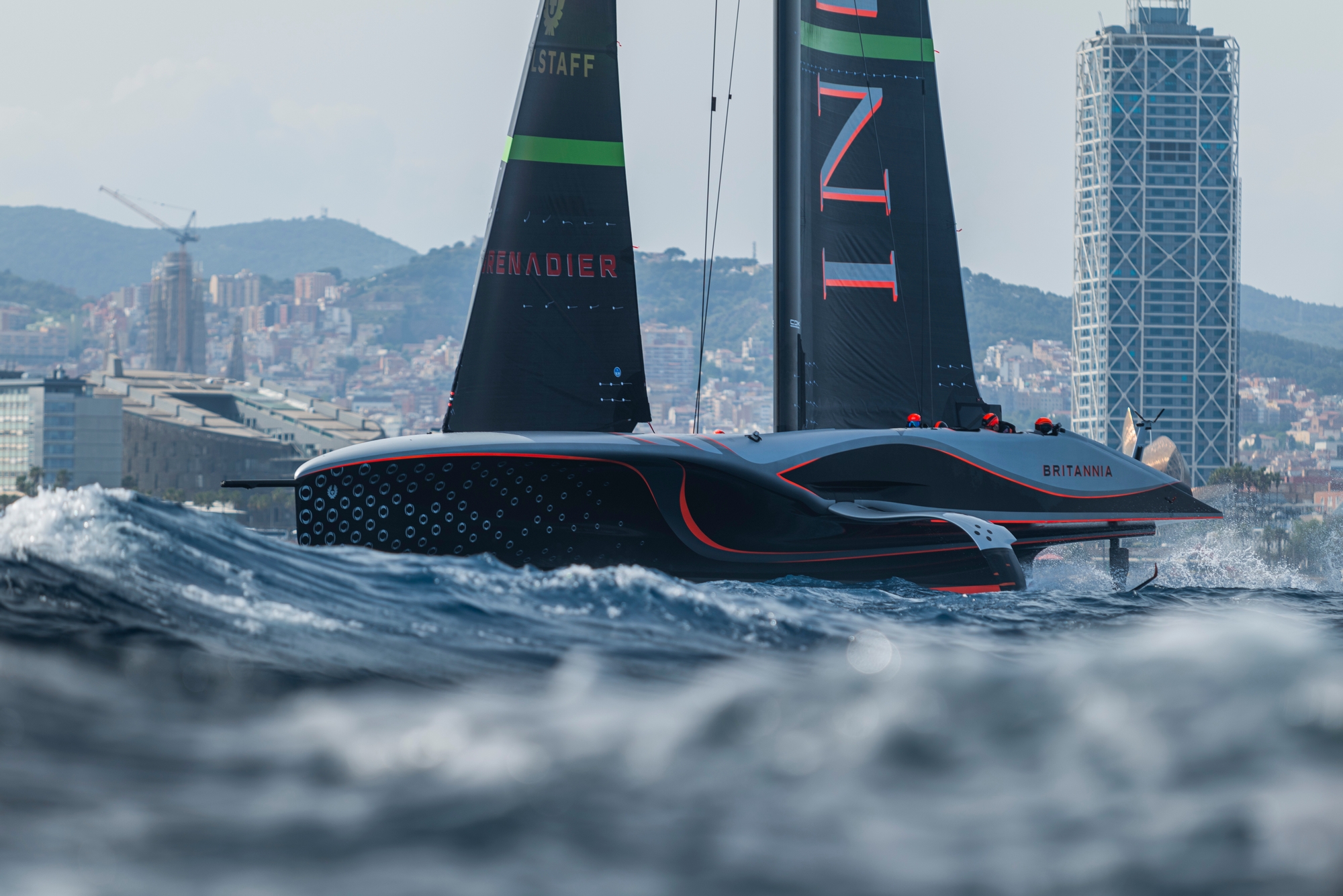
To highlight the following events:
-In one of the upwinds, very interesting crossings were seen with American Magic team.
-A hard nosedive was seen in a gybe manoeuvre at the first gybe from the second lap of the first practice race where they lost the Windex from the bowsprit.
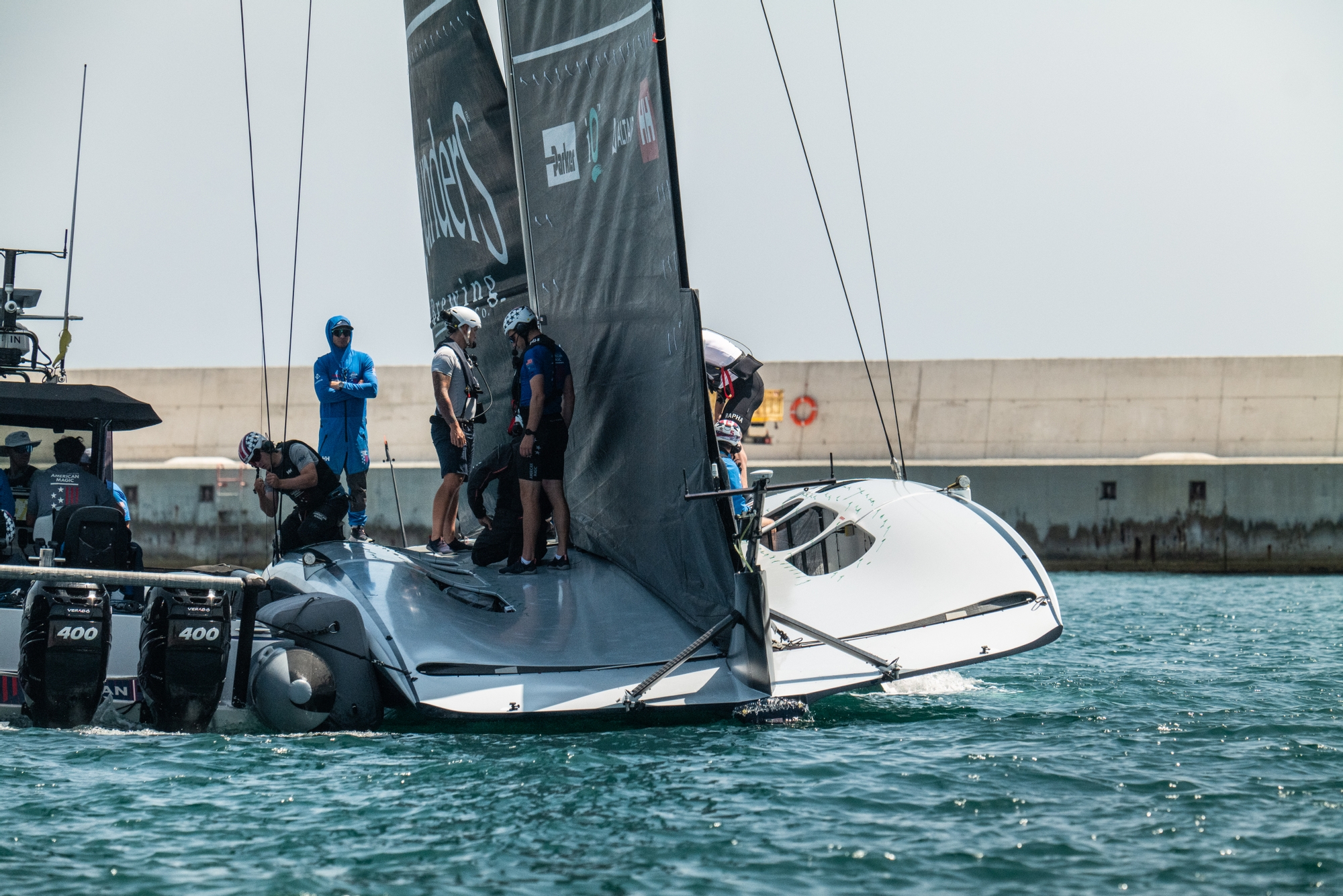
-After the last cyclor swap, Britannia started sailing upwind and we couldn’t see properly what happened but suddenly we saw the bow going quite high. Not sure if the rudder was close to go out from the water surface and what we saw was the reaction from a safety system to avoid that. Immediately Britannia stopped, they changed the jib from J2 to J3 and some technicians jumped from the chase boat to perform some quick checks.
Team INEOS Britannia dropped the sails at 17:30 h and docked in at 17:50 h after approximately 190 minutes of sailing. Jose Luis Piñana – INEOS Britannia AC Recon
On-Water Recon Report – Emirates Team New Zealand: Emirates Team New Zealand headed out onto the Hauraki Gulf this afternoon for a two-boat testing day. Towing down the harbour and hoisting M2 and J3 in Mechanics Bay, the team got started sailing, heading downwind and meeting the AC40 OD that had been out for the morning of sailing with the Youth Team.
There was a crew swap on the AC40 OD, with the Youth team getting off, and Josh Junior, Sam Meech, Gemma Jones, and Marcus Hansen getting onboard. Both teams engaged in warm-up sailing in the inner harbour off Kohimarama Beach. LEQ12 came to a stop after some tight manoeuvres and then spent time inspecting the main skin clew rams. The technical crew onboard worked on the issue, and the team lowered the jib and hooked up the tow, heading back toward the base. They stopped in Mechanics Bay, where they met a RIB that had come out with spare parts to fix the problem.
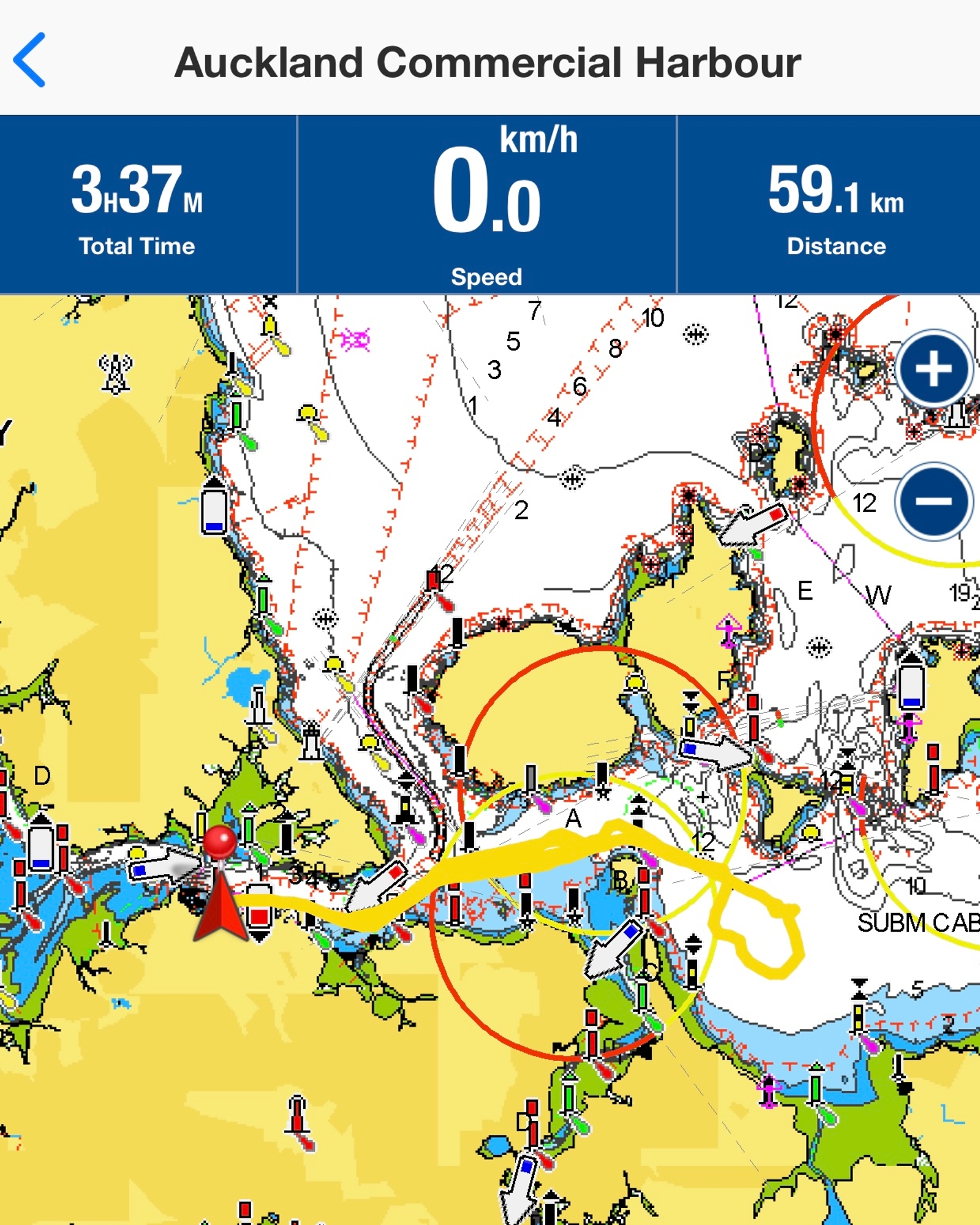
Once the issue was sorted and tidied away, the teams resumed the sailing session, heading downwind and again catching up with the AC40 OD in the ‘Back Paddock.’
A course was set, and the teams practiced starts. A significant takeaway from the racing today was that the speeds matched between both boats, resulting in very even racing. Shifty conditions also made for a tricky starting process; with both boats taking starts off each other at times.
Leading into the start line was challenging today, as both teams struggled to kill time toward the line, often having to make last-minute manoeuvres and facing a difficult final approach.
After completing 8 starts, the teams sailed back up the harbour together, and LEQ12 dropped sails before heading for the dock.
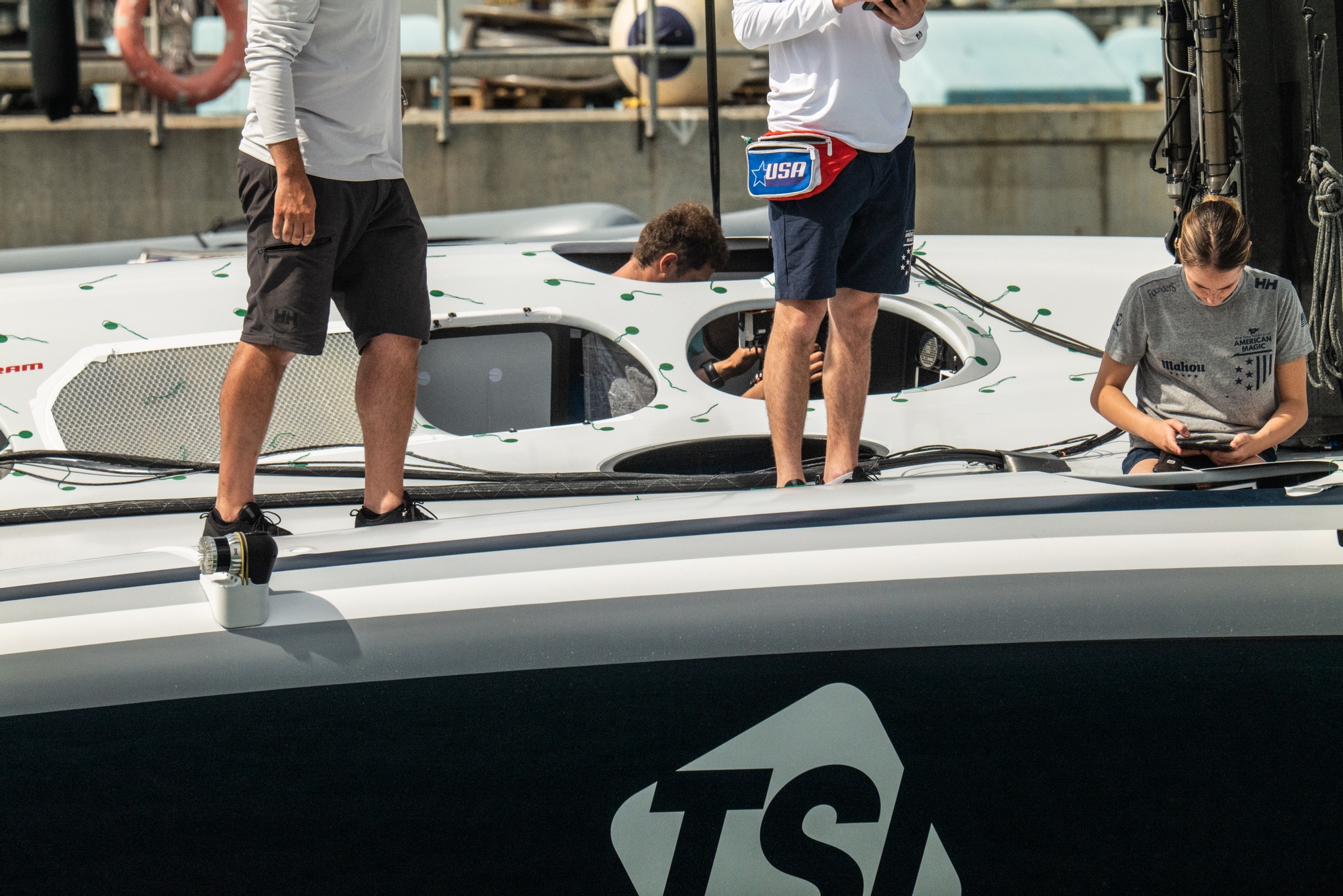
On-Water Recon Report – NYYC American Magic: American Magic rolled out Patriot at 09:55 and craned in 30 minutes later. Standard systems checks were carried out, with further FCS testing noted, as well as work on the jib track. Stickers were placed along the sheerline, but it was not clear what exactly these stickers were. The team docked out at 12:25 and hoisted the MN1-1 mainsail and J3-1 jib under the breakwater.
American Magic closed their sailing day at 15:55. The team docked in at 16:20 after four hours on the water.
According to Paul Goodison in the post sailing interview, the focus was on race training, with attempts at different manoeuvre techniques, as well as looking at the crossover between the J2 and J3 jib.