RECON LOG: TAKING IT SLOW – TAIHORO TRAINS DOWNRANGE
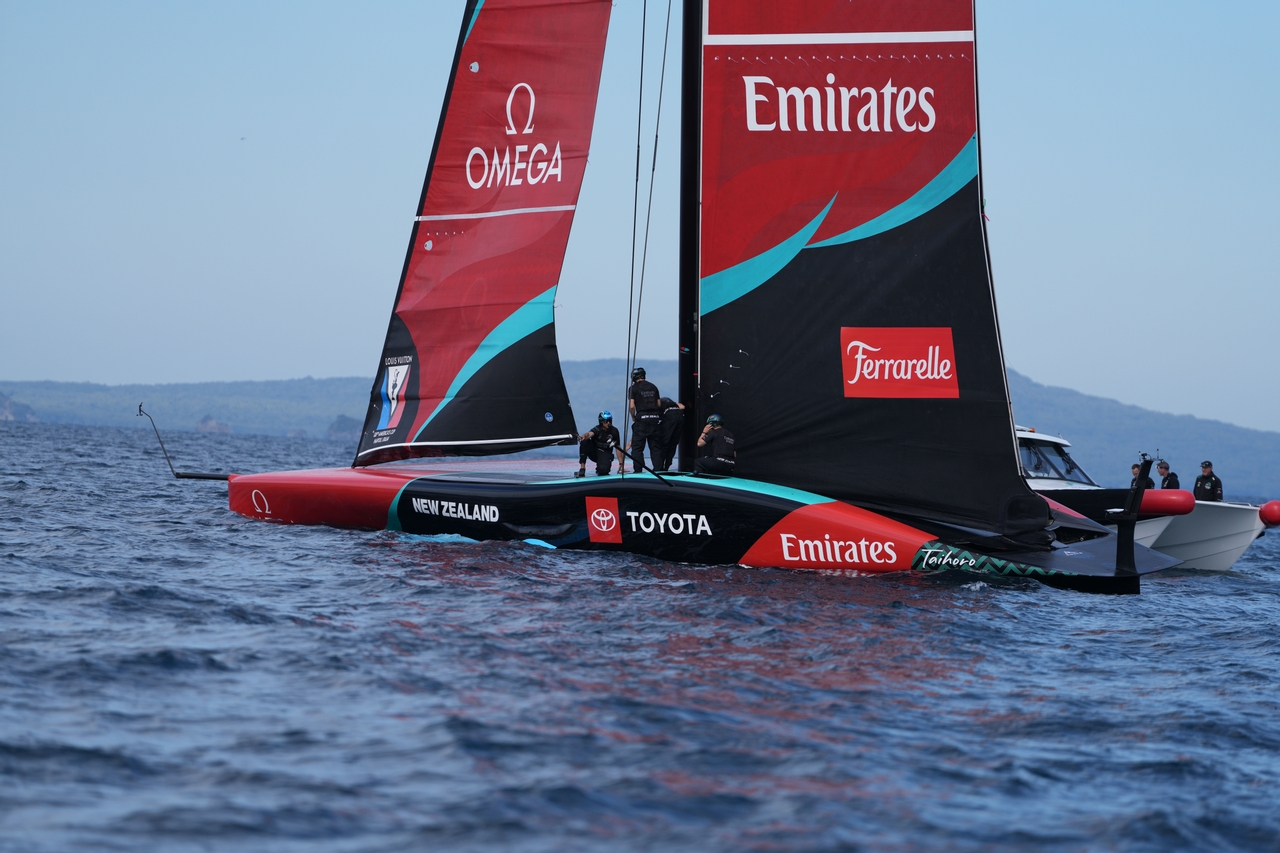
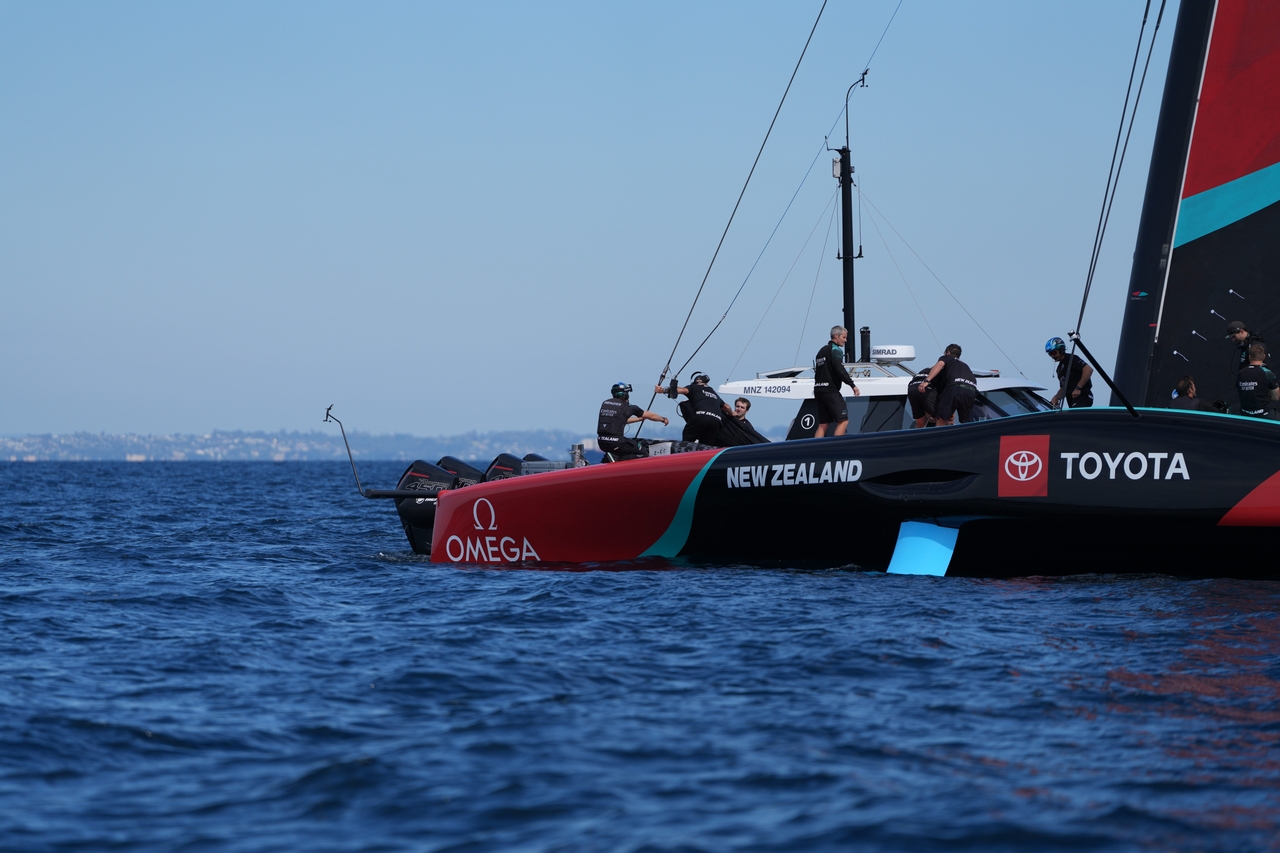
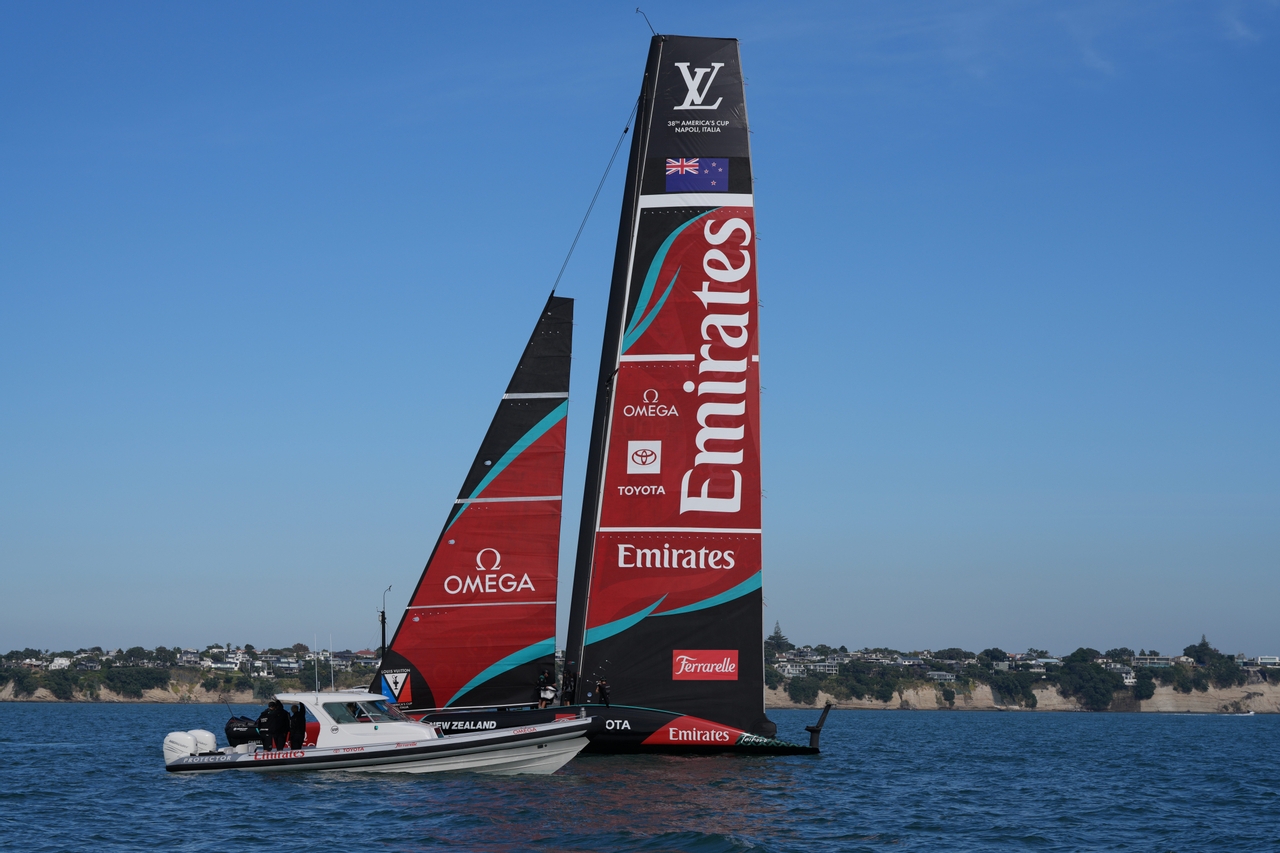
Having spent the day shoreside on Wednesday with the Hauraki Gulf being described as ‘mirror calm’ by the recon team, Thursday was a chance for Emirates Team New Zealand to get out and explore set-up, controls, cant angles and the inter-play with the double-skin mainsail at the very bottom end of the wind-range.
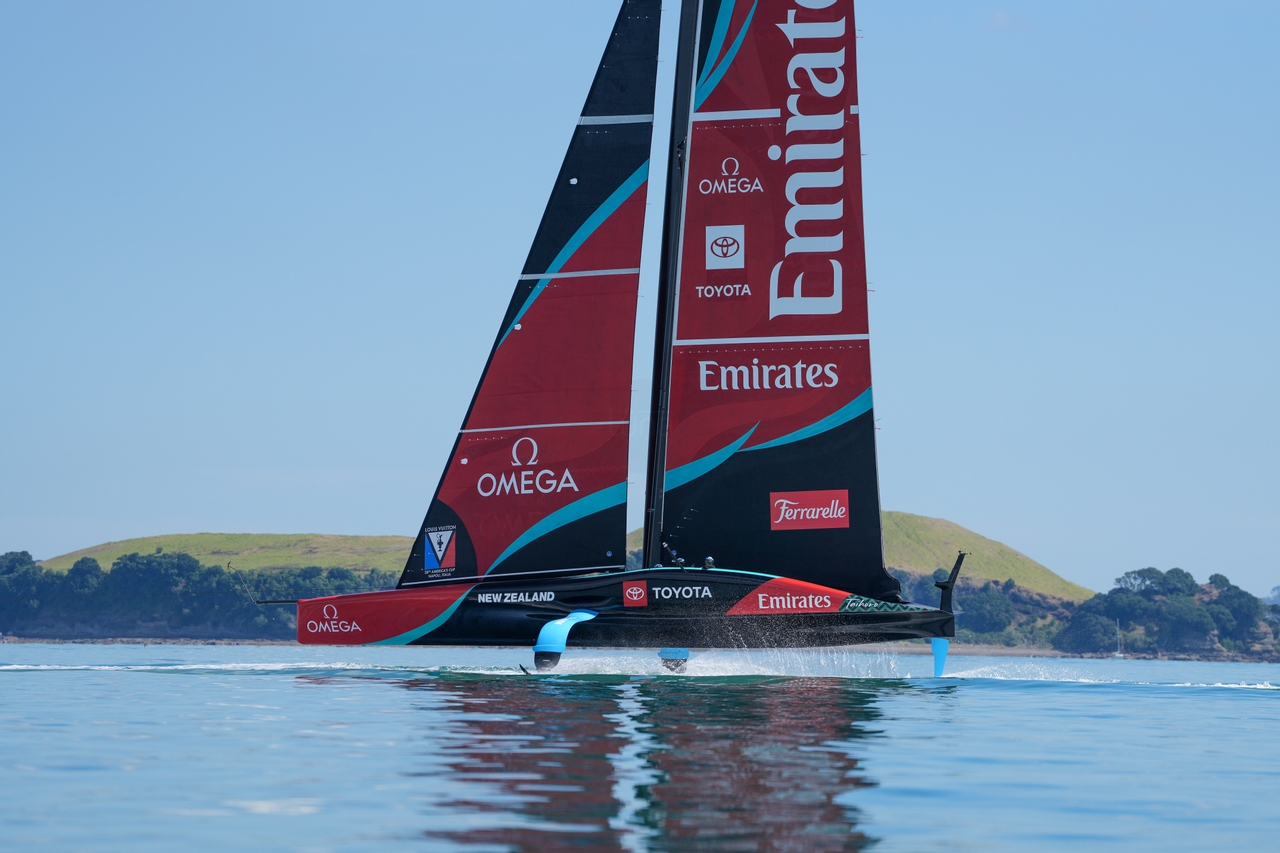
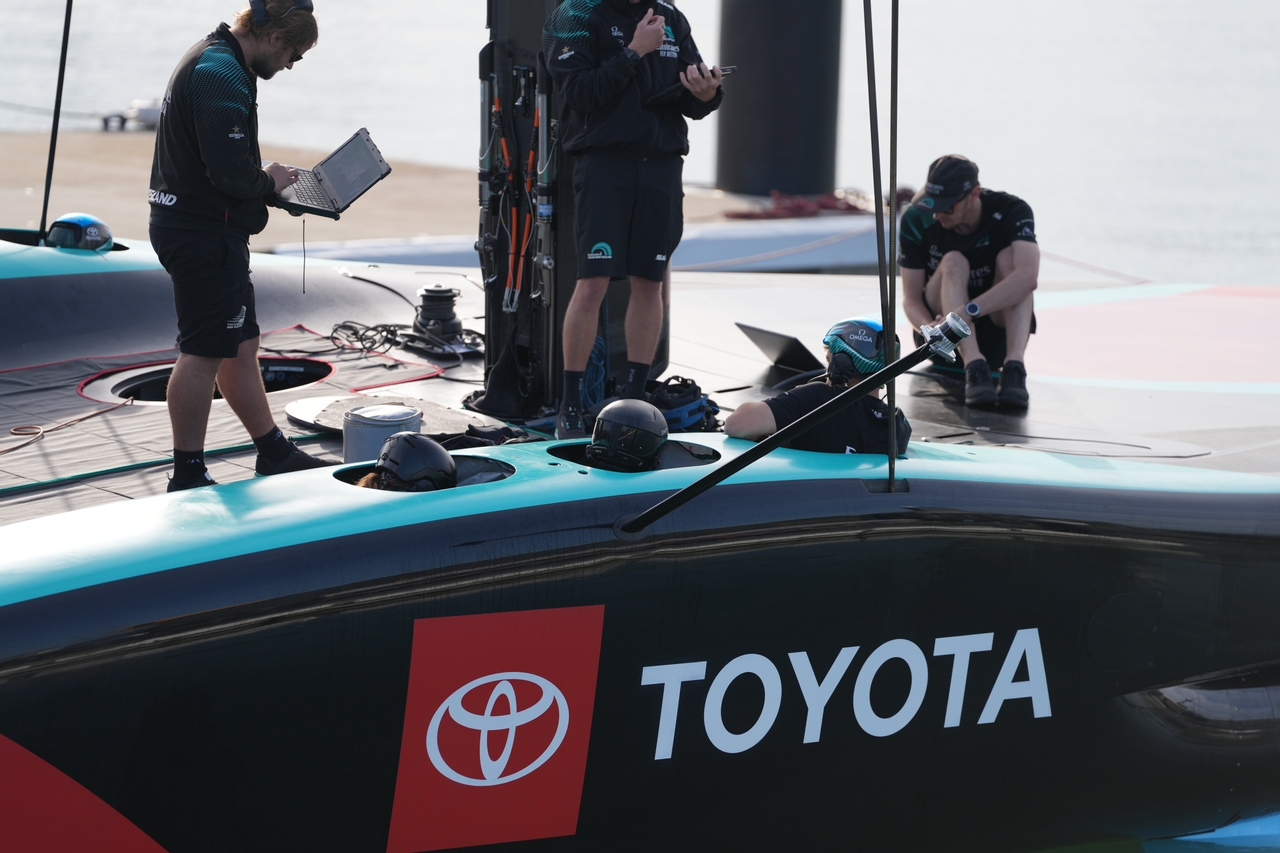
At times it was very much touch and go with the Chase Boat team earning their keep by towing to find the pressure, but it was a solid session with the team rotating and doing battery swaps to make the very most of a near five hour training session.
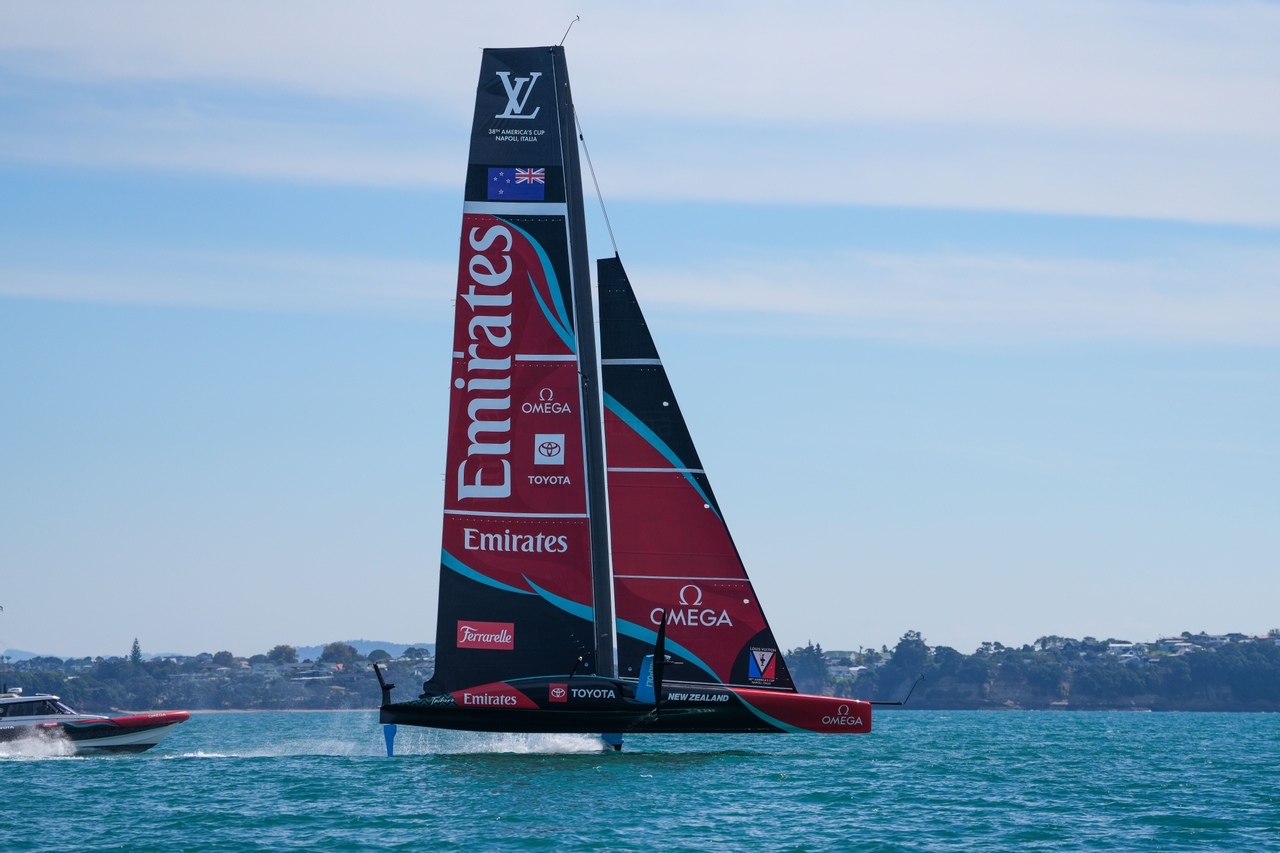
Interesting to reflect back on what the recon team observed on the Wednesday ‘day off’ for the sailors with plenty of rig tuning apparent. As they said: “The mast was lifted into boat, connected, rake was checked, boat lifted up and then removed and put back into the shed. It appeared there was an adjustment to mast rake - rake aft. This was indicated by the mast being pulled a long way further aft than previously to pin the stays and the back stay purchase system was also shortened when attached. The mast rake was measured by electronic level on the back of the mast surface. It was unclear but there was some technical difficulty with what appeared to be the forestay load reading.”
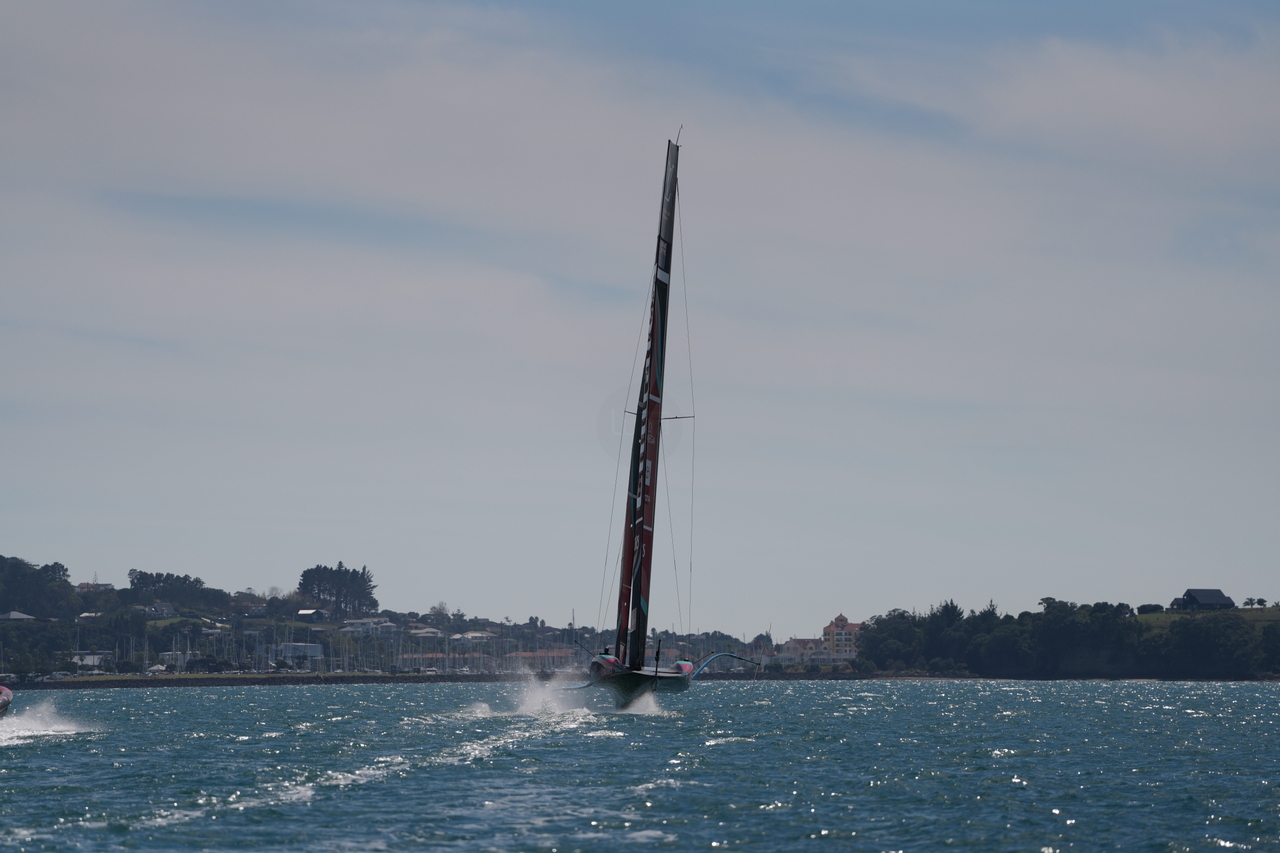
Taihoro has looked rock-solid in flight in all previous sessions (almost too solid) but the mantra of ‘if it ain’t broke, don’t fix it’ really doesn’t come into the Kiwi lexicon as they are always looking at improvements and asking the questions around their set-up and pre-sets with the simple goal of improvement to the numbers they see in simulation.
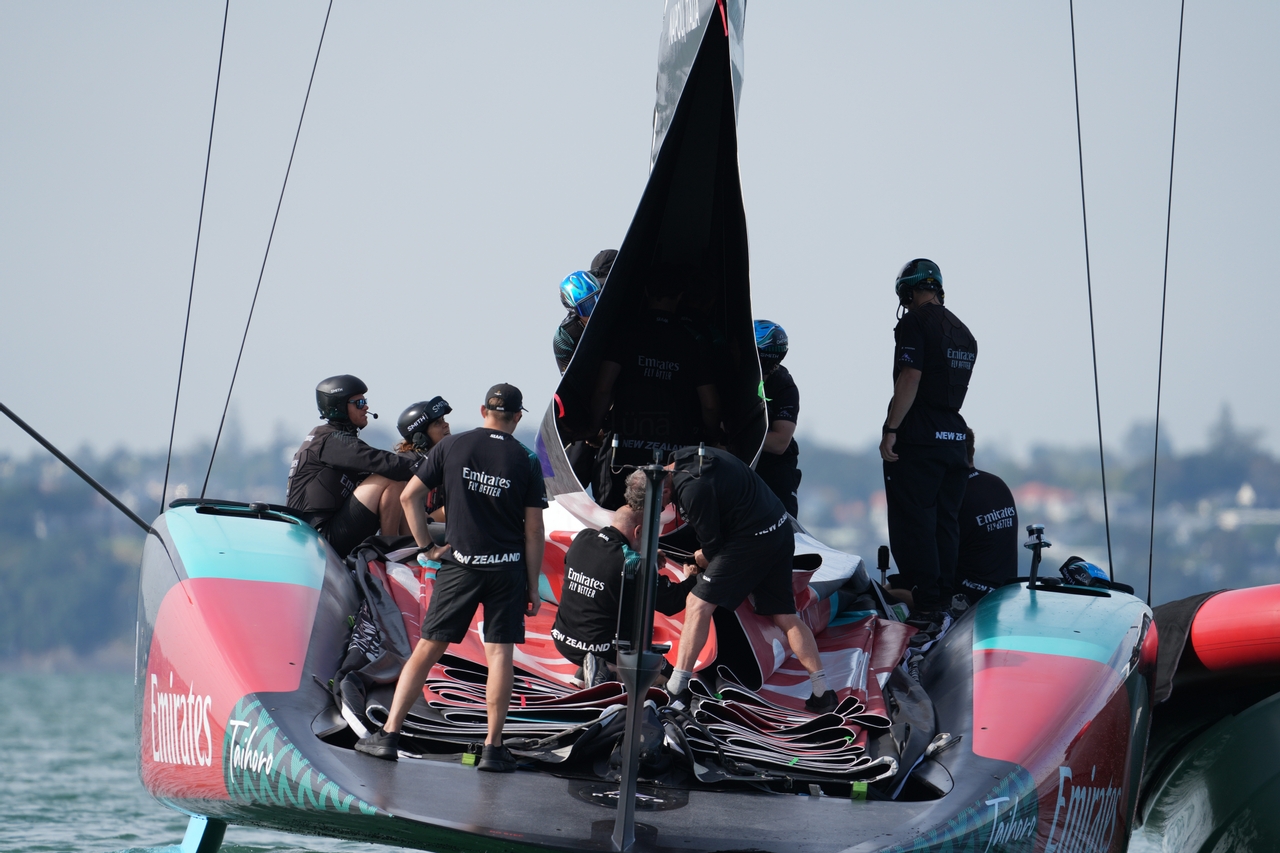
On Thursday, Nathan Outteridge and Seb Menzies were on co-helm with Jo Aleh, Iain Jensen and Andy Maloney on trim and the full recon report covered their sailing day as follows: The boat rolled out at 08:00 with Rig No.3 and left the dock on tow, going off tow at 10:12. ETNZ arrived in the Hauraki Gulf sailing area with conditions of 10–12 knots SSE and flat water. At 10:28 the mainsail was on lock and the jib was hoisted at 10:36. ETNZ began sailing at 10:38. After an initial period of sailing, ETNZ stopped at 11:17 to carry out adjustments to the jib clew and a check of the mainsail traveller system. They then carried out a series of bear-away practice runs past Browns Island, followed by a long downwind leg towards Tiritiri Matangi and returning upwind towards Rakino. During this phase, a couple of bow-up / stern-squat moments were observed on the downwind. The boat was sailed in a windward heel configuration downwind, combined with a relatively twisted sail setup.
During the session, work was carried out on the jib tack area, a halyard mouse line was installed, and a jib lock issue was identified. By 11:53 the wind had decreased to approximately 6 knots. At 12:05 the jib was lowered and a sail change was carried out, with the J3-2 removed and the J2-2 hoisted. ETNZ resumed sailing at 12:19 in approximately 8 knots SSE. They sailed for approximately 40 minutes, executing 1 tack and 1 gybe, before stopping again at 13:00. During this time, grey bags were brought onboard (possible battery swap.
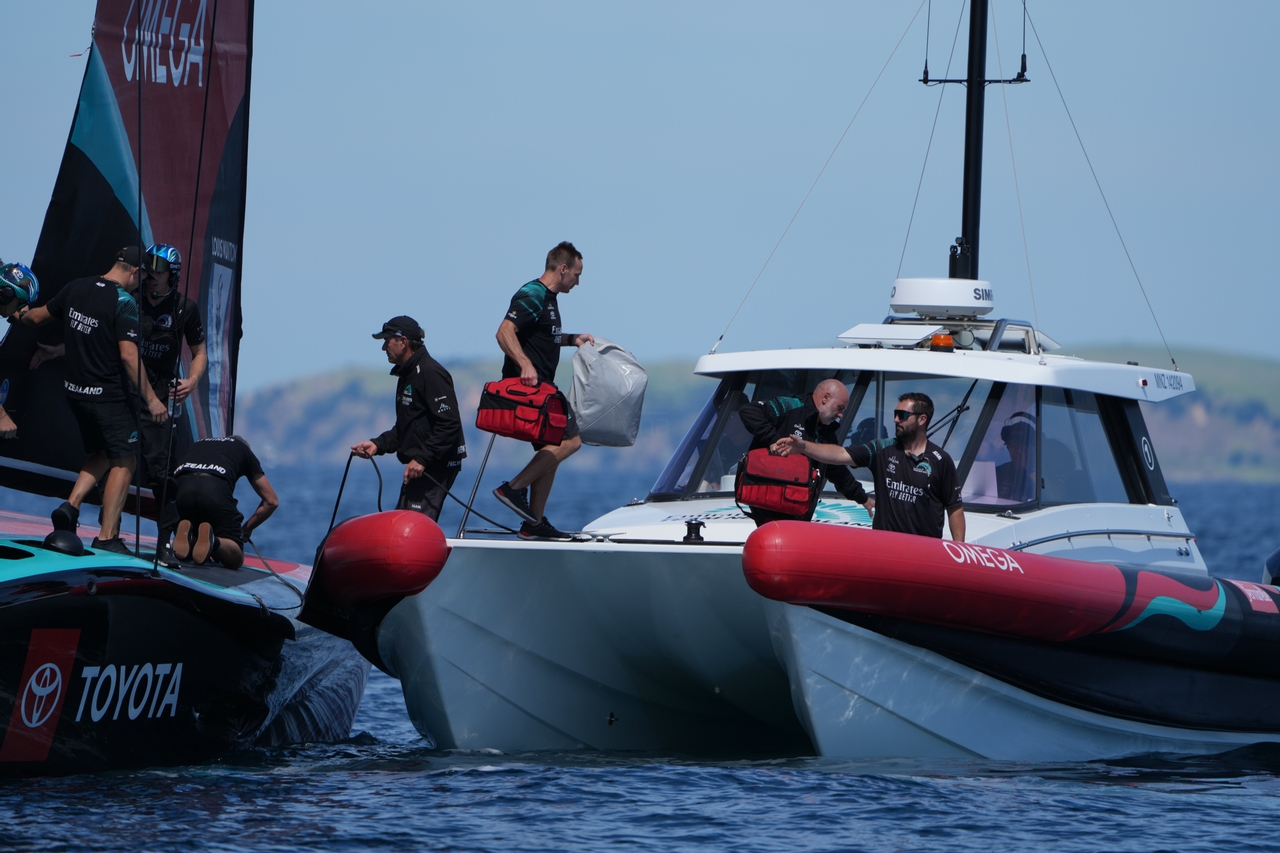
A guest disembarked, and a white briefcase-sized unit was brought onboard, with crew spending time working below deck, likely on onboard systems. At 13:27 the boat was taken on tow again. The wind continued to decrease to approximately 4 knots. ETNZ was towed towards the Maraetai area and attempted to resume sailing, however conditions were too light to continue. The boat remained on tow and returned to the crane, ending the session at 15:18.
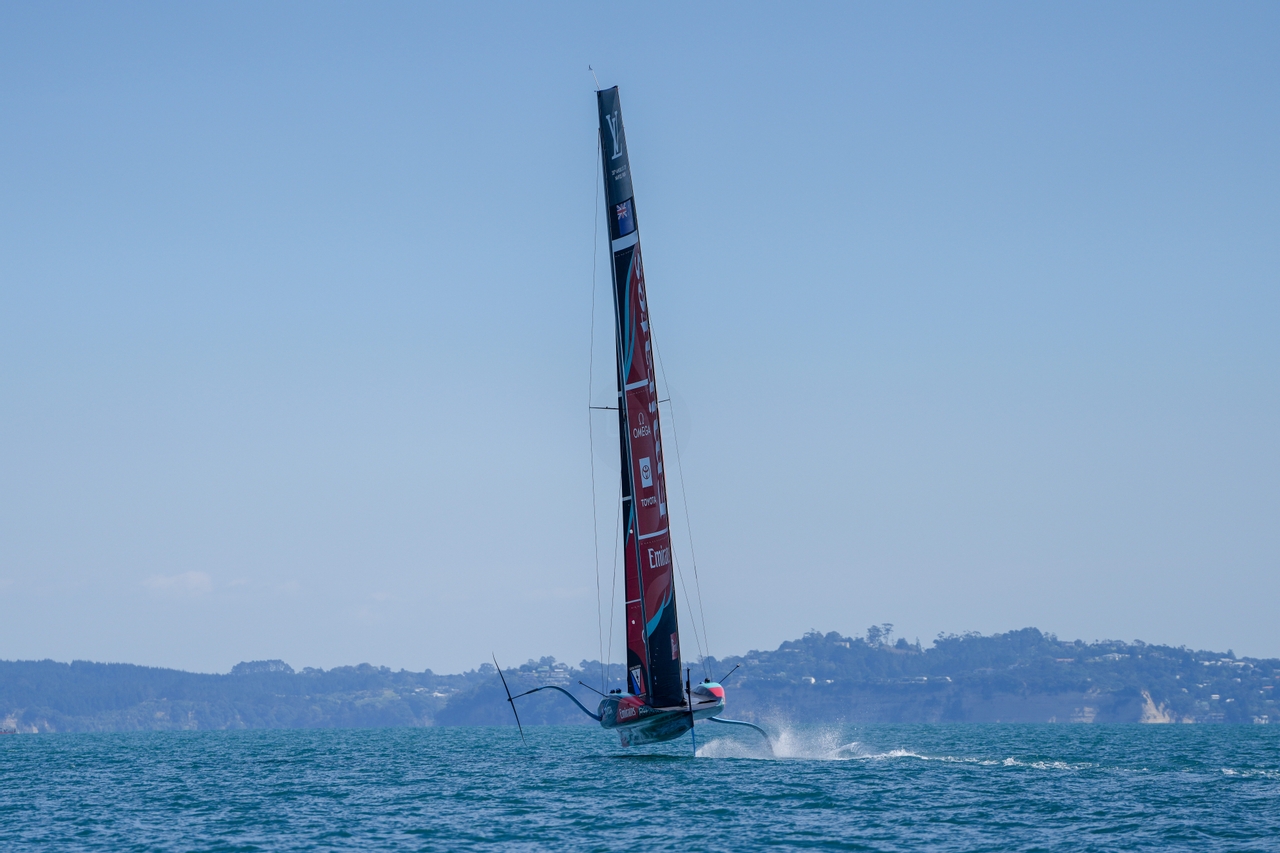
Overall, the session appeared to be focused on light wind mode testing and system setup. One of the most notable elements was the downwind configuration, where the boat was sailed with windward heel and a relatively twisted sail setup, in contrast to a flatter, lower cant configuration. ETNZ appeared to be switching between these modes, likely exploring performance and control in marginal foiling conditions.
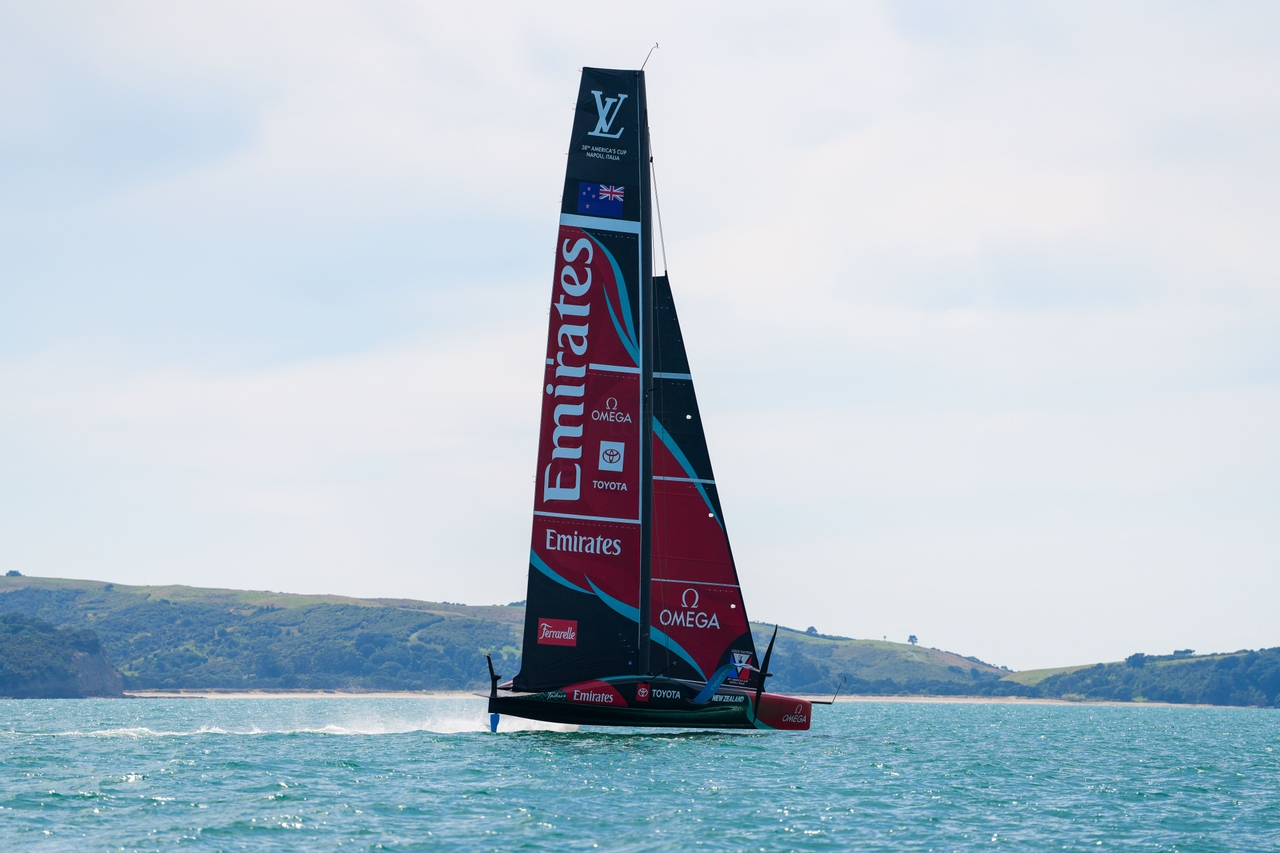
The bow-up / stern-squat moments observed downwind suggest the boat was operating close to its low-speed flight threshold, with ongoing refinement of longitudinal trim and control. Throughout the day there was a strong focus on sail setup and systems calibration, particularly around the jib, as well as internal systems work during stops.