175 YEARS OF TECHNOLOGY IN THE AMERICA’S CUP
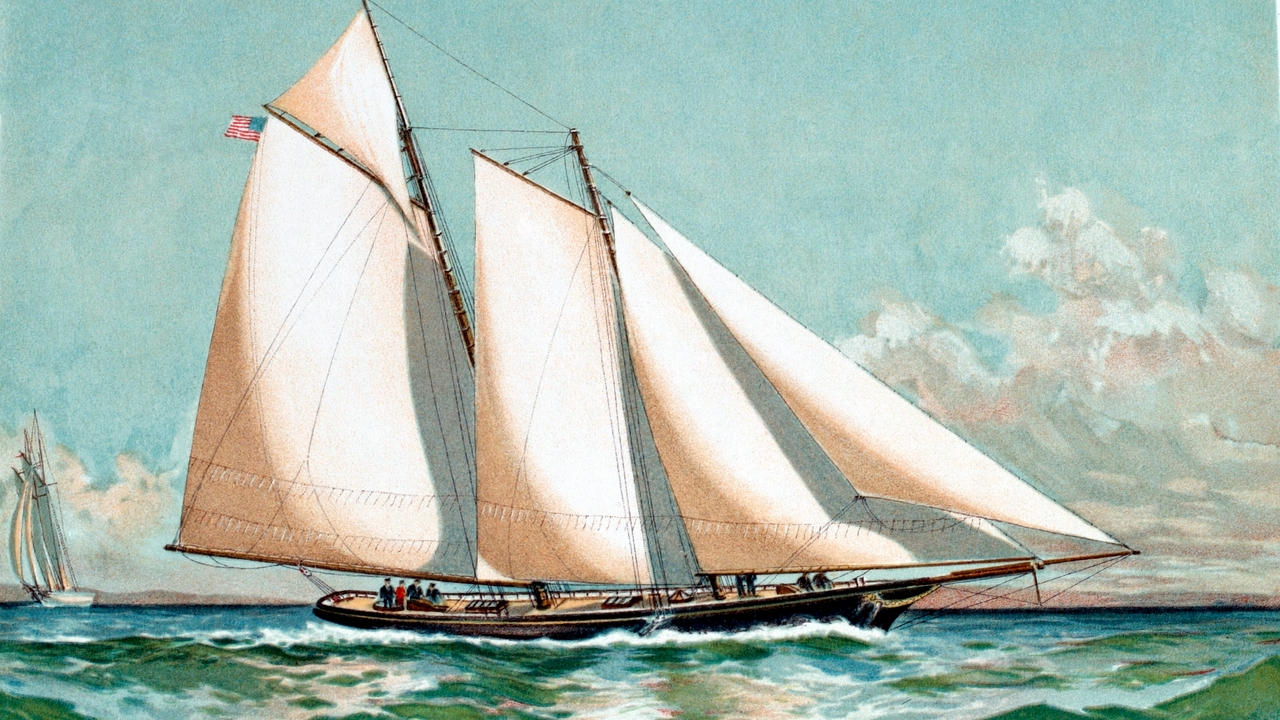
“If she is right, why, we must all be wrong” was the famous quote, made by the Marquis of Anglesey, about the yacht ‘America’ as it came to Cowes ahead of the race around the Isle of Wight on the 22nd August 1851.
What was before the British yachting establishment, shocked them. A hull form that was sharp in the bow, swelled in the stern and with a broad 22-foot beam made America powerful, yet it was aloft where arguably the biggest innovation came from. The two masts of the schooner were raked aft at 3 inches per foot and set flat-cut cotton-duck sails that absorbed less water than the British who opted for flax.
The America won the race, beating the very best of the British fleet. Britannia ruled the waves militarily, but it was the New World that out-thought, out-designed and out-sailed all-comers and start a tradition in the America’s Cup of technological advancement. Yachting has been the beneficiary throughout the twists and changes to the class rules as designers, engineers, physicists, computing specialists and today Artificial Intelligence, have sought to find the crucial edge in order to win the greatest prize in international sports.
1870-1903 – The Herreshoff era
The British, in 1870, were the first to challenge for what became ‘America’s Cup’ after the surviving syndicate members of the yacht America donated the trophy under a strict Deed of Gift to the New York Yacht Club.
The early challengers were dismissed with regularity but the emergence of designers Nathaniel Herreshoff, known as the ‘Wizard of Bristol,’ and Edward Burgess took naval architecture into the mathematical and physics arenas ushering in steel frames, nickel-steel construction, optimised sail plans and balanced rudders. By 1903, Herreshoff introduced hollow steel masts on ‘Reliance’ and crafted aluminium fittings that increased efficiency and allowed for ever greater sail plans.
1930-1937 – The J-Class
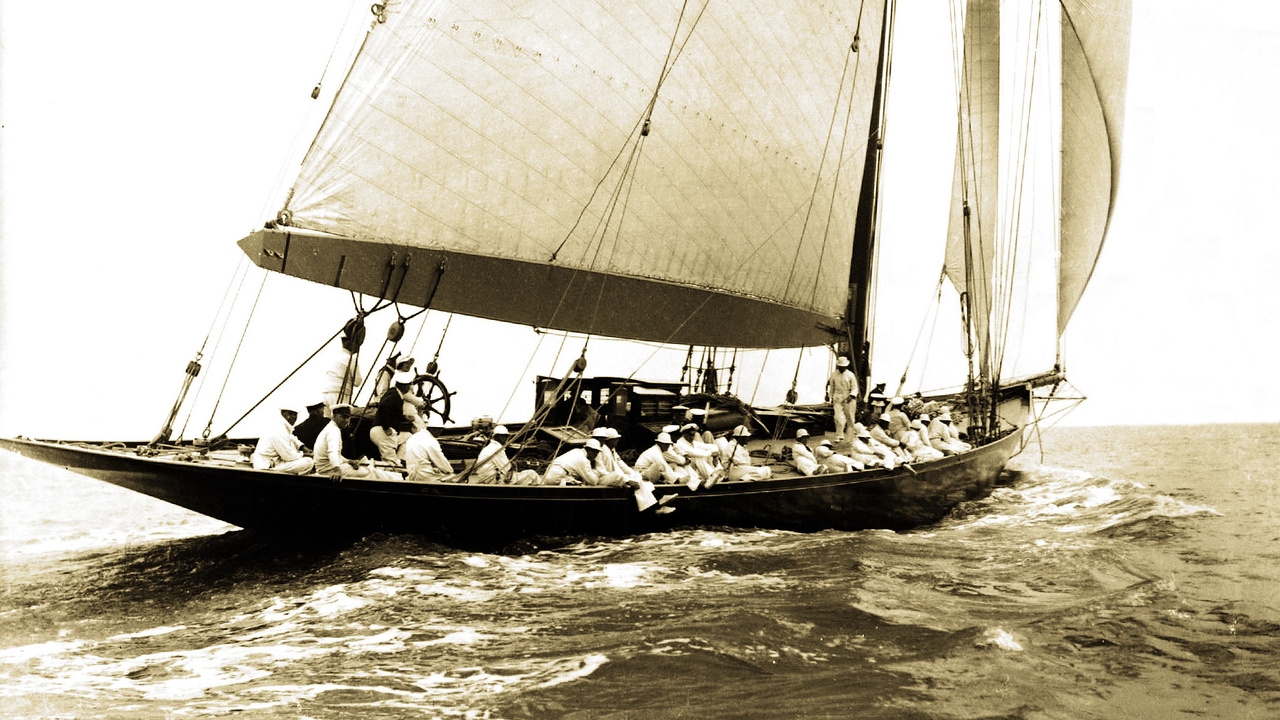
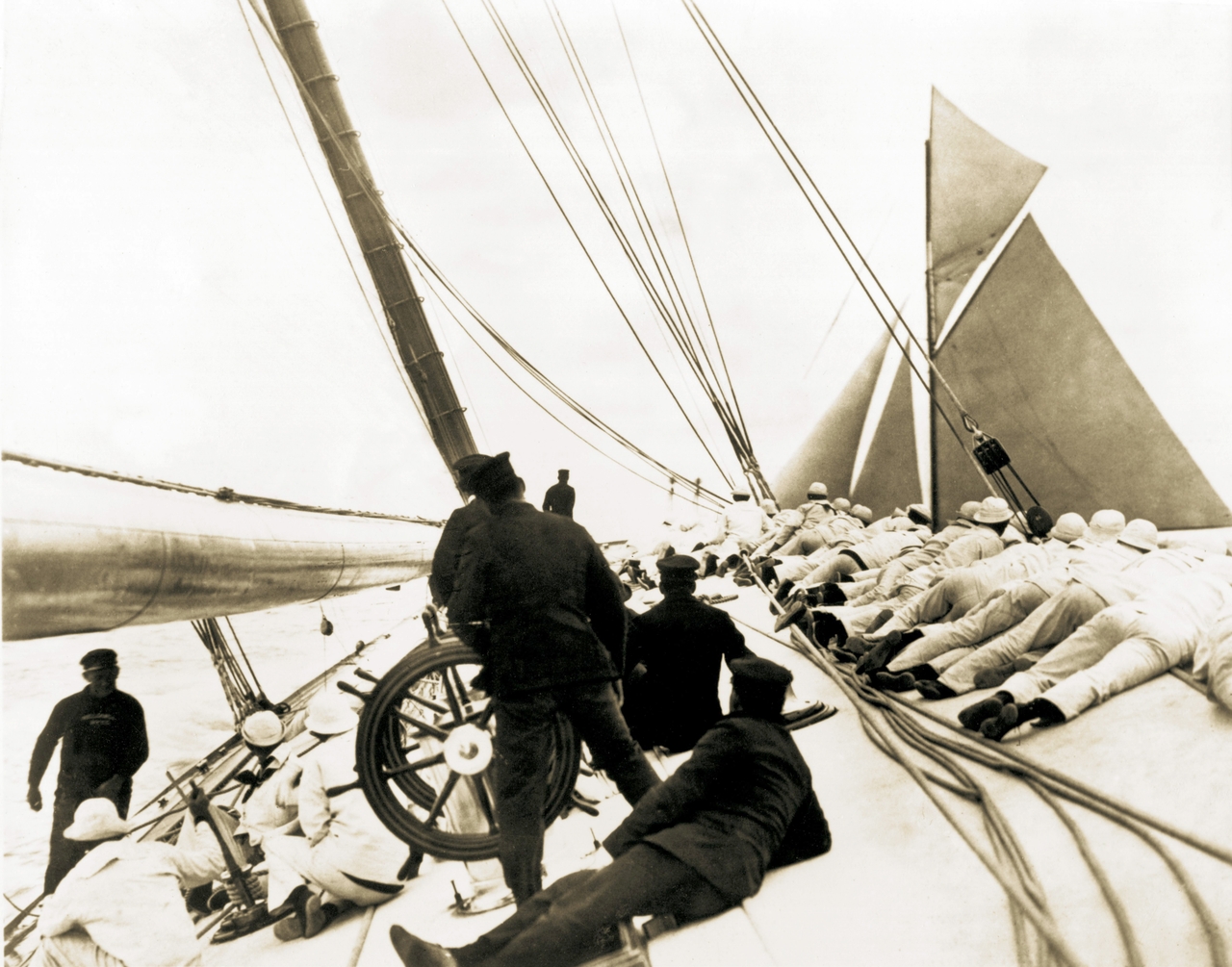
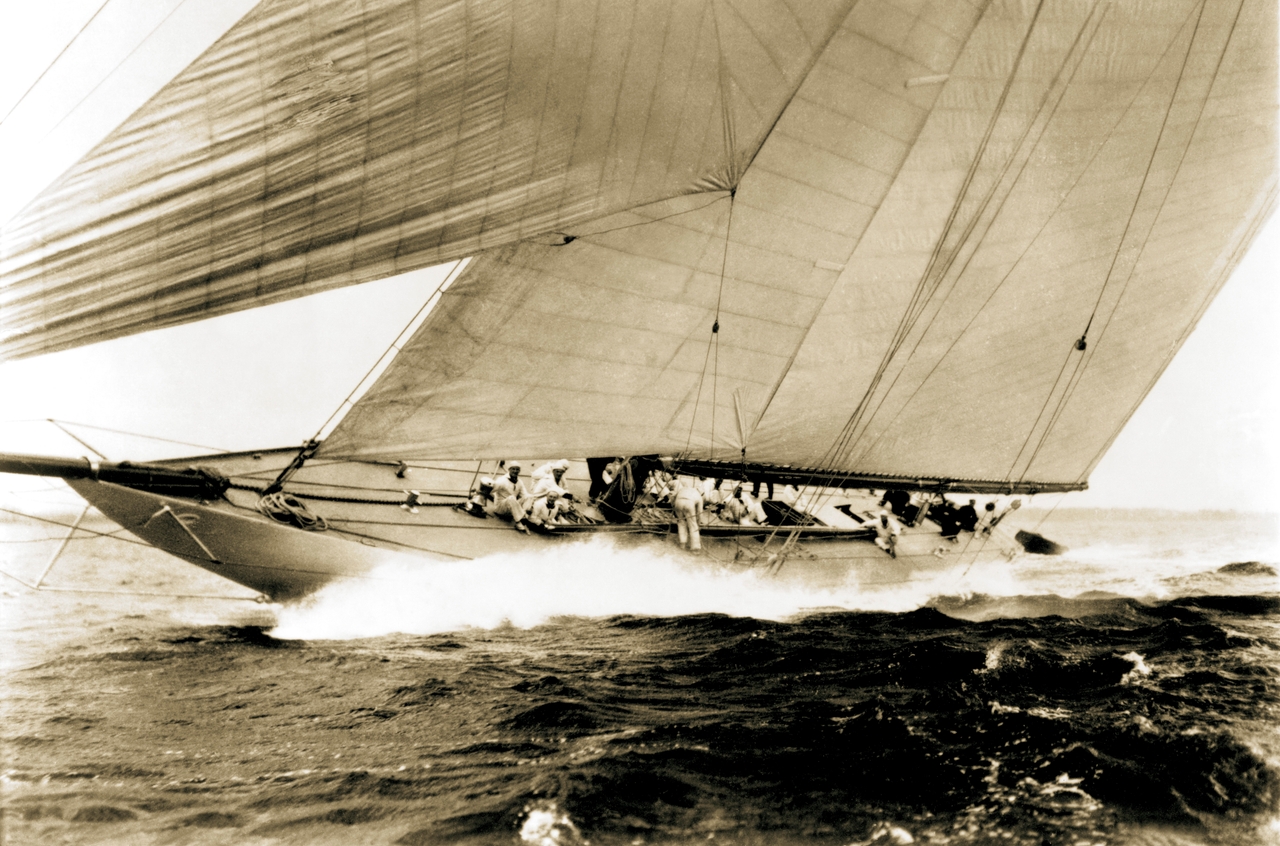
Often referred to as the ‘Golden Age’ of the America’s Cup, the world economy was booming, and the America’s Cup entered a period of extraordinary innovation. ‘Park Avenue’ booms sat on super lightweight aluminium masts that held vast, carefully curated sail plans for every condition. Decks featured winches, rigging blocks with steel bearings, and vastly improved purchase systems. Hull forms were extensively tank tested whilst the steel construction became ever lighter, mirroring aeronautical designs of the time. Metallurgy advances meant better and lighter rigging to reduce pitch, accurate chainplates, and considerable reduction in keel bolt attachment fittings. All round, by the time of what was known as the ‘superboat’ in Ranger in 1937 with its extreme low drag hull form, the J-Class had advanced sailboat construction considerably whilst the sailors brought in scientific meteorology and effective campaign management. The blueprint of the America’s Cup was set.
1958-1980 – The 12 Metre
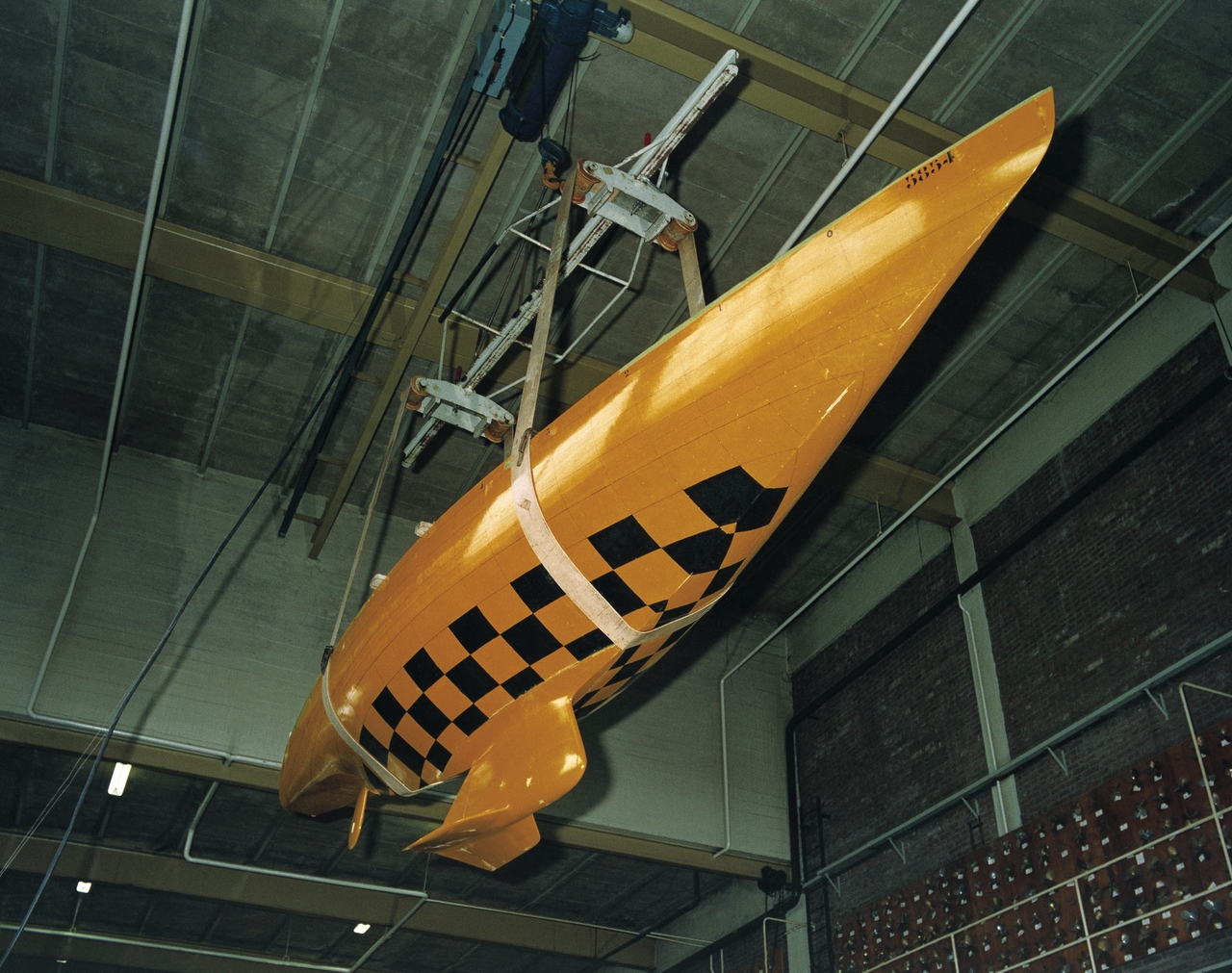
Throughout the First and Second World Wars, the America’s Cup was, understandably, on hiatus but when the new 12 Metre rule came in and the competition resumed in 1958, it began another era of development. Wind-tunnel and tank testing had advanced so much through the war effort, and the development in naval and aeronautical sciences, that they were the go-to for designers.
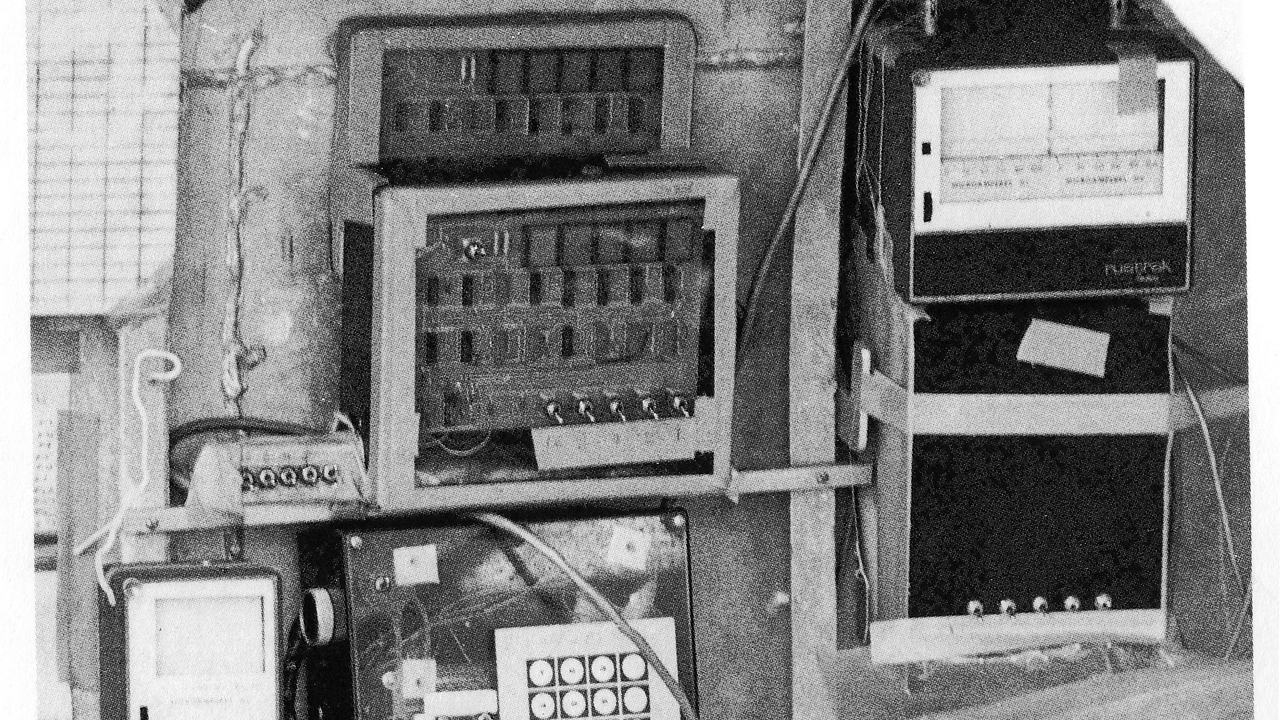
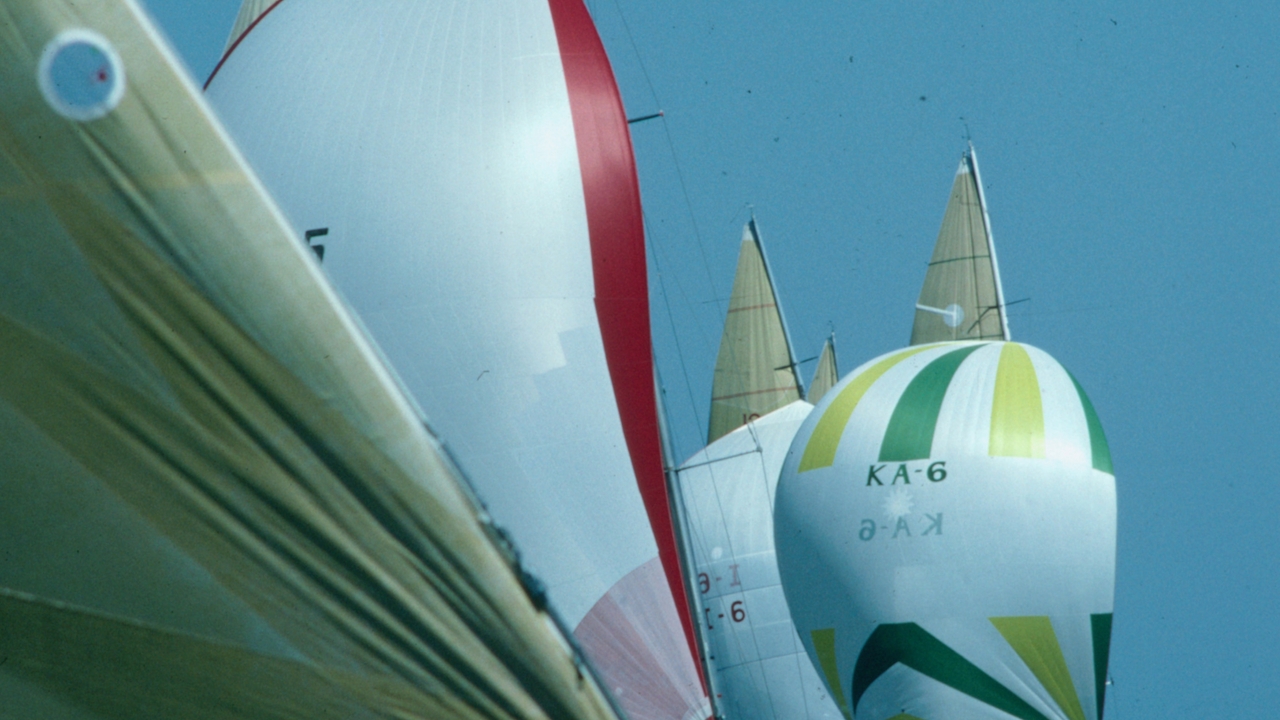
By 1974, large data was being crunched in early computers to produce Computer Performance Prediction results, leading to advancements in sail construction, overall inventories, and aerodynamics around the mast. Dacron became the sailmakers go-to, yet synthetic fibres started to be tested and the interaction between the sails could be accurately measured and enhanced. Geared sheet winches and onboard computational power featured heavily as designers and engineers pushed the limits on hull construction (ever lighter), keel design and rudder profiling.
1983 – The Cup that changed everything
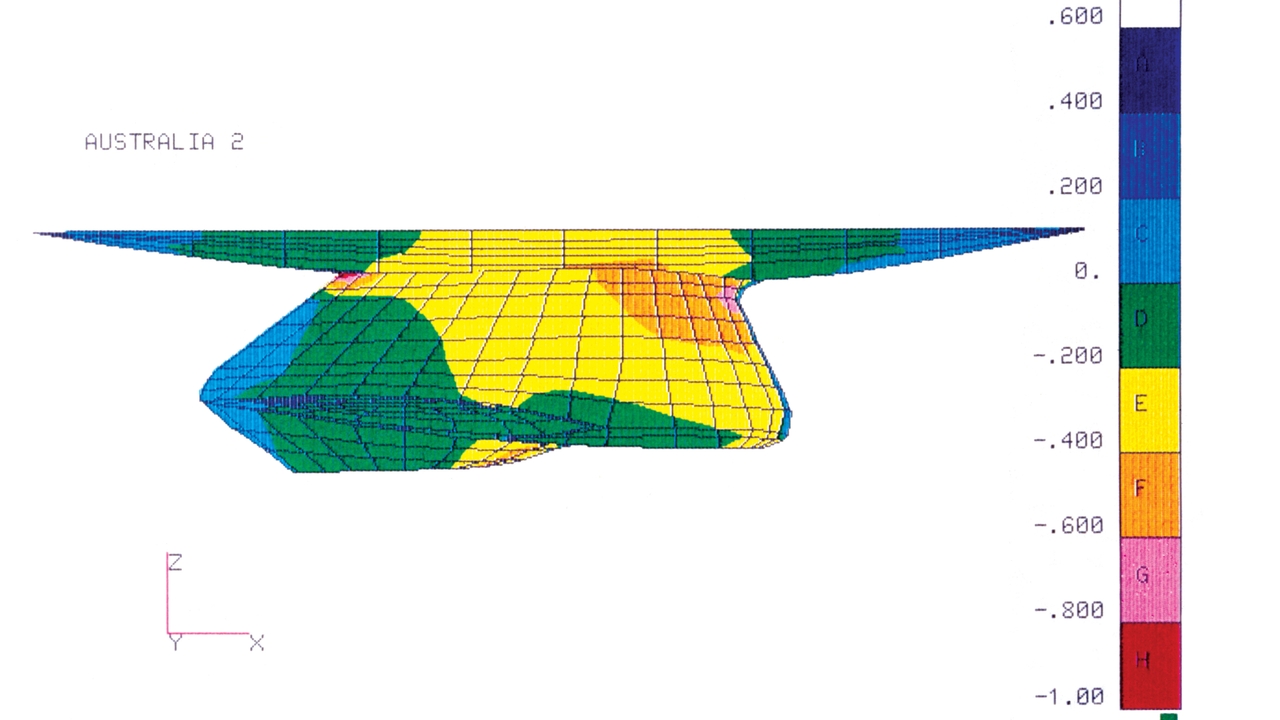
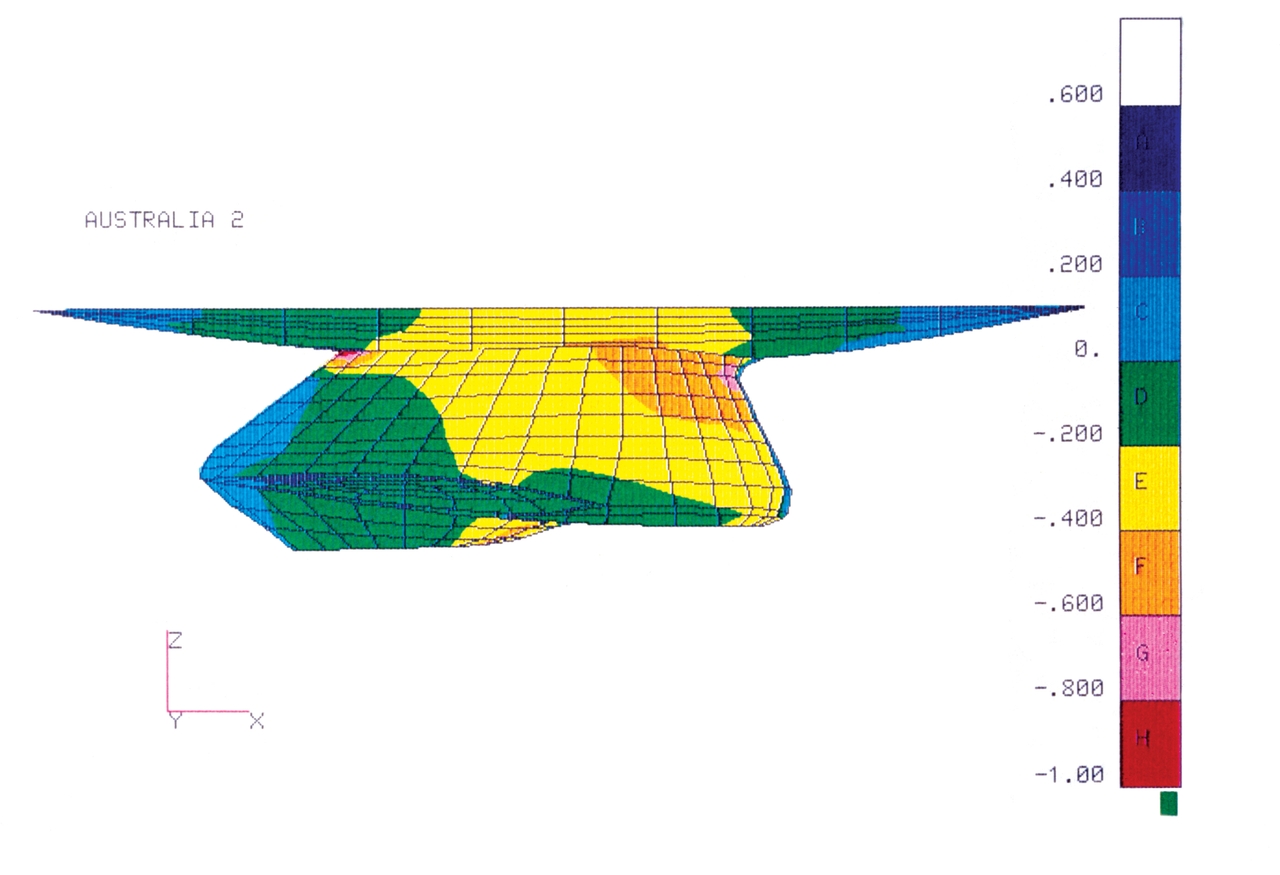
To chart the technological arms race in the modern America’s Cup, arguably the one development that caught global attention was that of Australia II’s winged keel in 1983. Designed by Ben Lexcen after extensive tanks testing at the Netherlands Ship Model Basin (NSMB) in Wageningen. There, Lexcen worked closely with Dr Peter van Oossanen and Dr Joop Slooff to refine an idea that he had to produce lift. Combined with an incredible sail development programme, led by Tom Schnackenberg after North Sails became a global enterprise, Australia II ended the 132-year reign of the New York Yacht Club holding the America’s Cup.
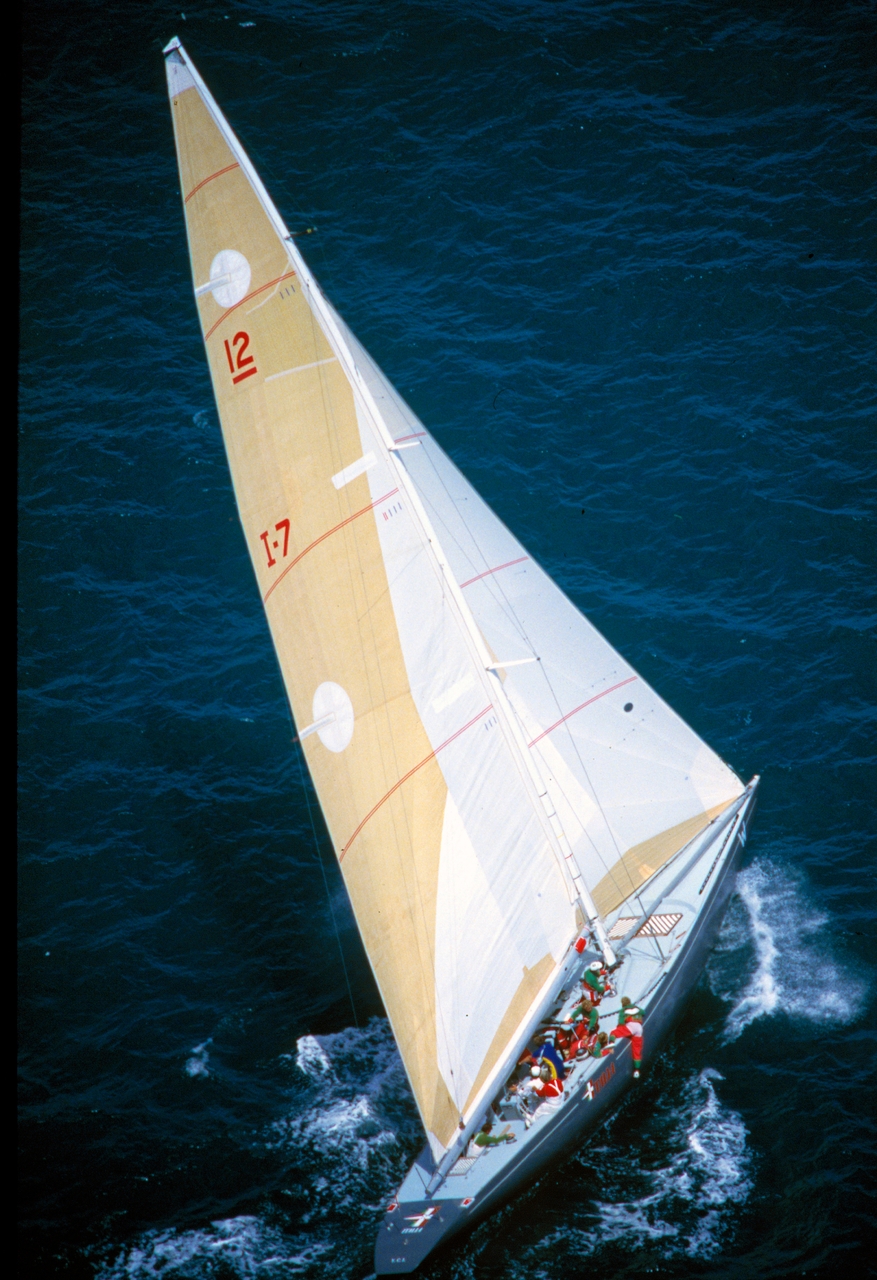
Nothing was ever the same again. By the defence in 1987 in Perth, Western Australia, glass fibre 12 Metres were introduced by the New Zealand team and Dennis Conner, who won, affixed 3M 'riblets' to the hull to disperse water better. Every detail of the yachts was examined for performance gains and computer-aided sail-shape programmes using cameras came into the Cup for the first time.
1988 – 2007 – Carbon fibre is ubiquitous
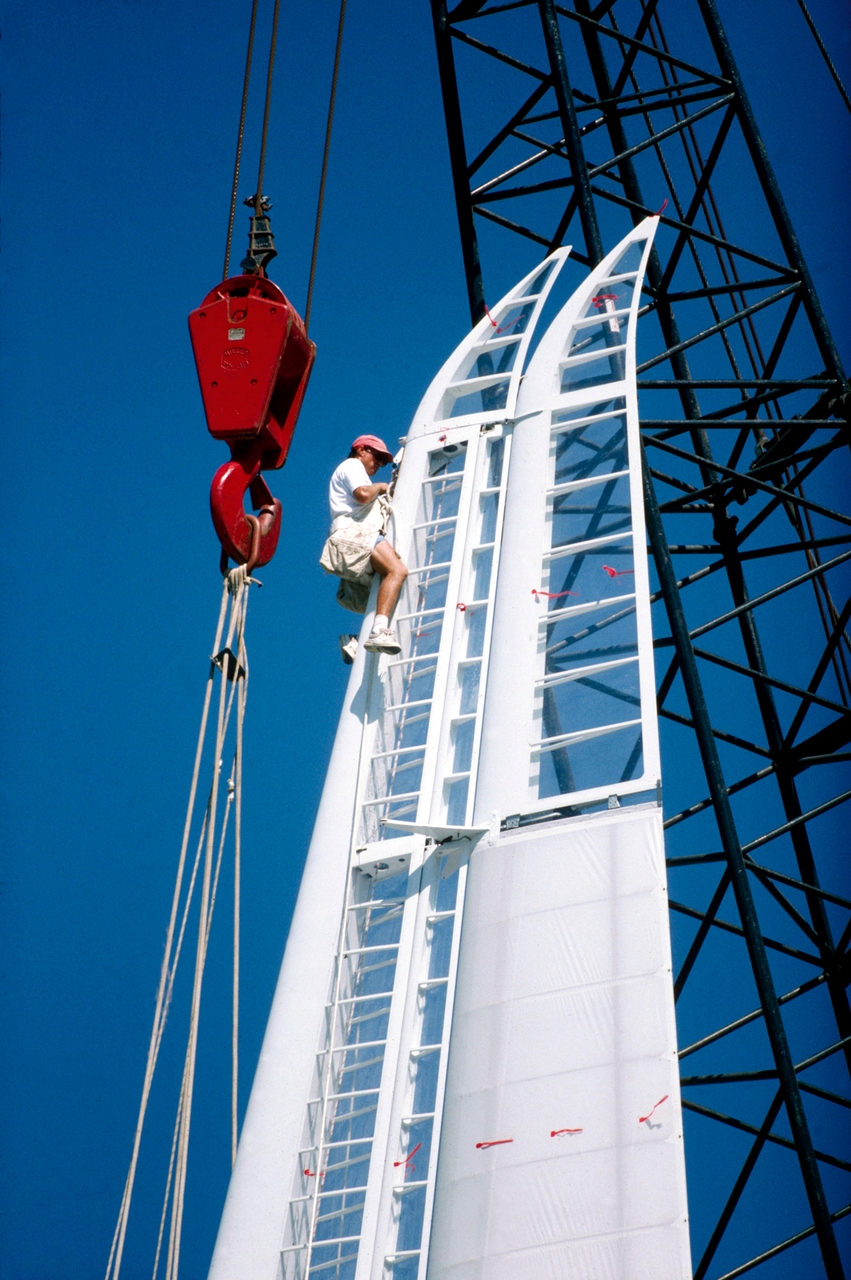
An acrimonious Deed of Gift Match in 1988 accidentally hurried forward development of rigid wing masts in the America’s Cup for the first time as the defender, Dennis Conner, opted to race in an advanced multihull – and won easily against a 90-foot monohull from New Zealand.
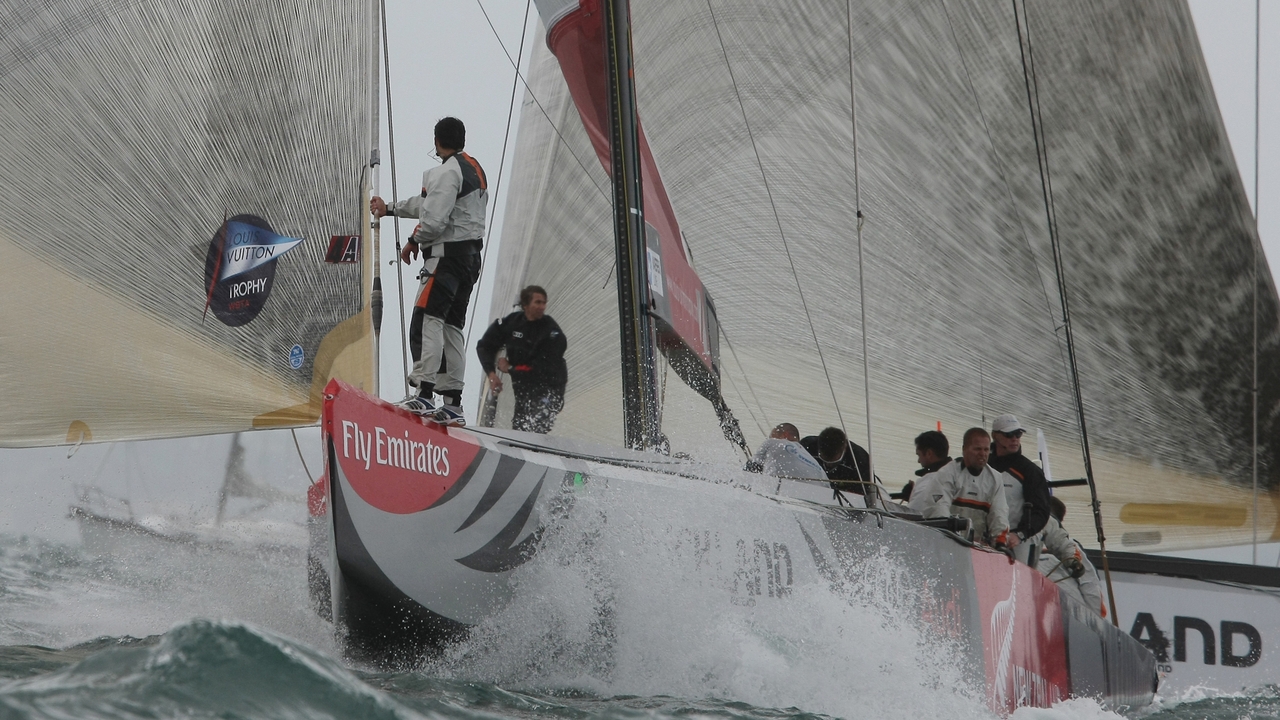
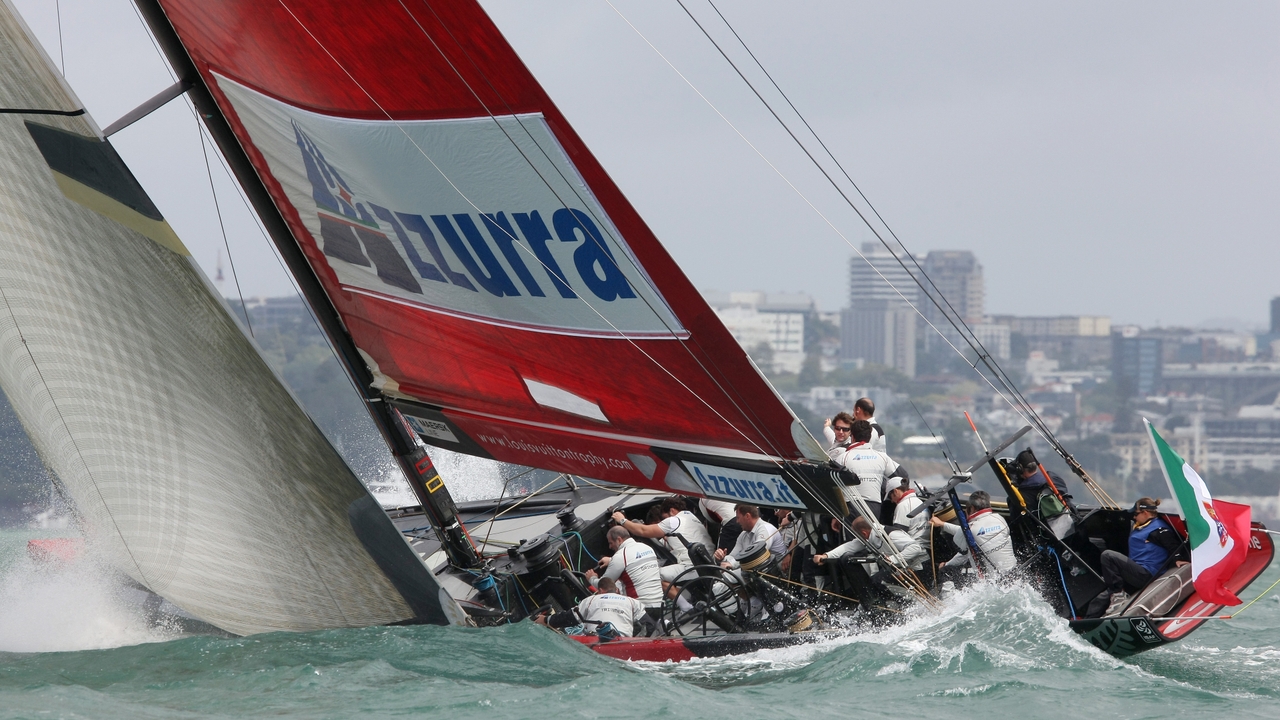
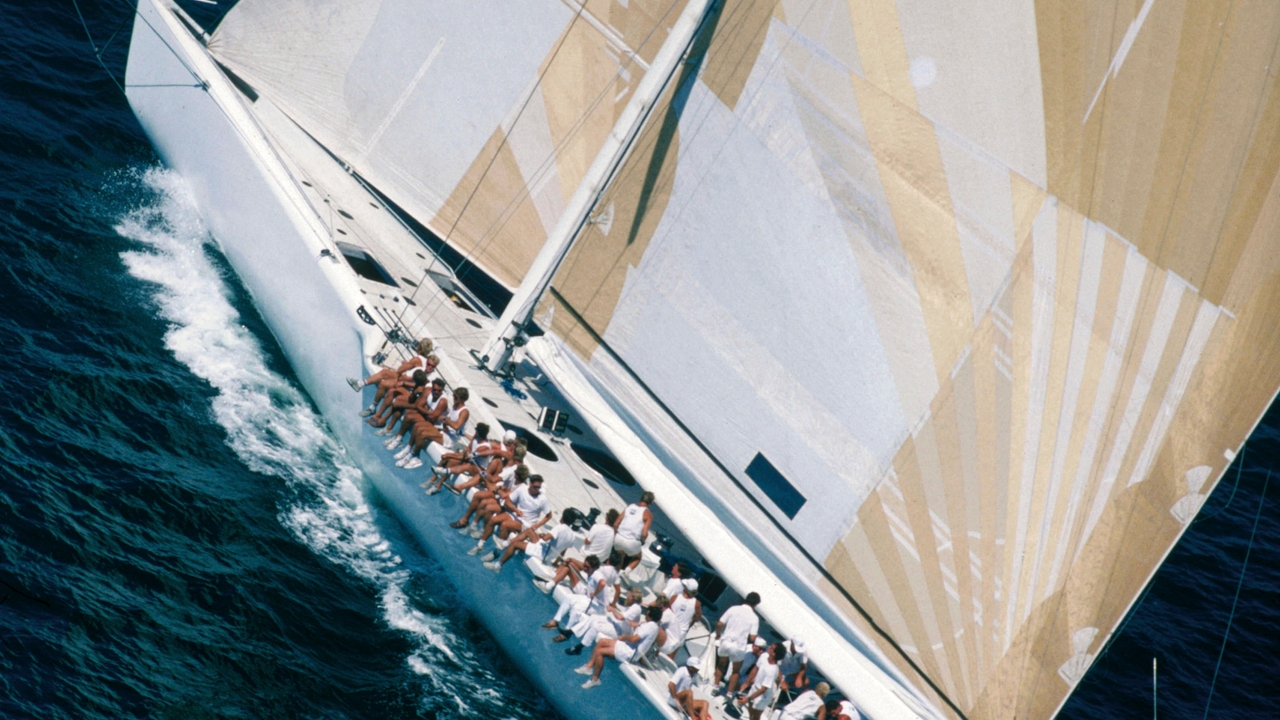
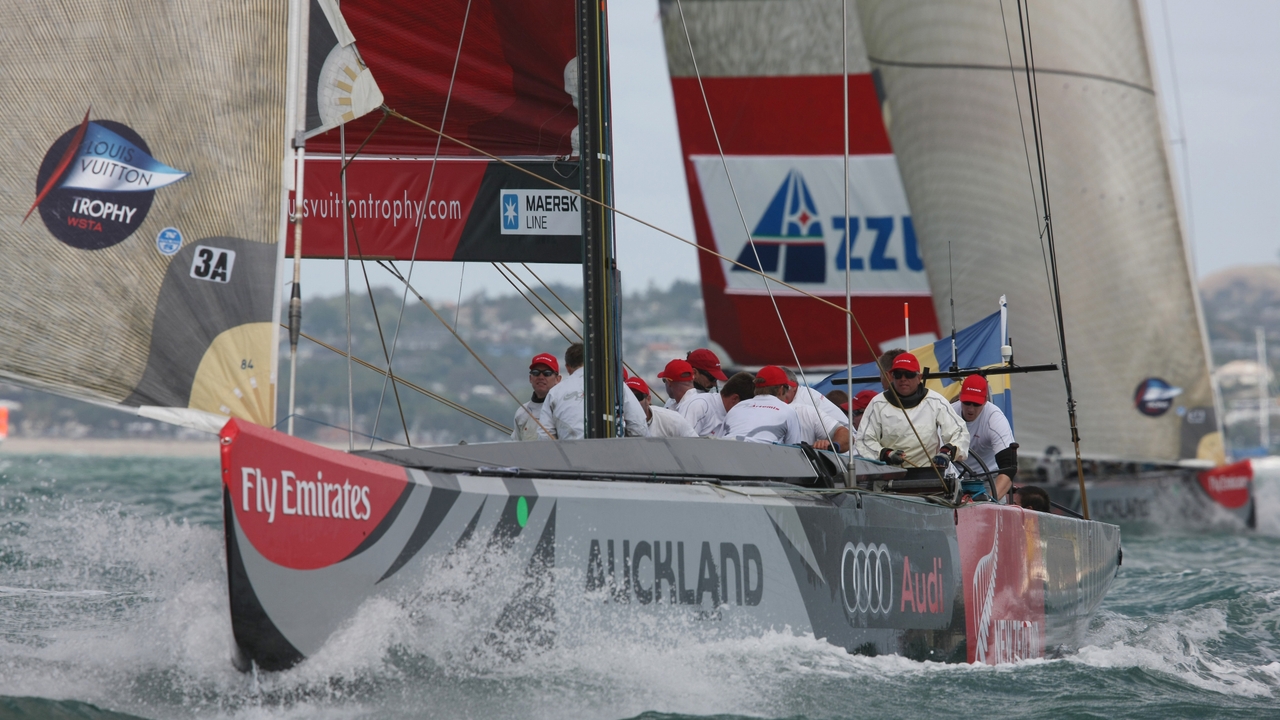
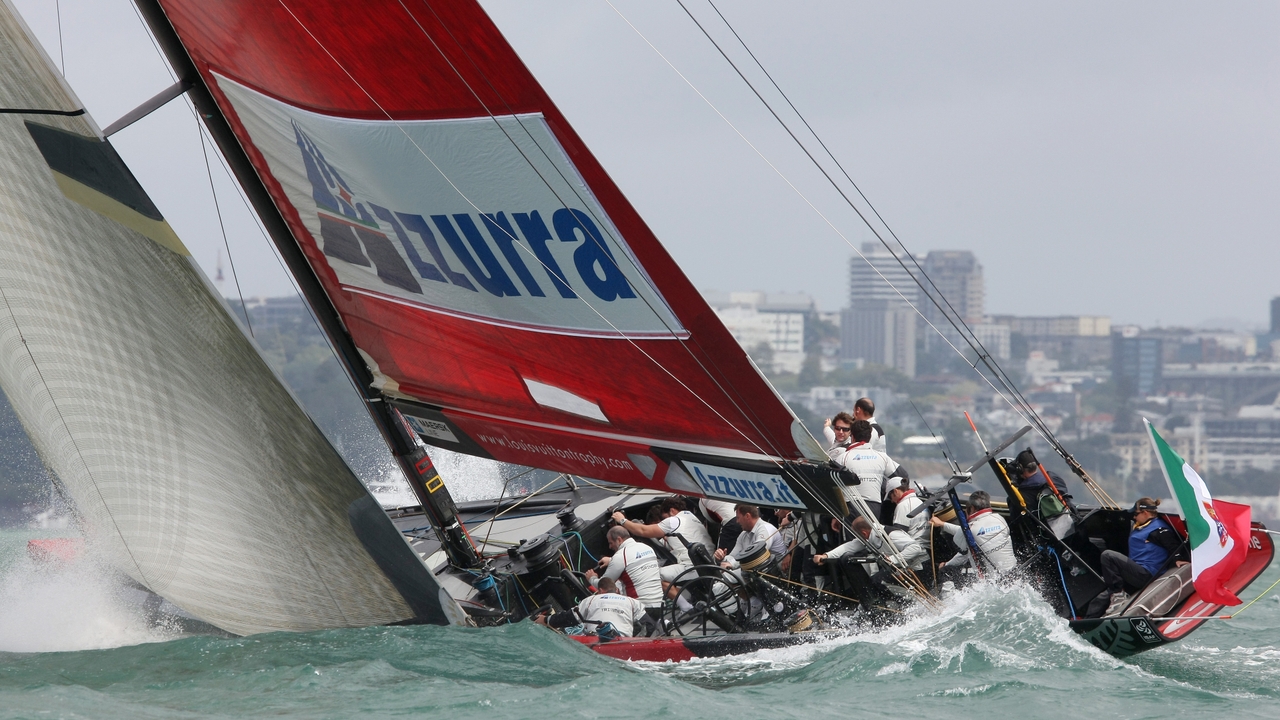
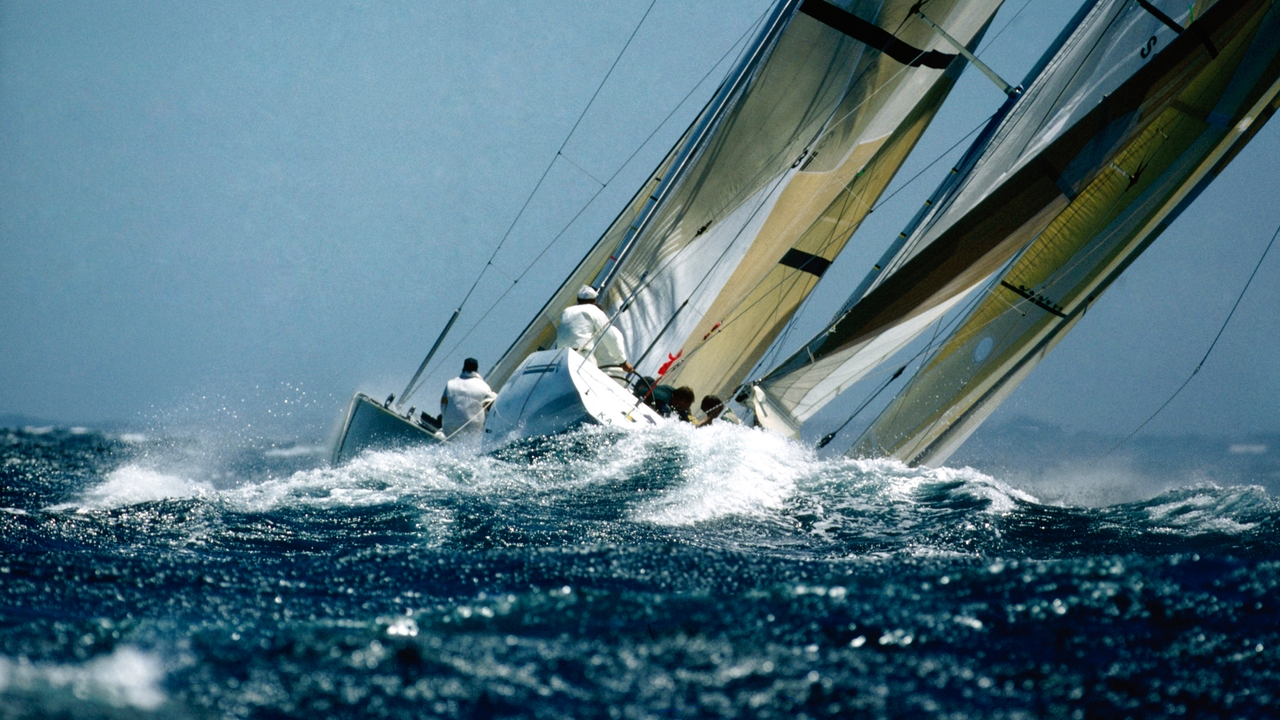
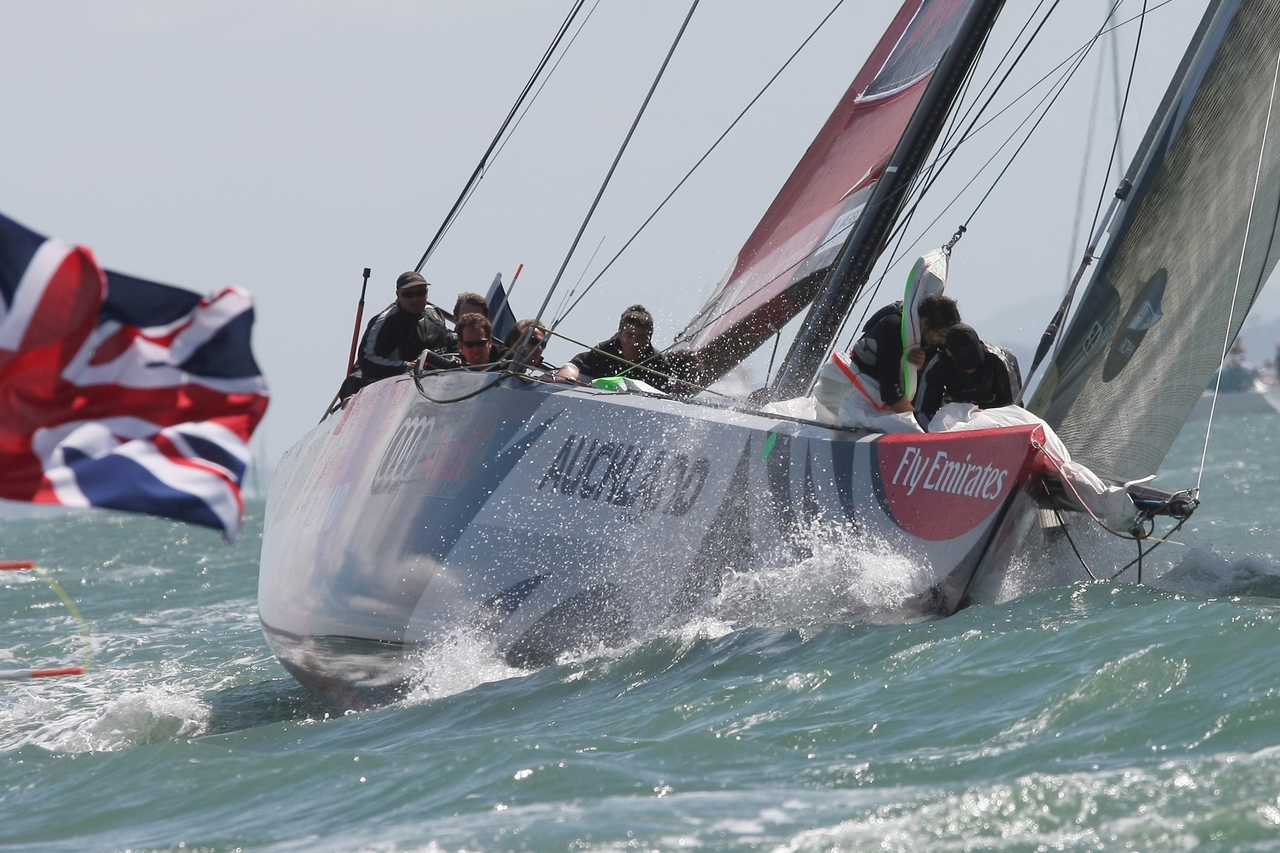
However, a new monohull class was introduced for the 1992 Cup in San Diego, the IACC, which led to extraordinary development. Cup after Cup, the boats got narrower, lighter and stiffer with carbon hulls as standard, finite element analysis, computer modelling and GPS-based performance analysis. Computational Fluid Dynamics, extensive simulation, and digital weather routing became standard whilst the use of advanced ‘cuben-fibre’ sails took sailmaking to another dimension.
Gilles Martin-Raget / BMW Oracle Racing
2010 – 2017 – the Cup goes extreme, and airborne
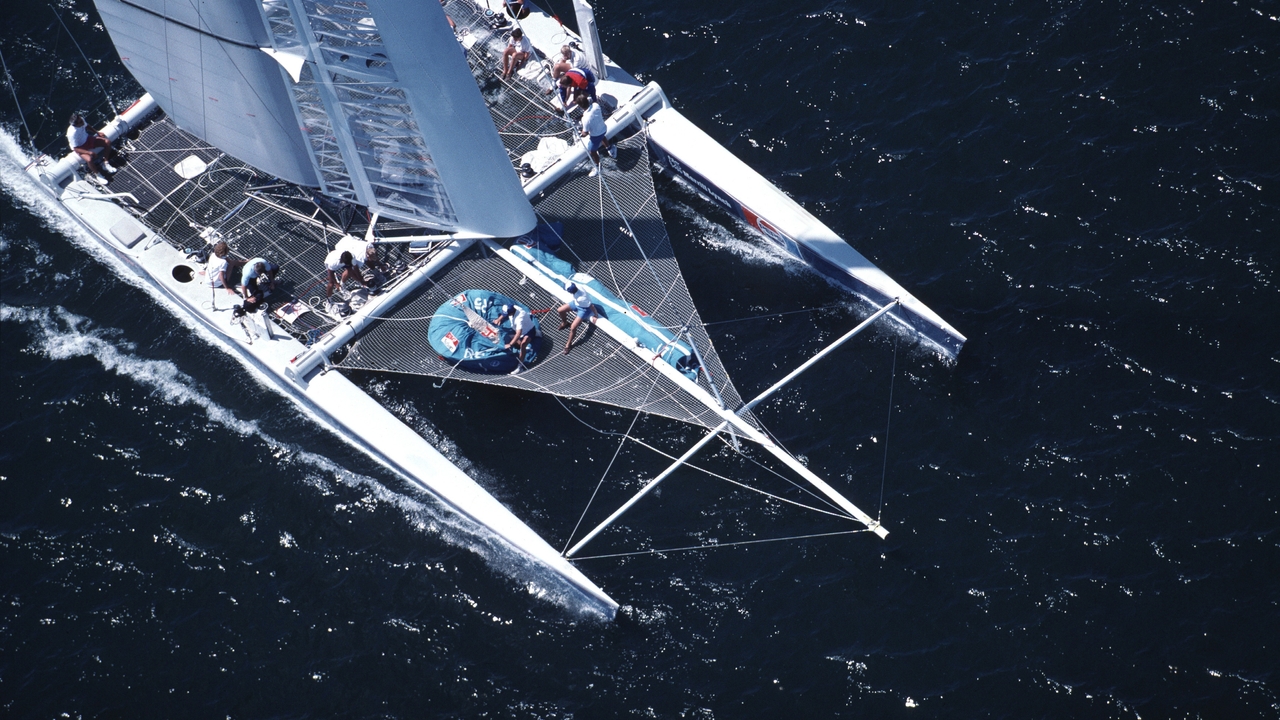
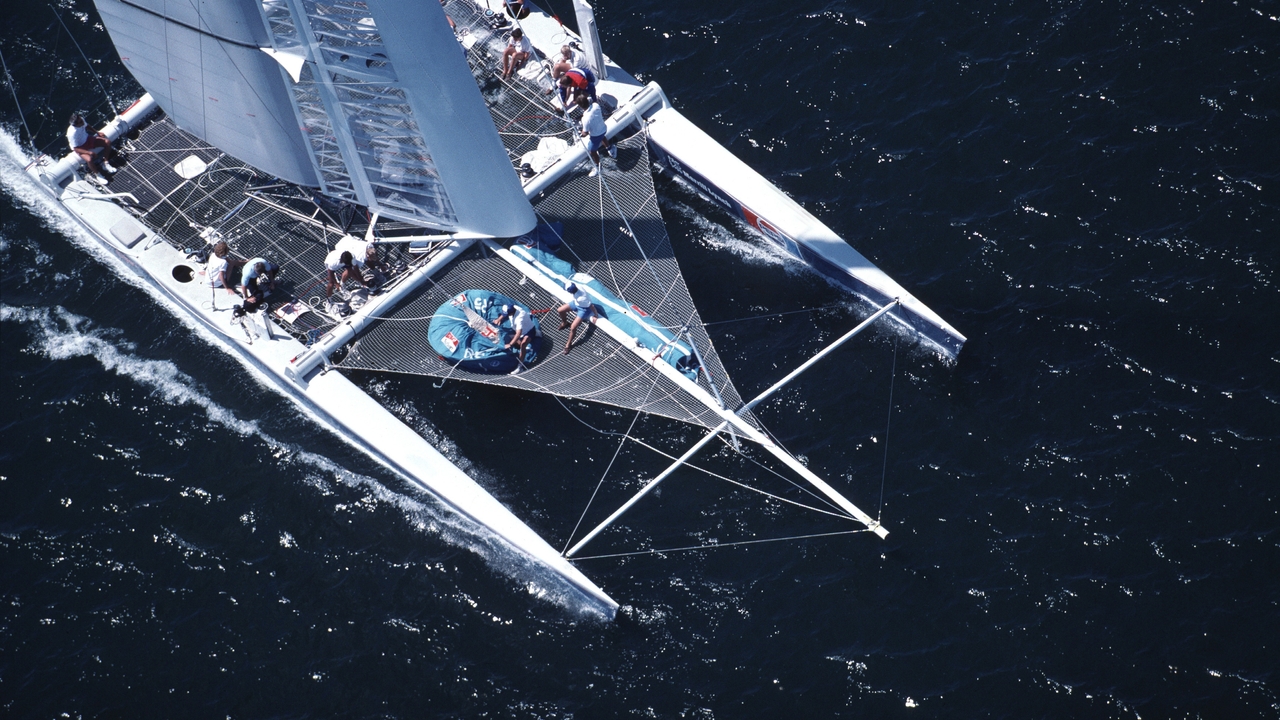
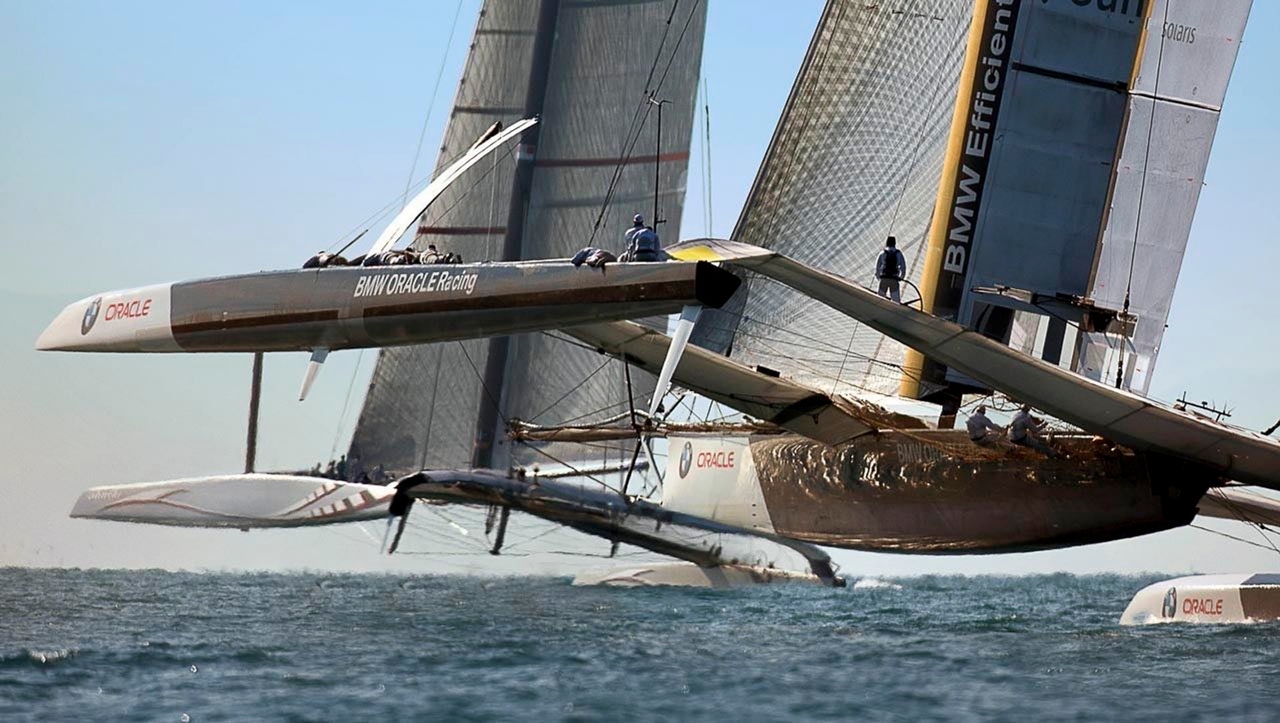
A second Deed of Gift Match in 2010 saw two of the most extreme yachts ever built for the America’s Cup that sat somewhere on the line of technical marvel and engineering extreme. Both fully carbon construction, Alinghi 5 and BMW Oracle USA were giant catamarans and trimarans with the American boat featuring a fixed wing mast that was built on the extremities of possibility at the time, and won, however by 2013 in San Francisco, fixed wing masts on catamarans were ubiquitous. The real story of that America’s Cup regatta was the emergence of foiling with Emirates Team New Zealand figuring out lift both upwind and downwind.
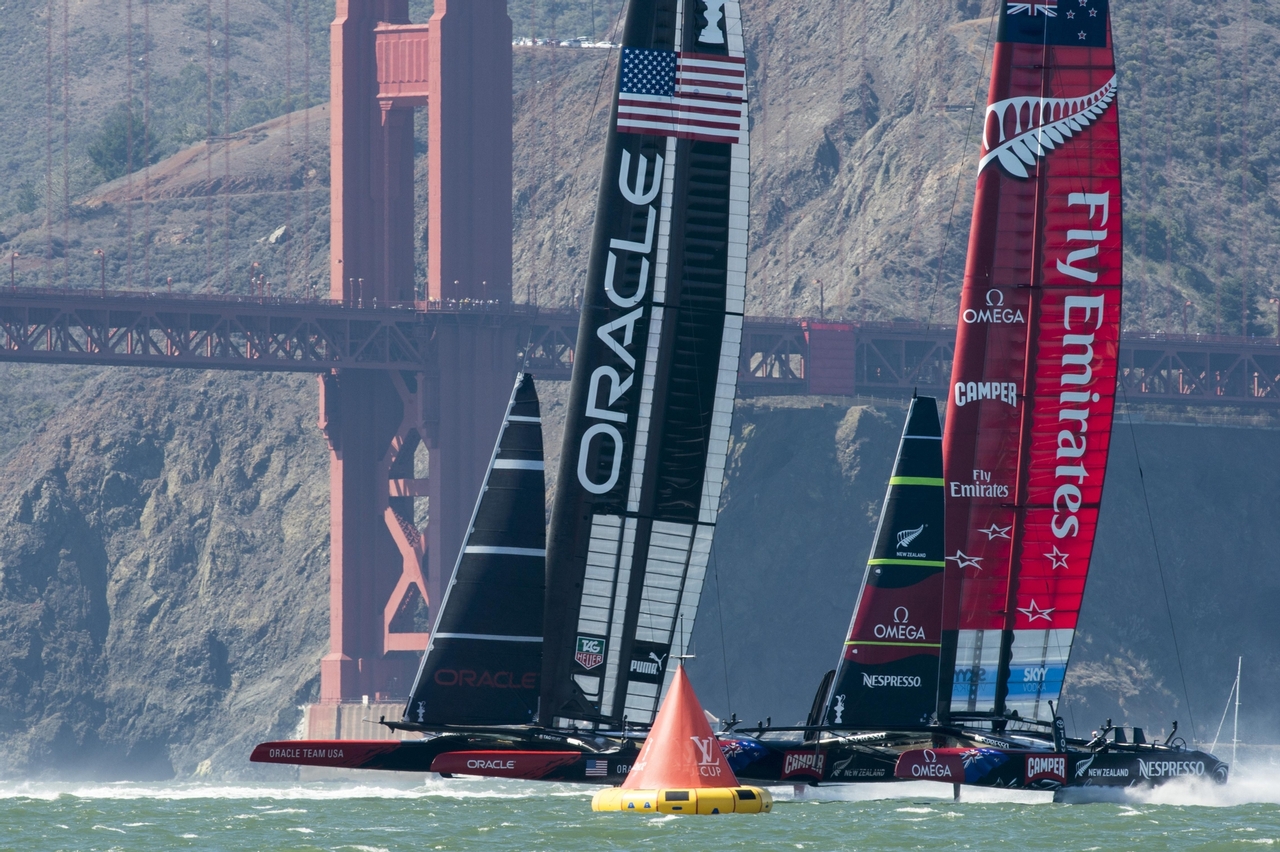
The others played catch up, even right through the closest Match in history with Oracle Team USA matching the Kiwis and winning from an impossible deficit. Foiling was out of the bag, and with a new class of yacht, the AC50 catamaran, being introduced in 2017 foiling was now an art form with much debate on foil shape and control systems. Innovation didn’t stop though and again Emirates Team New Zealand stole the show with leg-powered ‘cyclors’ replacing traditional arm-grinders. They won and the Cup changed again.
Ivo Rovira / America’s Cup
2027 – The Foiling Monohull AC75 rules the waves
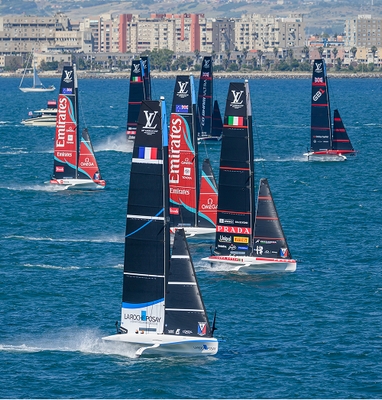
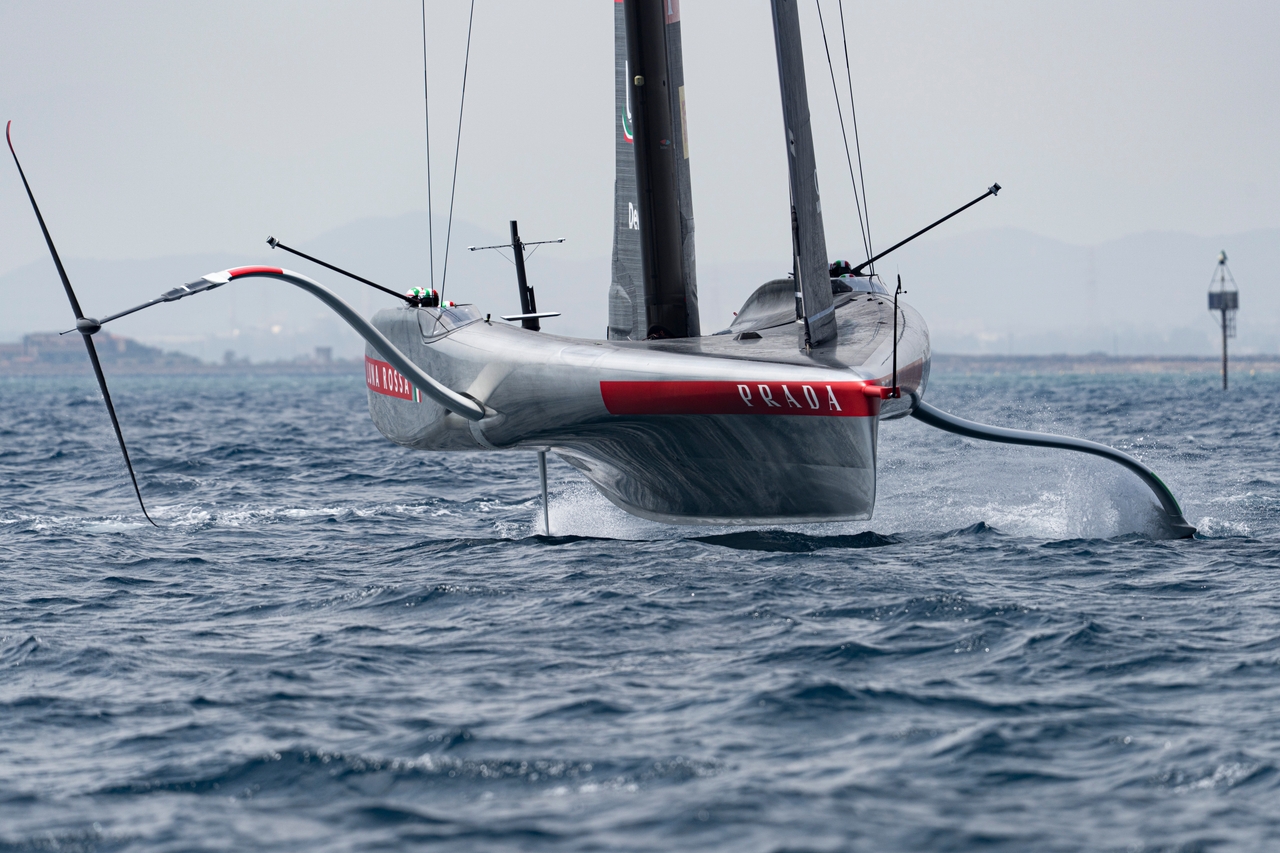
With the America’s Cup returning to Auckland for the Covid-affected 2021 Cup, a monohull was introduced, but for the first time it was a foiling monohull with a capability in excess of 50 knots. Furthermore, twin-skinned soft sails were introduced and cyclors were ubiquitous. Complex PLC systems controlled pre-set sail and mast rotational settings as well as cunningham and outhaul tensions in line with optimum performance. In 2021, most helms crossed from side to side except Luna Rossa who fixed one helm on port and another on starboard. By 2024, everyone adopted the dual helm systems, and the teams developed advanced foil optimisation, digital twins, AI-assisted design, massive sensor arrays, WindSight IQ live wind visualisation, and hydrogen-powered chase boats. This was all brought to life by advances in immersive broadcast technology.
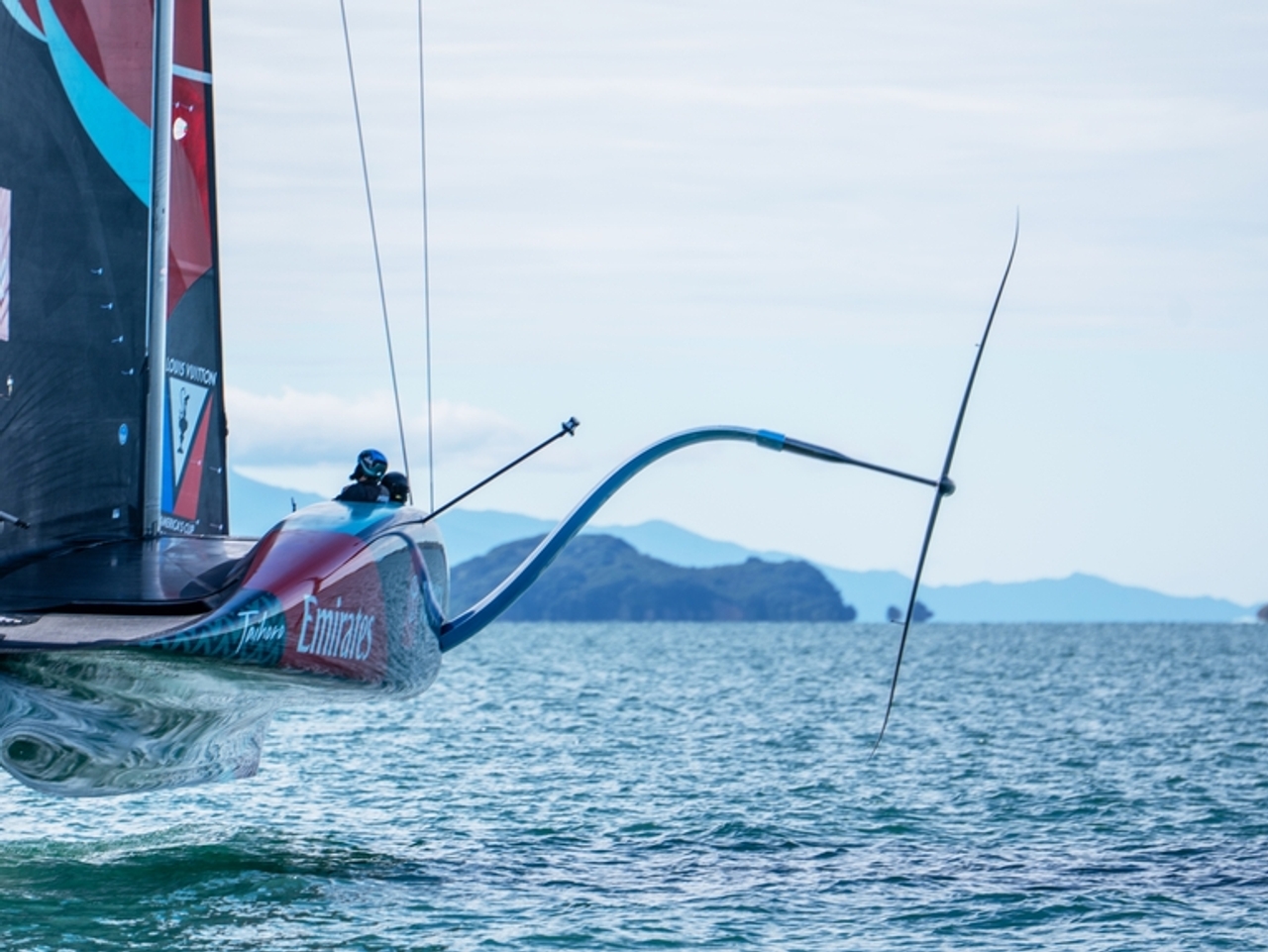
Emirates Team New Zealand
Now with the ‘Road to Naples’ in 2027 well advanced, we are seeing the emergence of AI-driven design optimisation, ever more sophisticated simulation, machine-learning analysis of performance data, enhanced battery-powered onboard software and control systems, integration of women into the AC75 crews under new rules, plus expanded fan technology including Guest Racer experiences and enhanced wind visualisation.
The America’s Cup never stops developing. Where 20 or 30 years ago speeds were in the 10-15 knot range, today the highest official top racing speed of an AC75 is 55.6 knots recorded on a bear-away in the Louis Vuitton Cup in 2024 by the British.
Quite what John Cox Stevens of the New York Yacht Club would have made of today’s technology, or indeed the technology race that he began back on August 22nd, 1851, is unknown. What’s for certain though is that the America’s Cup will never stop evolving.
Magnus Wheatley