Ivo Rovira / America's Cup
INSIDE THE AC75 – THE LATEST TRENDS IN FOIL DESIGN
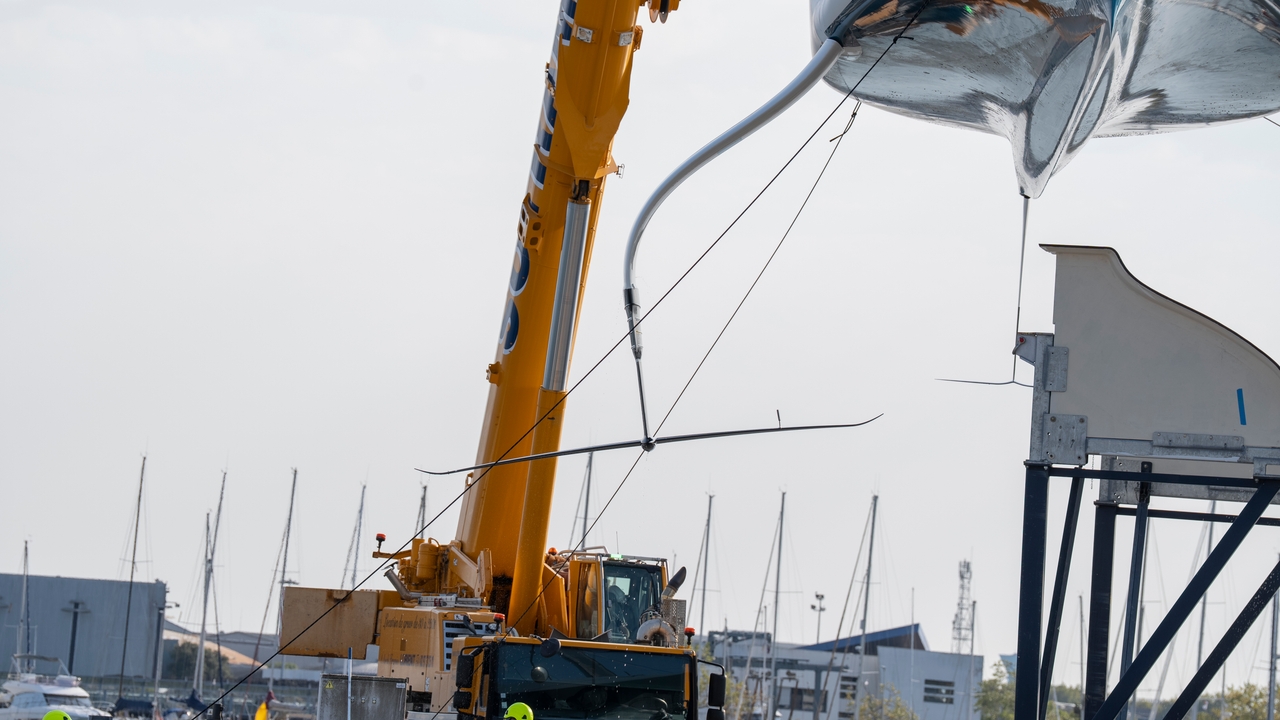
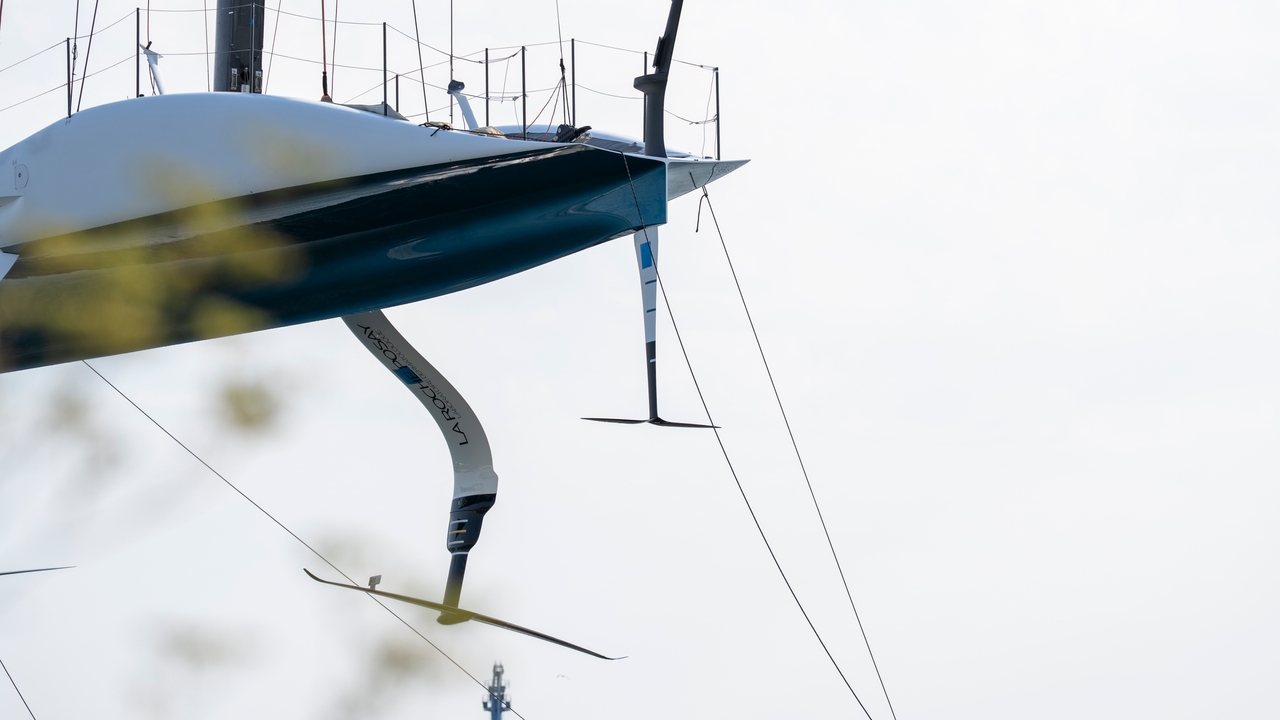
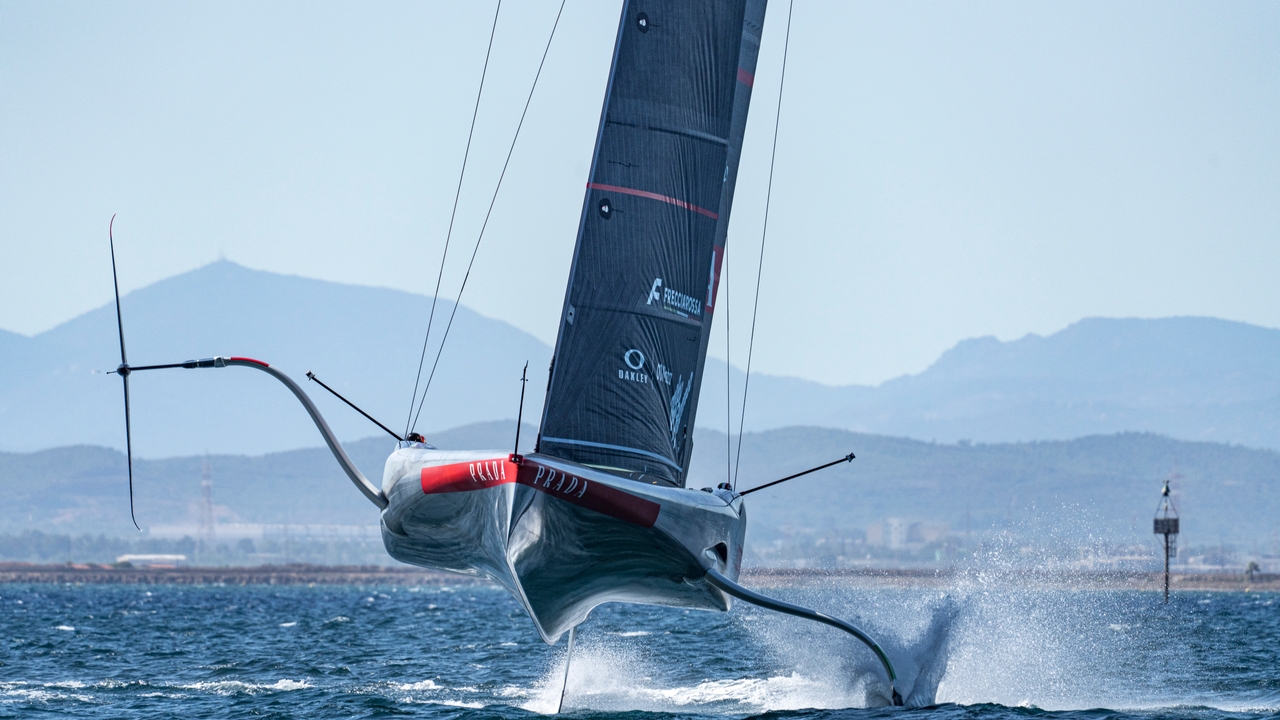
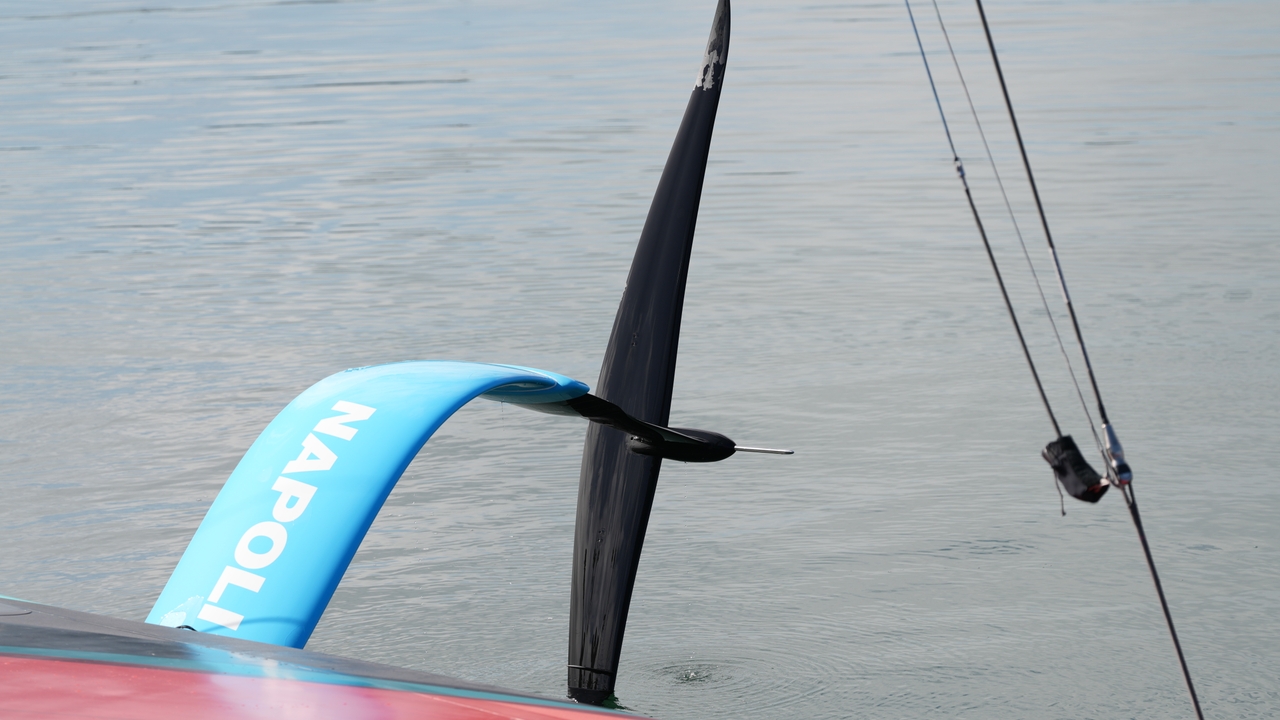
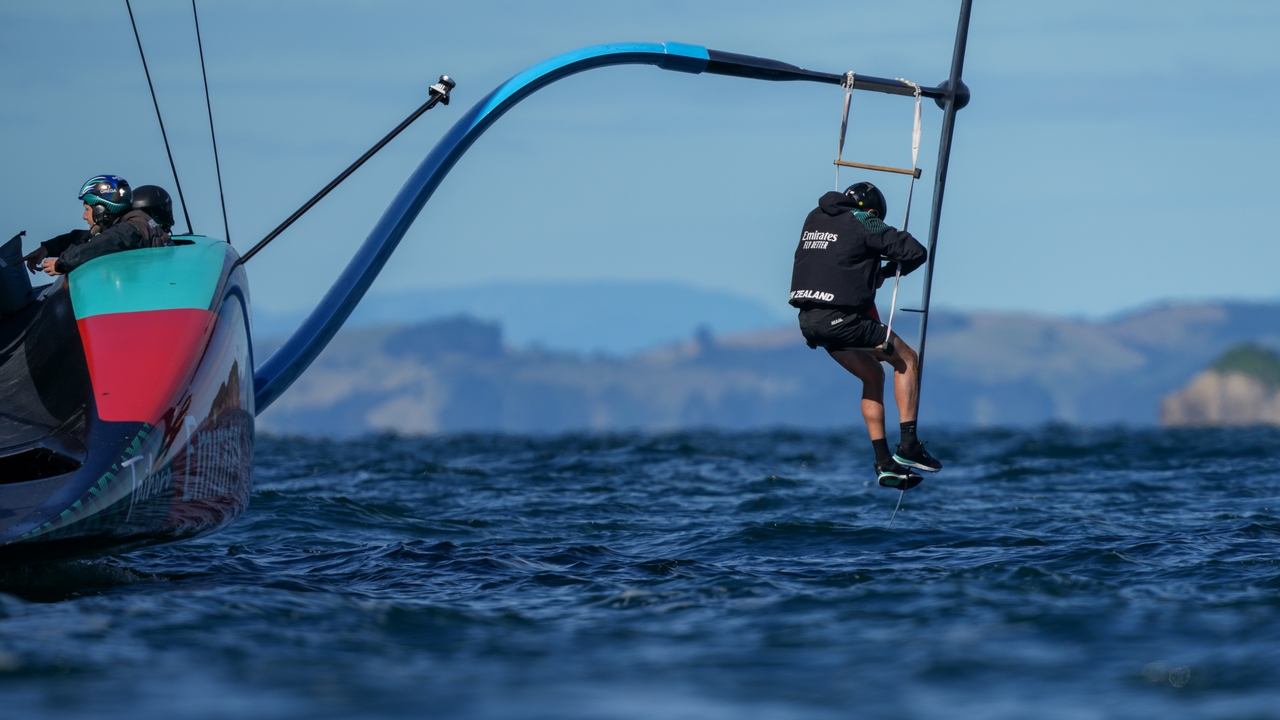
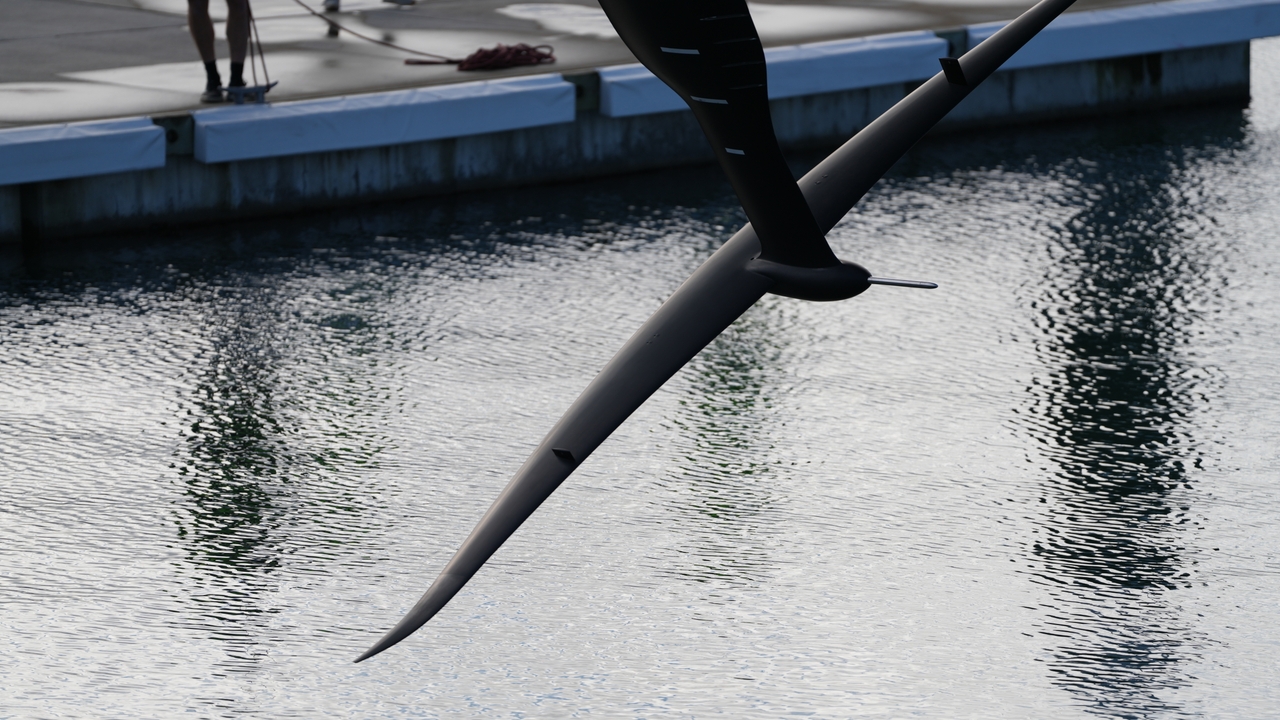
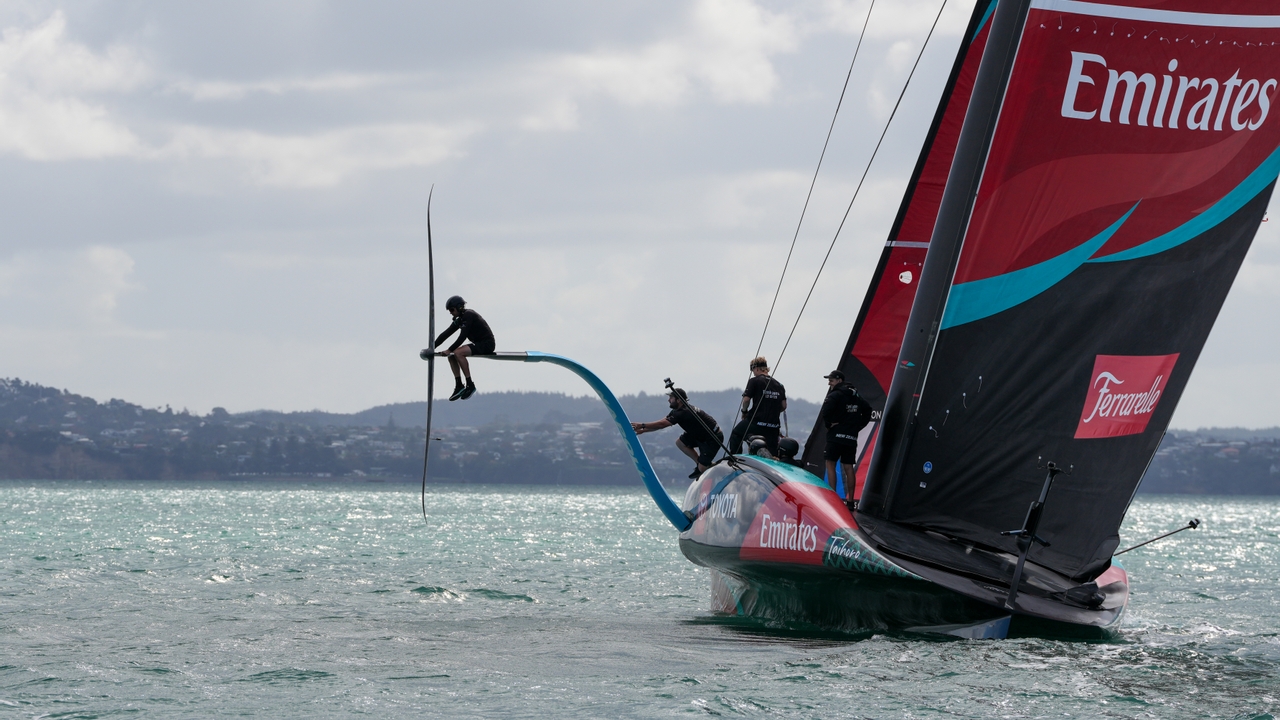
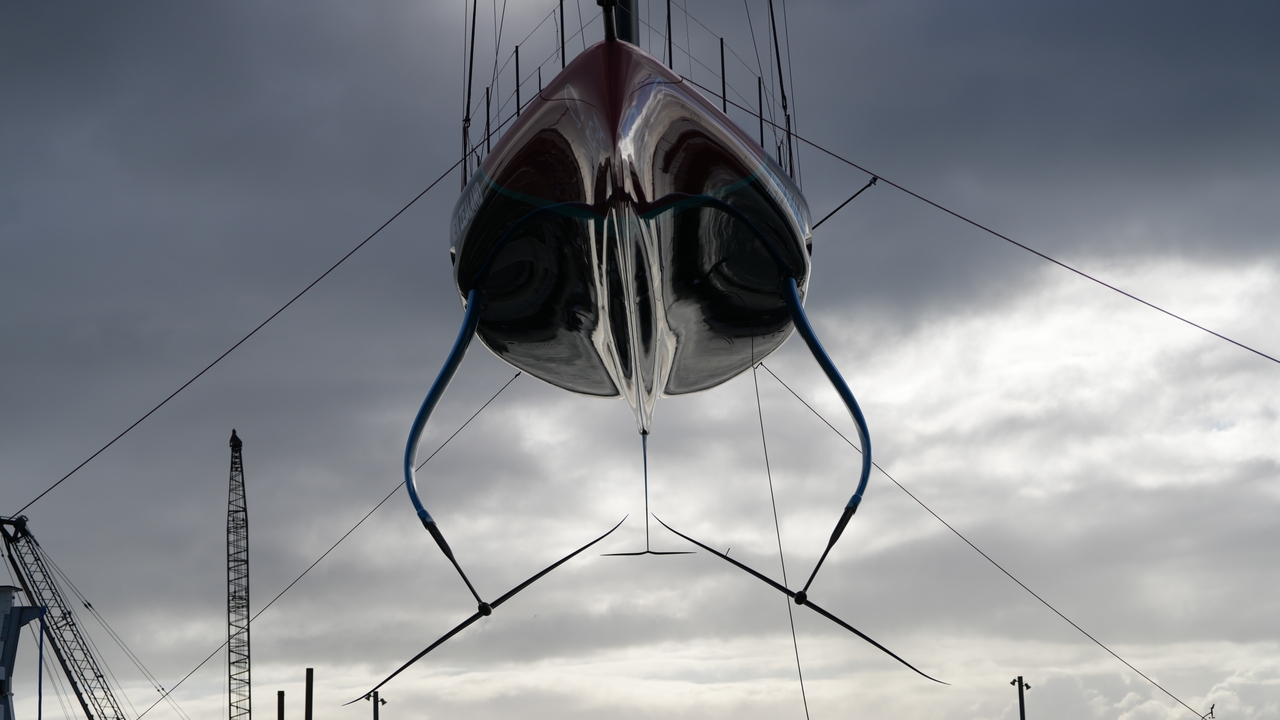
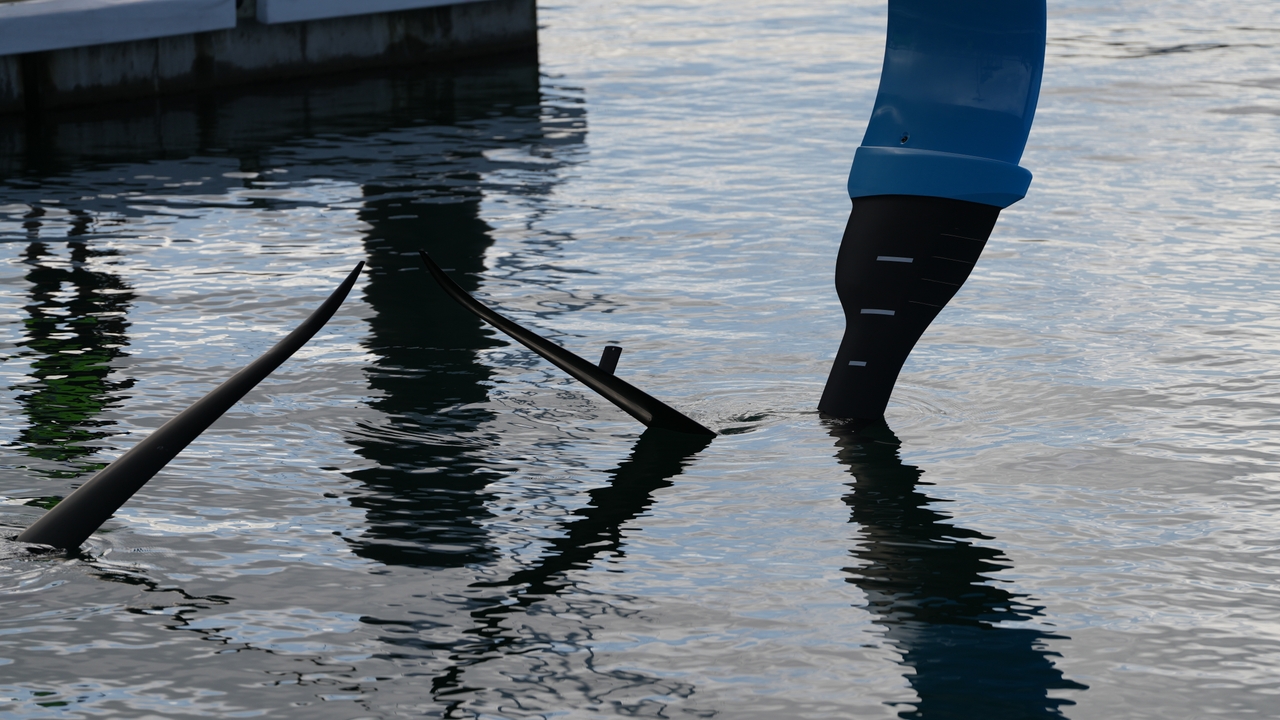
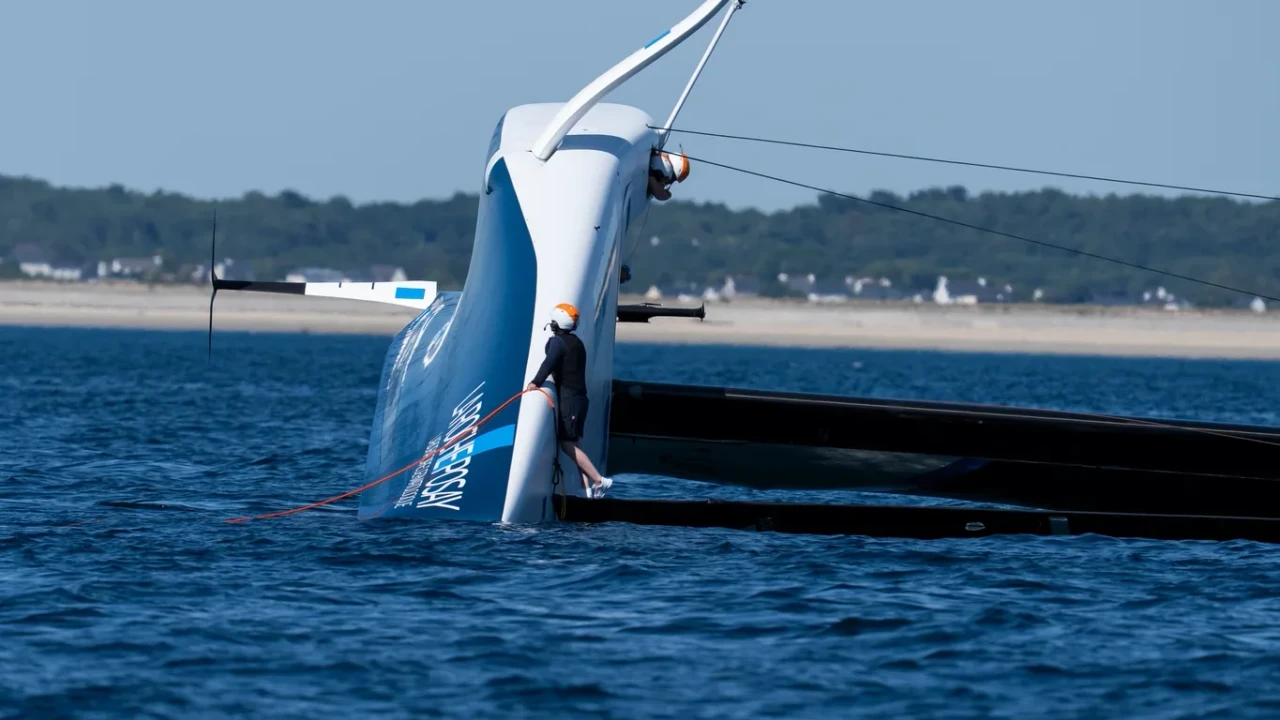
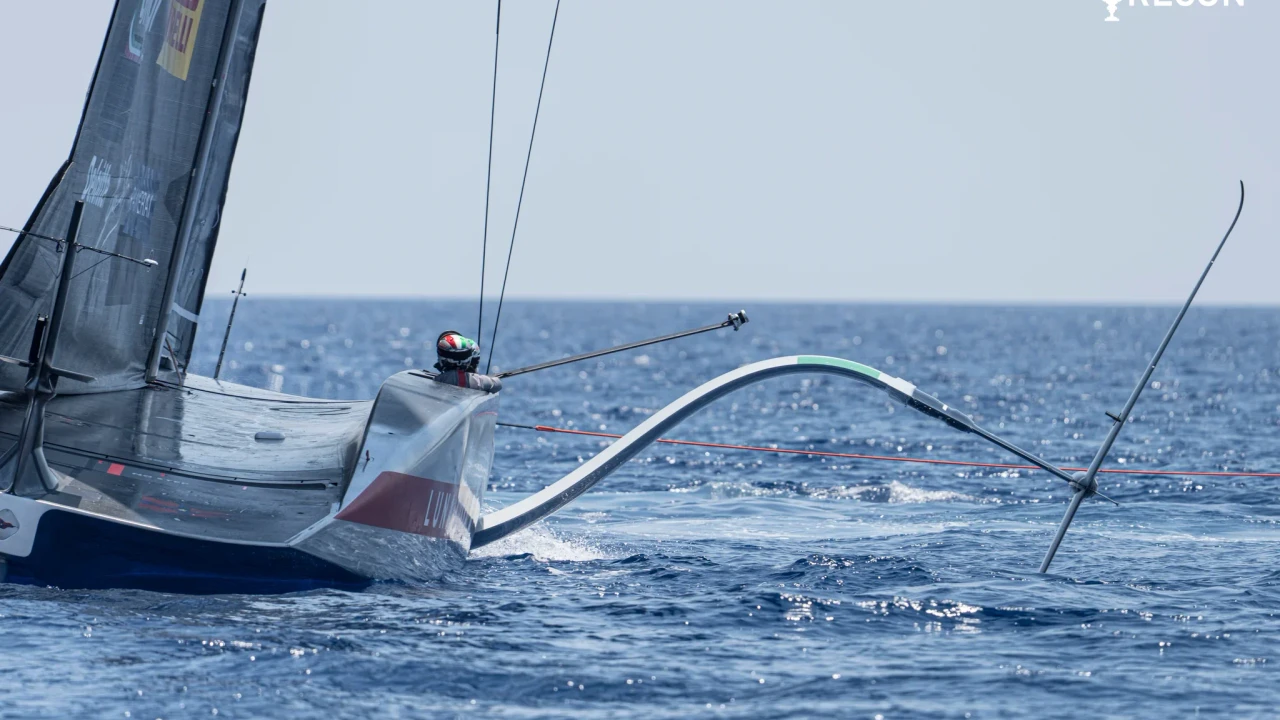
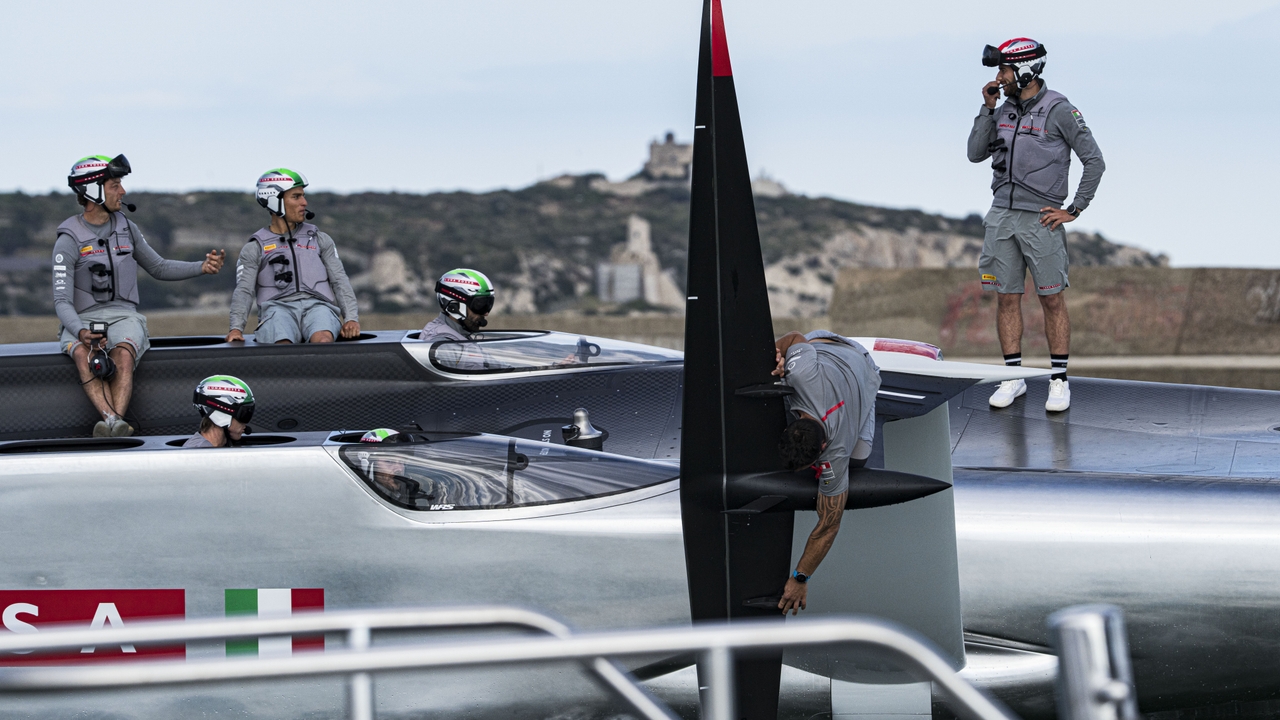
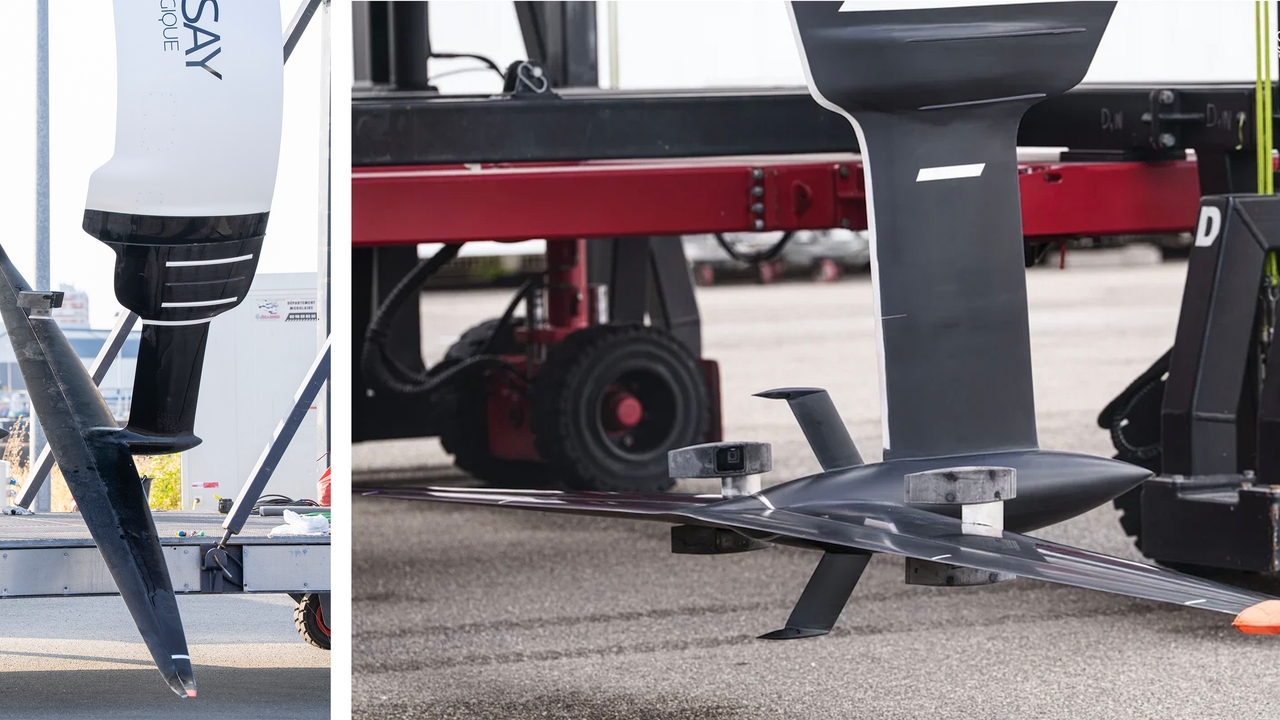
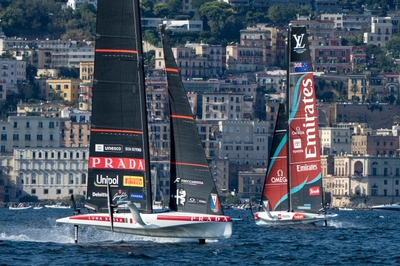
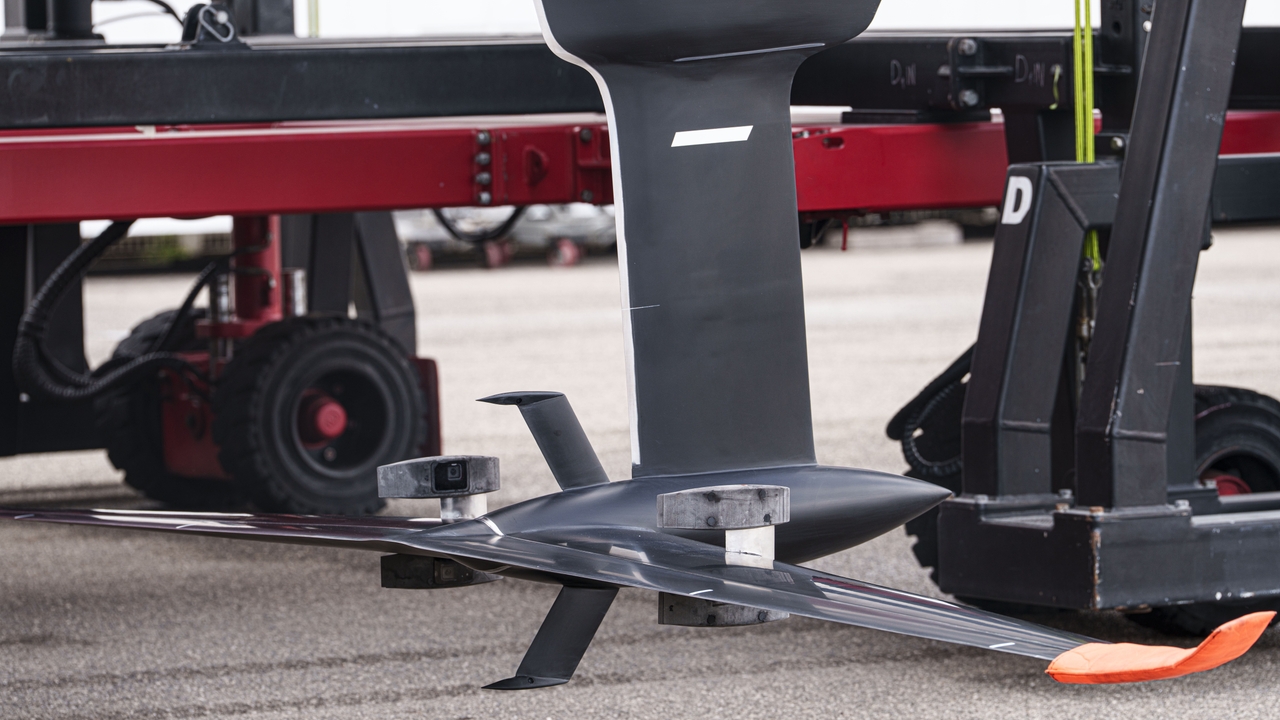
If there is one area where the Louis Vuitton 38th America’s Cup could be won or lost before the boats even line up in Naples, it is below the water. With existing AC75 hulls being retained and development increasingly concentrated on foils and control systems, the race to create the fastest foil package has become one of the defining technical battles of AC38.
From the dockside we see a barrage of cameras observing the foils from almost every angle. What are they doing? Simply, the cameras are typically looking for cavitation, ventilation (air sucked down from the surface, a separate problem and often the bigger one near the tips), flow behaviour (tufts or paint), flap movement, and how the foil bends, vibrates and twists under load.
Pierre Bouras / America's Cup
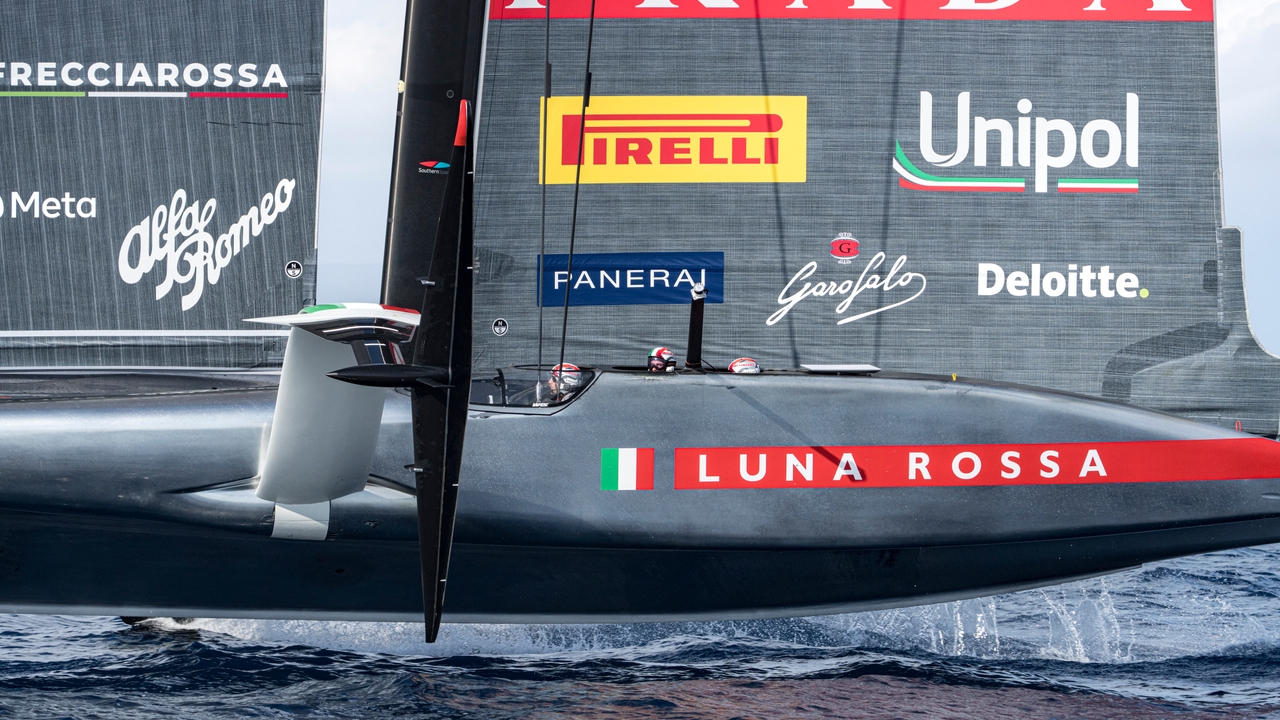
From onboard an AC75, looking down, it is almost scary to think that the hull is being supported by something so seemingly small but the foil wing must lift a yacht weighing several tonnes clear of the water, generate the lateral force required to sail upwind, survive enormous hydrodynamic loads and remain controllable from take-off speeds through to more than 55 knots. And it must do all of that with the minimum possible drag.
Those fundamental compromises have driven AC75 foil development since the class first appeared. For the Louis Vuitton 38th America’s Cup, however, the designers understand the problem far better than they did in 2021. The result is a fascinating convergence towards high-aspect, increasingly refined foil wings, but with some important new thinking about weight, take-off, control and the foil's complete operating range.
Sam Thom / America's Cup
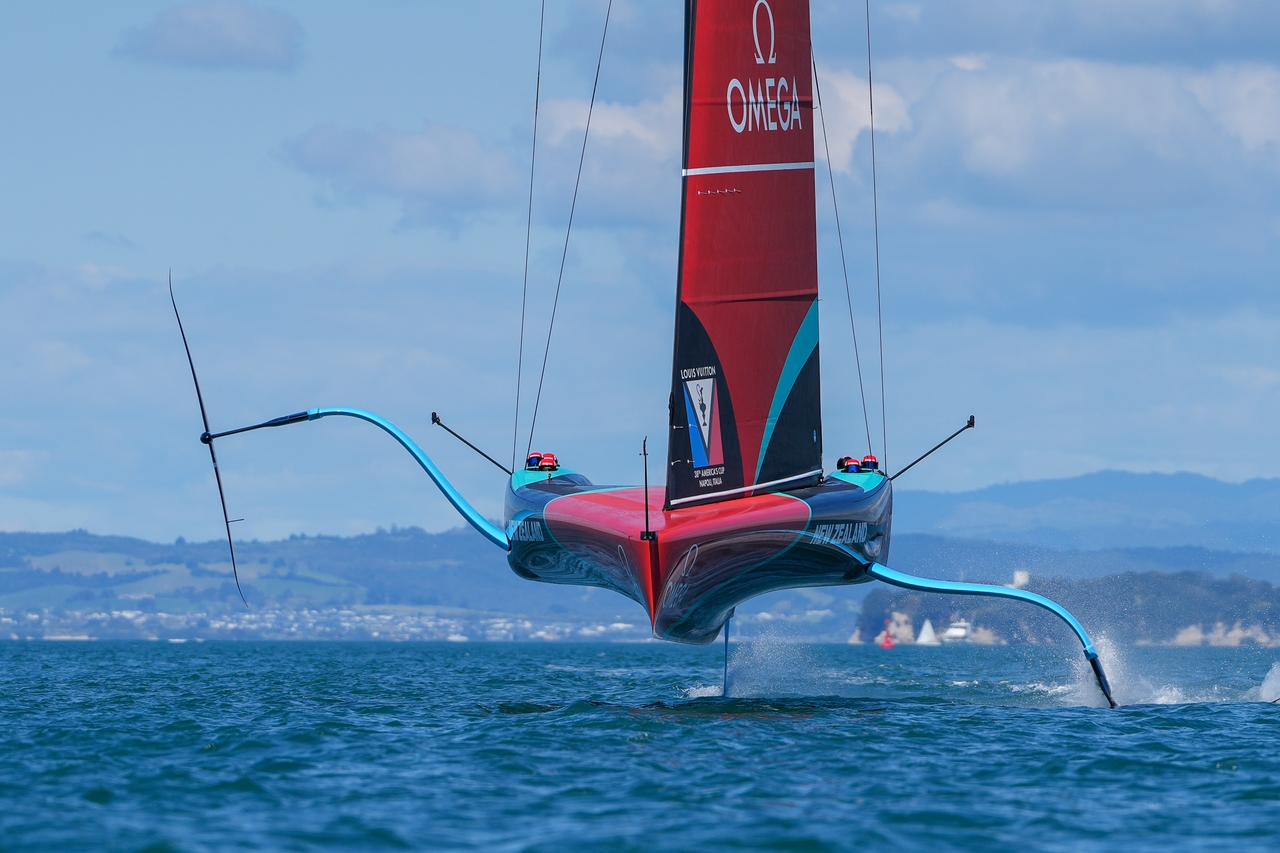
HIGH ASPECT IS STILL KING
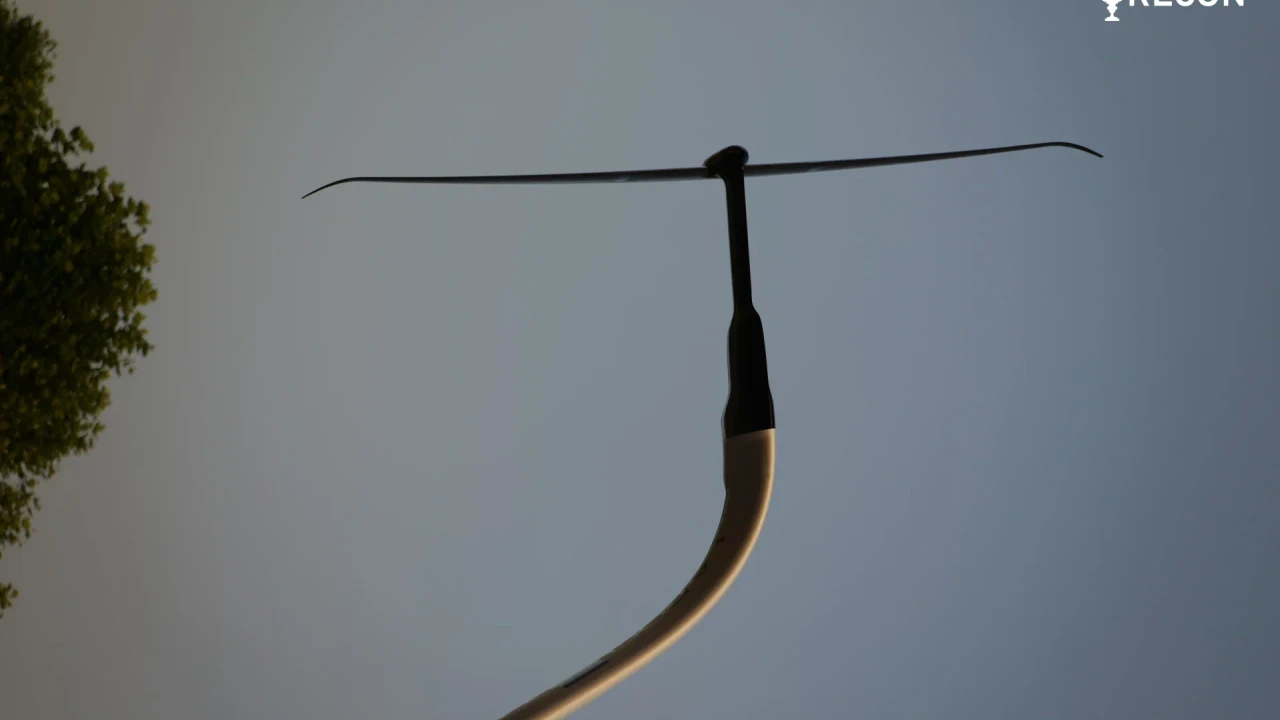
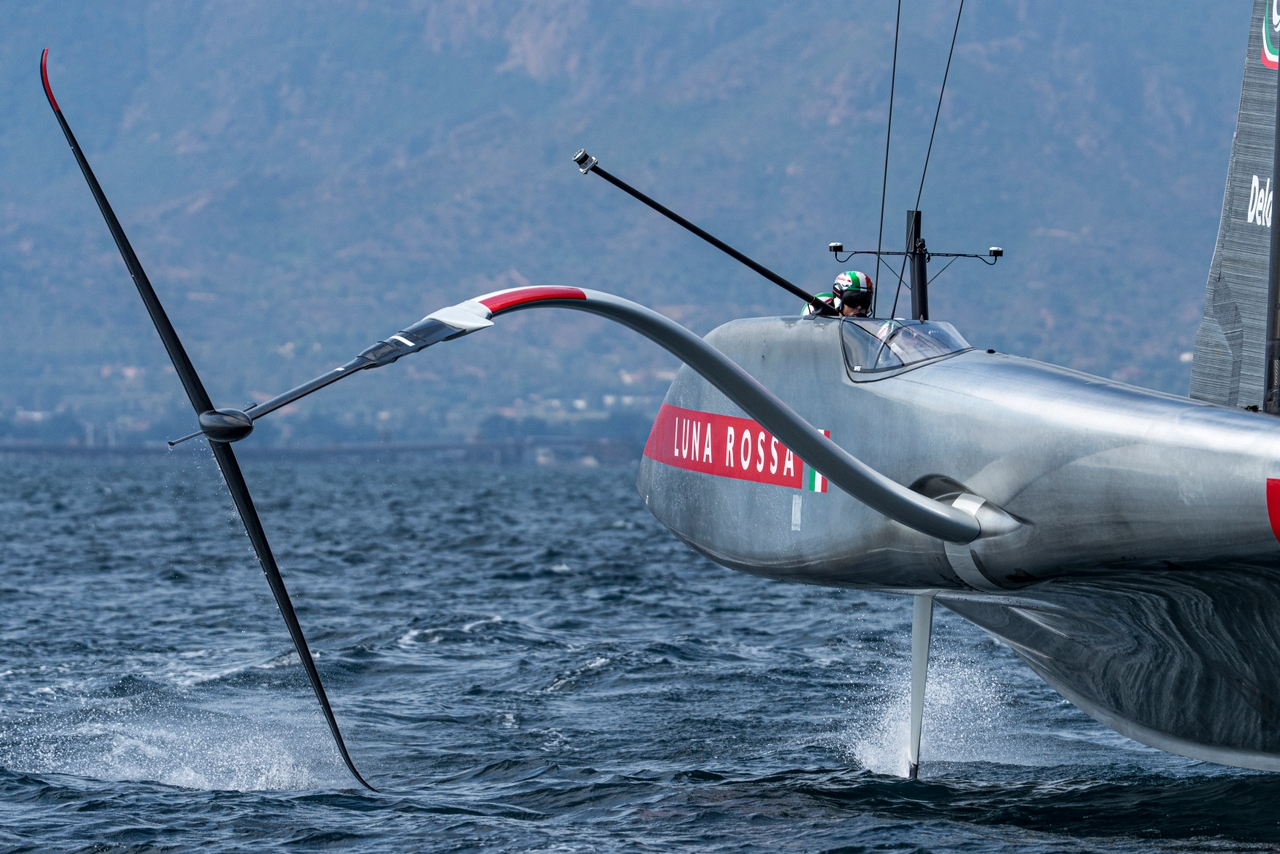
The broad trend remains towards long, relatively narrow foil wings. Hydrodynamically the attraction is obvious. Increasing span while reducing chord increases aspect ratio and reduces induced drag. In simple terms, a long efficient wing can generate the required lift whilst wasting less energy through the vortices created towards its tips.
The AC75 Class Rule places the foil inside a tightly defined design space, so teams cannot simply make the wing longer in span. The challenge becomes extracting the maximum useful span and efficiency available inside that envelope.
Ivo Rovira / America’s Cup
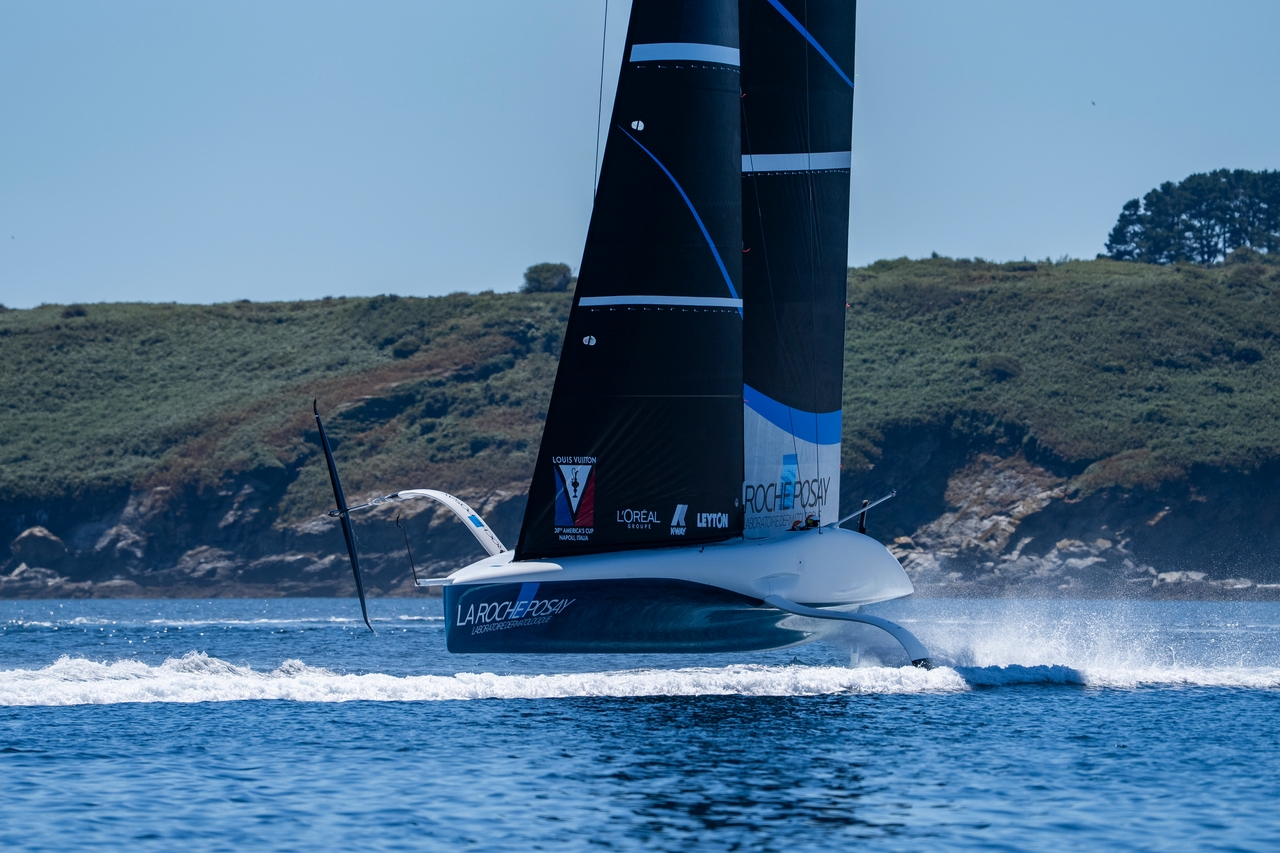
By Barcelona, the leading teams had already converged towards highly refined high-aspect concepts. Expect that philosophy to continue, but maximum aspect ratio is not automatically maximum performance. A very narrow foil has to produce enough lift to get the AC75 airborne in light wind and it must also contain structure strong enough to survive extraordinary loads, incorporate the flap mechanism and operate over a huge speed range. That produces one of the central compromises of AC75 design: large enough to take off, but small enough to be fast.High aspect ratio cuts induced drag, which matters most at low speed (take-off, light air, out of manoeuvres). Take-off gets harder because of the smaller area and chord, not the aspect ratio itself. At top speed, friction drag dominates, so less area and thinner sections are what count there.
Pierre Bouras / America's Cup
NAPLES CHANGES THE QUESTION
The venue matters enormously. The declared AC38 raceable wind range runs from 6.5 to 23 knots, placing considerable emphasis on the lower end. That matters because foil area which looks unnecessarily large when an AC75 is travelling at 50 knots can become extremely valuable when the yacht is desperately trying to take off in six-and-a-half or seven knots of wind.
The designers are therefore not simply searching for the foil with the lowest drag at maximum speed. They are designing around an entire race and looking at factors like take-off speed, wind speed, loss of inertia through tacks and gybes, re-acceleration, flying through lulls in the wind and behaviour of the yacht at touchdown.
Ivo Rovira / America’s Cup
The fastest AC75 around a racecourse may therefore not have the foil capable of producing the highest headline speed. It may have the foil that spends the greatest percentage of the race operating efficiently whilst airborne.
The foil can also become less forgiving through manoeuvres, when boat speed temporarily falls and the yacht needs substantial lift precisely when the flow over the foils is at its least stable. This is why designers increasingly talk about the complete ‘performance envelope’ rather than simply maximum speed. The perfect Naples foil may sacrifice a fraction at 52 knots if it gains significantly at 18, 25 or 35 knots.

Sam Thom / America's Cup
THE SECTION IS GETTING CLEVERER
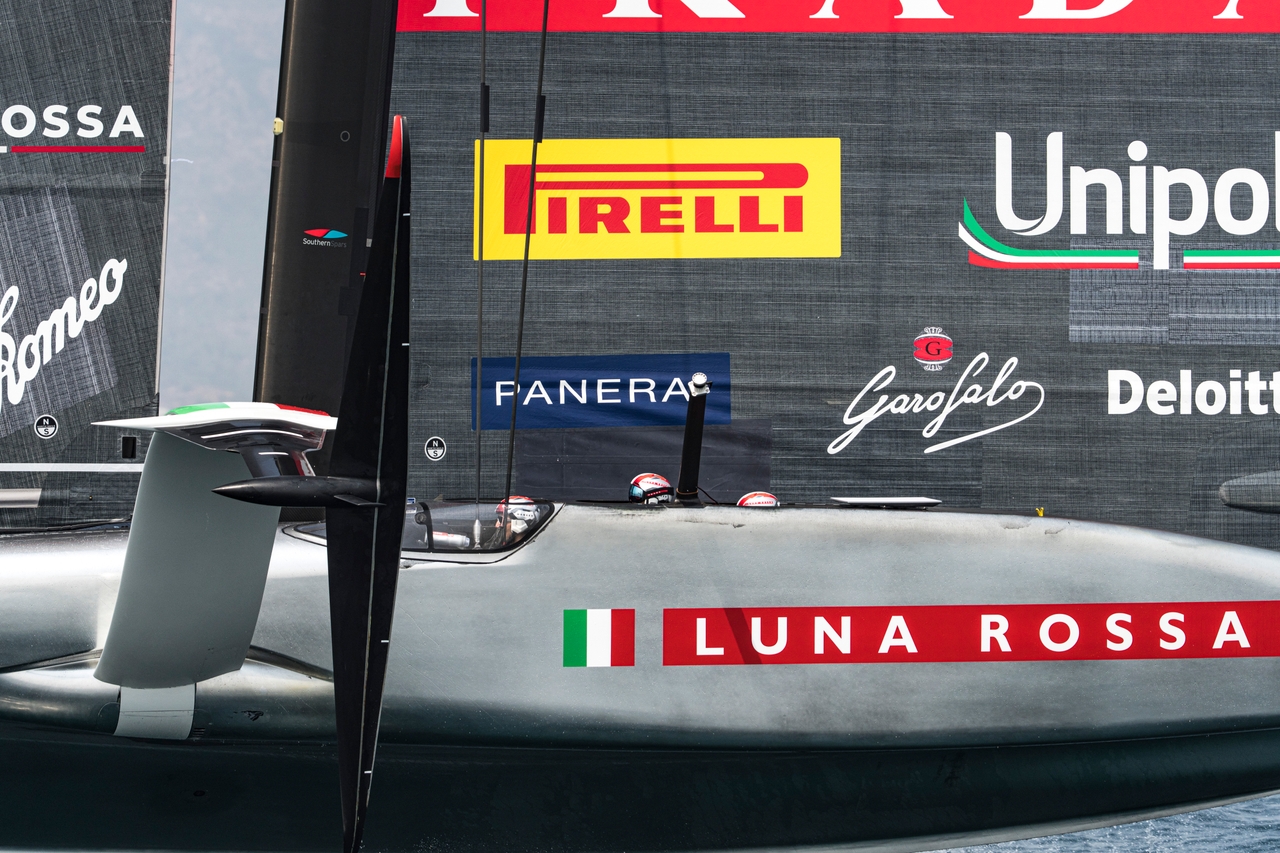
Span and area are only the most visible parts of the story. The cross-sectional shape of the foil is equally important. A thicker section can provide structural advantages and potentially operate effectively at high lift coefficients, but thickness generally carries drag penalties. A thinner section can be exceptionally fast but becomes structurally more challenging and potentially less tolerant across the operating range.
Then comes another enemy in the form of ‘cavitation' - and the thicker the section, the sooner cavitation arrives.
At extreme speeds, pressure over parts of the foil can fall sufficiently for water to vaporise locally, producing cavities that dramatically alter the foil’s behaviour. Detecting it is one of the main jobs of those cameras mounted on the foils from various angles.
The designers therefore need sections that remain efficient at very high speeds without compromising the low-speed characteristics required for take-off. This is one reason AC75 foil design is so difficult as the same wing is being asked to behave like a high-lift take-off foil and a low-drag high-speed foil.
Ivo Rovira / America’s Cup
THE FLAP CHANGES EVERYTHING
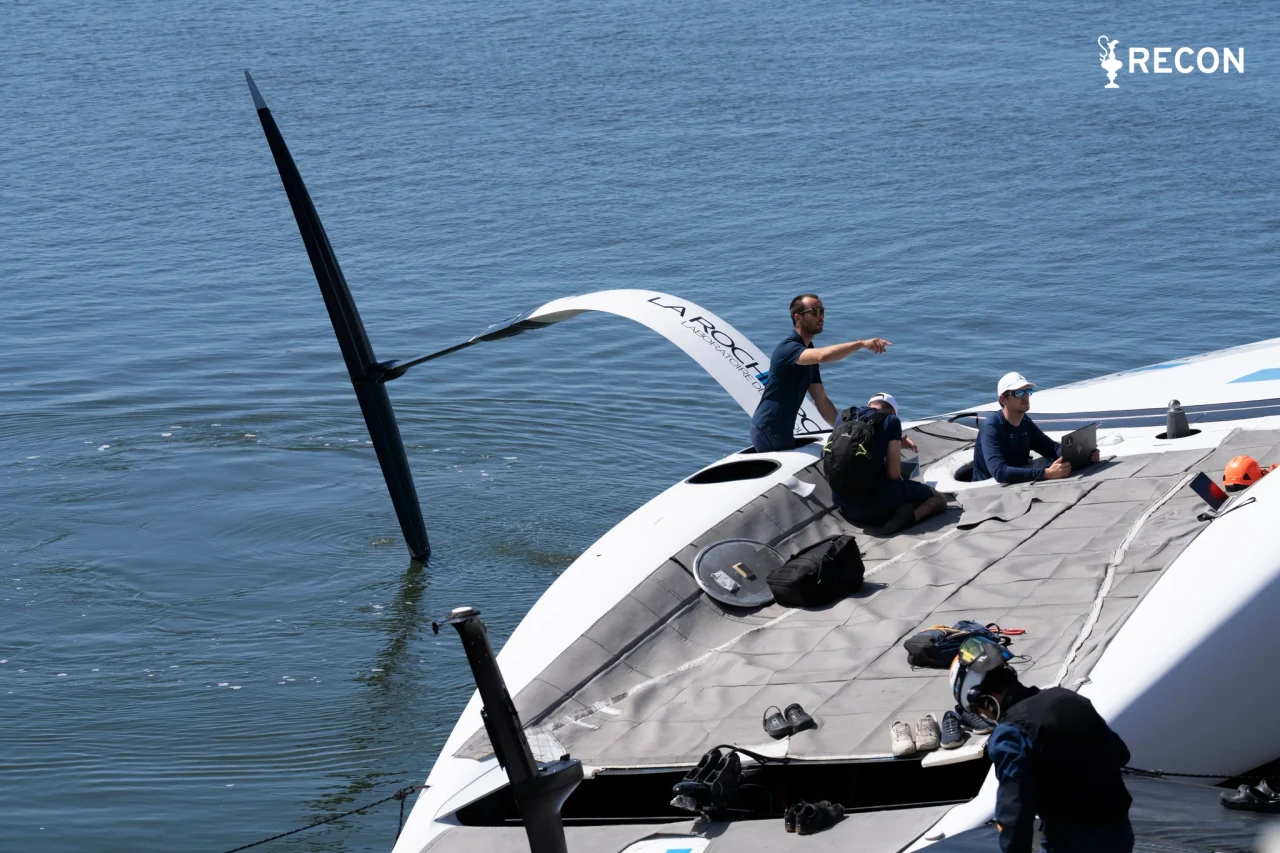
The AC75's great weapon in solving that contradiction is its movable trailing-edge flap. Rather than changing the angle of the entire foil, the flap alters the effective camber of the section. At lower speeds, more flap can generate additional lift. As speed increases, flap demand can reduce and the foil effectively changes gear and makes foil and flap design inseparable.
A beautifully efficient wing with a poor flap architecture will not produce a fast AC75. Designers must consider hinge location, flap chord, structural stiffness, sealing and how smoothly the geometry transitions between the fixed wing and movable surface.
For this current cycle of the America’s Cup, teams may construct five new foil flaps as well as three new foil wings, while legacy components can also be modified within defined limits. Teams get three legacy wings and three legacy flaps, which can be modified but must keep 60% of their AC37 mass.
That allocation itself tells you something. The flap is not an accessory, it is a major development component.
Pierre Bouras / America's Cup
CONTROL IS NOW PART OF FOIL DESIGN
Perhaps the biggest conceptual change is that it no longer makes much sense to discuss an AC75 foil independently of its control system. A theoretically faster foil may be useless if it is exceptionally difficult to control. The flap is continually being adjusted to manage lift and therefore ride height and heel. Pitch meanwhile is mostly controlled on the rudder elevator. The better the control architecture, the more aggressively designers can potentially optimise the foil.

Sam Thom / America's Cup
A stable, forgiving foil might tolerate relatively crude control. An extremely low-drag foil operating close to its limits may demand exceptionally accurate flap positioning and flight control and this is where software increasingly meets hydrodynamics. The foil designer can effectively ask: How difficult a foil can our sailors and control system successfully fly? That question may define the next generation.
THE GULL-WING REMAINS
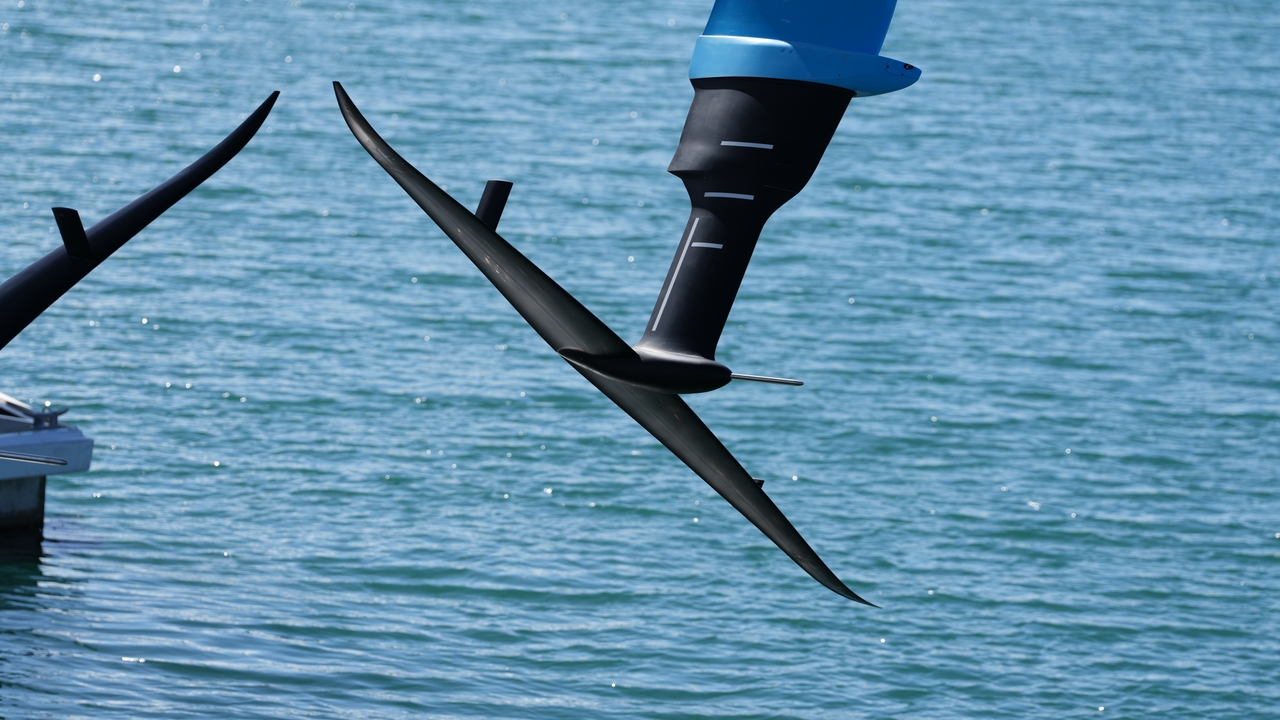
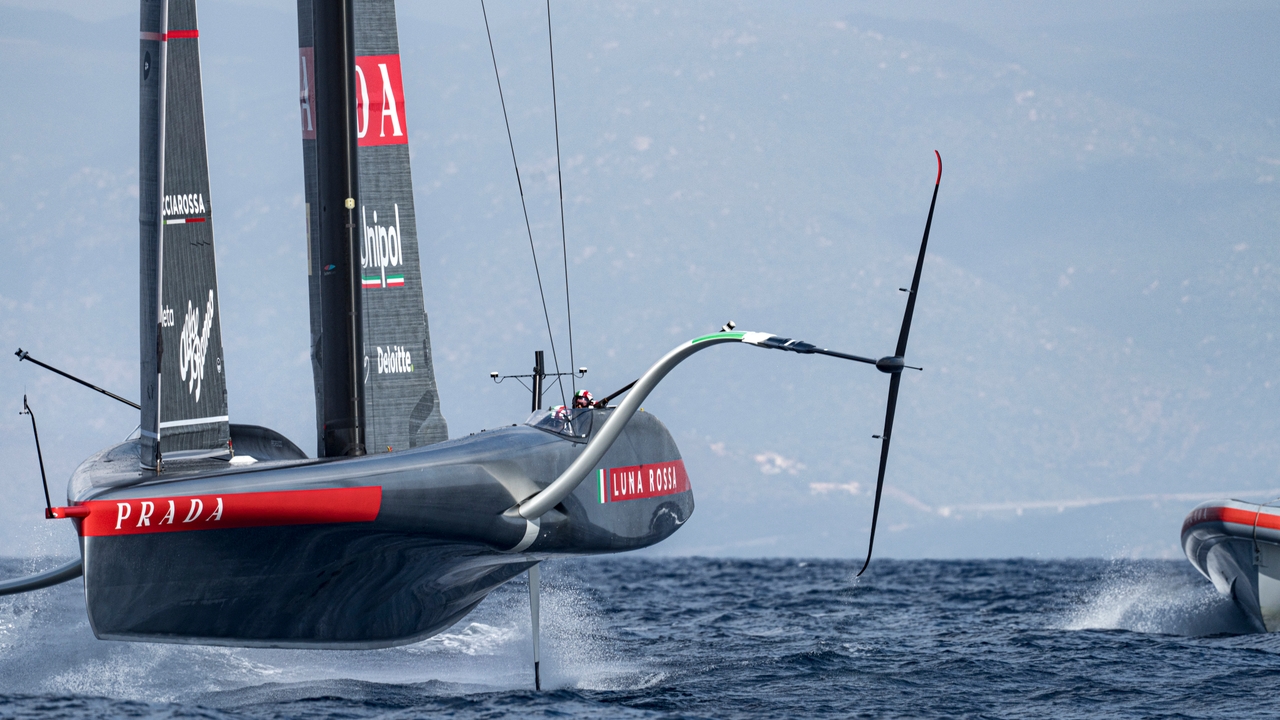
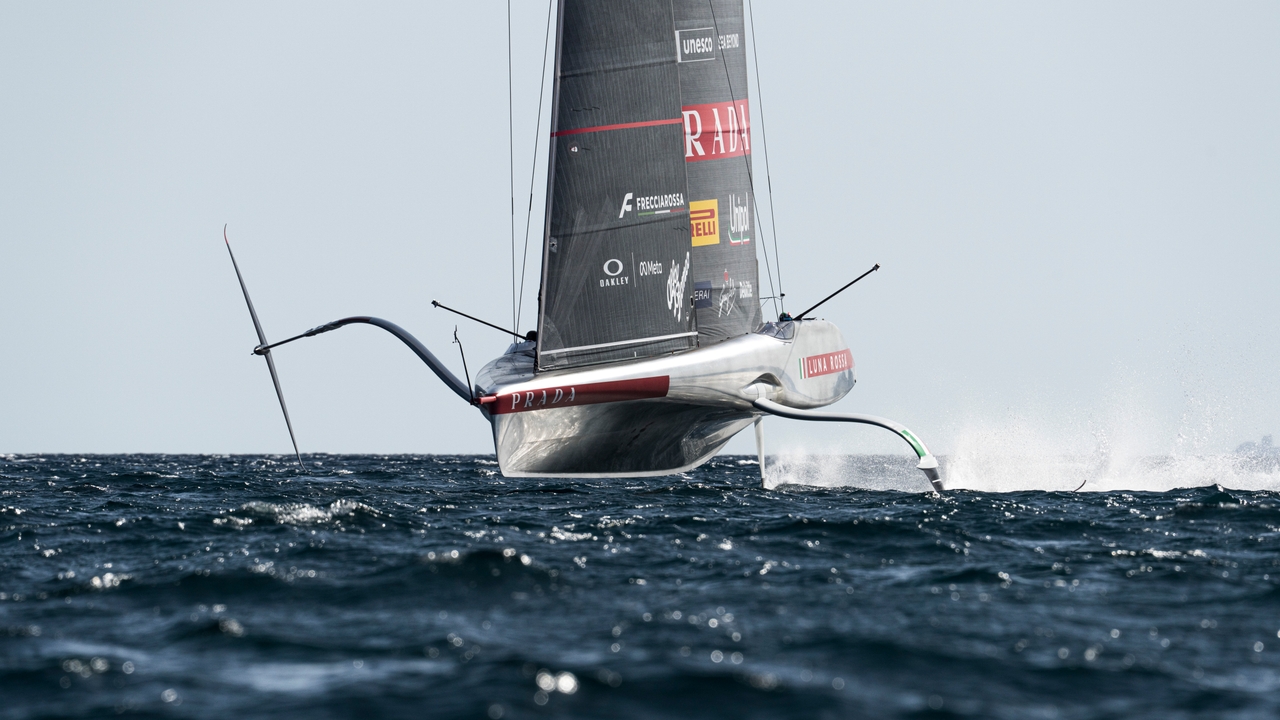
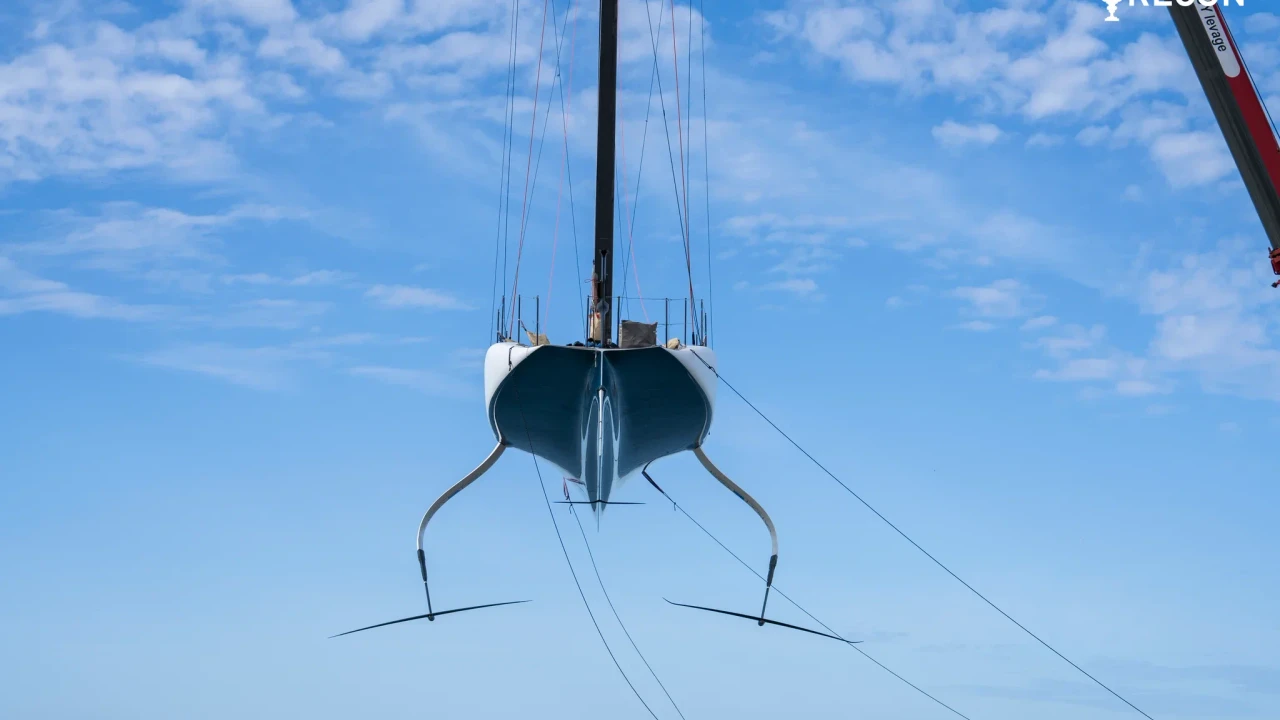
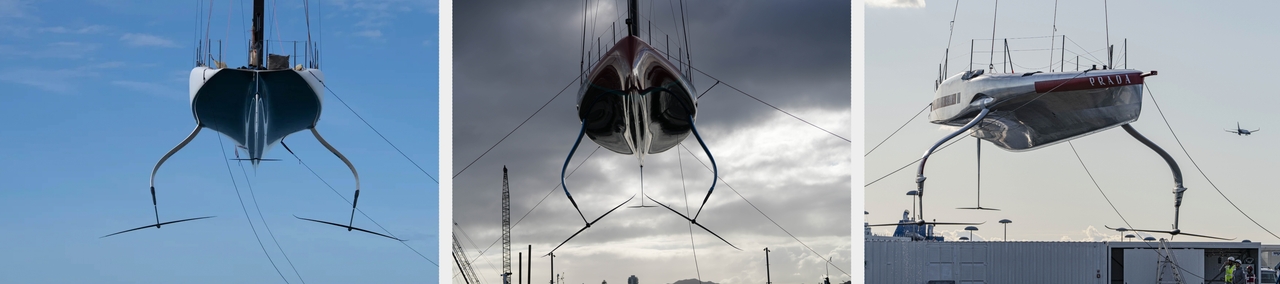
One obvious visual feature of the leading Barcelona foils was their geometry when viewed from ahead.
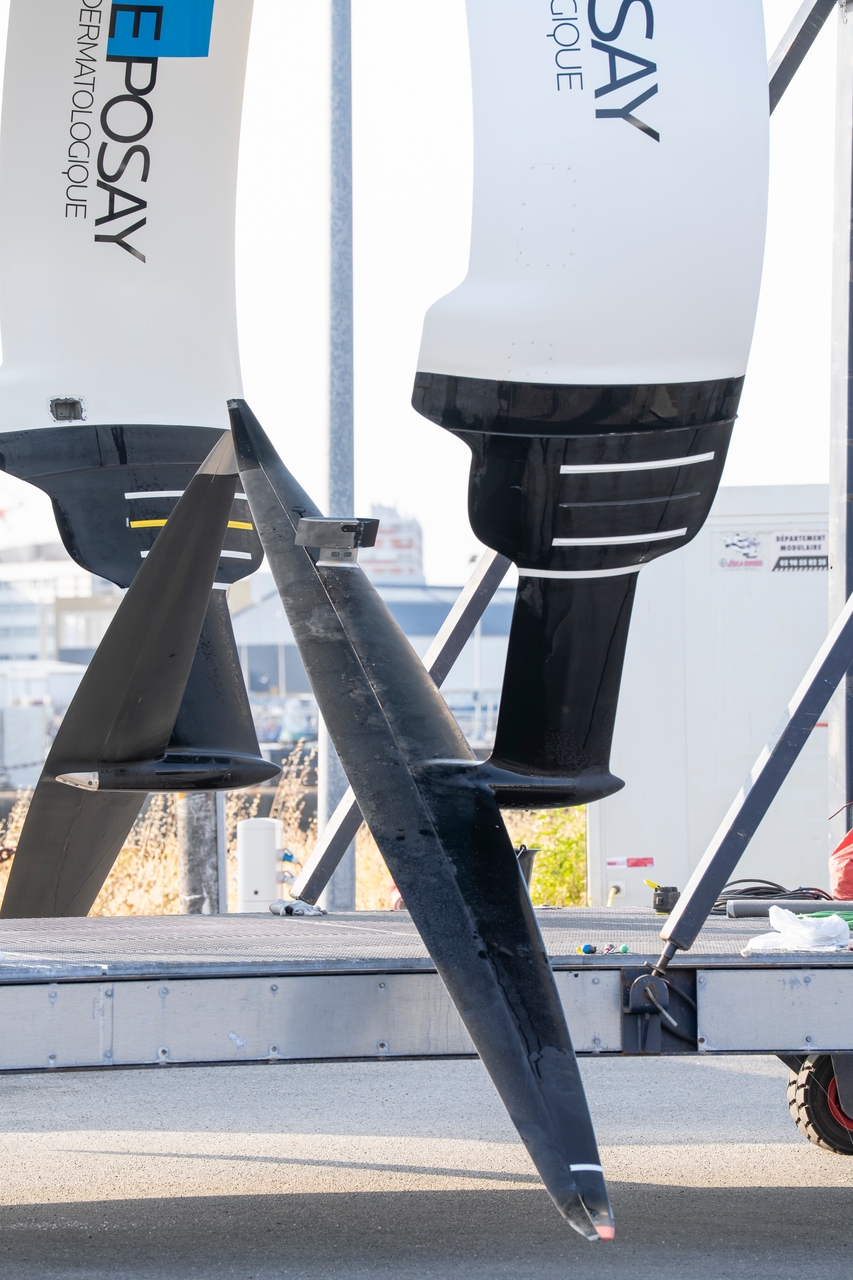
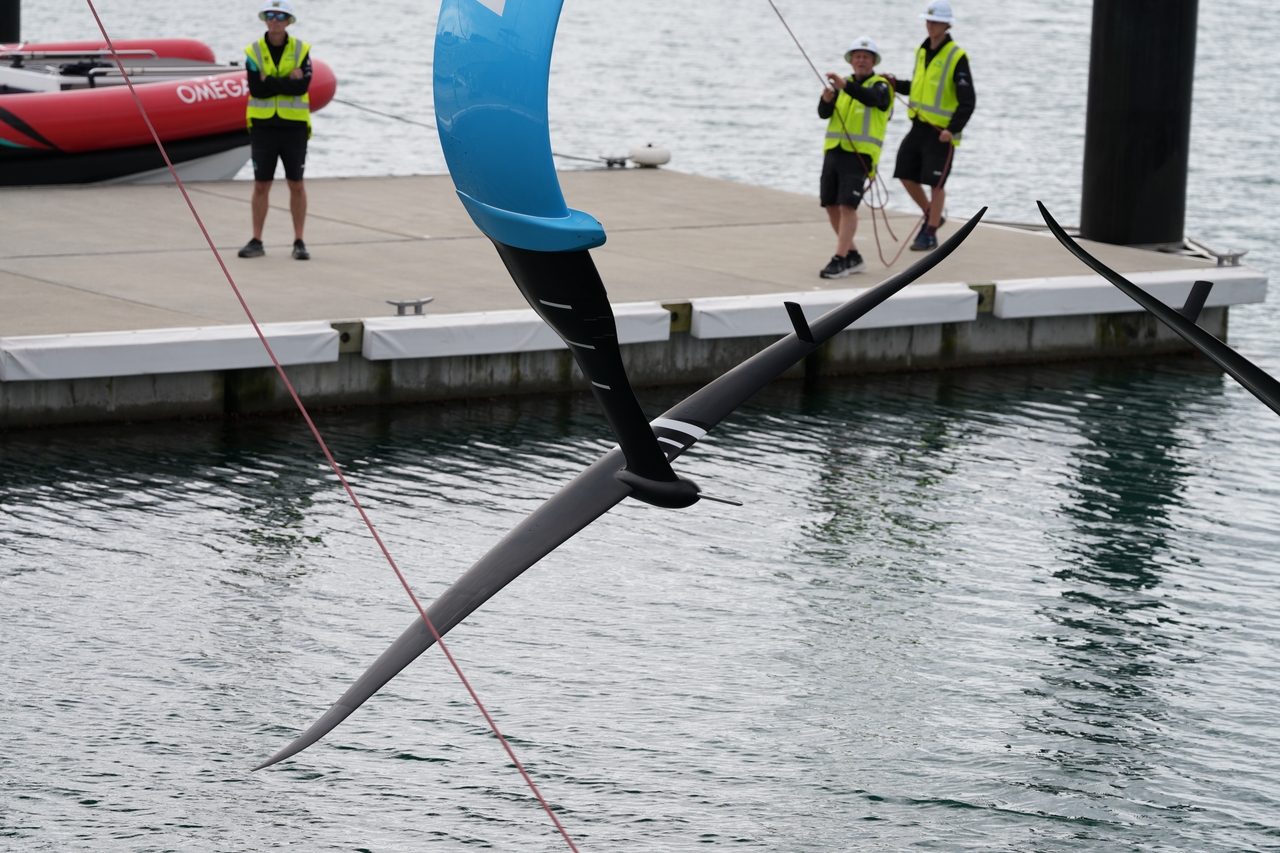
ETNZ's winning foil package on Taihoro incorporated a subtle gull-wing form, with the tips slightly anhedral. That geometry has remained visible on Taihoro throughout its 2026 development programme.
Sam Thom / America's Cup
These three-dimensional shapes allow designers to manipulate several things simultaneously: effective span, lift distribution, tip behaviour, structural packaging and the relationship between vertical and lateral forces. There is no requirement for the foil to be a perfectly straight horizontal aeroplane wing. Instead, the geometry can be used to influence where and how the hydrodynamic forces are generated. Expect increasingly subtle versions rather than necessarily dramatically different shapes.
THE JUNCTION IS EXPENSIVE
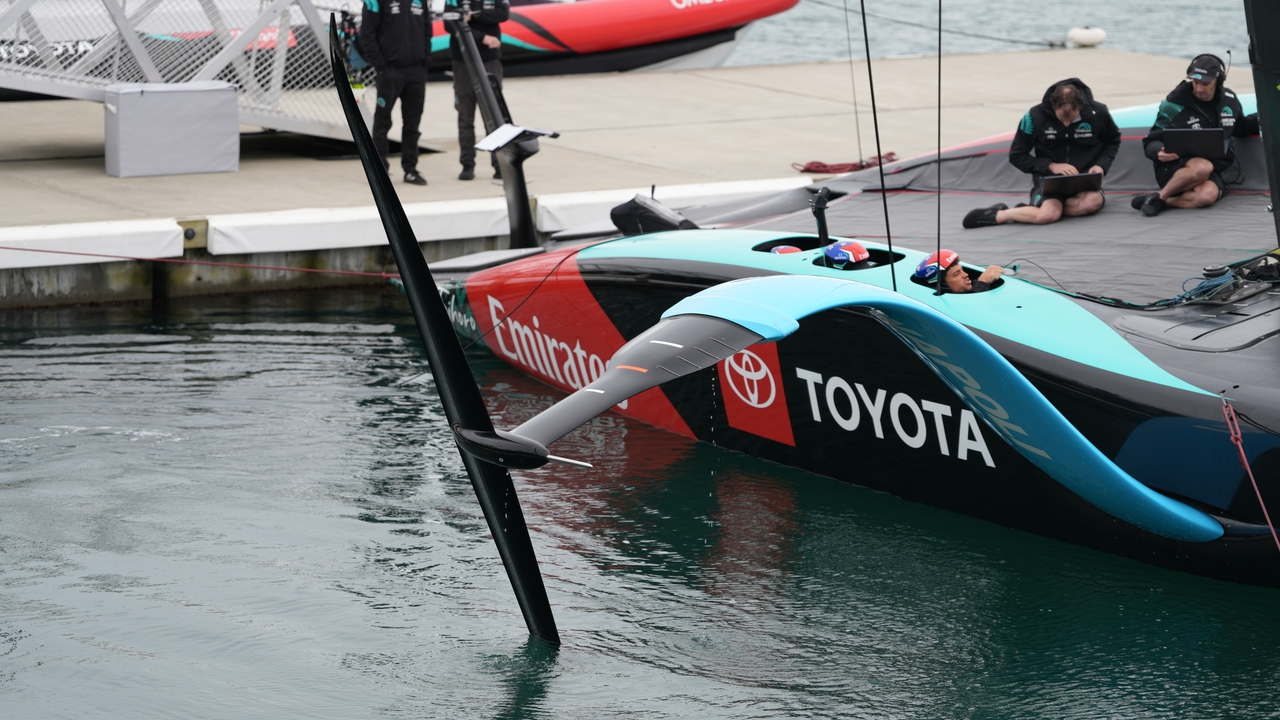
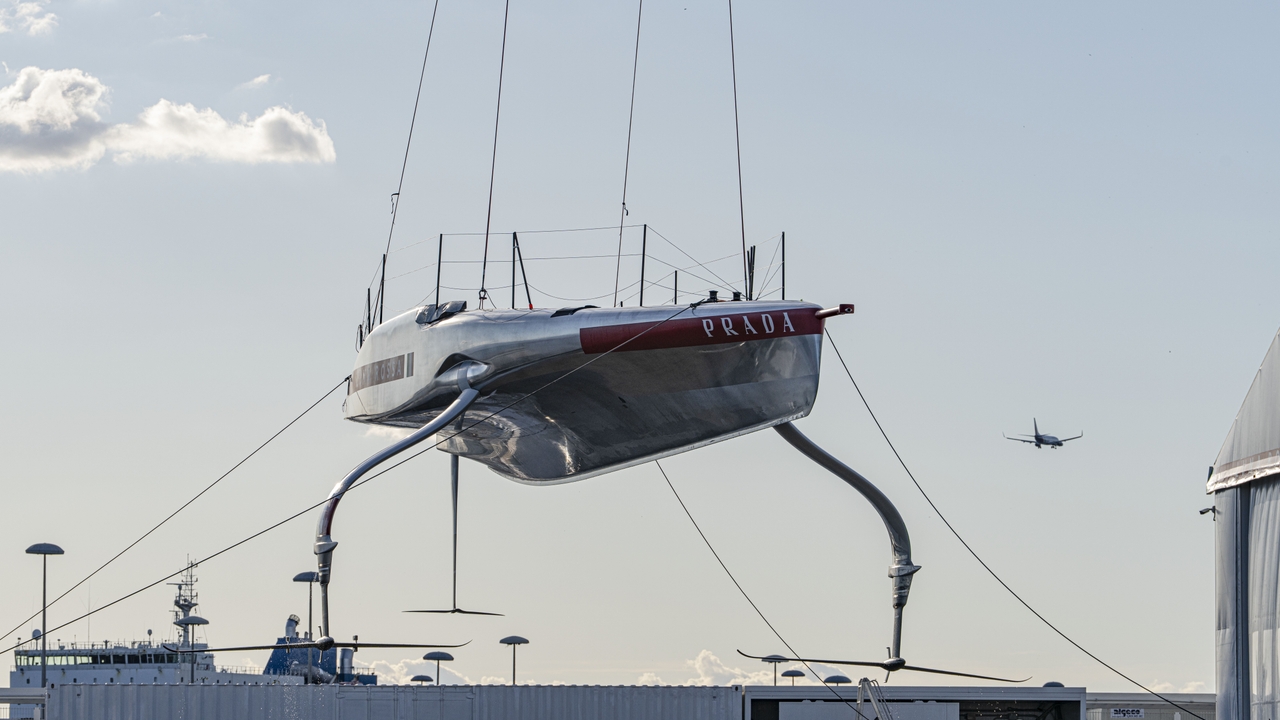
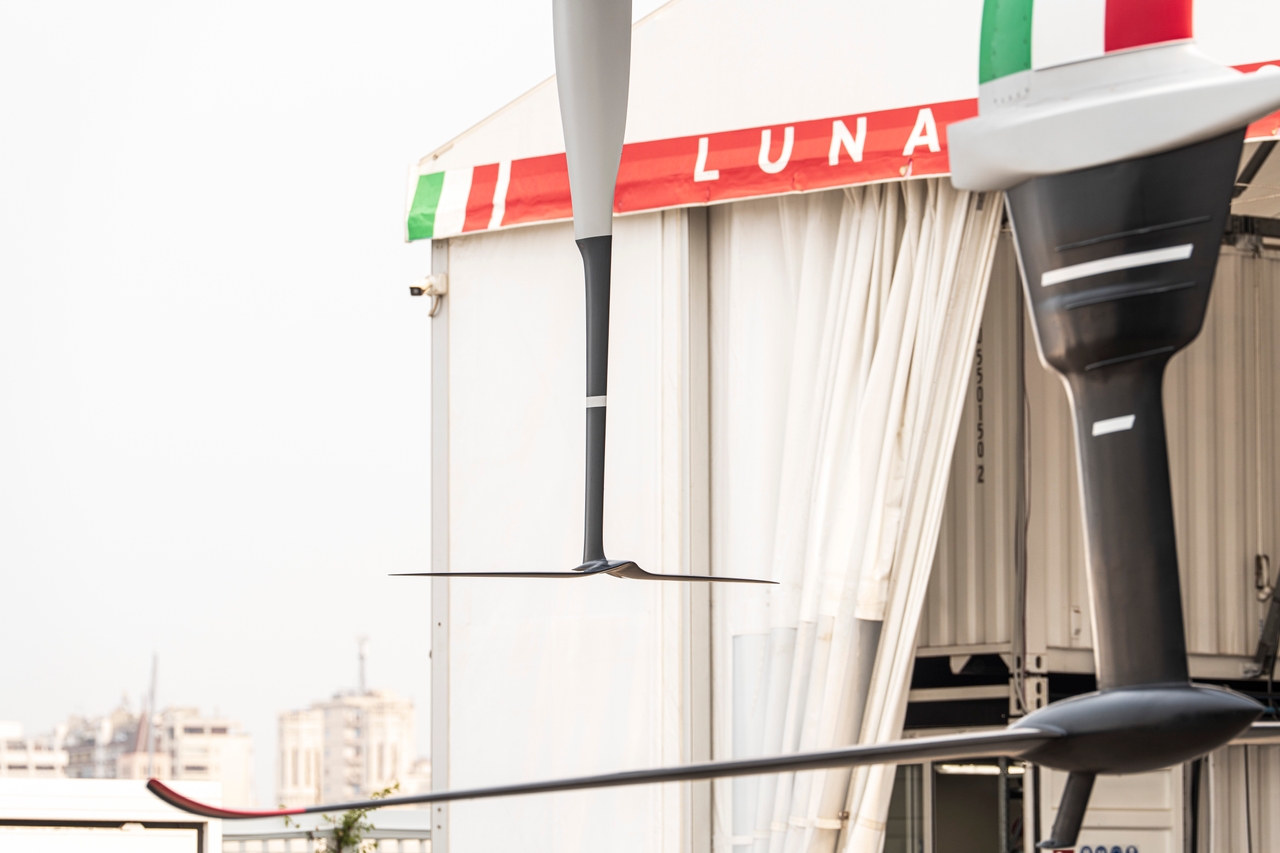
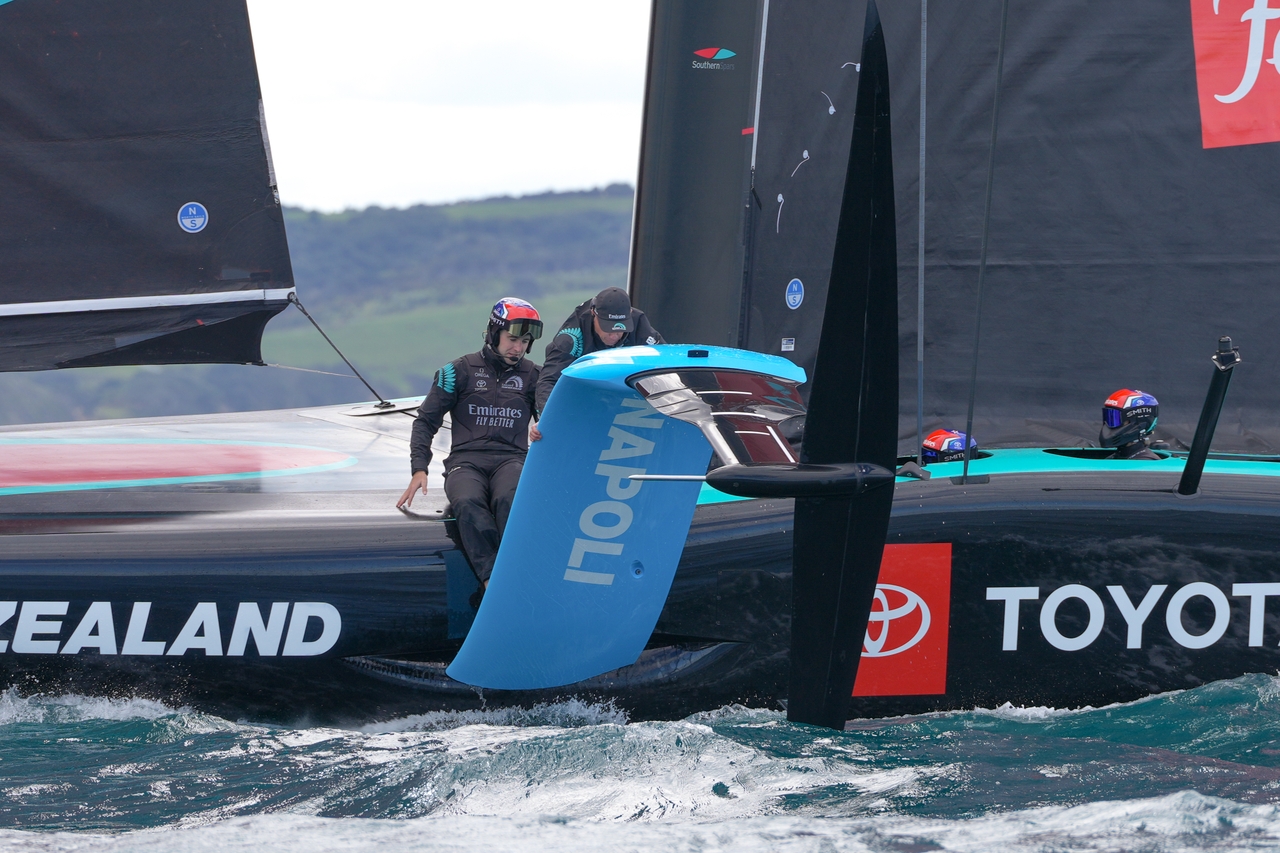
Another development battleground is where the foil wing meets the vertical foil arm. Any junction between hydrodynamic surfaces creates interference and is where flows interact, pressure fields collide and drag is generated.
Sam Thom / America's Cup
The designers therefore devote enormous effort to the fairing around the foil-arm/wing junction. During the Barcelona Cup, some teams developed substantial fairings and ballast structures around this area. ETNZ's 2026 configuration initially revealed a significant reduction in the volume of the prominent forward-projecting structure seen during AC37, with the team also confirming that weight had been removed from the foil package. Later development has continued around this area. This highlights another major trend: mass distribution is part of foil design.
WEIGHT MATTERS TWICE
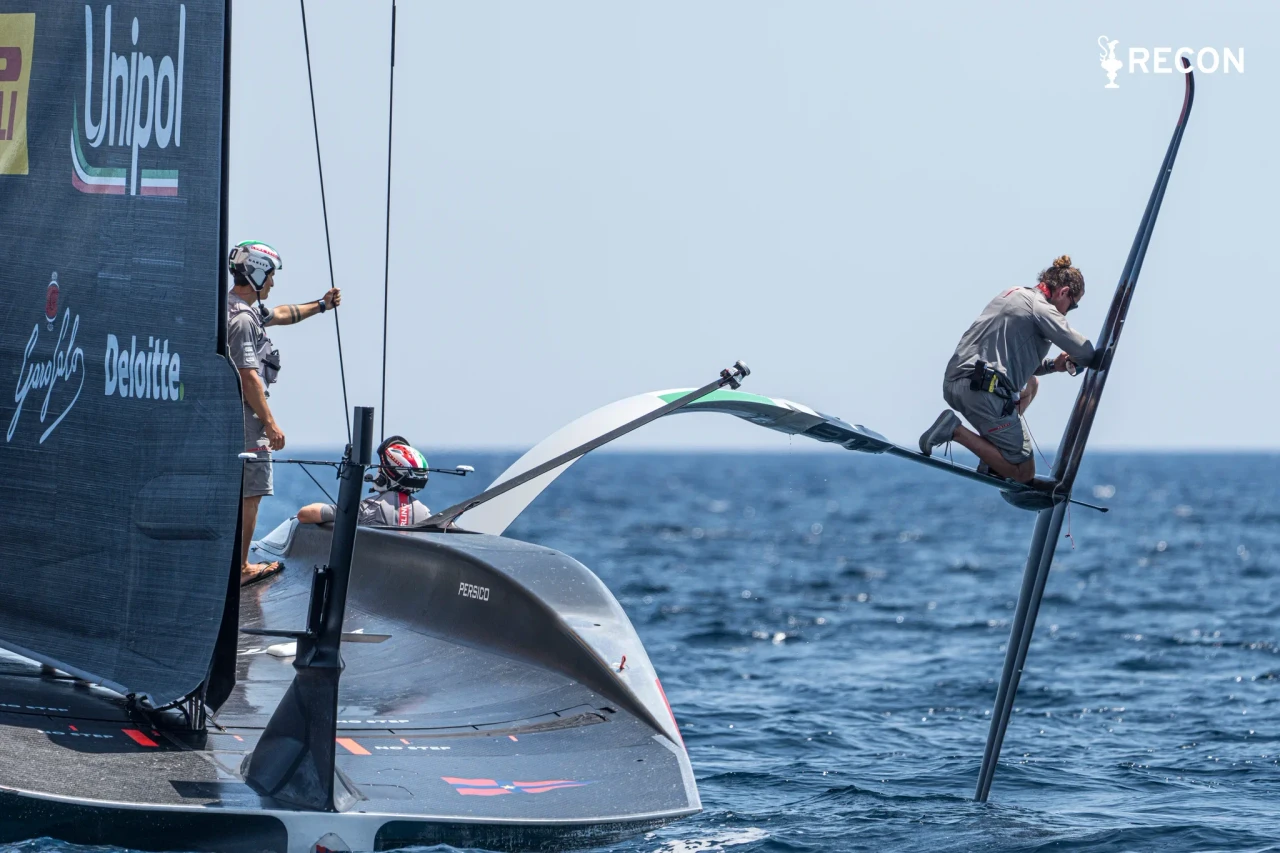
Every kilogram inside a foil wing has two consequences. First, it contributes to the yacht's overall weight distribution. Second, because the foil is positioned far from the yacht's centreline when deployed, the raised windward foil’s mass adds righting moment; the leeward foil’s works slightly the other way.
Ivo Rovira / America’s Cup
Historically, teams have used dense material and strategically positioned ballast inside foil packages to meet rule requirements while putting weight where it provides performance benefits. But the rules for this Cup cycle introduce a different overall architecture, with cyclors removed and stored electrical energy changing the internal weight equation. It's worth noting that each foil wing assembly must weigh between 550–580 kg, so in effect, it’s all about where that mass goes and how it's distributed.
FLEX – THE NEXT FRONTIER?
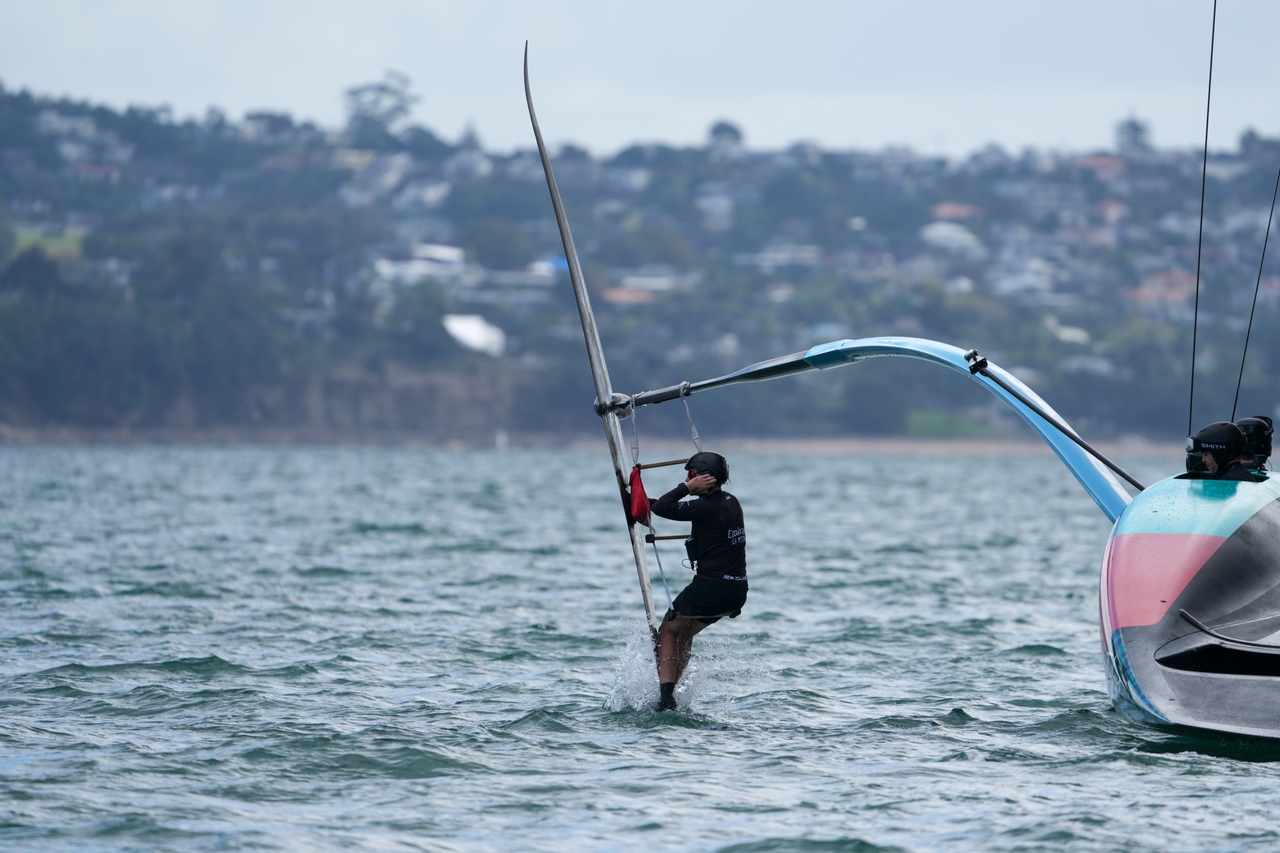
Another intriguing area is controlled structural behaviour. No foil is perfectly rigid. Under several tonnes of hydrodynamic loading it bends and twists and traditionally that deformation might have been regarded primarily as something to minimise, but modern composite engineering allows designers to think differently.
If deformation can be accurately predicted, the unloaded foil can theoretically be designed so that under a particular load it assumes a more desirable operating shape. In the Class Rule, a foil flexure is the flexible region where the flap meets the wing (essentially a flexible hinge). It’s limited in chord and only allowed to deform as the flap moves. Elsewhere the unloaded shape is tightly controlled, but the wing can still bend and twist under load. The difficulty is that the foil must work at many different loads. A shape optimised to flex at 45 knots might behave differently at 25 knots, so the challenge is range.
Sam Thom / America's Cup
THE BATTLE WE CAN'T YET SEE
The most important point about AC38 foil development is that we definitely have not seen the final answers yet. ETNZ, Luna Rossa and La Roche-Posay Racing Team have spent their training time through 2026 learning from legacy equipment whilst simultaneously developing what comes next, and the rules encourage exactly that approach. With only three new foil wings permitted, they are precious and nobody wants to reveal their final race weapon unnecessarily early, but what we can already see is the direction of travel.
Recon / America's Cup
The AC75 hulls racing in Naples will be familiar. What sits beneath them may not be. Dan Bernasconi's assessment after Barcelona was revealing when he said that the differences between the hulls had become almost insignificant in performance terms and that the gains were all in foils and systems. “The designers still felt there was performance left on the table in those areas.”
We will have to wait to see just how much performance there is left to run.
Magnus Wheatley