GB1 HELMSMAN BEN CORNISH ON NAPLES REGATTA AND UPCOMING RELAUNCH OF BRITISH AC75
GB1 port-side helmsman Ben Cornish shares his thoughts after the team’s disappointing showing in last month’s second AC40 regatta in Naples and looks ahead to the imminent relaunch of the British AC75
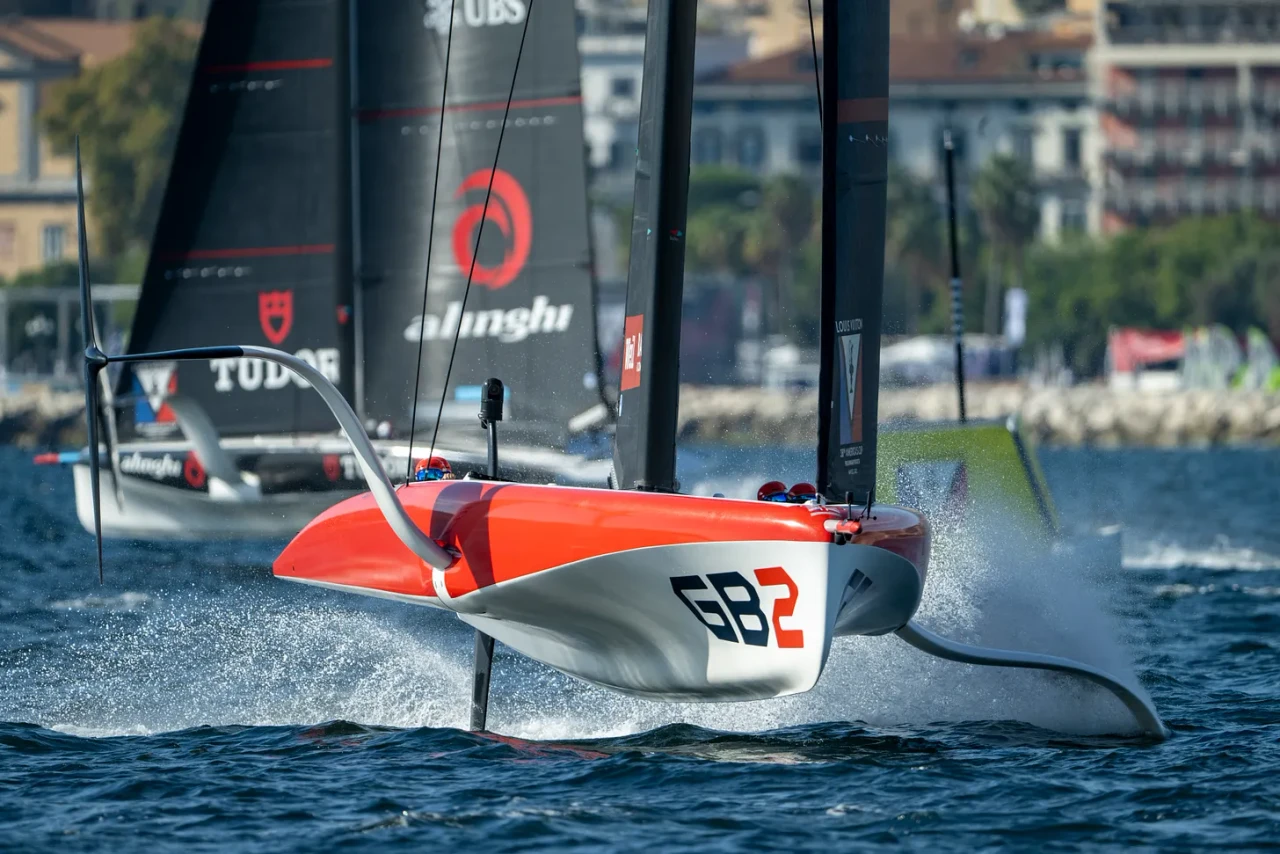
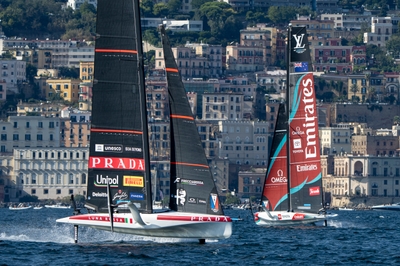
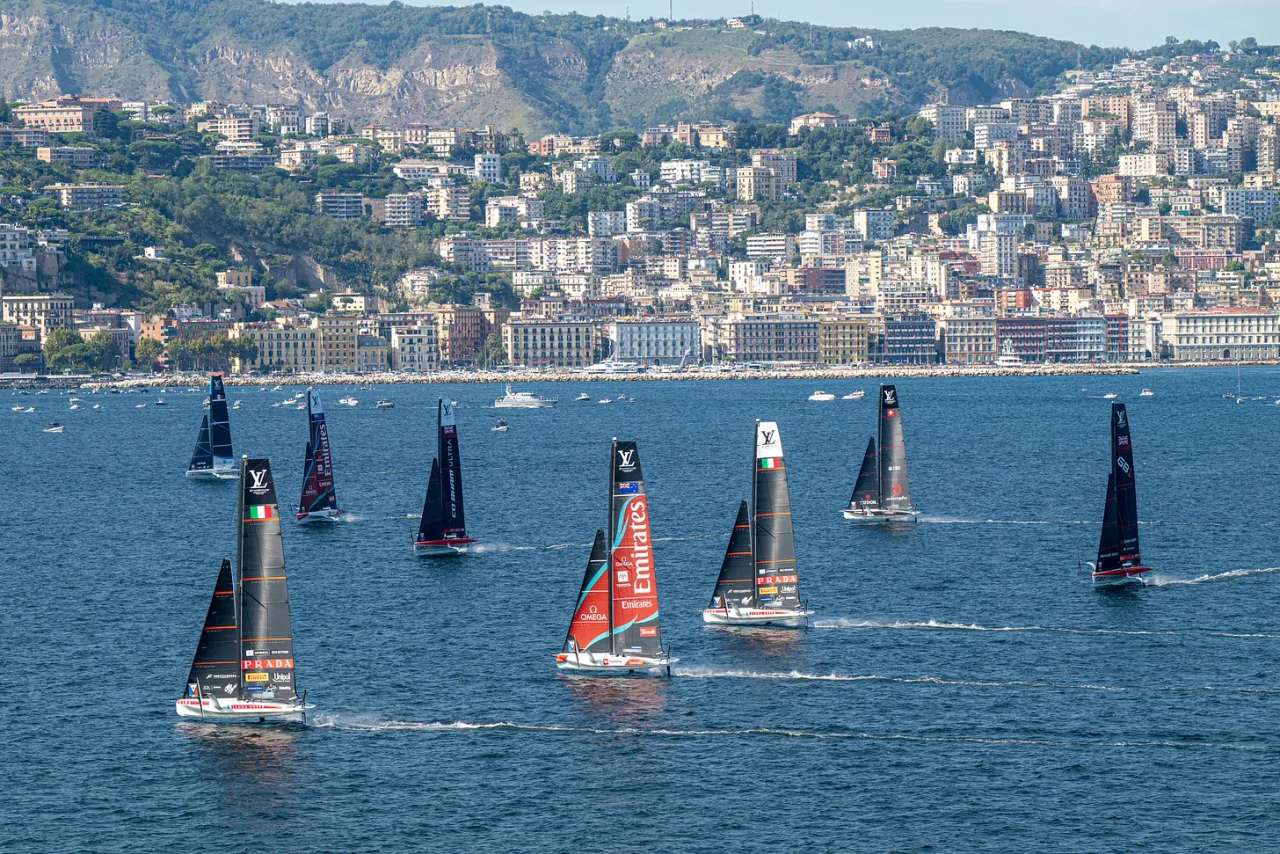
By anyone’s standards – and especially by their own exacting ones – the British squad underperformed for the majority of the Naples regatta to finish eighth overall in the nine-boat fleet.
As Cornish explained to me, the result was all the more frustrating after the team’s poor showing at the previous preliminary regatta in Cagliari, Sardinia, when technical issues with the British AC40 saw them complete only the third, seventh, and eighth races – albeit turning in a 2,1,3 scoreline in those.
“In that first prelim event we were riddled with issues with the boat,” he said. “But, in the racing we managed to take part in, we showed really good promise. We were competing at the front of the fleet, and I guess that naturally set a bit of an expectation as to where we felt we were [in relation to the other teams].”
On the back foot
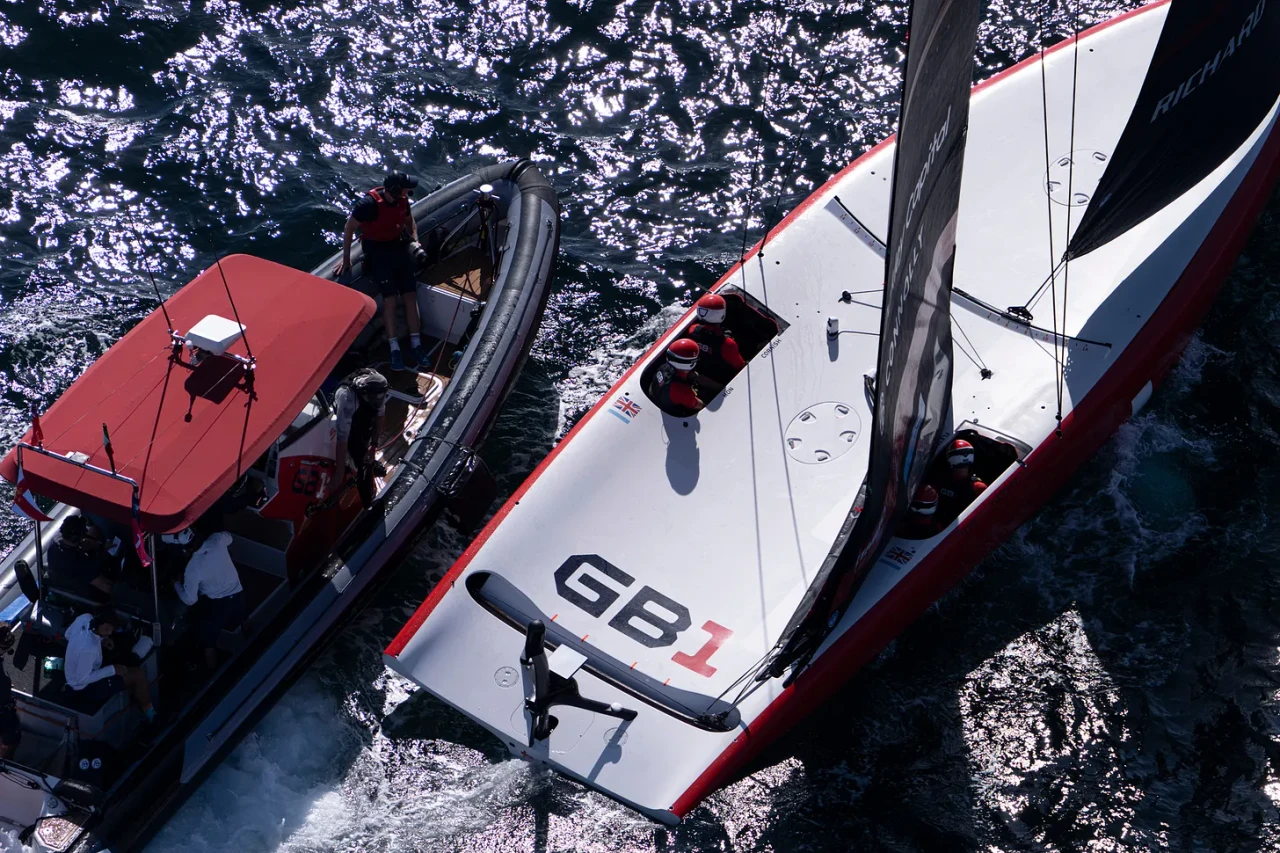
After the Sardinian regatta, however, the GB1 team made the decision to focus resources on getting the British AC75 ready to relaunch. That, Cornish said, meant having to watch other teams training in their AC40s in Naples, while the British sailors remained ashore.
“The priority was getting the race boat ready. We are not a million miles away from the America’s Cup itself, so focussing on the big boat was something that we as sailors and the whole team bought into. But it meant we had a difficult run-in to the PR2 event, having done far less hours than everyone we ended up lining up against.”
As well as lacking AC40 time, the British sailors were also unfamiliar with the characteristics of the Naples racecourse. This was in stark contrast to the Cagliari event, before which GB1 had spent several weeks at the venue sparring with their opposite numbers in the Cobham-Ultra GB2 British Women and Youth crew.
“Naples is a very different venue to where we raced in Sardinia,” Cornish said. “We had spent a lot of time there [in Cagliari] and had a good handle on the shift phases across a variety of wind directions, and where the breeze would trend throughout the day, and which side of the racecourse generally won.
“Whereas, I’d almost say we had the opposite understanding of Naples, where we were straight into the deep end, and we would experience a new wind direction for the first time when we had to race in it.”
As well as being put on the back foot strategically, Cornish said the sailors also felt very rusty in terms of their AC40 boat handling skills.
“When you combine everything together, it forms the perfect picture for how you wouldn’t expect to perform very well at a regatta.”
All that, and then throw in a practice-day collision with the Tudor Team Alinghi chase boat that resulted in the British shore crew having to work around the clock to replace a foil arm with one borrowed from the Swiss.
“Yes, we started racing properly on the back foot,” Cornish summed up.
No blaming the boat
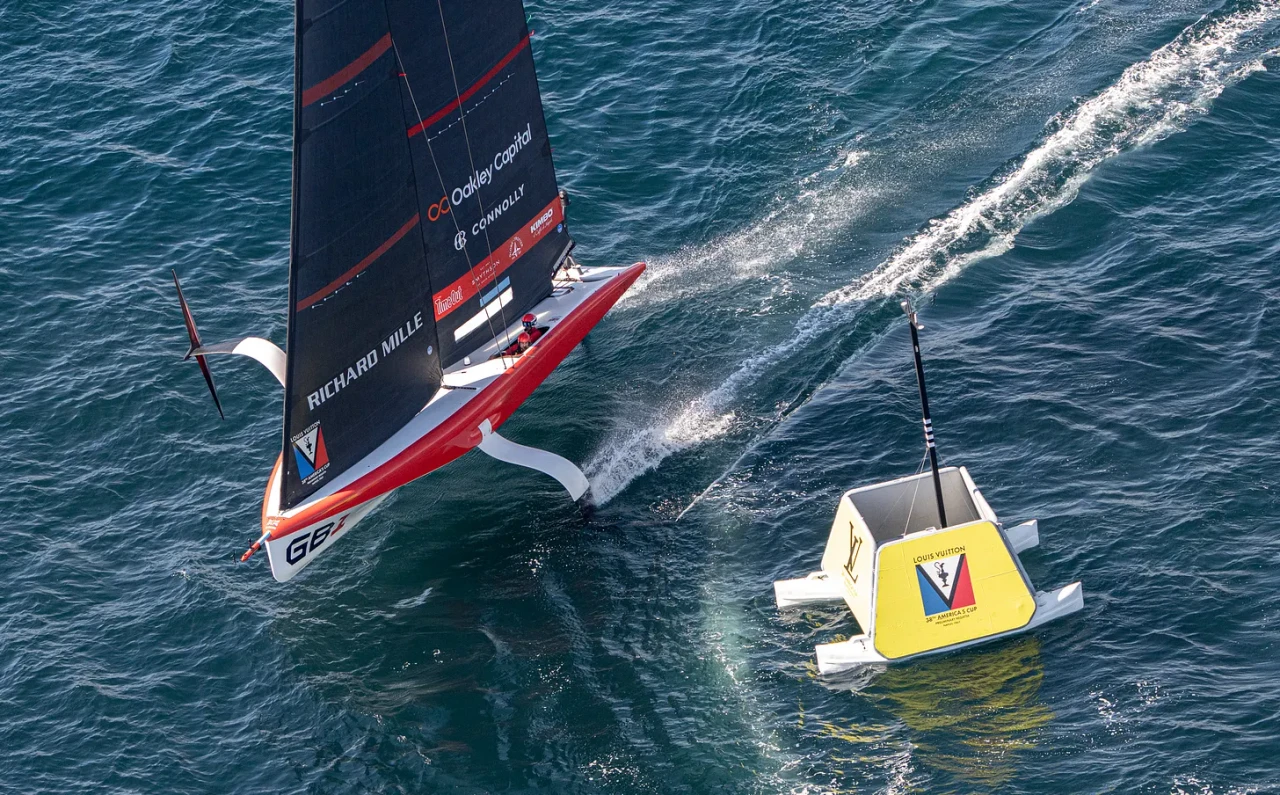
There has been plenty of negative comment about the integrity of the British AC40 – nicknamed ‘Crispy’ after suffering a battery fire while training in Barcelona prior to AC37 – but Cornish was quick to dispel any negativity around the boat.
“We have to give credit to the shore team,” he said. “They had a hard run of it in Sardinia and I really felt for them. Other than an issue with a cover plate coming off one of the foils, from a hydraulic point of view and in terms of the boat’s reliability, we didn’t have a problem during this last event. The shore crew fixed all of the gremlins which haunted us in Sardinia.”
The cover plate issue – which happened on the first day of racing in Naples – destroyed the flow over that foil and proved costly in terms of performance.
Even when it doesn’t count, the result still matters
When all is said and done, in the bigger picture of the 38th America’s Cup, the British team’s lowly rankings in the two preliminary regattas count for nothing points-wise. But when you are dealing with highly-competitive elite athletes who are performing on a global stage, back-to-back bottom-of-the-table finishes must surely have an impact?
“It’s easy to say that it doesn’t matter that much, but when you are on the start line everyone wants it as much as everyone else. You certainly don’t turn up there with the attitude that it doesn’t matter. Every time you get in the boat on a race day you are out to win races and to try to put the best series you can together – and this one was no different for us.”
Cornish told me that, although the British sailors may have taken some consolation from a 4,4,4 scoreline in the final three races in Naples, a full debrief of the event has, nevertheless, been conducted.
“We have certainly done our due diligence on what we would say was a bad weekend in the office. There has been a lot of work gone into identifying why Luna Rossa are getting around the racecourse faster than everyone else. What is special about their technique? What can we learn from boats that are doing a better job than we are? Then, there is so much to learn about the venue. I know we were racing at a different time of year to when the Cup will be held, but there are still geographic features that we need to get a handle on.
“So we are certainly not coming away from that event and thinking: ‘Oh, glad that’s done with, let’s forget about it.’ There is so much value in everyone picking themselves up and being able to think – big picture-wise – where can we improve and what do we need to learn going into next year? That is certainly the attitude of the sailing team and the wider team.”
So is that it now in terms of AC40 sailing for the British team, I asked?
“Well, the Youth and Women’s team are carrying on,” Cornish told me. “They are down in Naples this week and they are still hard at it. Their campaigns are obviously going to run all the way through to next year, so they will continue to do a lot of AC40 sailing.
“We will keep our AC40 as an option if we want to sail two boats. Like if we wanted to do some on-the-water match race prestart practice, maybe, it’s great to have that platform available. Right now, it’s – hopefully – not going to be coming out of the shed any time soon, but it is certainly going to be an option for next year.”
Back to the AC75
I had deliberately kept our conversation away from the thorny subject of the dispute between the British team and previous sponsor INEOS over the ownership of the team’s AC75. News on that subject could be imminent, as I understand it, and for Cornish and the rest of the sailing team, there is building excitement ahead of the boat’s anticipated relaunch sometime in November.
“It’s really exciting,” he told me. “It feels like it has been a long time in the pipeline. It’s not far away now, but it is also not long until the America’s Cup. We are in quite a unique situation in this cycle, in that the package is going to come together quite late in the piece. But, for sure, once the boat launches we are going to be straight into the thick of it in terms of developing everything on board. We will be using every day we can – because we don’t have many days between now and the first race day.”
The expectation is that the fleet of modified AC75s will not look much different from the outside than when we last saw them race in Barcelona in AC37. But how different will the British boat be in terms of the complex systems inside the boat?
“Like you say, visually you won’t see a huge amount of difference in the boats until people put their race foils on. There will be some subtle visual changes – the cyclors have gone and the cockpits will obviously look different."
“It’s hard to give you much of an answer without telling you what’s going on. But inside the brains of the boat it will certainly be quite different. Much of that will be impossible to see from the outside. Even for us, looking with a trained eye at the recon footage, it’s hard to be sure. You think you know what people are up to but it’s very hard to be sure what’s driving different things.”
Closer racing in prospect?
Although we might not be able to discern much from footage of the teams in training, when racing starts Cornish believes the individual teams’ performance will be much closer than we have seen before in AC75s.
“From a race point of view and in terms of the closeness of the competitors, I think things will step forward and start to arrowhead towards a really exciting and a less predictable summer,” he said.
Might we see more similarity in the foil designs across the campaigns, I wondered?
“I think naturally it has to,” Cornish replied. “As the iterations move on, peoples’ tools have been working for however many years now and things are getting more and more defined. You learn from your mistakes in previous campaigns. And you learn from what other teams did, because people move between campaigns and you start to gain that knowledge – I think a lot of that has gone on during this campaign.
“All of which means that, with us now being in generation three of the AC75, there’s not going to be a lot in it. I hope so anyway.”
Can sailing fans expect to see any new manoeuvres from the teams when racing begins? In the prestart, perhaps?
Cornish believes the crews might have some new tricks up their sleeves, particularly given that human power generation has been replaced by batteries this time around.
“What we are seeing from the other teams [that are sailing AC75s already – so Emirates Team New Zealand, Luna Rossa (ITA), and La Roche-Posay Racing Team (FRA)] is the ability to throw the boat around a bit. We have seen Team New Zealand doing a lot of circles in their practice pre-starts, and I think we will see that all the boats will be more capable in the prestart.”
Back under one roof
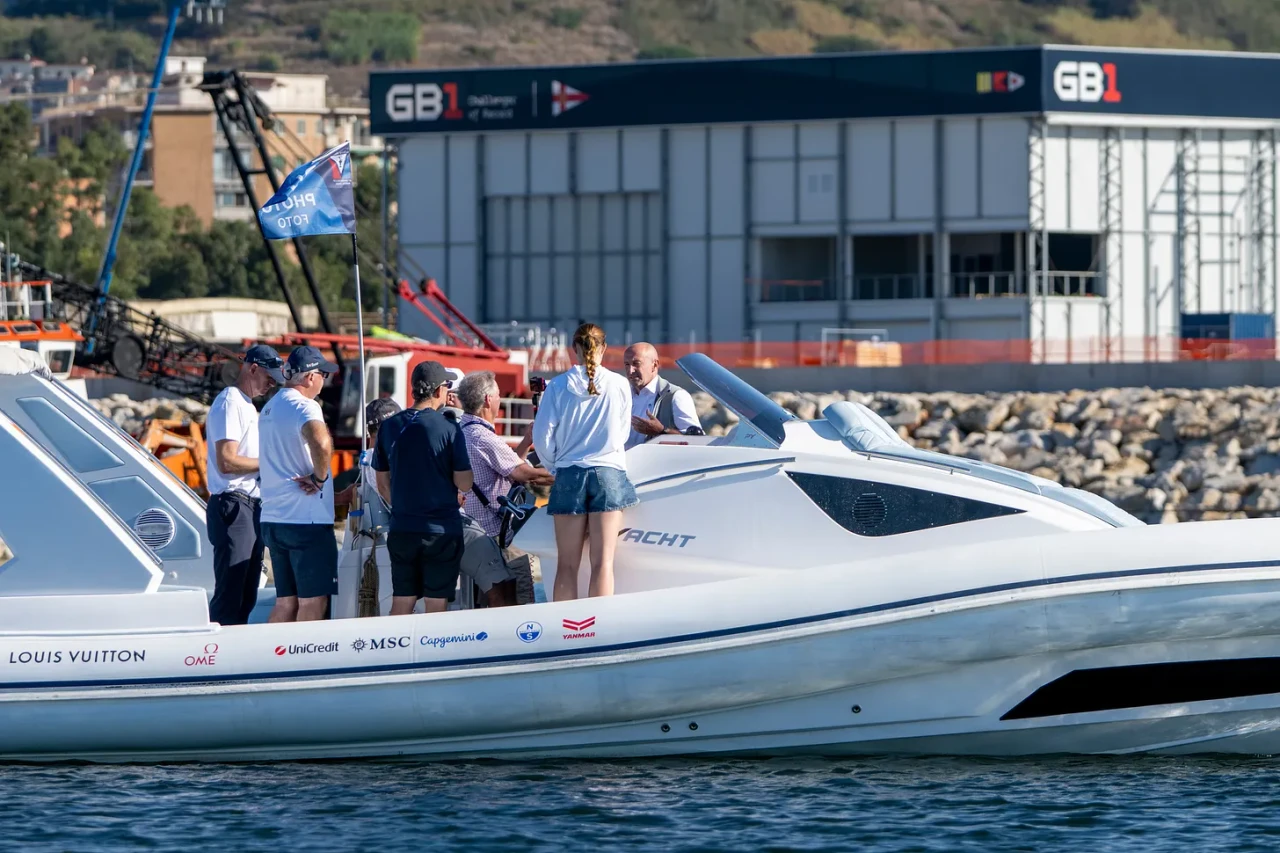
The preparations for the relaunch of the GB1 AC75 have also triggered a coming together of the British team at its AC38 base in Bagnoli. Previously the staff had been split between a main base in Portsmouth on the English south coast – where the designers worked – and a sailing team training base in Cagliari.
“It’s really exciting to have everyone under one roof for the first time,” Cornish confirmed. “Up to now, you could go a few weeks without seeing certain people in the team. There’s much more of a team feeling once we all are together in the same place.”
GB1 are expected to be the fourth team to relaunch their AC75 and the second team (after the French) to sail an AC75 in Naples. With the Kiwis and the Italians in particular having racked up a lot of training days, how do the British plan to catch up?
“The simulator is a big tool for that – just as it was last time,” Cornish answered. “So much of sailing these boats is repetition, and I think something that we did a good job of in the last campaign was having preplanned responses to certain moves in the prestart and having really strong set plays. That’s something we need to maintain.
“It’s also a difficult one to practice out on the water, because even when you do have the big boat out you are so restricted under the rules, in that you can’t rack up against another boat. So you need to have the system in place to be able to figure out all your timings and your routines: if A does this, B does that etc.”
Naples v Barcelona racecourses
Despite his relatively limited experience of the 38th America’s Cup racecourse in the Bay of Naples, what does Cornish make of the venue from a racing point of view?
“It’s a very cool natural amphitheatre – that was my first impression the first day we got round there. I think when we get the typical sea breeze direction, it will be a really good racecourse. It was pretty challenging when we had the offshore breeze – there was quite a lot going on. But, if we get the more typical sea breeze, then it’s going to be a really good spot for racing.
“From a sea state point of view, there is quite a lot of traffic in terms of ferries going between the islands – and obviously the chase boats with us and the spectator fleet. That all seems to recycle a bit around the harbour so you can get a pretty confused sea state that is rarely aligned to the wind. Plus, if you do get a swell outside the bay, it does tend to make its way in. So it’s certainly not a pan-flat venue – but it is also not going to be the challenge of Barcelona, where some days we raced in 1.5-metre seas.”