Pierre Bouras / America's Cup
INSIDE THE AC75: WHY AMERICA’S CUP TEAMS TOW-TEST THEIR AC75s BEFORE SAILING

Ahead of every first sail of the AC75, the boats undergo tow testing behind powerful team launches at various speeds. In the past we’ve seen some dramatic tow tests, with perhaps the most memorable being when the rudder broke on the British test boat ahead of the last America’s Cup. Most are benign affairs, but what’s really going on here? Let’s dive in and find out...
Ivo Rovira / America's Cup
Before an AC75 hoists its sails and takes flight, the shore team and engineers must first establish whether the yacht’s complex systems are operating as intended. Tow-testing is one of the most valuable tools available to America’s Cup teams, providing critical information about foil performance, hydrodynamic efficiency, control systems and the behaviour of the yacht at speed.
An AC75 is no ordinary sailing yacht. It is an extraordinary combination of advanced naval architecture, aerodynamics, hydraulics, electronics and sophisticated flight-control technology, designed to operate on the narrowest margins of performance.
Ugo Fonollá / America's Cup
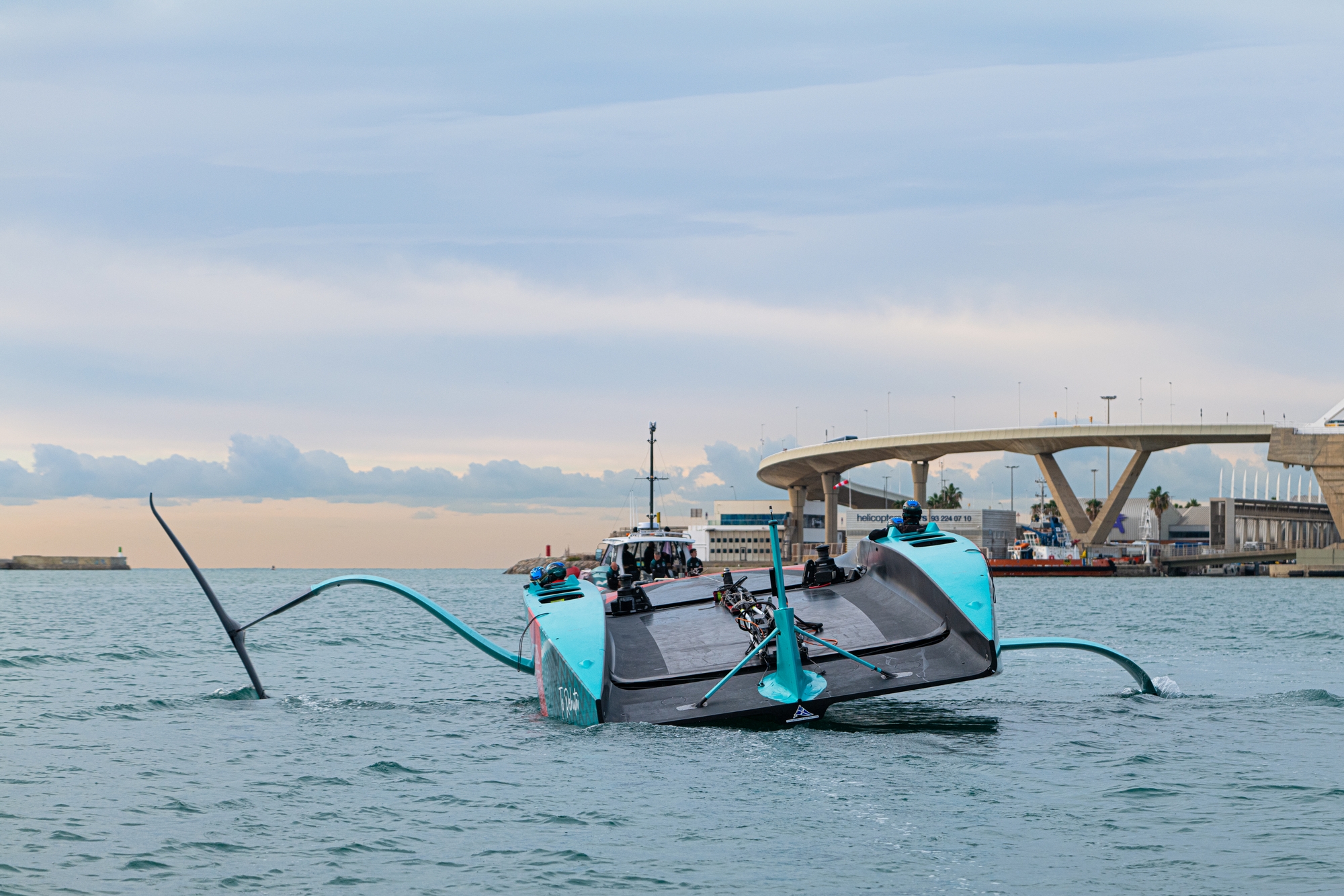
Before the sailing crew can begin pushing the yacht to its limits, designers and engineers need confidence that every component is functioning correctly and this is where tow-testing becomes essential. By towing an AC75 behind a powerful support vessel, teams can examine the yacht’s behaviour through the water without introducing the additional variables created by sails, wind shifts, manoeuvres and changing aerodynamic and hydrodynamic loads.
The result is a controlled testing environment that allows engineers to isolate individual performance characteristics, validate computer predictions and identify potential problems before the yacht begins a full sailing programme.
Ivo Rovira / America's Cup
Understanding the foils
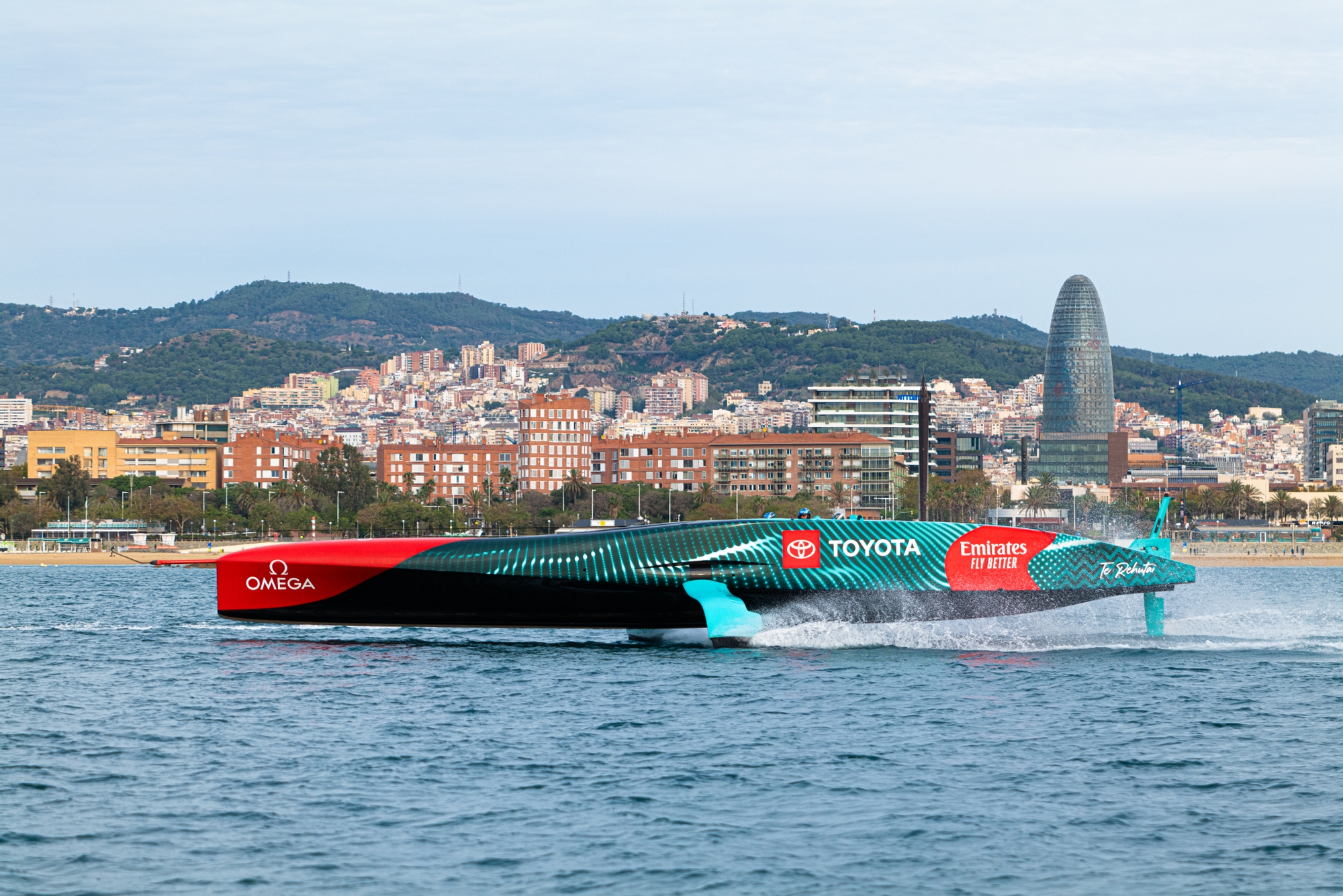
The primary focus of tow-testing is the performance of the AC75’s extraordinary foil system. Each yacht features two articulated foil arms, with sophisticated wing sections designed to generate sufficient hydrodynamic lift to raise the hull clear of the water. The efficiency of these foils is fundamental to the yacht’s speed, stability and overall performance.
During a tow test, engineers can assess the relationship between boat speed, foil immersion, flap settings, ride height and hydrodynamic drag. They can also observe how smoothly the yacht transitions from displacement mode to foiling flight.
The team is particularly interested in understanding how the foils behave at different speeds and angles of attack, and whether their performance matches predictions generated through Computational Fluid Dynamics (CFD) and other design simulations.
Even small discrepancies between predicted and actual behaviour can provide valuable information for further development.
Ugo Fonollá / America's Cup
Testing the rudder and flight stability
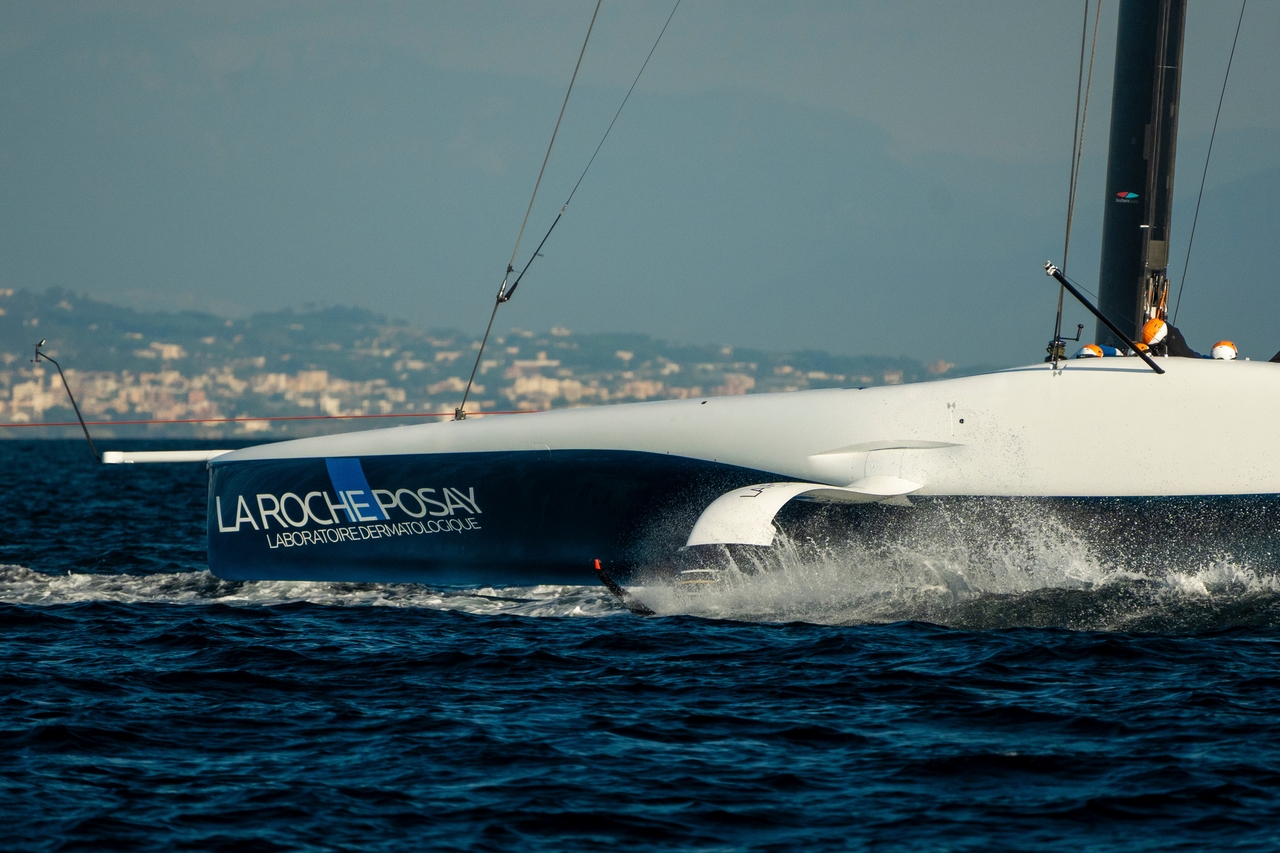
Equally important is the rudder and its horizontal elevator, which play a crucial role in controlling the yacht’s pitch. Engineers can vary rudder rake to assess how the bow responds, how stable the yacht remains at different ride heights and how the elevator interacts with the main foils. Excessive pitching, oscillation or an unexpected bow-down attitude can indicate that settings require adjustment.
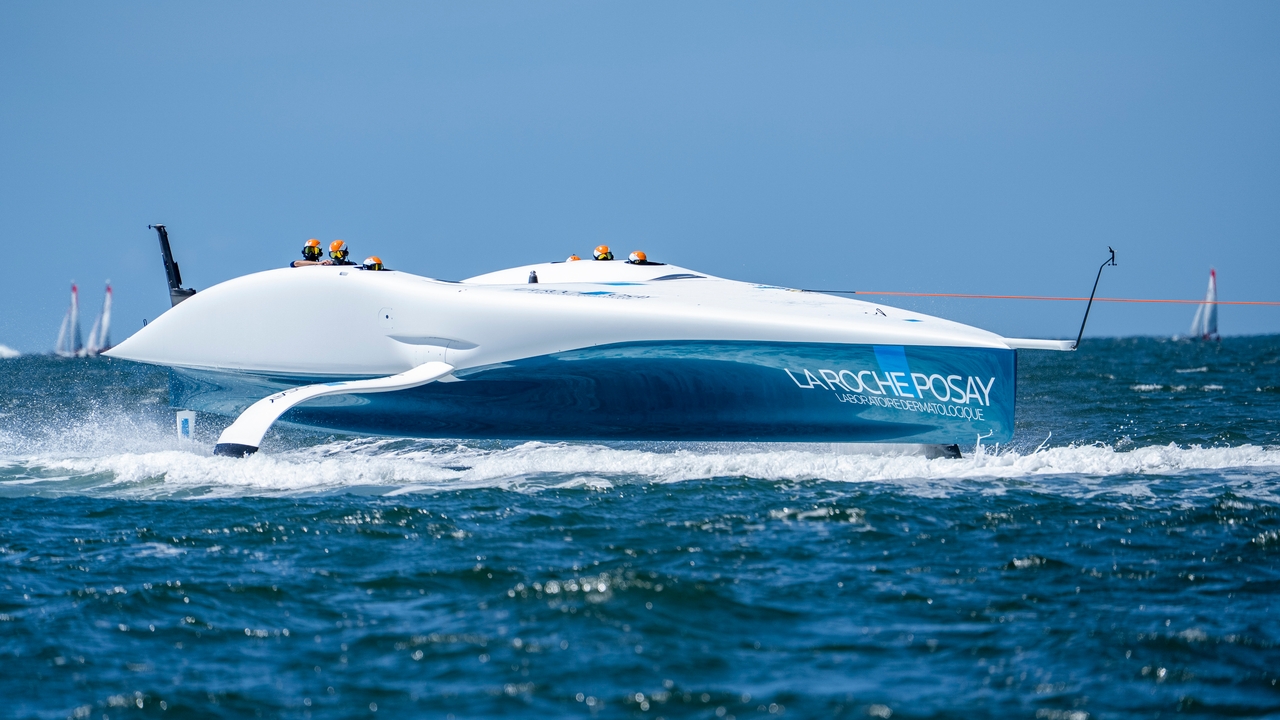
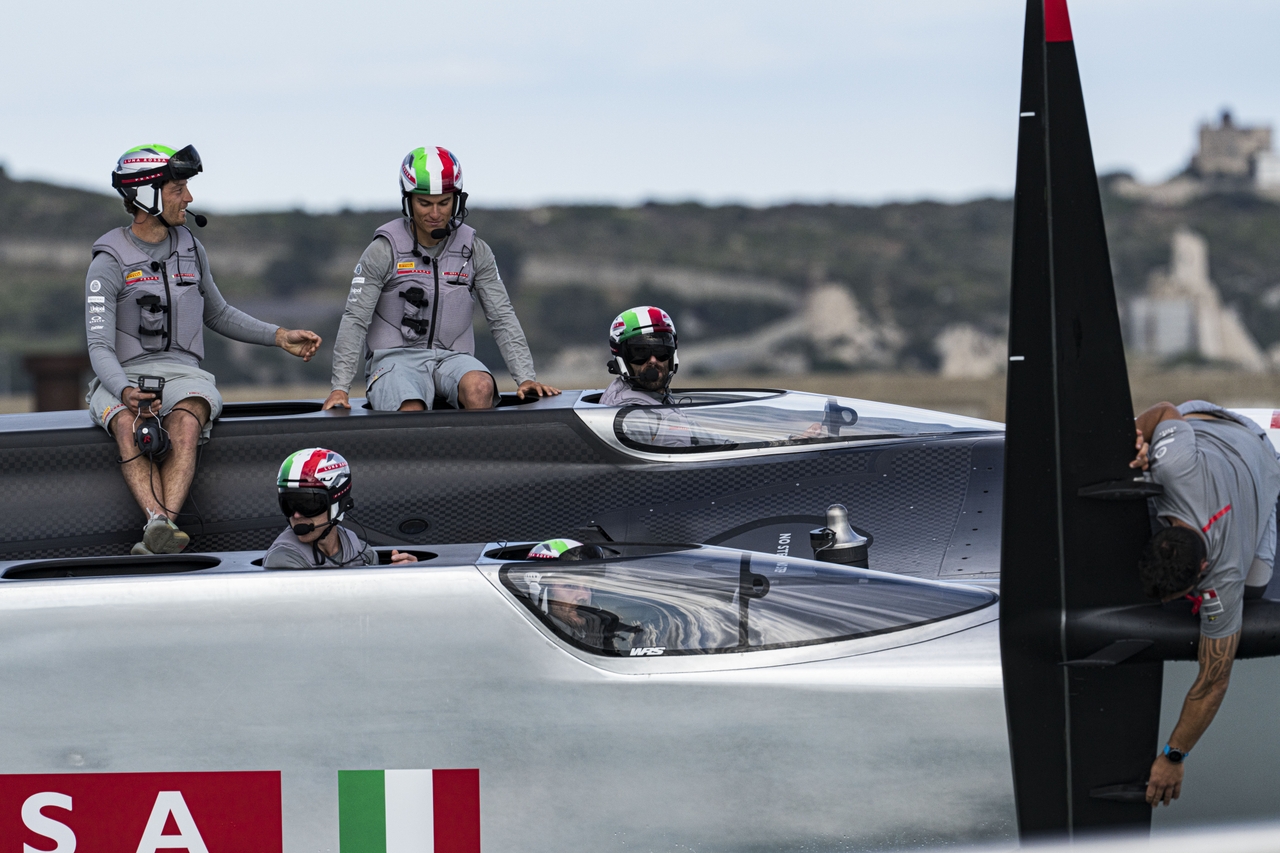
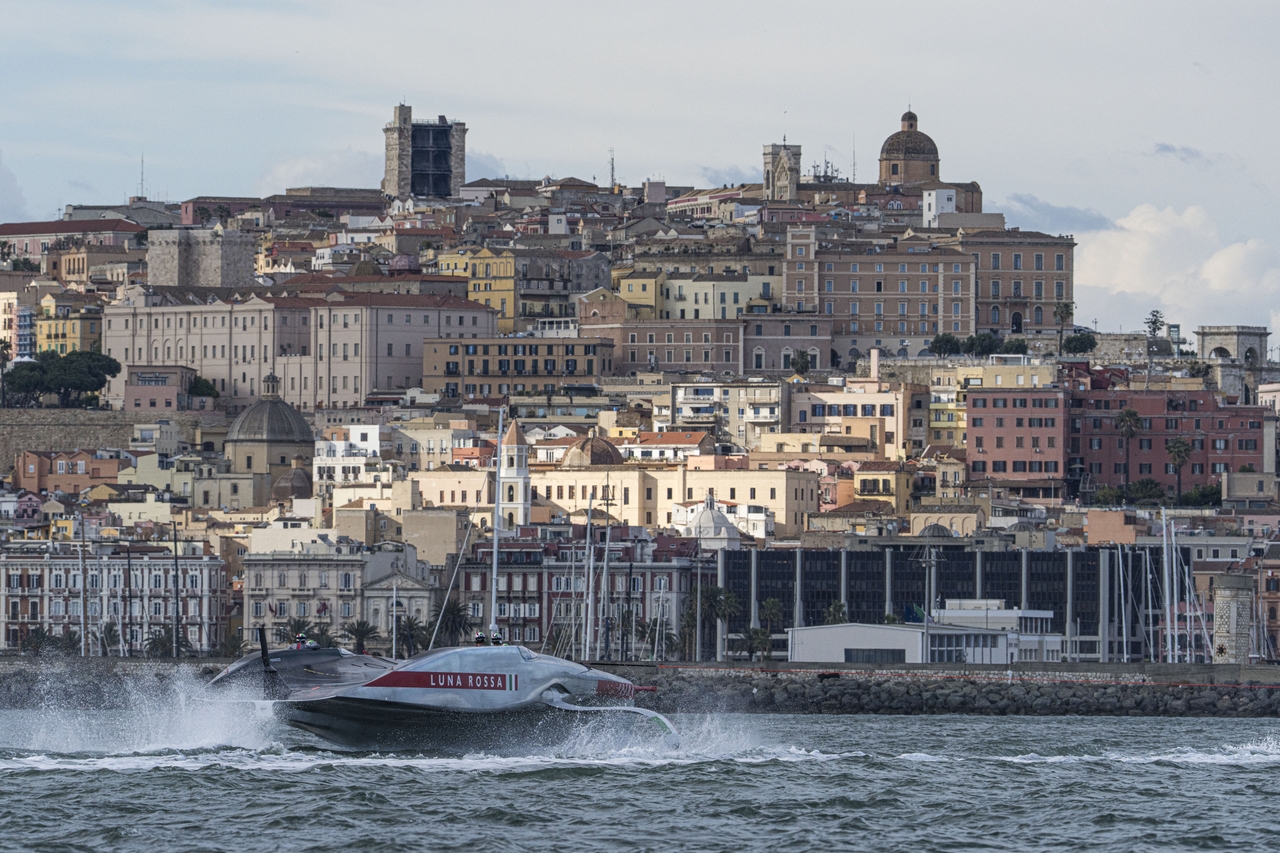
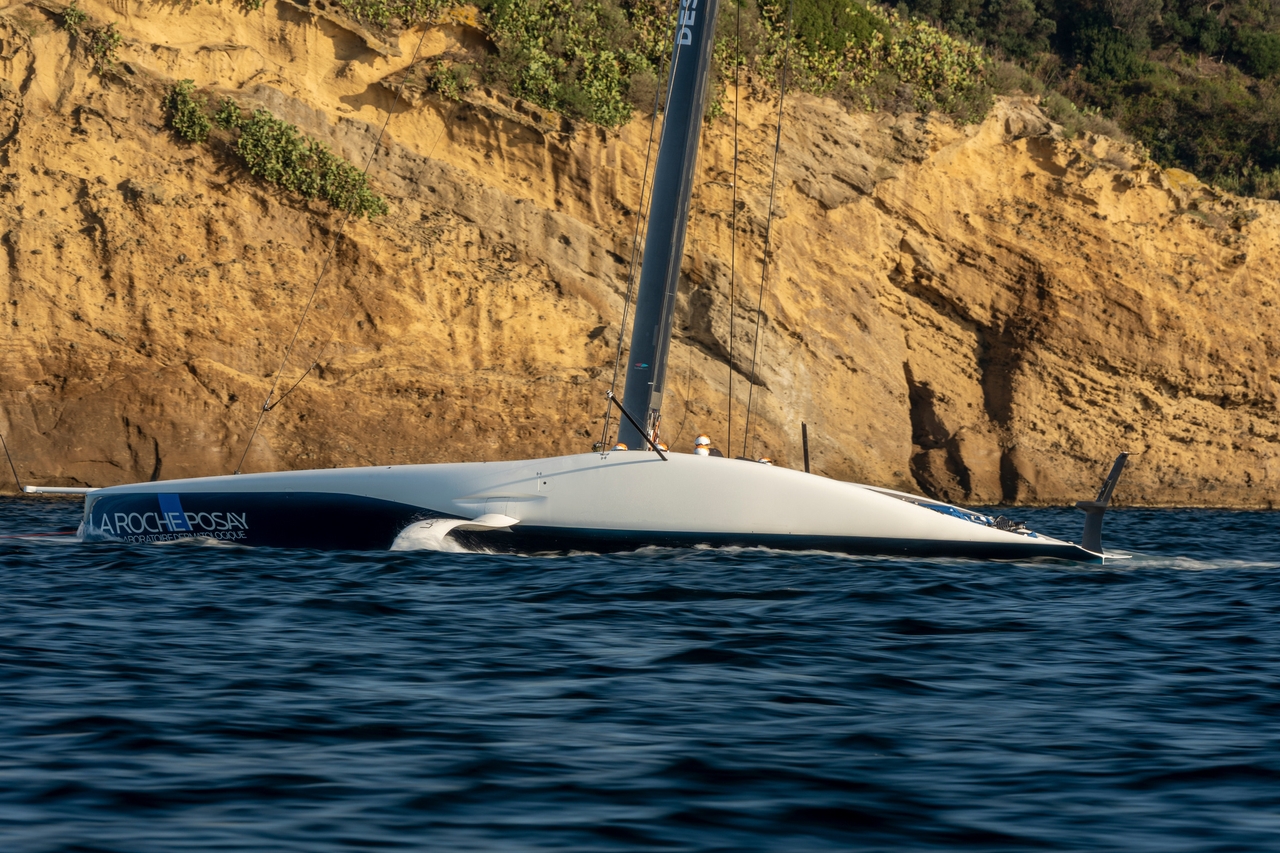
These are not theoretical exercises. During Luna Rossa’s May 2026 tow test, the team tested speeds of 25, 30 and 32 knots as reported by the Recon team on the water, varying rudder rake and foil cant angles. The French La Roche-Posay Racing Team similarly conducted several foiling runs in June, examining pitch stability and flight-control behaviour and again tow-tested in Naples in October 2027. Over the coming weeks, we will see GB1, ARC Team USA and Tudor Team Alinghi all conducting similar testing.
Alessandro Cazzulani / America’s Cup
Checking the electronics and hydraulics
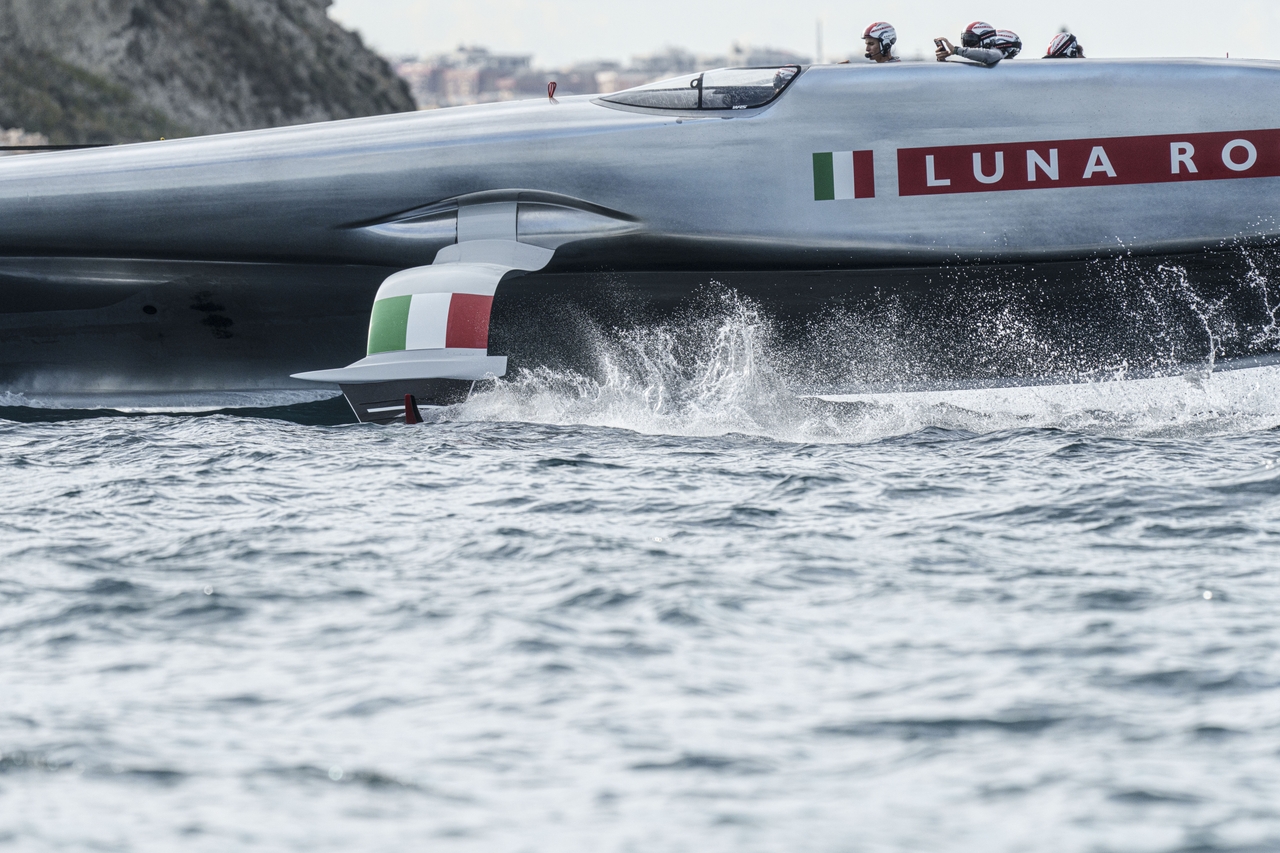
An AC75 relies on a complex network of sensors, actuators, hydraulic systems and electronic controls. Tow-testing allows engineers to check whether commanded foil movements are accurately executed, whether sensor readings are consistent and whether the yacht responds predictably to control inputs.
The foil cant system is particularly important. Teams need to confirm that the arms move smoothly, achieve their intended positions and operate without excessive vibration or unexpected loads. These tests can also help validate control-system calibration and identify discrepancies between the yacht’s physical behaviour and its digital instrumentation.
Ivo Rovira / America's Cup
Gathering the data
An enormous amount of information can be collected during a tow test, including boat speed, acceleration, foil position, rudder angle, pitch, roll, ride height and system pressures. Engineers compare these measurements with predicted performance and previous testing. Cameras focused on foil wings can provide further visual evidence of water-flow behaviour, surface ventilation and how the foils interact with the water.
Importantly, a tow test does not reproduce every condition experienced under sail. Without the aerodynamic forces generated by the rig, it cannot fully replicate sailing loads, manoeuvres or race conditions. Nevertheless, it establishes an invaluable baseline.
Alessandro Cazzulani / America’s Cup
The final safety check
Above all, tow-testing is about reducing risk. Before committing an expensive, highly sophisticated AC75 to full sailing loads, teams need to know that the yacht can foil, maintain controlled flight and respond correctly to its control systems. A successful tow test does not guarantee a successful first sail, but it substantially improves the team's understanding of the yacht and helps identify faults before they become serious problems. For America’s Cup engineers, every run produces information. Every adjustment is an opportunity to improve performance.
In a competition where fractions of a knot can decide the outcome, the pursuit of victory begins long before the sails are hoisted.
Magnus Wheatley