Sam Thom / America's Cup
INSIDE THE AC75 – WHY THE CUNNINGHAM HAS BECOME ONE OF THE MOST IMPORTANT CONTROLS ON THE BOAT
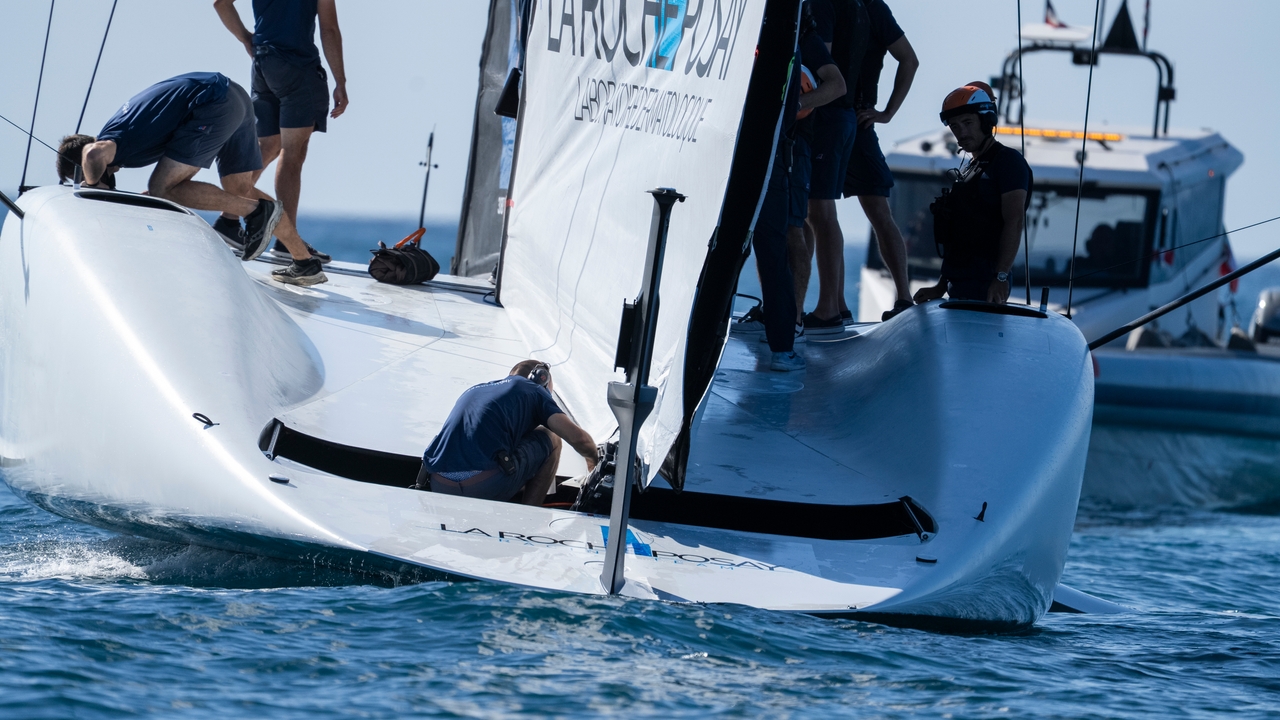
The legend goes that Briggs Cunningham, the man who steered Columbia to a famous 4-0 victory in the 1958 America’s Cup against the British yacht Sceptre, was unhappy with the mainsail shape on his 6-Metre yacht in the 1930’s. He took the sail to his sailmaker having noticed that it had stretched at the leading edge but with no time to re-cut the sail ahead of a weekend’s racing, Briggs Cunningham inserted a cringle eye on the luff and arranged a pulley system to tighten it. From there on, it became one of the most important controls on every racing boat from a dinghy to the America’s Cup.
Ivo Rovira / America’s Cup
Nicknamed the ‘cunningham’ in his honour, it’s an ever-present control and can make the difference between winning and losing. On a conventional racing yacht the cunningham can appear a relatively simple control that a sailor pulls on to increase luff tension and move the draft of the sail forward or ease it to make the sail fuller.
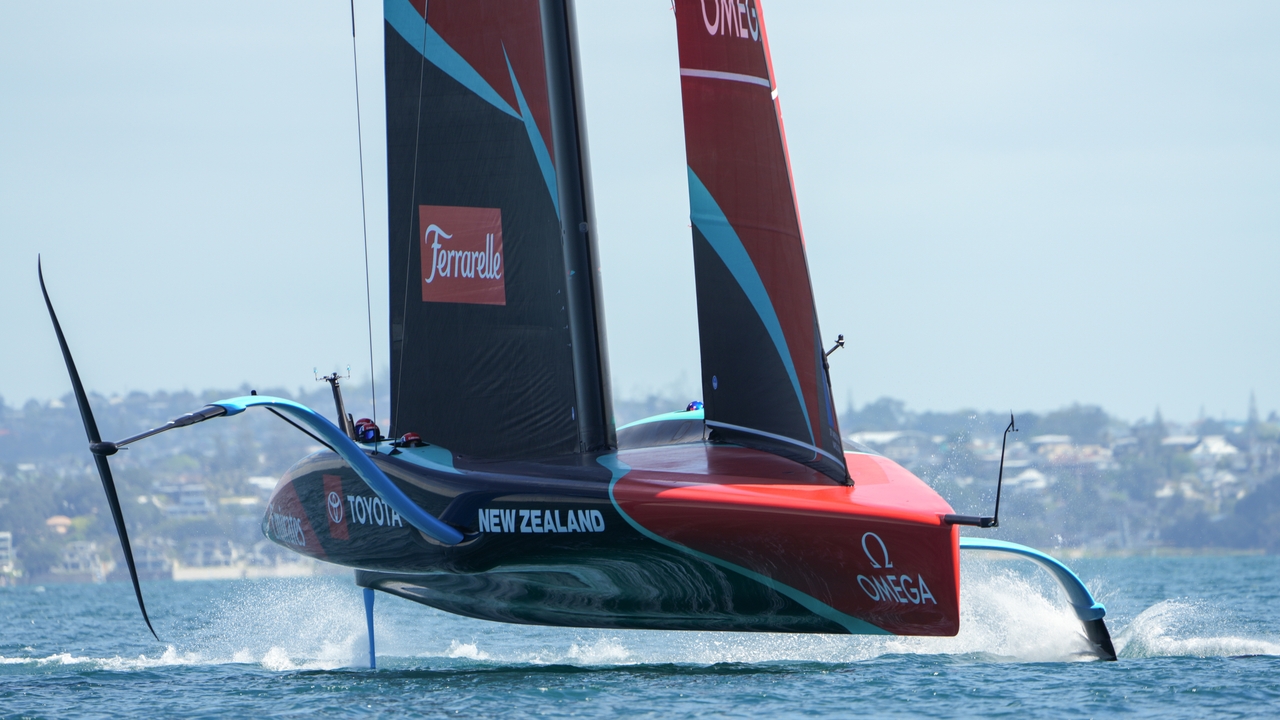
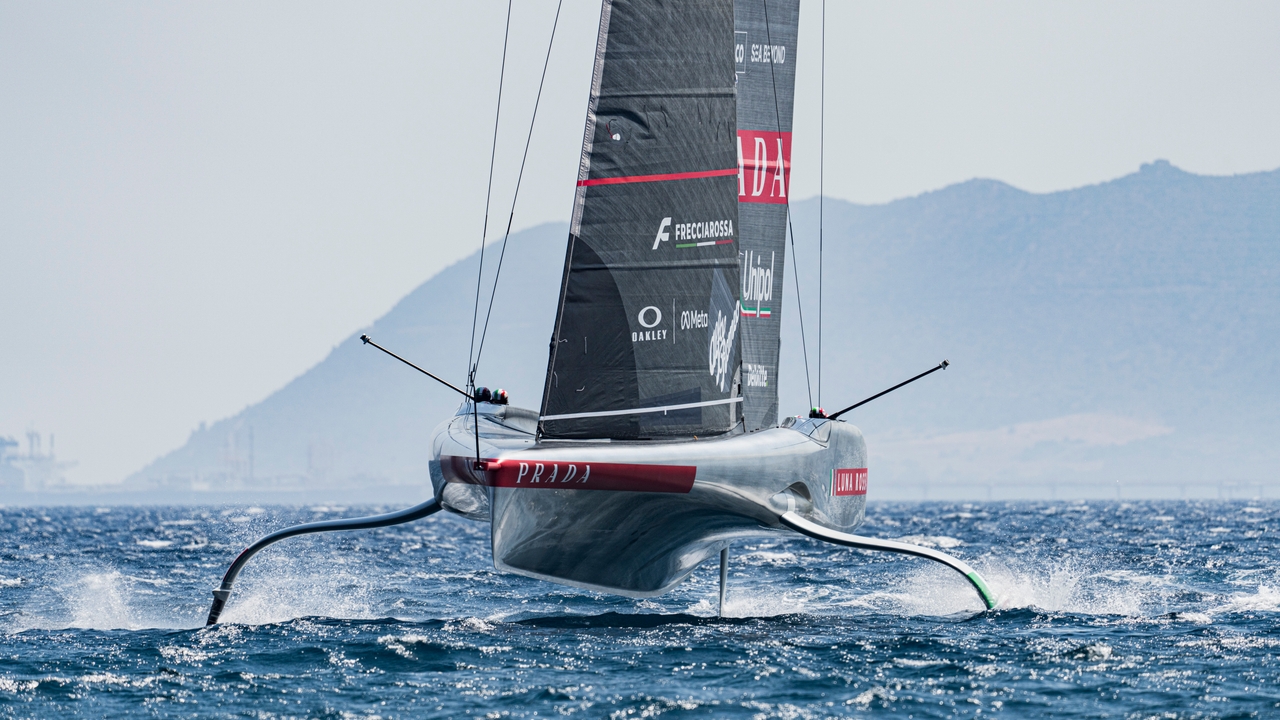
On an AC75, that same principle has been taken to an extraordinary level. The cunningham has become a powerful hydraulic sail-shaping tool, capable of transforming both mainsail and jib as the boat accelerates from low-speed take-off mode to more than 50 knots.
Pierre Bouras / America's Cup
The cunningham today on the AC75’s is now a highly loaded, highly engineered control capable of substantially changing the aerodynamic characteristics of the sail and that matters because an AC75 asks its sails to operate across an almost absurd performance range. The boat may initially be struggling to accelerate onto its foils and requiring maximum aerodynamic power. Seconds later, once flying, boat speed increases dramatically, apparent wind builds and the same sail that was producing desperately needed power can suddenly be producing unwanted drag.
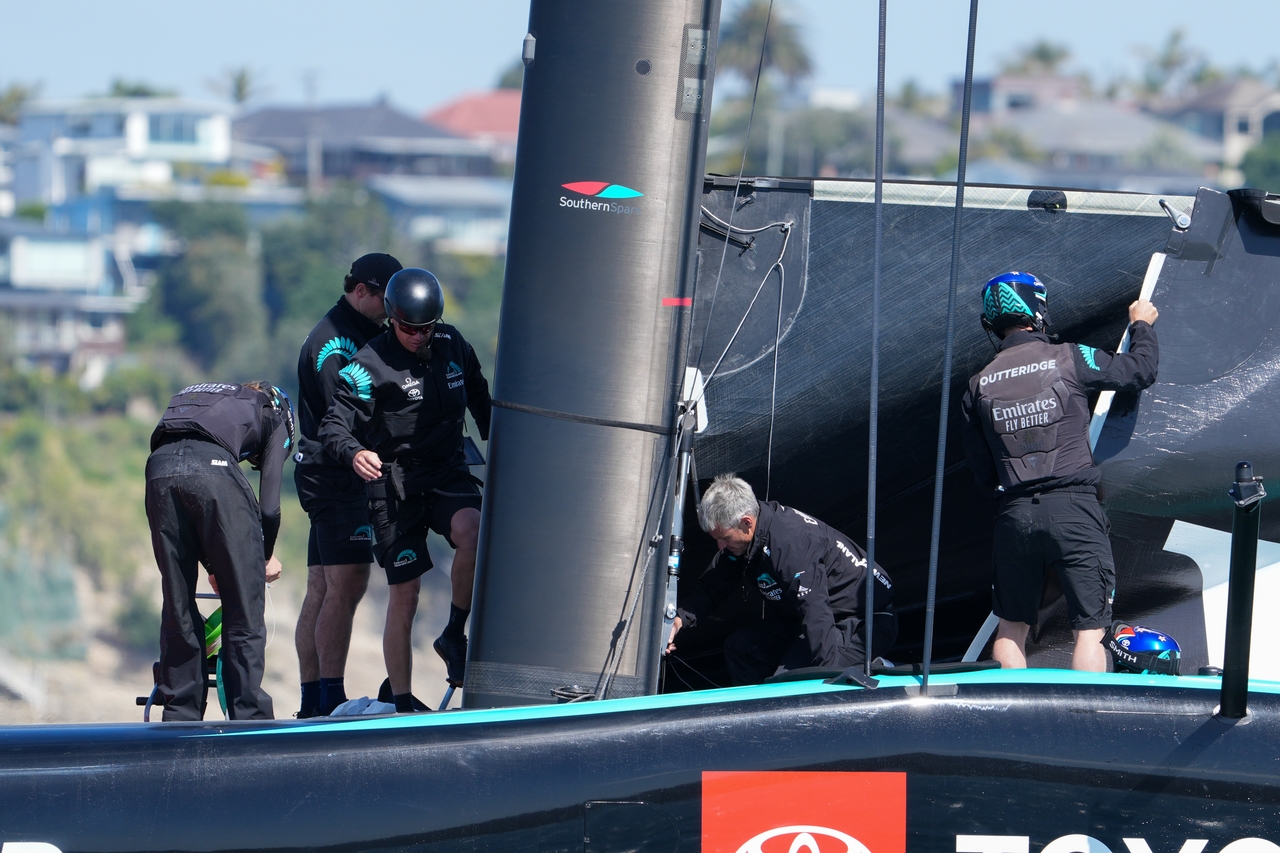
Sam Thom / America's Cup
THE AC75'S GEARBOX
Imagine an aircraft wing. During take-off, a plane extends flaps to produce a deep, highly cambered wing section capable of generating large amounts of lift at relatively low speed. Once cruising, those flaps retract. The wing becomes cleaner and lower drag because the aircraft no longer requires the same high-lift configuration.
An AC75 faces a surprisingly similar aerodynamic problem where during take-off it needs power and lots of it. The sails need to generate sufficient aerodynamic force to accelerate several tonnes of yacht through the high-drag displacement and transition phases until the foil produces enough lift to raise the hull clear of the water. Once airborne, hydrodynamic drag collapses and the AC75 accelerates rapidly. Now the apparent wind rises dramatically and moves forward. The deep, powerful sail shape required moments earlier becomes too powerful and too draggy so the yacht needs another gear. Cunningham load is one of the principal ways of getting there.
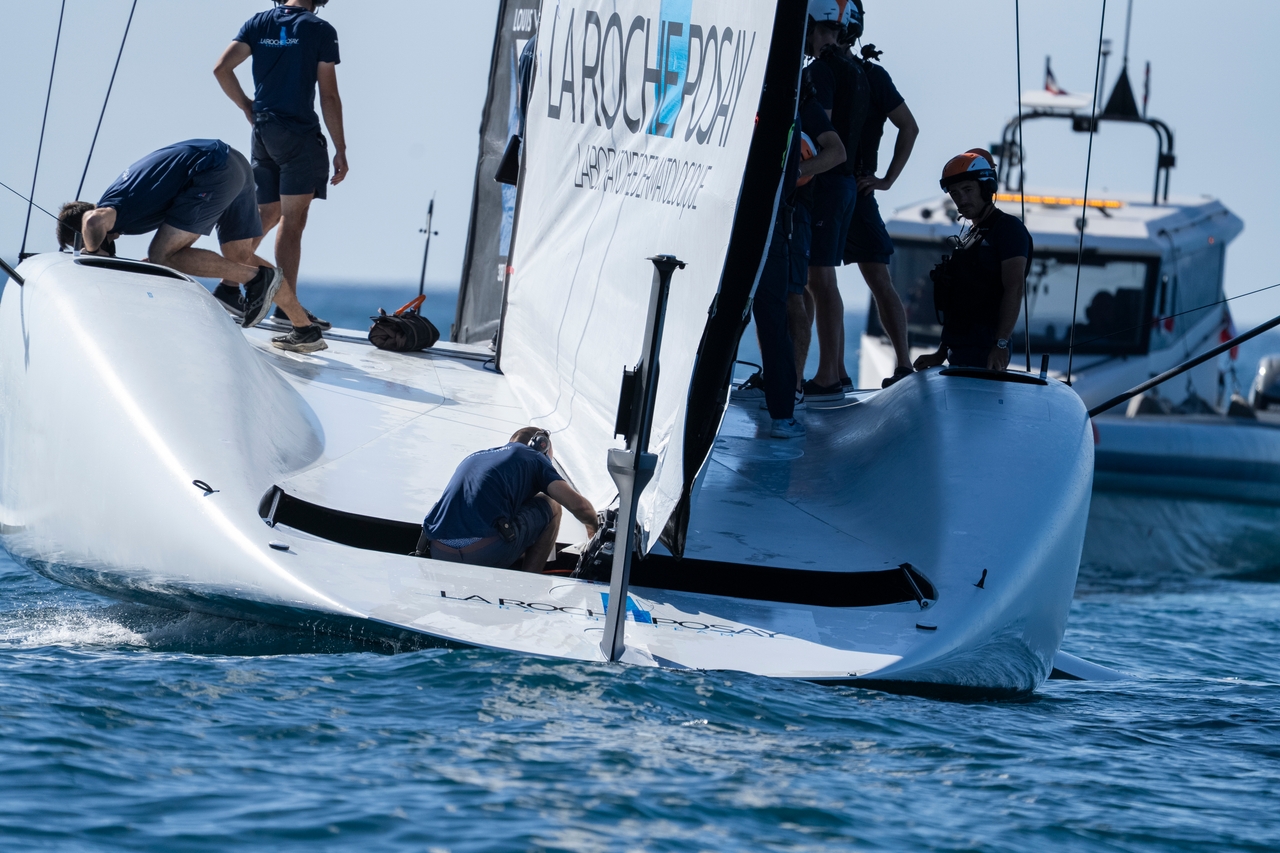
Pierre Bouras / America's Cup
WHAT HAPPENS TO THE MAINSAIL?
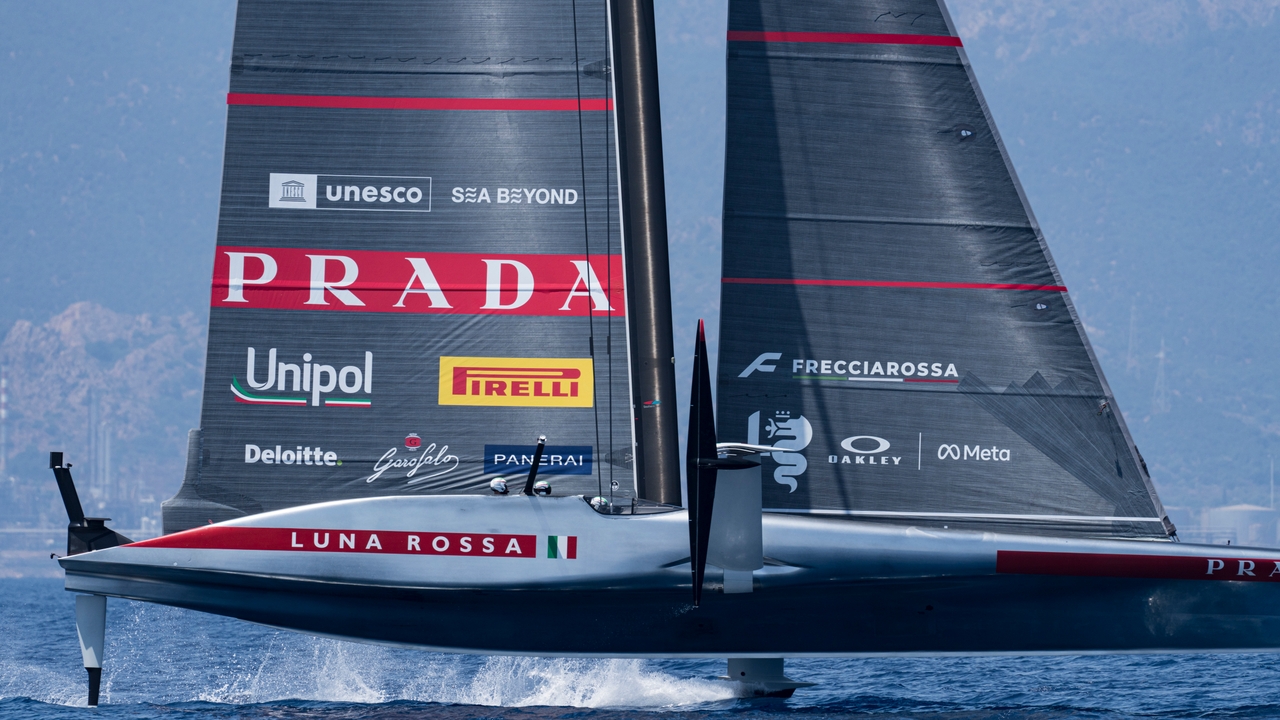
The double-skinned mainsail makes this particularly sophisticated. Unlike a conventional mainsail, the AC75's main consists of two skins affixed on tracks to the mast to create a soft aerodynamic wing. The AC75 Class Rule severely restricts where the sail can be controlled particularly with upper control lines, above the first third of the sail removed, the cunningham, mainsheet and traveller became primary mainsail controls.
That places enormous importance on controlling the bottom of the sail. Pulling cunningham load into the structured luff can substantially flatten the mainsail but it does more than that. The cunningham can influence draft depth, draft position and mast bend. Recent Recon reports on the AC75 systems describes twin hydraulic cunningham rams imposing substantial loads down the mainsail luff, simultaneously flattening the sail, controlling draft position and helping induce mast pre-bend. This makes the cunningham part of the entire rig-control system where if you change luff load, you are not necessarily changing only the sail but the entire relationship between the sail and the mast. And because the forestay is attached to that rig, changes elsewhere can influence jib behaviour as well. Everything interacts.
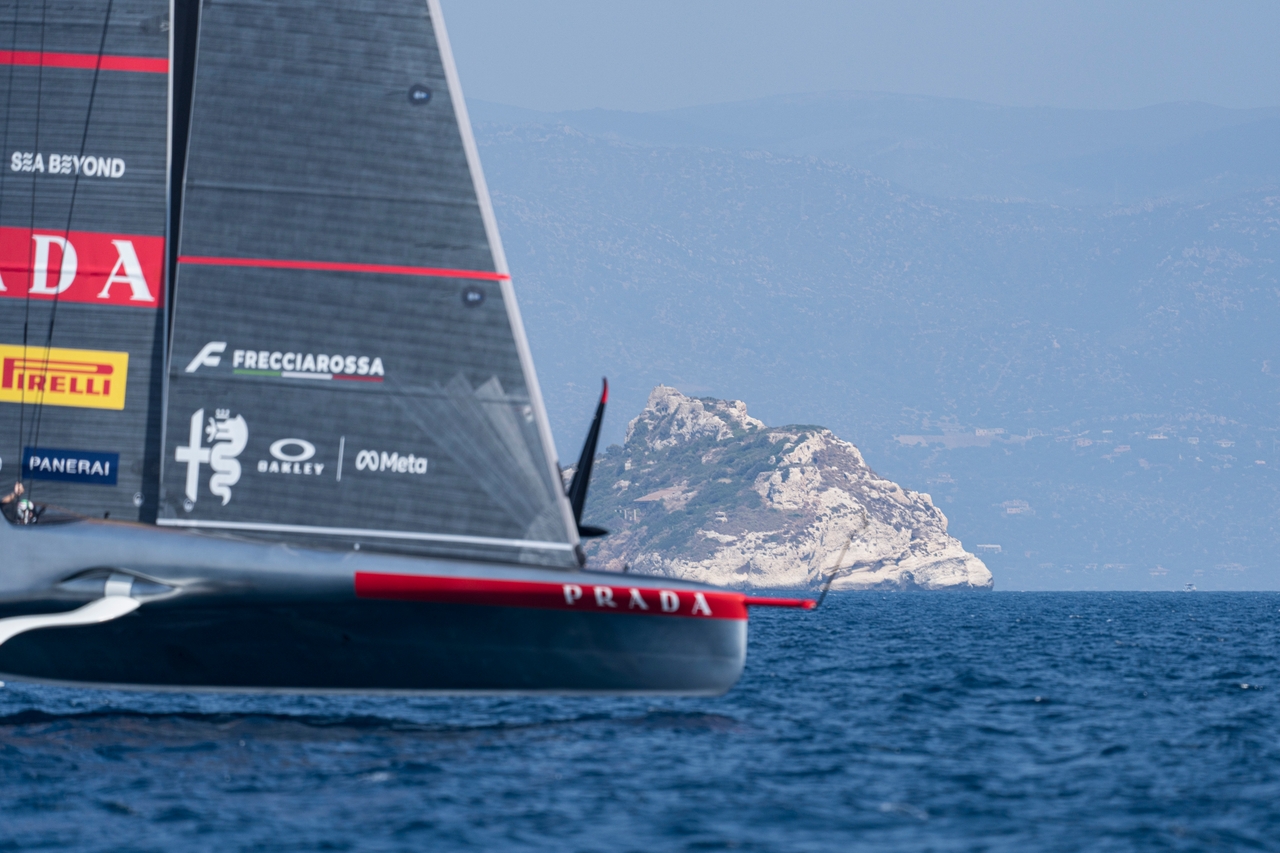
Ivo Rovira / America’s Cup
THE JIB
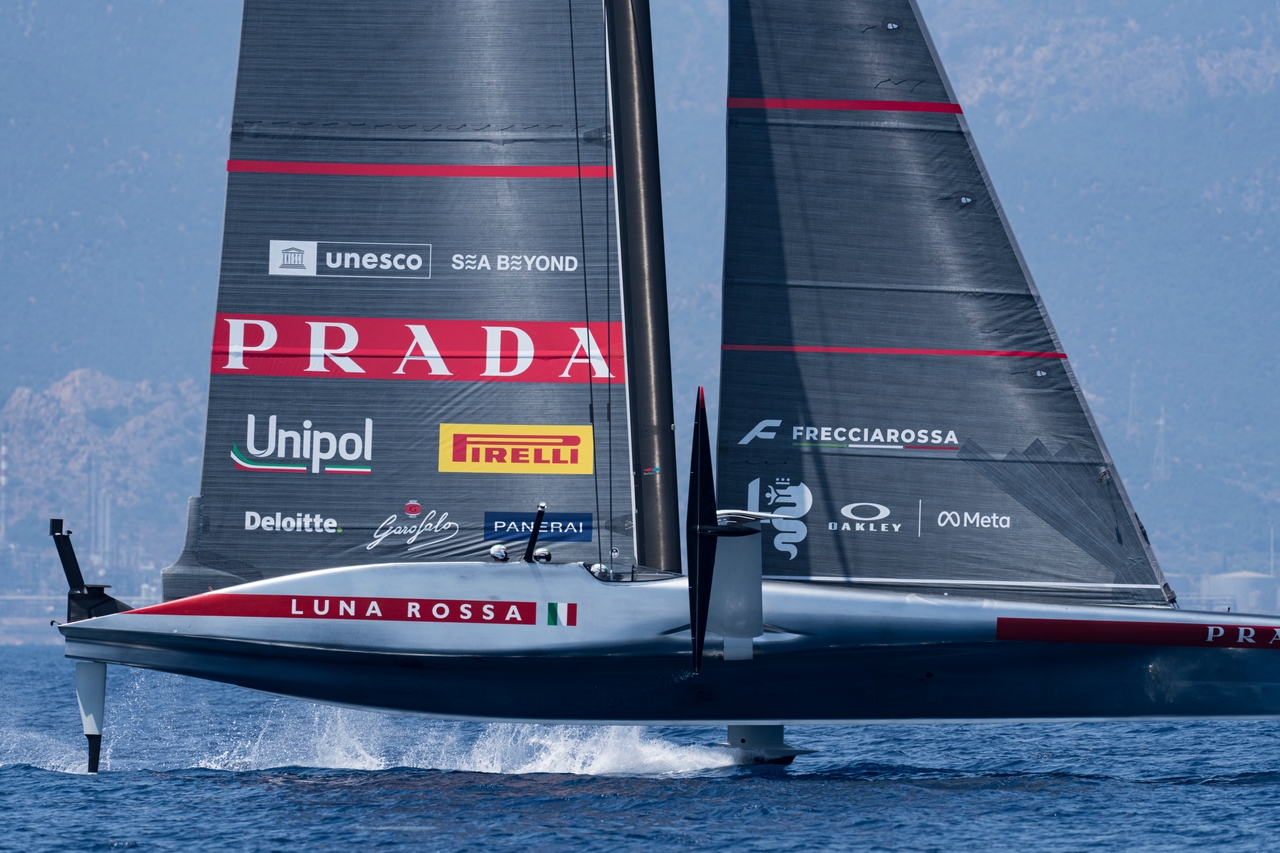
The jib Cunningham works on the same fundamental aerodynamic principle as the mainsail, although the geometry and consequences are different. The current AC75 Class Rule specifically permits a cunningham system near the jib tack. Increase jib cunningham tension and the load running down the luff changes the sail's shape and its draft characteristics. Again, the objective is not simply making the sail tighter. The jib needs to operate efficiently across very different apparent-wind speeds.
At the lower end of the range, particularly when trying to accelerate or recover from a touchdown, the trimmers may want a deeper, more powerful section. Once the boat is fully foiling and apparent wind increases, that depth becomes increasingly expensive.
More cunningham allows the jib to become flatter and cleaner but there is an additional complication in the fact that the jib is the first major sail surface encountered by the airflow and therefore its wake then interacts with the mainsail. The jib and mainsail therefore cannot simply be optimised independently as they form an aerodynamic package. Change the jib's depth and you potentially change the airflow arriving at the mainsail. Change the mainsail and you alter the pressure environment in which the jib operates. The optimum is the combination and that’s what the teams are spending hours on the water training, to try and understand the combination and correlation.
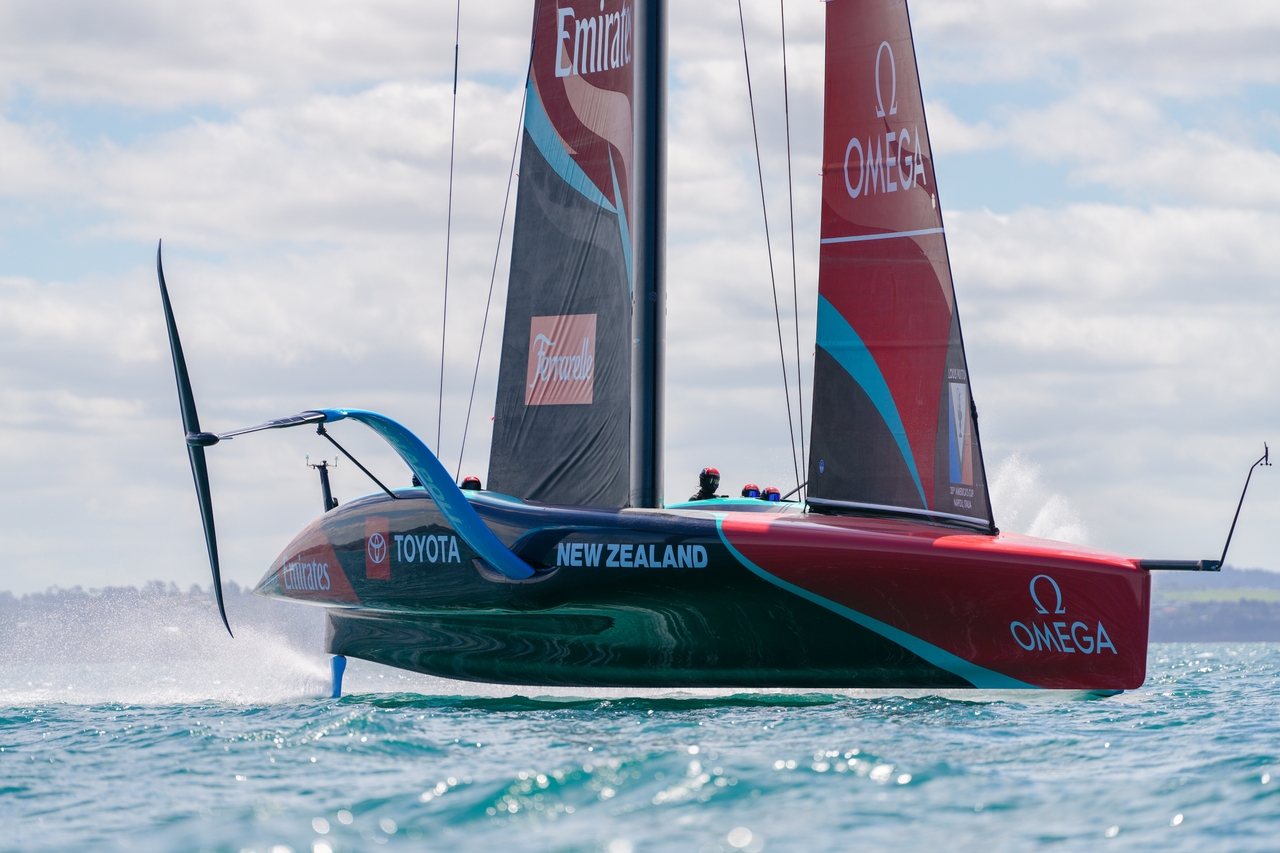
Sam Thom / America's Cup
CONTROLLING THE SLOT
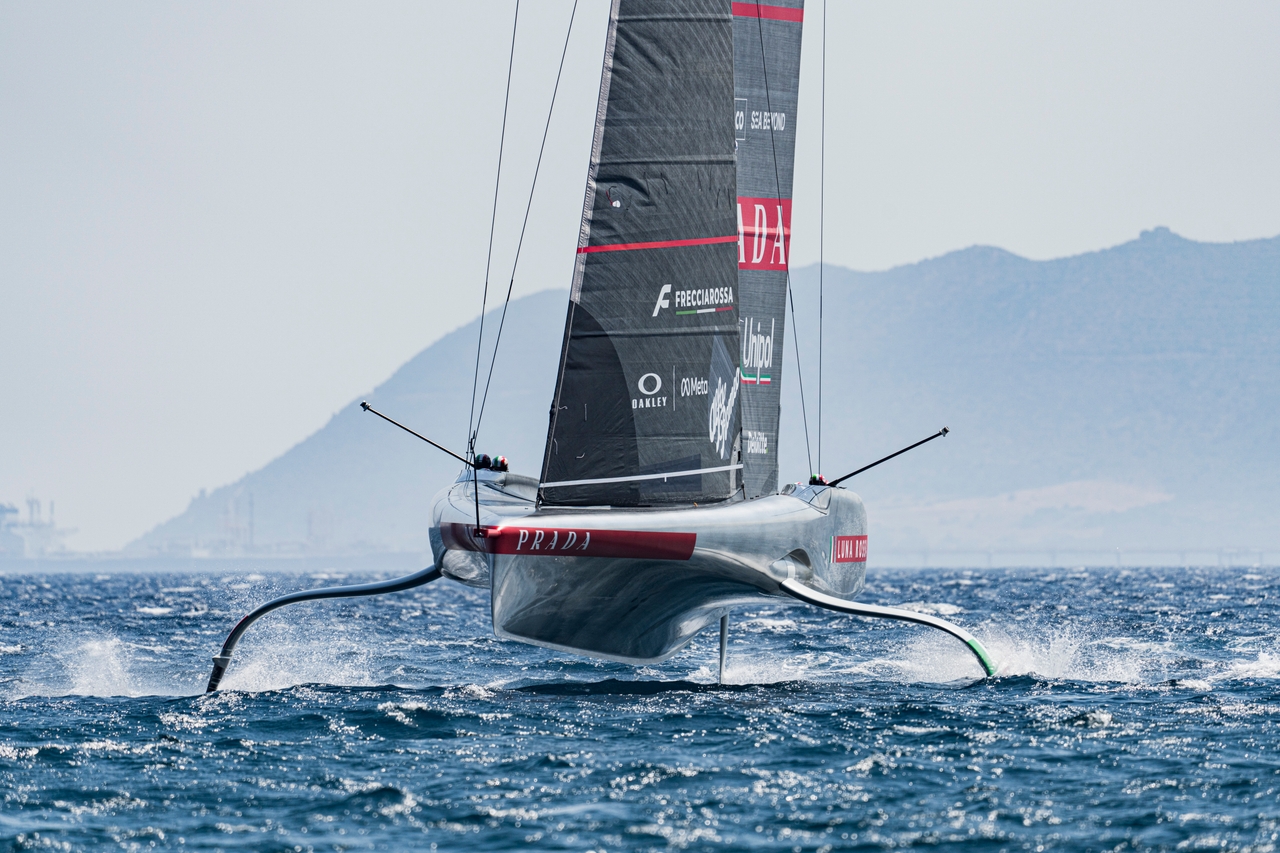
This interaction between jib and mainsail is fundamental. The airflow passing between them, traditionally called the ‘slot’ is influenced by the geometry, camber and angle of attack of both sails. If the jib is too deep, the airflow can become compromised and drag increases. Too flat and the boat may sacrifice useful aerodynamic force. The cunningham therefore provides another tool for tuning that relationship and the adjustment on an AC75 can be extraordinarily precise. The trimmer isn't simply looking at tell-tales and pulling a sheet until the sail looks right. The designers already have target aerodynamic shapes and the whole control system must allow the sailors to reproduce them.
Ivo Rovira / America’s Cup
WHY SPEED MAKES EVERYTHING HARDER
The extraordinary acceleration of an AC75 explains why cunningham control has become so important. A conventional yacht experiences a relatively modest change in apparent wind as it accelerates. A foiling AC75 can transition through a huge apparent-wind range very quickly. That means the optimum aerodynamic section is continually changing.
If you consider the process of a tack where the boat enters at high speed, loads change, the yacht turns, the sails cross, foil loading transfers, boat speed falls and the apparent wind changes. Out of the tack, the AC75 accelerates rapidly, so the optimum sail shape entering the tack may not be the optimum shape halfway through it, and certainly not the optimum shape several seconds after the exit. The cunningham therefore becomes part of the sequence. Load can be adjusted through the manoeuvre, potentially flattening the sails when drag reduction is critical and then changing shape again as the yacht accelerates away. Modern mechatronic control makes these adjustments fast, repeatable and extremely accurate.
Ivo Rovira / America’s Cup
MUCH MORE THAN A DOWNHAUL
The cunningham is no longer simply a device for tightening the luff. On the mainsail it can help control depth, draft position and mast behaviour whilst on the jib it provides another powerful means of changing aerodynamic shape across the AC75's enormous speed range. Together, the two controls allow the trimmers to continually change the aerodynamic characteristics of the rig. On an AC75, the sails are not static engines, they are variable aerodynamic surfaces and the cunningham is one of the principal controls that allows the sailors to change their shape.
What looks like a simple downhaul has become, in effect, one of the AC75's most important aerodynamic gear levers.
Magnus Wheatley