Ivo Rovira / America’s Cup
INSIDE THE AC75: HOW SENSORS ARE TRANSFORMING THE AC75 INVISIBLY
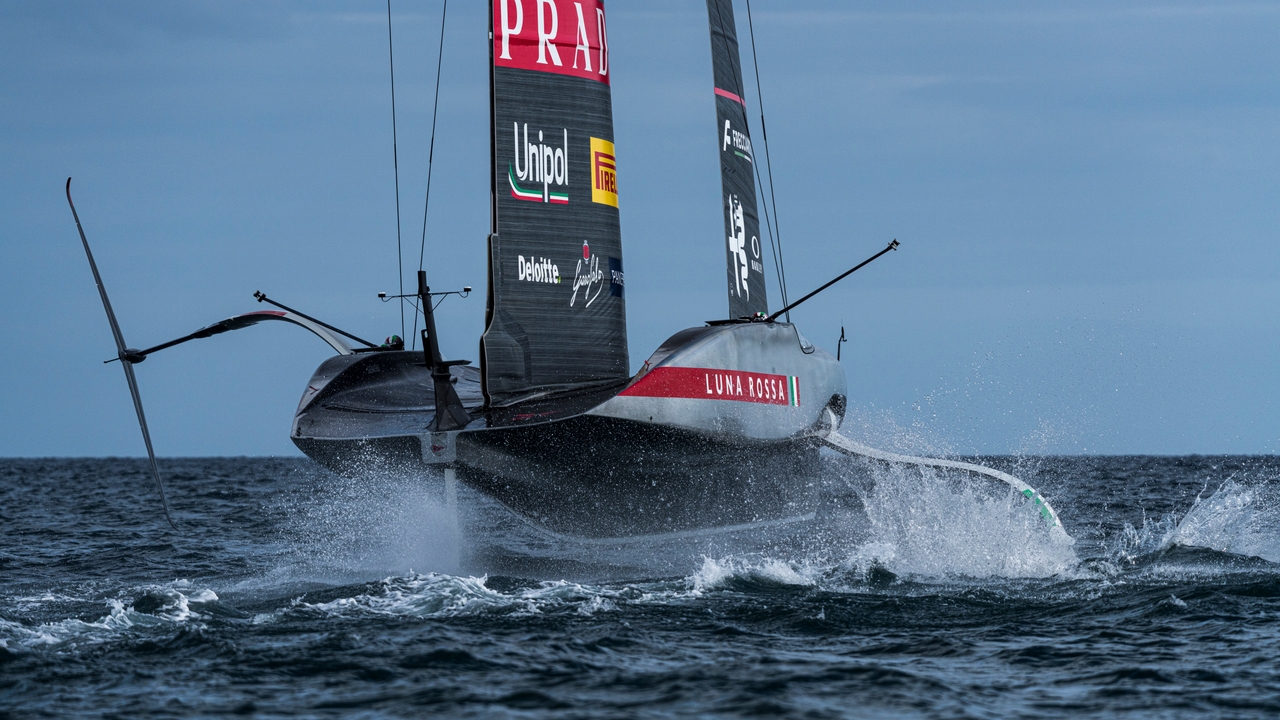
At speeds exceeding 50 knots, an AC75 is one of the most sophisticated racing machines ever built. Beneath the carbon-fibre structure, hidden within the foils, rigging, sails and hydraulic systems, an intricate network of sensors is constantly measuring the forces acting upon the yacht. In the modern America's Cup, this invisible world of data is every bit as important as the sailors in the pods.
Pierre Bouras / America's Cup
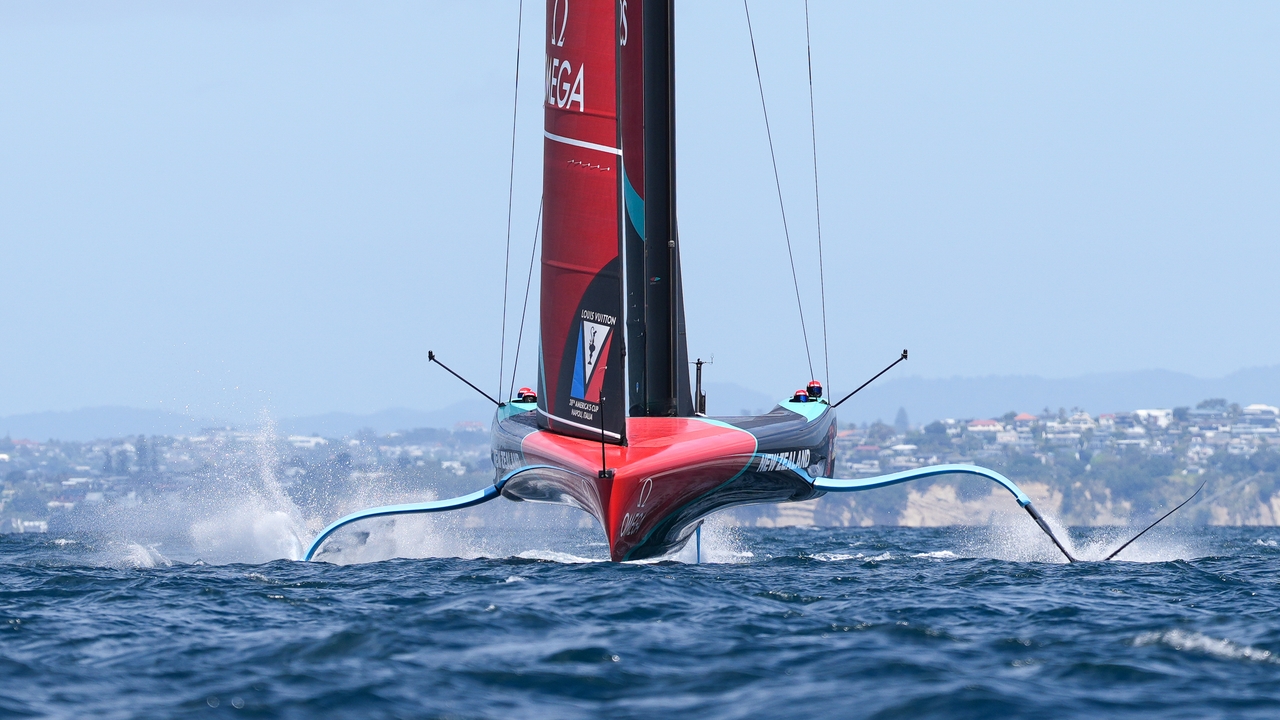
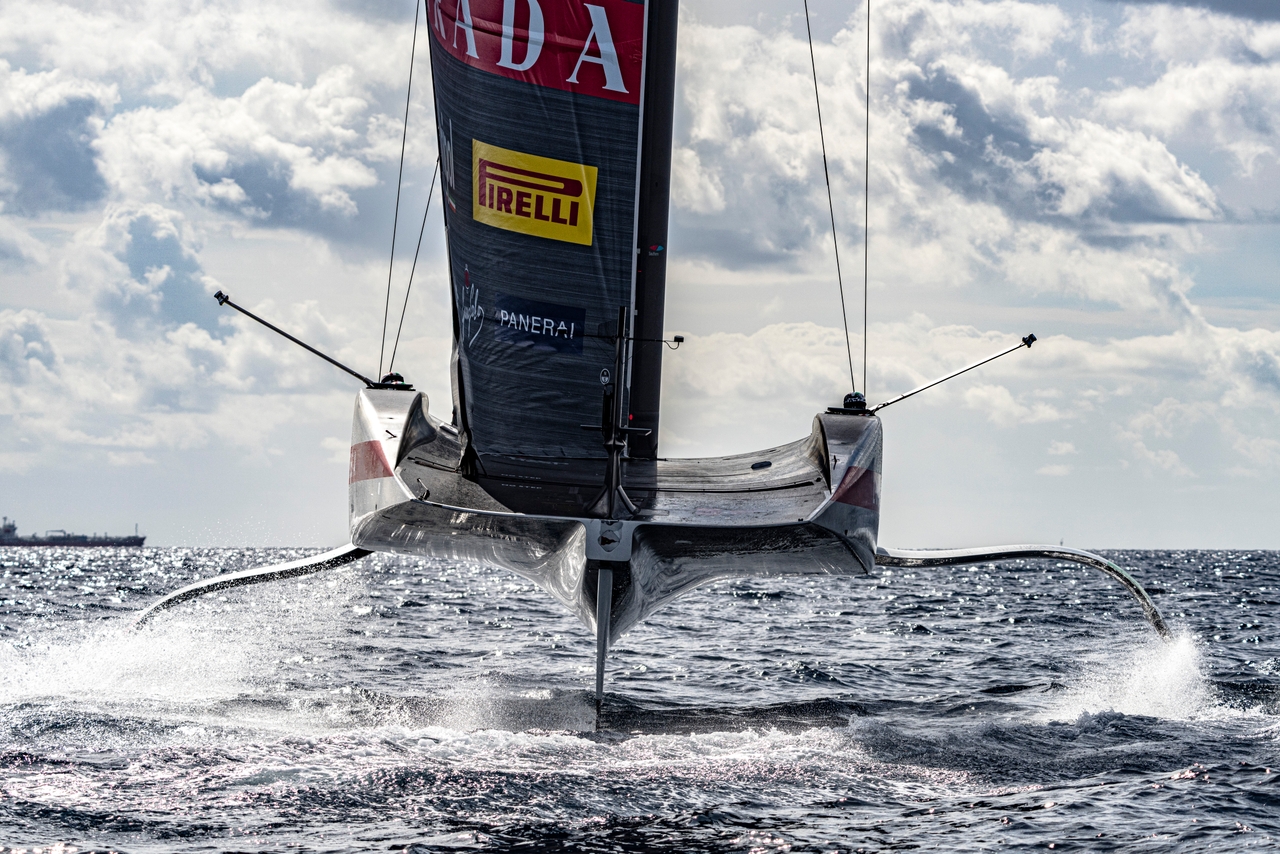
An AC75 generates extraordinary aerodynamic and hydrodynamic loads while balancing on a single submerged foil wing to leeward. Understanding those forces is fundamental to extracting performance, and sensors provide the information that allows designers, engineers and sailors to push the boundaries.
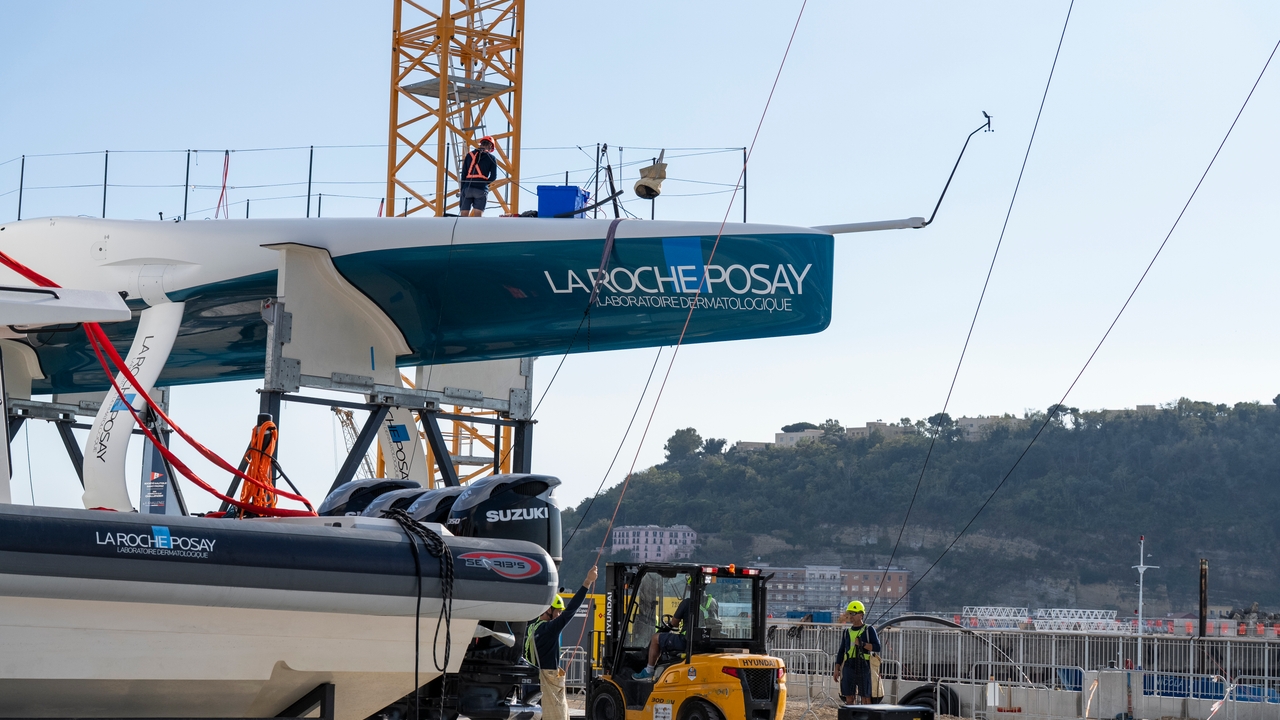
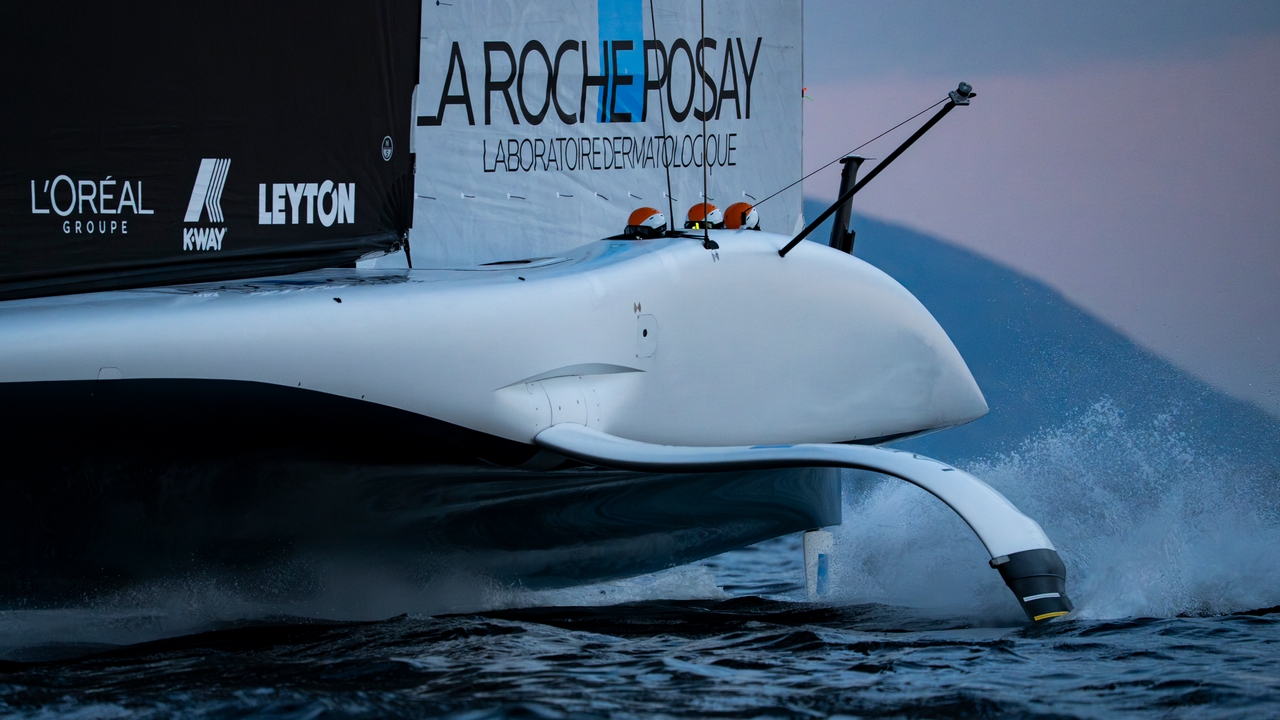
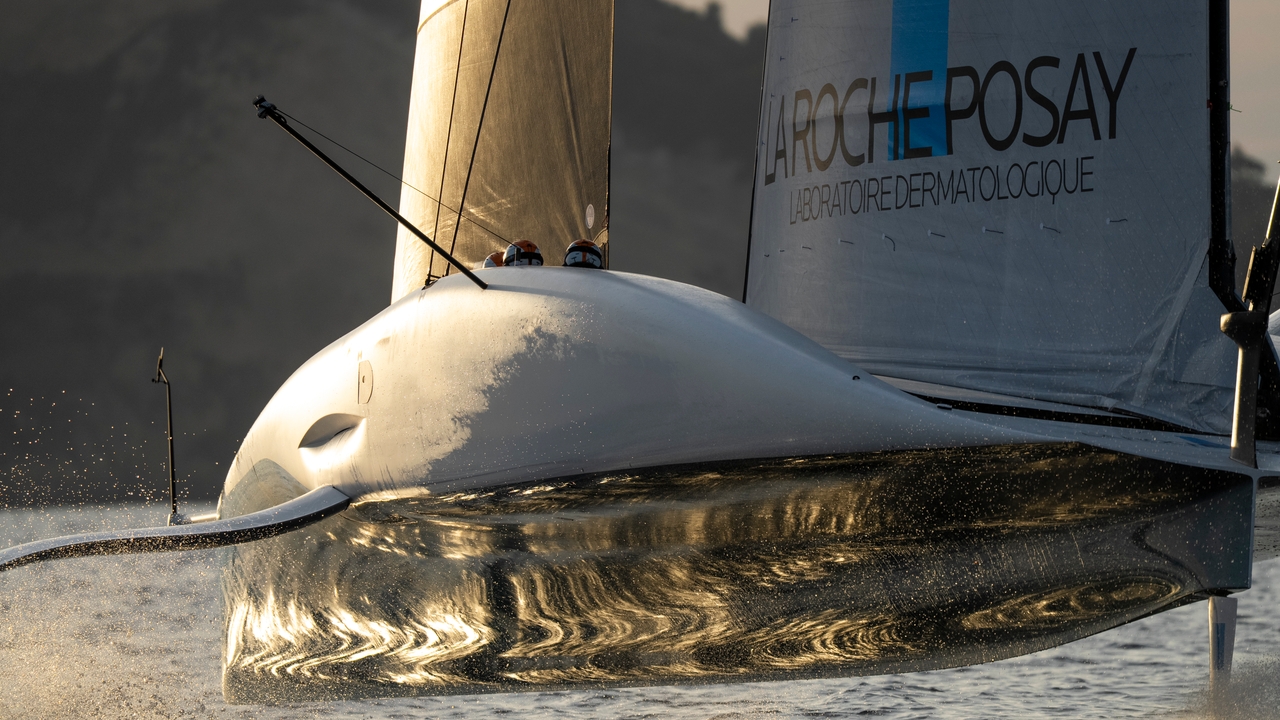
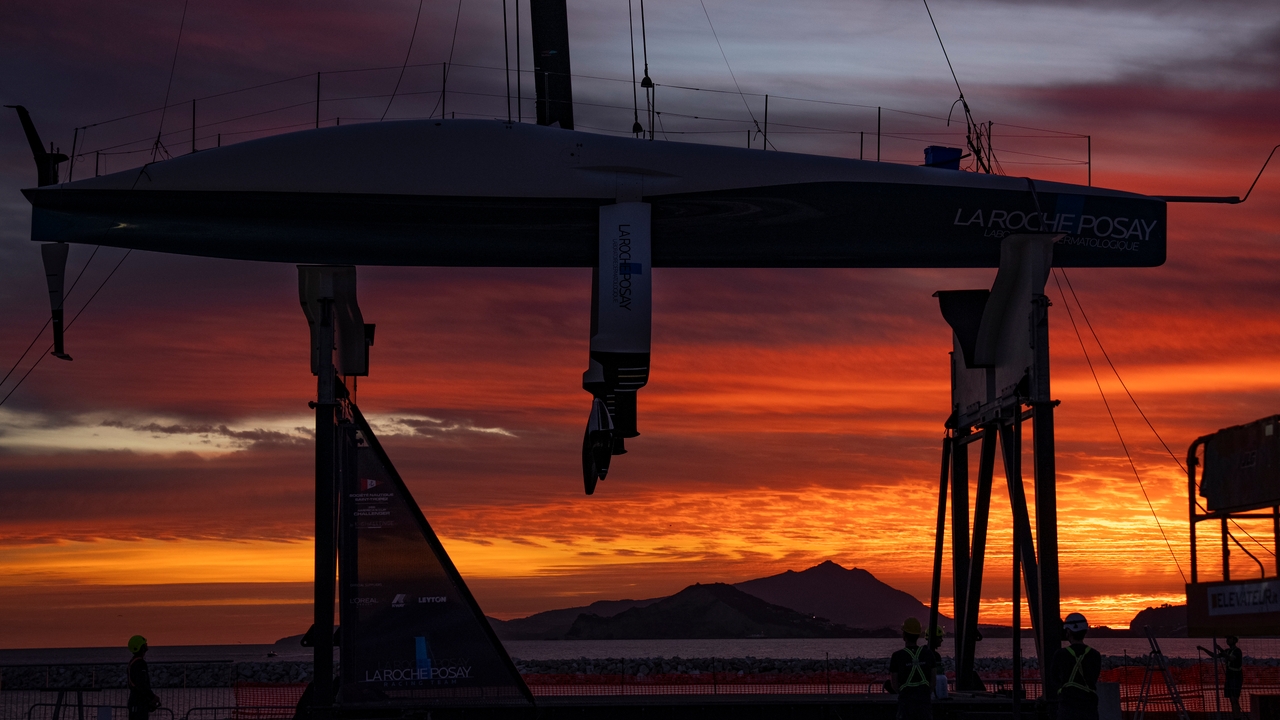
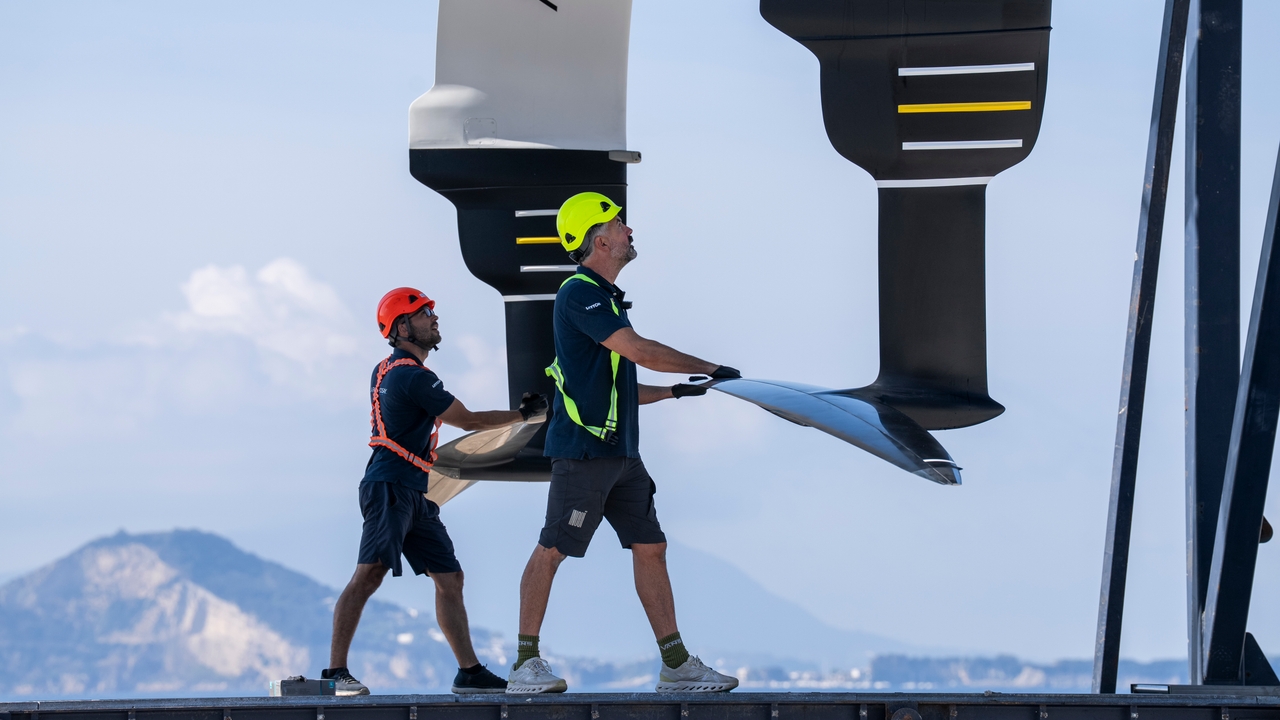
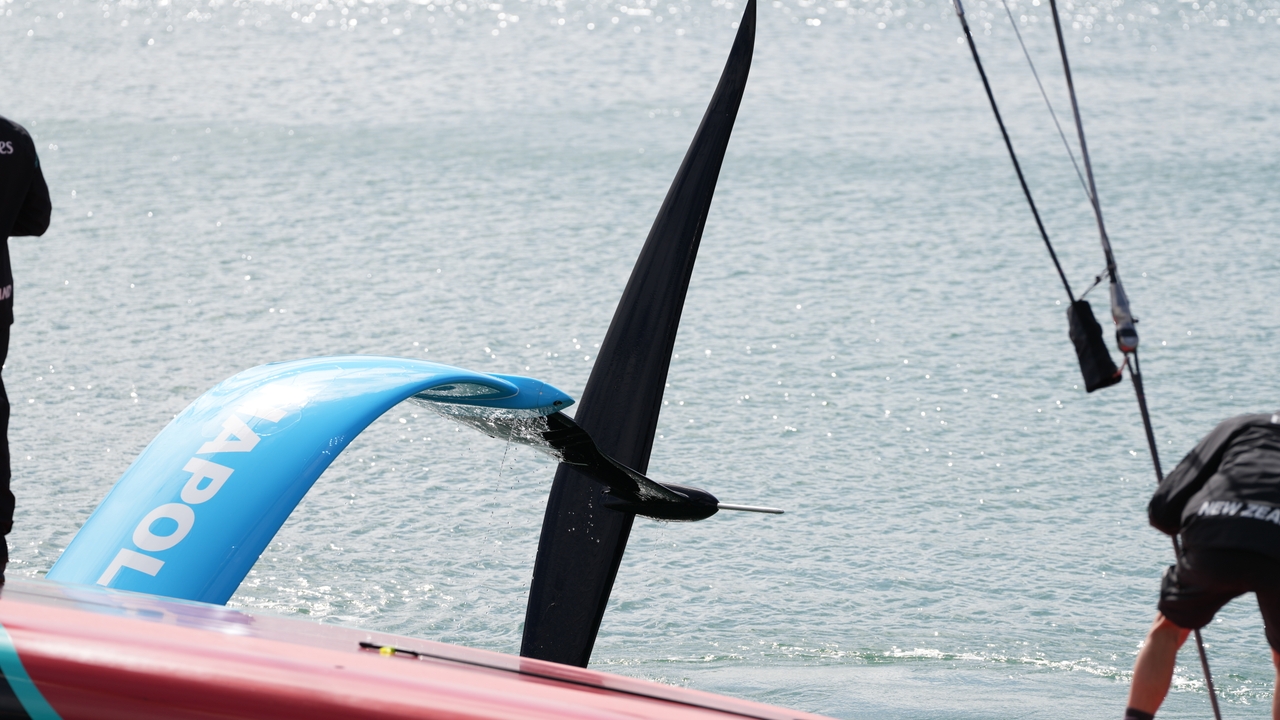
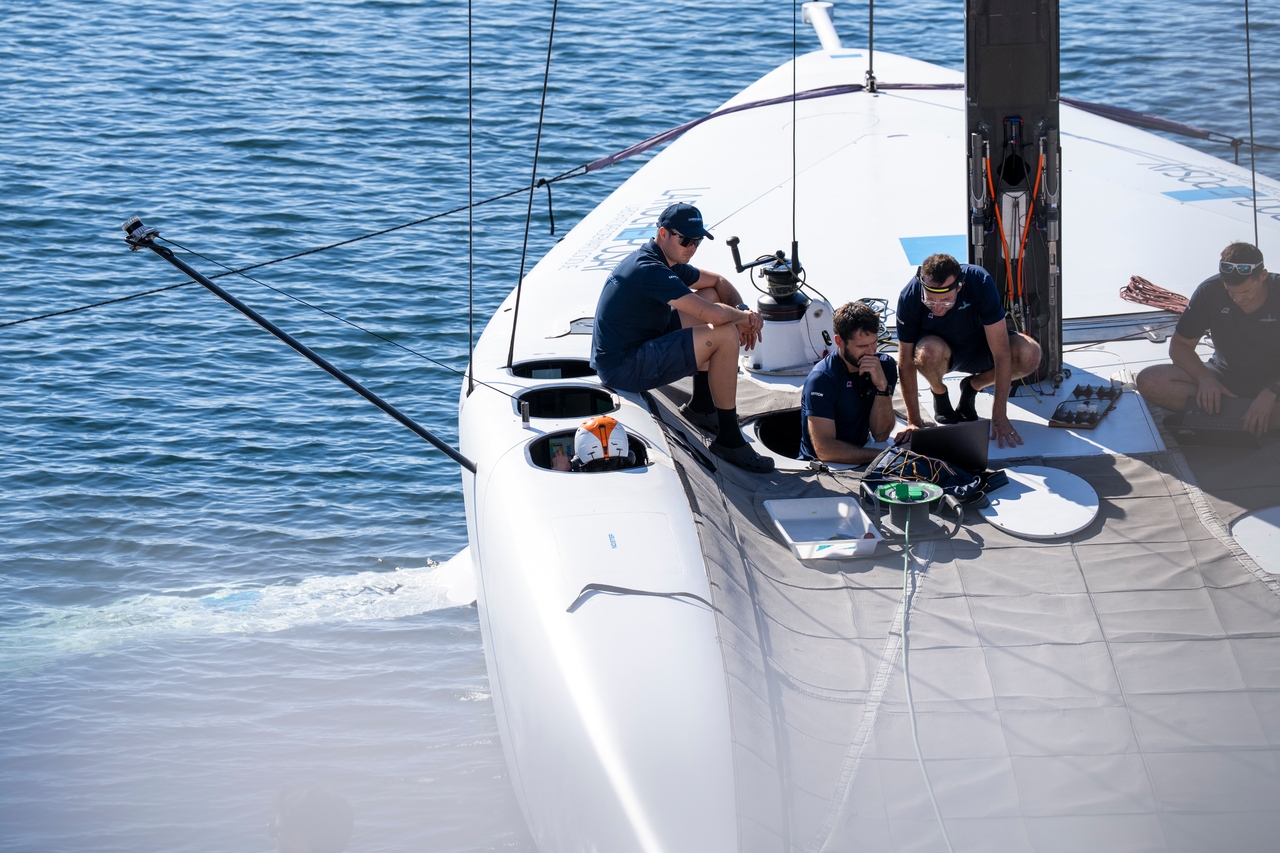
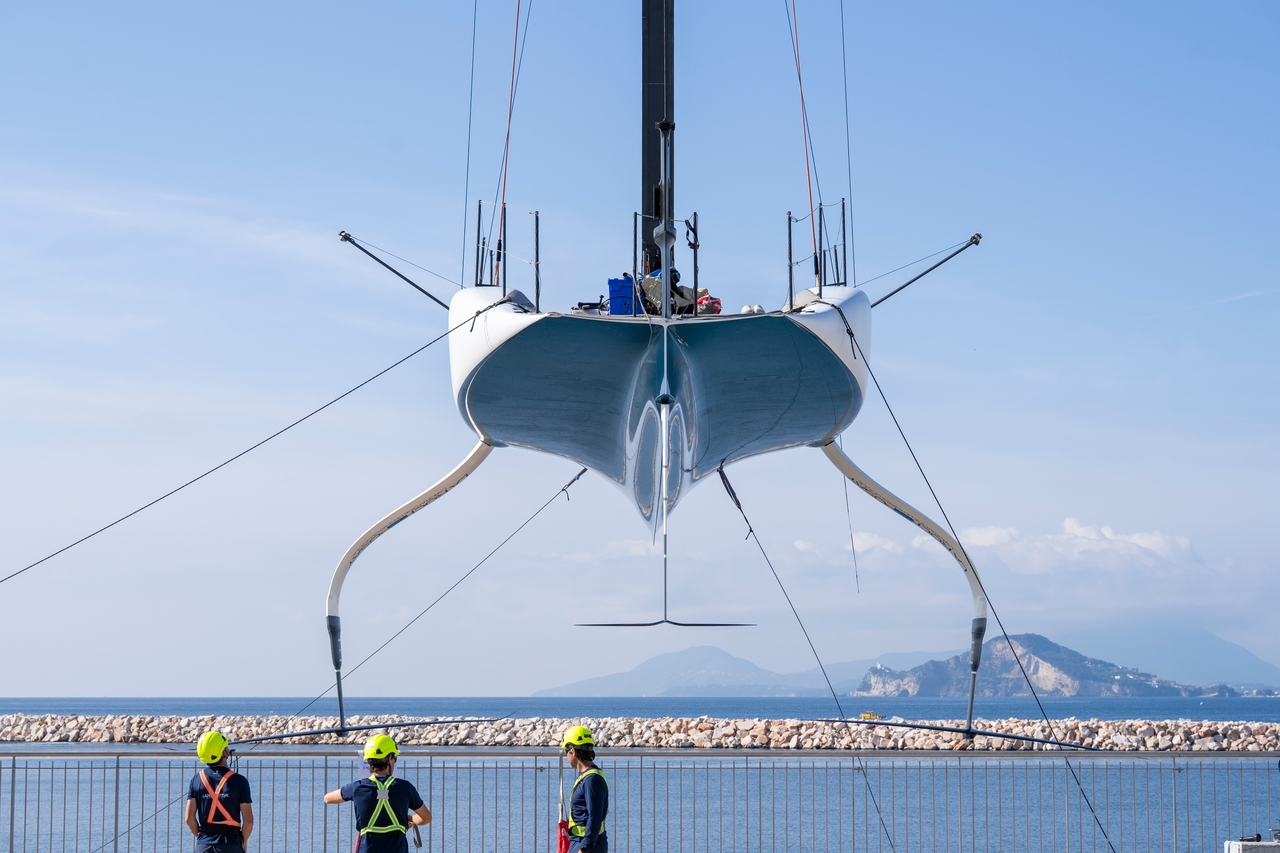
It begins with speed and position. High-precision GPS systems measure the yacht's velocity, heading and trajectory, while inertial measurement units (IMUs), incorporating accelerometers and gyroscopes, monitor pitch, roll, yaw and acceleration. Ride-height sensors measure the boat's distance above the water, while wind instruments record apparent wind speed and direction. As an example, the Naples Recon team noted that La Roche-Posay Racing Team held their boat on a crane about 20cm above the water on launch to accurately calibrate the ride-height sensor, whilst both Emirates Team New Zealand in this cycle and the British in the last, have been seen with Pitot Tubes on their foil bulbs.
Sam Thom / America's Cup
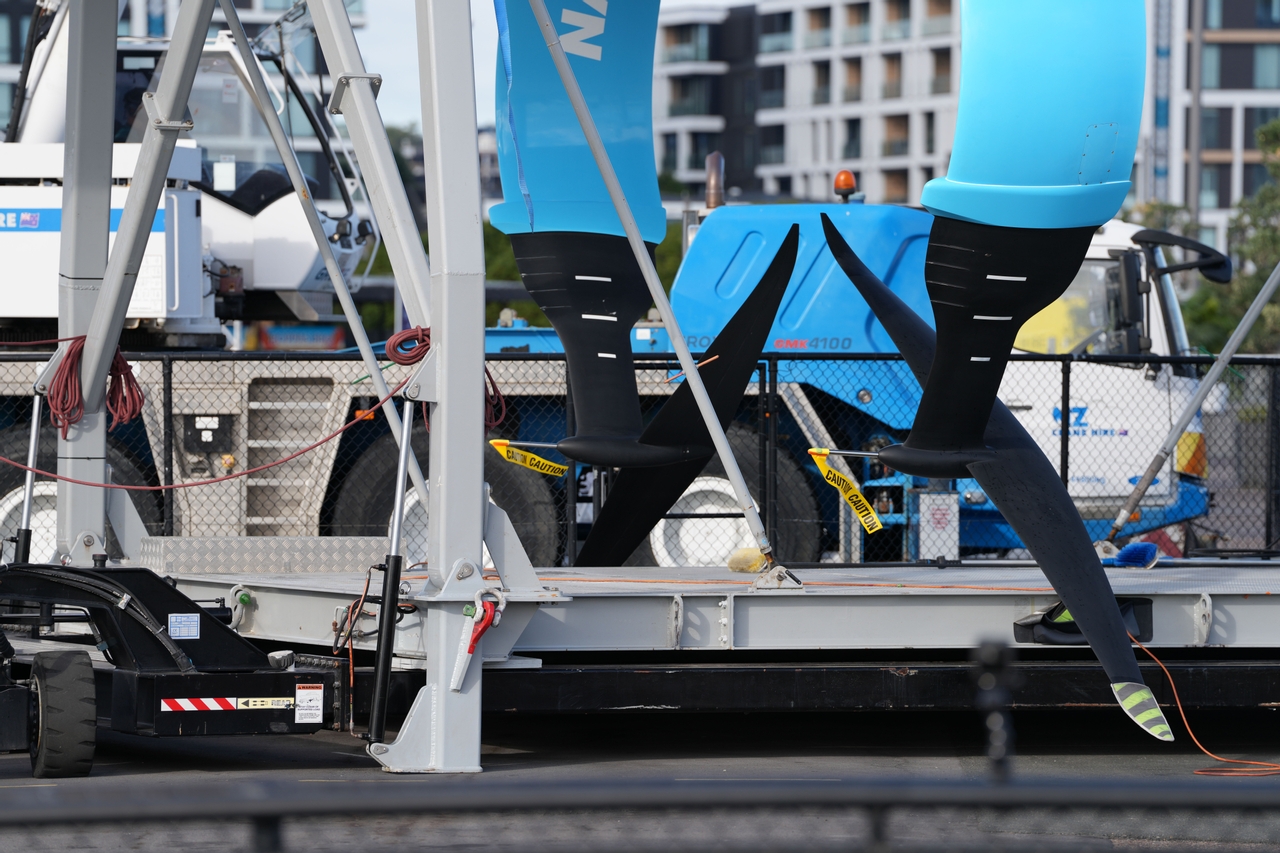
Together, these instruments create a remarkably detailed picture of the yacht's movement through the air and across the water. But GPS speed alone is insufficient. Specialist speed-through-water instruments can distinguish the yacht's movement relative to the surrounding water from its movement over the seabed. This helps engineers assess leeway, currents and the true efficiency of the foils.
Below the waterline, the technology becomes even more fascinating. Fibre-optic strain sensors and other load-measuring devices can be incorporated into structural components to measure bending, deformation and the forces generated by the foils. Teams have even used ultrasound microphones to detect carbon fibres splitting. Engineers want to understand how much lift and drag a foil produces, how its structure responds under load and whether the physical behaviour matches their computer simulations.
Pierre Bouras / America's Cup
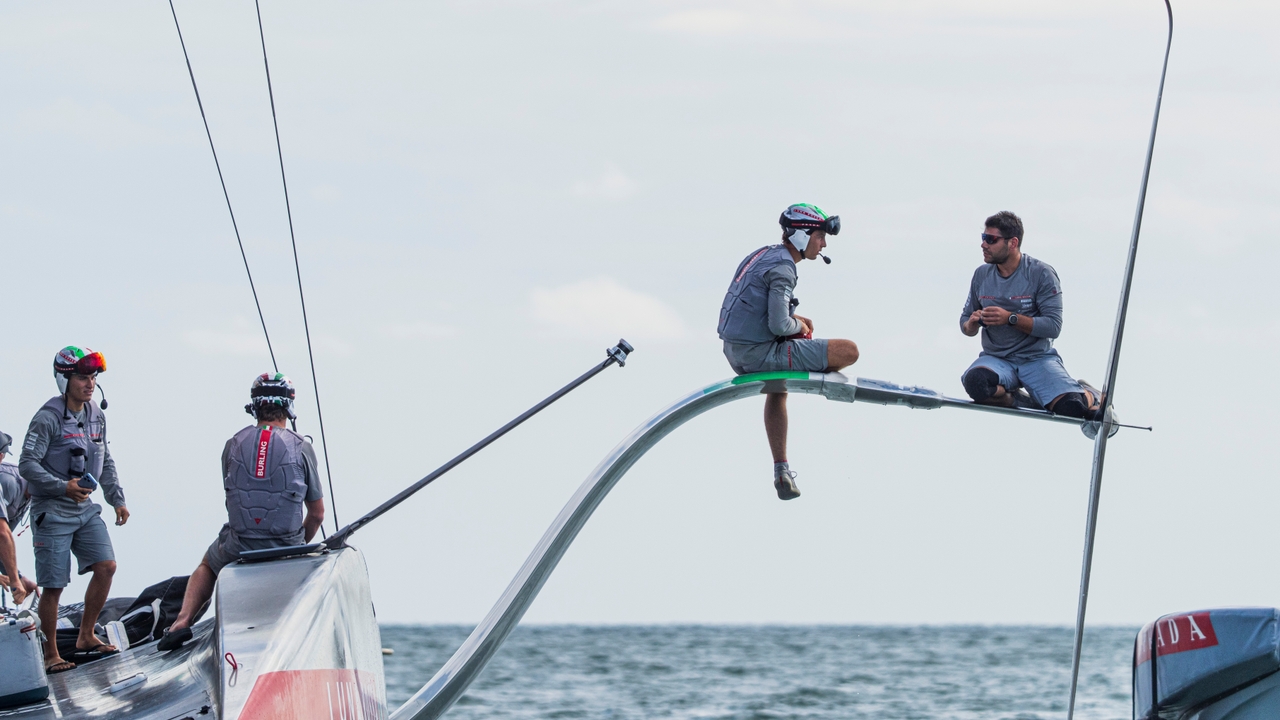
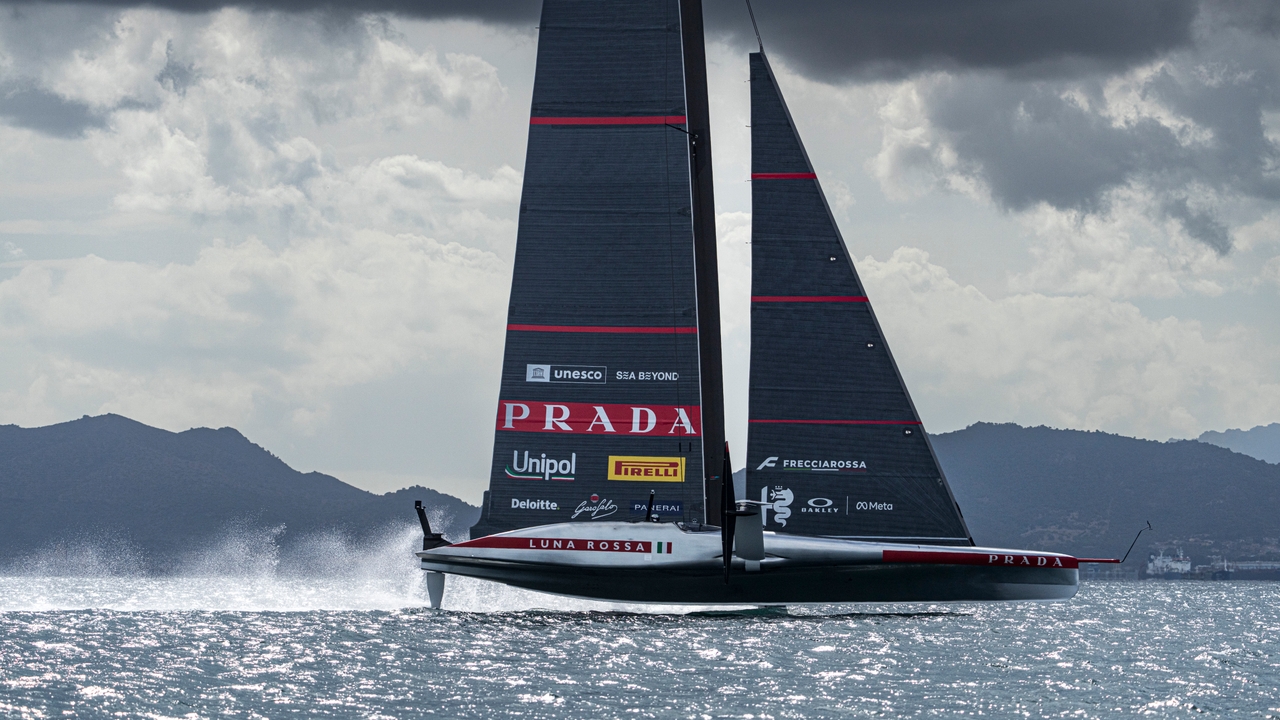
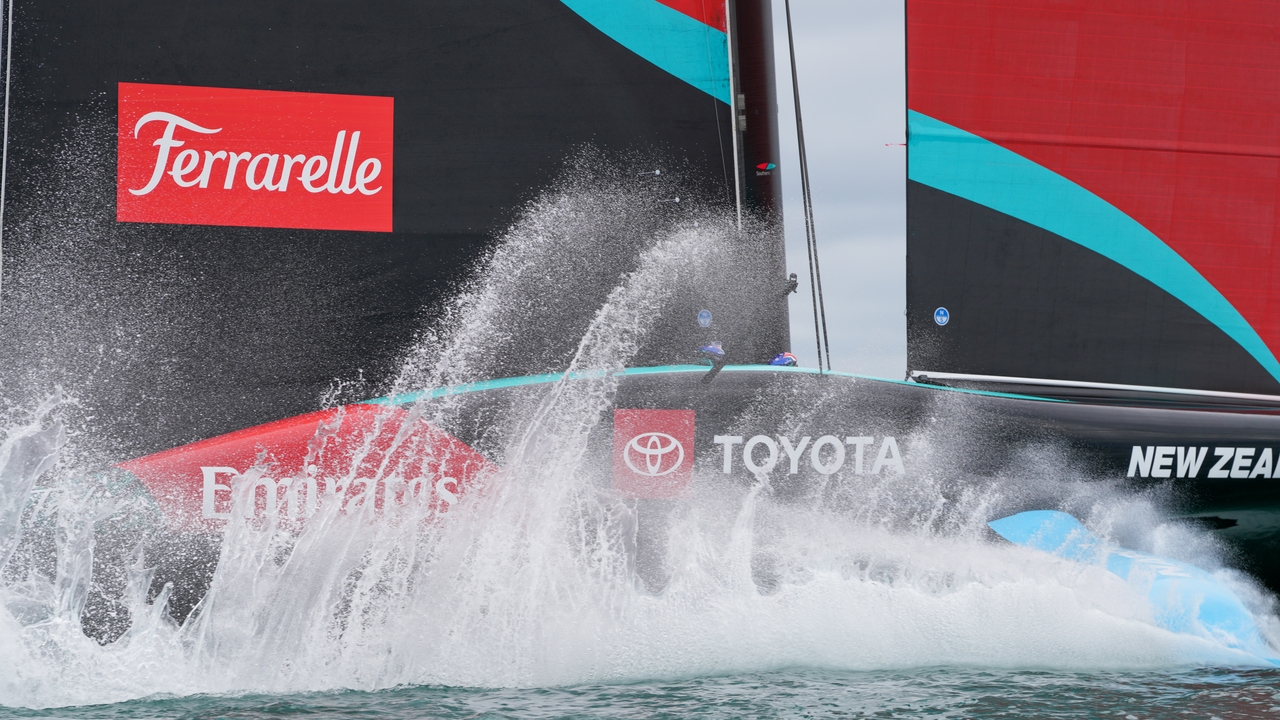
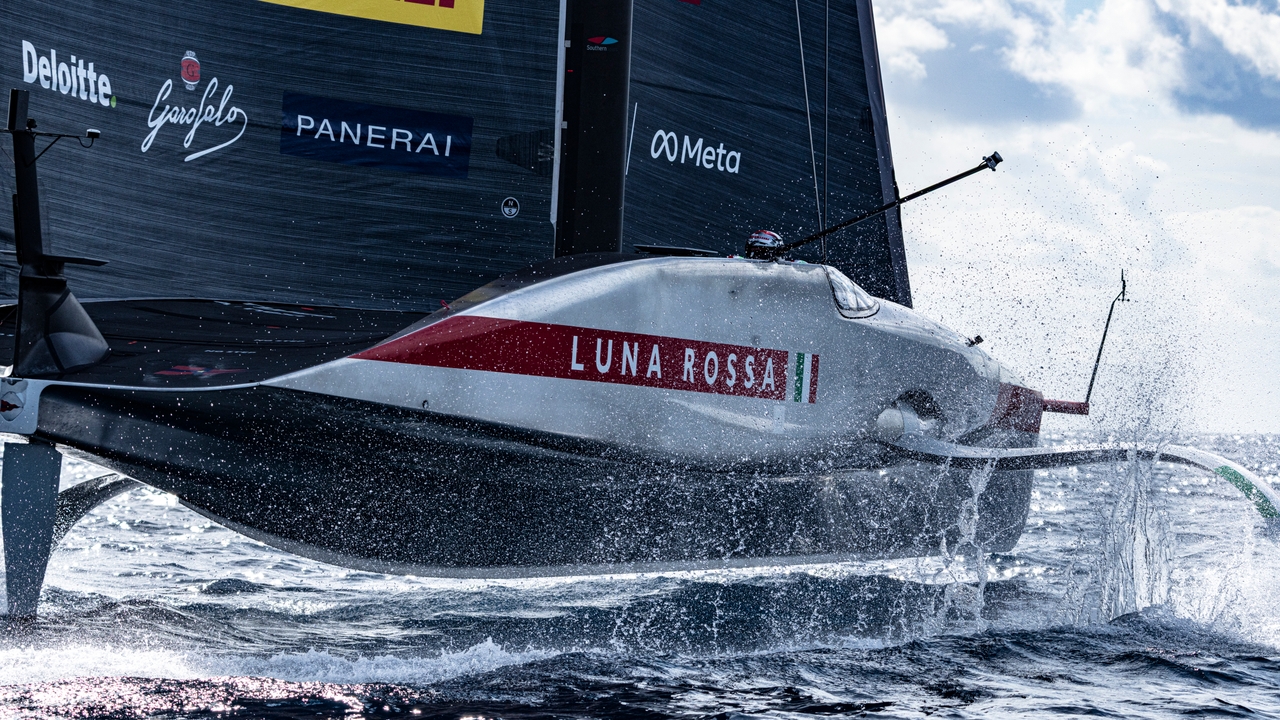
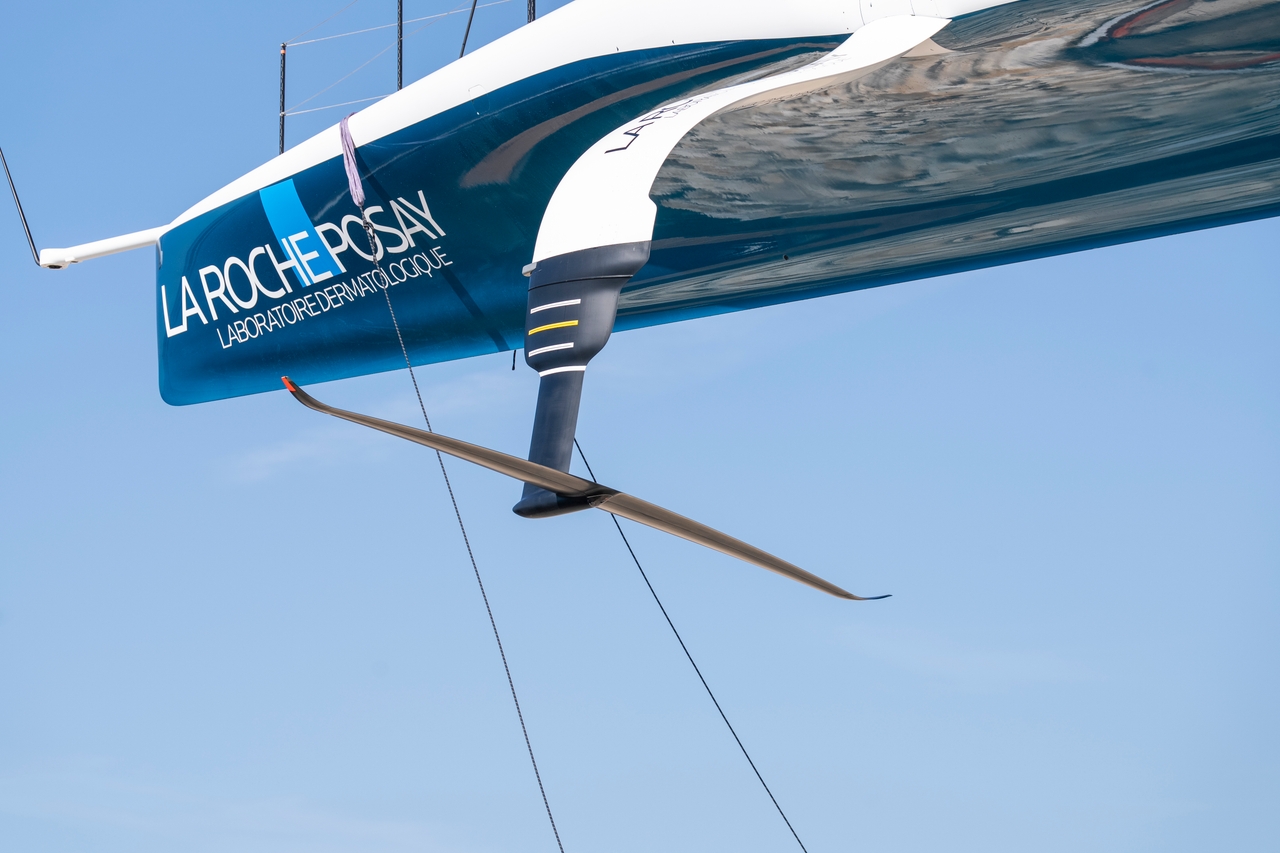
Cameras positioned around the foil arms provide another dimension of information. They can reveal flap movement, vibration, twisting, ventilation and, under suitable conditions, evidence of cavitation. Some teams also use visual markings as reference points to study structural deflection such as La Roche-Posay Racing Team who have bulb-shaped cameras on the leading edge of both foil arms and white marks painted on the outer wings, which fit with following wing deflection. Emirates Team New Zealand have run a camera and telltales on the port foil looking at flow around the T-junction, and a dual-sensor setup on the starboard foil (T-section plus tip). Luna Rossa have had GoPro cameras mid-span on the wing pointing at the bulb, and a camera in the hull skin near the rudder leading edge.
Ivo Rovira / America’s Cup
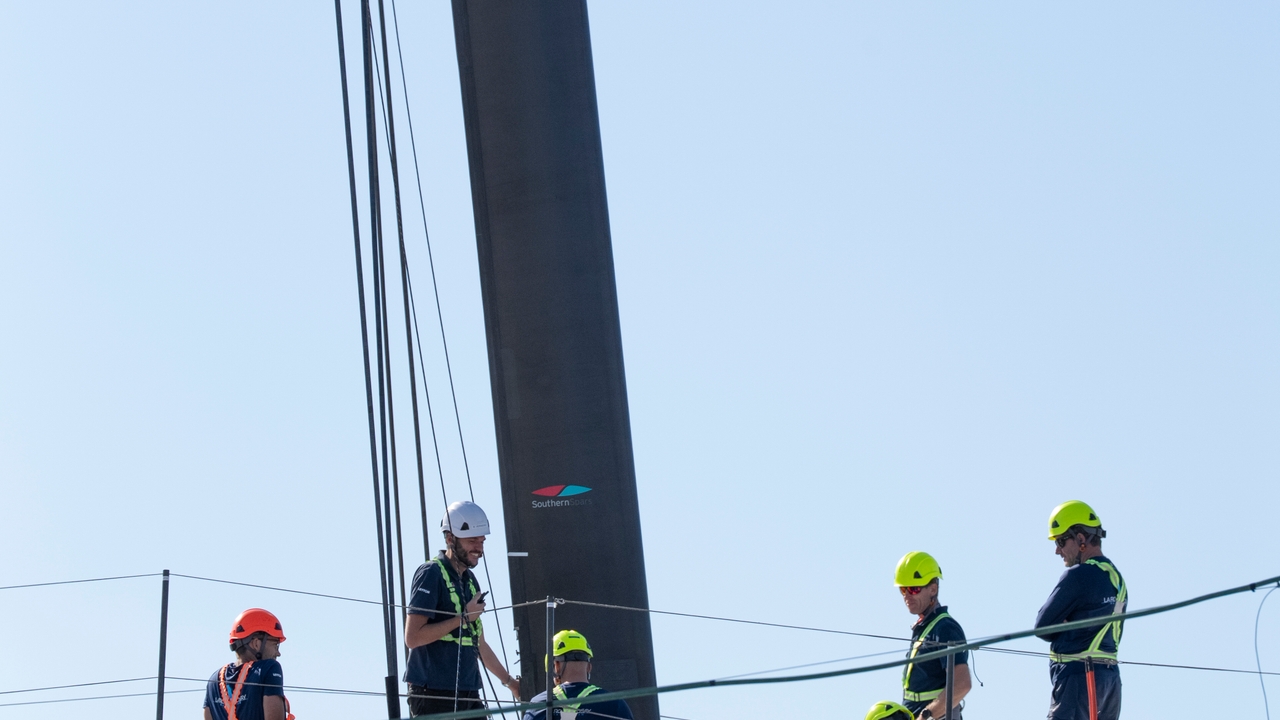
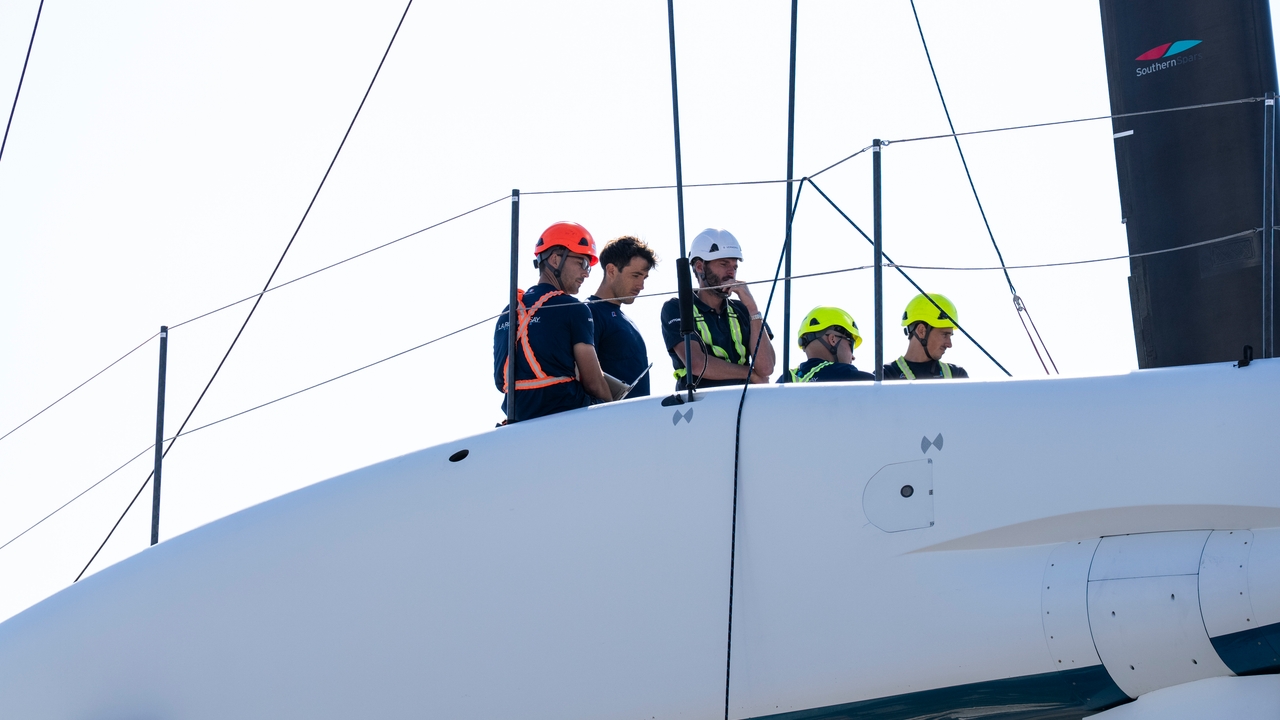
Above deck, the rig is an equally important laboratory. Load cells and strain-measuring systems monitor the enormous tensions carried by the shrouds and other structural components. It is worth noting that that the rigging is one-design and the mast tubes are built to a common specification (class rule 17), so the gains come from how teams tune and measure the rig, not from the tube itself. La Roche-Posay Racing Team have been seen to have fibre-optic lines running along their shrouds since Lorient. These measurements help designers understand mast compression, bend and rake, all of which influence the aerodynamic shape of the double-skinned mainsail.
By correlating rig loads with mast geometry and sail-shape measurements, teams can determine whether their physical yacht is behaving as predicted. A tiny difference in mast bend can translate into a meaningful change in sail performance.
The recent instrumented rig-tuning exercises undertaken by La Roche-Posay Racing Team in Naples illustrate this process, with independent load cells used to investigate cap-shroud loading and mast behaviour.
Pierre Bouras / America's Cup
Inside the hull, another network monitors the yacht's mechanical health. Pressure, temperature and position sensors track hydraulic systems, actuators, valves and other essential equipment. Engineers can identify excessive temperatures, unexpected pressure changes or inconsistencies in control-system behaviour before they develop into failures.
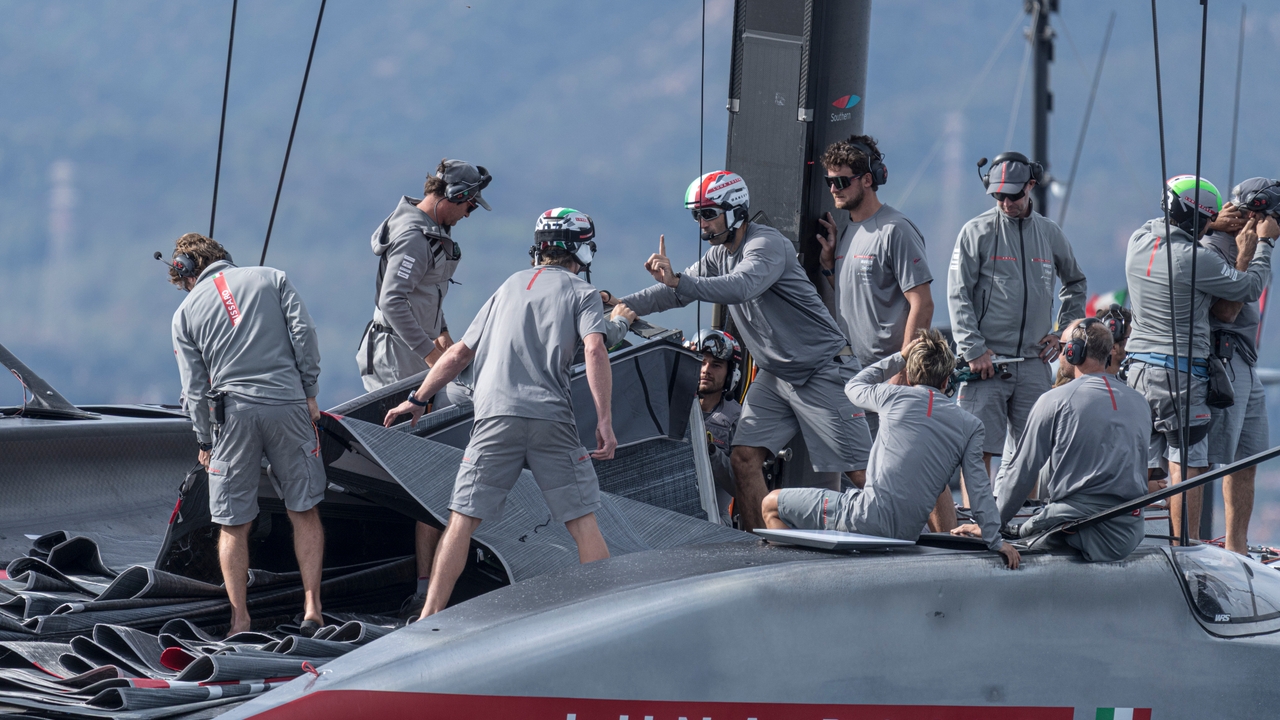
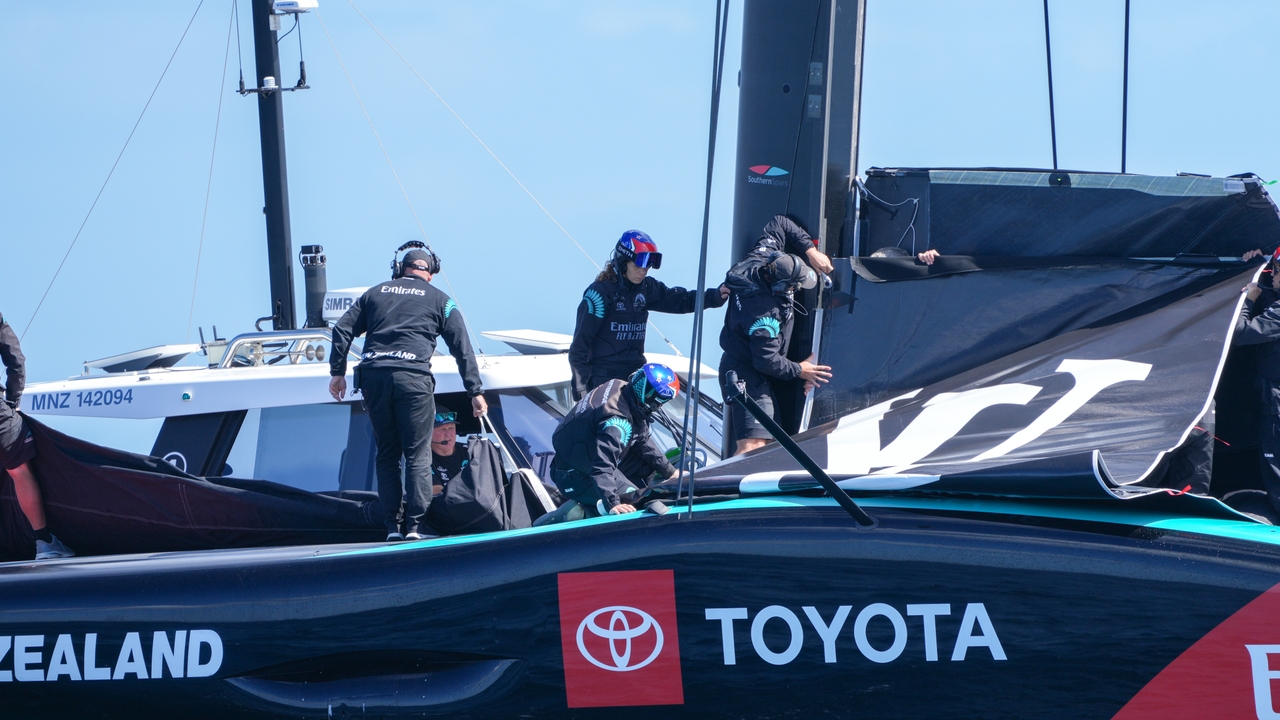
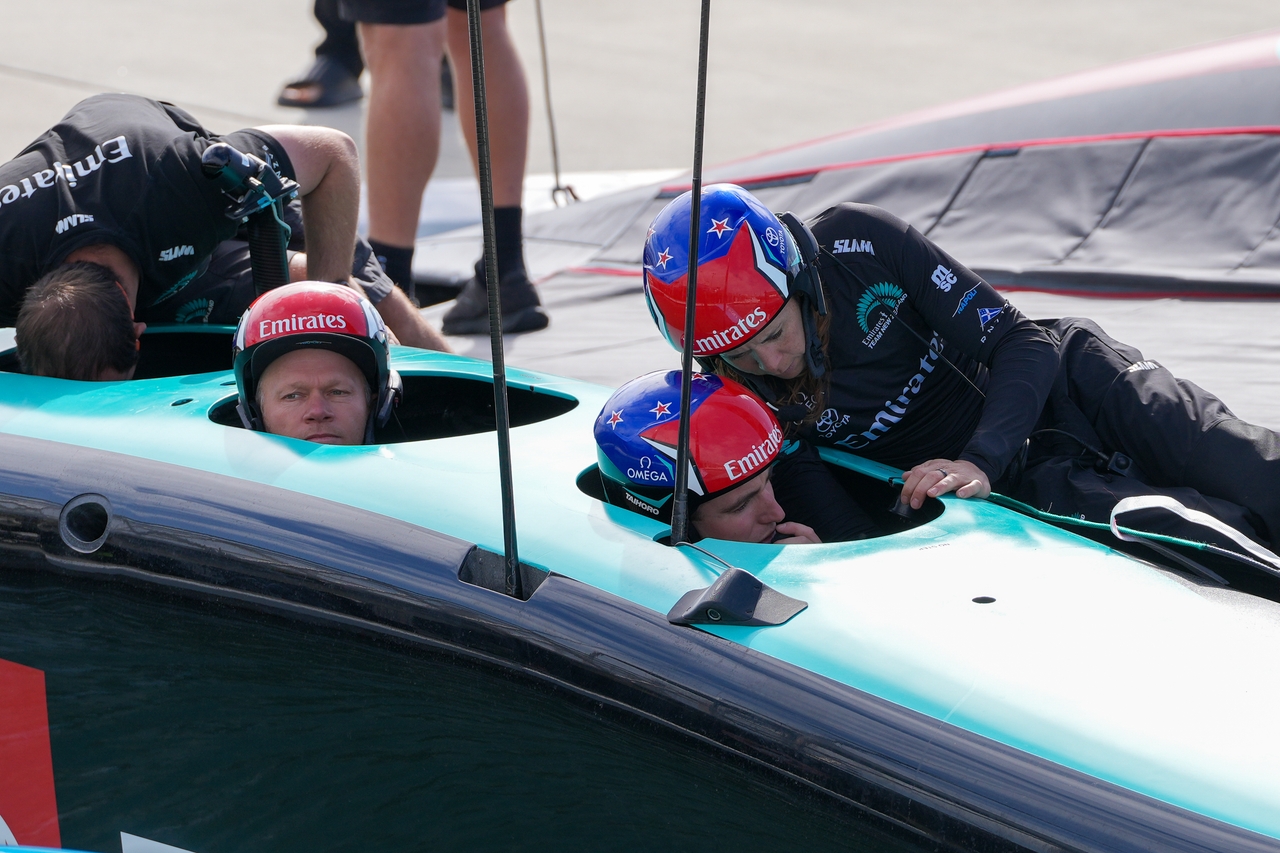
For the Louis Vuitton 38th America's Cup, limited battery-powered systems replace the cyclors used in Barcelona, with output modelled on the best power figures measured from the Barcelona cyclors. Electrical monitoring and energy management therefore become increasingly important, particularly for the fifth crew member, known as P5, responsible for overseeing power usage and performance. In testing, Jo Aleh of Emirates Team New Zealand has her head below the sheerline for most of a session, on systems control and performance monitoring – something confirmed in a Recon interview with Skipper, Nathan Outteridge.
All this information is collected through sophisticated instrumentation and logging systems, then analysed by specialists using performance software, statistical modelling and increasingly artificial intelligence. Crucially, however, an AC75 is not an autonomous yacht. The class rules restrict how sensor information can interact with control systems, preserving the sailors' responsibility for making racing decisions. The class rule, however, allows data and audio links to both the chase boat and shore base (rule 23.1), so live telemetry is something that all teams invest in. Emirates Team New Zealand added an extra Starlink on their comms pod back in April and others have followed suit. The distinction though between recording data, displaying information and automatically controlling the yacht is fundamental and the control systems can only take a defined list of sensor inputs (rule 24). The crew command system can't measure the yacht state at all (rule 25), and data only flows one way, from the crew's buttons to the control systems, through a bridge – and that's the real line between recording, displaying and controlling.
Sam Thom / America's Cup
The greatest gains often come after sailing, when engineers compare thousands of measurements against predicted performance, identify discrepancies and refine the next day's settings. The America's Cup has always been a contest of design and innovation.
Today, the decisive advantage may be almost invisible: a sensor detecting an unexpected load, a camera revealing a fraction of foil deformation, or a mathematical model identifying an improvement worth just a few hundredths of a knot. Over the course of an America's Cup race, those tiny gains can become the difference between winning and losing and whilst the teams build the invisible network, the Recon units spend their days spotting the visible clues to create an accurate picture of who’s hot and who’s not in the Louis Vuitton 38th America’s Cup.
Magnus Wheatley