Sam Thom / America's Cup
THE ART OF RECOVERY: WHY EMIRATES TEAM NEW ZEALAND IS PUSHING THE LIMITS WITH ITS SMALLER MAINSAIL
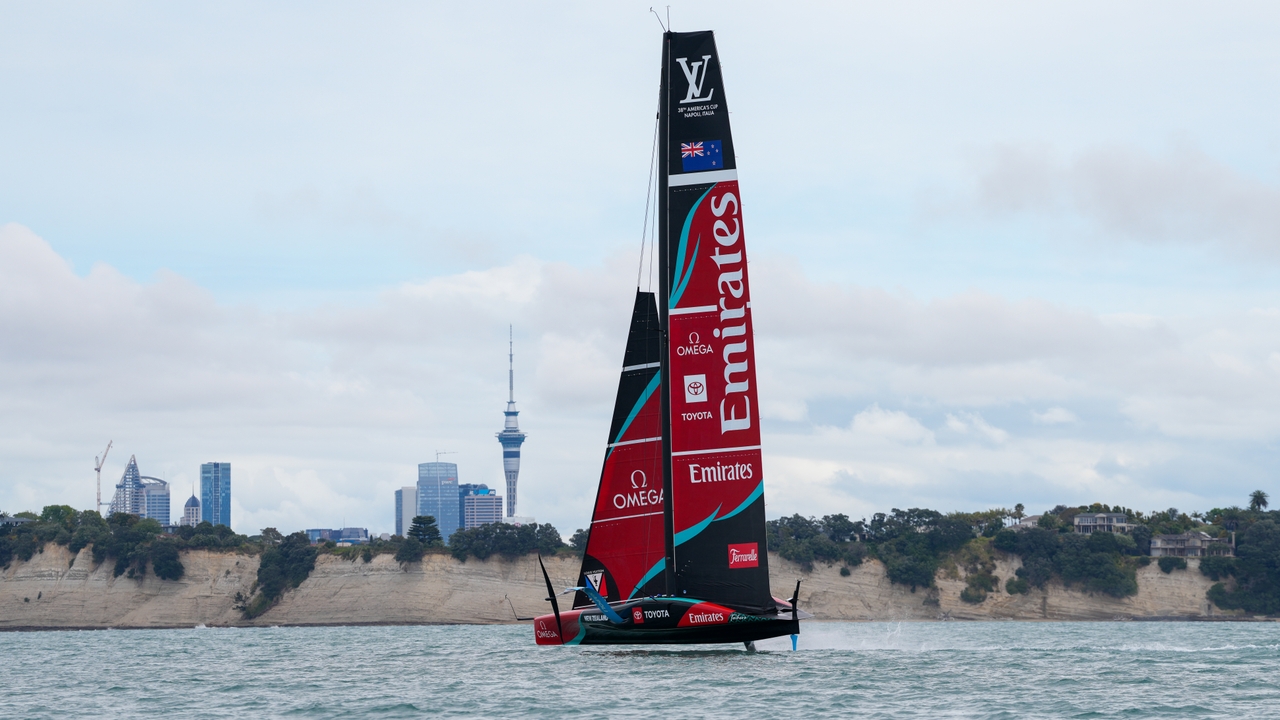
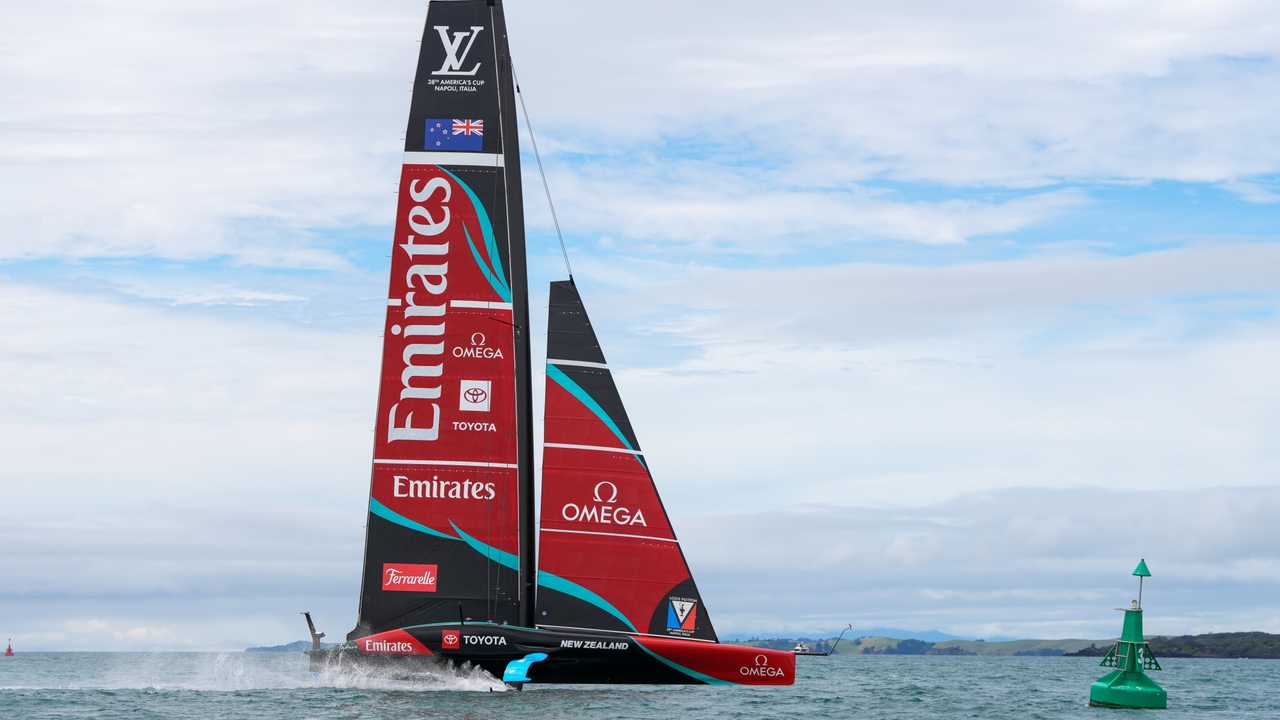
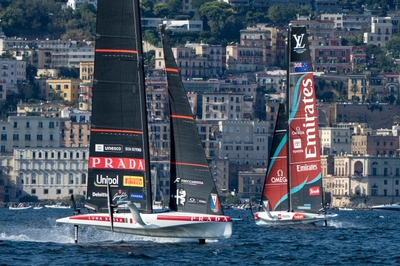
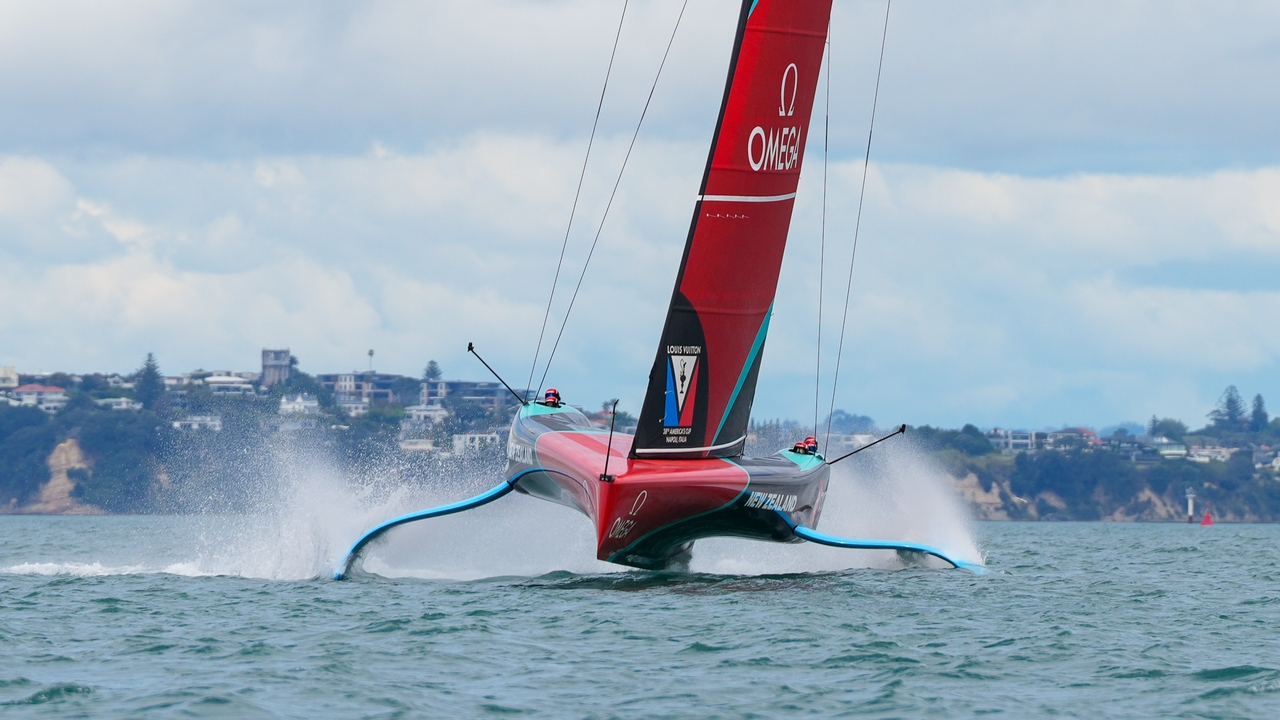
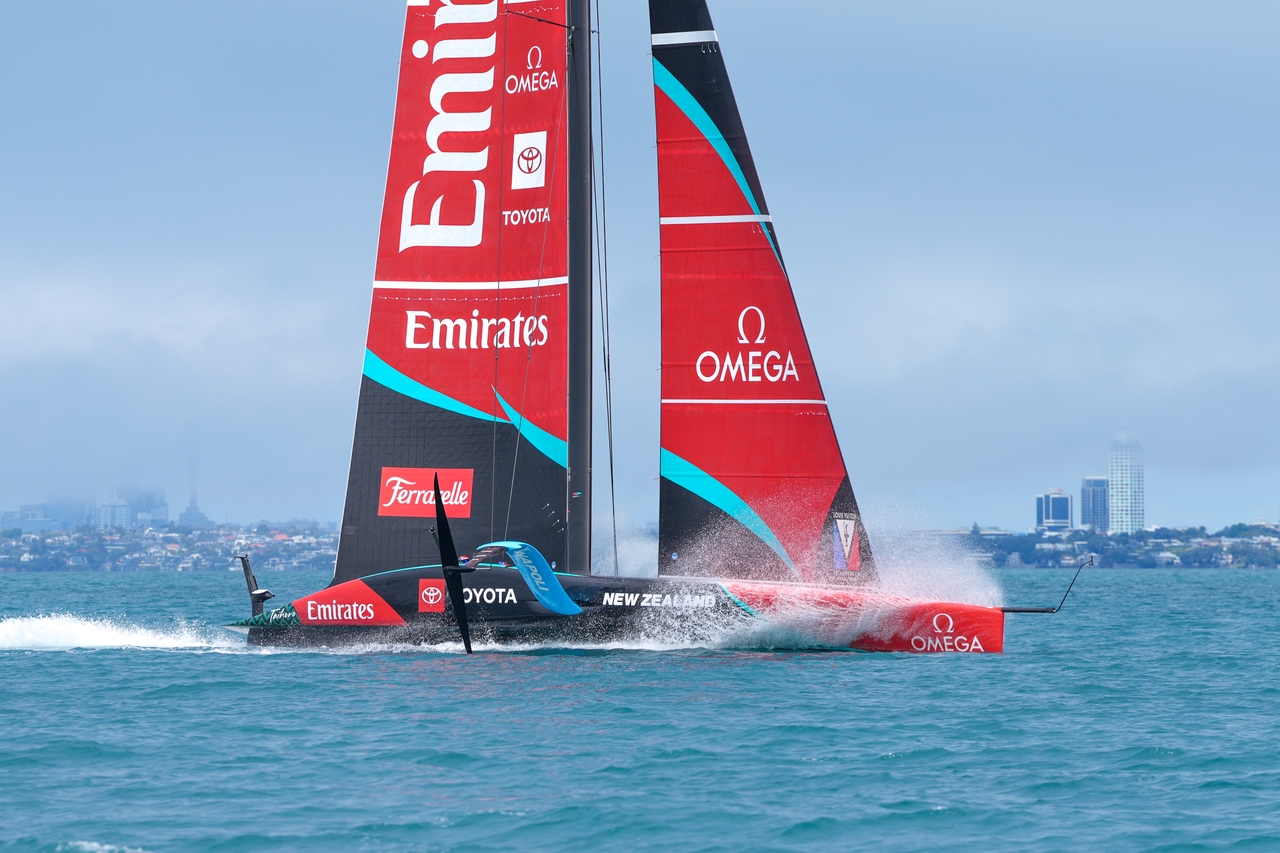
Emirates Team New Zealand's latest, and last training session in Auckland in November, offered a fascinating insight into the Defender's preparations for Naples 2027. With the smaller M2 mainsail hoisted in marginal conditions, the Kiwis appeared to be deliberately dropping off the foils to perfect one of the most critical skills in modern America's Cup racing: Recovery.
Sam Thom / America's Cup
There is an old adage in sailing that races are won by making fewer mistakes than the opposition. In the foiling era, that principle has never been more relevant, particularly when the breeze is hovering around the minimum required to keep an AC75 airborne.
On Thursday, Emirates Team New Zealand took to Auckland's waters in just 4–7 knots, hoisting their M2-1 mainsail and largest J2-1 jib. What followed was a revealing series of manoeuvres, with multiple touchdowns, particularly after downwind gybes.
Sam Thom / America's Cup
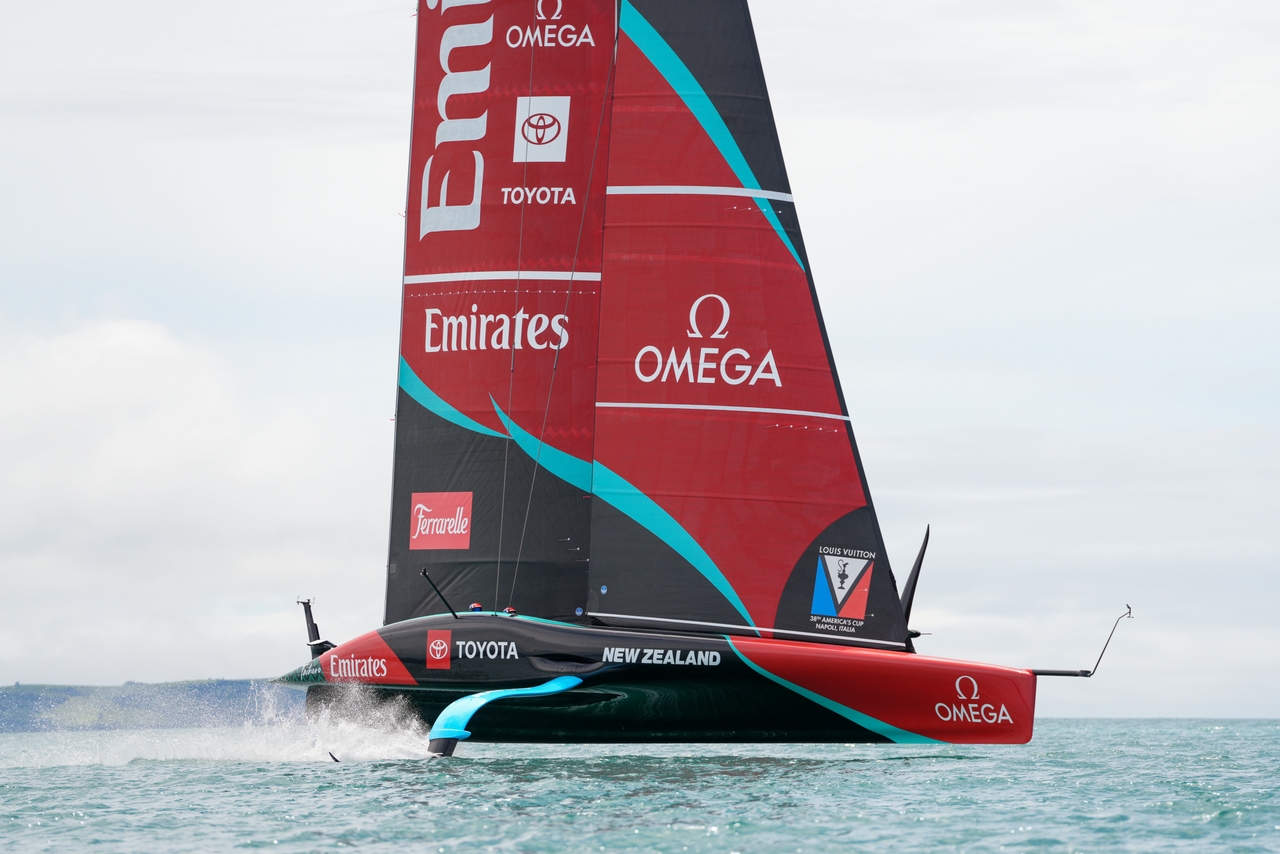
According to the recon report, several splash-downs appeared deliberate, with the race crew of Nathan Outteridge, Seb Menzies, Iain Jensen, Andy Maloney and Jo Aleh repeatedly demonstrating an impressively rapid return to flight. But why practise with the smaller M2 rather than the more powerful M1?
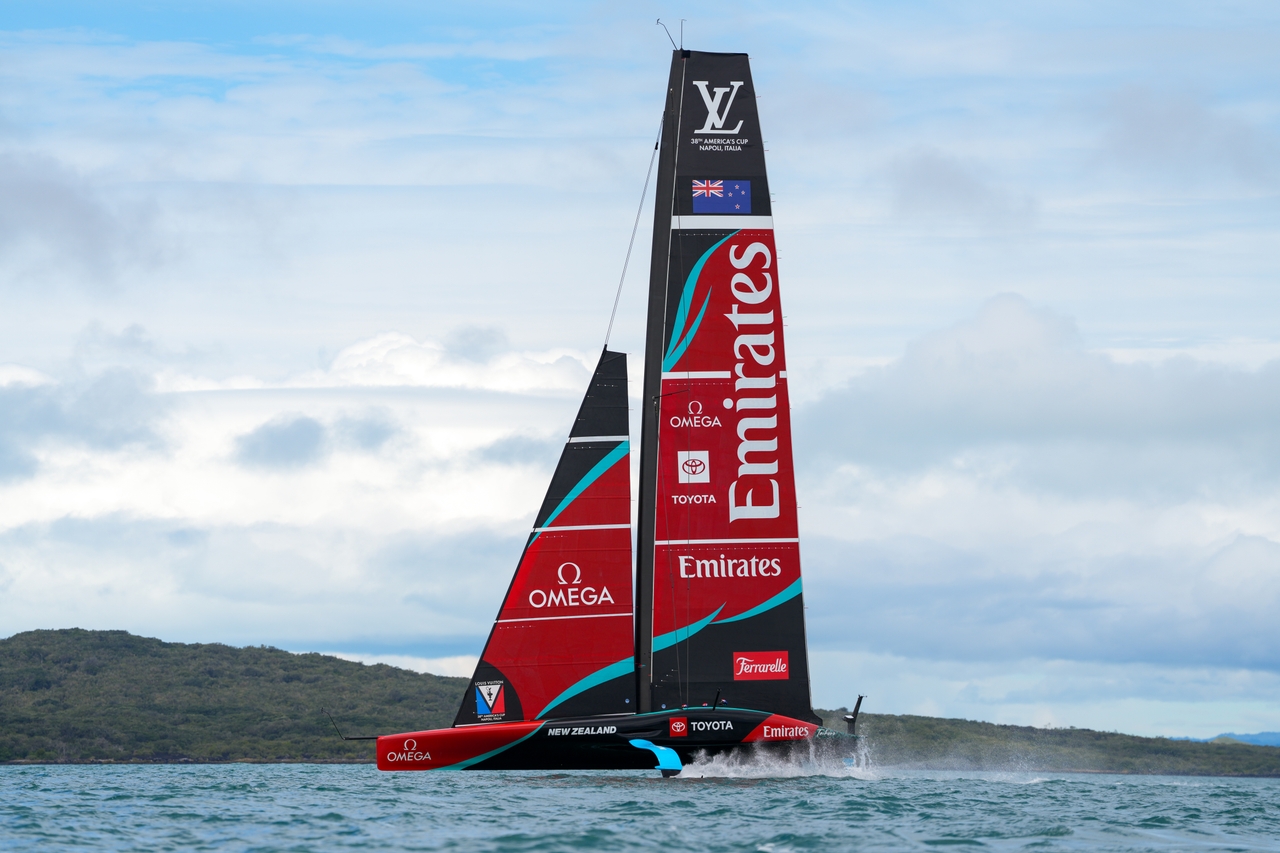
The answer potentially lies in understanding the absolute limits of the yacht's performance envelope. With less sail area available, the M2 offers less aerodynamic drive at low speeds, making acceleration back onto the foils more demanding. Furthermore, the M2 offers less drag when airborne so if they can master it in all conditions and still hit the magic performance numbers, are they onto a winner and yet another Kiwi innovation in the America’s Cup?
Sam Thom / America's Cup
More practically, if the team can reliably recover with the smaller mainsail in marginal conditions, it builds confidence in both the yacht's underlying performance and the crew's ability to execute a precise recovery sequence. This is where crew-work becomes fundamental. Following a touchdown, the helmsmen must establish the optimum course for acceleration, while the trimmers rapidly adjust sail power and twist. Simultaneously, foil cant, flap settings and rudder elevator control must work together to minimise drag, manage pitch and generate sufficient lift for take-off.
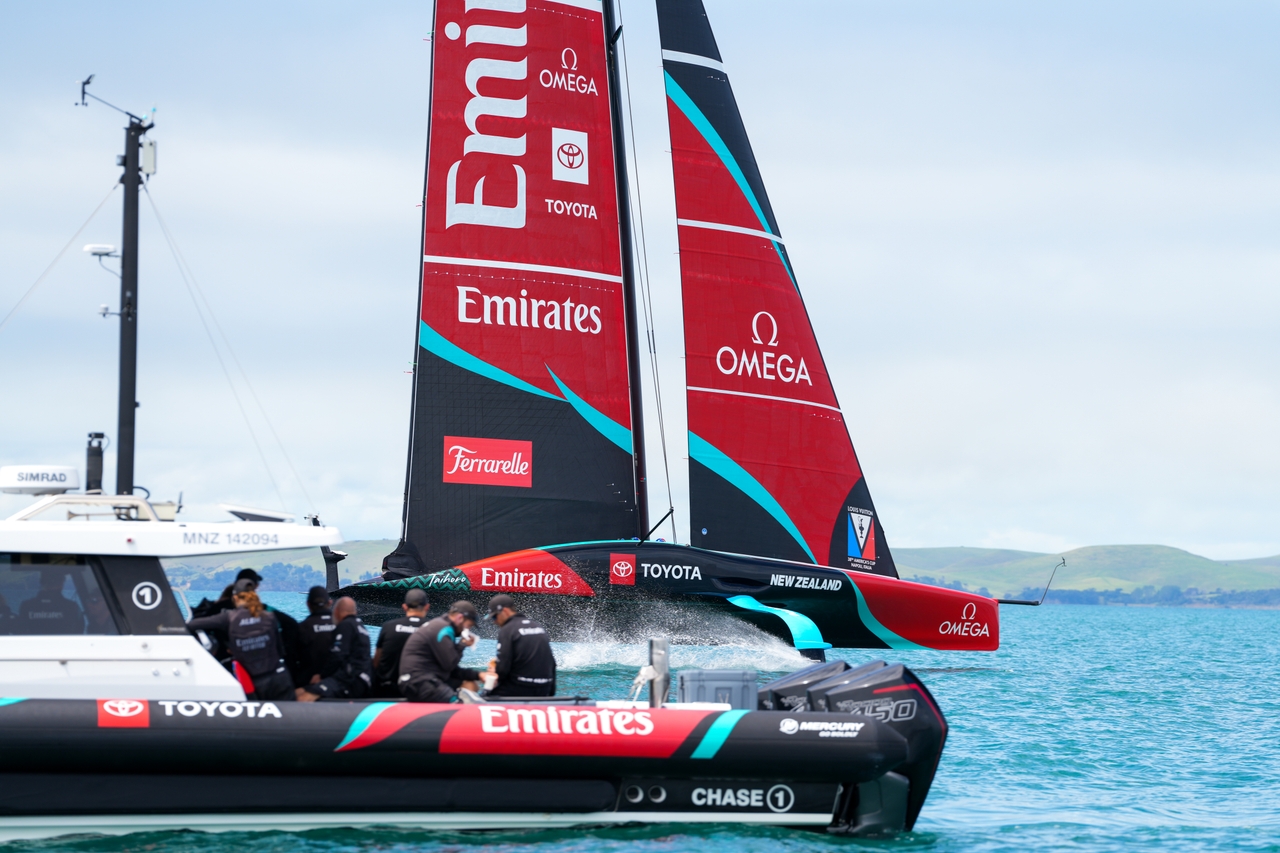
Timing is everything. The ‘pop-to-flight’ is an art form. Too much steering input, excessive drag or an incorrectly powered sail can turn a momentary touchdown into a race-defining loss. Interestingly, the Recon Team on the water also noted improved pitch stability through bear-aways and round-ups, with the stern remaining noticeably higher than in previous sessions. That suggests another possible focus: refining the coordination between sail trim, steering and flight control through high-load manoeuvres. The session also included aggressive virtual pre-starts, where the team occasionally remained off the foils for extended periods before resetting.
Sam Thom / America's Cup
For Naples, the implications are obvious. In close-quarters racing, especially in marginal breeze, an opponent's manoeuvre, a wind shadow or a tactical misjudgement can force a touchdown. The ability to recover almost instantly could decide an entire race. The recon report cannot establish whether every touchdown was intentional, nor prove the precise purpose of the M2 testing, but the pattern is compelling. Emirates Team New Zealand is not simply practising how to fly faster. It appears to be practising how to recover when flight is lost.
And in Naples 2027, that could prove priceless.
Magnus Wheatley